How to Care for and Protect Split or Cracked Nails While They Grow Out
Quick Answer
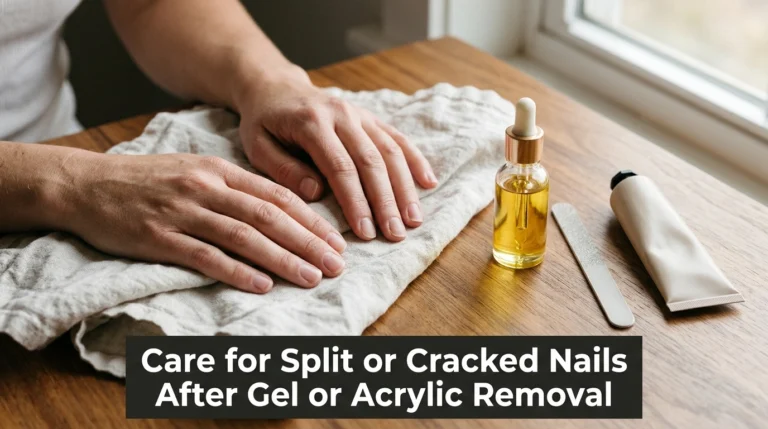
To care for and protect split or cracked nails while they grow out, keep your nails comfortably short, gently smooth rough edges, moisturize your nails and cuticles daily, and wear gloves during wet household chores. Cover a snagging crack with a clean, light bandage when necessary. Avoid nail glue or cosmetic repairs on painful, bleeding, or exposed nail-bed injuries. A split nail cannot fuse back together, but protecting it helps prevent further damage while healthy nail gradually replaces it.
Seeing a crack in your nail can be frustrating, especially when you’ve spent weeks growing your nails or maintaining a beautiful manicure. One small split can catch on your hair, clothing, or bedsheets and suddenly become a much bigger problem.
The good news is that you don’t need an expensive nail treatment to protect a minor split. Gentle grooming, consistent moisturizing, and a few changes to your daily habits can make the growing-out process much easier.
This guide explains how to care for split or cracked nails safely, which mistakes can make them worse, what products are worth using, and when a damaged nail needs professional attention.


Why Do Nails Split or Crack in the First Place?
Your nails are made primarily of keratin, a tough structural protein. Although nails feel hard, their layers can become damaged through repeated exposure to water, chemicals, friction, and physical pressure.
Sometimes a nail develops a horizontal split near the tip. Other times, a crack travels vertically toward the cuticle. The location and cause determine how carefully you need to protect it.
1. Repeated Water Exposure
Frequent handwashing, dishwashing, and cleaning expose your nails to repeated wetting and drying. Over time, this cycle can contribute to peeling and splitting.
If your hands spend considerable time in water, protective gloves can reduce unnecessary exposure.
2. Aggressive Manicures
Over-filing, excessive buffing, peeling off gel polish, or forcibly removing acrylic enhancements can damage the nail surface.
Removing artificial nail products incorrectly may strip away layers of the natural nail, making the remaining plate more vulnerable to cracking.
3. Dryness and Environmental Conditions
Cold weather, low humidity, and repeated exposure to cleaning products can leave the skin around your nails dry and uncomfortable.
Dryness-related brittleness may also make the nail edges more likely to split under everyday stress.
For seasonal protection, explore our guide on how to protect nails from dry air.
4. Everyday Physical Damage
Typing with long nails, opening cans, scraping stickers, and catching nails on fabric can place unnecessary pressure on weakened areas.
A tiny existing split becomes especially vulnerable when the nail extends beyond your fingertip.
5. Underlying Nail Conditions
Persistent splitting isn’t always caused by beauty habits. Nail psoriasis, fungal infections, certain nutritional deficiencies, and other medical conditions can sometimes contribute to nail abnormalities.
If several nails repeatedly split without an obvious cause, consider discussing the problem with a dermatologist instead of relying only on cosmetic treatments.
How Can You Tell Whether a Split Nail Is Safe to Care for at Home?
Before touching a cracked nail, examine where the split begins and whether the surrounding tissue is injured.
A Small Split at the Free Edge
If the crack affects only the white portion extending beyond your fingertip, doesn’t bleed, and isn’t painful, gentle trimming and filing are generally reasonable.
This is the simplest type of split to manage because the damaged portion can eventually be removed as the nail grows.
A Crack Extending Into the Attached Nail
When a crack reaches the pink, attached portion of your nail, avoid cutting deeply or trying to force the sides together.
The nail bed underneath may be vulnerable. Protect the area from catching and seek medical advice if the split is painful, deep, or unstable.
A Split Near the Cuticle
A crack beginning near the base of the nail deserves extra attention, especially when it develops repeatedly in the same location.
Damage near the nail matrix, where new nail cells form, may affect future nail growth.
Warning
Seek medical care for a deep or painful crack, bleeding, nail lifting, significant swelling, pus, or increasing redness. Severe trauma, a black or purple nail after injury, or inability to move the finger normally also requires prompt evaluation. Avoid glue, gel, acrylics, or decorative wraps on an open wound or suspected infection.
What Should You Do Immediately When Your Nail Cracks?

Your first priority is to prevent the split from catching and extending farther.
If the injury involves only the free edge and the surrounding skin is intact, follow these gentle steps.
Step 1: Clean Your Hands and Inspect the Damage
Wash your hands using mild soap and water, then pat them dry. Examine the crack under good lighting before trying to trim or file anything.
If you notice bleeding or exposed tissue, stop cosmetic grooming and protect the injury with a clean dressing.
Common mistake: Trying to pull off the loose section immediately. This can tear healthy attached nail and make the injury more painful.
Step 2: Shorten the Nail Carefully
When the split is entirely beyond your fingertip, carefully trim away the damaged free edge if you can do so without pulling on attached nail.
Keep the remaining length comfortable and practical. You don’t need to cut every nail extremely short, although matching lengths may make everyday activities easier.
Common mistake: Cutting directly through a crack that extends into the attached nail. This may worsen the split or injure sensitive tissue underneath.
Step 3: Smooth the Rough Edge
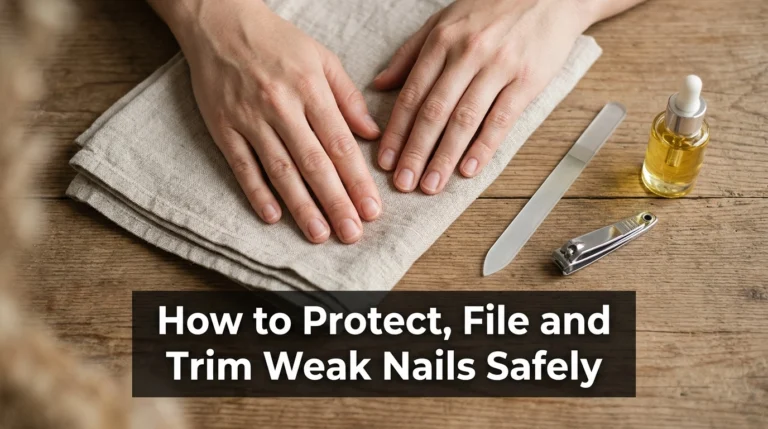
Use a fine-grit emery board or smooth glass file to remove sharp edges from the free portion of the nail.
Work gently with light strokes. Stop if the nail bends, becomes painful, or the crack begins spreading.
Common mistake: Filing aggressively over the crack. Excessive pressure can remove additional nail layers and increase weakness.
Step 4: Protect the Vulnerable Area
If the nail still catches on fabric, place a small, clean bandage over the fingertip to protect it during normal activities.
Choose a dressing that doesn’t pull strongly on the damaged nail when removed. Replace it if it becomes wet or dirty.
Common mistake: Keeping a damp dressing on the finger for extended periods. Moisture trapped around damaged skin can increase irritation.
Step 5: Moisturize the Nail and Surrounding Skin
Once the area is clean and dry, apply fragrance-free moisturizing cream to the intact skin surrounding your nails.
For an uncomplicated, dry split without an open wound, you can also massage a small amount over the exposed nail plate.
Common mistake: Expecting moisturizer to reconnect broken nail layers. It supports conditioning and comfort but cannot physically fuse a crack.
Pro Tip
Keep a fine nail file in your handbag or desk drawer. Smoothing a small free-edge snag early is easier than dealing with a larger break after it catches on clothing.
What Is the Best Daily Routine for Split or Cracked Nails?
A consistent routine matters more than buying several different nail repair products.
Your goal is to minimize friction, reduce unnecessary moisture exposure, and maintain the condition of the surrounding skin while new nail grows.
Morning: Check, Protect, and Moisturize
- Inspect the split for new snagging, pain, or changes in appearance.
- Apply fragrance-free hand cream to your hands, nails, and intact cuticles.
- Keep vulnerable nails protected during activities that could catch them.
- Avoid using your fingernails to open packaging or scrape surfaces.
This routine takes only a couple of minutes and is easy to incorporate into your morning skincare habits.
During the Day: Reduce Repeated Stress
Everyday tasks can place pressure on a damaged nail without you noticing.
Use your fingertips rather than your nail tips when typing, picking up small objects, or operating buttons.
Wear suitable protective gloves when washing dishes or using household cleaning products.
After washing your hands, dry the area gently and reapply moisturizer when necessary.
Evening: Condition and Inspect
Before bed, check whether the edge needs gentle attention. Don’t file unnecessarily if the nail is already smooth.
Apply a richer fragrance-free moisturizer and massage it gently into the intact skin around your nails.
If you prefer oil, a small amount of jojoba-based cuticle oil may provide additional conditioning.
Our comparison of nail cream vs nail oil explains when each option makes sense.
Should You Use Nail Glue, Tea Bags, or Silk Wraps on a Cracked Nail?
You may have seen popular nail-repair videos recommending glue, tea bags, or silk wraps.
These techniques can make a minor cosmetic split appear temporarily smoother, but they are not appropriate for every type of damage.
Nail Glue
Nail glue is intended for certain cosmetic nail applications. It isn’t a medical wound adhesive and shouldn’t be used on damaged skin or an exposed nail bed.
If your crack is painful, bleeding, or extends into the attached nail, skip the glue and seek appropriate care.
Tea Bag Patches
A tea bag patch is sometimes used as a temporary cosmetic reinforcement over an intact nail plate.
However, it depends on adhesives and surface products, so it isn’t a reliable solution for a deep split or an injury involving living tissue.
For a minor free-edge crack, shortening and smoothing the nail is usually a simpler option than building a cosmetic patch.
Silk or Fiberglass Wraps
Professional nail wraps can add temporary surface reinforcement, but application and removal may place additional stress on an already fragile nail.
If you choose a cosmetic wrap, it should be limited to an intact, painless nail, and the product should be applied according to its instructions.
When uncertain, consult a qualified nail professional or dermatologist before attempting an adhesive repair.
How Can You Prevent a Split Nail From Getting Worse?
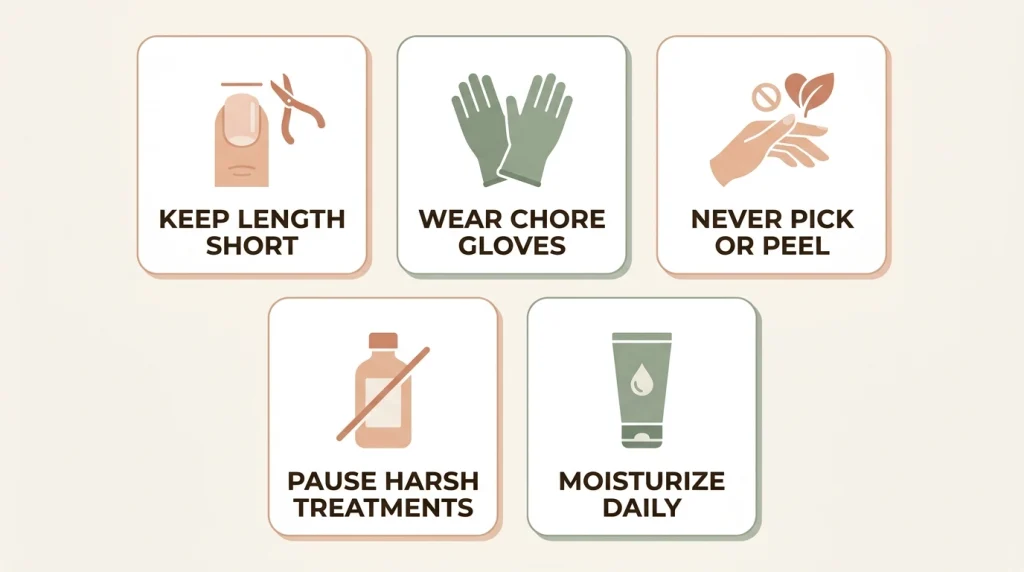
Preventing a crack from spreading involves reducing the forces that bend, catch, or weaken the nail.
Keep Your Nail Length Manageable
Long nails act like small levers. When the tip catches on something, pressure transfers toward the attached nail and any existing crack.
Shorter, smoothly shaped nails are less likely to snag during daily activities.
Wear Gloves for Household Chores
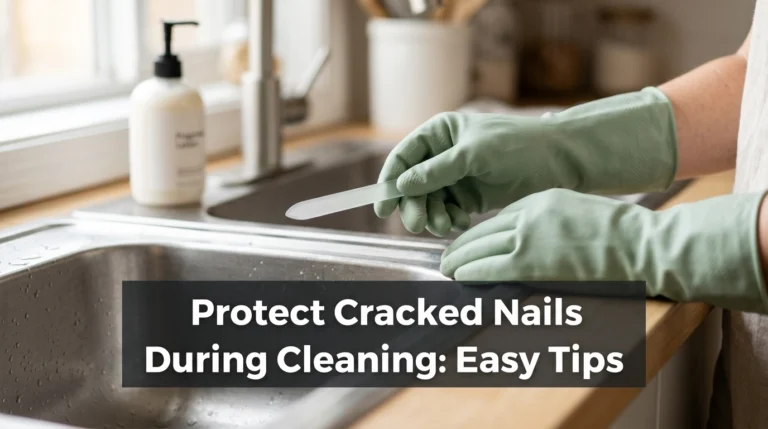
Use well-fitting protective gloves when handling detergents, cleaning bathrooms, washing dishes, or performing other wet chores.
Remove the gloves after finishing and dry your hands. If your hands sweat heavily inside them, consider a suitable cotton liner.
Avoid Picking or Peeling
Never peel away a lifted nail layer simply because it looks loose.
Pulling at the damaged area may detach healthy portions of the nail and expose more sensitive tissue.
Take a Break From Damaging Nail Treatments
Skip aggressive buffing, repeated acetone soaking, acrylic removal, and other stressful treatments while your nails are fragile.
If you wear artificial enhancements, have them removed carefully rather than pulling them off.
Moisturize Consistently
Moisturizing can improve the comfort and condition of dry nail folds and surrounding skin. It may also help reduce dryness-associated brittleness.
Remember that hydration supports protection rather than speeding up the biological production of new nail.
How Long Does It Take for a Cracked Nail to Grow Out?

Fingernails typically grow around 3 millimeters per month, although the rate varies with age, health, season, and individual differences.
Replacing an entire fingernail commonly takes around four to six months. Toenails generally take considerably longer.
The time needed for a crack to disappear depends mainly on its location.
- Minor free-edge crack: May be trimmed away immediately or over the following weeks if shortening it is painless.
- Crack around the middle of the nail: May require several months to move completely beyond the fingertip.
- Crack near the base: Can take much of the fingernail replacement period to grow out, assuming the nail matrix is healthy.
- Damage involving the nail matrix: May cause persistent changes and should be assessed by a dermatologist.
These are general expectations, not guaranteed healing times.
A split in the existing nail plate doesn’t close by growing back together. Instead, new nail gradually moves forward from the growth area beneath your cuticle.
For a deeper explanation of this process, see our article on nail growth and nail damage.
What Are the Most Important Do’s and Don’ts for Cracked Nails?
Do
- Keep nails comfortably short.
- Use a fine file on rough free edges.
- Moisturize after washing.
- Wear gloves during wet chores.
- Protect snagging nails when needed.
- Seek help for painful or infected nails.
Don’t
- Pull at split nail layers.
- Cut into the attached nail.
- File aggressively over cracks.
- Apply nail glue to wounds.
- Peel off gel or acrylic products.
- Ignore swelling, pain, or discoloration.
Which Products Are Worth Using for Split or Cracked Nails?
You don’t need a large collection of expensive nail treatments. A few simple products can make daily protection easier.
Choose products based on what your nails actually need rather than promises of instant nail repair.
Affiliate disclosure: As an Amazon Associate, we earn from qualifying purchases. Product links below lead to Amazon search results, not guaranteed individual listings.
Recommended Product
Fine-Grain Glass Nail File
A smooth glass nail file offers controlled shaping for minor free-edge snags. Choose one with a fine filing surface and avoid pressing against a deep crack.
Best for: Keeping short nails smooth and reducing catching.
As an Amazon Associate, we earn from qualifying purchases.
Recommended Product
Fragrance-Free Hand and Nail Cream
A simple moisturizing cream containing glycerin, ceramides, or petrolatum can help condition dry fingertips and support the surrounding skin barrier.
Best for: Daily moisturizing after handwashing.
As an Amazon Associate, we earn from qualifying purchases.
Recommended Product
Jojoba-Based Cuticle Oil
A basic cuticle oil is useful for conditioning intact nail folds and dry cuticles. It won’t repair a structural split, but it can complement your moisturizing routine.
Best for: Targeted conditioning around the nail.
As an Amazon Associate, we earn from qualifying purchases.
Recommended Product
Reusable Household Cleaning Gloves
Well-fitting gloves create a practical barrier between your nails and prolonged exposure to water or household detergents.
Best for: Dishwashing, cleaning, and wet household chores.
As an Amazon Associate, we earn from qualifying purchases.
What Common Mistakes Slow Down Nail Recovery?
Even when you follow a careful routine, a few common habits can interfere with the growing-out process.
Trying to Repair Every Crack With Glue
Cosmetic glue may seem like a convenient shortcut, but it doesn’t solve the cause of cracking and can complicate an injury if applied to broken skin.
Instead, assess the depth of the split and focus on protection. Seek professional help when damage extends into sensitive attached tissue.
Constantly Filing the Damaged Area
It’s tempting to smooth the nail every time you notice an imperfection.
However, repeated filing can thin an already fragile nail. Only remove genuine snags from the free edge, and use minimal pressure.
Using Multiple Hardening Treatments
Nail hardeners vary widely in formulation. Some form a temporary surface coating, while others contain ingredients that may irritate sensitive skin or make nails less flexible.
A hardener cannot reconnect a deep crack. If you use one, follow the label and discontinue it if irritation develops.
Ignoring Daily Moisturizing
Moisturizing once a week is unlikely to address dryness caused by frequent handwashing.
Instead, make hand cream part of your regular routine, particularly after water exposure.
Learn more about the role of hydration in our guide on whether moisturizing helps nail growth.
What Should You Do if Your Nail Keeps Splitting?
Problem: The Crack Keeps Catching on Clothing
Immediate fix: If the snag is entirely on the free edge, gently shorten or smooth it. Otherwise, protect the nail with a clean dressing. Prevention: Keep the nail shorter until the damaged section moves beyond the fingertip.
Problem: Several Nails Keep Peeling and Splitting
Immediate fix: Reduce aggressive manicure practices and unnecessary chemical exposure. Prevention: Follow a consistent moisturizing and glove-wearing routine. Consult a dermatologist if the problem persists.
Problem: The Same Nail Splits in the Same Place
Immediate fix: Stop picking, buffing, or placing pressure on the affected nail. Prevention: Have recurring longitudinal splits evaluated, especially if they start near the base or involve a single nail repeatedly.
Problem: The Nail Becomes Painful or Changes Color
Immediate fix: Stop cosmetic treatments and seek medical evaluation. Prevention: Avoid covering unexplained symptoms with opaque polish or artificial nails before the cause has been assessed.
Can You Still Wear Nail Polish While a Split Nail Grows Out?
Whether polish is appropriate depends on the severity and location of the damage.
A small, painless free-edge split on an otherwise intact nail is different from a deep crack involving the nail bed.
For a minor cosmetic imperfection, regular nail polish may be an option once the nail is stable. However, polish doesn’t provide reliable structural repair.
If your nail is painful, lifting, bleeding, inflamed, or possibly infected, avoid covering it with polish, gel, acrylic, or nail extensions.
Repeated polish removal can also contribute to dryness and irritation, particularly when the surrounding skin is sensitive.
When the nail is already fragile, a temporary break from decorative treatments may make daily care simpler.
When Should You See a Dermatologist About a Cracked Nail?
Most minor free-edge splits are manageable with gentle grooming, but some nail changes need professional attention.
Arrange medical evaluation if you notice any of the following:
- A deep split extending into the attached nail or nail bed.
- Persistent pain, swelling, warmth, or redness.
- Pus or other signs of infection.
- A nail lifting away from the nail bed.
- Repeated splitting in the same location.
- An unexplained new or changing dark streak.
- Unusual thickening, deformity, or widespread nail changes.
- Splitting that continues despite reducing environmental damage.
If you have diabetes, reduced circulation, or a condition that affects wound healing, seek professional advice earlier rather than attempting to manage a significant nail injury yourself.
It’s especially important not to assume that every cracked nail is simply dry or weak.
Frequently Asked Questions About Split or Cracked Nails
Q: Can a split nail heal itself?
A: The cracked section of the nail plate cannot permanently fuse back together. If the nail growth area remains healthy, new nail can gradually replace the damaged portion as it grows out.
Q: Should I cut off a cracked nail?
A: You may gently trim a split that is completely within the free edge if doing so is painless. Never cut into the attached nail or pull away a section that remains connected to sensitive tissue.
Q: Does cuticle oil help split nails?
A: Cuticle oil can condition dry nail folds and the surface of an intact nail. However, it doesn’t close an existing crack or replace missing nail layers. Protection and healthy nail growth remain essential.
Q: How long does a split fingernail take to grow out?
A: Fingernails grow approximately 3 millimeters per month on average. A small crack near the tip may disappear within weeks, while a split closer to the base may require several months to grow out.
Q: Can I put gel polish over a cracked nail?
A: Avoid gel polish over a deep, painful, lifting, or injured nail. Even with a minor cosmetic split, gel application and removal may add stress to the damaged plate. Keeping the nail short and protected is often the safer approach.
Final Thoughts: Protect Your Nails While Healthy Growth Takes Over
Caring for split or cracked nails while they grow out doesn’t require a complicated routine. Focus on preventing snags, maintaining comfortable nail length, moisturizing consistently, and protecting your hands from unnecessary stress.
Be patient with the growing-out process. Your damaged nail cannot instantly repair itself, but gentle care can help you avoid making the split worse while new nail replaces it.
Save this guide to your Pinterest nail care board so you’ll have these simple protection tips ready whenever your nails need extra attention.
Medical note: This article provides general nail-care information and doesn’t replace advice from a qualified healthcare professional. Seek medical evaluation for painful, infected, severely injured, or persistently abnormal nails.

Hi, I’m Jessica, the creator behind Unique Lash & Nails Katy.
I created this website for anyone who loves beautiful nails as much as I do. Here, I share trendy nail designs, seasonal manicure ideas, easy nail care tips, honest product recommendations, and step-by-step guides to help you create salon-worthy nails at home. Whether you’re looking for everyday inspiration or your next favorite nail trend, I hope you’ll find something you love.