Protect Nails From Dry Air: 7 Easy Tips (39 characters)
Quick Answer
To protect nails from dry air, apply a fragrance-free hand cream to your nails and cuticles after washing, massage cuticle oil around each nail daily, and use petroleum jelly before bed when extra protection is needed. Wear gloves outdoors and during wet household chores, keep nails gently filed, and consider a clean humidifier if indoor air feels excessively dry. Consistent moisture and protection help minimize dryness, peeling, and preventable breakage.
Time Needed
3–5 minutes daily
Difficulty
Beginner
Items Needed
4–5 basic products
Results
Ongoing with daily care
Dry air can turn your beautiful manicure into a frustrating cycle of rough cuticles, peeling nail tips, and unexpected breaks. Winter weather, indoor heating, and low humidity make maintaining comfortable, healthy-looking nails more challenging.
The good news? You don’t need an expensive salon treatment to protect your nails. A few practical moisture-saving habits can make a noticeable difference in your daily nail care routine.
This guide explains exactly how to protect nails from dry air, which products are worth using, and how to avoid mistakes that make brittle nails worse.


Why Does Dry Air Make Your Nails Brittle?
Your fingernails are primarily made of keratin, a tough protein arranged in compact layers. Although nails seem hard and dry, their water content affects how flexible they are.
When humidity drops, nails and surrounding skin can become drier. Repeated washing, exposure to cleaning products, and heated indoor environments may make the problem worse.
Dry nails are more likely to feel rigid and develop splitting or peeling, especially when they’re repeatedly exposed to water and then allowed to dry out.
Common signs of dryness include:
- Rough, flaky, or peeling nail tips.
- Dry cuticles and uncomfortable skin around nails.
- Increased nail breakage during ordinary activities.
- Small splits along the free edges.
- White, chalky-looking areas after polish removal.
- Hangnails and cracked skin around the nail folds.
Dry air isn’t the only possible cause of these symptoms. Frequent manicures, repeated chemical exposure, and certain nail conditions can also contribute.
If you’re already experiencing peeling, start with our guide on how to fix dry nails before introducing additional cosmetic treatments.
What Do You Need to Protect Your Nails From Dry Air?
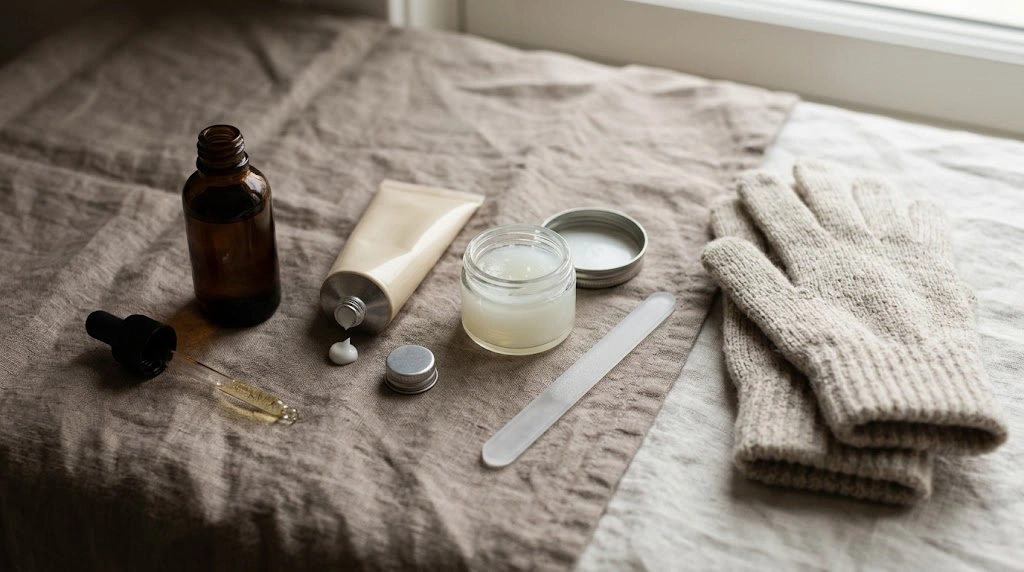
Protecting nails against dry air doesn’t require a large beauty collection. These simple essentials cover the most important steps.
- Fragrance-free hand cream: Look for moisturizing ingredients such as glycerin, ceramides, petrolatum, or shea butter.
- Cuticle oil: A jojoba-based formula is convenient for moisturizing the nail folds and surrounding skin.
- Petroleum jelly: A useful protective layer for especially dry cuticles before bedtime.
- Protective gloves: Wear insulated gloves outdoors and suitable waterproof gloves during cleaning.
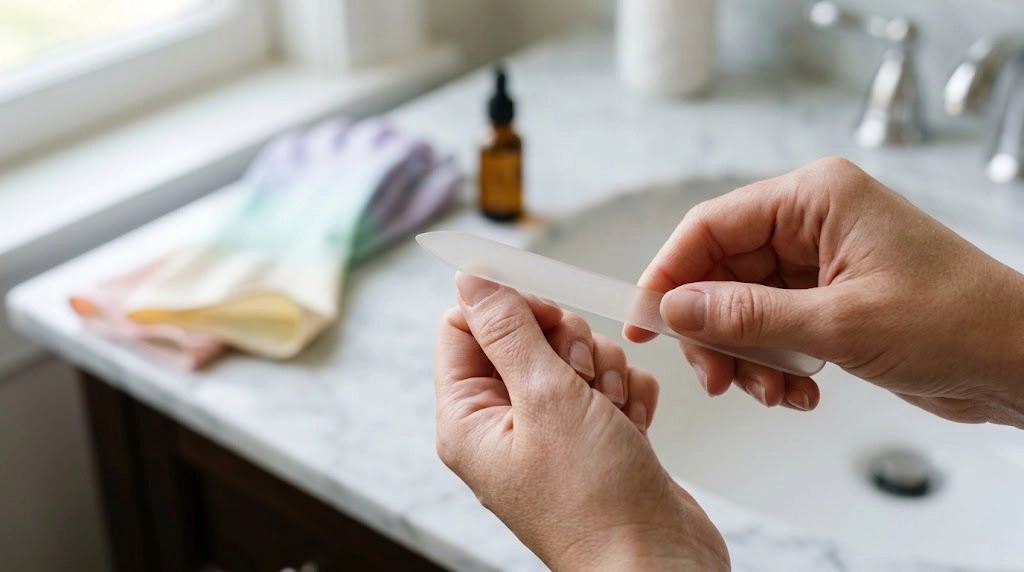
- Fine-grit nail file: A glass or gentle emery file helps smooth snagging edges.
You can also use a clean, properly maintained humidifier if your bedroom becomes excessively dry during heating season.
Choose products based on your needs and skin sensitivity. More expensive doesn’t necessarily mean more effective.
How to Protect Nails From Dry Air: 7 Easy Steps
The most effective prevention routine combines regular moisturizing, physical protection, and gentle nail maintenance. Follow these seven steps consistently rather than relying on a single intensive treatment.
Step 1: Moisturize Your Nails After Washing Your Hands
1. Apply Hand Cream Immediately
After washing, gently pat your hands dry and apply a small amount of fragrance-free moisturizing cream. Massage the product over your nails, around the cuticles, and across your fingers.
Reapply throughout the day when your hands feel dry, especially after frequent handwashing. A thicker cream is often more helpful than a lightweight lotion in dry weather.
Common mistake: Moisturizing only the palms and backs of your hands while completely skipping the nails and cuticle area.
Step 2: Apply Cuticle Oil Every Day
2. Massage Oil Around Each Nail
Place a small drop of cuticle oil near each nail and massage gently around the nail folds. Spread any remaining oil across the nail plate when you’re not preparing to apply polish.
Try applying it once during the day and again before bed if your cuticles are particularly dry. Lightweight oils are convenient because you can use them without a lengthy treatment.
Common mistake: Applying a large amount once a week instead of using a small amount consistently.
Step 3: Seal in Moisture Before Bed
3. Use a Protective Overnight Layer
Start with clean hands and apply your normal moisturizing cream. For very dry cuticles, add a thin layer of plain petroleum jelly around the nail folds.
If you’re comfortable wearing them, lightweight cotton gloves can help keep the moisturizer off your bedding. You don’t need to cover your hands with excessive amounts of product.
Common mistake: Expecting one overnight treatment to permanently repair nails that are already split or peeling.
Step 4: Wear Gloves in Cold, Dry Weather
4. Protect Your Hands Outdoors
Before heading outdoors on a cold, windy day, apply hand cream and put on comfortable gloves. This helps shield your hands and cuticles from direct exposure to harsh weather.
Choose gloves that fit well without rubbing against your fingertips. If the lining irritates your skin, try a softer material.
Common mistake: Wearing gloves only after your fingers become painfully cold or the skin has already started cracking.
Step 5: Protect Your Nails During Household Chores
5. Reduce Repeated Wetting and Drying
Wear suitable protective gloves when washing dishes or handling cleaning products. Frequent contact with water and detergents can leave nails more vulnerable to splitting and peeling.
After finishing, remove your gloves, dry your hands thoroughly, and apply moisturizer. Avoid keeping wet gloves on for long periods.
Common mistake: Washing dishes without gloves and assuming cuticle oil afterward will completely undo repeated water exposure.
Step 6: Keep Your Nails Short and Smooth
6. Gently File Fragile Nail Edges
Shorter nails are often easier to maintain when they’re brittle. Trim them neatly and round the corners slightly to reduce the chance of catching them on clothing or other surfaces.
Use a fine file with gentle strokes. Focus on smoothing rough edges rather than repeatedly buffing the surface of your nails.
Common mistake: Aggressively filing the top of a peeling nail, which removes more material from an already fragile nail plate.
Step 7: Improve Indoor Humidity When Necessary
7. Make Your Indoor Environment Less Dry
If your bedroom feels unusually dry because of indoor heating, consider using a properly maintained cool-mist humidifier. A comfortable indoor humidity level can help reduce dryness affecting your skin and cuticles.
Use a hygrometer to monitor humidity. Around 30–50% relative humidity is a commonly recommended indoor range. Clean the humidifier according to its instructions to prevent microbial buildup.
Common mistake: Running a humidifier continuously without monitoring humidity or cleaning the water tank.
What Is the Best Daily Routine for Dry Weather Nail Protection?
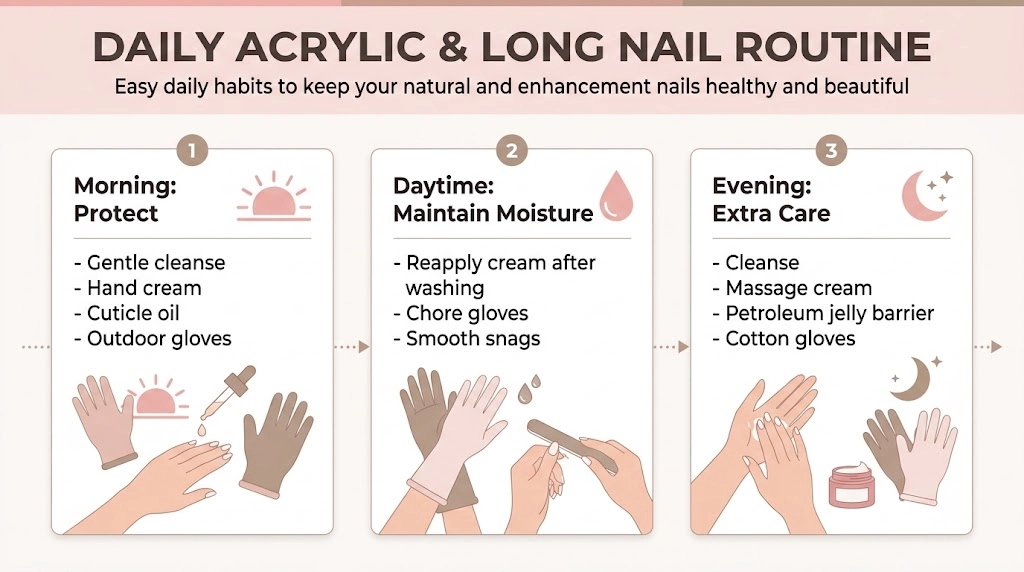
A consistent routine is easier to maintain when you divide it into quick morning, daytime, and evening habits.
Morning: Protect Before Your Day Begins
- Wash your hands with a gentle cleanser.
- Dry your fingers and nail edges carefully.
- Apply moisturizing hand cream over your nails and cuticles.
- Massage in a small amount of cuticle oil if needed.
- Take gloves when going outdoors in cold weather.
During the Day: Maintain Moisture
- Reapply hand cream after washing your hands.
- Use protective gloves for cleaning and dishwashing.
- Avoid picking or biting dry cuticles.
- Smooth any snagging nail edge with a gentle file.
Evening: Give Your Nails Extra Care
- Clean and dry your hands.
- Massage moisturizer around your nails.
- Apply petroleum jelly to especially dry areas.
- Use comfortable cotton gloves overnight if desired.
For a more complete maintenance schedule, explore our best nail care routine for healthy nails.
Which Nail Care Products Work Best in Dry Air?
The right product depends on whether your biggest concern is flaky cuticles, uncomfortable skin, or nails that split easily.
1. Fragrance-Free Moisturizing Hand Cream
Best for: Everyday dry hands, nails, and cuticles.
A moisturizing cream is the foundation of dry-weather nail care. Look for formulas containing glycerin, ceramides, or petrolatum. These ingredients help support the skin’s moisture barrier.
The main advantage is convenience: you can treat your hands and the surrounding nail area with the same product.
Recommended Product Type
Fragrance-Free Moisturizing Hand Cream
A rich hand cream provides convenient daily care for dry skin around your fingernails.
As an Amazon Associate, we earn from qualifying purchases.
2. Jojoba-Based Cuticle Oil
Best for: Rough cuticles and lightweight daytime moisturizing.
Jojoba-based oils spread easily around your nails and help soften dry surrounding skin. They are particularly convenient if you dislike the heavier feeling of petroleum jelly during the day.
Apply a small amount and massage gently. You can use it alongside hand cream instead of treating the two products as competing options.
Recommended Product Type
Jojoba Cuticle Oil
A lightweight option for softening the nail folds and maintaining a comfortable cuticle area throughout the day.
Explore Cuticle Oils on Amazon
As an Amazon Associate, we earn from qualifying purchases.
3. Plain Petroleum Jelly
Best for: Very dry cuticles and overnight protection.
Petroleum jelly forms an occlusive barrier over the skin that helps limit moisture loss. It’s particularly useful when lighter products aren’t enough to keep your cuticles comfortable.
Apply it after your usual moisturizing cream. A thin layer is generally sufficient, and you can focus on the driest areas rather than coating your entire hands.
If you’re uncertain which option to choose, our article on the healthiest things to put on nails explains how moisturizer, oil, and petroleum jelly fit into nail care.
Recommended Product Type
Plain Petroleum Jelly
An affordable protective ointment that helps reduce moisture loss from very dry skin around your nails.
Explore Petroleum Jelly on Amazon
As an Amazon Associate, we earn from qualifying purchases.
What Nail Care Mistakes Should You Avoid in Dry Weather?
Even an excellent moisturizing routine can be undermined by habits that repeatedly damage the nail plate or surrounding skin.
Warning
Don’t cut healthy cuticles, peel gel manicures, or aggressively buff brittle nails. These habits can damage protective tissue or remove superficial nail layers, making existing problems harder to manage.
Avoid Excessively Hot Water
Very hot water can worsen dryness around your hands and cuticles. Use comfortably warm water for washing and apply moisturizer afterward.
Limit Frequent Nail Polish Removal
Both acetone and non-acetone removers can contribute to nail dryness. Avoid unnecessarily removing and reapplying polish every day.
When you do remove polish, follow the product’s recommended removal process and moisturize afterward.
Stop Picking at Peeling Nails
Pulling away a peeling section may remove additional nail layers. Instead, carefully smooth the loose edge and keep the nail short enough to avoid snagging.
Be Careful With Aggressive Nail Hardeners
Harder doesn’t always mean healthier. Some strengthening products can make nails less flexible, and certain formulations may irritate sensitive skin.
When dryness is the main problem, focus on moisture and protection before adding unnecessary hardening treatments.
What Are the Do’s and Don’ts for Protecting Nails From Dry Air?
Do
- Moisturize after washing.
- Apply cuticle oil regularly.
- Wear gloves for wet chores.
- Keep nails gently filed.
- Protect hands outdoors.
- Use gentle nail products.
Don’t
- Pick peeling nail layers.
- Cut healthy cuticles.
- Overbuff nail surfaces.
- Use nails as tools.
- Ignore painful changes.
- Overuse polish remover.
How Long Does It Take for Dry Nails to Improve?
The improvement timeline depends on whether your problem affects the surrounding skin or the nail plate itself.
Within several days: Consistent moisturizing may make rough cuticles and dry skin feel noticeably more comfortable.
Over several weeks: You may experience fewer new snags and less preventable damage as you maintain a gentler routine.
Over several months: Existing splits and damaged nail layers gradually move toward the tip as your natural nails grow. Fingernails generally take several months to replace their visible length.
Remember that moisturizer cannot permanently fuse an already split nail plate back together. The goal is to protect your current nails and support healthier new growth.
What Should You Do if Your Nails Keep Peeling Despite Moisturizing?
Problem: Your cuticles still feel dry.
Switch to a richer fragrance-free cream and apply it after washing. Add a thin layer of petroleum jelly at bedtime. Reduce contact with irritating cleansers and detergents.
Problem: Your nail tips keep splitting.
Keep nails shorter, gently smooth snags, and reduce repeated wet-to-dry cycles. Avoid buffing or peeling damaged layers.
Problem: Your hands become dry again immediately.
Check whether you’re using a harsh soap, washing frequently, or working without protective gloves. Keep moisturizer close to your sink so reapplication becomes automatic.
Problem: Your nails remain brittle for months.
Consider a dermatologist’s evaluation, especially if multiple nails are affected or there are changes in color, thickness, or attachment. Persistent brittleness isn’t always caused by dry weather.
When Should You See a Dermatologist for Nail Problems?
Simple dryness can often be managed with gentle care, but certain symptoms deserve professional attention.
- Increasing pain, redness, or swelling around a nail.
- Pus, bleeding, or suspected infection.
- A new unexplained dark streak or significant discoloration.
- Persistent nail separation from the nail bed.
- Unusual thickening, deformity, or rapid changes.
- Brittleness that persists despite reducing exposure and improving nail care.
Don’t cover concerning symptoms with artificial nails or polish while waiting for them to disappear. A dermatologist can help determine whether dryness, irritation, infection, or another condition is responsible.
Frequently Asked Questions About Protecting Nails From Dry Air
Q: Can dry air cause nails to peel?
A: Yes. Low humidity can contribute to dry, brittle nails, particularly when combined with repeated washing and drying. Regular moisturizing, gentle filing, and protective gloves may help reduce further peeling.
Q: What is the best oil for nails in dry weather?
A: Jojoba-based cuticle oil is a convenient choice because it spreads easily around nails and cuticles. However, a gentle hand cream or petroleum jelly can also be effective for everyday moisture protection.
Q: Does Vaseline protect nails from dry air?
A: Plain petroleum jelly helps reduce moisture loss from the skin around your nails. Apply a thin layer after moisturizing, especially before bed. It cannot permanently repair nail layers that have already split.
Q: Should I use a humidifier to prevent brittle nails?
A: A clean humidifier may help when indoor air is excessively dry, particularly during heating season. It supports a more comfortable environment but should complement regular moisturizing and protective nail care.
Q: How often should I moisturize my nails in winter?
A: Apply moisturizing cream after handwashing and whenever your hands feel dry. Cuticle oil can be used daily, while petroleum jelly is helpful for additional overnight protection when needed.
How Can You Keep Your Nails Healthy Throughout Dry Weather?
Learning how to protect nails from dry air comes down to simple, repeatable habits. Moisturize after washing, protect your hands from cold weather and household chemicals, care for your cuticles gently, and avoid unnecessary damage from aggressive manicures.
You don’t need an elaborate nail treatment routine. Consistency and gentle protection matter more than adding another expensive product.
Save this guide to Pinterest so you can revisit these easy dry-weather nail care tips whenever your nails and cuticles need extra attention.

Hi, I’m Jessica, the creator behind Unique Lash & Nails Katy.
I created this website for anyone who loves beautiful nails as much as I do. Here, I share trendy nail designs, seasonal manicure ideas, easy nail care tips, honest product recommendations, and step-by-step guides to help you create salon-worthy nails at home. Whether you’re looking for everyday inspiration or your next favorite nail trend, I hope you’ll find something you love.