How to Protect, File and Trim Weak Nails Safely
Quick Answer
To protect, file and trim weak nails, keep them short, use clean sharp clippers for small cuts, and smooth the edges with a fine-grit or glass nail file. File gently in one direction, maintain a softly rounded shape, and moisturize your nails after shaping. Avoid aggressive buffing, excessive water exposure, and peeling off nail products to reduce further splitting and breakage.
Time Needed
10–20 minutes
Difficulty
Beginner
Items Needed
4 basic tools
Results
Immediate smoothing; ongoing care
Weak nails can turn a simple manicure into a frustrating experience. One nail splits while you’re getting dressed, another starts peeling after washing dishes, and even gentle filing seems to make the edges worse.
The good news? You don’t need long nails or an expensive manicure to keep your fingertips looking neat. The right trimming technique, gentle filing, and consistent protection can help you prevent avoidable damage.
This guide explains how to protect, file and trim weak nails at home without unnecessarily stressing the nail plate. You’ll also learn which tools to use, mistakes to avoid, and how to build a practical routine.


Why Are Your Nails Weak, Brittle, or Peeling?
Before you reach for a nail file, it helps to understand why your nails keep breaking. Fingernails are made primarily of keratin, a tough structural protein. Although the nail plate feels solid, repeated stress can cause its layers to separate or its edges to crack.
Weakness doesn’t always mean your nails lack a vitamin. Everyday environmental exposure and manicure habits often contribute to the problem.
Frequent Water Exposure
Your nails absorb water and change as they become wet and dry. Repeated wet-dry cycles can contribute to brittleness and splitting, especially when your hands spend long periods in water.
Washing dishes without gloves, frequent cleaning, and repeatedly soaking your hands may make fragile nails harder to maintain.
Harsh Nail Products
Frequent exposure to strong solvents, aggressive gel removal, and scraping off artificial nail enhancements can damage the nail surface.
If your nails feel thin after removing gel or acrylic products, give them a break from procedures that involve filing or scraping the nail plate.
Mechanical Damage
Long nails are more likely to catch on clothes, handbags, and household objects. Every snag places pressure on the nail’s free edge.
Using your fingernails to open containers, remove labels, or scratch hard surfaces increases that stress.
Health-Related Causes
Persistent nail changes can sometimes accompany skin conditions, nutritional deficiencies, thyroid disorders, or other medical problems. Nail appearance alone cannot identify the cause.
If your nails suddenly change, become painful, lift from the nail bed, or remain unusually brittle despite careful protection, consult a healthcare professional.
What Tools Do You Need to Trim and File Weak Nails?
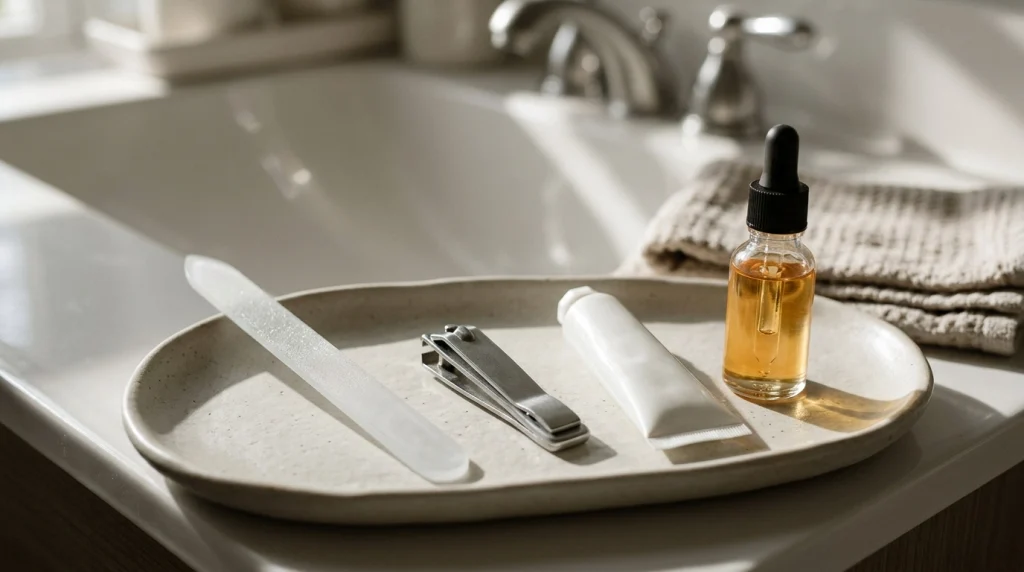
You only need a few basic items for gentle nail maintenance. Choosing the right tools matters more than buying a large manicure kit.
- Fine-grit glass nail file: Helps smooth delicate edges with controlled movements.
- Sharp fingernail clippers: Useful for removing excess length without repeated bending.
- Fragrance-free hand cream: Helps moisturize the skin around your nails after grooming.
- Cuticle oil or petroleum jelly: Provides extra conditioning for dry nail folds and surrounding skin.
If you already have a gentle nail file and properly functioning clippers, there’s no need to replace them automatically.
Recommended Tool
Fine-Grit Glass Nail File
A fine glass nail file is a practical choice when you want to smooth fragile edges without using an aggressive coarse file. Choose one with a comfortable grip and a smooth, intact filing surface.
Explore Glass Nail Files on Amazon
As an Amazon Associate, we earn from qualifying purchases. This link opens Amazon search results, not a personally tested product.
How Do You File and Trim Weak Nails Without Breaking Them?
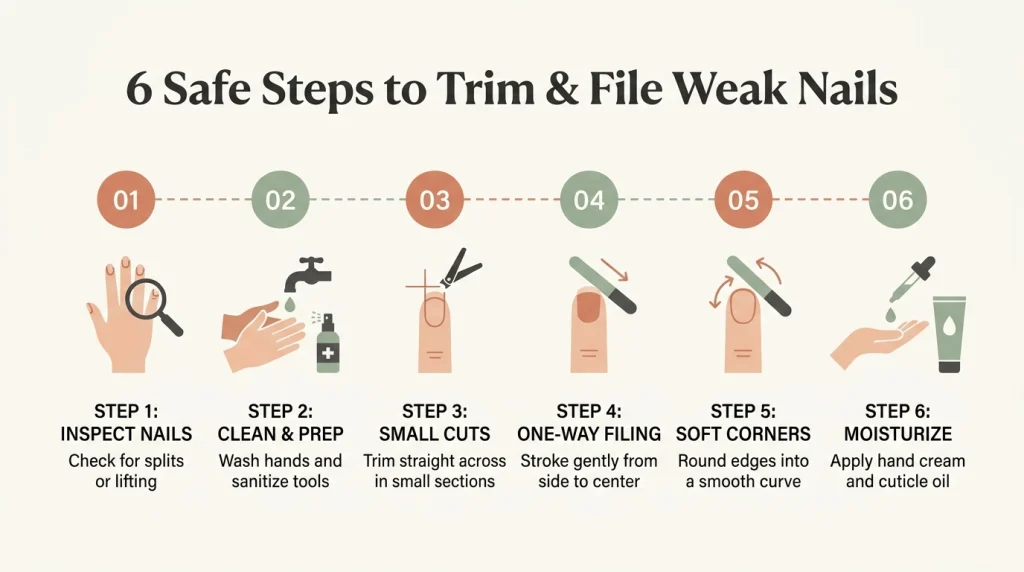
Gentle grooming starts with removing only the length you need. Work slowly and stop if the nail bends, cracks, or becomes uncomfortable.
Important Safety Warning
Do not cut through a crack that extends into the pink attached portion of your nail. If you experience bleeding, severe pain, inflammation, or nail lifting, avoid further trimming and seek appropriate medical advice.
Step 1: Inspect Your Nails Before Cutting
Examine every nail under good lighting. Look for peeling layers, small cracks, lifting, and rough corners. Identify which nails need shortening and which only need gentle filing.
If a nail is already split, avoid putting pressure directly on the damaged area. Never pull off a loose layer to make the surface appear smoother.
Common mistake: Trimming all nails to the same length without checking for existing cracks. This can worsen a damaged nail.
Step 2: Clean Your Hands and Prepare the Tools
Wash your hands with a gentle cleanser and dry them using a clean towel. Ensure your clippers and file are clean and free from visible debris.
If your nails are difficult to clip, trimming after a shower or briefly softening them in lukewarm water may help. Dry your hands afterward and avoid prolonged soaking.
Common mistake: Using dirty, dull clippers. Damaged cutting edges may pinch rather than cleanly cut the nail.
Step 3: Trim Small Sections Instead of Making One Large Cut
Position your clippers along the free edge of the nail, not against the attached nail bed. Remove excess length using small, controlled cuts rather than forcing the clipper through a wide section.
Trim approximately straight across, leaving enough free edge to avoid cutting into sensitive skin. You can soften the corners during filing.
Common mistake: Cutting nails extremely short. This may expose sensitive tissue and make the fingertips uncomfortable.
Step 4: File Gently in One Direction
Hold your nail file at the free edge and use light strokes from the side toward the center. Lift the file between strokes instead of aggressively sawing backward and forward.
Repeat on the opposite side until the edge feels smooth. Don’t press hard or continue filing after you’ve achieved the desired shape.
Common mistake: Filing rapidly with heavy pressure. This removes unnecessary nail material and can worsen fragile edges.
Step 5: Shape the Corners Into a Soft Curve
Use your file to soften sharp corners without narrowing the sides too much. A short, softly rounded or squoval shape is often practical for fragile nails.
Run a fingertip gently along each edge to check for snags. If an edge catches, smooth that particular spot rather than reshaping the entire nail.
Common mistake: Filing deeply into the sidewalls to create a dramatic point. This removes supporting material and may increase breakage.
Step 6: Moisturize the Nails and Surrounding Skin
After filing, apply fragrance-free hand cream across your fingertips, nails, and nail folds. For particularly dry skin, add a little petroleum jelly or cuticle oil.
Regular moisturizing helps manage dryness and keeps the surrounding skin comfortable. It won’t permanently repair a split nail, but it can support healthier everyday maintenance.
Common mistake: Moisturizing only the backs of your hands while ignoring your fingertips and nail folds.
Pro Tip
Check nail edges after your final filing stroke. A snag you barely notice during your manicure can catch on fabric later. Correcting tiny rough spots early is easier than dealing with a larger split.
Which Nail Shape Is Best for Weak Nails?
The most practical nail shape is one that reduces catching and doesn’t require removing too much material from the sides.
Short Round Nails
A softly rounded shape follows the natural contour of your fingertip. It has no sharp points and works well when you prefer minimal length.
Best for: Nails that regularly catch on clothing or break at the corners.
Short Squoval Nails
Squoval nails combine a mostly straight free edge with gently rounded corners. This shape provides a neat appearance without creating the sharp corners of a traditional square manicure.
Best for: Anyone who prefers a slightly squared look but wants smoother edges.
Shapes to Approach Carefully
Long stiletto, coffin, or sharply tapered shapes can place more demand on fragile natural nails. Achieving these shapes may require extra length or extensive filing.
If your nails are actively peeling or splitting, prioritize a manageable short length while the damaged sections grow out.
How Can You Protect Weak Nails From Daily Damage?
Careful filing helps with the nail’s shape, but daily protection makes the biggest difference in avoiding repeated damage.
Wear Gloves During Wet Household Tasks
Cleaning solutions and prolonged water exposure can be hard on brittle nails. Wear properly fitting household gloves while washing dishes, cleaning sinks, or handling detergents.
If moisture accumulates inside your gloves, remove them, dry your hands, and change the lining if necessary. Keeping your hands continuously damp defeats part of the protective benefit.
Learn more about everyday nail care and nail health to build habits that fit your lifestyle.
Avoid Using Your Nails as Tools
Use a proper opener for beverage cans, scissors for packaging, and a scraper designed for removing labels. These simple substitutions help prevent pressure from concentrating on the nail tips.
Even if your nails are short, repeated tapping, picking, and prying can produce new splits.
Be Gentle With Nail Polish Removal
Don’t peel gel polish or artificial nail products away from your natural nails. Doing so may remove superficial layers of the nail plate.
Reduce unnecessary polish removal when your nails are already fragile. If you’re unsure whether to leave them bare, explore natural nail care guidance and prioritize practices that avoid additional trauma.
Protect Your Cuticles
Your cuticle and surrounding nail folds help protect the area where your nail grows. Cutting living skin around the nail base can lead to irritation or infection.
Instead, moisturize the area and avoid aggressive pushing or scraping. Our guide to cuticle anatomy and gentle care explains why this protective barrier matters.
Nail Protection Essential
Reusable Household Cleaning Gloves
Comfortable waterproof gloves help reduce direct contact with detergents and repeated moisture exposure. Choose a pair that fits well and allows you to grip dishes safely.
Explore Protective Gloves on Amazon
As an Amazon Associate, we earn from qualifying purchases.
What Should Your Daily Weak Nail Care Routine Look Like?

Protecting weak nails doesn’t require a complicated schedule. Small, repeatable habits are usually easier to maintain than occasional intensive manicures.
Morning: Moisturize and Check the Edges
- Apply hand cream after washing your hands.
- Check for sharp corners or new snags.
- Keep a small nail file available for minor rough edges.
- Wear gloves before household cleaning.
During the Day: Reduce Unnecessary Stress
- Reapply moisturizer when your hands feel dry.
- Avoid picking at peeling nail layers.
- Use tools rather than your nails to open objects.
- Minimize prolonged contact with detergents.
Evening: Condition and Protect
- Wash away dirt and product residue gently.
- Dry your hands thoroughly.
- Apply a nourishing hand cream to the nails and surrounding skin.
- Use petroleum jelly on especially dry nail folds if needed.
If you want a more complete weekly manicure routine, follow this step-by-step nail care guide for healthy natural nails.
Daily Care Essential
Fragrance-Free Hand Cream
A simple fragrance-free moisturizer is useful when repeated handwashing leaves your fingertips dry. Look for formulas containing glycerin, petrolatum, or other moisturizing ingredients.
As an Amazon Associate, we earn from qualifying purchases.
What Should You Do and Avoid When Caring for Weak Nails?
Do
- Keep nails comfortably short.
- File with gentle strokes.
- Use clean, sharp tools.
- Moisturize after handwashing.
- Wear gloves during cleaning.
- Leave healthy cuticles intact.
Don’t
- Rip off peeling layers.
- File aggressively.
- Cut into the nail bed.
- Over-buff the nail surface.
- Peel off gel enhancements.
- Ignore painful nail changes.
How Often Should You Trim and File Weak Nails?
There’s no single trimming schedule that works for everyone. Nail growth, breakage, lifestyle, and preferred length all influence how frequently you need maintenance.
Many people find that checking their nails every few days and trimming when the free edges become vulnerable is more useful than following a rigid calendar.
You may need only a few gentle filing strokes to remove a snag. Avoid filing the entire nail every day when its shape is already smooth.
For weekly maintenance, inspect all ten nails, shorten excess length if necessary, and apply moisturizer afterward. Keeping the routine brief reduces unnecessary handling.
How Long Does It Take for Weak Nails to Become Stronger?
Improvement depends on why your nails are weak. If environmental exposure and repeated nail trauma are the main causes, changing your habits may help prevent new damage.
However, filing and moisturizer cannot instantly rebuild a nail that has already split. Damaged sections generally need to grow toward the free edge before they can be removed.
Fingernails grow approximately 3 millimeters per month on average, although individual growth rates vary. Replacing an entire fingernail commonly takes around four to six months.
That means meaningful improvement may require weeks or months of consistent protection. Sudden or persistent brittleness deserves medical evaluation rather than relying on cosmetic treatments alone.
What If Your Nails Keep Splitting After Filing?
Problem: The Tips Keep Peeling
Immediate fix: Stop peeling loose layers and gently shorten affected free edges when possible.
Prevention: Reduce repeated wet work and avoid aggressive buffing or scraping the nail surface.
Problem: The Corners Break Easily
Immediate fix: Carefully smooth a sharp corner using a fine file, provided the crack hasn’t reached attached tissue.
Prevention: Maintain a short round or squoval shape and avoid narrow, sharply pointed edges.
Problem: Nails Feel Thin After Gel Removal
Immediate fix: Avoid further scraping, extensive filing, or enhancement removal procedures.
Prevention: Have enhancements removed carefully, reduce repeated mechanical trauma, and moisturize regularly.
Problem: The Nail Splits Into the Pink Area
Immediate fix: Stop filing or clipping the affected area. Protect it from further snagging without applying strong adhesives to injured skin.
Prevention: Keep nails short, protect them from trauma, and obtain medical assessment if there is pain, bleeding, or nail separation.
When Should You See a Dermatologist About Weak Nails?
Most minor cosmetic nail problems can be managed with gentle maintenance, but not every change is caused by everyday wear.
Arrange a medical assessment if you notice:
- Persistent pain or swelling around a nail.
- Redness, warmth, or discharge suggesting infection.
- A nail lifting away from the nail bed.
- Sudden changes affecting multiple fingernails.
- New or changing dark streaks beneath a nail.
- Unexplained thickening, distortion, or discoloration.
- Brittleness that persists despite avoiding obvious damage.
A dermatologist can examine your nails and determine whether further testing or specific treatment is appropriate. Avoid taking high-dose nail supplements without medical guidance, since some supplements have risks and may interfere with laboratory tests.
Frequently Asked Questions About Weak Nails
Q: Is it better to file or cut weak nails?
A: Both can be useful. Use sharp clippers to remove significant length in small sections, then a gentle file to smooth the free edge. For tiny adjustments, filing alone may be sufficient.
Q: What nail file is best for weak nails?
A: A fine-grit glass file or gentle fine emery board is a reasonable option. Use light, controlled movements and avoid coarse files that rapidly remove nail material.
Q: Should you keep weak nails short?
A: Generally, yes. Short nails are less likely to catch on objects and experience bending forces. Leave a comfortable free edge rather than cutting into the sensitive nail bed.
Q: Can cuticle oil repair weak nails?
A: Cuticle oil can help condition dry skin and the surrounding nail area, but it cannot permanently bond a split nail back together. Protecting the nail as damaged sections grow out remains important.
Q: Should you buff peeling nails to make them smooth?
A: Avoid buffing away peeling layers. Buffing removes additional nail material and may make thin nails more vulnerable. Focus on gentle edge maintenance and reducing the causes of peeling.
Final Thoughts: Protect Your Weak Nails With Gentle Care
Learning how to protect, file and trim weak nails is mostly about avoiding unnecessary damage. Keep your nails comfortably short, use gentle tools, smooth rough edges carefully, and protect your hands from repeated moisture and harsh treatments.
Small daily habits can make fragile nails easier to manage while damaged sections grow out. Save this guide to your Pinterest nail care board so you’ll have these steps ready whenever your nails need a little extra attention.

Hi, I’m Jessica, the creator behind Unique Lash & Nails Katy.
I created this website for anyone who loves beautiful nails as much as I do. Here, I share trendy nail designs, seasonal manicure ideas, easy nail care tips, honest product recommendations, and step-by-step guides to help you create salon-worthy nails at home. Whether you’re looking for everyday inspiration or your next favorite nail trend, I hope you’ll find something you love.