Nail Growth and Nail Damage: Causes & Recovery Tips
Quick Answer
Nail growth happens at the nail matrix beneath the skin near your cuticle. Nail damage can result from repeated water exposure, harsh manicures, injuries, or certain health conditions. Your fingernails typically grow about 3 millimeters per month and need approximately four to six months to replace the visible nail plate. To protect healthier new growth, moisturize regularly, keep damaged nails short, avoid peeling off nail products, and wear gloves during wet chores.
Have you ever carefully grown your nails for weeks, only to watch one split or peel just when you reached your favorite length? It’s frustrating, especially when you’re doing everything you think should help.
Understanding nail growth and nail damage can change how you approach your manicure routine. Instead of chasing overnight growth tricks, you can learn what makes nails fragile, what actually supports recovery, and when a nail change needs medical attention.
This guide explains how your nails grow, the most common reasons they become damaged, and the everyday habits that protect beautiful, healthy-looking nails.


How Do Your Nails Actually Grow?
Your nails are made primarily of keratin, a tough structural protein. Although the visible nail plate consists of nonliving cells, new nail cells are continuously produced in living tissue beneath the skin at the base of your nail.
That tissue is called the nail matrix. As new cells form and harden, they gradually push older nail material forward toward your fingertip.
What Parts of Your Nail Affect Growth?
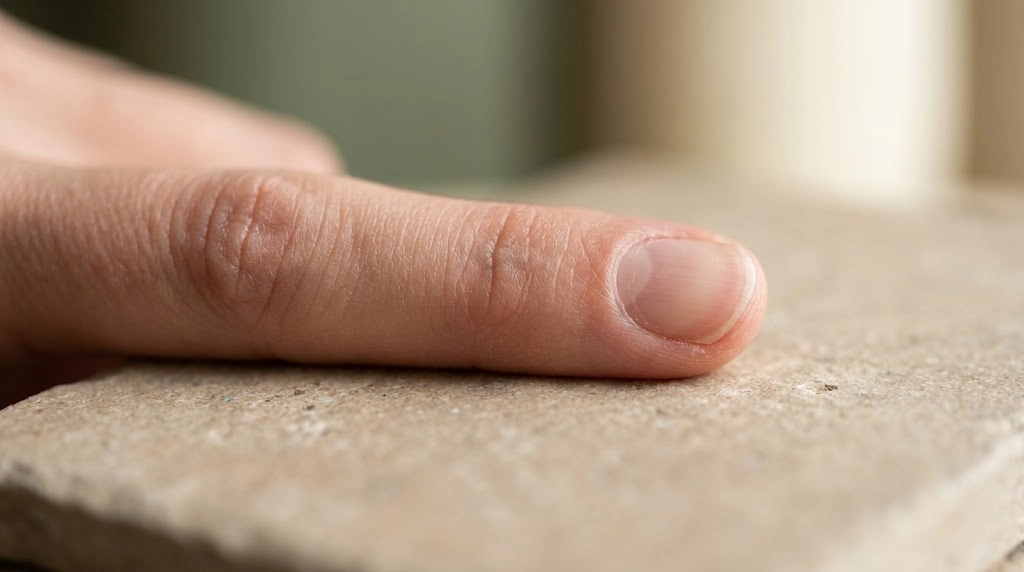
- Nail matrix: Produces most of the nail plate and plays a central role in normal growth.
- Nail plate: The visible, hardened part that you file, paint, and decorate.
- Nail bed: The tissue beneath the attached nail plate that helps support it.
- Cuticle: A protective seal near the base that helps keep irritants and microorganisms away from vulnerable tissue.
- Nail folds: The skin surrounding the sides and base of your nail.
- Free edge: The portion extending beyond your fingertip, where splitting and breakage frequently occur.
The distinction matters because a damaged nail plate cannot heal itself like living skin. The damaged material usually needs to grow forward and be trimmed away.
How Fast Do Fingernails Grow?
Fingernails generally grow around 3 millimeters per month, although the exact rate varies. Toenails grow more slowly, so replacing a damaged toenail can take considerably longer.
Your age, general health, nutrition, injuries, and individual biology can affect nail growth. Some nails may also grow at slightly different rates.
If your tips never seem to get longer, the problem isn’t necessarily slow production. Your nails may be growing normally but repeatedly breaking at the free edge.
For a closer look at this difference, explore our guide on why nails grow slowly.
What Causes Nail Growth Problems and Nail Damage?
Nail damage doesn’t always have one cause. Sometimes a rough manicure weakens the surface. Other times, a repeated household habit creates tiny splits that gradually become noticeable.
Identifying the source of damage helps you choose the right response instead of applying unnecessary treatments.
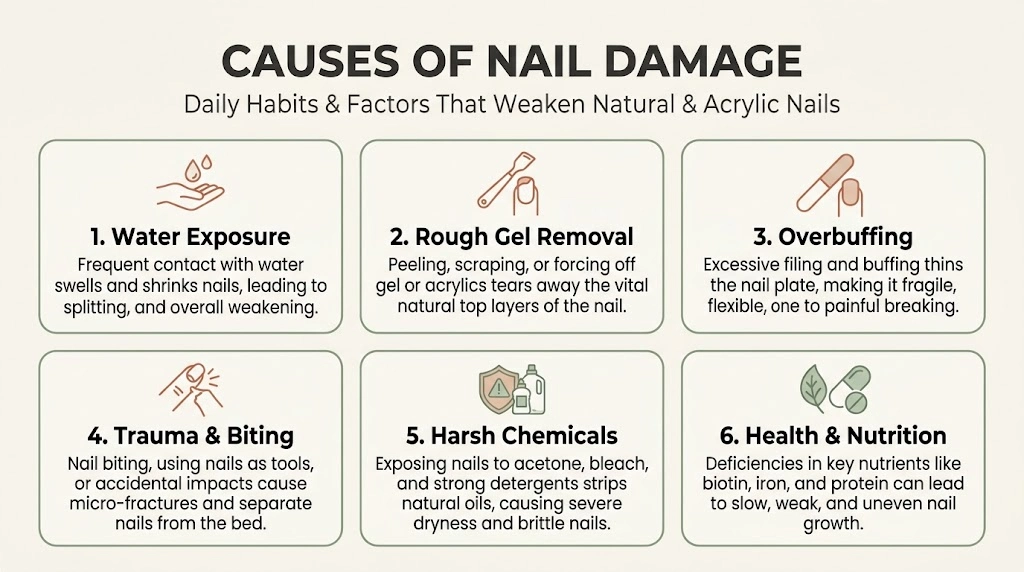
1. Frequent Water Exposure
Your nails absorb water and then release it as they dry. Repeated wetting and drying can contribute to peeling and splitting, particularly when the nails are already fragile.
If you frequently wash dishes, clean bathrooms, or work with water, you may notice that your nail tips become softer and more likely to separate into layers.
What helps: Wear waterproof gloves for wet chores, dry your hands thoroughly, and apply moisturizer afterward. If gloves make your hands sweaty, use a breathable cotton liner when practical.
2. Improper Gel, Acrylic, or Dip Removal
Artificial nails and long-lasting manicures don’t automatically stop nail growth. However, aggressive removal can strip away layers of your natural nail plate.
Peeling off attached gel polish or prying away acrylic enhancements may leave your nails thin, rough, and unusually flexible.
What helps: Follow the appropriate removal method for the product. Avoid forcing off material that remains attached, and ask a qualified nail professional for help with stubborn enhancements.
3. Excessive Filing and Buffing
Filing your nails is useful for maintaining a smooth shape, but repeatedly sanding the top surface removes nail material.
Overbuffed nails may become sensitive or bend more easily. Once that thickness is lost, a strengthening product cannot immediately rebuild the original nail plate.
What helps: Use a fine-grit file on the free edge, apply gentle pressure, and avoid unnecessary surface buffing while your nails recover.
4. Nail Biting, Picking, and Physical Trauma
Using your nails to open containers, scrape labels, or lift objects puts pressure on the free edge. Nail biting and picking can also injure the surrounding skin.
A significant injury close to the nail matrix may disrupt normal nail formation and sometimes cause lasting changes.
What helps: Keep your nails at a manageable length, smooth small snags promptly, and reach for a suitable tool instead of using your fingertips as one.
5. Harsh Chemicals and Irritating Products
Detergents, cleaning products, and repeated exposure to solvents can dry out the skin around your nails. Some nail products may also cause irritation or allergic contact dermatitis.
If you develop itching, burning, redness, or swelling after using a product, don’t assume your nails simply need more moisturizer.
What helps: Stop using products that appear to cause irritation, protect your hands during cleaning, and consult a healthcare professional if the reaction persists.
6. Health Conditions and Nutritional Deficiencies
Some changes in nail growth can be associated with conditions such as iron deficiency, thyroid disorders, psoriasis, or nail infections.
However, nail appearance alone cannot confirm a deficiency or diagnose a medical condition.
Rather than starting iron, zinc, or high-dose biotin supplements based on your nail appearance, ask a healthcare professional whether testing is appropriate.
How Can You Recognize Different Types of Nail Damage?
Knowing what you’re looking at makes it easier to decide whether simple protective care is enough or further evaluation is needed.
Peeling Nail Layers
When the tips separate into thin horizontal layers, your nails may have experienced repeated moisture exposure, aggressive filing, or manicure-related trauma.
Keep the peeling edge short and smooth rather than pulling loose layers away.
Brittle Nails That Split Easily
Brittle nails may crack at the corners or split along the free edge. Repeated wet work, dryness, and mechanical stress are possible contributing factors.
Protecting the edges and reducing unnecessary exposure can help prevent additional breaks.
Thin or Flexible Nails
If your nails bend unusually easily after enhancement removal, surface thinning may be involved.
Don’t try to fix this by aggressively buffing away the roughness. Protect the remaining nail while fresh material grows forward.
Ridges or Grooves
Fine vertical ridges can be a normal variation, particularly with aging. Deep horizontal grooves, however, may appear after an interruption in nail growth associated with illness, injury, or other stressors.
New, pronounced, or unexplained changes deserve professional assessment.
Discoloration or Nail Lifting
Dark polish can leave temporary staining, but persistent yellowing, thickening, crumbling, or lifting may indicate something other than cosmetic damage.
A new unexplained dark stripe, especially one that changes, should be examined promptly by a dermatologist.
Compare your symptoms with our detailed guide to signs of unhealthy nails.
Can Damaged Nails Grow Back Healthy?
In many cases, yes. If the nail matrix remains healthy and functional, it can continue producing new nail material even after the visible plate has been damaged.
However, this doesn’t mean a split, peeled, or overfiled nail instantly repairs itself.
The practical goal is to prevent further damage while the affected area gradually moves toward the fingertip.
Recovery depends on the severity and location of the injury. Minor surface damage may grow out normally, while deep damage to the nail matrix can occasionally create permanent changes.
Warning
If your nail has suffered a deep injury, is bleeding significantly, has lifted away from its bed, or is accompanied by severe pain, seek medical care. Do not attempt to glue a painful split into attached tissue or cover a suspected infection with artificial nails.
Learn more about expected recovery in our article on whether a damaged nail can regrow.
What Is the Best Routine for Protecting Damaged Nails?
You don’t need an elaborate collection of nail treatments. A consistent routine focused on moisture, gentle grooming, and protection is a practical starting point for ordinary cosmetic damage.
Morning: Moisturize and Inspect
After washing and drying your hands, apply a small amount of fragrance-free hand cream around your nails and cuticles.
Check for rough corners that could catch on clothing. Smooth them carefully with a fine file instead of tearing them away.
During the Day: Reduce Repeated Stress
Wear gloves when doing dishes or using cleaning chemicals. Avoid keeping your hands wet longer than necessary.
If your hands become dry after washing, apply moisturizer again. You don’t need to wait until the skin feels tight or cracked.
Evening: Protect Your Cuticles
Before bed, massage a little cuticle oil or plain moisturizer around the nail folds. A small amount of petroleum jelly may also help protect very dry skin by reducing moisture loss.
There’s no need to push or cut the cuticle aggressively. Keeping this protective area intact helps reduce unnecessary irritation.
Weekly: Maintain a Comfortable Nail Length
Once a week, inspect the length and shape of your nails. Trim any weak or snagging edges before they become deeper splits.
A short, softly rounded shape is often easier to manage while your tips are fragile.
Pro Tip
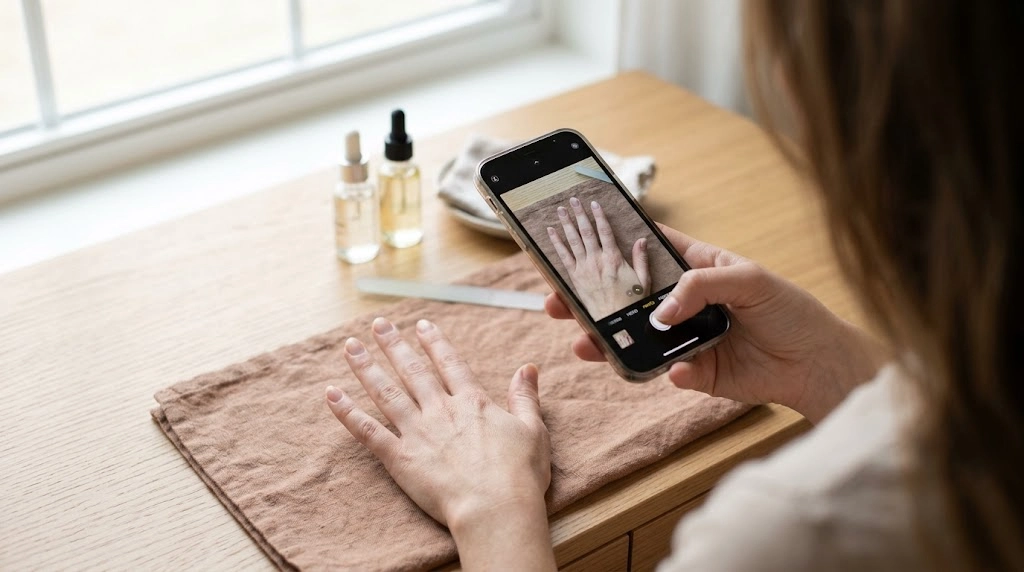
Take a clear photo of your bare nails once every four weeks using similar lighting. Compare the nail base and damaged tips. This can help you see whether newer, smoother growth is gradually replacing the damaged area.
How Long Does Nail Damage Take to Grow Out?
Patience matters because nail growth is gradual. You may notice improvements in surrounding skin and fewer fresh breaks relatively quickly, but an already-damaged nail plate needs time to move forward.
First Week
Moisturizing and avoiding irritating habits can make dry surrounding skin feel more comfortable. Smoothing rough tips may reduce snagging immediately.
Weeks Two to Four
If repeated damage has stopped, you may notice fewer new splits. Nails that are growing normally will still have damaged material toward the ends.
Months Two to Three
Newer nail growth may become more noticeable near the cuticle. Depending on the original injury, damaged areas may gradually approach the free edge.
Months Four to Six
Many fingernails can replace most or all of their visible plate over approximately four to six months. Individual growth rates vary, and significant matrix injuries may not follow this pattern.
If your nail changes continue getting worse despite gentle care, don’t simply wait for another growth cycle. Have the problem evaluated.
What Should You Do and Avoid for Healthier Nail Growth?
Do
- Moisturize after washing your hands.
- Keep fragile nails short.
- Wear gloves for wet chores.
- Use a gentle nail file.
- Eat a balanced diet.
- Remove nail products properly.
- Keep manicure tools clean.
Don’t
- Peel off attached gel polish.
- Overbuff the nail surface.
- Pick or bite your cuticles.
- Use nails to open packaging.
- Apply harsh DIY growth mixtures.
- Take supplements unnecessarily.
- Ignore painful nail changes.
Which Nail Care Products Are Actually Helpful?
Products cannot replace healthy nail growth, but a few simple tools can make protecting damaged nails easier.
Cuticle Oil for Dry Nail Folds
A basic cuticle oil can help condition the skin surrounding your nails. Look for a product you enjoy using consistently rather than one that promises dramatic overnight growth.
Recommended Product Type
Jojoba-Based Cuticle Oil
Useful for conditioning dry cuticles and making regular nail-fold moisturizing easier.
As an Amazon Associate, we earn from qualifying purchases.
Fine-Grit Nail File for Fragile Tips
A gentle file helps remove small snags before they turn into major splits. Use light pressure and avoid repeatedly filing the top of your nail.
Recommended Product Type
Fine-Grit Glass Nail File
A reusable grooming tool for carefully shaping natural nails and smoothing rough free edges.
As an Amazon Associate, we earn from qualifying purchases.
Protective Gloves for Household Cleaning
If washing dishes repeatedly leaves your nails soft or peeling, a pair of comfortable waterproof cleaning gloves may be more useful than another strengthening treatment.
Recommended Product Type
Reusable Waterproof Cleaning Gloves
Help limit repeated exposure to water and detergents during everyday household chores.
As an Amazon Associate, we earn from qualifying purchases.
Do Nail Hardeners and Growth Treatments Really Work?
Some nail coatings may temporarily reduce bending or improve the appearance of a fragile nail. However, not every hardener is suitable for every type of damage.
Products that make nails very rigid may not be comfortable or useful for nails already prone to snapping. Certain ingredients can also irritate sensitive skin.
Similarly, nail growth serums and oils shouldn’t be expected to make damaged nail material regenerate instantly.
When choosing a product, focus on its specific purpose, follow the manufacturer’s instructions, and stop using it if you experience irritation.
For mild cosmetic damage, protective habits are still the foundation of your routine.
When Should Nail Damage Be Checked by a Dermatologist?
Not every split or ridge means something serious. But some symptoms suggest that ordinary nail care isn’t enough.
Seek Professional Evaluation
Arrange medical assessment for persistent nail lifting, unexplained discoloration, significant thickening, deep new grooves, or changes affecting several nails. Seek prompt care for increasing pain, swelling, pus, spreading redness, or a new unexplained dark streak. Severe injuries to the nail base also need assessment.
A healthcare professional can examine the nail and decide whether testing or treatment is needed. Avoid hiding unexplained changes beneath opaque polish or artificial enhancements until the cause is understood.
If you’re dealing with mild surface damage instead, our guide on repairing a damaged nail at home explains practical protective care.
Frequently Asked Questions About Nail Growth and Nail Damage
Q: Can damaged nails grow back normally?
A: Often, yes. If your nail matrix remains functional, it can produce new nail material. The damaged plate gradually moves toward the tip and can be trimmed away. Severe matrix injuries may cause lasting changes.
Q: Does cutting your nails make them grow faster?
A: No. Trimming doesn’t directly speed up nail production at the matrix. However, keeping fragile nails short can reduce snagging and breakage, making it easier to maintain healthy-looking length.
Q: Can gel manicures permanently damage your nails?
A: Routine gel use doesn’t automatically cause permanent damage. However, aggressive filing, picking, or removal can thin the nail plate. Significant injury to the matrix may result in longer-lasting changes.
Q: Does cuticle oil make nails grow faster?
A: Cuticle oil helps condition dry skin around the nails, but strong evidence that it substantially accelerates nail growth is lacking. Its main benefit is supporting a comfortable, well-maintained nail-care routine.
Q: How long should you give damaged nails to recover?
A: A fingernail often takes approximately four to six months to grow out completely. You may notice fewer fresh breaks sooner, but existing damaged sections require time to move forward. Persistent or worsening changes need professional assessment.
What Is the Most Important Thing to Remember About Nail Growth and Nail Damage?
Healthy-looking nails come from protecting the growth process, not forcing instant results. Your nail matrix produces new material, while your everyday habits influence how well that material survives without breaking, peeling, or splitting.
Keep your nails gently filed, moisturize regularly, protect them during wet chores, and avoid aggressive manicure removal. Consistency gives your new nail growth a better chance to remain intact.
Save this guide to your Pinterest nail-care board so you can return to these tips whenever your nails need extra attention.

Hi, I’m Jessica, the creator behind Unique Lash & Nails Katy.
I created this website for anyone who loves beautiful nails as much as I do. Here, I share trendy nail designs, seasonal manicure ideas, easy nail care tips, honest product recommendations, and step-by-step guides to help you create salon-worthy nails at home. Whether you’re looking for everyday inspiration or your next favorite nail trend, I hope you’ll find something you love.