Why Do Nails Have Ridges? Causes and Care Tips
Quick Answer
Nails develop ridges for several reasons, including normal aging, dryness, repeated nail trauma, skin conditions, and sometimes underlying health problems. Vertical ridges running from cuticle to tip are common and usually harmless. Horizontal grooves may develop when nail growth is temporarily interrupted by illness or injury. New, deep, painful, or discolored changes deserve medical evaluation.
Have you ever removed your nail polish, looked closely at your natural nails, and noticed tiny raised lines running across the surface? It’s easy to wonder whether you’ve damaged your nails or missed an important sign of poor health.
The reassuring truth is that many nail ridges are completely normal. However, the direction, depth, and accompanying symptoms can help you understand whether they need attention.
This guide explains why nails have ridges, what different patterns mean, and how you can care for your nails without relying on misleading beauty hacks.


What Are Nail Ridges, and Why Do They Appear?
Nail ridges are raised lines, shallow grooves, or uneven areas that appear on the surface of your fingernails or toenails. They develop when the nail plate grows with slight differences in thickness or texture.
Your nails are made primarily of keratin, a strong structural protein. New nail cells form in the nail matrix, located mostly beneath the skin at the base of the nail. As new cells develop, they push the existing nail plate forward.
If the nail matrix produces cells unevenly or temporarily slows production, the resulting nail may contain visible ridges.
The appearance can vary considerably:
- Vertical ridges: Lines extending from the cuticle toward the nail tip.
- Horizontal ridges: Grooves extending from one side of the nail to the other.
- Shallow surface lines: Subtle changes that become more noticeable under certain lighting.
- Deep grooves: More pronounced indentations that may indicate interrupted nail growth.
- Irregular texture: Roughness, pitting, or splitting that may accompany other nail conditions.
Not every visible line has the same cause. In particular, raised ridges should not be confused with dark pigmented streaks, which require a different assessment.
What Causes Vertical Ridges in Fingernails?
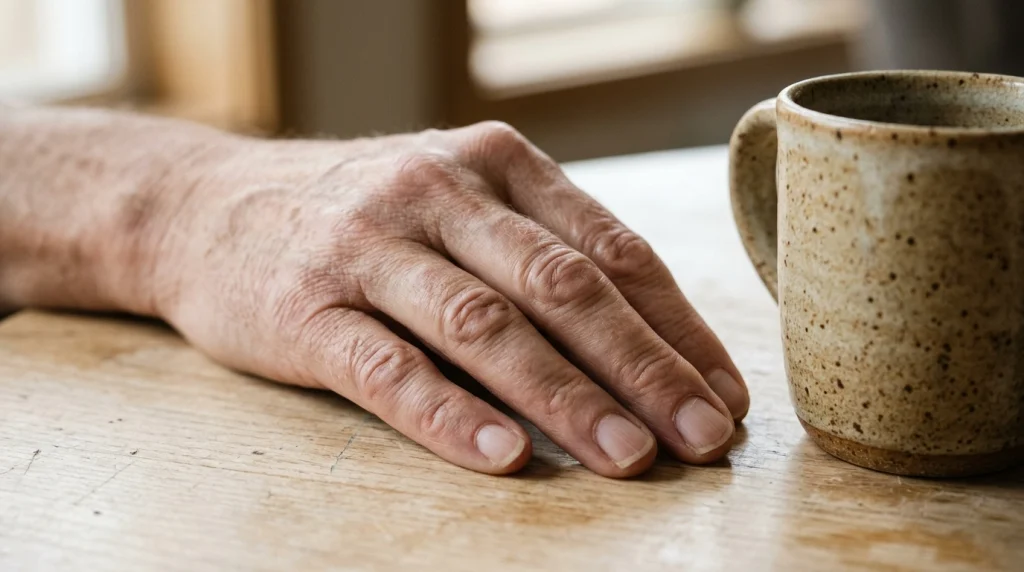
Vertical nail ridges, medically called longitudinal ridges, run lengthwise along the nail. These lines are especially common as you get older and generally do not mean something is wrong.
1. Natural Aging
Normal aging is one of the most common explanations for vertical nail ridges. As your nail matrix changes over time, the nail plate may develop increasingly noticeable lengthwise lines.
You might first notice these ridges in adulthood, particularly when your nails are bare or exposed to bright light.
Age-related ridges generally develop gradually, affect multiple nails, and do not cause pain. They may remain visible even when your nails are otherwise healthy.
Because the ridges reflect natural nail growth, there’s no guaranteed treatment that permanently removes them.
2. Dry Nails and Surrounding Skin
Dryness can make existing ridges more noticeable. Nails may appear dull, rough, or brittle when they’re frequently exposed to water, detergents, and harsh manicure products.
Repeated wetting and drying can also contribute to peeling and splitting, particularly at the nail tips.
Although moisturizer won’t necessarily eliminate ridges produced by the nail matrix, it can improve the appearance and comfort of dry nails.
If dryness is a regular problem, follow a consistent daily nail-care routine that emphasizes gentle maintenance and protection.
3. Repeated Nail Trauma
Your manicure habits can affect the appearance of your nails. Aggressive filing, picking at cuticles, and removing artificial nails improperly may injure the nail plate or surrounding growth area.
Repeatedly pushing back or picking at the skin near the nail base can sometimes create unusual ridges, particularly on the thumbnails.
Look for changes that develop after a new manicure technique or a period of frequent nail picking.
If the problem is related to physical damage, reducing the repeated injury gives new nail a better opportunity to grow normally.
4. Skin Conditions
Some skin conditions can affect the nail unit. Eczema may contribute to dry skin and changes in nail texture, while conditions such as psoriasis and lichen planus may cause more substantial nail abnormalities.
These conditions don’t always produce simple vertical ridges. Depending on the diagnosis, you may also notice pitting, roughness, splitting, or changes in nail thickness.
If you have persistent nail changes together with irritated skin, a dermatologist can help identify the cause.
5. Certain Medical Conditions
Occasionally, nail ridges appear alongside health problems such as thyroid disease or nutritional deficiencies.
However, vertical ridges alone are not reliable evidence of either condition. Doctors consider additional symptoms, medical history, examinations, and sometimes laboratory testing before making a diagnosis.
If your ridges occur with significant fatigue, unusual hair loss, persistent brittle nails, or other unexplained symptoms, discuss the combination with your healthcare professional.
Why Do Nails Develop Horizontal Ridges?
Horizontal nail ridges run across the width of the nail rather than along its length. Deep horizontal grooves may be called Beau’s lines.
These grooves develop when nail growth slows significantly or temporarily stops. Once growth resumes, the affected section moves outward as the nail continues growing.
Illness or High Fever
A serious illness can temporarily interfere with nail growth. Certain infections involving high fever, major physical stress, or hospitalization may result in Beau’s lines appearing afterward.
Because fingernails grow slowly, you might notice the groove weeks after the original illness rather than immediately.
If several nails develop horizontal grooves at approximately the same time, a healthcare professional may ask whether you recently experienced a significant illness.
Physical Injury
An injury near the base of a nail can disturb the nail matrix. For example, accidentally crushing a finger or striking the nail against a hard object may produce a groove that becomes visible as the nail grows.
When only one nail has a horizontal ridge, local trauma is one possible explanation.
However, it’s important not to assume an injury is responsible when you cannot remember one.
Medical Treatments or Ongoing Conditions
Certain medical treatments, including chemotherapy, may temporarily affect nail growth. Some inflammatory or systemic conditions may also contribute to repeated horizontal grooves.
The presence of Beau’s lines doesn’t establish a diagnosis. Their significance depends on your overall health, the number of affected nails, and whether the grooves keep recurring.
Warning
If deep horizontal grooves appear suddenly, affect several nails, or repeatedly return, arrange a medical assessment. Covering the grooves with polish doesn’t address the underlying reason your nail growth changed.
How Can You Tell Vertical and Horizontal Nail Ridges Apart?
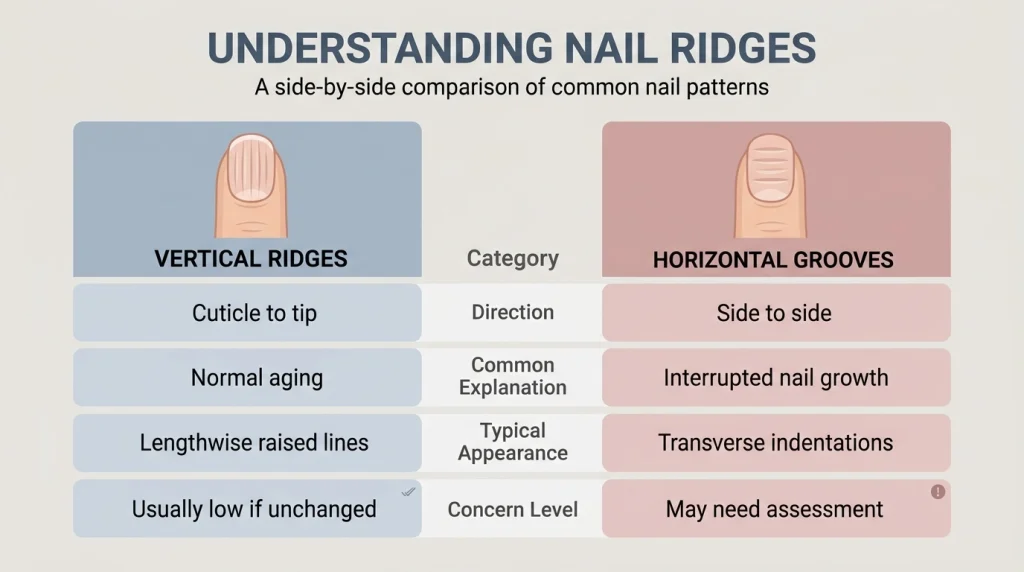
The easiest way to distinguish these patterns is to look at the direction of the lines and whether the nail surface has deep indentations.
| Feature | Vertical Ridges | Horizontal Grooves |
|---|---|---|
| Direction | Cuticle to tip | Side to side |
| Common explanation | Normal aging | Interrupted nail growth |
| Typical appearance | Lengthwise raised lines | Transverse indentations |
| Concern level | Usually low if unchanged | May need assessment |
A single shallow vertical line that has looked the same for years is usually less concerning than a new deep horizontal groove affecting several nails.
Still, the pattern is only one clue. A healthcare professional can determine whether other findings require investigation.
Can Vitamin Deficiencies Cause Nail Ridges?
Yes, some nutritional deficiencies can contribute to nail abnormalities. However, most nail ridges are not caused by vitamin deficiencies, and you cannot diagnose a deficiency simply by looking at your fingernails.
Iron Deficiency
Iron deficiency may be associated with brittle nails and, in some cases, spoon-shaped nails called koilonychia. Certain people also develop changes in nail texture.
If nail changes occur alongside unusual tiredness, breathlessness, or other symptoms, your healthcare provider may recommend appropriate testing.
Zinc Deficiency
Zinc contributes to normal cell growth and repair. A significant deficiency can affect several tissues, including nails, and may sometimes be associated with changes such as Beau’s lines.
But taking extra zinc when you don’t need it won’t necessarily improve your nails. Excess supplementation can also cause health problems.
Protein and Overall Nutrition
Your body needs sufficient protein and energy to maintain healthy tissue growth. Severe nutritional problems can affect nail development, although small ridges in otherwise healthy nails are not proof that your diet is inadequate.
Focus on a balanced eating pattern with varied protein sources, vegetables, fruits, whole grains, and other nutrient-rich foods.
Avoid starting high-dose iron, zinc, or biotin supplements based on nail appearance alone. Ask a qualified clinician whether testing or supplementation is appropriate.
When Should You Worry About Ridges in Your Nails?
Most mild vertical nail ridges don’t require treatment. What matters more is whether your nails have developed additional changes.
Arrange a medical evaluation if you notice any of these symptoms:
- Deep horizontal grooves that develop without an obvious explanation.
- Sudden changes affecting several fingernails or toenails.
- Nail splitting accompanied by significant pain or bleeding.
- Persistent redness, warmth, swelling, or discharge near the nail.
- Unexplained changes in nail shape, including spoon-shaped nails.
- Thickening, lifting, or persistent unusual discoloration.
- A new or changing brown or black streak, especially on one nail.
- Ridges accompanied by other persistent or unexplained health symptoms.
A new dark streak is particularly important to assess because it may occasionally indicate a serious condition, including nail melanoma. Don’t simply assume that it’s another harmless ridge.
For a wider explanation of suspicious changes, explore this guide to the signs of unhealthy nails.
Important Safety Reminder
Nail appearance cannot diagnose an illness by itself. If a change is new, worsening, painful, or accompanied by discoloration, have it evaluated rather than attempting to conceal it with nail enhancements.
How Can You Improve the Appearance of Ridged Nails?
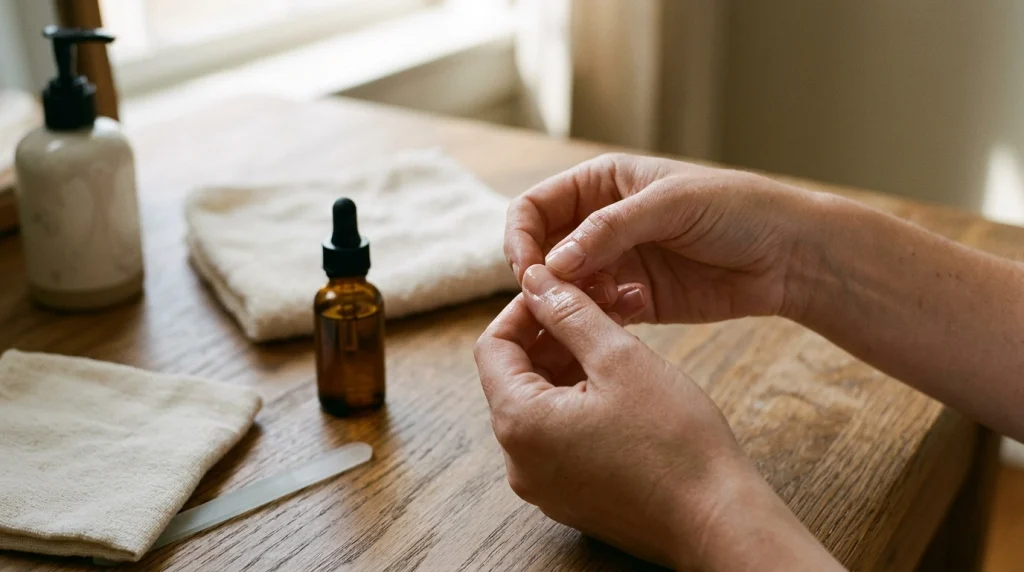
If your nail ridges are harmless and your healthcare professional has ruled out concerning causes, a gentle care routine may make your nails look and feel better.
The objective isn’t to erase every natural line. Instead, protect the nail plate, support the surrounding skin, and avoid introducing additional damage.
1. Moisturize Your Nails and Cuticles Daily
Apply hand cream to your nails and the surrounding skin after washing your hands and before bed.
Look for moisturizing ingredients such as glycerin, petrolatum, or ceramides. A fragrance-free product is particularly helpful if your skin becomes irritated easily.
For additional conditioning, you can massage a small amount of cuticle oil around the nail folds.
You may find a jojoba cuticle oil pen convenient for keeping in your handbag or at your desk.
Remember that moisturizing can reduce dryness and improve cosmetic appearance, but it cannot reverse all ridges caused by aging or medical conditions.
2. Avoid Excessive Nail Buffing
Buffing can temporarily smooth minor surface irregularities. Unfortunately, repeated or forceful buffing removes layers from the nail plate.
That may leave your nails thinner, weaker, and more vulnerable to peeling.
If you choose to buff an otherwise healthy nail, use an extremely light touch and avoid trying to remove deep grooves.
When ridges are pronounced, it’s generally better to leave the nail surface alone and address the underlying cause if necessary.
3. Protect Your Hands From Cleaning Chemicals
Dishwashing detergents, cleaning products, and repeated exposure to water can dry the skin around your nails and contribute to brittle nail problems.
Wear task-appropriate protective gloves during wet household chores. Dry your hands afterward and apply moisturizer.
Reusable household cleaning gloves may be useful for ordinary dishwashing and cleaning, provided they’re suitable for the products you’re using.
4. Keep Your Nails at a Practical Length
Long nails are more likely to catch on objects, especially when they are already brittle or uneven.
Trim your nails regularly and gently file rough edges. A short oval or squoval shape may be easier to maintain if your nails frequently split.
If your nail plate has already been damaged, the safest approach is often to protect it as new nail grows.
Our guide on repairing a damaged nail at home explains how to manage minor cosmetic damage without aggressive treatments.
5. Choose Gentle Manicure Techniques
You don’t necessarily have to give up nail polish because you have ordinary vertical ridges.
However, repeated aggressive preparation and removal can make your nail texture worse.
Ask your nail technician to avoid excessive filing of the natural nail surface. Never peel off gel, dip, or acrylic products.
If your nails are sore, extremely thin, or visibly damaged, avoid enhancements until the issue has been assessed and the nails have recovered sufficiently.
6. Consider a Ridge-Filling Base Coat
When your nails are healthy and the ridges are purely cosmetic, a ridge-filling base coat can create the appearance of a smoother surface beneath regular nail polish.
Unlike aggressive buffing, this approach doesn’t require sanding away the raised portions of your nail.
You can explore a nail ridge-filling base coat if you want a smoother-looking manicure.
Choose a formula you tolerate well, follow the manufacturer’s instructions, and discontinue use if irritation develops.
Don’t use cosmetic products to conceal unexplained deep grooves, painful changes, or unusual discoloration before obtaining medical advice.
Pro Tip
Take a clear photograph of your bare nails once a month under similar lighting. Comparing images can help you notice whether a new groove is moving outward with nail growth or whether additional changes are developing.
What Should You Avoid When You Have Nail Ridges?
Some popular nail beauty techniques can make your nails appear smoother for a short time while causing more damage in the long run.
Do
- Moisturize nails daily.
- Use gentle nail files.
- Protect hands during chores.
- Maintain clean nail tools.
- Watch for new changes.
- Seek medical advice when appropriate.
Don’t
- Over-buff nail surfaces.
- Pick or cut living skin.
- Peel off gel polish.
- Use harsh DIY remedies.
- Take unnecessary supplements.
- Hide suspicious nail changes.
One particularly common mistake is treating every ridge as a surface flaw that needs to be filed away.
The nail plate cannot regenerate material that has already been removed. Once the surface has been thinned, you need to protect it while new nail grows forward.
If you frequently wear manicures, reviewing these common nail health mistakes can help you avoid unnecessary damage.
How Long Does It Take for Nail Ridges to Disappear?
The answer depends on what caused the ridges.
Age-related vertical ridges may persist indefinitely because they reflect ongoing changes in how your nails grow. Moisturizer or a cosmetic base coat may make them less noticeable, but neither permanently changes the nail matrix.
Horizontal grooves caused by a temporary interruption in growth may gradually move toward the tip as the nail grows.
Fingernails generally require several months to grow from base to tip, while toenails take substantially longer.
Consequently, you shouldn’t expect a noticeable groove to disappear within a few days.
When a medical condition contributes to nail changes, treating the underlying problem may help new nail grow more normally. Visible improvement still takes time.
If grooves keep appearing instead of growing out, contact your healthcare professional for an assessment.
Can You Prevent Nail Ridges From Developing?
You cannot prevent every type of nail ridge. Normal age-related changes are part of how your body develops over time.
However, you can reduce avoidable nail damage by following a few practical habits.
- Keep nails moisturized: Apply cream regularly, especially after washing.
- Limit unnecessary trauma: Avoid picking at nails, cuticles, and surrounding skin.
- Choose careful manicures: Minimize aggressive filing and removal methods.
- Protect nails during chores: Reduce repeated exposure to water and irritating chemicals.
- Eat a varied diet: Support overall health without relying on unproven nail supplements.
- Observe unusual changes: Pay attention to new grooves, nail lifting, discoloration, or pain.
Consistency is more valuable than complicated treatments. A realistic routine you can maintain is more useful than an expensive product that promises to eliminate every ridge.
Frequently Asked Questions About Nail Ridges
Q: Are vertical ridges in nails normal?
A: Yes. Mild vertical ridges are common, especially with aging, and usually don’t indicate a health problem. New or unusual changes should still be discussed with a healthcare professional.
Q: What deficiency causes ridges in fingernails?
A: Some iron or zinc deficiencies may contribute to nail abnormalities, but ridges alone cannot diagnose a deficiency. Testing is appropriate only when your medical history and symptoms support it.
Q: Can stress cause horizontal nail ridges?
A: Significant physical stress, such as severe illness, can temporarily interrupt nail growth and produce Beau’s lines. Ordinary daily emotional stress doesn’t automatically explain new horizontal grooves.
Q: Should I buff ridges off my nails?
A: Avoid aggressive buffing. It removes part of the nail plate and can leave nails thin and brittle. For harmless cosmetic ridges, a ridge-filling base coat is generally a gentler option.
Q: Can nail ridges go away naturally?
A: Some ridges caused by temporary injury or illness gradually grow out. Age-related vertical ridges often remain. How quickly nail texture improves depends on the cause and the rate of nail growth.
What Is the Most Important Thing to Remember About Nail Ridges?
Most vertical nail ridges are harmless, and you don’t need to chase perfectly smooth nails to have healthy hands. Gentle moisturizing, protective habits, and careful manicures can improve the appearance of dry or damaged nails.
Pay closer attention to deep horizontal grooves, sudden changes, pain, swelling, or unusual discoloration. Understanding the difference between normal texture and concerning symptoms helps you make better nail-care decisions.
Save this guide on Pinterest so you can revisit these nail-health tips whenever you notice a change in your natural nails.

Hi, I’m Jessica, the creator behind Unique Lash & Nails Katy.
I created this website for anyone who loves beautiful nails as much as I do. Here, I share trendy nail designs, seasonal manicure ideas, easy nail care tips, honest product recommendations, and step-by-step guides to help you create salon-worthy nails at home. Whether you’re looking for everyday inspiration or your next favorite nail trend, I hope you’ll find something you love.