How to Protect Nails During Gardening
Quick Answer
To protect nails during gardening, keep them comfortably short, smooth any snagged edges, and wear gloves suited to the job. Use sturdy gloves for thorns, grippy gloves for digging, and waterproof protection for prolonged wet work. Afterward, wash away soil gently, dry your hands thoroughly, and moisturize your nails and cuticles. Never scrape packed dirt out with a sharp tool.
Time needed
5 minutes before and after
Difficulty
Beginner
Items needed
Gloves, file, soap, cream
Protection lasts
Each gardening session
You shouldn’t have to choose between a pretty manicure and an afternoon planting flowers. Unfortunately, soil, wet gloves, rough tools, and unexpected snags can leave your nails looking worse for wear. The solution isn’t avoiding your garden. It’s using a few small habits that protect your natural nails, polish, and surrounding skin without making every planting session feel complicated.


Why Can Gardening Be So Hard on Your Nails?
Gardening combines several things that nails don’t love: friction, impact, repeated moisture, and contact with rough materials. When you press your fingertips into compact soil or pull stubborn weeds, the free edges of your nails can bend or catch. A tiny snag may become a split, especially if your nails are already peeling.
Water is another issue. Repeated wetting and drying can contribute to brittle, splitting nails. Meanwhile, damp gloves can keep the skin around your nails wet longer than intended. Soil itself doesn’t automatically cause a nail infection, but damaged skin and persistently damp conditions can make nail problems more likely.
Long extensions add another challenge. Their extra length creates leverage when you grip a trowel or press against a pot. If you’ve been dealing with splitting already, our guide on helping damaged nails recover explains why reducing repeated trauma matters more than disguising it.
Warning
Thorns, splinters, sharp tools, and fertilizers can injure or irritate your hands. Wear task-appropriate protective gloves and follow product-label precautions. If you get a deep puncture, significant bleeding, worsening redness, swelling, or pus, seek medical advice rather than covering the area with polish or glue.
What Do You Need to Protect Your Nails Before Gardening?
Keep your setup simple. You probably already own most of these items, and you don’t need a special salon kit to tend your plants safely.
As an Amazon Associate, we earn from qualifying purchases through qualifying affiliate links below.
- Well-fitting gardening gloves: Choose a style with enough grip to hold tools without bunching around your fingertips.
- Fine nail file: A gentle emery board or glass file smooths tips that could snag inside your gloves.
- Mild soap and lukewarm water: These are usually enough for your post-garden hand wash.
- Soft nail brush: Use a soft nail cleaning brush only when soil remains around your fingertips.
- Hand cream or cuticle oil: Reapply moisture once your hands are clean and dry.
- Optional cotton glove liners: These can make longer sessions more comfortable if your hands get sweaty.
Which Gardening Gloves Protect Nails Best?
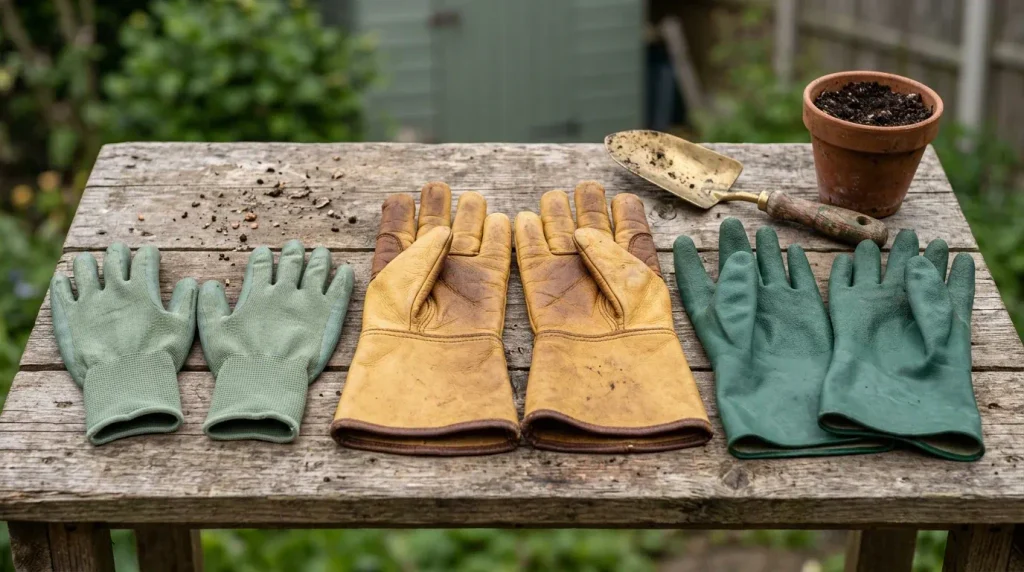
The best glove is the one that matches the task. A thin glove that gives you excellent control while planting seeds may offer too little puncture protection when you’re cutting back a thorny rosebush.
For planting, potting, and pulling small weeds
Choose snug nitrile-coated gardening gloves with a flexible fabric back. The coated palm helps you grip pots and tools, while a close fit limits the nail-catching folds that loose gloves create. Check the manufacturer’s description: a coated palm does not mean the whole glove is waterproof.
For pruning thorny plants
Use thorn-resistant gardening gloves designed for the plant you’re handling. Look for reinforced fingertips and, for roses or brambles, longer cuffs. No glove is completely puncture-proof, so handle thorny stems carefully and use appropriate pruners instead of your fingertips.
For prolonged watering or wet, muddy jobs
Choose waterproof gloves rated for wet work and change them if water gets inside. A dry liner may help with comfort, but it isn’t a substitute for drying your hands when you finish. For light, dry weeding in warm weather, breathable gloves may be more comfortable than heavy waterproof ones.
Pro Tip
Test gloves by making a fist and picking up a small trowel before you start. If the fingertips fold over your nails or your hand slides inside, try another size. A secure fit gives you more control and less nail-to-fabric friction.
How Do You Protect Your Nails During Gardening Step by Step?
Use this eight-step routine whenever you’re about to dig, plant, prune, or weed. It protects your manicure while keeping cleanup manageable.
1Trim and Smooth Your Nail Edges
Check each fingertip for cracks or sharp corners. Keep nails at a length that won’t press firmly against your glove fingertips, then file small snags gently in one direction. You can keep a pretty rounded or squoval shape without sacrificing a practical length.
Common mistake: Leaving one rough corner because it looks tiny. That edge can catch on glove fabric and start a larger tear.
2Check Your Cuticles and Existing Damage
Look for hangnails, tender skin, or a partially lifted enhancement. Don’t cut your cuticles or peel loose polish before heading outside. If a nail is painful, lifting from the nail bed, or surrounded by inflamed skin, avoid tasks that press on it until you’ve addressed the problem.
Common mistake: Cutting healthy cuticle tissue to make the nail look tidy. The cuticle helps protect the area where your nail grows.
3Put On Clean, Dry, Task-Appropriate Gloves
Make sure the glove interiors are dry and shake out any grit from a previous session. Pull each fingertip into place without forcing long nails into a cramped seam. Switch to reinforced gloves for thorns instead of expecting lightweight planting gloves to do every job.
Common mistake: Reusing damp gloves. A moist interior makes your hands uncomfortable and keeps the nail area wet longer.
4Use Tools Instead of Your Fingernails
Loosen hard soil with a trowel, lift weeds with a weeder, and use pruners for stems. Hold tools with your whole hand rather than pressing their handles against your nail tips. These small adjustments reduce bending forces on the free edge.
Common mistake: Scraping a compacted pot with your nails. Even a hard manicure can chip or lift under repeated pressure.
5Take Breaks When Gloves Get Wet or Sweaty
If your hands get sweaty or water runs into your gloves, stop somewhere clean, remove the gloves, and dry your hands. Change wet liners or gloves before continuing. Taking a short break is kinder to your skin than leaving moisture trapped against your fingertips.
Common mistake: Assuming waterproof means your hands must stay dry inside. Sweat can collect even when outside water stays out.
6Wash Soil Away Without Scraping
When you’re finished, remove gloves carefully and wash your hands with soap and running water. Clean around and beneath the visible free edge using your fingertips or a soft brush with light pressure. Rinse thoroughly, especially after handling fertilizer or potting mix.
Common mistake: Digging under the nail with a metal file or pointed tool. This can injure the delicate tissue beneath the nail.
7Dry Thoroughly and Reapply Moisture
Pat your hands dry, including the fingertips and areas between your fingers. Then massage hand cream over the skin and nail folds. A small amount of jojoba-based cuticle oil is handy for dry edges; it moisturizes but won’t repair a cracked nail instantly.
Common mistake: Applying oil while dirt is still trapped around the nail. Clean and dry first, then moisturize.
8Inspect Your Nails Before Your Next Manicure
Look for fresh chips, splits, tender corners, or lifting polish. Smooth a small harmless snag instead of pulling it, and allow any injured area to settle before applying enhancements. For everyday upkeep, follow a simple daily nail-care routine between garden days.
Common mistake: Covering a painful or separating nail with fresh polish. That hides changes you may need to have examined.
Can You Garden With Gel, Acrylic, or Long Nails?
Yes, but your technique matters more when your nails extend far past your fingertips. Longer nails can strike the ends of gloves and catch on handles. Keep them away from direct pressure, choose roomy fingertip protection, and use tools for every digging or prying job. If gloves can’t fit without pushing against the extensions, consider shortening them before tackling heavy yard work.
Gel and acrylic aren’t shields against injuries. A lifted enhancement can catch on material, and forcing it back into place may damage the natural nail. Don’t glue an unexplained lifting nail to the skin or peel product away. If you notice soreness, separation of the natural nail, or unusual discoloration, have the nail assessed.
Regular polish is fine for many gardening days, though friction may wear the tips. You can apply a thin top coat to a fully dry manicure before the next session if it needs refreshing, but gloves and gentler movements provide the main protection. Let fresh polish cure or dry according to its instructions before pulling on tight gloves.
What Should You Do and Avoid While Gardening?
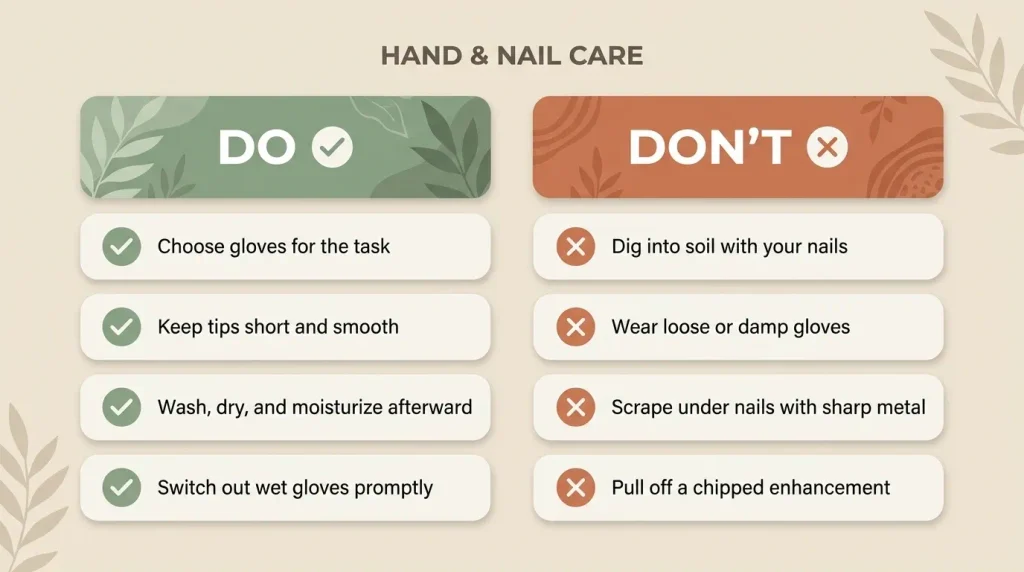
Do
- Choose gloves for the task.
- Keep tips short and smooth.
- Wash, dry, and moisturize afterward.
- Switch out wet gloves promptly.
Don’t
- Dig into soil with your nails.
- Wear loose or damp gloves.
- Scrape under nails with sharp metal.
- Pull off a chipped enhancement.
How Can You Fix Common Nail Problems After Gardening?
Dirt remains under your nails
Wash with soap and running water, then gently clean the exposed underside with a soft brush. Don’t force a tool deep under the nail. Next time, wear fitted gloves and avoid using your fingertips as shovels.
A nail tip chips or starts to split
If the split is shallow and only at the free edge, file away the snag or trim it carefully. If the split extends into attached, painful nail, protect it and seek professional advice. Shorter nails and better-fitting gloves help prevent a repeat.
Your cuticles feel dry or rough
Apply a fragrance-free hand cream and a little oil after washing. Repeat before bed instead of trimming away healthy skin. If you prefer an oil you already have, see our guide to using coconut oil around nails.
A nail fold becomes red, swollen, or painful
Stop irritating the area and keep it clean. Increasing pain, spreading redness, pus, or significant swelling needs medical attention. Don’t try to drain it yourself or hide it under acrylics.
Which Small Habits Make the Biggest Difference?
Keep a dedicated garden nail kit. Store your file, gloves, and a clean hand towel near the door. You’ll be more likely to protect a snag before it catches and to clean up promptly afterward.
Rotate and dry your gloves. Owning two suitable pairs makes it easier to let one pair dry completely before its next use. Wash them according to the care label, especially after muddy jobs.
Give weak nails a shorter season. If your nail tips keep breaking, reduce their length while the damaged portion grows out. You can still enjoy cute polish and nail art on short nails. For more ideas on recognizing a problem rather than a routine chip, see signs of unhealthy nails.
Frequently Asked Questions About Gardening Nail Care
Q: Should you wear gloves every time you garden?
A: Gloves are a smart default for digging, weeding, pruning, and handling soil or garden chemicals. Match the glove to the hazard; lightweight planting gloves are not enough for thorns or sharp debris.
Q: How do you get gardening dirt out from under acrylic nails?
A: Wash gently with mild soap and running water, and use a soft brush only where you can clean without forcing it beneath the enhancement. If an acrylic nail lifts or traps persistent debris, ask a qualified nail professional about safe removal or repair.
Q: Does clear nail polish protect nails from garden dirt?
A: A clear coat may add a cosmetic layer, but it doesn’t prevent punctures, nail bending, or soil from getting around your fingertips. Proper gloves, tools, and gentle cleaning matter far more.
Q: Can gardening cause a nail infection?
A: Gardening can cause small cuts and prolonged moisture exposure, both of which may increase infection risk. Soil on intact nails doesn’t automatically mean infection. Clean injuries promptly, and seek care for worsening pain, redness, swelling, or drainage.
Q: What’s the easiest way to keep your manicure nice while gardening?
A: Start with smooth, manageable nail length and fitted gloves. Use a trowel instead of your nail tips, keep the glove interior dry, and wash and moisturize right after you finish.
Keep Your Garden Growing Without Sacrificing Your Nails
Protecting your nails during gardening comes down to one habit: put the right barrier between your manicure and the work. With fitted gloves, proper tools, gentle cleanup, and consistent moisture, you can enjoy your plants without making nail repairs part of every afternoon. Save this guide to Pinterest before your next gardening day.

Hi, I’m Jessica, the creator behind Unique Lash & Nails Katy.
I created this website for anyone who loves beautiful nails as much as I do. Here, I share trendy nail designs, seasonal manicure ideas, easy nail care tips, honest product recommendations, and step-by-step guides to help you create salon-worthy nails at home. Whether you’re looking for everyday inspiration or your next favorite nail trend, I hope you’ll find something you love.