How Fast Do Fingernails Grow? Real Growth Timelines
Quick Answer
Fingernails typically grow about 3 to 3.5 millimeters per month, or roughly 0.1 millimeter per day. That adds up to around 0.7 to 0.8 millimeter each week. A completely replaced fingernail generally takes about six months, sometimes longer. You can’t safely force dramatic overnight growth, but protecting your nails from splitting helps you keep the length they naturally produce.
If your nails barely seem longer after a week, you’re not imagining things: fingernail growth is slow enough that daily changes are almost invisible. One small break can also undo weeks of progress, especially when you’re trying to grow out a manicure or switch to natural nails.
Here’s what normal nail growth actually looks like, why some fingers seem faster than others, and how to protect your new length without chasing miracle treatments.


How Much Do Fingernails Grow in a Day, Week, or Month?
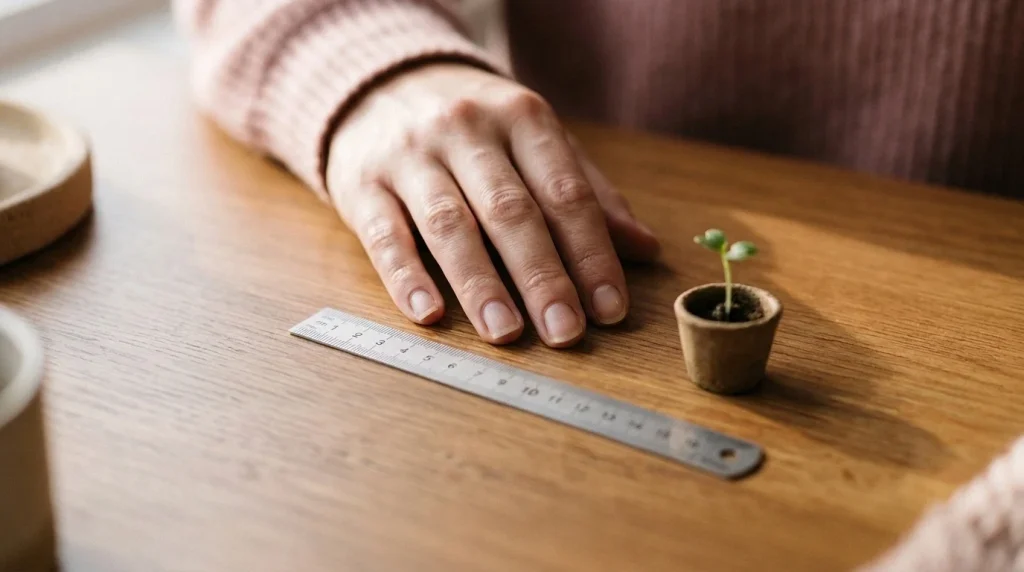
For a useful real-world estimate, think one-tenth of a millimeter each day. A study involving 22 healthy young adults measured average fingernail growth at 3.47 millimeters in 30 days. That’s a helpful benchmark, not a promise that every nail grows at exactly that speed.
Here’s what you might expect if your nails grow near that study average:
- One day: about 0.12 mm, usually too little to see.
- One week: about 0.8 mm, visible mainly when comparing photos.
- Two weeks: about 1.6 mm, enough to notice a small polish gap near the cuticle.
- One month: about 3.5 mm, a noticeable change if the tips haven’t broken.
- Two months: about 7 mm, assuming steady growth and no trimming.
- Three months: about 10 mm, although actual results can be much shorter after filing or breakage.
Those longer estimates are simple projections from the average, not guaranteed results. Your growth rate may change with age, general health, or injury. The visible free edge also depends on where your nail bed ends, not just how much new nail you make.
Where Does Fingernail Growth Actually Start?
Your nails don’t grow from the white tips. New nail cells form mainly in the nail matrix, a living growth area tucked beneath the skin at the base of each nail. As fresh cells form and harden into keratin, they push the older nail plate forward across the nail bed.
The nail plate is the firm part you paint and file. Once those cells have hardened, that visible section cannot heal like living skin. A split near the tip has to be protected or trimmed as it moves outward; a serum cannot permanently glue its internal layers back together.
The cuticle helps protect the seal where your nail emerges. Cutting it deeply or pushing it back aggressively can injure the area, which is why gentle manicures matter more than making the cuticle line look perfectly bare.
This also explains why your nails may appear healthy near the cuticle but peel at the ends. The new portion may be growing normally while the older section still carries damage from previous filing, picking, or chemical exposure.
How Long Does It Take for a Fingernail to Grow Back Completely?
A fingernail generally needs around six months or longer to be fully replaced after it is lost. Some descriptions of normal nail turnover give a four-to-six-month range, but injuries and individual growth rates can extend the timeline. If the matrix was damaged, the nail may regrow unevenly or not return to its original appearance.
There are three different timelines worth separating:
- Growing 3 mm past your current length: often close to one month, assuming the tips stay intact.
- Growing out a damaged surface patch: several weeks to months, depending on how close the patch is to the cuticle.
- Replacing the entire nail after loss: commonly around six months or longer, with the cause of the injury affecting recovery.
Don’t confuse a damaged nail slowly moving forward with a nail that has stopped growing. Photograph the same finger every two weeks and look for the damaged mark shifting toward the edge. If the nail was torn off, you have significant pain, or you suspect an injury to the nail bed, get medical advice rather than waiting for it to grow back on its own.
Do Fingernails Grow Faster Than Toenails?
Yes. Fingernails usually grow more than twice as fast as toenails. In the same growth study, fingernails averaged 3.47 mm a month while toenails averaged 1.62 mm. That difference helps explain why a chipped fingernail seems to recover sooner than a damaged big toenail.
Toenails also travel a longer distance before the whole plate is replaced. Complete toenail regrowth commonly takes 12 to 18 months. Fingernail growth is still slow, but a month of progress on your hands is much easier to see than the same period on your feet.
Why Do Some Fingernails Grow Faster Than Others?
Even on the same hand, every nail doesn’t behave identically. The small study mentioned earlier found that little fingernails grew more slowly than the other fingernails measured. It found no meaningful overall difference between right and left hands.
Your age and natural growth pattern
Nail growth tends to slow as people get older. That doesn’t mean you suddenly stop making nails after a certain birthday. It means the average pace can shift gradually, so your results at 40 may not match the speed you remember at 20.
Nutrition and overall health
Your matrix needs normal nourishment to make nail cells. A balanced diet with adequate protein and essential nutrients supports that process. A significant deficiency or illness may affect nail appearance or growth, but taking extra vitamins when you’re already getting enough doesn’t reliably create faster nails.
For practical meal ideas, see what to eat for stronger, healthier nails. Food is a foundation for normal growth, not a guaranteed shortcut to an extra centimeter next week.
Injuries, illness, and nail treatments
Trauma to the nail matrix can temporarily interrupt new growth. Significant illness, certain medical conditions, and some medications may also change the way nails grow. Repeated gel removal, acrylic filing, and biting are more likely to damage the existing nail plate than to improve your growth rate.
Are Your Nails Growing Slowly, or Are They Breaking Off?
This is the question that changes your whole routine. If your nails reach the same length and then chip or peel, your matrix may be working perfectly normally. You’re losing free-edge length almost as fast as you’re gaining it.
Imagine your nails produce about 3 mm in a month, but you break 2 mm from the tips. Your visible length increases by only 1 mm. It feels like slow growth, yet most of the missing progress is really breakage.
Check for peeling layers at the corners, snags after shampooing, or nails that bend and split when you open packages. If these sound familiar, focus on length retention rather than buying a product promising to speed up cell production.
If your nails are already fragile after manicures, follow this guide to making damaged nails healthy again while the weaker portions grow out.
What Actually Helps You Grow Longer Natural Fingernails?
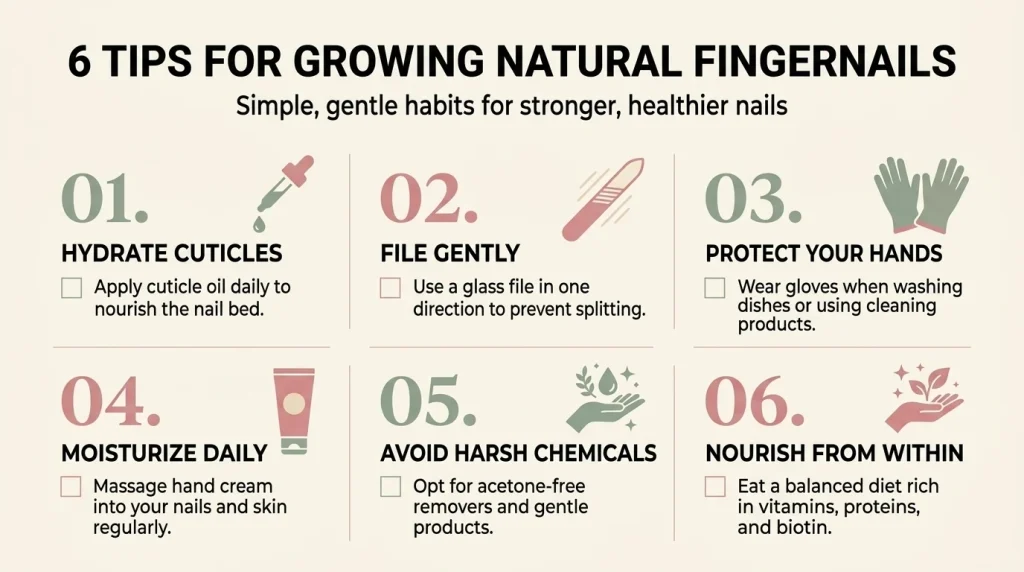
There isn’t a proven at-home trick that can safely turn normal fingernail growth into a dramatic overnight transformation. The useful approach is simpler: support your health, avoid new damage, and keep more of each millimeter your nails produce.
1. Moisturize after washing your hands
Apply hand cream over your fingertips and nail folds after washing, especially if soap leaves your skin tight. Moisturizing helps dry nails stay more flexible and helps protect the skin around them. A small amount of plain petroleum jelly over dry cuticles at bedtime can help seal in moisture.
2. Smooth snags before they turn into breaks
Keep a fine-grit file nearby. Gently smooth a rough corner as soon as it catches on your hair or clothing. A rounded or softly squared tip is often easier to maintain than an extra-sharp point because there are fewer delicate corners to catch.
3. Protect your hands during wet chores
Repeated soaking and drying can contribute to splitting and peeling. Wear reusable cleaning gloves for dishes and household cleaners, and remove them when finished so moisture doesn’t stay trapped against your skin.
4. Remove manicures without peeling
Don’t pick off gel, dip, or press-on residue just because an edge is lifting. That can take layers of your natural nail with it. Follow the product’s removal directions, avoid forceful scraping, and take a break from harsh removal methods if your nails become tender or thin.
5. Leave your cuticles intact
You don’t need to cut the protective cuticle to make a manicure look tidy. Moisturize dry skin and skip aggressive nipping or pushing. A neat nail line isn’t worth irritation around the area where new nail emerges.
6. Keep a realistic length while recovering
If your tips peel every week, trim them slightly shorter until stronger new sections move forward. This reduces leverage on fragile edges. You can still enjoy a polished look with short, softly shaped nails while preparing for longer styles later.
For an easy maintenance schedule, use this simple nail care routine instead of adding more complicated treatments.
Which Nail Products Are Worth Using While You Grow Them Out?
The most useful products help prevent breakage or dryness; they don’t promise impossible growth rates. You can start with products you already own, then fill only the gaps in your routine.
Recommended Product
Jojoba Nail and Cuticle Oil
A light oil is convenient for conditioning dry nail folds and reducing the rough feeling around the edges, although it won’t directly speed up the matrix.
As an Amazon Associate, we earn from qualifying purchases.
Recommended Product
Fine-Grit Glass Nail File
A fine file makes it easier to catch small snags before they spread into splits, helping you keep the length you’ve grown.
As an Amazon Associate, we earn from qualifying purchases.
Can Vitamins, Oils, or Home Remedies Make Fingernails Grow Faster?
Be cautious with viral claims promising faster nails in three days. Most home remedies improve how the nail surface feels or looks, not the biological speed of nail production.
- Biotin gummies: evidence that they accelerate normal nail growth is weak. Some small studies suggest possible benefits for brittle nails, but high doses can interfere with important laboratory tests.
- Cuticle oils: useful for dry surrounding skin and nail flexibility; no reliable evidence that massage with oil substantially accelerates growth.
- Petroleum jelly: helps reduce moisture loss, so you may keep more length rather than grow it more quickly.
- Garlic, lemon, and harsh DIY mixtures: no dependable proof of faster growth, and irritating ingredients can leave skin sore or dry.
- Nail hardeners: some formulas temporarily reduce bending, but very rigid or irritating products can be a poor fit for already fragile nails.
Learn more about whether Vaseline can make nails grow faster if that’s a trick you’ve been tempted to try.
Warning
Don’t start high-dose biotin solely for nail growth without medical guidance. It can distort certain blood-test results, including some thyroid and cardiac tests. Tell your healthcare team about supplements before testing.
How Can You Tell Whether Your Fingernails Are Growing Normally?
Choose one fingernail, take a clear photo today, and repeat it in two weeks under the same lighting. If you’re wearing regular polish, the new bare band near your cuticle can serve as a visual reference. Otherwise, you can compare a recognizable ridge or natural mark as it travels outward.
Don’t cut a groove into the nail just to measure progress. You could create a weak point that catches and splits. A simple photo series is enough to tell whether your tips are holding length, while a small ruler next to your finger gives useful scale.
Check every two weeks rather than every morning. Daily inspection can make normal growth seem nonexistent, while several weeks give you a fairer comparison. If you’re trimming often, record that too: trimming removes visible length without changing how much nail your body produced.
Pro Tip
Track one nail with a small, recognizable surface mark instead of measuring the free edge alone. The mark moving toward the tip reflects new nail growth even if you’ve filed your nails shorter.
When Is Slow Fingernail Growth a Reason to See a Doctor?
A slow-growing nail by itself usually isn’t an emergency. But a sudden change in growth, especially across several nails, deserves attention when it accompanies unusual texture, color, pain, or changes in your health.
Arrange a medical assessment if a nail stops appearing to advance after an injury, begins lifting away from the nail bed, becomes increasingly thick or painful, or develops swelling, drainage, or a new changing dark streak. These changes can have several causes and shouldn’t be covered with polish while you wait indefinitely.
You can compare other warning signs with this guide to signs of unhealthy nails. Photos help you explain when a change started, but a clinician is the right person to diagnose it.
Frequently Asked Questions About Fingernail Growth
Q: How fast do fingernails grow in one week?
A: Near the measured adult average, fingernails grow roughly 0.7 to 0.8 mm each week. Your own rate may be higher or lower, and breakage can hide the new length.
Q: Can fingernails grow 1 cm in a month?
A: Not at the usual rate. One centimeter is 10 mm, nearly three times the commonly measured monthly average. Photos claiming that much growth in a month deserve skepticism.
Q: Which fingernail grows the fastest?
A: There isn’t one finger that’s fastest for everyone. Research found the little fingernail grew more slowly than several other fingernails, but your individual pattern matters more.
Q: Does nail polish stop fingernails from growing?
A: Ordinary nail polish doesn’t stop your nail matrix from producing new nail. Rough preparation, picking, and aggressive removal can damage the visible plate and make length harder to maintain.
Q: How long should I wait before expecting longer nails?
A: Give your routine four to eight weeks before judging the visible change. You may see several millimeters of new nail, but keeping that length depends on avoiding chips, splits, and unnecessary trimming.
The Bottom Line
Fingernails grow about 3 to 3.5 mm a month, so patience matters more than any viral growth hack. Keep your nails moisturized, smooth rough tips, and protect them during chores to hold onto the length you’re already growing.
Save this guide on Pinterest so the next time you wonder why your nails aren’t longer yet, you can check the timeline and stick with habits that actually help.

Hi, I’m Jessica, the creator behind Unique Lash & Nails Katy.
I created this website for anyone who loves beautiful nails as much as I do. Here, I share trendy nail designs, seasonal manicure ideas, easy nail care tips, honest product recommendations, and step-by-step guides to help you create salon-worthy nails at home. Whether you’re looking for everyday inspiration or your next favorite nail trend, I hope you’ll find something you love.