How Do I Make My Nails Healthy Again? 9 Easy Fixes
Quick Answer
To make your nails healthy again, keep them short while damaged areas grow out, moisturize your nails and cuticles several times a day, protect your hands from water and cleaning chemicals, and take a break from aggressive gel, dip, or acrylic removal. Eat a balanced diet rather than relying on nail supplements, and give the new nail several months to replace the damaged portion.
If your nails used to feel strong but now peel, bend, split, or snap every time they get a little length, your first instinct may be to buy the strongest nail hardener you can find.
That usually isn’t the whole answer. Healthy-looking nails come back through a combination of protection, moisture, gentler manicure habits, and patience while new nail grows from the base.
Here’s how to create a simple recovery routine without giving up beautiful nails forever.


How can I tell if my nails actually need a recovery period?
Your nails don’t have to look severely damaged to benefit from a few weeks of gentler care. Pay attention to how they feel as well as how they look.
Common signs that your nails may need a recovery period include:
- Layers peeling from the free edge.
- Nails bending much more easily than they used to.
- Small cracks or splits that keep returning.
- A rough, over-filed surface after gel, dip, or acrylic removal.
- Dry skin and hangnails around the nail folds.
- White patches that appeared after scraping or picking off product.
- Nails breaking before they can grow beyond your fingertip.
If your main problem is breakage, keeping your nails shorter for a while can make recovery much easier. You can still keep them polished and attractive. These short nail ideas are a good example of how neat, shorter nails can still look elegant while you reduce leverage on weak tips.
Warning
Not every nail change is cosmetic damage. Pain, swelling, pus, significant nail lifting, persistent thick yellow or crumbly nails, or a new or changing dark stripe should be checked by a healthcare professional rather than covered with polish or artificial nails.
What should I do first to make my nails healthy again?
 Save
Save1. Keep damaged nails short while they grow out
Start by trimming your nails to a comfortable length that doesn’t extend far past your fingertips. A shorter nail has less leverage when it catches on clothing, hair, drawers, or bags, so weak areas are less likely to tear farther down the nail.
Use sharp nail clippers, then smooth rough edges with a fine file. Don’t keep sawing aggressively across a peeling edge. Gentle shaping prevents tiny snags from turning into larger breaks.
If you miss having a polished manicure, try a simple short rounded, squoval, or soft oval shape. You don’t need long extensions for your hands to look finished.
2. Moisturize the nail plate and cuticle every day
Dry nails are less flexible, which means they can crack and split more easily when they’re bumped. Moisturizing helps reduce that dry, brittle feeling and also improves the skin around your nails.
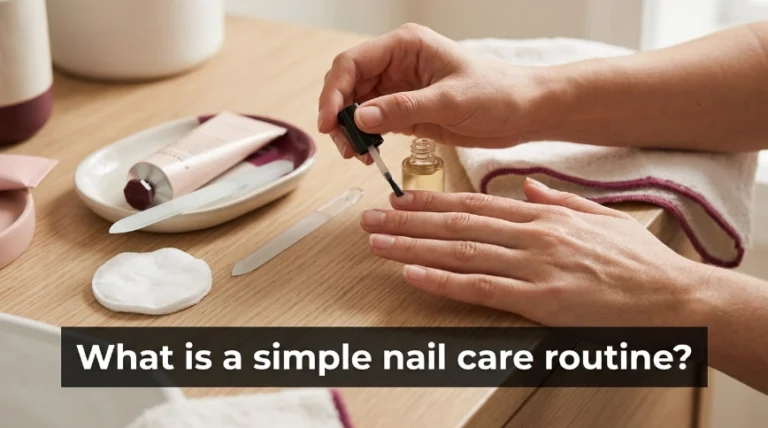
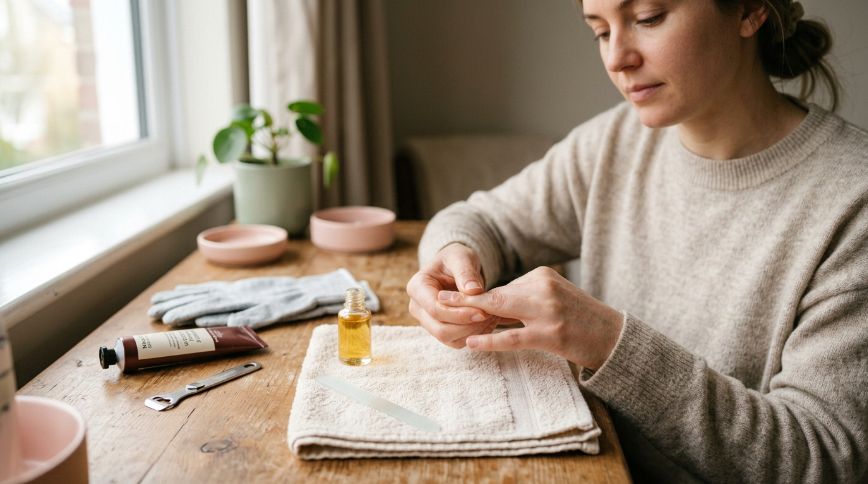
Apply a thick hand cream after washing your hands and before bed. Then massage a small drop of cuticle oil around each nail and into the surrounding skin.
You don’t need an exotic formula. Jojoba-based oils, mineral oil, petroleum jelly, or a rich fragrance-free hand cream can all help reduce moisture loss.
A simple jojoba cuticle oil is especially convenient because you can keep a small bottle near your bed or desk and apply it consistently.
Pro Tip
Put your nail moisturizer where you’ll actually use it. One bottle beside the sink and another beside your bed usually works better than one expensive product hidden in a bathroom drawer.
3. Protect your nails from repeated water exposure
Water sounds harmless, but repeatedly soaking and drying your nails can make them expand and contract over and over. Add detergents or household cleaners and weak nails may feel even drier.
You don’t need to avoid water completely. Instead, wear gloves for dishes, bathroom cleaning, hand-washing clothes, or other long wet jobs.
For cleaning, try reusable household cleaning gloves. If your hands sweat inside them, a thin cotton liner can make longer chores more comfortable.
4. Stop using your nails as tools
Opening cans, peeling labels, scraping stickers, pulling apart key rings, and picking at packaging puts concentrated pressure on the free edge of your nail.
When your nails are already weak, that small daily trauma matters.
Use a spoon edge, box opener, coin, tweezers, or the correct tool instead. This habit sounds minor, but it often makes the difference between finally growing past the fingertip and breaking the same nail every week.
Should I take a break from gel, dip, or acrylic nails?
If your natural nails are thin, peeling, sore, or heavily buffed, a temporary break from enhancements can make recovery easier.
The bigger issue is often not the product sitting on your nail. Damage commonly happens during repeated filing, drilling, scraping, picking, and removal.
Never peel off gel or acrylic because it feels loose. The product can take superficial layers of your natural nail with it, leaving the surface thinner and rougher.
If you’re wearing acrylics now, have them removed carefully instead of prying them off. You can look through these acrylic nail ideas for future inspiration, but wait until your natural nails feel comfortable and stable before jumping straight back into continuous enhancement wear.
During your recovery period, plain polish or a sheer manicure can give you color without adding length. A simple French manicure is another low-drama option once your nails are comfortable; these French tip nail ideas show how polished natural-looking nails can be.
Warning
Don’t cover a painful, swollen, discolored, infected-looking, or separating nail with acrylic, gel, press-ons, or opaque polish just to hide it. Covering the change can delay getting the right diagnosis.
What nail products actually help during recovery?
You don’t need a 12-step routine. A few basic products used consistently are more useful than a shelf full of treatments you forget to apply.
Recommended Product
Jojoba-Based Cuticle Oil
A simple cuticle oil makes daily moisturizing easier, especially when the skin around your nails feels dry after frequent handwashing or polish removal.
As an Amazon Associate, we earn from qualifying purchases.
Use a fine nail file instead of tearing rough edges
A fine file gives you control when a nail starts to snag. Smooth the damaged edge as soon as you notice it instead of pulling the loose layer away.
A glass nail file for natural nails is reusable and makes it easy to keep the free edge neat without aggressive shaping.
Use polish as protection, not camouflage
If your nails aren’t painful or showing signs of infection, a basic protective coat can reduce friction on the surface. Choose a clear or sheer polish if you want to keep an eye on how the nail looks underneath.
A soft nude or pale pink can make recovering nails look tidy without requiring elaborate art. If you want inspiration, these light pink nail ideas include several understated looks that work well on shorter nails.
Remove polish gently when it chips. Don’t scrape it away with another nail.
Do vitamins or biotin make damaged nails healthy again?
Your nails need normal nutrition to grow, but more supplements don’t automatically mean stronger nails.
Start with food. Aim for a balanced diet that includes enough protein along with iron, zinc, vitamins, healthy fats, fruits, vegetables, whole grains, and other nutrient-dense foods.
If your diet is very restricted or you think you might have a deficiency, talk with a healthcare professional instead of guessing based on your nails alone. Brittle or changed nails can have many causes, and a supplement won’t fix repeated chemical exposure, manicure trauma, infection, or an underlying medical condition.
Be especially careful with high-dose biotin products marketed for hair, skin, and nails. Biotin can interfere with certain laboratory tests and produce misleading results. If you already take it, tell your healthcare professional before blood testing.
How long does it take for nails to become healthy again?
This is the part nobody loves hearing: nails recover slowly.
You may notice less breaking within a few weeks once you stop the habits that are causing repeated damage. Your cuticles and surrounding skin can also look better quickly when you moisturize consistently.
The damaged part of the nail plate itself, however, has to move forward as new nail grows from the base. A fingernail can take roughly six months to grow out completely, and the exact speed varies from person to person.
That means a two-week nail-care challenge can improve how your nails feel, but it can’t instantly replace months of damaged nail.
Take a photo of your bare nails today. Compare it with another photo after four weeks and again after eight to twelve weeks. Watching the healthier new growth appear near the cuticle makes progress much easier to see.
What should I do and avoid while my nails recover?
Do
- +Keep weak nails short and smoothly filed.
- +Moisturize after handwashing and before bed.
- +Wear gloves for wet cleaning and detergent exposure.
Don’t
- −Peel or pry off gel, dip, acrylic, or press-ons.
- −Cut away healthy cuticles or pick hangnails.
- −Use your nails to scrape, pry, open, or pick objects.
What are the best habits for stronger-looking nails long term?
Moisturize before your nails feel dry
Consistency matters more than rescuing severely dry nails once a week. If you wash your hands frequently, reapply hand cream while the skin is still slightly damp.
Leave your cuticles alone
Your cuticle helps seal the area where the nail grows. Cutting or aggressively pushing it back can irritate that protective area and create an opening for infection.
If loose skin is catching, carefully trim only the dead hanging piece with clean nippers instead of tearing it.
Choose manicure techniques based on your nail condition
If your nails feel strong and healthy again, you don’t necessarily have to avoid manicures forever. The key is reducing repeated trauma.
Ask for gentle prep. Don’t allow painful filing. Avoid having product drilled aggressively into the natural nail plate, and never accept a removal method that involves ripping or prying.
Give yourself recovery windows when needed
You don’t need to follow a rigid schedule, but if your nails become noticeably thin or sore after repeated enhancements, listen to them.
A few weeks of shorter nails, moisturizer, gentle polish, and reduced chemical exposure can prevent you from turning a small amount of damage into months of peeling and breakage.
Pro Tip
Judge your progress at the base of the nail, not only at the tip. The tip is the oldest part and may stay thin or rough until you eventually trim it away. A smoother, stronger-looking band near the cuticle is a better sign that your routine is working.
When should unhealthy nails be checked by a dermatologist?
 Save
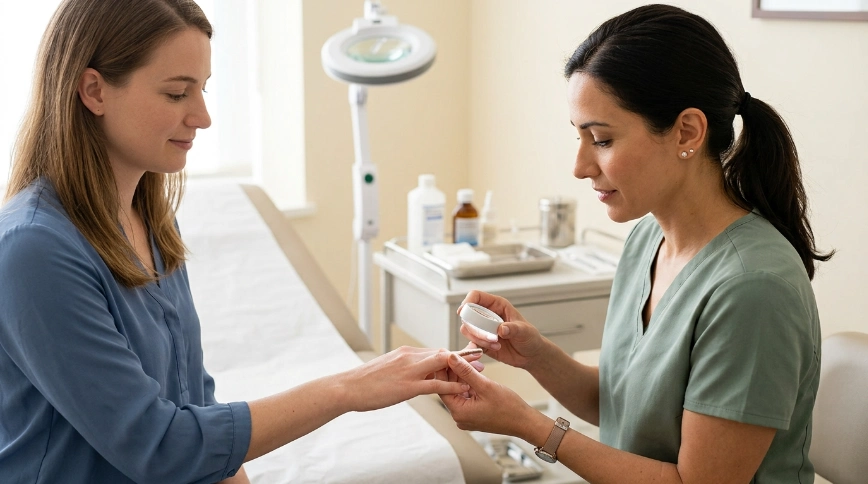
SaveHome nail care is useful for ordinary dryness, mild brittleness, and cosmetic damage, but some changes deserve professional evaluation.
Make an appointment if you notice:
- Pain, warmth, swelling, or pus around a nail.
- A nail that is lifting significantly away from the nail bed.
- Persistent thickening, yellowing, crumbling, or unusual odor.
- Deep pitting or major changes in several nails at the same time.
- A new dark brown or black stripe, especially if it changes or extends onto nearby skin.
- Sudden nail changes without an obvious manicure or injury explanation.
- Nail problems that continue despite several weeks of gentle care.
Don’t assume every unusual nail needs a vitamin. Skin conditions, infections, injuries, medications, and some health conditions can all affect nails, so persistent changes are worth getting properly identified.
Frequently Asked Questions
Q: Can damaged nails become healthy again?
A: Often, yes. Mild cosmetic damage can improve as you prevent new trauma and healthy nail grows forward from the base. The damaged tip won’t transform overnight, so you’ll gradually trim it away as new nail replaces it.
Q: How long should I leave my nails bare after gel or acrylics?
A: There’s no single mandatory break for everyone. If your nails feel thin, peeling, or sore, leaving them bare or using only gentle polish for a few weeks gives you time to monitor the surface and avoid repeated removal damage.
Q: Does cuticle oil really make nails stronger?
A: Cuticle oil doesn’t instantly create a thicker nail, but regular moisturizing helps keep the nail and surrounding skin from becoming excessively dry. That can make brittle nails feel more flexible and less prone to cracking.
Q: Should I take biotin for weak nails?
A: Don’t assume you need high-dose biotin just because your nails are brittle. Ask a healthcare professional if a supplement is appropriate for you, and tell them if you’re already taking biotin because it can interfere with some laboratory tests.
Q: What is the fastest way to make weak nails look better?
A: Trim away fragile length, smooth snags, apply moisturizer and cuticle oil, and use a sheer protective polish if the nail is otherwise healthy. The appearance can improve quickly, but true recovery still depends on healthier nail growing out over time.
Can you really get your healthy nails back?
For most everyday manicure damage and brittleness, the best strategy is surprisingly simple: protect what you have while healthier nail grows forward.
Keep your nails short, moisturize every day, wear gloves for wet chores, stop picking off enhancements, and be patient with the growth process. You don’t need perfect nails next week—you need habits that still work three months from now.
Save this guide to Pinterest so you can come back to your nail recovery routine whenever your nails start feeling dry, weak, or overworked.

Hi, I’m Jessica, the creator behind Unique Lash & Nails Katy.
I created this website for anyone who loves beautiful nails as much as I do. Here, I share trendy nail designs, seasonal manicure ideas, easy nail care tips, honest product recommendations, and step-by-step guides to help you create salon-worthy nails at home. Whether you’re looking for everyday inspiration or your next favorite nail trend, I hope you’ll find something you love.