Does Diet Affect Nail Growth? Foods That Help
Quick Answer
Yes, diet affects nail growth because your body needs protein, vitamins, minerals, and sufficient energy to produce healthy nails. Nutrient deficiencies, particularly iron or zinc deficiencies, may contribute to weak, brittle, or slow-growing nails. Eating a balanced diet supports normal nail growth, but extra vitamins won’t necessarily make already healthy nails grow faster.
You’ve been caring for your cuticles, avoiding harsh nail products, and trying to grow beautiful natural nails. But what if your meals are another important part of the picture?
Your nails grow from living cells beneath the skin, and those cells depend on the nutrients your body receives. That means your everyday food choices can influence nail health, especially when your diet lacks important nutrients.
Here’s how nutrition affects your nails, which foods deserve a place on your plate, and what actually works if you want stronger, healthier natural nails.


How Does Diet Affect Nail Growth?
Your fingernails are primarily made of keratin, a tough structural protein. New nail cells form in the nail matrix, the growth area hidden beneath the skin at the base of each nail.
As new cells develop, older cells are pushed forward, gradually forming the visible nail plate.
This process depends on several factors, including genetics, age, overall health, and nutrition.
When your body receives enough protein, calories, vitamins, and minerals, it has the building materials needed to maintain normal nail production.
However, restrictive diets, poor nutrient absorption, or significant deficiencies can interfere with this process.
For example, inadequate iron or zinc may be associated with changes in nail strength, appearance, and growth. Severe nutritional problems can sometimes cause noticeable nail abnormalities.
That doesn’t mean eating more of one particular nutrient will automatically accelerate growth. Once your nutritional needs are met, extra nutrients generally won’t provide an additional benefit.
The goal is to support your body’s normal nail-building process rather than search for a miracle ingredient.
Which Nutrients Are Most Important for Healthy Nail Growth?
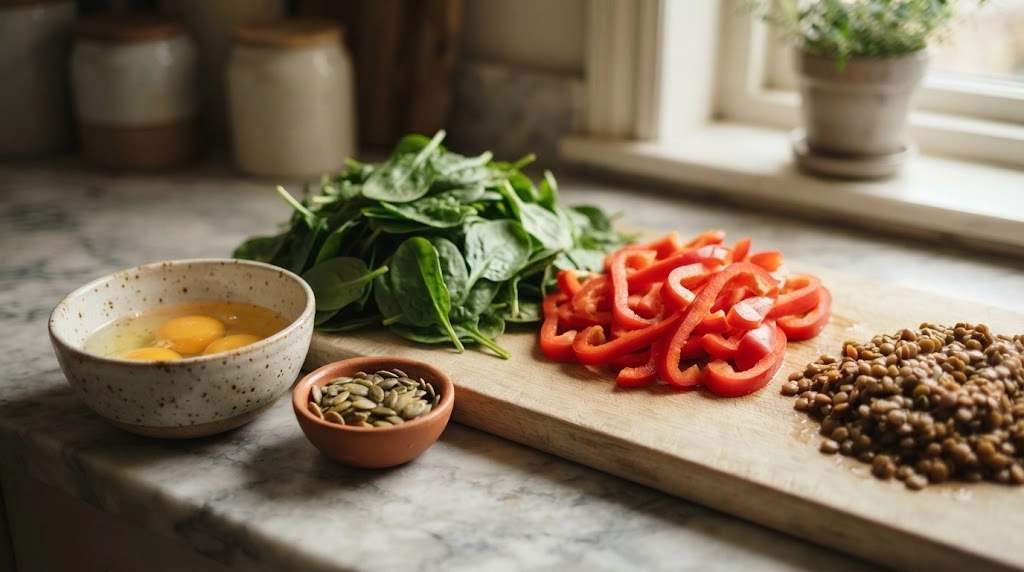
Several nutrients contribute to normal cell function and tissue maintenance. The following deserve particular attention when you’re building a nail-friendly diet.
1. Protein: The Building Material for Your Nails
Protein matters because keratin, the main structural material in your nails, is made from amino acids.
Your body breaks down dietary proteins into amino acids and uses them to build and maintain tissues throughout your body.
When protein intake is severely inadequate, nail production and overall tissue health may suffer.
Good protein sources include:
- Eggs and poultry
- Fish and seafood
- Greek yogurt and cottage cheese
- Beans, chickpeas, and lentils
- Tofu, tempeh, and soy products
- Nuts and seeds
Practical tip: Include a source of protein in each main meal. For example, combine eggs with breakfast, chickpeas with lunch, and fish or tofu with dinner.
You don’t need expensive protein powders simply to maintain healthy nails. Regular foods can usually provide adequate protein when your overall diet is balanced.
2. Biotin: Important, but Often Overhyped
Biotin, also called vitamin B7, helps your body process carbohydrates, fats, and proteins.
A genuine biotin deficiency can cause brittle nails, but deficiency is uncommon among people eating a varied diet.
Biotin supplements are frequently advertised as nail-growth solutions. However, scientific evidence that extra biotin improves nails in otherwise healthy people remains limited.
A few small studies have reported improvements in brittle nails, but larger, better-controlled research is still needed.
Foods containing biotin include:
- Cooked eggs
- Salmon
- Sunflower seeds
- Almonds
- Sweet potatoes
- Mushrooms
- Legumes
What this means for you: Eating biotin-containing foods is sensible. Taking high-dose biotin supplements without an identified need isn’t automatically better.
3. Iron: Essential for Healthy Oxygen Transport
Iron helps your red blood cells transport oxygen throughout your body. Adequate oxygen delivery supports normal tissue function, including the tissues responsible for producing nails.
Iron deficiency can sometimes be associated with brittle nails or unusual changes in nail shape.
One recognizable condition is koilonychia, which produces thin, spoon-shaped nails and may occur with iron deficiency anemia.
Iron-rich foods include:
- Lean beef
- Lentils and beans
- Spinach and other leafy vegetables
- Tofu
- Iron-fortified cereals
- Seafood
Plant-based iron is generally absorbed less efficiently than iron from meat. Combining plant sources with vitamin C can improve absorption.
For example, add lemon juice to lentils or eat bell peppers alongside beans.
Warning
Don’t start high-dose iron supplements simply because your nails are brittle. Excess iron can be harmful. If you suspect deficiency, ask a healthcare professional whether blood tests are appropriate.
4. Zinc: Supports Cell Growth and Repair
Zinc participates in numerous processes involving cell division, protein production, and tissue maintenance.
Because nails are continuously produced by dividing cells, adequate zinc is important for normal growth.
Significant zinc deficiency may contribute to fragile nails or changes in nail appearance.
Useful food sources include:
- Oysters and other seafood
- Beef and poultry
- Pumpkin seeds
- Beans and chickpeas
- Whole grains
- Dairy products
Eating a variety of these foods can help you meet your zinc requirements without relying on unnecessary supplements.
5. Vitamin B12 and Folate: Support Normal Cell Production
Vitamin B12 and folate are involved in DNA synthesis and the production of healthy cells.
These processes are important throughout the body, including in tissues that continuously renew themselves.
Deficiencies can sometimes produce nail changes alongside other symptoms, although nail appearance alone cannot confirm the problem.
Vitamin B12 comes naturally from animal products such as fish, meat, eggs, and dairy. People following vegan diets generally need reliable fortified foods or supplements to meet their B12 requirements.
Folate is found in leafy greens, lentils, beans, asparagus, and fortified grains.
6. Vitamin C: Supports Normal Connective Tissue Health
Vitamin C is essential for collagen production and helps maintain normal connective tissues, including the skin surrounding your nails.
It also improves the absorption of non-heme iron from plant foods.
Good sources include strawberries, oranges, kiwi, bell peppers, broccoli, and tomatoes.
Adding colorful fruits and vegetables to your meals provides vitamin C alongside other useful nutrients.
7. Healthy Fats: Part of a Balanced Diet
Dietary fats provide energy and essential fatty acids while helping your body absorb fat-soluble vitamins.
Although eating extra omega-3 fats hasn’t been proven to accelerate nail growth, healthy fat sources are an important part of a nutritious eating pattern.
Include foods such as salmon, sardines, walnuts, chia seeds, avocado, and olive oil.
What Are the Best Foods for Nail Growth?
No single food guarantees longer nails. However, nutrient-dense foods can help your body maintain normal nail production and reduce the risk of deficiencies.
These options are especially useful because they provide several nutrients at once.
Eggs
Eggs supply protein, biotin, and vitamin B12. They are affordable, versatile, and easy to include in breakfast or lunch.
Try boiled eggs with whole-grain toast or an omelet with spinach.
Salmon
Salmon provides high-quality protein, vitamin B12, and omega-3 fats.
Enjoy baked salmon with vegetables and a whole grain for a balanced meal.
Lentils
Lentils provide plant-based protein, iron, folate, and fiber.
They work particularly well in soups, curries, salads, and grain bowls.
Spinach
Spinach contains folate, vitamin C, and some iron.
Combine it with eggs, beans, or a protein-rich main dish instead of relying on spinach alone to meet your nutritional needs.
Greek Yogurt
Greek yogurt supplies protein and other nutrients, including vitamin B12 and calcium.
Top plain yogurt with berries and nuts for a filling snack.
Pumpkin Seeds
Pumpkin seeds offer zinc, protein, and healthy fats.
Sprinkle them over salads, oatmeal, or yogurt for an easy nutritional addition.
Sweet Potatoes
Sweet potatoes provide carbohydrates, fiber, and beta-carotene, which your body can convert into vitamin A.
Vitamin A supports normal cell function, but excess supplemental vitamin A can be harmful. Food sources are generally a better starting point.
Almonds
Almonds contain vitamin E, healthy fats, and some biotin.
A small handful makes a convenient snack, especially when paired with fruit.
Pro Tip
Instead of buying every food marketed for nail growth, build meals around protein, colorful produce, whole grains, and healthy fats. Dietary variety is more useful than depending on one supposedly magical ingredient.
Can a Poor Diet Make Your Nails Grow Slower?
Yes. Significant nutritional deficiencies and inadequate calorie intake can interfere with normal nail production.
Your body needs sufficient energy and nutrients to maintain essential functions. During prolonged undernutrition, the health of your hair, skin, and nails can be affected.
Possible nail changes associated with nutritional problems include:
- Unusually brittle nails
- Increased splitting or breakage
- Slower-than-expected nail growth
- Changes in nail shape or texture
- Visible grooves after periods of severe illness or physiological stress
However, these symptoms are not specific to poor nutrition.
Repeated exposure to water, harsh manicures, fungal infections, skin conditions, and thyroid problems can also affect nail appearance.
If your nails frequently split, our guide to dry nails versus brittle nails can help you understand the difference between surface dryness and structural fragility.
A sudden or persistent change across several nails deserves attention, especially if it occurs alongside fatigue, hair loss, or other symptoms.
Does Drinking More Water Help Nails Grow Faster?
Staying adequately hydrated supports your general health, but drinking extra water beyond your body’s needs has not been shown to make healthy nails grow faster.
Your nails can become dry and brittle because of external conditions even when you’re drinking enough fluids.
Frequent handwashing, prolonged soaking, nail polish removers, and cleaning products can all contribute to surface dryness.
For this reason, you should combine normal fluid intake with practical nail protection.
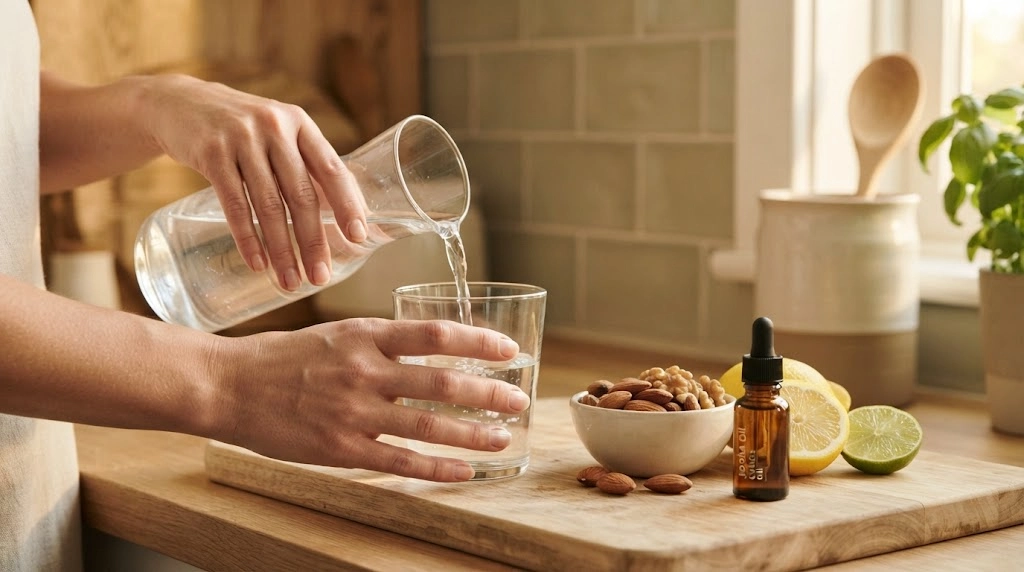
Apply hand cream after washing, use cuticle oil when your skin feels dry, and wear protective gloves during wet household chores.
These habits help protect the nail plate you already have while healthy new nail material grows underneath.
How Long Does It Take for Diet to Affect Nail Growth?
Dietary improvements take time to become visible in your nails because nail growth is gradual.
Healthy fingernails typically grow approximately 3 millimeters per month, although the rate varies between individuals.
A complete fingernail may take roughly four to six months to replace itself.
If a genuine nutrient deficiency has affected your nails, correcting the deficiency may support healthier new growth. However, existing damaged nail material won’t instantly repair itself.
Here’s a realistic way to think about progress:
- First few weeks: Your nutritional intake may improve, but visible nail changes can be minimal.
- After one to three months: You may begin noticing healthier new nail growth if a nutritional problem was successfully corrected.
- After several months: More of the older nail plate has grown out, making longer-term changes easier to evaluate.
These are approximate observation periods, not guaranteed treatment timelines.
Your results depend on the underlying cause, how severe any deficiency was, and whether other factors are damaging your nails.
For a more detailed explanation, explore our guide to how fast fingernails grow.
What Should You Eat in a Day for Healthy Nails?
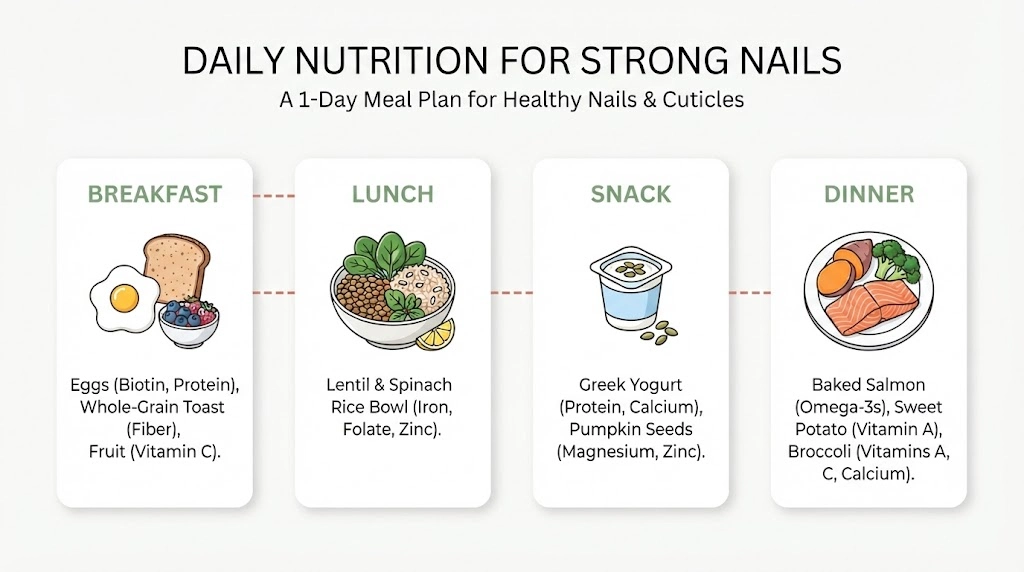
You don’t need a special nail-growth diet. Instead, create balanced meals that provide protein, micronutrients, and enough energy for your individual needs.
Here’s an easy example you can adapt to your preferences.
Breakfast: Eggs, Whole-Grain Toast, and Fruit
Start with cooked eggs, whole-grain toast, and strawberries or orange slices.
You’ll get protein, biotin, B vitamins, and vitamin C from a simple combination of everyday foods.
Lunch: Lentil and Spinach Bowl
Combine cooked lentils, spinach, brown rice, bell peppers, and a little olive oil.
Lentils provide protein and iron, while the vegetables contribute folate and vitamin C.
Afternoon Snack: Yogurt and Pumpkin Seeds
Choose plain Greek yogurt topped with pumpkin seeds and berries.
This combination adds protein, zinc, and other beneficial nutrients without requiring a specialized supplement.
Dinner: Salmon, Sweet Potato, and Broccoli
Serve baked salmon with roasted sweet potato and steamed broccoli.
This meal provides protein, vitamin B12, healthy fats, and a variety of vitamins.
If you prefer plant-based meals, replace the salmon with tofu or tempeh and include reliable sources of vitamin B12 elsewhere in your diet.
Remember: This is an example, not a calorie-controlled meal plan. Portion sizes and nutritional requirements vary based on your age, activity, health, and individual circumstances.
Do Nail Growth Supplements Actually Work?
Supplements can be useful when they correct a confirmed nutritional deficiency or meet a specific medical need.
However, taking extra vitamins doesn’t necessarily improve the nails of someone who already receives enough nutrients.
Products marketed for hair, skin, and nails frequently contain biotin, collagen, zinc, or combinations of several vitamins.
The evidence supporting these products varies, and some popular claims are stronger than the available research.
Biotin Supplements
Small studies suggest that biotin may improve certain cases of brittle nails, but there is insufficient strong evidence that high-dose biotin speeds nail growth in healthy people.
High doses can also interfere with certain laboratory tests, potentially producing misleading results.
Collagen Supplements
Collagen supplements are often promoted for skin and nail health, but evidence for improved nail growth remains limited.
Collagen is not a substitute for eating adequate protein from a balanced diet.
Iron and Zinc Supplements
Iron or zinc supplements may help when a deficiency has been identified and treatment is appropriate.
Taking excessive amounts without medical guidance can cause adverse effects.
Important Safety Note
Tell your healthcare professional about any supplements you take, particularly biotin, before laboratory testing. Don’t use supplements to treat unexplained nail changes without identifying the underlying cause.
Which Kitchen Tools Can Make Healthy Eating Easier?
Most people don’t need special nail supplements. Simple kitchen tools can make it easier to prepare nutritious meals consistently.
Optional Kitchen Essential
Glass Meal Prep Containers
Reusable containers make it easier to prepare balanced lunches with beans, vegetables, grains, and protein ahead of time.
As an Amazon Associate, we earn from qualifying purchases.
Optional Kitchen Essential
Compact Food Blender
A small blender helps you combine yogurt, fruit, nut butter, and other nutritious ingredients when you need a convenient breakfast or snack.
As an Amazon Associate, we earn from qualifying purchases.
What Else Helps Your Nails Grow Stronger?
Diet is only one part of nail health. Even well-nourished nails can split if they experience repeated physical damage.
Protecting the nail plate helps you retain the length your body naturally produces.
Moisturize Your Nails and Cuticles
Apply hand cream after washing and massage cuticle oil around your nails regularly.
Moisturizing can help reduce dryness and improve flexibility, making the nail edges less vulnerable to certain types of damage.
Optional Nail Care Product
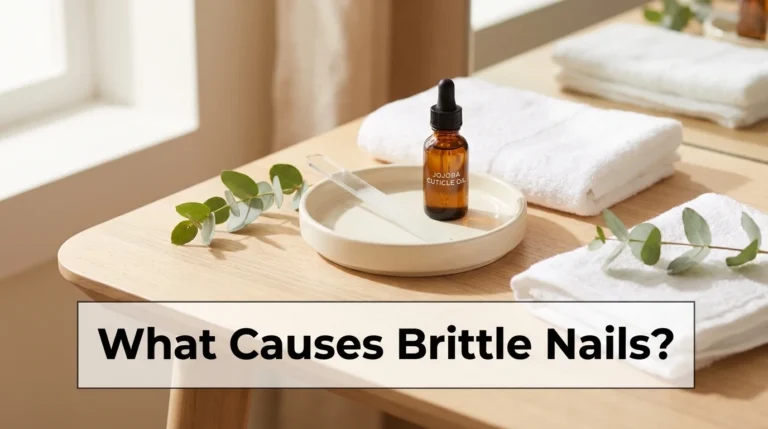
Jojoba Cuticle Oil
A simple cuticle oil helps condition dry skin around your nails and makes regular moisturizing easier.
As an Amazon Associate, we earn from qualifying purchases.
Protect Your Hands During Household Chores
Wear well-fitting protective gloves while washing dishes or using cleaning products.
Repeated wetting and drying can make nails more prone to splitting, especially when they’re already fragile.
Keep Nail Edges Smooth
Use a fine-grit nail file to smooth snags before they become larger cracks.
Keeping nails slightly shorter during recovery can also reduce leverage and accidental breakage.
Optional Nail Care Product
Fine-Grain Glass Nail File
A smooth glass file can help refine rough nail edges with controlled, gentle filing.
As an Amazon Associate, we earn from qualifying purchases.
For a complete maintenance routine, see our guide to the best nail care routine for healthy nails.
What Are the Do’s and Don’ts of Eating for Healthy Nails?
Do
- Eat adequate protein daily.
- Include colorful fruits and vegetables.
- Choose iron- and zinc-rich foods.
- Maintain adequate hydration.
- Correct identified deficiencies with professional guidance.
Don’t
- Follow extremely restrictive diets.
- Depend on one miracle food.
- Take high-dose supplements unnecessarily.
- Expect instant nail growth.
- Ignore persistent nail abnormalities.
When Should You See a Doctor About Slow Nail Growth?
Most nail growth differences are harmless and vary naturally between individuals.
However, noticeable changes can occasionally indicate an underlying medical condition.
Consider seeking professional advice if you experience:
- Sudden changes in multiple fingernails
- Persistent brittleness combined with unusual fatigue
- Significant nail discoloration or unexplained dark streaks
- Deep grooves or marked changes in nail shape
- Pain, swelling, bleeding, or nail separation
- Slow nail growth accompanied by unexplained hair loss or weight changes
A healthcare professional can assess possible nutritional deficiencies, thyroid conditions, infections, or other causes.
Blood tests may be appropriate depending on your symptoms and medical history.
Don’t assume every unusual nail change is caused by a vitamin deficiency.
Frequently Asked Questions About Diet and Nail Growth
Q: Can eating more protein make nails grow faster?
A: Protein is essential for making keratin, the main material in nails. Eating enough supports normal nail production, but consuming extra protein beyond your needs hasn’t been proven to accelerate healthy nail growth.
Q: Does biotin really help nails grow?
A: Biotin is necessary for normal metabolism, and deficiency can cause brittle nails. However, strong evidence that additional biotin speeds nail growth in healthy people is lacking.
Q: Can a vegetarian diet support healthy nail growth?
A: Yes. A well-planned vegetarian diet can provide protein, iron, zinc, folate, and other important nutrients. Include legumes, soy products, whole grains, nuts, seeds, and appropriate vitamin B12 sources.
Q: Can skipping meals affect nail growth?
A: Occasional missed meals don’t necessarily affect nails. However, consistently eating too little or developing significant nutrient deficiencies may interfere with normal nail production over time.
Q: How quickly will my nails improve after changing my diet?
A: Improvements depend on whether a deficiency caused the problem. Because fingernails grow only a few millimeters each month, visible changes may take several months.
Final Thoughts: Does Diet Affect Nail Growth?
Yes, diet affects nail growth by providing the nutrients your body needs to produce healthy nail cells. Adequate protein, iron, zinc, biotin, and overall balanced nutrition are important, particularly when you’re correcting a nutritional deficiency.
Focus on varied meals, protect your nails from everyday damage, and give new growth time to appear. You don’t need an expensive supplement collection to build a sensible nail-care routine.
Save this guide to your Pinterest nail-care board so you can revisit these nutritious food ideas whenever you’re planning meals for healthier nails.

Hi, I’m Jessica, the creator behind Unique Lash & Nails Katy.
I created this website for anyone who loves beautiful nails as much as I do. Here, I share trendy nail designs, seasonal manicure ideas, easy nail care tips, honest product recommendations, and step-by-step guides to help you create salon-worthy nails at home. Whether you’re looking for everyday inspiration or your next favorite nail trend, I hope you’ll find something you love.