Coconut Oil for Nails: Benefits, Uses & What It Really Does
Quick Answer
Yes, coconut oil can be good for your nails when dryness is the problem. It helps moisturize the nail surface and surrounding cuticle area, which can make brittle nails feel less dry and rough. It won’t make your nails grow dramatically faster, repair deep damage, or treat a nail infection, so think of it as a moisturizing care step rather than a cure-all.
If your nails look dry, your cuticles keep peeling, or the tips seem to split every time they get a little length, coconut oil is an easy product to reach for. The appeal makes sense: it’s inexpensive, simple to use, and already sitting in many kitchens and bathrooms.
The important part is knowing what coconut oil can realistically do. Its biggest benefit is moisture. That can be useful for dry nails and rough cuticles, but it doesn’t rebuild a damaged nail plate overnight or change how fast new nail grows from the base.
Here’s how to use coconut oil for nails in a way that actually fits a healthy nail-care routine.


What Does Coconut Oil Actually Do for Your Nails?
Coconut oil works best as a moisturizer and protective oil. When you massage a small amount over your nails and the skin around them, it leaves a light oily layer that helps reduce moisture loss. That matters because frequent handwashing, acetone, cleaning products, dry weather, and repeated wet-to-dry cycles can leave nails and cuticles feeling rough.
If dryness is contributing to your brittleness, regular moisturizing can make the nail area feel more flexible and comfortable. You may notice fewer rough cuticle edges and less of that chalky, dehydrated look after polish removal.
What coconut oil does not do is permanently “harden” your nails. Your visible nail plate is made of keratin, and once part of that plate has been peeled, over-filed, or otherwise damaged, an oil cannot fuse those layers back together. You have to protect the nail while healthier growth gradually moves forward.
If your nails are already peeling, thin, or damaged from repeated manicures, follow this guide on how to repair a damaged nail at home while the weakened section grows out.
What Are the Main Benefits of Coconut Oil for Nails?
1. It Helps Soften Dry Cuticles
Dry cuticles can look white, flaky, or ragged, especially after frequent washing or polish removal. A small amount of coconut oil helps coat the skin around the nail and leaves it feeling softer.
This is most useful when the problem is simple dryness. You don’t need to trim away every rough-looking edge. Consistent moisture usually makes the area look neater without aggressive cutting.
2. It Can Make Dry Nails Feel Less Brittle
Brittle nails often feel stiff, rough, and prone to catching on fabric. Coconut oil doesn’t create a new nail layer, but adding moisture can make dry nails feel less rigid. That may help reduce some dryness-related cracking and snagging when you also keep the edges smoothly filed.
Moisturizing is only one part of keeping length. If your main goal is longer natural nails, this guide on what helps nails grow fastest explains why preventing breakage can matter as much as the growth happening at the base.
3. It Gives Nails a Smoother, Healthier-Looking Finish
Even when your nails are healthy, the surface can look dull after handwashing or polish remover. Rubbing in a tiny amount of coconut oil adds temporary shine and makes the surrounding skin look more conditioned.
This is a cosmetic benefit, not proof that the nail itself has become stronger. Still, the smoother appearance can make bare nails look more polished between manicures.
4. It Can Be Useful After Polish Removal
Acetone and repeated remover use can leave your fingertips and cuticle area feeling dry. Coconut oil is convenient after removal because you can massage it over the nail and surrounding skin once you’re done cleaning off the old product.
Give the oil time to sit if you’re leaving your nails bare. If you’re applying fresh polish immediately, wash or wipe the nail plate clean first because an oily surface can interfere with polish adhesion.
5. It Makes a Simple Overnight Nail Treatment
Coconut oil works especially well at night because you’re less likely to wash it off right away. Apply a very thin layer, massage it into each nail and cuticle, and leave it on while you sleep.
You don’t need to soak your fingertips in oil or apply a thick coating. A small amount is enough to cover the area without leaving your hands uncomfortably greasy.
Pro Tip
Apply coconut oil right after washing and drying your hands, when the skin around your nails still feels slightly hydrated. Using it at a consistent trigger point makes the routine easier to remember than applying it randomly.
Can Coconut Oil Make Your Nails Grow Faster?
Don’t expect coconut oil to make your nails suddenly grow faster. Nail growth happens from the nail matrix under the skin at the base of the nail, and topical oil on the visible nail plate doesn’t act like a growth accelerator.
What coconut oil may help with is length retention. If dryness is making your nails crack and break before they get long, moisturizing and protecting them can help you keep more of the length you already grow.
That distinction matters. A nail that breaks less may seem like it’s “growing faster” because you can finally see progress, but the oil isn’t necessarily changing the biological growth rate.
If nail growth is your goal, focus on the bigger picture: avoid picking and peeling, protect your hands during wet chores, keep rough edges filed, moisturize consistently, and eat a balanced diet. Those habits support your nails far more reliably than expecting one topical product to transform them.
How Should You Use Coconut Oil on Your Nails?
 Save
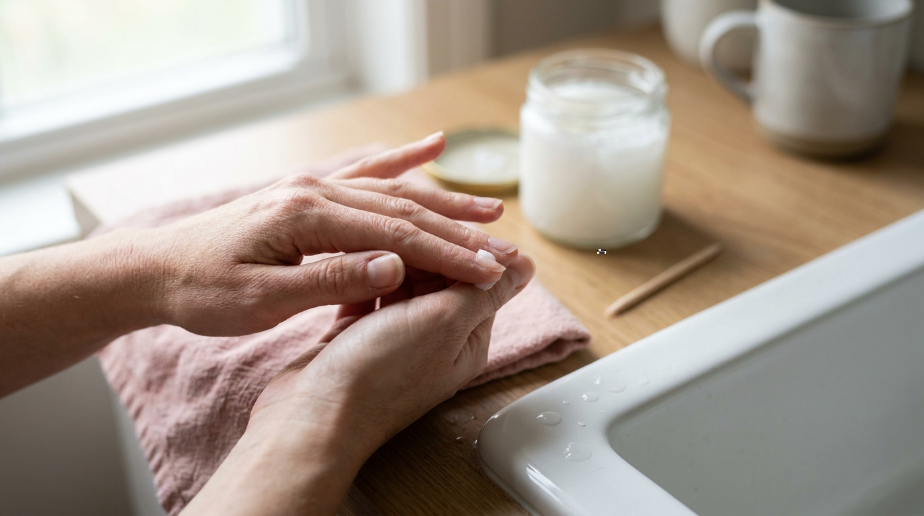
SaveYou can keep the routine very simple. Warm a pea-sized amount of coconut oil between your fingertips, then massage a thin film over each nail, the cuticle area, and the skin along the sides of the nail.
- Wash and dry your hands. Remove visible dirt and make sure your nails are clean before applying oil.
- Use a very small amount. Start with less than you think you need. You can always add more.
- Massage each nail for 15–30 seconds. Focus on the cuticle area and sides of the nail where dryness is often most noticeable.
- Leave it on. Bedtime is easiest because the oil has more time to sit without being immediately washed away.
- Repeat once or twice daily if needed. Consistency matters more than using a heavy layer.
If your nails are extremely dry, you can apply a little oil before bed and wear clean cotton moisturizing gloves. The gloves mainly keep the product off your bedding and make overnight care less messy.
Recommended Product
Organic Virgin Coconut Oil
★★★★☆ Popular nail-moisture option on Amazon
A plain virgin coconut oil is enough for a simple nail-and-cuticle moisture routine, so you don’t need a complicated formula.
As an Amazon Associate, we earn from qualifying purchases.
Is Coconut Oil Better Than Cuticle Oil?
Not necessarily. Coconut oil and cuticle oil can both fit into a nail-care routine, but they feel different and may suit different situations.
Coconut oil is simple, inexpensive, and slightly heavier. It’s a good option when you want a basic overnight moisturizer or already have it at home.
Cuticle oil is usually lighter and easier to apply during the day. Many cuticle oils come in pens or brush bottles, which makes them convenient to keep at your desk, in your bag, or beside your bed. Some formulas blend jojoba, vitamin E, or other emollient oils.
If you dislike greasy fingertips, a cuticle-oil pen may be easier to use consistently. If you want a minimal, one-ingredient option, coconut oil is perfectly reasonable.
Recommended Product
Jojoba Cuticle Oil Pen
★★★★☆ Convenient for daily use
A pen-style cuticle oil is less messy than a jar of coconut oil when you want quick moisture at your desk or on the go.
As an Amazon Associate, we earn from qualifying purchases.
Is Coconut Oil Better Than Vaseline for Nails?
 Save
SaveThey do slightly different jobs. Coconut oil feels more like a traditional oil moisturizer, while Vaseline is a heavier occlusive that is especially good at slowing moisture loss.
If your cuticles are mildly dry, coconut oil may feel comfortable enough on its own. If your hands and nail folds get extremely dry, you may prefer a small amount of petroleum jelly at night because it creates a thicker barrier.
You can also combine them: apply a light moisturizer or oil first, then use a very thin layer of petroleum jelly over the driest areas to seal it in.
For a full comparison of what petroleum jelly can and cannot do, see is Vaseline good for nails?
What Can’t Coconut Oil Fix?
Coconut oil is useful for dryness, but it has limits. It won’t correct every nail problem, and using more oil isn’t the answer when the underlying issue is something other than dehydration.
- It won’t repair severe peeling instantly. Damaged nail has to grow out while you protect it from more trauma.
- It won’t remove deep ridges. Some ridging is normal, while new or significant changes may have another cause.
- It won’t cure a fungal nail infection. Don’t rely on a kitchen oil as a substitute for proper diagnosis and treatment.
- It won’t reverse nail lifting. A nail separating from the nail bed needs attention to the cause rather than simply adding moisturizer.
- It won’t erase unexplained discoloration. New dark streaks, persistent yellowing, or other unusual color changes should not be hidden under polish or home remedies.
Warning
Get medical advice for nail pain, warmth, swelling, pus, significant lifting, a new dark streak, or a persistent unexplained change in color, thickness, or shape. Coconut oil can moisturize the area, but it cannot diagnose or treat those problems.
If you’re unsure whether what you’re seeing is normal dryness or something that needs attention, compare your symptoms with these signs of unhealthy nails.
Who Should Be Careful With Coconut Oil?
Many people can use a small amount of coconut oil on intact skin without difficulty, but any topical product can irritate some people. Stop using it if you notice itching, redness, burning, or a rash around your nails.
Avoid rubbing oil into open cuts, actively inflamed skin, or an area that looks infected. If you know you’re allergic to coconut, choose a different nail moisturizer.
Also remember that oily nails and fresh polish don’t mix well. If you’re about to paint your nails, remove surface oil with soap and water or your normal nail-prep method, then let the nail plate dry completely before applying base coat.
What Is the Best Coconut Oil Nail Routine?
For most people, the best routine is simple enough to repeat every day:
Do
- +Massage a small amount into clean nails and cuticles.
- +Use it consistently after washing or before bed.
- +Pair moisture with gloves, gentle filing, and careful manicure removal.
Don’t
- −Expect it to make nails grow overnight.
- −Use it to cover up signs of infection or nail disease.
- −Leave an oily film on the nail plate right before polish.
If you want to build a routine around more than one moisturizer, this best nail care routine shows how daily moisture, weekly shaping, and protection from water work together.
Recommended Product
Cotton Moisturizing Gloves
★★★★☆ Useful for overnight nail care
Soft cotton gloves can make an overnight coconut-oil routine less messy and help keep moisturizer on your hands instead of your bedding.
As an Amazon Associate, we earn from qualifying purchases.
Frequently Asked Questions About Coconut Oil for Nails
Q: Can I put coconut oil on my nails every day?
A: Yes, if your skin tolerates it. A small amount once or twice a day is usually enough for dry nails and cuticles. Bedtime is especially convenient because you’re less likely to wash it off immediately.
Q: Does coconut oil strengthen nails?
A: It doesn’t permanently harden the nail plate, but regular moisturizing can make dry nails feel less brittle and keep the surrounding cuticle area softer. Think moisture and protection, not instant structural repair.
Q: Can coconut oil help peeling nails?
A: It can help with dryness around peeling nails, but it can’t glue peeled nail layers back together. Keep the nail shorter, smooth loose edges gently, moisturize, and avoid picking while the damaged area grows out.
Q: Can coconut oil treat nail fungus?
A: Don’t rely on coconut oil as a treatment for a suspected fungal infection. Thickening, crumbling, persistent discoloration, lifting, or spreading changes need proper evaluation so you can choose an effective treatment.
Q: How long should I leave coconut oil on my nails?
A: You don’t need a strict timer. Massage in a thin layer and leave it on until it absorbs or until your next handwash. For a richer treatment, apply it before bed and leave it on overnight.
So, Is Coconut Oil Worth Using on Your Nails?
Yes—coconut oil is worth using if you want a simple way to moisturize dry nails and soften rough cuticles. Its value is practical rather than magical: it helps support a more comfortable, conditioned nail area while you protect your nails from the habits that cause dryness and breakage.
Use a small amount consistently, keep realistic expectations, and pay attention to changes that moisturizer can’t explain. Save this guide to Pinterest so you can come back to the routine whenever your nails start feeling dry, brittle, or overworked.

Hi, I’m Jessica, the creator behind Unique Lash & Nails Katy.
I created this website for anyone who loves beautiful nails as much as I do. Here, I share trendy nail designs, seasonal manicure ideas, easy nail care tips, honest product recommendations, and step-by-step guides to help you create salon-worthy nails at home. Whether you’re looking for everyday inspiration or your next favorite nail trend, I hope you’ll find something you love.