How Often Should You Care for Your Nails? Easy Guide
Quick Answer
You should care for your nails every day with moisturizing and gentle cleaning, once a week with filing and a quick nail check, and every one to two weeks with trimming as needed. Give your nails a more detailed assessment once a month, especially if you wear gel or acrylic manicures. The secret is consistent, gentle care rather than frequent aggressive treatments.
Beautiful nails don’t require a salon appointment every week or an expensive collection of treatments. What matters most is knowing which nail care habits belong in your daily routine and which ones should happen less often.
If you’ve ever wondered whether you’re filing too much, moisturizing enough, or scheduling manicures too frequently, you’re asking the right questions.
Here’s how often you should care for your nails, with a realistic schedule that fits your lifestyle and keeps your natural nails looking their best.


How Often Should You Care for Your Nails Each Day?
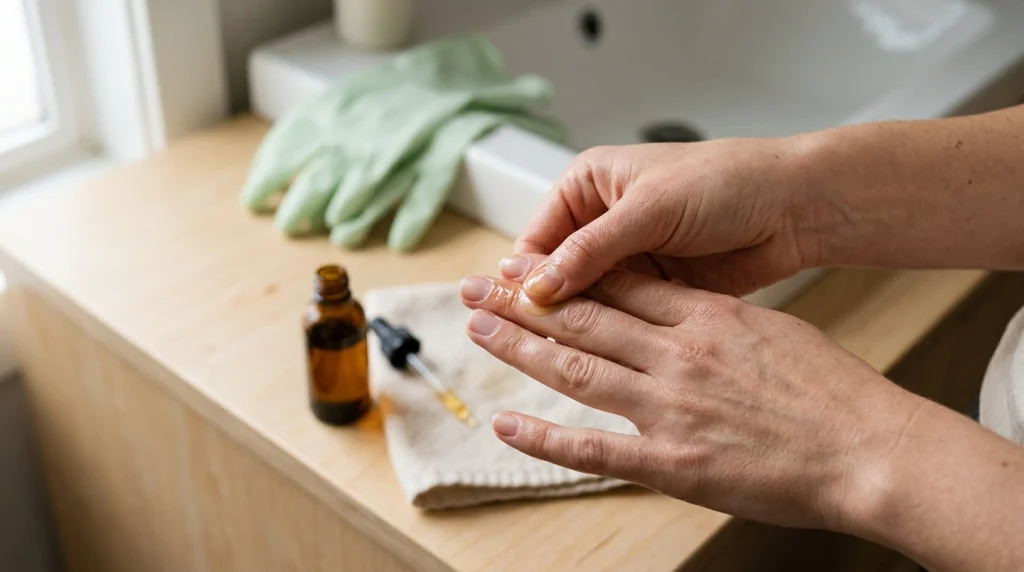
Your daily nail care routine should take approximately three to five minutes. You don’t need to trim, buff, or polish your nails daily. Instead, concentrate on moisture, cleanliness, and protection.
These small habits help prevent dryness, rough cuticles, and the everyday damage that eventually leads to splitting or breakage.
1. Moisturize Your Nails and Cuticles Every Day
Apply hand cream after washing your hands, especially when your skin feels dry. Massage a small amount over your nails, cuticles, and surrounding skin rather than moisturizing only your palms.
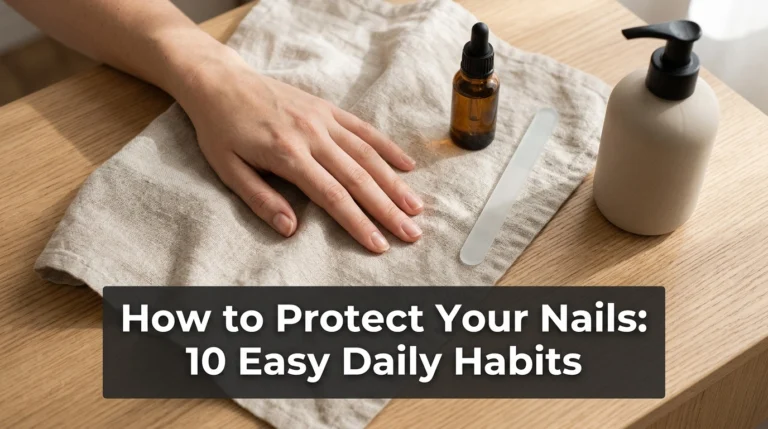
You can also apply cuticle oil once or twice daily. Jojoba-based formulas are convenient because they’re lightweight and easy to use without leaving your fingers excessively greasy.
Regular moisturizing helps maintain flexibility and reduces uncomfortable dryness around your nails. It won’t make damaged nail layers instantly healthy again, but it can improve how your nails and cuticles feel.
For more specific product guidance, explore whether Vaseline or cuticle oil is better for your nails.
2. Keep Your Nails Clean Without Over-Scrubbing
Clean your hands and nails during normal handwashing using mild soap and water. If dirt collects underneath your free edges, use a soft nail brush gently rather than digging with a sharp tool.
After washing, dry your fingers carefully, including the areas around your nails.
Constantly soaking your hands or using aggressive cleaning tools can contribute to irritation and nail damage. Clean nails are important, but excessive scrubbing isn’t necessary.
3. Protect Your Nails During Household Chores
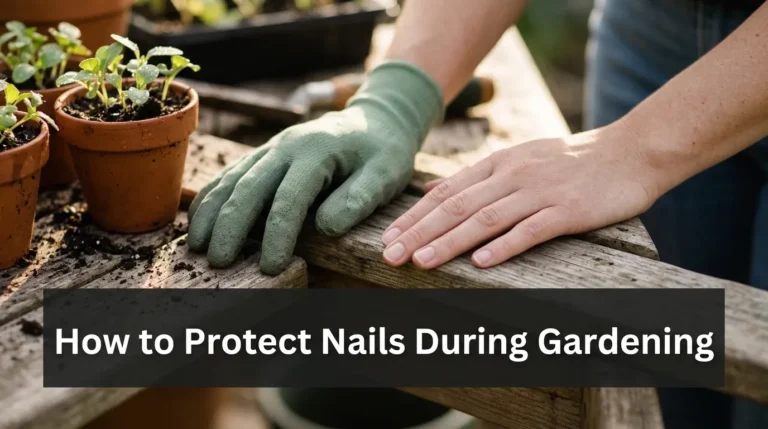
Wear household gloves when washing dishes, cleaning bathrooms, or handling cleaning products. This reduces prolonged exposure to water and detergents, which can be particularly troublesome if your nails are already brittle.
Choose reusable gloves that fit comfortably. Remove them after finishing your chores, dry your hands, and apply moisturizer.
Remember that your nails aren’t tools. Opening soda cans, scraping labels, or prying apart packaging can cause tiny cracks that eventually turn into noticeable breaks.
Pro Tip
Keep hand cream beside your sink and cuticle oil on your nightstand. Linking nail care to habits you already have makes it easier to stay consistent without setting extra reminders.
How Often Should You Trim and File Your Nails?
Most people can check and file their nails weekly and trim them approximately every one to two weeks, depending on how quickly their nails grow and the length they prefer.
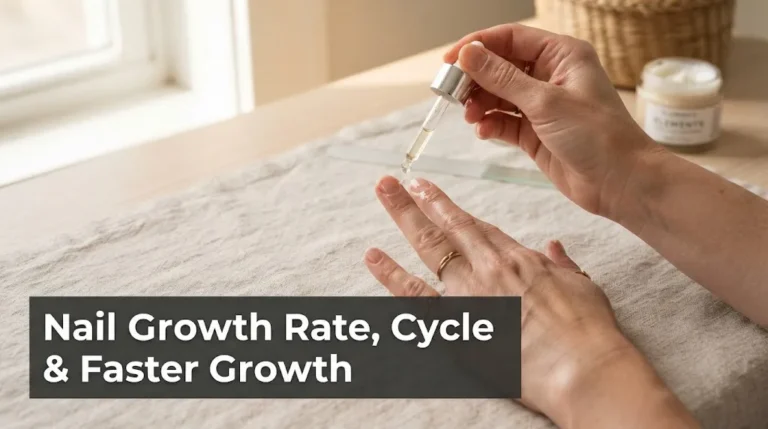
Fingernails typically grow around 3 millimeters per month, although growth varies with age, health, and individual differences.
If you prefer short nails, you might trim them more frequently. If you’re growing them longer, you may only need to smooth the edges regularly and shorten them when necessary.
File Rough Edges About Once a Week
Inspect your nails for snags, sharp corners, or uneven edges. Use a fine-grit file to smooth problem areas with gentle, controlled movements.
A 180- to 240-grit nail file can work for shaping natural nails, with a finer grit generally being gentler on delicate edges.
Avoid aggressively filing down the sides because that can weaken the nail’s structure and make corners more likely to split.
There’s no need to file perfectly smooth nails just because your weekly appointment with yourself has arrived.
Trim Your Nails Every One to Two Weeks
Use clean nail clippers to shorten nails that are becoming inconvenient or likely to catch on clothing.
Trim in small sections rather than forcing one large cut across the entire nail. Leave a little free edge instead of cutting extremely close to the sensitive skin underneath.
After trimming, lightly file uneven corners into your preferred shape.
Rounded and squoval shapes are practical choices if your nails frequently catch or break because they avoid extremely sharp corners.
What Should Your Weekly Nail Care Routine Include?
Set aside approximately 10 to 15 minutes once a week for a simple maintenance session. This gives you enough time to examine your nails, correct rough edges, and refresh your routine without overworking the nail plate.
Here’s a practical weekly checklist:
- Inspect your nails: Look for splitting, lifting polish, discoloration, or irritated skin.
- Remove worn regular polish: Replace it when it chips, peels, or looks uneven.
- Shape the free edges: File only where necessary to eliminate snags.
- Clean your nail tools: Wash reusable tools and disinfect them according to the manufacturer’s instructions.
- Moisturize thoroughly: Massage hand cream and cuticle oil into dry areas.
- Check your manicure condition: Make sure no enhancement is lifting or catching.
You don’t need to perform every task each week. For example, if your polish still looks beautiful and your nail edges are smooth, you can skip removing or reshaping them.
The goal is maintenance, not forcing your nails through a complete manicure unnecessarily.
For a more detailed foundation, see this simple nail care routine for maintaining healthy nails.
How Often Should You Care for Your Cuticles?
You can moisturize your cuticles daily, but you generally shouldn’t cut or aggressively push them back every day.
The cuticle helps protect the area where new nail grows. Repeated cutting or scraping can irritate the surrounding skin and increase the risk of infection.
If the cuticle area looks dry, apply a small amount of cuticle oil or fragrance-free moisturizer. A thin layer of petroleum jelly at bedtime can help protect especially dry skin.
If you have a hangnail, carefully clip only the loose piece of skin using clean tools. Never pull it off, because tearing can damage healthy skin.
Warning
Avoid cutting deeply into your cuticles or using sharp tools beneath the nail fold. If the surrounding skin becomes increasingly red, swollen, painful, or develops pus, seek medical advice rather than attempting another manicure.
How Often Should You Get a Manicure?
Your ideal manicure frequency depends on the type of polish or enhancement you wear, how quickly your nails grow, and whether your natural nails remain comfortable and healthy.
Different manicure systems have different maintenance needs. You shouldn’t apply the same schedule to every type of nail treatment.
Regular Nail Polish: Every 5 to 10 Days as Needed
Traditional nail polish may start chipping within several days, although a well-applied manicure can last longer.
Refresh your manicure when the color becomes noticeably worn rather than removing perfectly good polish on a rigid schedule.
Use a base coat beneath color and a suitable top coat for additional protection and shine. Avoid peeling polish from your nails, even when the edges begin lifting.
If your nails feel dry after removal, moisturize them before deciding whether another manicure is appropriate.
Gel Manicures: Usually Every 2 to 3 Weeks
Gel manicures often remain presentable for approximately two to three weeks, depending on nail growth, application quality, and daily activities.
However, visible lifting, cracks, soreness, or unusual discoloration shouldn’t be ignored until your next appointment.
Never peel gel polish off your nails. Removing it by force can strip away superficial layers of the natural nail plate.
Use the appropriate removal method for your gel system, or visit a qualified nail technician.
Acrylic Nails: Maintenance Usually Every 2 to 3 Weeks
Acrylic enhancements commonly need professional maintenance approximately every two to three weeks as natural nails grow.
Growth changes the position and balance of the enhancement, which can increase stress on the natural nail if the structure becomes too long or poorly supported.
The exact interval depends on nail growth, product retention, and your technician’s assessment.
If an acrylic lifts or breaks, don’t glue it down over trapped moisture or damaged skin. Have the issue assessed and corrected properly.
Dip Powder Nails: Commonly Every 2 to 4 Weeks
Dip powder manicures can remain intact for several weeks, but longevity doesn’t automatically mean your nails are healthy underneath.
Avoid repeated aggressive filing or forceful removal. These practices can gradually thin the natural nail plate.
If you’re experiencing peeling, tenderness, or surface damage, reassess your manicure routine before applying another set.
Do Your Nails Need a Break Between Manicures?
You don’t automatically need a scheduled break from every manicure. Your nails don’t breathe in the same way your skin does, so going polish-free isn’t necessary simply to give them oxygen.
However, taking a break can be helpful when repeated filing, removal, or enhancements have caused noticeable damage.
Consider reducing cosmetic treatments if your nails are:
- Unusually thin or flexible after enhancement removal.
- Peeling repeatedly in layers.
- Painful or sensitive when touched.
- Developing frequent splits or cracks.
- Showing irritation around the nail folds.
During a break, keep your nails comfortably short, moisturize regularly, and avoid unnecessary buffing.
You may notice improved comfort relatively soon, but visibly damaged nail plates must gradually grow out before they’re fully replaced.
For additional recovery advice, explore how to help damaged nails become healthy again.
What Nail Care Should You Do Once a Month?
Your monthly nail care routine should focus on assessing progress and identifying habits that might be causing problems.
Spend approximately 15 to 20 minutes reviewing the condition of your natural nails and cleaning or replacing worn tools.
Check Your Nail Growth and Strength
Examine whether your nails are growing smoothly from the base. Look for persistent splitting, unusual changes in color, or repeated damage in the same areas.
If you’re trying to grow longer nails, take a photograph once a month under similar lighting. This makes gradual changes easier to notice without obsessively measuring your nails every day.
Inspect Your Nail Care Tools
Check whether your nail file has become worn, your clippers are cutting cleanly, and your brushes are easy to sanitize.
Replace damaged disposable files instead of continuing to use rough or contaminated tools.
Store reusable tools somewhere clean and dry.
Review Your Manicure Habits
Ask yourself whether your current manicure routine is helping or hurting your nails.
If your nails repeatedly become sore after removal, the solution might involve changing removal techniques, reducing aggressive filing, or switching products.
More frequent nail appointments aren’t always better. Sometimes your nails benefit more from gentler services and less manipulation.
How Can You Tell If You’re Caring for Your Nails Too Often?
Overcare is possible, especially when nail care involves repeated buffing, cuticle cutting, scraping, or unnecessary product removal.
Watch for these common signs:
- Thin, bendy nails: Excessive surface filing or buffing may have removed protective nail layers.
- Red, tender cuticles: Cutting or pushing the surrounding tissue too aggressively can cause irritation.
- Peeling nail tips: Repeated trauma, forceful polish removal, or wet work may be contributing.
- Stinging during manicures: The nail surface or surrounding skin may be irritated or damaged.
- Persistent soreness: Your nail treatments may be too aggressive, or another issue may need evaluation.
Stop any treatment that causes pain. Healthy nail maintenance should not require discomfort.
If discoloration, separation, swelling, or pain persists, consult a healthcare professional. Those symptoms aren’t always caused by cosmetic overcare.
What Are the Most Important Nail Care Do’s and Don’ts?
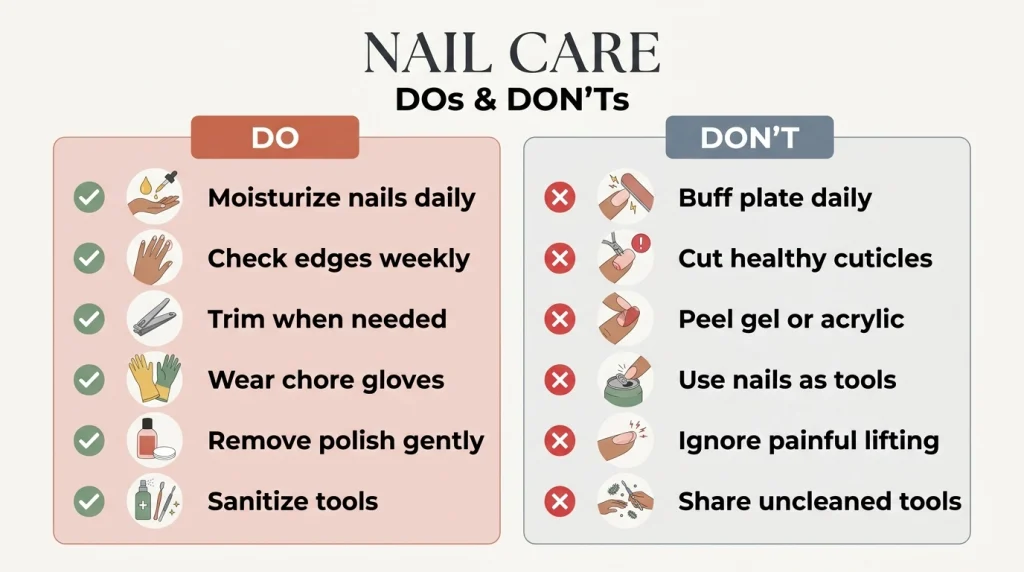
Do
- Moisturize nails and cuticles daily.
- Check for rough edges weekly.
- Trim your nails when needed.
- Wear gloves during wet chores.
- Remove manicures gently.
- Clean reusable nail tools.
Don’t
- Buff your nail surface daily.
- Cut healthy cuticles deeply.
- Peel gel or acrylic products off.
- Use nails to open packaging.
- Ignore painful or lifting enhancements.
- Share unsanitized manicure tools.
Which Nail Care Products Are Worth Using Regularly?
A simple routine usually needs only a few basic products. Choose items based on your nail concerns rather than buying every treatment marketed for stronger nails.
1. Jojoba-Based Cuticle Oil for Daily Moisturizing
A lightweight cuticle oil is convenient if your nail folds frequently feel dry. Massage a small amount around each nail once or twice daily.
Recommended Product
Jojoba-Based Cuticle Oil
A practical everyday choice for keeping dry cuticles conditioned without complicated treatments.
As an Amazon Associate, we earn from qualifying purchases.
2. Fine-Grit Nail File for Weekly Maintenance
A fine-grit nail file helps smooth small snags without the aggressive abrasion of a coarse file intended for artificial enhancements.
Choose a file suitable for natural nails and use gentle pressure.
Recommended Product
Fine-Grit Natural Nail File
Useful for gently refining nail edges during weekly maintenance without unnecessary surface buffing.
As an Amazon Associate, we earn from qualifying purchases.
3. Fragrance-Free Hand Cream for Frequent Moisturizing
A basic moisturizing cream is one of the most versatile additions to your routine. Look for ingredients such as glycerin, petrolatum, or ceramides to help reduce moisture loss.
Apply it after handwashing and before bed, especially when your hands are exposed to frequent washing or dry air.
Recommended Product
Fragrance-Free Moisturizing Hand Cream
An easy way to moisturize your hands, nails, and cuticles throughout the day, particularly if your skin is sensitive.
As an Amazon Associate, we earn from qualifying purchases.
How Long Does It Take to See Results From Regular Nail Care?
You may notice softer, more comfortable cuticles within several days of consistent moisturizing. Smoother nail edges can improve immediately after careful filing.
However, changes in the condition of the nail plate take longer because nails grow gradually.
Fingernails typically need around four to six months to grow from the base to the tip, although individual growth rates vary.
That means a damaged nail won’t become completely healthy after a week of using cuticle oil.
Instead, your routine protects the nail as new growth gradually replaces the affected portion.
If you want visible progress, take monthly photographs and focus on reducing new breakage rather than expecting dramatic changes overnight.
How Can You Make Nail Care Easier to Maintain?
The best nail care schedule is one you can follow even when you’re busy. Instead of treating every maintenance task as a separate appointment, connect it to your normal daily routine.
Create a Morning and Evening Habit
After your morning handwashing, apply hand cream and massage it around your nails.
Before bed, spend approximately one minute applying cuticle oil or another suitable moisturizer.
If you wear polish, avoid applying heavy oils immediately before painting. The nail surface should be clean and dry so regular polish can adhere properly.
Choose One Weekly Maintenance Day
Pick a convenient day to inspect your nails, smooth rough edges, and replace chipped regular polish if necessary.
You’ll be less likely to overlook developing cracks if you check your nails regularly.
Adjust Your Schedule to Your Lifestyle
If you frequently wash dishes, work with your hands, or use cleaning chemicals, daily protection and moisturizing may matter more than frequent manicures.
When your nails are already healthy and comfortable, you may need only minimal weekly maintenance.
For a more detailed daily schedule, see how to take care of your nails every day.
Pro Tip
If one nail keeps breaking in the same place, examine what that finger does during everyday tasks. Repeated pressure from opening containers, typing habits, or picking at objects can damage the same nail even when the rest are growing normally.
Frequently Asked Questions About Nail Care Frequency
Q: Should you care for your nails every day?
A: Yes, basic nail care should be part of your daily routine. Moisturize your nails and cuticles, maintain normal hand hygiene, and protect your hands during wet or chemical-heavy chores. Daily trimming, filing, or buffing isn’t necessary.
Q: How many times a week should you use cuticle oil?
A: You can use cuticle oil every day, usually once or twice depending on dryness. Apply a small amount around each nail and massage gently. You don’t need excessive amounts or repeated applications when the area already feels comfortable.
Q: Is getting your nails done every two weeks too much?
A: Not necessarily. A two-week manicure schedule may work well for some people, especially when products are applied and removed carefully. However, frequent aggressive filing, cuticle cutting, or forceful removal can damage your natural nails.
Q: How often should you let your nails rest from polish?
A: There’s no universal requirement to take scheduled breaks from nail polish. If your nails are comfortable and undamaged, regular polish can be worn consistently. Take a break from potentially damaging treatments if your nails become thin, sore, or irritated.
Q: How often should you buff your natural nails?
A: Buff natural nails sparingly, if at all. Repeated buffing removes surface material and can thin the nail plate. If your nails are already peeling or flexible, avoid cosmetic buffing and focus on gentle maintenance instead.
Your Simple Nail Care Schedule
If you want an easy routine to remember, use this schedule as your starting point:
- Every day: Clean gently, moisturize your nails and cuticles, and protect your hands during wet work.
- Once a week: Inspect your nails, smooth rough edges, and check the condition of your manicure.
- Every 1–2 weeks: Trim or reshape your nails as needed.
- Every 2–3 weeks: Have gel or acrylic enhancements assessed or maintained when appropriate.
- Once a month: Review nail growth, clean or replace worn tools, and reassess any damaging habits.
Your nails don’t need constant treatments to look beautiful. A few gentle habits performed consistently can make everyday maintenance easier and help limit preventable damage.
Final Thoughts: How Often Should You Care for Your Nails?
Care for your nails a little every day, give them a quick inspection each week, and schedule more involved maintenance only when it’s needed. Gentle moisturizing, proper protection, and avoiding unnecessary trauma matter more than frequent elaborate manicures.
Save this nail care schedule to your Pinterest beauty board so you always know when to moisturize, file, trim, and refresh your manicure.

Hi, I’m Jessica, the creator behind Unique Lash & Nails Katy.
I created this website for anyone who loves beautiful nails as much as I do. Here, I share trendy nail designs, seasonal manicure ideas, easy nail care tips, honest product recommendations, and step-by-step guides to help you create salon-worthy nails at home. Whether you’re looking for everyday inspiration or your next favorite nail trend, I hope you’ll find something you love.