What Causes Brittle Nails? 9 Reasons and Simple Fixes
Quick Answer
Brittle nails most often result from repeated exposure to water, soap, cleaning chemicals, or manicure damage. Frequent picking, natural aging, and dry conditions also make nails more likely to peel or split. Less commonly, iron deficiency, thyroid problems, skin conditions, infections, or certain medicines are involved. Keep your nails short, moisturize daily, wear gloves for wet chores, and seek medical advice for sudden or unusual changes.
Have you ever grown your nails to the perfect length, only to find a peeling corner or a fresh crack the next morning? Brittle nails can be frustrating, especially when you can’t tell whether your manicure habits or something else is responsible.
Here’s how to recognize the different types of brittleness, narrow down the likely causes, and protect your natural nails without giving up every manicure you love.


What Do Brittle Nails Actually Look Like?
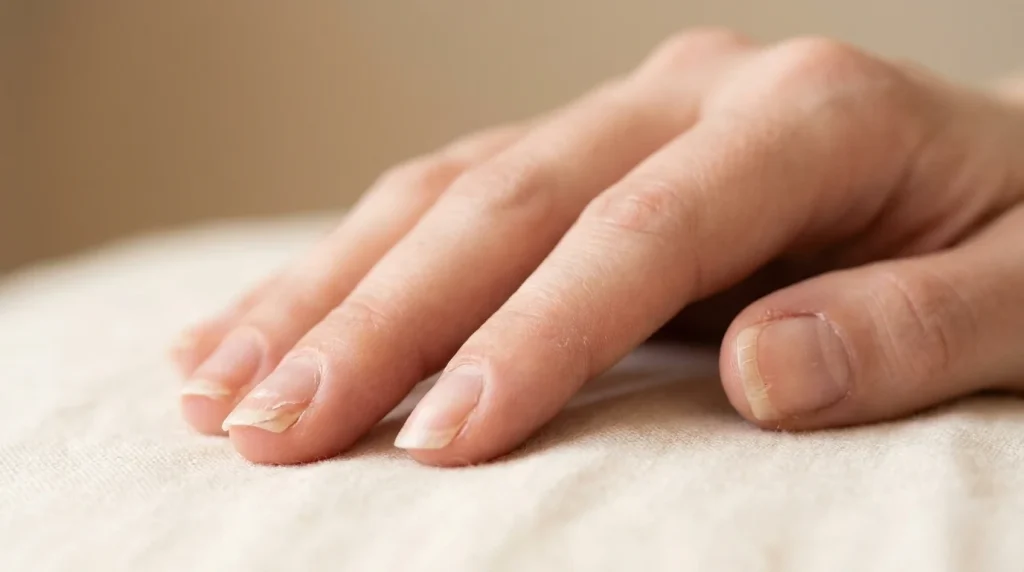
A healthy nail has some flexibility. It can bend a little with everyday movement without repeatedly cracking or shedding layers. A brittle nail tends to lose that balance: it may feel unusually rigid and snap, or become soft and peel at the free edge.
Look for these common signs:
- Peeling tips: Thin layers separate horizontally, almost like the pages of a tiny book.
- Splitting edges: A crack starts at the tip or side and catches on fabric or hair.
- Frequent breakage: Nails break during simple tasks, even at a relatively short length.
- Rough surfaces: The nail looks flaky or feels uneven, especially after polish removal.
- Lengthwise splits: Ridges or cracks run from the base toward the tip; persistent deep splits deserve closer attention.
Dermatologists use terms such as onychoschizia for layered splitting and onychorrhexis for lengthwise ridging or splitting.
What Causes Brittle Nails? 9 Common Reasons
Most brittle nails are affected by daily exposure or repeated physical stress rather than one mysterious vitamin problem. Start by looking at what your hands do each day. If you want a broader overview of fragile nails, our guide to what causes weak nails explains how everyday damage can affect strength.
1. Frequent Wetting and Drying
Water isn’t a moisturizer for your nail plate in the same way a cream is for your skin. Nails take up water while they’re wet and lose it again as they dry. Repeated swelling and shrinking can weaken the bonds between nail layers, leaving the tips prone to peeling.
This is especially relevant if you wash dishes daily, work with wet hands, swim frequently, or sanitize and wash your hands many times during a shift. You don’t need to stop washing your hands. Instead, limit unnecessary soaking and protect them during longer wet jobs.
2. Harsh Soaps, Cleaners, and Polish Remover
Dish detergents, household cleaners, and frequent solvent-based polish removal can strip away surface oils and leave the surrounding skin dry. If your nails already split easily, that extra dryness can make everyday wear feel worse.
Notice whether breakage increases after deep cleaning or after several polish changes in one week. Use mild soap when appropriate, avoid soaking your fingers in remover longer than necessary, and reapply hand cream afterward. Acetone has a legitimate role in removing certain nail products; the problem is repeated exposure without gentle handling and aftercare.
3. Rough Gel, Dip, or Acrylic Removal
Beautiful enhancements don’t automatically mean damaged nails. However, aggressive electric filing, scraping stubborn product, and peeling off gel or acrylic can remove superficial layers of your natural nail plate. The remaining nail may look thin, chalky, flexible, or flaky.
If the brittleness appeared right after an enhancement was removed, manicure trauma is an important clue. Ask for careful removal, resist lifting product yourself, and pause repeated enhancements if your nails feel sore or unusually thin. For a balanced explanation, see whether taking a break from nail polish can help.
4. Using Your Nails as Tools
Opening cans, peeling stickers, picking at labels, and repeatedly tapping your free edges against hard surfaces put concentrated pressure on the same small areas. Even healthy nails can eventually tear under that kind of stress.
Long pointed shapes are particularly vulnerable because extra length creates more leverage. If one thumb or index nail always breaks while the others remain fine, think about what that finger does most often. Keep the vulnerable nail shorter and use an actual tool for prying or scraping.
5. Natural Aging and Individual Nail Texture
Nail texture changes over time. Some people naturally have thinner or more flexible nails, while others develop increased ridging and fragility with age.
What matters is whether the change is gradual and familiar or sudden and unexplained. You can’t change the nail texture you inherited, but you can reduce avoidable damage by moisturizing and keeping your nails at a practical length. A nail doesn’t have to be extremely hard to be healthy; a little flexibility is useful.
6. Iron Deficiency or Other Nutritional Gaps
Your nail matrix continuously makes new nail cells, so adequate nutrition matters. Significant deficiencies, including iron deficiency, and inadequate overall nutrition can sometimes contribute to fragile or unusually shaped nails.
But peeling nails alone don’t prove you’re missing iron, biotin, or any other nutrient. If you also have unusual fatigue, dizziness, heavy periods, or a restricted diet, a clinician can assess whether testing makes sense. Eating balanced meals with protein, iron-containing foods, and a variety of vegetables is a better starting point than guessing with multiple supplements.
7. Thyroid Disorders
Both underactive and overactive thyroid conditions can be associated with nail changes. Depending on the situation, nails may grow more slowly, become fragile, develop ridges, or lift from the skin underneath. These signs are not unique to thyroid disease.
Pay attention to the bigger picture. New brittleness alongside unexplained tiredness, temperature sensitivity, skin changes, or changes in weight deserves a discussion with a healthcare professional. A nail photo can’t diagnose your thyroid; medical history and appropriate tests are much more informative.
8. Eczema, Psoriasis, or Nail Infection
Inflammatory skin conditions can also affect nails. Eczema around the fingertips may come with dry, irritated skin, while nail psoriasis may cause pits, roughness, thickening, or separation. Fungal infections can make a nail yellowish, thick, crumbly, or distorted.
These problems need different treatments. Moisturizer may help irritated skin, but it won’t cure a fungal infection or manage every form of nail psoriasis. If a nail changes color, thickens, lifts, or becomes painful, have it assessed instead of hiding it beneath another enhancement.
9. Certain Medications and Medical Treatments
Some prescription treatments, including oral retinoids and certain cancer therapies, can change nail strength or appearance.
If your nails became brittle after starting a new prescription, ask the clinician or pharmacist who manages it whether the change might be related. Don’t stop prescribed medication on your own just to improve a manicure. Your care team can help weigh side effects against the treatment’s benefits.
How Can You Tell Which Cause Is Most Likely?
Think about when the brittleness started, which nails are affected, and what else changed. These clues can guide your next move, although they can’t provide a diagnosis.
- Many fingernails peel after frequent washing: Repeated wet-dry exposure or harsh soap may be contributing.
- Nails feel thinner immediately after gel removal: Filing, picking, or scraping damage is a likely possibility.
- Only your dominant thumbnail cracks: Repeated pressure or using that nail as a tool may explain it.
- One nail becomes thick, yellow, and crumbly: A nail infection or another nail disorder should be considered.
- Several nails suddenly change with other symptoms: Ask a clinician about potential medical or nutritional causes.
You can take a clear photograph of your bare nails now and compare it with another in four weeks.
What Can You Do to Protect Brittle Nails?
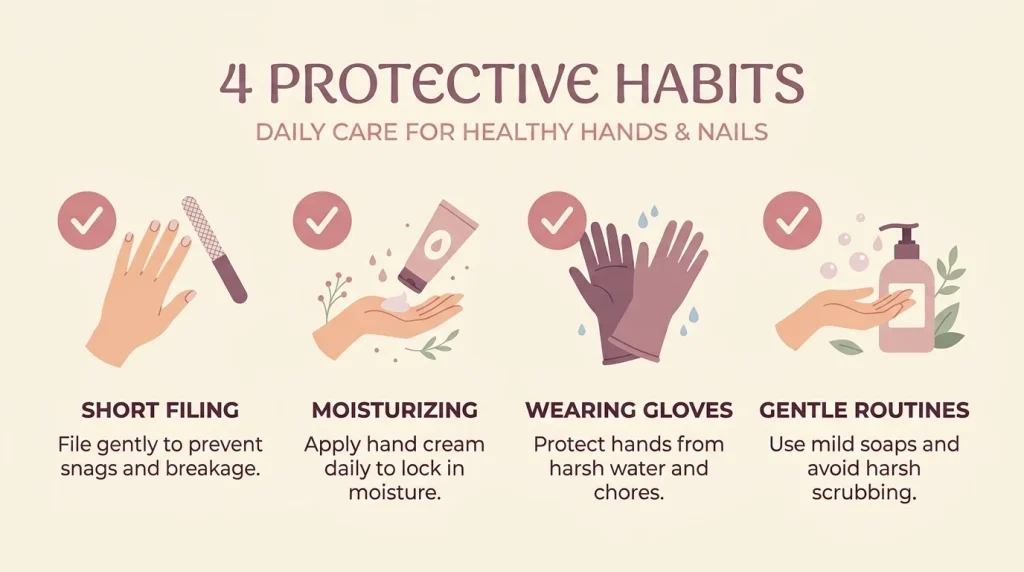
You can’t instantly fuse a split nail back into an undamaged nail plate. The practical goal is to prevent new breaks and let healthier growth replace the weak section. Start with these manageable habits.
Keep Your Nails Comfortably Short
Trim away excess length so fragile tips are less likely to catch on clothes or hair. A softly rounded or squoval shape can be easier to maintain than dramatic pointed extensions while your nails are peeling. Use clean clippers, then smooth snags with a fine, non-metal file rather than tearing off loose layers.
Moisturize After Washing and Before Bed
Rub a fragrance-free hand cream over your nails and the skin around them after washing. At night, massage a small amount of cuticle oil or petroleum jelly around each nail. Consistent moisturizing helps manage dryness; it does not magically rebuild nail layers that have already been removed.
A simple jojoba cuticle oil is convenient to keep beside your bed, especially if you forget daytime applications.
Wear Gloves for Dishes and Cleaning
Protect your nails from repeated soaking and detergents with reusable cotton-lined cleaning gloves. If gloves become sweaty inside, remove them when the task ends, dry your hands, and moisturize. The goal is less prolonged wet exposure, not keeping your hands sealed in damp gloves all day.
Adjust Your Manicure Routine
Choose gentle filing and removal over aggressive buffing, drilling, or peeling. If your natural nails are already thin, wait until they’re comfortable and stable before another long-wear enhancement. A regular sheer polish may be fine when the nail isn’t painful or showing suspicious changes, but color shouldn’t be used to conceal a possible infection.
If you want a practical routine you can keep using, follow these simple daily nail care habits rather than buying a different treatment every week.
Pro Tip
Keep a nail file in your bag and hand cream by the sink. Fixing a tiny snag before it catches, then moisturizing after wet work, is often more useful than a complicated weekly nail treatment.
What Should You Do—and Avoid—When Nails Keep Breaking?
Do
- Keep tips short and smoothly filed.
- Use hand cream after washing.
- Wear gloves for prolonged wet chores.
- Notice changes when nails are bare.
Don’t
- Peel or pry off gel and acrylic.
- Over-buff a thin nail plate.
- Cut or push back cuticles aggressively.
- Self-treat every change with vitamins.
Do Nail Vitamins or Hardeners Actually Fix Brittleness?
It’s tempting to treat every weak nail as proof that you need a supplement. However, evidence is insufficient to routinely recommend over-the-counter biotin for brittle nails. High doses may also interfere with important blood tests. If you already take biotin, tell your clinician before testing.
Nail hardeners can sometimes provide temporary surface support, but they aren’t a cure for nutritional deficiency or repeated manicure trauma. Some formulas may irritate sensitive skin or make a nail too rigid. Stop using a product if it causes burning, redness, or worsening breakage.
For most people, consistent protection, gentle removal, and moisturizing are sensible first steps. Supplements should address an identified need, not replace a conversation with a medical professional when your nails change suddenly.
How Long Does It Take for Brittle Nails to Improve?
You may find that your nails snag less within days after trimming and smoothing the tips. Dry cuticles can also feel more comfortable soon after you start moisturizing. Those are improvements in protection and comfort, not instant repair of the old nail plate.
New fingernail grows from the matrix near the base, typically at roughly 3 millimeters a month. Replacing an entire fingernail often takes around four to six months, sometimes longer. Your timeline depends on the cause, the extent of damage, and your individual growth rate.
Take photos every four weeks and watch the newer section near the cuticle, not just the oldest peeling edge. To understand the regrowth process in more detail, read whether a damaged nail can regrow.
When Should Brittle Nails Be Checked by a Doctor?
Ordinary peeling after cleaning or manicure removal often responds to gentler habits. But brittleness paired with certain changes should not be treated as a cosmetic issue.
Warning
Seek medical care if you notice pain, swelling, pus, significant lifting, a persistent thick or yellow crumbly nail, or sudden changes in several nails. Have a new or changing dark streak evaluated promptly, especially if pigment spreads onto the surrounding skin. Don’t cover unexplained changes with opaque polish or artificial nails.
If brittleness persists despite gentle care, or comes with fatigue, hair or skin changes, or other new symptoms, a healthcare professional can decide whether examination or testing is appropriate. For examples of changes worth watching, see these signs of unhealthy nails.
Which Basic Products Are Worth Keeping for Brittle Nails?
Choose products that make the habits above easier to maintain, and remember that they protect nails rather than diagnosing or treating underlying disease.
Recommended Product
Fragrance-Free Moisturizing Hand Cream
A thick, fragrance-free cream is useful if frequent handwashing leaves your nails and the skin around them dry. Apply after washing and before bed.
As an Amazon Associate, we earn from qualifying purchases.
Recommended Product
Fine Glass Nail File
A fine file lets you smooth small snags gently instead of pulling peeling pieces away and turning them into larger splits.
Browse Glass Nail Files on Amazon
As an Amazon Associate, we earn from qualifying purchases.
Frequently Asked Questions About Brittle Nails
Q: What deficiency causes brittle nails?
A: Iron deficiency and inadequate nutrition can sometimes contribute, but water exposure and nail trauma are much more common explanations. Nail appearance alone can’t identify a deficiency; testing depends on your symptoms and medical history.
Q: Why do my nails peel in layers?
A: Layered peeling often follows repeated wetting and drying, rough filing, or harsh manicure removal. Keep the tips smooth, minimize prolonged water exposure, and let the damaged part grow out.
Q: Can brittle nails become strong again?
A: Often, yes. Protecting nails from repeated damage gives new growth a better chance to remain intact. Existing splits won’t vanish, but they can gradually be trimmed off as the nail grows.
Q: Is nail polish bad for brittle nails?
A: Regular polish isn’t automatically harmful. Frequent solvent exposure, aggressive filing, and peeling off long-wear coatings are more concerning. Avoid covering painful, lifting, or unexplained nail changes.
Q: Does drinking more water stop nails from breaking?
A: Normal hydration supports overall health, but drinking extra water isn’t a proven fix for a dry nail plate. Protecting your nails from wet-dry cycles and moisturizing them directly is usually more practical.
What’s the Most Important Takeaway for Brittle Nails?
The most common causes of brittle nails are repeated water exposure, harsh products, and mechanical or manicure damage. Start with gentle care and protection, then get unusual or persistent changes checked instead of guessing at a vitamin deficiency.
Save this guide on Pinterest so your nail-care checklist is easy to find before your next manicure.

Hi, I’m Jessica, the creator behind Unique Lash & Nails Katy.
I created this website for anyone who loves beautiful nails as much as I do. Here, I share trendy nail designs, seasonal manicure ideas, easy nail care tips, honest product recommendations, and step-by-step guides to help you create salon-worthy nails at home. Whether you’re looking for everyday inspiration or your next favorite nail trend, I hope you’ll find something you love.