How Often Should You Moisturize Nails? Easy Routine
Quick Answer
Moisturize your nails and cuticles at least once daily, ideally before bed. If your hands get dry or you wash them frequently, apply hand cream to your nails and cuticles after each wash. A small amount of cuticle oil once or twice a day is an optional extra, not a requirement. Consistency and protection from prolonged water exposure matter more than applying thick layers.
Wondering whether your nails need oil every hour or just a little cream at night? You don’t need to turn nail care into a full-time job. The right schedule depends on how often your hands get wet, how dry your cuticles feel, and whether you’re recovering from a manicure. Here’s a realistic routine you can follow without leaving greasy fingerprints everywhere.


How Many Times a Day Should You Moisturize Your Nails?
For most people, one thorough application before bed is a sensible starting point. If your nails and surrounding skin stay comfortable, that might be all the dedicated nail care you need. However, handwashing removes some moisturizing product, so daytime touch-ups are useful when your fingers start feeling tight.
Think of the schedule as a starting guide rather than a medical rule. There isn’t one perfect number of daily applications that works for every nail type.
- Healthy nails with comfortable cuticles: Moisturize once every evening and include your nails whenever you use hand lotion.
- Dry or flaky cuticles: Try morning and bedtime applications, plus hand cream after washing when needed.
- Frequent handwashing or sanitizer use: Reapply a fragrance-free cream to your fingertips, nails, and cuticles after each wash or after sanitizer has dried.
- Peeling or brittle nails: Moisturize daily and after washing, but also reduce wet chores, harsh removers, and picking. Moisture alone can’t fix existing splits.
- Cold, dry weather: Keep a small cream nearby and apply again whenever your skin starts feeling rough or tight.
A practical way to check your frequency is to look at your fingertips a few hours after applying product. If the skin is supple and comfortable, there’s no need to keep adding oil. If it becomes visibly ashy, flaky, or uncomfortable, another thin application may help.
If you’re unsure which product should go on first, our guide to the best way to moisturize your nails explains how to combine lighter oils with richer creams.
When Is the Best Time to Apply Nail Moisturizer?
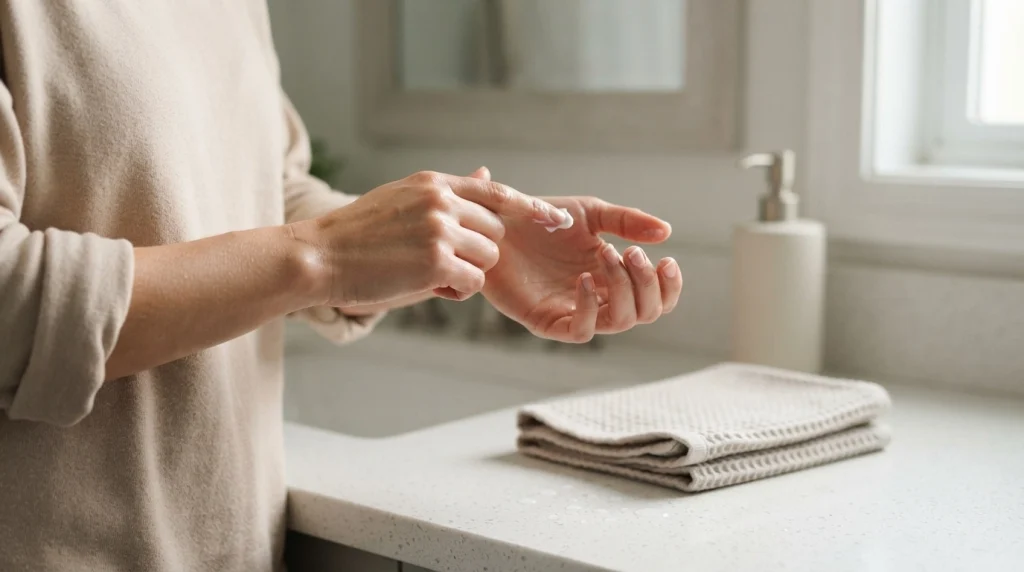
After washing your hands
This is the most useful time to reapply if dryness is a problem. Soap and repeated wetting can leave hands and cuticles dry. Pat your hands mostly dry, leave the skin slightly damp, and rub in a little fragrance-free cream. Sweep the remaining product across each nail, along the sides, and around the cuticle line. Don’t just moisturize your palms.
Before going to bed
Nighttime is ideal for a thicker formula because you’re less likely to wash it straight off. Massage in cream or oil, then add a thin layer of petroleum jelly to especially rough fingertips. You can wake up with softer-feeling skin without needing a lengthy nail treatment.
After removing nail polish
Nail polish remover, particularly acetone, can leave your nail area feeling dry. Once removal is finished, wash away residue and apply a cream or cuticle oil. If you’re about to repaint immediately, keep the nail plate clean of oily residue so the new polish can adhere properly.
After a shower or bath
Your skin is already slightly damp, making this a convenient moment to apply moisturizer. There’s no reason to soak your nails in a bowl of water first. Prolonged wetting and drying can contribute to splitting in vulnerable nails, so finish your shower, gently dry your hands, and moisturize.
Should You Use Cuticle Oil, Hand Cream, or Vaseline?
All three can fit into a good routine, but they solve slightly different practical problems. You don’t need to buy all of them if one comfortable product already keeps your fingertips moisturized.
Cuticle oil: best for a quick, lightweight touch-up
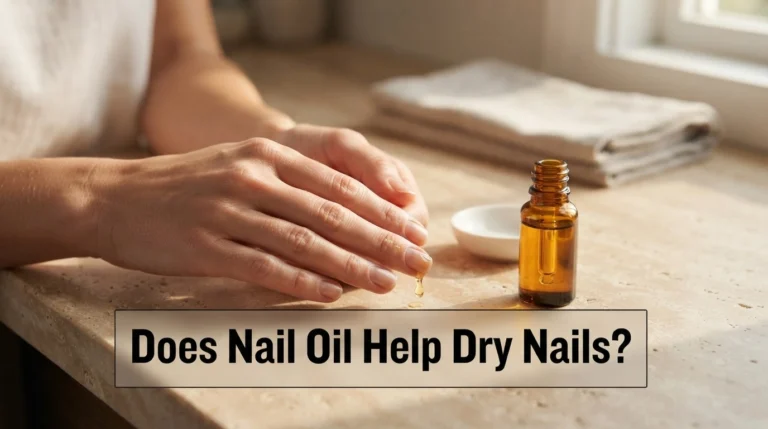
Cuticle oils commonly contain jojoba, sunflower, or other conditioning oils. A tiny drop is easy to massage around the nail folds while you’re at your desk or watching television. It suits you if your cuticles feel rough but you dislike thick hand cream during the day.
How to use it: Massage a small drop across several nails, distributing it along each sidewall and cuticle. You should see a light sheen, not pools of oil. The advantage is convenience; the drawback is that some formulas feel slippery and need reapplying after washing.
For a portable option, look for a jojoba cuticle oil pen. It can be easier to use neatly than an open bottle.
Hand cream: best for everyday moisture after washing
A fragrance-free cream is the simplest all-rounder because it covers your hands, nail folds, and cuticles in one step. Ingredients such as glycerin help attract water to the skin, while richer ingredients help limit moisture loss. Choose a cream you actually enjoy using; the most expensive jar won’t help if you never reach for it.
How to use it: Apply while your skin is slightly damp. Work a little into each fingertip and over the nail surface. Cream may feel heavier than an oil, but it is practical when the whole hand needs attention.
Petroleum jelly: best for sealing very dry areas overnight
Plain petroleum jelly forms a protective layer that slows water loss. It’s particularly useful on dry cuticles, rough fingertips, and the days after a drying manicure removal. Use a rice-grain-sized amount per nail area, spreading it thinly over moisturizer rather than piling it on.
The tradeoff is texture: petroleum jelly is inexpensive but greasy. If you’re deciding between a light daytime oil and an overnight barrier, see our Vaseline versus cuticle oil comparison.
What Does a Realistic Daily Nail-Moisturizing Routine Look Like?
You can keep the entire routine under two minutes on an ordinary day. It doesn’t require special soaking bowls, cuticle scissors, or a complicated ten-product manicure kit.
- Morning: Apply hand cream after your first handwash. If your cuticles are already comfortable, skip the extra oil.
- During the day: Moisturize after handwashing when your hands need it. A small amount is enough to cover the nails and surrounding skin.
- Before wet chores: Put on protective household gloves instead of expecting cream to compensate for long exposure to detergent and water.
- At bedtime: Massage cream or cuticle oil around each nail. Add petroleum jelly only to areas that still feel rough.
When you already follow a skincare routine, attach nail care to that familiar habit. Keep the cuticle oil beside your nighttime face moisturizer or put the hand cream near the sink. Making the product easy to reach usually matters more than owning several different formulas.
If you enjoy manicures, keep moisturizing even when your nails are painted. The polish covers much of the nail plate, but the cuticles, nail folds, fingertips, and exposed free edges still benefit from gentle care.
Can You Moisturize Your Nails Too Often?
Applying a modest amount of a well-tolerated moisturizer several times a day is generally fine. The more common problem is using excessive product rather than choosing the wrong number of applications. If your nails stay slick, your phone gets oily, or polish lifts soon after application, scale back the quantity.
Too much product also makes it harder to tell whether a new formula is irritating your skin. Fragranced oils and essential-oil blends can cause redness or itching in sensitive people. Stop any product that triggers irritation rather than adding more layers to cover the discomfort.
Remember: Moisturizing isn’t the same as keeping nails continuously wet. Don’t soak your fingertips repeatedly to make them feel hydrated. Dry them after normal washing and use a little cream or oil instead.
For help finding the balance between helpful and messy, see whether you can oil your nails too much.
Should You Moisturize More Often If Your Nails Are Peeling?
If dryness is contributing to peeling, more regular moisturizing can help protect the nail area from further dryness. But a peeling nail isn’t always simply dehydrated. Repeated water exposure, peeling off gel polish, rough buffing, and certain medical conditions can also affect the nail plate.
Start with hand cream after washing and a richer bedtime application. Keep tips short enough that loose layers don’t catch on clothing. File snags gently, avoid pulling peeling layers away, and wear gloves for washing dishes or using cleaning products.
If you recently removed acrylics, dip powder, or gel, don’t expect oil to bond damaged nail layers back together. Moisturizer supports comfort and protection while the affected portion grows outward. Our guide to caring for a damaged nail at home covers what you can safely manage yourself.
Warning
Get medical advice if you have pain, increasing redness, swelling, pus, a dark streak, substantial nail lifting, or persistent unexplained changes. Cream and oil cannot treat nail infections or replace an evaluation.
How Long Before Moisturizing Makes a Difference?
Dry skin around your nails can feel smoother immediately after you apply cream or oil. With consistent use over several days, you may notice fewer uncomfortable, rough patches. However, there’s no reliable universal countdown for seeing stronger nail tips, because the cause of brittleness matters.
An already split nail won’t fuse itself back together just because you moisturize it. Fingernails grow gradually, generally over months, so visibly damaged sections need time to move toward the tip. Moisturizer can help you maintain the surrounding skin while you wait.
If your routine seems ineffective after a few weeks, look beyond the bottle. Are you washing dishes without gloves, picking off polish, filing aggressively, or using a fragranced product that stings? Correcting the ongoing trigger may matter more than applying oil more frequently.
What Are the Do’s and Don’ts of Nail Moisturizing?
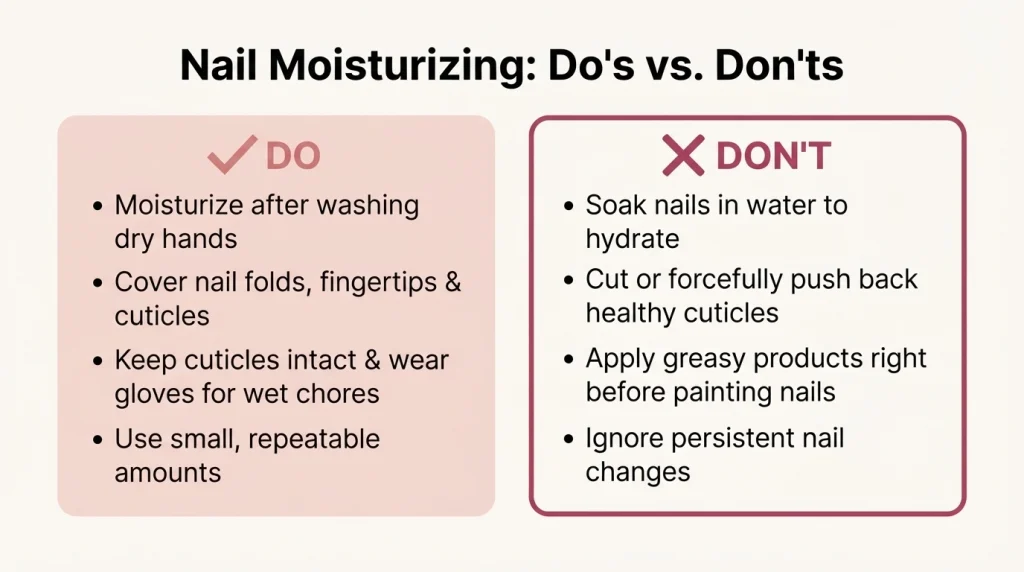
Do
- Apply moisturizer after washing if your hands dry out easily.
- Cover nail folds, fingertips, and cuticles as well as your hands.
- Keep cuticles intact and wear gloves for lengthy wet chores.
- Use small, repeatable amounts rather than occasional heavy layers.
Don’t
- Keep nails soaked in water as a hydration treatment.
- Cut or forcefully push back healthy cuticles.
- Apply greasy products immediately before painting your nails.
- Assume persistent nail changes are caused only by dryness.
What Small Changes Make Nail Moisturizing More Effective?
Pro Tip
Use your hands as your reminder. When you finish washing them, check whether the skin beside your nails feels tight. That cue is more useful than setting an hourly alarm to apply oil.
Give nail edges attention. If your nails extend past your fingertips, swipe a little leftover cream along the free edge. You don’t need to push product underneath attached nail or dig around with a tool.
Choose fragrance-free when your skin is reactive. A pleasant scent isn’t worth itchy cuticles. Test any unfamiliar product on a small area first, particularly if you have a history of irritation.
Make nighttime care easy. If cream transfers onto your sheets, lightweight cotton moisturizing gloves can help you keep an overnight product in place. Use them on clean, mostly dry hands, not over soaked skin.
Which Products Are Worth Keeping in Your Nail-Care Kit?
Start with one comfortable moisturizer. Add an oil or ointment only if it solves a specific problem, such as dry cuticles during the day or rough fingertips at night. You don’t need an expensive strengthening serum just to maintain moisture.
Recommended Product Type
Fragrance-Free Hand Cream
A richer cream containing glycerin, petrolatum, or mineral oil is a practical choice if repeated washing dries both your hands and nail area.
As an Amazon Associate, we earn from qualifying purchases.
Recommended Product Type
Plain Petroleum Jelly
A tiny amount over slightly damp skin or hand cream makes an inexpensive protective layer for particularly dry cuticles before bed.
Explore Petroleum Jelly on Amazon
As an Amazon Associate, we earn from qualifying purchases.
Frequently Asked Questions About Moisturizing Nails
Q: Should I moisturize my nails every day?
A: Yes, daily moisturizing is a useful habit, particularly if your cuticles are dry. Apply hand cream over your nails and cuticles at least before bed, and reapply after washing whenever needed.
Q: Is cuticle oil once a day enough?
A: It often is if your cuticles feel comfortable. When washing, cold air, or manicure removal leaves them dry, you can add a second light application or use hand cream after washing.
Q: Can I put lotion on nails with gel or acrylics?
A: Yes. Moisturize the exposed skin, cuticle area, and fingertips while avoiding picking at or lifting the enhancement. Lotion won’t repair lifting product, which should be checked by a qualified nail professional.
Q: Should I use cuticle oil before or after hand cream?
A: Either can work, but oil first followed by cream is a convenient layering approach for very dry cuticles. If you’re short on time, one fragrance-free cream applied thoroughly is enough for a basic routine.
Q: Does moisturizing make nails grow faster?
A: Not directly. Moisturizing helps manage dryness and may reduce dryness-related breakage, but it doesn’t dramatically speed up growth from the nail matrix. Healthy nail length also depends on gentle grooming and protection.
What’s the Best Nail-Moisturizing Schedule to Stick With?
Start with nightly moisturizer and make a point of covering your nails and cuticles whenever you apply hand cream. If your fingertips become dry after washing, add a small touch-up rather than waiting until bedtime. Keep one product by your sink and another by your bed if that makes the habit easier.
Pair this with a simple nail care routine that protects your nails from unnecessary stress. Beautiful nails don’t need constant oiling; they need small, consistent care. Save this guide to Pinterest so your moisturizing schedule is easy to find the next time your cuticles feel dry.

Hi, I’m Jessica, the creator behind Unique Lash & Nails Katy.
I created this website for anyone who loves beautiful nails as much as I do. Here, I share trendy nail designs, seasonal manicure ideas, easy nail care tips, honest product recommendations, and step-by-step guides to help you create salon-worthy nails at home. Whether you’re looking for everyday inspiration or your next favorite nail trend, I hope you’ll find something you love.