How to Stop Nails From Breaking: 7 Easy Nail-Care Habits
Quick Answer
To stop nails from breaking, keep them comfortably short, gently file away snags, moisturize your nails and cuticles after washing, and wear gloves for dishes and cleaning. Avoid peeling off gel polish, over-buffing, and using your nails to pry things open. These habits protect the nail you have while healthier nail gradually grows in.
Time needed
5–10 minutes daily
Difficulty
Beginner
Items needed
4 basic essentials
Result lasts
With ongoing care
You finally get your nails to a pretty length, then one catches on a sweater and snaps. If that keeps happening, you don’t need a miracle serum or a complicated manicure routine. You need to reduce the everyday stress that makes nails split. Here’s a realistic way to protect your natural nails without giving up the nail looks you love.


Why Do Your Nails Keep Breaking?
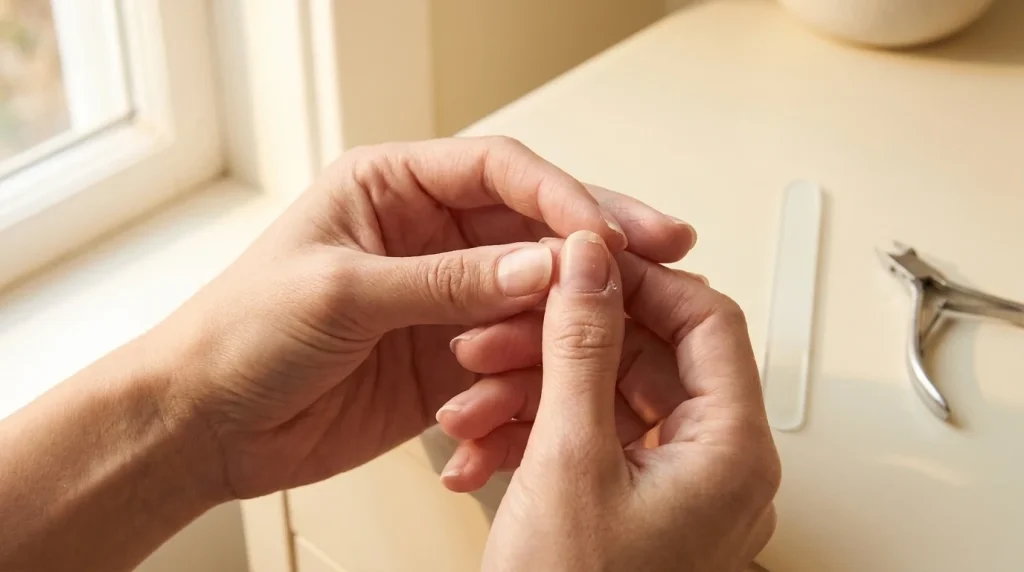
Your nail plate is made of layers of keratin. It can bend a little, but repeated stress, dryness, and damage can make those layers peel apart or crack. Before buying a strengthener, notice where your nail breaks and what your hands do all day.
- Peeling at the tips: Repeated wetting and drying, polish removal, or rough filing may be contributing.
- Cracks along the side: Extra length and small impacts can turn a tiny snag into a painful split.
- Thin, bendy nails after extensions: Peeling off enhancements or aggressive filing can remove surface layers.
- Brittle nails on many fingers: Frequent cleaning, dry air, and repeated manicures are common factors, although persistent changes deserve a closer look.
Keep in mind that a damaged nail plate doesn’t heal like skin. Your job is to stop the new damage and let healthy-looking nail grow forward. If your nails are already visibly damaged, this guide to repairing a damaged nail at home explains how to manage minor peeling and splits safely.
What Do You Need to Keep Nails From Breaking?
Start with four essentials rather than an overflowing nail-care drawer:
- Clean nail clippers: To remove excess length before it catches on things.
- Fine-grit or glass nail file: To smooth small snags without aggressive sanding. A glass nail file for natural nails is a convenient option.
- Fragrance-free hand cream: To moisturize the nail plate and surrounding skin after washing.
- Reusable protective gloves: To shield your hands from dishwater, detergents, and cleaning products.
Cuticle oil and plain petroleum jelly are optional extras. Neither is necessary if you already use a moisturizing cream consistently.
Warning
If a crack reaches the pink, attached portion of your nail, or you notice bleeding, significant pain, pus, swelling, or nail lifting, don’t cover it with glue or a decorative enhancement. Get medical advice instead of treating it like an ordinary cosmetic break.
How Can You Stop Nails From Breaking Step by Step?
The routine below focuses on prevention, not a one-day cosmetic fix. Start with the steps that match your habits and repeat them consistently.
1Trim Your Nails to a Practical Length
Clip your nails so the free edges won’t constantly hit your keyboard, pockets, or countertops. Cut nearly straight across, then soften the corners slightly. If you’re rebuilding very fragile nails, leave little or no overhang until breakage settles.
Common mistake: Cutting into the pink attached nail to get everything super short. That can injure sensitive tissue and isn’t needed for prevention.
2File Away Snags Before They Spread
Use a fine file with light strokes in one direction to round sharp corners and smooth rough edges. Check your nails after laundry, workouts, and other activities where a tiny chip might appear. Stop once the edge feels smooth.
Common mistake: Buffing the top surface to erase ridges. Removing more nail material can leave already thin nails easier to split.
3Moisturize After Every Hand Wash
After washing, pat your hands dry and massage a little hand cream across each nail, its sides, and the surrounding cuticle area. Repeat before bed. Regular moisturizing helps combat the dryness that can accompany frequent water exposure.
Common mistake: Moisturizing only the backs of your hands. Your nail plates and cuticles need attention too.
4Wear Gloves for Wet and Messy Chores
Put on well-fitting household gloves before dishwashing, scrubbing, or handling cleaners. Cotton-lined gloves can feel more comfortable when a job takes longer. Remove the gloves afterward, dry your hands, and moisturize if needed.
Common mistake: Wearing damp gloves for long periods. Trapped moisture can leave your hands irritated, so dry gloves between uses.
5Stop Using Your Nails as Tools
Open cans with a tab tool, peel labels with a scraper, and use the pads of your fingers instead of your nail tips. This one habit removes the bending and leverage that often cause side cracks and sudden breaks.
Common mistake: Thinking a tough top coat makes nails safe for prying. Polish doesn’t protect a nail from every impact.
6Remove Polish and Enhancements Gently
For ordinary polish, press remover-soaked cotton against the nail instead of scraping the color away. For gel or acrylic enhancements, follow the correct removal method or see a qualified nail professional. Give visibly thin or peeling nails a break from repeated enhancements.
Common mistake: Picking off a lifted gel edge. It may take superficial layers of your natural nail with it.
You don’t have to avoid every manicure forever. The goal is to minimize repeated filing, scraping, and removal trauma. If you’re unsure whether polish-free time would help, see whether nails are healthier without nail polish.
7Leave Your Cuticles Alone
Moisturize the thin skin at your nail bases instead of clipping or forcefully pushing it back. Cuticles help protect the growing nail area. If you have a hangnail, carefully clip the loose skin with clean tools; never pull it.
Common mistake: Cutting living cuticle tissue for a perfectly clean-looking manicure. That increases the risk of irritation and infection.
What Else Makes Brittle Nails Worse?
Even a careful daily routine may struggle if you keep repeating the same damaging habits. Watch for frequent soaking, peeling enhancements, rough surface buffing, nail biting, and harsh cleaners used without gloves. Each creates a different kind of stress, but all can contribute to rough, weakened nails.
Be cautious with nail hardeners marketed as instant fixes. Some formulations make nails more rigid instead of more flexible, and a brittle nail may still crack under pressure. Formaldehyde-containing products can also irritate skin or cause problems for sensitive users. If a treatment stings, produces a rash, or seems to worsen peeling, stop using it.
Don’t assume a nail needs lemon juice, baking soda, or an aggressive scrub to become healthy. Those DIY treatments won’t replace lost nail layers. Consistent gentle care is a more sensible first move.
How Long Does It Take to Stop Nail Breakage?
Small practical changes can help immediately: a freshly filed edge is less likely to snag, and shorter nails experience less leverage. Moisturizer may make dry surrounding skin feel more comfortable within days. However, existing splits and thin spots don’t simply fuse back together.
Fingernails typically grow around 3 millimeters per month, and replacing an entire fingernail commonly takes about four to six months. Damage near the tip can be trimmed away sooner, while damage close to the base needs more time. What matters is whether new nail growth is staying intact.
If you’re trying to grow long nails without losing your progress, combine this routine with healthy habits that help you retain nail length. Growth and breakage are related, but they aren’t the same thing.
What Should You Do and Avoid Every Day?
Do
- Keep nails short enough for your routine.
- Moisturize after washing and before bed.
- Wear gloves for dishes and cleaning.
- File a snag as soon as you notice it.
Don’t
- Pick off gel or acrylic products.
- Buff away layers to hide ridges.
- Use nails to open or scrape objects.
- Cut living cuticles or pull hangnails.
Which Nail-Care Products Are Actually Worth Buying?
Spend your budget on tools that prevent everyday damage rather than promising overnight growth. These categories support the same simple routine; you don’t need all three if you already own suitable alternatives.
Recommended Product
Fragrance-Free Hand Cream
Choose a simple cream that you enjoy using after handwashing; consistency matters more than luxury packaging.
As an Amazon Associate, we earn from qualifying purchases.
Recommended Product
Cotton-Lined Cleaning Gloves
A comfortable pair makes it easier to protect your hands from repeated water exposure while doing ordinary chores.
As an Amazon Associate, we earn from qualifying purchases.
Recommended Product
Jojoba-Based Cuticle Oil
A small brush-on oil is useful if you want extra moisture around dry nail folds without carrying a large cream jar.
As an Amazon Associate, we earn from qualifying purchases.
What If Your Nails Keep Splitting Anyway?
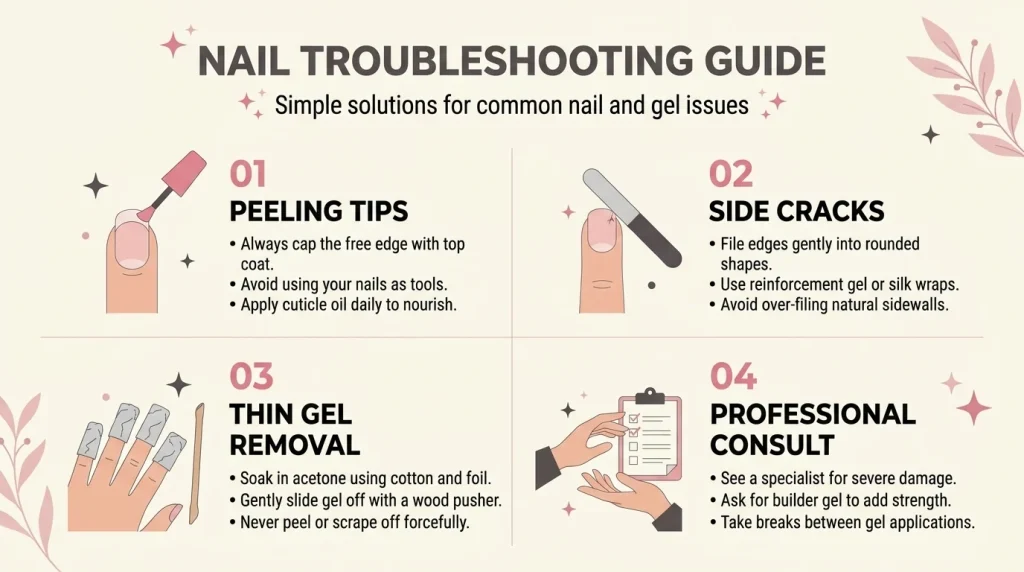
The tips keep peeling in layers
Trim the loose free edge without pulling it. Reduce frequent polish removal and wet work; keep moisturizer nearby so your hands don’t stay dry after washing.
One nail keeps cracking at the side
Shorten and smooth the edge if the split is painless and fully within the free tip. If it extends into attached nail or hurts, don’t glue it; seek professional advice.
Your nails feel paper-thin after gel removal
Pause aggressive enhancements, keep your nails short, and protect them as they grow. Skip surface buffing, which would remove even more material.
Several nails are getting worse despite gentle care
Book an appointment with a healthcare professional or dermatologist. Persistent brittleness can sometimes accompany skin conditions, infections, or other health concerns that a product won’t solve.
Are Nail Vitamins Necessary to Prevent Breaking?
Not automatically. Eating enough protein and a varied diet supports normal nail growth, but a supplement isn’t a guaranteed fix for nails damaged by water, friction, or manicures. Biotin is widely marketed for brittle nails, yet evidence that extra biotin helps people without a deficiency is limited.
High-dose biotin can also interfere with some laboratory tests, including certain thyroid and heart-related tests. Talk to a healthcare professional before starting supplements, especially if you notice other symptoms or have upcoming bloodwork. For a food-first approach, see which vitamins and nutrients support nail health.
What Are the Best Pro Tips for Stronger-Looking Nails?
Pro Tip
Keep a mini file in your bag. A snag smoothed at lunchtime is less likely to become a big tear when it catches on your clothes later.
Pro Tip
Choose a short, softly rounded shape. It has fewer sharp corners to catch on fabric, which can be especially helpful while growing out a weak nail.
Pro Tip
Track new growth rather than old damage. Take a bare-nail photo every two weeks in the same light; compare the area near the cuticle instead of expecting a split tip to repair itself.
Frequently Asked Questions About Nail Breakage
Q: Why do my nails break even when they’re short?
A: Short nails can still be brittle from frequent wetting and drying, product removal, friction, or an underlying nail problem. Focus on moisturizing, protecting them from cleaners, and avoiding aggressive filing.
Q: Does cuticle oil stop nails from breaking?
A: Cuticle oil can help keep the nail area moisturized, particularly if dryness is contributing to brittleness. It won’t glue a split nail back together or guarantee faster growth.
Q: Should I stop wearing nail polish if my nails keep breaking?
A: Regular polish isn’t automatically the problem, but repeated removal and harsh manicure prep may worsen weak nails. If you see thinning or peeling, reduce manicure frequency and remove products gently.
Q: Can you make naturally weak nails strong overnight?
A: No overnight treatment can replace damaged nail layers. You can reduce breakage risk right away by shortening the nails, smoothing snags, moisturizing, and avoiding damaging habits.
Q: When should you see a doctor about breaking nails?
A: Seek medical advice if breakage is persistent or comes with pain, redness, swelling, lifting, major texture changes, or unusual discoloration. A new dark streak under one nail should be assessed promptly.
Can Your Nails Stay Strong Without Constant Repairs?
Yes, you can lower your chances of everyday breakage with gentle shaping, regular moisturizing, protective gloves, and less manicure trauma. Start with those habits before buying another treatment, and give damaged nail time to grow out. Save this guide to your Pinterest nail-care board so your routine stays easy to follow.

Hi, I’m Jessica, the creator behind Unique Lash & Nails Katy.
I created this website for anyone who loves beautiful nails as much as I do. Here, I share trendy nail designs, seasonal manicure ideas, easy nail care tips, honest product recommendations, and step-by-step guides to help you create salon-worthy nails at home. Whether you’re looking for everyday inspiration or your next favorite nail trend, I hope you’ll find something you love.