What Are the Signs of Unhealthy Nails? (And What Do They Look Like?)
Quick Answer
Unhealthy nails show up as discoloration (yellow, white, or dark spots), unusual texture (ridges, pitting, or thickening), structural changes (peeling, splitting, or brittleness), and changes in shape like curling edges or separating nail beds. Most signs point to nutritional gaps, fungal infections, excessive moisture, or an underlying health condition — and the earlier you spot them, the easier they are to fix.
Your nails are surprisingly honest. They reflect what’s happening inside your body long before other symptoms appear — and on the outside, they reveal exactly how your nail care habits are treating them. If something looks or feels off, that’s not just a cosmetic issue. It’s your nails telling you to pay attention.
This guide walks you through every major sign of unhealthy nails — what each one looks like, what’s actually causing it, and whether it needs a trip to a doctor or just a tweak to your routine.


The Most Common Signs of Unhealthy Nails — and What They Actually Mean
 Save
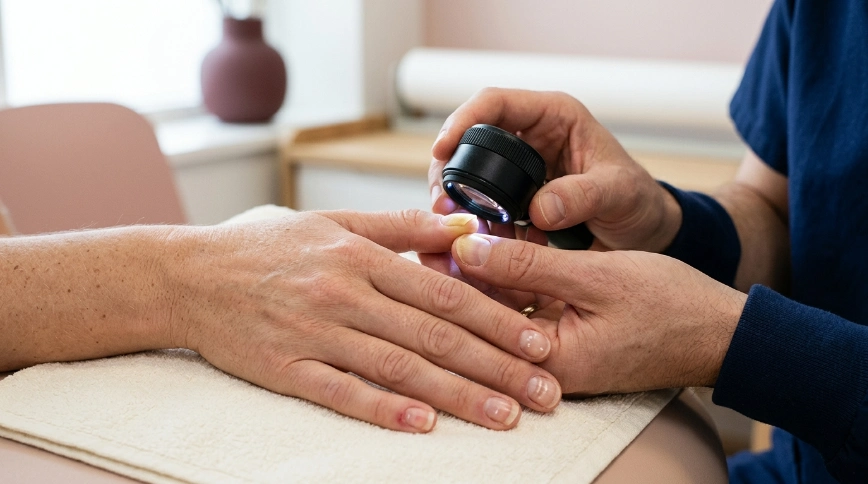
SaveEach sign has a different root cause, so identifying the right one matters. Here’s what to look for and what it’s telling you.
1. Yellow Nails
Yellow nails are one of the most common complaints, and they have several possible causes. The most frequent culprit is a nail fungal infection (onychomycosis) — especially if the yellowing starts at the tip and moves toward the base, and the nail feels thickened or brittle. But if your nails are stained uniformly yellow without texture changes, the cause is almost always dark nail polish applied without a base coat. The pigment molecules in deep reds, berries, and neons seep directly into the nail plate over time.
In rarer cases, yellow nails can signal psoriasis, diabetes, thyroid disease, or chronic respiratory conditions. If the yellowing is paired with slow nail growth and no obvious polish history, that’s worth discussing with your doctor.
Pro Tip
Always apply a ridge-filling base coat like OPI Natural Nail Base Coat before any dark or pigment-heavy shade. It creates a barrier that prevents staining — and the difference after just two manicures is noticeable.
2. White Spots or Patches (Leukonychia)
Those small white spots most people notice on their nails are almost never a calcium or zinc deficiency — that’s a persistent myth. They’re usually caused by minor trauma to the nail matrix, the growth area just beneath your cuticle. Bumping your hand, pressing too hard during a manicure, or aggressive cuticle pushing are the most common triggers. The spots appear weeks after the injury because nails grow slowly, so by the time you see them, you’ve usually forgotten what caused them.
Large white patches that spread across the nail or appear on multiple nails at once are different. Those can indicate a fungal infection, allergic reaction to nail products, or a systemic condition like kidney disease. If the patches are widespread and keep returning, don’t just polish over them — get them checked.
3. Dark Streaks or Lines Running Down the Nail
A thin, dark vertical streak running from the base to the tip of the nail is called a melanonychia streak. In people with darker skin tones, these are very often benign and caused by melanin deposits — completely normal. In lighter-skinned individuals or when a streak appears suddenly, widens, changes color, or involves the skin at the base of the nail (called Hutchinson’s sign), it should be evaluated by a dermatologist promptly. In rare cases, a subungual melanoma — a form of skin cancer beneath the nail — presents exactly this way.
Warning
Never self-diagnose a dark nail streak. If a new dark line appears and you haven’t experienced trauma to that finger, see a dermatologist within a few weeks. A benign cause is far more likely, but the ones worth ruling out are serious.
4. Ridges — Horizontal or Vertical
Not all ridges mean the same thing. Vertical ridges that run from cuticle to tip are the most common and typically harmless — they become more pronounced as you age as the nail matrix produces cells less evenly. They’re also linked to mild dehydration or low iron levels. Buffing them smooth is fine, but buffing too aggressively thins the nail plate, so limit it to once a month using a gentle 4-way buffer.
Horizontal ridges (called Beau’s lines) are a different story. A single deep groove running across the nail marks the exact point where nail growth slowed or stopped temporarily. Common causes include a high fever, surgery, severe stress, nutritional deficiency, or a systemic illness. Because nails grow roughly 3mm per month, you can actually estimate when the disruption happened based on how far the ridge has grown from the cuticle.
5. Peeling and Splitting (Onychoschizia)
Nails that peel in layers from the tip are almost always experiencing chronic moisture imbalance — repeated wetting and drying weakens the bonds between nail layers. This is extremely common among people who wash their hands frequently, swim regularly, or use acetone-based removers without moisturizing after. The fix isn’t strengthening treatments; it’s hydration and barrier protection.
Splitting that goes vertically down the nail (onychorrhexis) is linked to iron deficiency, thyroid issues, or prolonged exposure to harsh chemicals. If the splits are painful and reach the nail bed, that’s a sign the nail has been structurally compromised and needs time to grow out — you can’t bond it back permanently with glue.
If you’re dealing with persistent splitting, protecting nails during washing and cleaning makes a bigger difference than any strengthening polish. Learn more about building a routine that actually works in our guide to everyday nail care basics.
6. Brittle Nails
Brittle nails that break at minimal pressure come in two forms: dry brittle (breaks cleanly, looks dull and dehydrated) and soft brittle (bends before breaking, feels thin and flexible). Dry brittle nails need moisture — cuticle oil applied twice daily, worn-down by environmental dryness or product overuse. Soft brittle nails usually lack protein or are overexposed to water.
Biotin deficiency is often blamed, but the research shows biotin supplementation only helps people who are actually deficient. Before buying supplements, focus on diet: eggs, salmon, almonds, and leafy greens all support nail keratin production more reliably than capsules alone.
Recommended Product
Nail Strengthening Treatment with Biotin and Keratin
★★★★☆ Highly rated on Amazon
A keratin-infused strengthener applied as a base coat helps rebuild the nail plate structure over 2–4 weeks for nails that snap or bend easily.
As an Amazon Associate, we earn from qualifying purchases.
7. Thickened Nails
Nails that grow noticeably thicker than usual — especially toenails — are almost always caused by a fungal infection. Fungus breaks down the nail plate, causing it to grow back distorted and thickened. The nail may also become crumbly, discolored (yellow or brownish), and have an unpleasant odor. Thickening on fingernails can also result from psoriasis, which causes a buildup of cells that mimics the nail growth pattern.
Don’t try to file thick nails down aggressively — the fungus lives in layers throughout the nail, and trauma makes it worse. Over-the-counter antifungal treatments work for mild cases, but prescription oral antifungals are often needed for moderate-to-severe fungal nail infections.
8. Pitting — Small Dents in the Nail Surface
Nail pitting looks like tiny ice-pick holes scattered across the surface of the nail. It happens when cells in the nail matrix are shed prematurely before the nail fully hardens. Psoriasis is the most common cause, affecting up to 50% of people with the skin condition. Alopecia areata (an autoimmune hair-loss condition) also frequently causes pitting. If you’re seeing pitting without any skin symptoms, mention it at your next doctor’s visit — it’s a reliable early marker for psoriatic arthritis in some people.
9. Spoon-Shaped Nails (Koilonychia)
If the nail curves upward at the edges to form a concave scoop shape — like it could hold a drop of water — that’s koilonychia, and it’s strongly associated with iron-deficiency anemia. It can also result from hemochromatosis (iron overload) or thyroid disease. This is one of the nail signs most clearly linked to an internal condition rather than external damage, and it almost always warrants a blood test to check your iron levels and ferritin.
10. Nail Separation from the Nail Bed (Onycholysis)
When the nail plate lifts away from the nail bed, starting from the tip and working inward, it creates a white or yellowish gap where the nail used to be attached. Common causes include trauma, prolonged water exposure, psoriasis, thyroid disease, and reactions to nail products — particularly gel and acrylic removal done improperly. The separated area is vulnerable to bacterial and fungal infection because moisture gets trapped underneath.
Don’t try to push the nail back down or glue it in place. Trim it as short as possible, keep it dry, and let the nail bed reattach naturally as new growth comes in. For more on protecting your nails during and after salon treatments, see our guide to what to know before getting gel nails.
What Causes Unhealthy Nails? The Root Reasons
Most nail problems trace back to one of five categories:
- Nutritional deficiencies — particularly iron, zinc, biotin, and protein. Nails are made of keratin, a protein, so a diet low in these building blocks shows up fast.
- Fungal or bacterial infections — often picked up from nail salons, shared tools, or prolonged moisture exposure. They require treatment, not just better polish.
- Damage from products and habits — acetone overuse, skipping base coat, picking off gel polish, and excessive buffing all physically damage the nail plate.
- Moisture imbalance — both too much (soaking nails constantly) and too little (dry climate, low water intake) weaken nail structure differently.
- Underlying health conditions — thyroid disorders, diabetes, psoriasis, anemia, and autoimmune conditions all have nail manifestations. The nail signs often appear before other symptoms.
Nail Health Do’s and Don’ts
Do
- +Apply cuticle oil morning and night — it hydrates the nail matrix where growth starts
- +Always use a base coat before any colored polish, especially dark or pigment-heavy shades
- +Wear gloves for cleaning and washing dishes — even 10 minutes of detergent exposure dries nails significantly
- +File in one direction only, using a glass or crystal file for the cleanest edge
Don’t
- −Pick or peel off gel or acrylic — it takes layers of the real nail with it every single time
- −Use your nails as tools to open packages, scrape stickers, or pry things — it causes micro-fractures
- −Cut your cuticles — push them back gently with a rubber-tipped cuticle pusher instead; cutting breaks the protective seal
- −Over-buff the nail surface — more than once a month thins the plate and makes nails weaker, not smoother
Expert Tips for Keeping Nails Healthy Long-Term
Pro Tip
Apply a drop of jojoba oil to each cuticle immediately after removing nail polish — acetone strips the nail of its natural moisture, and jojoba mimics the skin’s own sebum better than most dedicated nail oils.
Pro Tip
Take a photograph of any nail change you’re concerned about — discoloration, a new streak, or lifting — so you have a baseline to compare over the following weeks. It’s much easier to tell if something is growing out or worsening when you have a reference.
Pro Tip
Give your nails one week off between gel or acrylic sets whenever possible. You don’t need to go bare for months — even seven days of cuticle oil and a breathable nail treatment like Essie Hard to Resist is enough to reset moisture levels before your next appointment.
Recommended Product
Cuticle Oil Pen with Jojoba and Vitamin E
★★★★☆ Highly rated on Amazon
A click-pen applicator makes twice-daily cuticle oil easy to apply without mess — the jojoba formula absorbs quickly and doesn’t leave nails greasy.
As an Amazon Associate, we earn from qualifying purchases.
When Do Unhealthy Nail Signs Need a Doctor?
 Save
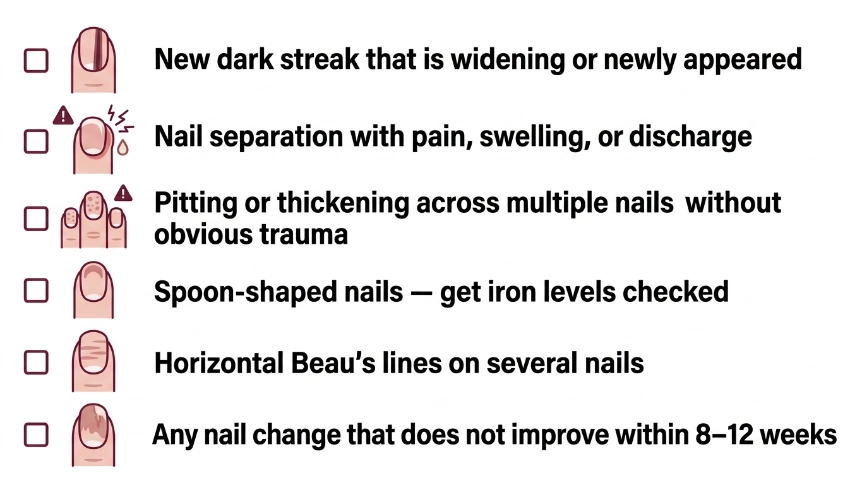
SaveMost nail problems are cosmetic or habit-related and respond well to better care. But these signs specifically warrant a medical evaluation:
- A new dark streak under the nail, especially if it’s widening or has never been there before
- Nail separation that involves pain, swelling, or discharge
- Pitting or thickening across multiple nails with no obvious product or trauma history
- Spoon-shaped nails (koilonychia) — always get iron levels checked
- Horizontal Beau’s lines appearing on several nails simultaneously — this signals a systemic event
- Any nail change that doesn’t grow out or improve within 8–12 weeks
Your nail technician can also spot changes over time — another reason a consistent relationship with a trusted salon matters. If you’re in the Katy area and want professional eyes on your nail health, book a visit with our team and we’re happy to take a look alongside your service.
Frequently Asked Questions About Unhealthy Nails
Q: Can unhealthy nails become healthy again?
A: Yes — nails grow out completely over 4–6 months, so any damage or change that isn’t caused by an ongoing condition will eventually grow out as healthy nail takes its place. The key is removing the cause first: fix the habit, treat the infection, or address the nutritional gap, then give your nails time to regenerate.
Q: Are white spots on nails really caused by calcium deficiency?
A: This is one of the most persistent nail myths. White spots (leukonychia) are almost always the result of minor trauma to the nail matrix — a knock, pressure from manicure tools, or aggressive cuticle work. Calcium and zinc deficiency rarely cause this specific sign. If you’re seeing lots of white spots repeatedly, it’s more likely a cuticle-care issue than a dietary one.
Q: How do I know if my nail problem is fungal or just damage?
A: Fungal infections typically affect one or two nails, cause thickening alongside discoloration, may have an odor, and don’t improve with moisturizing or better care habits. Damage from products or habits tends to affect multiple nails evenly, improves once you change your routine, and has a clear timeline linked to something you were doing differently. If you’re unsure, a dermatologist can confirm with a nail scraping.
Q: Does wearing nail polish constantly make nails unhealthy?
A: Polish itself doesn’t damage nails — it’s the removal process and what you do before and after that determines nail health. Skipping base coat, using acetone without moisturizing after, and picking off chips all cause real damage. Nails don’t need to “breathe” — they get oxygen from the blood supply, not from air — but they do need hydration and a proper barrier between pigment and the nail plate.
Q: What’s the fastest way to improve overall nail health?
A: The two habits that make the fastest, most visible difference are applying cuticle oil twice daily and wearing gloves during household chores and dishwashing. These address the two biggest drivers of poor nail health — dehydration and detergent exposure — and most people see a noticeable change in texture and flexibility within two to three weeks.
Your Nails Are Telling You Something — It’s Worth Listening
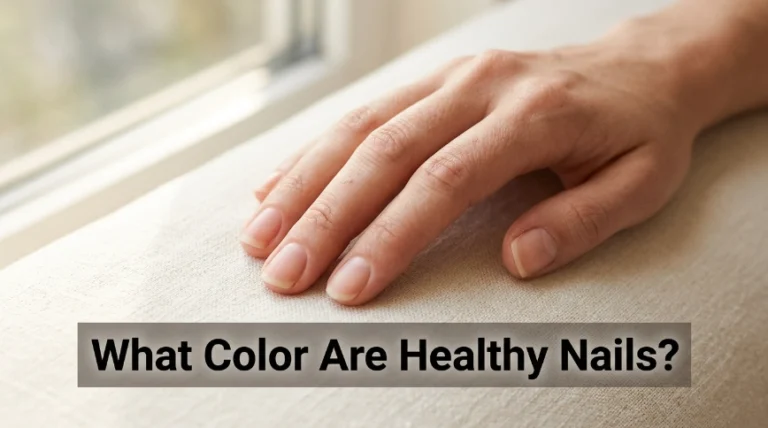
Healthy nails are smooth, consistently colored, firmly attached, and flexible without being soft. Any deviation from that baseline is worth noticing — even if it turns out to be nothing more than a habit you can easily fix. The signs of unhealthy nails are usually the easiest health signals to spot, which makes them one of the most useful tools you have for catching small problems before they become bigger ones.
Save this guide to Pinterest so you always have it as a reference — and share it with anyone who’s ever wondered what their nails might be trying to say.

Hi, I’m Jessica, the creator behind Unique Lash & Nails Katy.
I created this website for anyone who loves beautiful nails as much as I do. Here, I share trendy nail designs, seasonal manicure ideas, easy nail care tips, honest product recommendations, and step-by-step guides to help you create salon-worthy nails at home. Whether you’re looking for everyday inspiration or your next favorite nail trend, I hope you’ll find something you love.