Nail Plate vs Nail Bed: Easy Guide to Tell Them Apart
Quick Answer
Your nail plate is the hard, visible nail you polish and file, while your nail bed is the living skin underneath it that feeds and supports that plate. Damage to your plate often looks like peeling, splitting, or white spots, whereas damage to your bed more often brings pain, redness, swelling, or bleeding. Treat your plate gently and protect your bed carefully, because a healthy bed grows a stronger plate over time.
Here is a surprising fact before your next manicure: the hard nail you paint cannot feel anything on its own. Sensation comes from living tissue beneath it, which is why a rough file can feel harmless yet leave skin underneath sore later. You will learn where your plate ends and bed begins, how to spot trouble in each, and what to change so both stay healthier.


What Is Your Nail Plate, Exactly?
Your nail plate is the hard, translucent layer you see when you look down at your fingertip. It forms from keratin, the same tough protein found in hair, and it grows forward from the matrix hidden under your cuticle area. Because the plate itself has no nerves or blood supply, it does not bleed or feel pain when you trim it, which also explains why surface damage can go unnoticed until peeling or splitting appears.
Think of your plate as a protective shield rather than living skin. It guards your sensitive fingertip, gives polish a smooth surface, and helps you pick up small objects precisely. Its pink color does not come from the plate itself, since the mostly clear plate lets tissue below show through. Dull, ridged, or flaky plate usually points to dryness, over-filing, harsh removal, or repeated water exposure.
Your plate grows slowly, at roughly 3 millimetres per month for fingernails, so a damaged section cannot heal the way skin does. Instead, new plate must grow out from the base while you protect the weakened part, which is why gentle habits matter more than quick fixes.
What Is Your Nail Bed, Exactly?
Your nail bed is the soft, living skin directly underneath your nail plate, running from just behind your cuticle to the tip where your nail separates from your finger. It contains tiny blood vessels and nerves, which give your nail its pink tone and make the area tender when it gets injured. Unlike your plate, your bed can bleed, swell, and become infected, so pain or redness there deserves more attention than a simple surface chip.
Your bed also anchors your plate through fine ridges that grip its underside and guide growth forward in a straight line. That guidance explains why one injury can change growth for months afterward, and why a moist, pressure-free bed creates a smoother base for the plate above it.
Because your bed sits close to your fingertip, it reacts quickly to trauma, pressure from long extensions, and aggressive cuticle work. A bruise under your nail happens when blood collects in this bed after a crush or knock, and trapped blood can throb because the hard plate above leaves little room for swelling. Treat sharp pain, dark spreading discoloration, or swelling as a sign to pause nail work.
Nail Plate vs Nail Bed: The Difference at a Glance
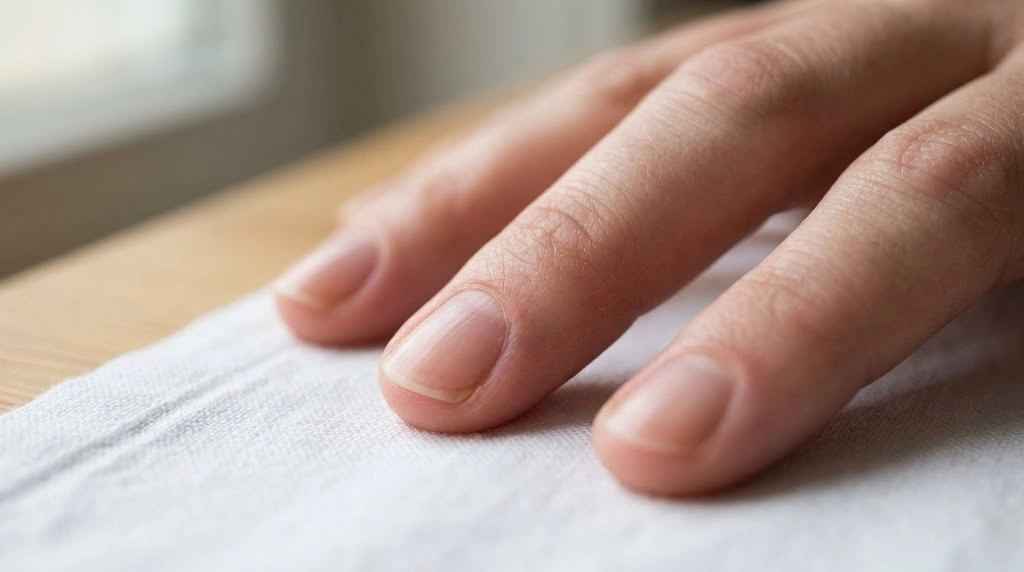
Once you know the basic split, telling them apart gets much easier. Your plate is what you touch, file, and polish, while your bed is what you protect underneath. One is hard and painless, and the other is soft, sensitive, and full of blood vessels.
- What it is: your plate is hardened keratin, whereas your bed is living skin and tissue.
- Can it feel pain? your plate cannot feel pain on its own, but your bed can feel pressure, soreness, and sharp pain.
- Does it bleed? your plate does not bleed when trimmed, while your bed can bleed if it gets cut or crushed.
- What color shows? your plate looks pink because your bed shows through it, not because the plate itself is pink.
- How does it recover? your plate must grow out and be trimmed away, whereas your bed can heal like other skin when it gets rest and protection.
- What damages it most? your plate suffers most from over-filing, peeling polish off, and harsh acetone soaking, while your bed suffers most from trauma, aggressive pushing, and infection.
If you remember only one line, make it this: polish sits on your plate, but comfort and healthy growth come from your bed. Keeping both ideas separate will help you judge whether a problem needs a gentler manicure routine or a break from nail work altogether.
How Do Your Nail Plate and Nail Bed Work Together?
Your plate and bed act like a team, with each one making the other work better. Blood flow from your bed and a smooth, gripping surface support the plate, while the plate shields that delicate tissue from bumps, water, and everyday friction. Without a firm plate, your fingertip would feel raw, and without a healthy bed, your plate would lift, bend, or grow unevenly.
Growth shows this partnership clearly. New plate cells form in the matrix near your cuticle, harden as they move forward, and slide along your bed toward your fingertip. Swelling, dryness, or injury along that path can leave ridges or weak spots, which is why one bad injury sometimes appears as a dent months later.
Moisture balance matters for both parts, too. Too little moisture leaves your plate brittle, while too much water softens it and makes splitting easier. Light, regular use of cuticle oil seals moisture around your cuticle and bed area without soaking your plate for hours.
Which One Does Polish, Filing, and Removal Actually Touch?
Most of your routine touches only your plate, and that distinction should reassure you when you use products correctly. Base coat, color, and top coat sit on top of your plate, and a file shapes the free edge and surface of that same plate. None of those steps should reach your bed when your plate is intact, which is why a well-done manicure feels comfortable rather than sore.
Trouble starts when tools or habits go past the plate. Over-buffing thins your plate until pressure reaches your bed more easily, and peeling off gel or press-ons can lift thin layers of plate and expose tender tissue underneath. Pushing your cuticle back too hard can also press on the matrix and bed area, causing soreness that lasts longer than a simple polish chip. For a gentler routine, you might like a glass nail file, since its fine surface shapes without the harsh drag of a coarse emery board.
Removal deserves special care for the same reason. Soaking in acetone softens polish, but leaving your nails in acetone for too long also dries your plate and the skin around your bed. Wrapping, waiting patiently, and gently lifting softened product protects both layers far better than scraping or forcing a layer off. If removal hurts, stop and soak a little longer instead, because pain is your bed telling you the plate is being stressed.
For a calmer routine after polish, learn whether your nails are healthier without nail polish during a short break, especially if your plates feel thin or your beds feel sore. A break gives you a clear view of your natural color and texture without color hiding early warning signs.
How Can You Tell Which One Is Causing a Problem?
Your symptoms usually point to one layer more than the other, even when both look involved at first glance. Start by asking yourself whether the issue hurts, bleeds, or swells, or whether it only changes how your nail looks and feels on the surface. Pain and swelling lean toward your bed, while peeling and surface texture lean toward your plate.
Signs the problem is mainly in your nail plate
- Peeling layers at the tip, especially after frequent water exposure or peeling polish off
- Splitting or breaking at the free edge, often where your plate is thinnest
- White spots or cloudy patches that move forward as your nail grows
- Vertical ridges that feel rough but do not hurt when you press gently
- A dull, dry surface that improves with oiling and a break from harsh removers
Signs the problem is mainly in your nail bed
- Sharp pain, throbbing, or tenderness when you press on your nail
- Redness, warmth, or swelling around or under your nail
- Bleeding, bruising, or a dark spot that does not move as your nail grows
- Lifting of your plate from the bed, sometimes with soreness underneath
- Pus, a bad smell, or red streaks spreading from your fingertip
Some problems overlap, so use these lists as a guide rather than a diagnosis. A lifted plate can leave your bed exposed and sore, and an infection can affect both layers at once. When pain, swelling, or discoloration worsens or does not settle within a few days, seek in-person care instead of covering it with polish.
Warning
Never file, buff, or polish over a sore, bleeding, or swollen nail bed to hide it. Covering an injured bed traps moisture and bacteria underneath, which can turn a small injury into a painful infection and delay healing.
What Should You Do Differently for Each One?
Caring for your plate and bed calls for different habits, even though both benefit from gentleness. Your plate needs protection from thinning and drying, while your bed needs protection from pressure, cuts, and infection. A simple split in your routine makes both jobs easier to remember.
Do
- +File in one direction with light pressure to avoid splitting your plate
- +Oil your cuticles daily to keep the bed area supple and supported
- +Wear gloves for cleaning and long water exposure to protect both layers
Don’t
- −Peel gel, acrylic, or press-ons off, since peeling lifts plate layers
- −Cut or push cuticles aggressively, because that area protects your bed
- −Buff your plate until it feels thin or sore, as thinning exposes your bed to pressure
Daily habits also shape the difference between strong and fragile nails. Hot water, for instance, can soften your plate and dry the skin around your bed at the same time, so shorter, lukewarm washes help both layers. To check that link in more detail, read about whether hot water can damage your nails before you change your shower or dishwashing routine.
Pro Tips That Protect Both
Small changes often protect your plate and bed better than a shelf full of new products. Start with your filing direction, since sawing back and forth creates tiny tears at the tip that later split upward. Filing gently in one direction keeps the edge sealed, which helps your plate resist peeling while your bed stays undisturbed underneath.
Pro Tip
Check your nails in natural light with no polish once a month. Bare nails reveal plate ridges, bed color changes, and early lifting far sooner than a dark color can, so you can adjust your routine before a small issue grows.
Treat your free edge as the weakest part of your plate, since it takes the most daily knocks. Keeping nails slightly shorter during recovery reduces leverage on your bed and lowers the chance of painful lifting. Once your plate feels stronger, grow length back gradually.
Finally, give polish a proper base. A thin base coat grips your plate and creates a barrier between color pigments and your nail surface, which reduces staining and makes removal less aggressive. Skipping base coat might save a minute, yet it often costs you extra soaking and scraping later, and that extra work stresses both layers. For a polish-free option, explore what a Japanese manicure without polish involves.
If you love a natural finish during a recovery break, learn how to shine your nails without polish using gentle buffing and oil, rather than heavy buffing that thins your plate. Light shine work keeps your bed comfortable while your plate still looks polished.
Products That Help Without Overdoing It
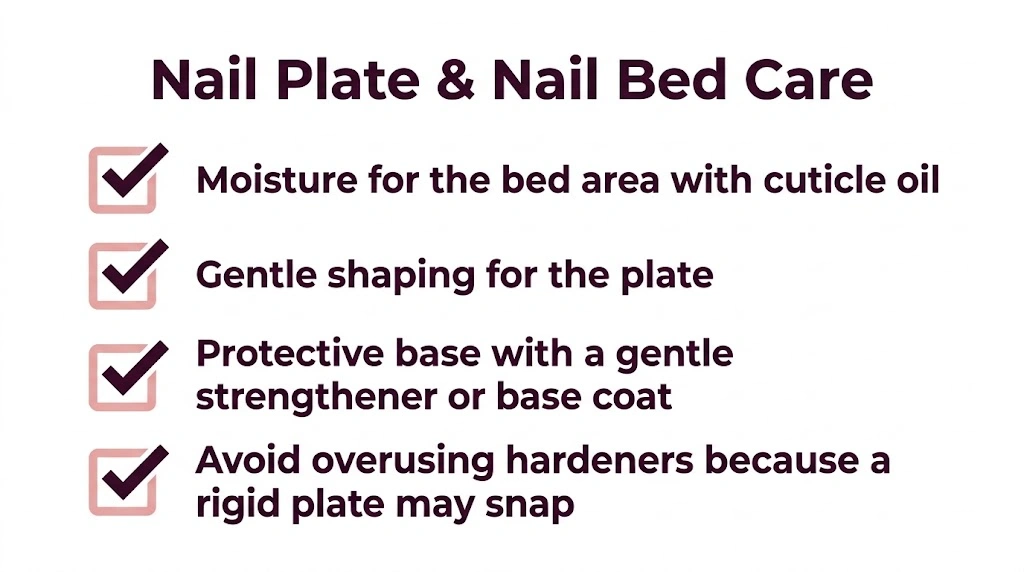
You do not need a complicated routine to support both layers. Focus on moisture for your bed area, gentle shaping for your plate, and a protective base when you wear color. Overusing hardeners can backfire, since an overly rigid plate may snap instead of flexing with daily use.
Recommended Product
Cuticle Oil for Daily Nail Bed Care
Editorial pick for this guide
A light cuticle oil keeps the skin around your bed supple, which helps your plate grow over a smoother, less irritated base.
As an Amazon Associate, we earn from qualifying purchases.
Recommended Product
Gentle Nail Strengthener and Base Coat
Editorial pick for this guide
A gentle strengthener can support a peeling plate while acting as a base, so color grips better and removal stays less harsh on the tissue below.
As an Amazon Associate, we earn from qualifying purchases.
When you choose polish after a break, gentler formulas can reduce dryness around your bed and plate. For help comparing options, read about what the safest nail polish brand means in practice, and look for formulas that suit your sensitivity rather than assuming every “clean” label works the same way.
Frequently Asked Questions
Q: Is the nail plate the same as the nail bed?
A: No, they are different parts. Your plate is the hard, visible nail on top, while your bed is the living skin underneath that supports and nourishes it.
Q: Can you damage your nail bed by filing too much?
A: Yes, over-filing thins your plate, so pressure and heat reach your bed more easily. Stop if your nail feels thin, warm, or sore, and let it grow out before filing again.
Q: Why does my nail look pink if the plate is clear?
A: Your plate is mostly translucent, so the pink tone you see comes from blood vessels in your bed showing through. Pale, blue, or very dark changes can therefore reflect bed or circulation changes.
Q: How long does a damaged nail plate take to grow out?
A: Fingernails usually need several months to replace a damaged section fully, since they grow only a few millimetres each month. Protect the weak area and trim it gradually as healthy plate moves forward.
Q: Should you polish over a lifted or sore nail?
A: No, leave a lifted or sore nail bare until it calms down. Polish traps moisture against an exposed bed, which raises infection risk and hides changes you need to watch.
Your plate and bed work best when you treat them as partners rather than one single nail. Protect your plate from thinning and peeling, guard your bed from pressure and infection, and give both time to recover after harsh removal or injury. Save this guide on Pinterest so you can check it before your next manicure and keep your routine gentle, simple, and kind to both layers.

Hi, I’m Jessica, the creator behind Unique Lash & Nails Katy.
I created this website for anyone who loves beautiful nails as much as I do. Here, I share trendy nail designs, seasonal manicure ideas, easy nail care tips, honest product recommendations, and step-by-step guides to help you create salon-worthy nails at home. Whether you’re looking for everyday inspiration or your next favorite nail trend, I hope you’ll find something you love.