Does Nail Care Affect Growth? What Really Helps
Quick Answer
Yes, nail care affects how healthy and long your nails can become, but it doesn’t necessarily make them grow faster. Proper moisturizing, gentle filing, cuticle protection, and avoiding harsh chemicals help prevent breakage. Your fingernails naturally grow about 3 millimeters per month. Consistent care helps you keep more of that new growth instead of losing length to splitting and peeling.
Have you ever followed a nail-growth routine for weeks, only to wonder why your nails still look short? You might be caring for them regularly without understanding what actually controls their growth.
Here’s the important distinction: growing nails and keeping long nails aren’t exactly the same thing.
Your body produces new nails beneath the skin, while your daily habits determine how much of that growth survives. Once you understand the difference, you’ll know which nail-care habits are worth your time and which popular growth tricks deserve skepticism.


How Does Nail Growth Actually Work?
Your nails begin growing in a specialized tissue called the nail matrix, located beneath the skin near the base of each nail.
The matrix produces new cells that gradually harden into the nail plate. As additional cells form, older nail material moves forward toward your fingertips.
That means the visible nail tip isn’t where growth begins. Your fingernails grow from the base, even when you can’t immediately see a difference.
How Fast Do Healthy Nails Normally Grow?
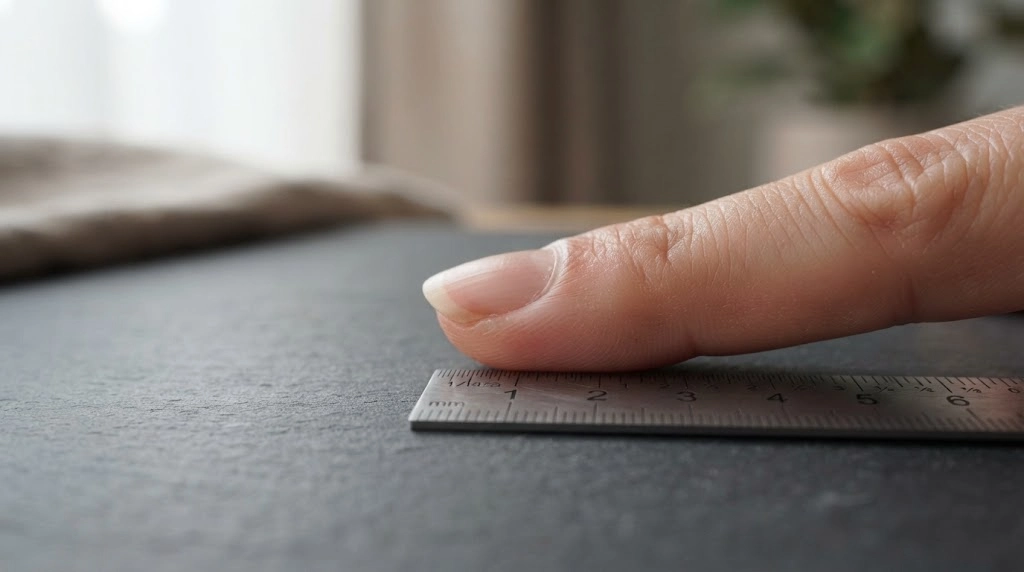
Fingernails typically grow around 3 millimeters per month, although individual rates vary. That’s roughly 0.7 millimeters per week.
Several factors can influence your natural growth rate:
- Age: Nail growth generally becomes slower as you get older.
- Overall health: Certain illnesses and medical conditions can affect nail production.
- Nutrition: Nutritional deficiencies may contribute to unhealthy nails.
- Individual biology: Your natural growth rate is partly determined by factors outside your control.
- Nail matrix health: Significant damage to the growth area can interfere with normal nail formation.
Because nails grow gradually, a complete fingernail replacement often takes approximately six months.
For a closer look at normal growth timelines, explore this guide on how fast fingernails grow.
Does Nail Care Make Your Nails Grow Faster?
Good nail care can improve your chances of maintaining longer nails, but ordinary cosmetic routines have not been shown to dramatically accelerate the biological growth process.
This distinction matters because many products advertise faster growth when their main benefit is actually reduced breakage.
Imagine your nails naturally gain 3 millimeters in a month, but weak tips repeatedly split or chip. You may see almost no increase in visible length.
Now imagine those same nails receiving regular moisture, gentle shaping, and protection from harsh cleaning products.
They might continue growing at their usual rate, but fewer breaks allow you to maintain more length.
Pro Tip
Measure nail progress from the base as well as the tip. A growing gap between your cuticle and an old polish line shows new nail growth, even when the free edge keeps breaking.
Which Nail Care Habits Help You Maintain Longer Nails?
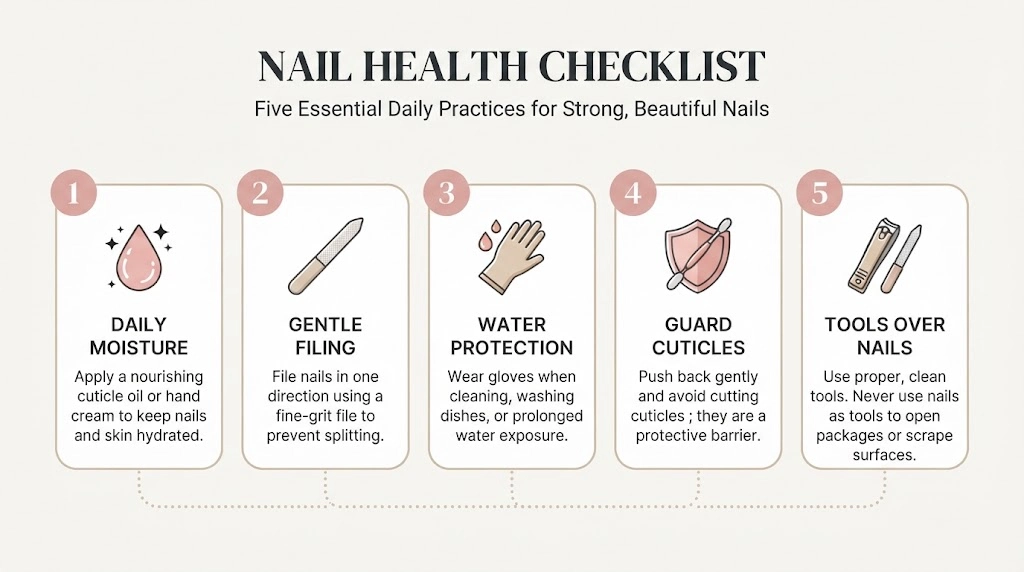
You don’t need an expensive salon routine to support healthy nails. A few consistent habits can reduce everyday damage and make your natural length easier to maintain.
1. Moisturize Your Nails and Cuticles Every Day
Dry nails are more likely to feel brittle and develop peeling or splitting at the edges.
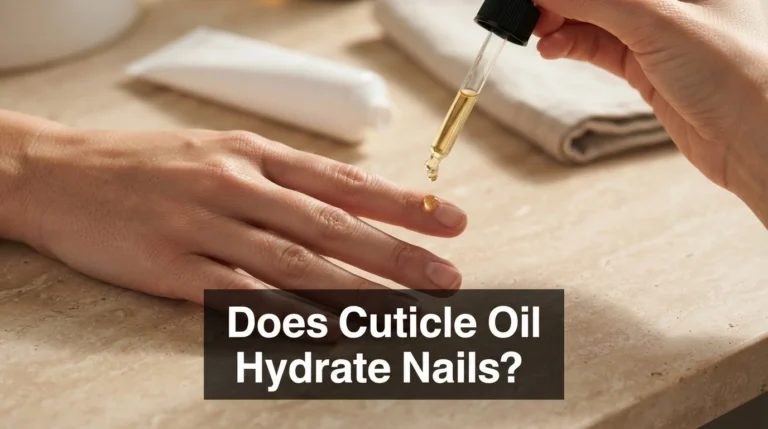
Applying hand cream, petroleum jelly, or a cuticle oil helps reduce dryness in the nails and surrounding skin.
Try this simple routine:
- Apply hand cream after washing your hands.
- Massage a small amount of moisturizer around your nails before bed.
- Use a cuticle oil if your nail folds feel particularly dry.
- Reapply moisturizer after prolonged water exposure.
Jojoba-based cuticle oils are a convenient option, although ordinary fragrance-free hand cream or petroleum jelly may be enough.
Remember that moisturizing helps protect your existing nails. It isn’t proven to stimulate faster growth from the nail matrix.
2. File Your Nails Gently to Prevent Splitting
Rough nail edges easily catch on clothing, hair, handbags, and everyday objects.
Once an edge begins splitting, a tiny snag can turn into a larger break.
Use a fine-grit nail file to smooth irregular edges without aggressively removing nail material.
A soft oval or squoval shape can be practical if the corners of your nails frequently catch or chip.
When filing, use gentle strokes and avoid repeatedly sawing across an already thin or peeling nail.
Also remember that filing doesn’t cause faster growth. It simply makes breakage less likely.
3. Protect Your Nails From Excessive Water
Repeated exposure to water can weaken nails, particularly when they’re already brittle.
Nails absorb water and change as they become wet and dry. Frequent cycles, especially alongside detergents, may contribute to peeling and splitting.
Protect your hands by wearing properly fitting household gloves when:
- Washing dishes for extended periods.
- Cleaning bathrooms or kitchen surfaces.
- Handling household detergents.
- Working with potentially irritating cleaning products.
After removing your gloves, dry your hands carefully and apply moisturizer.
You don’t need to avoid normal handwashing. The goal is to limit unnecessary prolonged exposure to water and irritants.
4. Avoid Cutting or Aggressively Pushing Back Cuticles
Your cuticle forms part of the protective barrier around the nail’s growth area.
Cutting this tissue or pushing it back forcefully may create small injuries that allow germs to enter.
Infections and inflammation around the nail can affect nail health and sometimes interfere with normal growth.
Instead, keep your cuticle area moisturized and leave healthy attached tissue alone.
If a hangnail develops, carefully clip the loose skin using clean nail tools. Never pull or bite it off.
5. Stop Using Your Fingernails as Tools
Opening soda cans, scraping labels, peeling stickers, and prying objects apart can place unnecessary pressure on your nail tips.
That pressure sometimes causes small cracks, especially when you’re growing your nails beyond your fingertips.
Use the appropriate tool instead of your nails.
For example, open a can with a small utensil, remove stickers with a scraper, and use your fingertips rather than your nail edges when handling objects.
These small adjustments can protect several weeks of natural growth from disappearing in a single break.
6. Remove Gel Polish and Acrylics Carefully
Gel manicures and acrylic enhancements don’t automatically stop your nails from growing.
However, aggressive filing, scraping, peeling, and repeated removal can damage the nail plate.
The result may be thin, flexible nails that split before they reach your preferred length.
If you wear enhancements, choose a nail professional who uses appropriate removal techniques and avoids excessive filing of your natural nails.
Never forcibly peel hardened product from the nail surface.
When your nails become noticeably weak or sore, consider taking a break from enhancements and focusing on gentle care.
You can also follow this guide to repair a damaged nail at home safely while the affected portion grows out.
7. Eat a Balanced Diet Instead of Relying on Growth Supplements
Your nails contain keratin, a structural protein produced by specialized cells.
A balanced diet that supplies sufficient protein, calories, vitamins, and minerals supports normal bodily functions, including nail production.
Useful everyday food choices include:
- Eggs, beans, poultry, or other protein-rich foods.
- Leafy vegetables and a variety of colorful produce.
- Whole grains, nuts, and seeds.
- Foods containing iron, zinc, and other essential nutrients.
You don’t need a restrictive nail-growth diet or expensive beauty supplements if your nutritional needs are already being met.
High-dose biotin supplements aren’t a proven solution for accelerating normal nail growth. They may also interfere with certain laboratory tests.
If your nails have changed significantly or you suspect a nutritional deficiency, ask a healthcare professional whether testing or supplementation is appropriate.
8. Keep Your Nails at a Manageable Length
Long nails can be beautiful, but they also experience more leverage when they catch on clothing or strike a hard surface.
If your nails repeatedly break at the same length, try keeping them slightly shorter while the damaged sections grow out.
Once your tips feel stronger, you can gradually maintain a longer free edge.
Choose a length that suits your routine rather than forcing yourself to maintain extremely long nails during activities that frequently damage them.
9. Follow a Consistent Nail Care Routine
One intensive manicure session cannot replace weeks of gentle everyday care.
For better results, focus on repeatable habits rather than elaborate treatments.
Moisturize regularly, repair snags before they worsen, protect your hands during wet household work, and avoid biting or picking your nails.
If you’re uncertain how to organize those steps, follow this simple nail care routine for healthy nails.
How Long Does It Take to See Results From Nail Care?

Improving the appearance and condition of your nails takes consistency, particularly if they’re already damaged.
Different improvements happen on different timelines.
- First few days: Moisturizing may make dry cuticles feel softer and more comfortable.
- After 2–4 weeks: You may notice fewer snags and less breakage if your routine removes the original cause.
- After 4–8 weeks: New nail growth becomes easier to recognize near the base.
- After several months: More of the previously damaged nail plate can be replaced by new growth.
- After approximately six months: A fingernail may have grown out substantially or completely, depending on the individual.
These are approximate expectations, not guaranteed outcomes. Your results depend on nail condition, lifestyle, underlying health, and the type of damage involved.
A useful way to monitor progress is to photograph your bare nails every four weeks using the same lighting and angle.
Compare the condition of the new growth, the amount of splitting, and how often your nails break.
What Is the Difference Between Nail Growth and Nail Strength?
Nail growth refers to the production of new nail material. Nail strength describes how well the existing nail resists bending, cracking, splitting, or breaking.
Those properties are related, but they’re not identical.
You may have naturally fast-growing nails that stay short because they break frequently.
Alternatively, you may have a slower natural growth rate but maintain impressive length because your nails are well protected.
This is why stronger nails can appear to grow faster even when their actual biological growth rate hasn’t changed.
Your most realistic goal is to protect the new length your body naturally produces.
Can Too Much Nail Care Damage Your Nails?
Yes. More nail treatments don’t always mean healthier nails.
Excessive buffing, repeated aggressive filing, harsh chemical exposure, and frequent removal of artificial products can gradually weaken the nail plate.
Even routines marketed as strengthening treatments may become harmful if they involve unnecessary scraping or irritation.
Warning
Avoid aggressive cuticle cutting, peeling gel polish, and excessive buffing. These habits can damage the nail plate or surrounding protective tissue. Pain, redness, swelling, pus, unexplained dark streaks, or persistent nail lifting should be evaluated by a healthcare professional rather than covered with another manicure.
For everyday maintenance, gentle cleaning, modest trimming, moisturizing, and simple protection are usually more useful than complicated routines.
What Should You Do and Avoid for Healthy Nail Growth?
Do
- Moisturize nails and surrounding skin daily.
- File rough edges gently.
- Wear gloves during wet cleaning.
- Protect healthy cuticles.
- Eat a balanced diet.
- Use gentle manicure removal methods.
Don’t
- Bite or pick your nails.
- Peel off gel or acrylic products.
- Cut healthy cuticle tissue.
- Over-buff thin nails.
- Use nails to open objects.
- Trust overnight growth promises.
Which Nail Care Products Are Actually Worth Using?
You don’t need a cabinet full of products to maintain healthy nails.
Start with affordable tools that solve everyday problems such as dryness, rough edges, and frequent exposure to cleaning products.
1. Jojoba Cuticle Oil for Dry Nail Folds
Recommended Product
Jojoba-Based Cuticle Oil
A convenient moisturizer for dry cuticle areas and the skin surrounding your nails. Choose a fragrance-free option if your skin is sensitive.
As an Amazon Associate, we earn from qualifying purchases.
2. Fine-Grit Glass Nail File
Recommended Product
Fine-Grit Glass Nail File
A quality glass file can smooth minor snags and help maintain an even nail shape without aggressive filing.
As an Amazon Associate, we earn from qualifying purchases.
3. Fragrance-Free Hand Cream
Recommended Product
Fragrance-Free Moisturizing Hand Cream
A simple hand cream helps replenish moisture after washing and keeps the skin around your nails from becoming excessively dry.
As an Amazon Associate, we earn from qualifying purchases.
4. Reusable Household Cleaning Gloves
Recommended Product
Reusable Protective Cleaning Gloves
Protective gloves reduce direct contact with detergents and prolonged water exposure during household chores.
As an Amazon Associate, we earn from qualifying purchases.
What Is a Simple Daily Routine for Longer, Healthier Nails?
A practical nail care routine should be easy enough to follow even when you’re busy.
Morning: Protect and Moisturize
- Wash your hands normally and dry them thoroughly.
- Apply moisturizing hand cream.
- Check for obvious nail snags before starting your day.
- Use protective gloves when handling cleaning products.
Evening: Restore Moisture
- Clean your hands gently.
- Apply hand cream or a small amount of cuticle oil.
- Pay extra attention to dry skin around your nail folds.
- Avoid picking at polish or loose nail layers.
Once a Week: Check and Maintain Your Nails
- Inspect your nails for peeling, splitting, or rough edges.
- Trim excess length if necessary.
- File minor snags gently.
- Clean and dry your manicure tools.
- Assess whether your current manicure products are causing irritation or damage.
Most importantly, adjust the routine to the condition of your nails. Healthy nails don’t need constant filing, soaking, buffing, or treatment.
When Should Slow Nail Growth Be a Concern?
Slow-looking nails aren’t always a medical problem. Sometimes the issue is simply that the tips keep breaking.
However, sudden changes in nail growth or appearance can occasionally indicate an underlying condition.
Arrange a medical evaluation if you notice:
- A sudden, unexplained change in several nails.
- Persistent redness, swelling, tenderness, or pus.
- A new unexplained dark streak or unusual pigmentation.
- Significant nail lifting or separation from the nail bed.
- Unusual thickening, deformation, or persistent discoloration.
- Nail changes occurring alongside unexplained fatigue or other symptoms.
A dermatologist can help identify whether the issue involves trauma, infection, a skin condition, or another health concern.
If you’re unsure which changes are significant, review these signs of unhealthy nails and seek professional care when appropriate.
Frequently Asked Questions About Nail Care and Growth
Q: Does nail care affect growth naturally?
A: Nail care supports healthier nails and helps prevent breakage, allowing you to maintain more of your natural growth. However, ordinary care products don’t necessarily increase the speed at which the nail matrix produces new nail material.
Q: Does cuticle oil help nails grow faster?
A: Cuticle oil moisturizes dry skin and may help reduce brittleness around your nails. There’s no strong evidence that ordinary cuticle oil substantially speeds up biological nail growth.
Q: Can nails grow longer in two weeks?
A: Yes, although the change will usually be small. At an average rate of 3 millimeters per month, your fingernails may grow roughly 1.5 millimeters in two weeks. Protecting your tips helps you retain that length.
Q: Does cutting your nails make them grow faster?
A: No. Cutting or trimming your nails doesn’t directly stimulate the growth area beneath the skin. It can remove damaged edges and reduce breakage, making your nails easier to maintain.
Q: Why do my nails stay short even when I care for them?
A: Your nails may be growing normally but losing length because of peeling, breakage, biting, or frequent filing. Check for damage at the tips and compare photographs over several weeks to see whether new growth is appearing near the base.
Final Thoughts: Does Nail Care Really Make a Difference?
Yes, nail care makes a meaningful difference to how healthy, strong, and long your nails can become. While it won’t necessarily accelerate your natural growth rate, gentle maintenance and protection can help you preserve the length your nails produce.
Start with daily moisturizing, careful filing, protective gloves, and healthier manicure habits. Save this guide to your Pinterest nail care board so you can return to these simple habits whenever your nails need extra attention.

Hi, I’m Jessica, the creator behind Unique Lash & Nails Katy.
I created this website for anyone who loves beautiful nails as much as I do. Here, I share trendy nail designs, seasonal manicure ideas, easy nail care tips, honest product recommendations, and step-by-step guides to help you create salon-worthy nails at home. Whether you’re looking for everyday inspiration or your next favorite nail trend, I hope you’ll find something you love.