How to Fix Dry Cuticles Fast With a Simple Routine
Quick Answer
To fix dry cuticles, apply a thick, fragrance-free hand cream after every handwash, massage a little cuticle oil around each nail if you like, and seal very dry areas with plain petroleum jelly before bed. Stop cutting or picking the skin, and wear gloves for dishes and cleaning. Mild dryness may feel better within days; painful swelling, spreading redness, or pus needs medical attention.
If the skin around your nails looks white, ragged, or cracked, you probably want it comfortable again before your next manicure. The good news is that most everyday cuticle dryness responds to a simple routine, not an expensive treatment kit.
Here’s how to calm the rough skin now, identify what’s drying it out, and prevent the problem from returning without damaging the protective skin at the base of your nails.


Are Your Cuticles Dry, or Is Something Else Going On?
Dry cuticles usually feel tight and look flaky or slightly ragged. You may notice tiny pieces of lifted skin near the nail corners, especially after washing your hands or removing polish. The skin can feel uncomfortable, but ordinary dryness typically doesn’t produce significant swelling, heat, or throbbing pain.
- Dryness: Fine flakes, rough edges, a tight feeling, and mild peeling without substantial swelling.
- Hangnails: Small torn pieces of skin beside the nail that catch on clothing and can sting.
- Irritant dermatitis: Red, itchy, burning, or cracked skin after repeated exposure to soap, sanitizer, detergent, or nail products.
- Possible infection: Increasing pain, warmth, redness, swelling, or pus around a nail.
These problems can overlap. A dry edge may split into a hangnail, and picking at that hangnail can create an opening for infection. If your fingertip is hot, very tender, or visibly swollen, skip cosmetic cuticle treatments and get medical advice instead.
Why Do Your Cuticles Get So Dry and Peel?
The delicate area where your nail meets your skin is exposed to almost everything your hands touch. Your cuticle helps protect the seal at the nail base, while the surrounding nail folds need a healthy skin barrier to stay comfortable. When repeated washing, friction, or irritating products disrupt that barrier, moisture escapes more easily.
Frequent handwashing and sanitizer
Soap removes dirt and oils, which is necessary for hygiene but can leave already-sensitive skin dry. Alcohol sanitizer may add to that tight feeling. You don’t need to wash less when washing is appropriate; you need to moisturize afterward, while the skin is still slightly damp.
Dish soap, cleaning products, and wet work
Long periods with wet hands, followed by drying, can irritate the skin around your nails. Household detergents make that cycle worse. If the dryness is strongest on the fingers you use for dishes or scrubbing, consider your chores a likely trigger.
Manicures, acetone, and cuticle trimming
Polish remover can dry your fingertips, while aggressive pushing or cutting injures tissue that should remain intact. Repeatedly removing gel polish can expose your nails and surrounding skin to more solvents. Your best defense is gentle removal, careful moisturizing, and leaving living cuticle tissue alone.
Cold air, picking, and irritating ingredients
Cold weather and indoor heating can aggravate dryness. Fragranced nail oils, essential oils, harsh scrubs, and cuticle-removing chemicals may also irritate sensitive skin. If a new product makes the area burn or itch, stop using it rather than applying more.
If you’d like a broader everyday approach, this guide to properly caring for your nails explains how moisturizing fits into routine nail maintenance.
How Can You Fix Dry Cuticles Right Now?
Start with the skin barrier rather than trying to remove every visible flake. You can complete this gentle reset in a few minutes with a mild cleanser, moisturizer, and an optional protective ointment. There’s no need to soak your hands for a long time or scrape away dry skin.
1. Wash gently, then leave the skin slightly damp
Use lukewarm water and a mild, preferably fragrance-free soap. Pat your hands with a clean towel. Leave a little surface moisture rather than rubbing until the skin feels squeaky dry; the next product can help hold that water in your skin.
Avoid: Hot-water soaking, abrasive nail brushes on tender skin, or using your fingernail to lift stubborn flakes. Friction can turn a minor rough patch into a painful split.
2. Apply a thick hand cream around every nail
Choose a fragrance-free cream with ingredients such as glycerin, petrolatum, mineral oil, or ceramides. Use enough to coat the backs of your hands, fingertips, and the skin surrounding each nail. Press it gently into the nail folds; aggressive rubbing isn’t necessary.
Thicker creams and ointments are often more useful for very dry skin than light, heavily scented lotions. Keep a tube beside your sink so moisturizing happens automatically after each wash.
3. Add cuticle oil if your skin tolerates it
A drop of simple jojoba-based or mineral-oil-based cuticle oil can make the nail edges feel smoother and more flexible. Massage it over intact skin around each nail for about 20 seconds. This is an optional conditioning step, not a replacement for hand cream or a cure for infection.
If your skin is cracked or reactive, start with plain fragrance-free moisturizer or petroleum jelly. Some scented cuticle oils contain ingredients that sting irritated skin.
4. Seal especially rough patches before bed
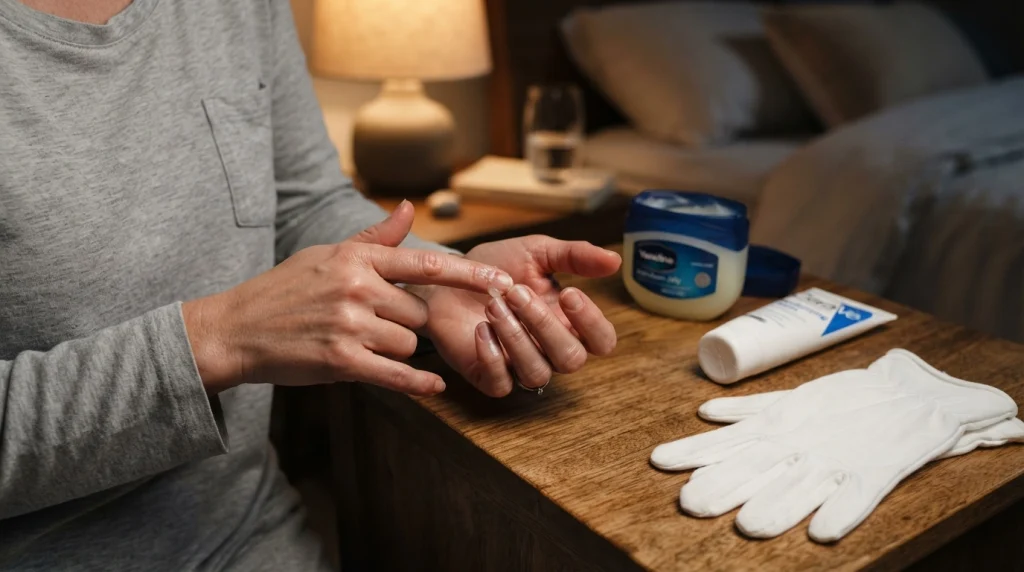
After your evening hand cream, smooth a thin layer of plain petroleum jelly onto the driest nail folds. It forms a protective barrier that slows moisture loss while you sleep. You only need a little; coating your fingers so heavily that everything becomes slippery won’t make the method work faster.
For extra protection, wear clean, breathable cotton gloves if they’re comfortable. Remove them if your hands get sweaty or irritated. Overnight care is especially practical because you aren’t immediately washing the product away.
Pro Tip
Put your hand cream where your routine already happens: by the sink, on your desk, and beside your bed. Three convenient locations beat one fancy product you forget to use.
What If Your Cuticles Are Cracked or You Have a Hangnail?
When your cuticle area has an actual split, treat it more gently than ordinary dryness. Wash the area with mild soap and water, pat it dry, and apply a small amount of plain petroleum jelly. If clothing keeps catching the crack, cover it with a clean, nonstick bandage and change that dressing as needed.
A hangnail is a torn piece of skin, not an extra part of the nail that needs pulling. If a tiny loose piece catches repeatedly, carefully clip only the detached tip with clean nail clippers or sanitized small scissors. Never dig into attached skin, cut down the sides of the nail, or try to make the entire area look perfectly smooth in one session.
Skip lemon juice, vinegar, strong exfoliating acids, and cuticle remover on open cracks. They can sting and cause further irritation. If your skin continues splitting despite gentle care, or the area is very itchy, a dermatologist can check for eczema or contact allergy.
What’s the Best Daily Routine to Stop Dry Cuticles From Coming Back?
The difference between temporary softness and lasting improvement is what you do between manicures. Think of this as a small habit system, not a seven-day challenge that you abandon when the skin looks better.
Morning: protect before your day begins
After washing your hands, apply fragrance-free hand cream and work the remainder over your fingertips. If you enjoy nail oil, use a drop around the nail edges once the cream has settled. Keep the routine light enough that you can comfortably use your phone, keyboard, and everyday tools.
Throughout the day: reapply after washing
Moisturize after handwashing and whenever your skin feels tight. For dishwashing, bathroom cleaning, or prolonged wet work, wear protective gloves. If moisture builds up inside your gloves, take a break, dry your hands thoroughly, and switch to a dry pair. Comfortable cotton liners may help if gloves irritate your skin.
Evening: use your richest moisture layer
At bedtime, apply hand cream to slightly damp skin and then a thin coat of petroleum jelly over rough nail folds. Don’t scrub away the flakes first. Skin usually becomes smoother as the damaged surface naturally sheds and the barrier recovers.
Weekly: check the habits causing damage
Look for patterns. Did your cuticles worsen after a salon visit, gel removal, several cleaning sessions, or a scented oil? Change one likely trigger at a time so you can see what helps. If you enjoy painting your nails, consider gentler removal and a short break when the surrounding skin is irritated. Our article on whether nails are healthier without polish can help you decide when that break makes sense.
Should You Use Cuticle Oil, Hand Cream, or Vaseline?
You don’t need all three, but each solves a slightly different problem. For dry, sensitive skin, a thick fragrance-free cream is the foundation. Cuticle oil is convenient for touch-ups, while petroleum jelly is especially helpful when you want a longer-lasting protective layer.
- Hand cream: Best basic choice for daily moisture across hands and nail folds. Look for a rich, fragrance-free formula.
- Cuticle oil: Best optional addition when you want a light product for the skin around your nails during the day.
- Petroleum jelly: Best simple seal for stubborn dry patches, especially at night or over a healing superficial crack.
Want to compare the textures more closely? Here’s the practical breakdown of Vaseline versus cuticle oil for different nail-care needs.
Recommended Product
Fragrance-Free Hand Cream for Dry Skin
A thicker, fragrance-free cream is an easy first purchase because you can apply it after every wash and around every nail.
As an Amazon Associate, we earn from qualifying purchases.
Recommended Product
Plain Petroleum Jelly for Nighttime Care
An inexpensive, fragrance-free ointment helps reduce moisture loss from rough, cracked skin without requiring a complicated treatment.
As an Amazon Associate, we earn from qualifying purchases.
If you prefer a lightweight daytime option, browse fragrance-free jojoba cuticle oils. A simple ingredient list matters more than an elaborate scent or claims about dramatically faster nail growth. Our guide to the best oils for weak or brittle nails explains the differences between popular options.
For hands that need protection overnight, soft cotton moisturizing gloves are optional. You can get useful results from moisturizer alone, so don’t feel pressured to buy every accessory.
How Long Will It Take for Dry Cuticles to Heal?
With uncomplicated dryness, your skin may feel softer after the first few applications, and you may notice less visible flaking over several days. Deeper cracks, frequent wet work, or an underlying skin condition can take longer. There’s no guaranteed three-day fix, especially if the original irritant is still part of your routine.
Use a one-to-two-week check-in rather than judging your progress after a single night. Look for less tightness after washing, fewer new hangnails, and smaller areas of rough skin. If you see no clear improvement after one to two weeks of consistent gentle care, or symptoms worsen sooner, arrange a medical assessment.
What Mistakes Make Dry Cuticles Worse?
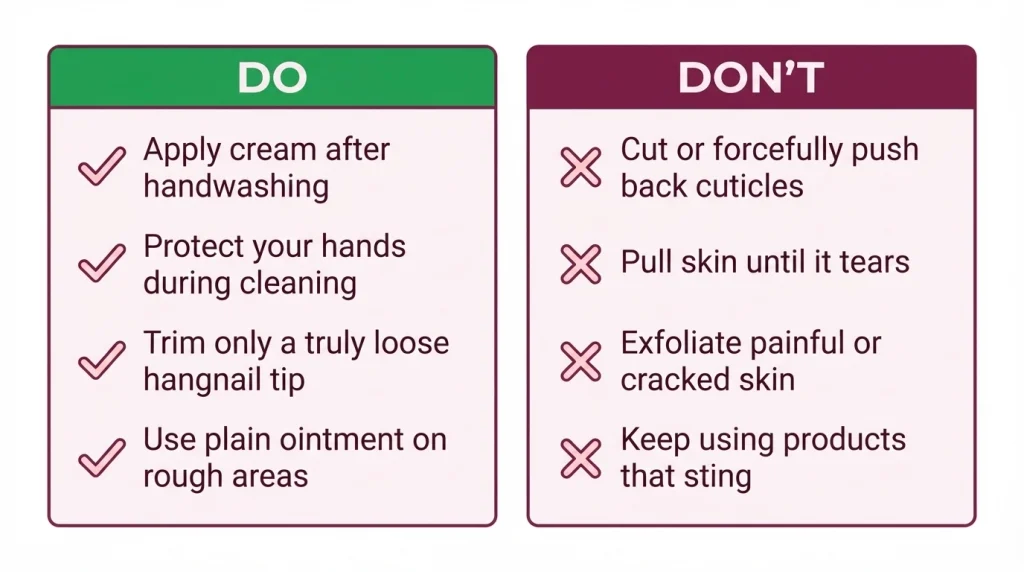
Do
- Apply cream after handwashing.
- Protect your hands during cleaning.
- Trim only a truly loose hangnail tip.
- Use plain ointment on rough areas.
Don’t
- Cut or forcefully push back cuticles.
- Pull skin until it tears.
- Exfoliate painful or cracked skin.
- Keep using products that sting.
One especially tempting mistake is clipping away all the visible dry skin before a manicure. That may look cleaner for a few hours, but removing protective tissue can create more irritation. A safer goal is comfortable, intact skin—not a completely invisible cuticle line.
Why Are Your Cuticles Still Dry After Using Oil?
They look moisturized, then turn white after washing
Try now: Apply a thick cream to slightly damp skin after washing. Next time: Keep cream by the sink instead of relying on oil once each evening.
One finger keeps developing hangnails
Try now: Protect splits and carefully clip only loose skin. Next time: Notice whether you pick that finger while working, scrolling, or feeling stressed.
Your cuticle oil makes the skin burn or itch
Try now: Stop that oil, gently rinse off residue, and switch to a plain fragrance-free moisturizer. Next time: Avoid fragrance and essential oils until the skin is calm; seek advice if the rash persists.
The area improves, then cracks after doing dishes
Try now: Clean and moisturize the irritated skin. Next time: Use well-fitting protective gloves and dry your hands after wet work.
When Should You See a Doctor About Dry Cuticles?
Dry-looking skin isn’t always a cosmetic issue. A nail-fold infection called paronychia can start after a cut, hangnail, or manicure injury. Contact a healthcare professional promptly if you have increasing pain, warmth, swelling, spreading redness, or pus. Don’t cut, puncture, or squeeze a swollen area yourself.
Warning
Get urgent medical advice for rapidly spreading redness, severe pain, fever, red streaks, or a collection of pus. If you have diabetes, reduced circulation, or a weakened immune system, seek advice early for suspected nail-fold infection.
For chronic flaking, repeated cracking, itchy rashes, or symptoms that don’t respond to basic care, a dermatologist can assess for hand eczema, contact allergy, or another skin problem. Treatment depends on the cause, so stronger nail products aren’t always the answer.
Frequently Asked Questions About Dry Cuticles
Q: Can you fix dry cuticles overnight?
A: Hand cream followed by petroleum jelly can make your cuticles feel softer by morning, but cracked skin usually needs repeated care. Don’t peel off remaining flakes just because they haven’t disappeared overnight.
Q: Is Vaseline good for dry cuticles?
A: Yes. Plain petroleum jelly helps reduce moisture loss and protects rough skin. Apply a thin layer after washing or over hand cream, particularly before bed.
Q: Should you cut off peeling cuticles?
A: No. Don’t cut living cuticle tissue or pull attached skin. You may carefully clip only a detached hangnail tip with clean tools, then moisturize the surrounding skin.
Q: Why do your cuticles stay dry even when you use oil?
A: Oil alone may not offset frequent washing, detergents, picking, or a skin condition. Add thick fragrance-free cream after washing, protect your hands during chores, and investigate persistent irritation.
Q: Can dry cuticles cause an infection?
A: Cracks and torn skin can give germs an entry point, especially if you pick or bite the area. Increasing redness, swelling, warmth, pain, or pus deserves medical assessment.
Keep Your Cuticles Soft Without Overworking Them
The most reliable way to fix dry cuticles is to moisturize after washing, protect your hands from irritants, and leave the protective skin around your nails intact. Give the routine time to work, and get help if you notice infection signs or persistent inflammation.
Save this guide on Pinterest so your next manicure starts with comfortable, healthy-looking cuticles.

Hi, I’m Jessica, the creator behind Unique Lash & Nails Katy.
I created this website for anyone who loves beautiful nails as much as I do. Here, I share trendy nail designs, seasonal manicure ideas, easy nail care tips, honest product recommendations, and step-by-step guides to help you create salon-worthy nails at home. Whether you’re looking for everyday inspiration or your next favorite nail trend, I hope you’ll find something you love.