When Do Brittle Nails Need Professional Attention?
Quick Answer
Brittle nails need professional attention when splitting or peeling persists despite gentle care, happens suddenly without an obvious cause, or comes with pain, swelling, discoloration, thickening, or nail separation. A new or changing dark streak should be assessed promptly by a dermatologist. Redness that spreads, pus, or severe pain needs urgent medical assessment. Mild dryness without other symptoms may improve with home care.
Your nails have been breaking for weeks. You’ve tried cuticle oil, trimmed them short, and skipped a few manicures, but nothing seems to help. Is this normal nail damage, or could your body be telling you something?
Knowing when brittle nails need professional attention can prevent you from overlooking problems that require medical treatment.
Here’s how to recognize warning signs, understand possible causes, and decide whether you should visit a dermatologist or continue gentle nail care at home.


Are Brittle Nails Always a Sign of a Health Problem?
No. Brittle nails are common, and many cases are related to everyday habits rather than illness.
Your nails consist primarily of keratin, a tough protein that forms the visible nail plate. Repeated exposure to water, cleaning products, nail polish removers, and friction can gradually damage its layered structure.
When those layers become vulnerable, your nails may peel, split, crack, or break before reaching their usual length.
Common nonmedical contributors include:
- Frequent handwashing and prolonged water exposure.
- Repeated use of detergents and cleaning chemicals.
- Aggressive filing, buffing, or cuticle manipulation.
- Peeling off gel polish or artificial nail products.
- Dry weather and repeated exposure to solvents.
- Natural changes in nail texture associated with aging.
These factors can affect otherwise healthy nails. If you recognize a clear cause and have no concerning symptoms, improving your routine may be a reasonable first step.
However, persistent brittleness can sometimes accompany infections, inflammatory skin conditions, thyroid disorders, or nutritional deficiencies.
The important distinction is whether your nails are simply experiencing surface damage or showing changes that suggest an underlying problem.
What Are the Warning Signs That Brittle Nails Need Professional Attention?
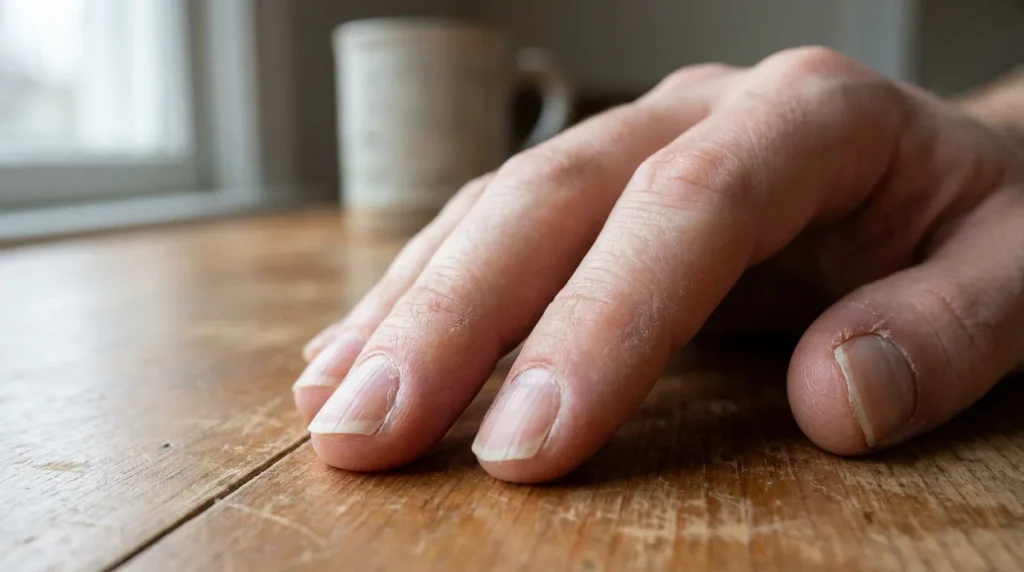
Occasional breakage isn’t usually alarming. However, certain changes deserve closer attention, especially when they develop without an obvious explanation.
1. Your Nails Keep Splitting Despite Gentle Care
Imagine shortening your nails, moisturizing consistently, and protecting your hands during cleaning, yet the tips continue splitting every week.
Persistent breakage may mean that everyday exposure isn’t the only contributing factor.
Pay attention if:
- Several nails repeatedly break during ordinary activities.
- New nail growth appears unusually fragile.
- Splitting continues even after reducing manicure damage.
- Your nails have become noticeably weaker than before.
A few weeks of careful nail protection can help you assess whether dryness and friction are contributing, but there is no fixed waiting period required before contacting a doctor.
If the change is unexplained, worsening, or concerning, arrange an appointment sooner.
2. Your Nails Change Color Without an Obvious Reason
A nail that becomes yellow, brown, greenish, unusually pale, or otherwise discolored may need medical evaluation.
Color changes have several possible explanations. Dark nail polish can leave temporary staining, while certain infections and medical conditions can alter the nail itself.
Watch for discoloration accompanied by:
- Increasing nail thickness.
- Crumbly or irregular edges.
- Separation from the nail bed.
- Pain or tenderness.
- Changes involving several nails.
A new or changing brown or black streak deserves particular attention because, rarely, pigment changes beneath a nail can indicate melanoma.
Not every dark streak is dangerous, but a dermatologist should examine an unexplained new or changing streak rather than having you cover it with polish.
3. Your Nails Become Painful or Tender
Simple brittle nails usually cause more frustration than pain.
If your nail hurts when touched, becomes increasingly tender, or develops pain beneath the plate, something else may be happening.
Possible explanations include trauma, inflammation, infection, or a split extending into attached nail tissue.
Avoid placing acrylic, gel, or adhesive over a painful area. Cosmetic coverings can hide changes and sometimes make irritation worse.
Contact a healthcare professional for unexplained pain, particularly when discomfort is persistent or increasing.
4. The Skin Around Your Nails Is Red, Warm, or Swollen
Inflamed nail folds can indicate paronychia, an infection or inflammation affecting the skin beside the nail.
You may notice redness, swelling, tenderness, or warmth. Sometimes a collection of pus forms near the nail edge.
These symptoms aren’t typical of uncomplicated nail brittleness.
Warning
Seek urgent medical assessment if redness spreads quickly, severe pain develops, pus accumulates, or you develop fever alongside a nail infection. Don’t attempt to drain an infection yourself. People with diabetes, poor circulation, or weakened immunity should seek advice promptly.
5. Your Nail Starts Lifting From the Nail Bed
When the nail plate separates from the tissue underneath, the condition is called onycholysis.
You might first notice a white or opaque area extending backward from the nail tip.
Possible causes include injury, nail psoriasis, fungal infection, and exposure to irritating manicure products.
Because the detached portion doesn’t simply reattach, treatment focuses on identifying the cause and protecting new growth.
Don’t push tools beneath the lifted nail or attempt to glue it back down. A dermatologist can determine whether further examination or testing is needed.
6. Your Nails Develop Unusual Ridges, Pits, or Shape Changes
Fine vertical ridges become more common with age and aren’t always concerning.
New deep horizontal grooves, multiple small pits, spoon-shaped nails, or significant changes in curvature are different.
These changes may sometimes accompany interrupted nail growth, inflammatory conditions, or nutritional problems.
For example, nail pitting can occur with psoriasis, while spoon-shaped nails can be associated with iron deficiency.
Neither finding establishes a diagnosis on its own. Unexplained changes deserve an examination.
7. Your Nails Become Thick, Yellow, and Crumbly
Brittleness combined with thickening and yellow or brown discoloration may suggest a fungal nail infection.
Fungal infections can also cause debris beneath the nail and gradual separation from the nail bed.
However, psoriasis, repeated trauma, and other nail disorders can produce similar changes.
A healthcare professional may collect a nail sample before prescribing antifungal treatment. This helps avoid treating the wrong condition.
8. Your Nail Problems Appear Alongside Other Physical Symptoms
Changes in your nails become more significant when they occur with symptoms elsewhere in your body.
Tell your clinician if brittle nails develop alongside:
- Unusual fatigue or weakness.
- Hair thinning or increased shedding.
- Unexplained weight changes.
- Feeling unusually cold or hot.
- Persistent dry skin.
- Heavy menstrual bleeding or other possible sources of blood loss.
These combinations may prompt evaluation for conditions such as iron deficiency or thyroid dysfunction.
They don’t automatically mean that you have a nutritional deficiency or hormonal disorder.
9. Several Nails Suddenly Become Fragile
A gradual change affecting one frequently damaged nail differs from sudden brittleness affecting many nails.
When several nails change together, consider whether you’ve started a new medication, experienced a significant illness, or changed your work or manicure routine.
Sometimes the reason is environmental. In other cases, a clinician may need to investigate a medical cause.
If multiple nails deteriorate unexpectedly, book a medical appointment rather than relying on nail strengtheners alone.
When Should You See a Doctor Immediately?
Most brittle nail problems don’t require emergency care. The urgency changes when symptoms suggest an active infection, significant injury, or another potentially serious condition.
Seek urgent medical care
Get urgent assessment for rapidly spreading redness, fever with an infected-looking nail, severe or worsening pain, a significant nail-bed injury, or a finger that becomes markedly swollen. New blue discoloration accompanied by breathing difficulty or other acute symptoms requires emergency evaluation.
Arrange a prompt dermatology appointment for an unexplained new or changing dark nail streak, particularly if pigment extends into the surrounding skin.
For unexplained shape changes, persistent splitting, nail lifting, or possible fungal infection without urgent symptoms, a routine medical appointment is generally appropriate.
If you’re unsure how serious a change is, contacting your primary care clinician is a sensible starting point.
What Medical Conditions Can Cause Brittle Nails?
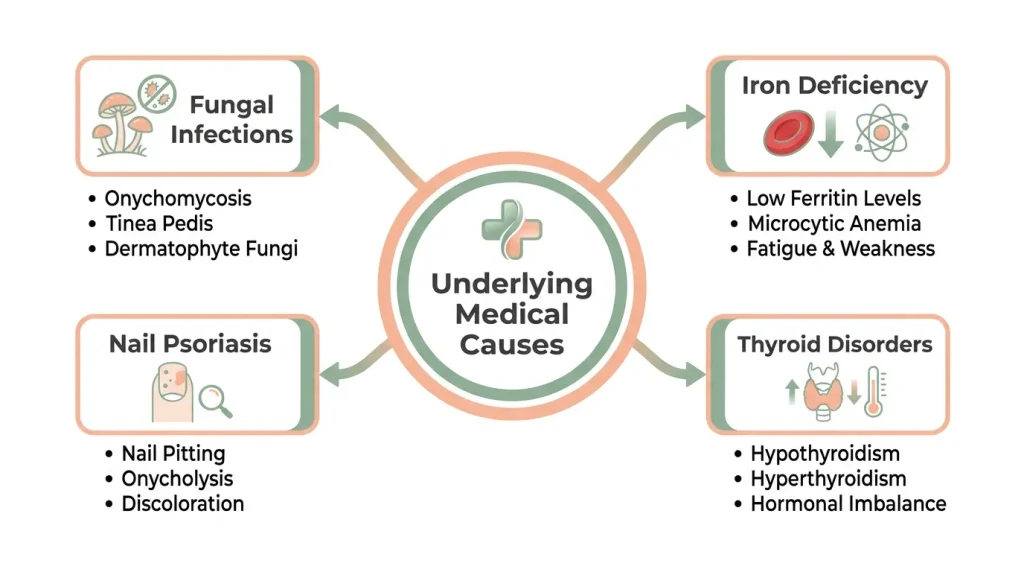
Several conditions may contribute to nail fragility. Understanding the possibilities can help you describe your symptoms, but appearance alone cannot confirm the cause.
Iron Deficiency and Anemia
Iron supports important functions throughout your body, including oxygen transport.
Iron deficiency may sometimes be associated with brittle or spoon-shaped nails, particularly when accompanied by fatigue or other symptoms.
A healthcare professional may recommend blood tests such as a complete blood count and ferritin when your history suggests iron deficiency.
Don’t begin high-dose iron supplements solely because your nails are brittle. Excess iron can be harmful, and supplementation should match your medical needs.
Thyroid Disorders
Your thyroid helps regulate metabolism and influences skin, hair, and nail health.
Thyroid disorders may contribute to dry, fragile, slow-growing, or unusually soft nails.
Because nail changes alone are nonspecific, clinicians consider your overall symptoms and may request thyroid function tests when appropriate.
Nail Psoriasis and Eczema
Inflammatory skin conditions can affect the structures responsible for nail formation.
Nail psoriasis may produce pitting, discoloration, thickening, lifting, or irregular surfaces.
Eczema can irritate the skin surrounding the nail and may contribute to changes in nail texture, particularly when inflammation persists.
A dermatologist can distinguish these conditions from cosmetic damage and recommend treatment suited to the diagnosis.
Fungal Nail Infections
Nail fungus can make nails brittle, discolored, thick, and crumbly.
Fungal infections are more common in toenails but can also affect fingernails.
Since several disorders look similar, testing may be needed before treatment. Over-the-counter cosmetic products aren’t a reliable substitute for a confirmed diagnosis.
Nutritional Problems and Other Conditions
Inadequate dietary intake, certain medications, and some systemic medical conditions can contribute to nail changes.
Still, most brittle nails aren’t proof of a vitamin deficiency.
Before spending money on supplements, review your diet, medications, relevant symptoms, and nail-care habits with a clinician if the problem remains unexplained.
Can You Treat Brittle Nails at Home Before Seeing a Dermatologist?
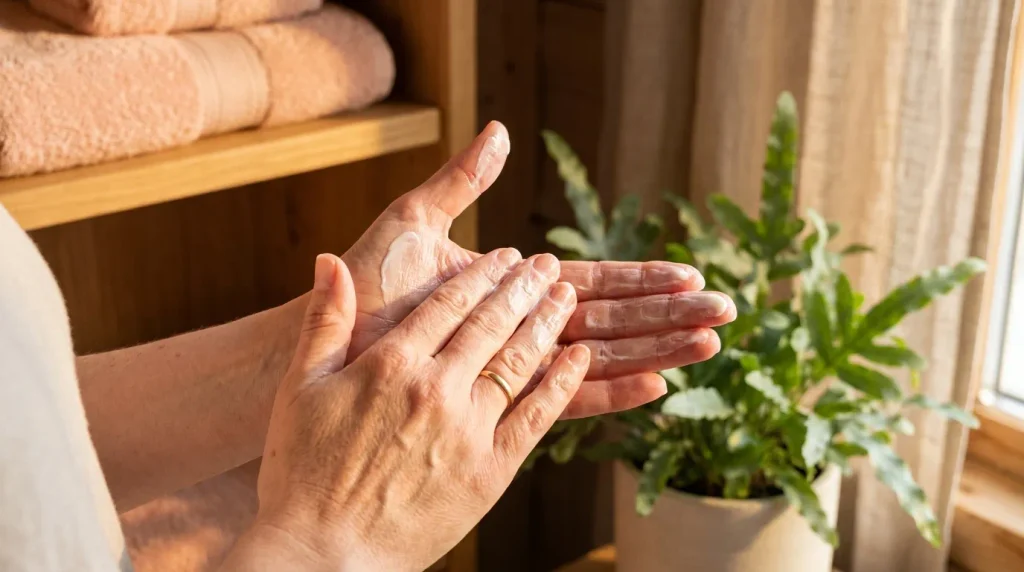
Yes, when the brittleness is mild, there are no warning signs, and the damage appears related to everyday exposure or manicure habits.
The goal is to reduce further breakage while healthier nail growth gradually replaces damaged areas.
Keep Your Nails Short and Smooth
Shorter nails experience less leverage when they catch on clothing or hard surfaces.
Trim loose edges carefully and use a fine nail file to smooth snags. Avoid tearing away peeling layers.
For practical maintenance ideas, explore our guide on how to strengthen nails with gentle daily habits.
Moisturize After Washing Your Hands
Apply a fragrance-free hand cream to your hands, fingertips, and nail folds after washing.
A simple petroleum jelly product can also help reduce moisture loss from dry surrounding skin, especially overnight.
Moisturizers can improve comfort and help protect fragile nails, but they cannot repair a crack that has already formed.
Protect Your Hands During Household Chores
Wear suitable protective gloves when washing dishes or handling cleaning products.
Repeated wetting and drying can contribute to splitting, while detergents may further irritate the skin.
For more specific prevention strategies, see our article on how to prevent nail peeling.
Take a Break From Damaging Manicure Techniques
If your nails feel thinner after gel or acrylic removal, avoid repeated buffing, peeling, and scraping.
Choose a gentle removal method appropriate for the product, and allow visibly damaged areas to grow out.
Learn how solvents, detergents, and manicure products affect nail structure in our guide to how chemicals affect nail strength.
Eat a Balanced Diet Instead of Guessing at Deficiencies
Your nails grow from living tissue that depends on adequate nutrition.
A balanced diet containing protein, vegetables, whole grains, and appropriate iron sources supports overall health.
Biotin supplements are often advertised for brittle nails, but evidence for routine use in people without deficiency is limited. High-dose biotin can also interfere with certain laboratory tests.
Speak with a healthcare professional before starting supplements for unexplained nail changes.
What Should You Avoid When Your Nails Are Brittle?
Do
- Moisturize your nails and fingertips regularly.
- Wear gloves during wet household chores.
- Keep fragile tips short and smooth.
- Monitor unexplained changes and record when they started.
- Seek medical advice for persistent or concerning symptoms.
Don’t
- Peel away damaged nail layers.
- Cover infected-looking nails with artificial products.
- Cut or aggressively push back cuticles.
- Take high-dose supplements without medical guidance.
- Ignore pain, new dark streaks, or nail lifting.
Which Doctor Should You See for Brittle Nails?
A primary care doctor is a useful first contact when you have unexplained brittle nails alongside fatigue, weight changes, or other general symptoms.
They can review your medical history, medications, and physical symptoms and decide whether laboratory tests are appropriate.
A board-certified dermatologist specializes in diagnosing conditions affecting your skin, hair, and nails.
Dermatologists are particularly helpful when you notice abnormal pigmentation, nail lifting, persistent inflammation, significant texture changes, or suspected nail disease.
For difficult toenail problems, a podiatrist may also help, especially when thickened nails are painful or difficult to trim.
What Happens During a Professional Nail Examination?
Your appointment will usually begin with questions about when the problem started and how it has changed.
Be prepared to discuss:
- How long your nails have been brittle.
- Whether one nail or several nails are affected.
- Recent gel, acrylic, or dip manicures.
- Exposure to detergents, water, and workplace chemicals.
- New medications and relevant medical conditions.
- Additional symptoms such as fatigue, rashes, or hair changes.
Your clinician will examine the nail plates, surrounding skin, and sometimes other parts of your body.
Depending on the findings, they may recommend fungal testing, blood tests, or a closer examination of unusual pigmentation.
Not everyone needs testing. The purpose is to identify a likely cause rather than order every possible investigation.
Pro Tip
Take clear photos of your bare nails in natural light when you first notice a change. Photograph them again if the appearance changes. These images can help your clinician understand the timeline, especially if a streak, split, or inflamed area looks different on appointment day.
How Long Does It Take for Brittle Nails to Recover?
Recovery depends on why the nails became brittle and whether the cause has been addressed.
Dry surrounding skin may feel more comfortable relatively quickly after you start moisturizing and reducing exposure to irritants.
However, a damaged nail plate cannot instantly rebuild its missing layers.
Healthy new nail needs to grow forward from the nail matrix, which means visible improvement can take months.
A fingernail commonly takes about four to six months to replace completely, while a toenail may take approximately twelve to eighteen months.
These are general growth estimates, not guaranteed treatment timelines.
If new growth continues to look abnormal despite reasonable care, or symptoms worsen during recovery, professional assessment becomes more important.
For a broader recovery approach, review our simple nail care routine for healthy nails.
How Can You Tell Whether Your Nails Are Improving?
Look at the nail growing from the base rather than expecting old damage at the tip to disappear.
Encouraging changes may include smoother new growth, fewer newly forming splits, and less irritation around the nail folds.
For a more detailed comparison of healthy and concerning changes, see our guide to the signs of unhealthy nails.
Use a simple weekly check:
- Look at your nails without polish under good lighting.
- Check for new discoloration, lifting, or swelling.
- Notice whether new splitting has decreased.
- Compare new nail growth with older damaged areas.
- Arrange an examination if concerning symptoms appear.
Don’t repeatedly scrape, bend, or press your nails to test their strength. That can create additional damage.
Frequently Asked Questions About Brittle Nails
Q: When should I worry about brittle fingernails?
A: Be concerned when brittleness persists without a clear cause, worsens, or occurs with pain, discoloration, swelling, lifting, or other physical symptoms. A clinician can evaluate whether a nail condition or underlying medical issue is involved.
Q: Can brittle nails indicate a vitamin deficiency?
A: Sometimes. Iron deficiency and certain nutritional problems can contribute to nail changes, but everyday damage is also common. Brittle nails alone cannot identify a deficiency, so testing and supplementation should depend on your medical assessment.
Q: Should I visit a dermatologist for peeling nails?
A: Mild peeling after frequent water exposure or manicure damage may improve with protective care. Visit a dermatologist if peeling is persistent, unexplained, painful, or accompanied by abnormal color, thickness, or nail separation.
Q: Can stress cause brittle nails?
A: Significant physical illness or stress can temporarily disrupt nail growth and sometimes cause grooves. Ordinary daily stress doesn’t automatically explain brittle nails. Consider your nail-care habits and consult a clinician if changes are unusual or persistent.
Q: Can nail polish hide a serious nail condition?
A: Yes. Opaque polish can conceal color changes, lifting, and other visible signs. Examine your natural nails between manicures and avoid covering unexplained abnormalities before a healthcare professional has assessed them.
Protect Your Nails and Know When to Ask for Help
Understanding when brittle nails need professional attention helps you distinguish everyday damage from warning signs that deserve medical evaluation. Persistent, painful, discolored, inflamed, or lifting nails shouldn’t be ignored.
Keep your nail routine gentle, monitor new growth, and seek professional care when something changes unexpectedly. Save this guide on Pinterest so you’ll remember which nail symptoms deserve a closer look.
Medical disclaimer: This article is for educational purposes only and is not a substitute for professional medical diagnosis or treatment. If you have concerning nail symptoms, consult a qualified healthcare professional.

Hi, I’m Jessica, the creator behind Unique Lash & Nails Katy.
I created this website for anyone who loves beautiful nails as much as I do. Here, I share trendy nail designs, seasonal manicure ideas, easy nail care tips, honest product recommendations, and step-by-step guides to help you create salon-worthy nails at home. Whether you’re looking for everyday inspiration or your next favorite nail trend, I hope you’ll find something you love.