How Dry Air and Winter Weather Affect Nails: Care Tips
Quick Answer
Dry air and winter weather can make your nails more prone to brittleness, peeling, splitting, and breakage. Low humidity, indoor heating, frequent handwashing, and exposure to harsh products can also leave your cuticles dry and cracked. To protect your nails, moisturize after washing, use cuticle oil regularly, wear protective gloves, and avoid aggressive manicures. Consistent care helps keep your nails and surrounding skin healthier throughout winter.
Have you noticed that your nails seem to break more easily as soon as winter arrives? Perhaps your favorite manicure starts chipping, your cuticles become rough, or the tips of your natural nails begin peeling.
You’re not imagining these changes. Cold weather and dry indoor environments can make existing nail problems more noticeable, especially when your daily routine includes frequent handwashing and exposure to cleaning products.
Understanding how dry air and winter weather affect nails helps you choose the right protective habits instead of spending money on products that promise instant results.
Here’s what actually happens to your nails in winter, which warning signs deserve attention, and how to maintain comfortable, healthy-looking nails even when the temperature drops.


Why Does Dry Air Make Your Nails Brittle?
Your fingernails are primarily made of keratin, a tough structural protein. Unlike living skin, the visible nail plate cannot repair itself after damage. However, its flexibility and appearance are influenced by its structure, natural lipids, water exposure, and surrounding environment.
When humidity drops, your hands and the skin around your nails may lose moisture more easily. Repeated exposure to water, soaps, and detergents can make the problem worse.
Dry, brittle nails are more likely to develop rough edges that catch on clothing or split under everyday pressure.
Low Humidity Can Make Nail Problems Worse
Cold outdoor air often contains relatively little moisture. Once that air enters your home and is heated, the indoor relative humidity may fall even further.
This environment can increase dryness around your fingertips and cuticles. If your nails are already fragile, winter conditions may make peeling and splitting more noticeable.
It’s important to understand that brittle nails aren’t always caused by a simple lack of water. Nail structure, natural lipids, repeated wetting and drying, aging, and cosmetic damage can all contribute.
Repeated Wetting and Drying Weakens Nails
Your nails absorb water and change slightly as they become wet and dry. Repeating this cycle frequently can contribute to brittleness and splitting.
Think about a typical winter day. You wash your hands, take a hot shower, clean dishes, and use sanitizer several times. Each activity can expose your nails and surrounding skin to additional moisture changes or irritating ingredients.
When these activities happen alongside dry indoor air, maintaining comfortable cuticles and flexible nail tips becomes more challenging.
Indoor Heating Can Dry Out Your Cuticles
Central heating makes your home comfortable, but it can also reduce indoor relative humidity.
The skin surrounding your nails may become tight, flaky, or irritated. As this skin dries, small pieces can lift and develop into uncomfortable hangnails.
Unlike an already-split nail plate, dry surrounding skin can often feel more comfortable relatively quickly when you apply moisturizer consistently.
If your biggest concern is low humidity, explore these practical tips on how to protect nails from dry air.
What Happens to Your Nails During Winter?
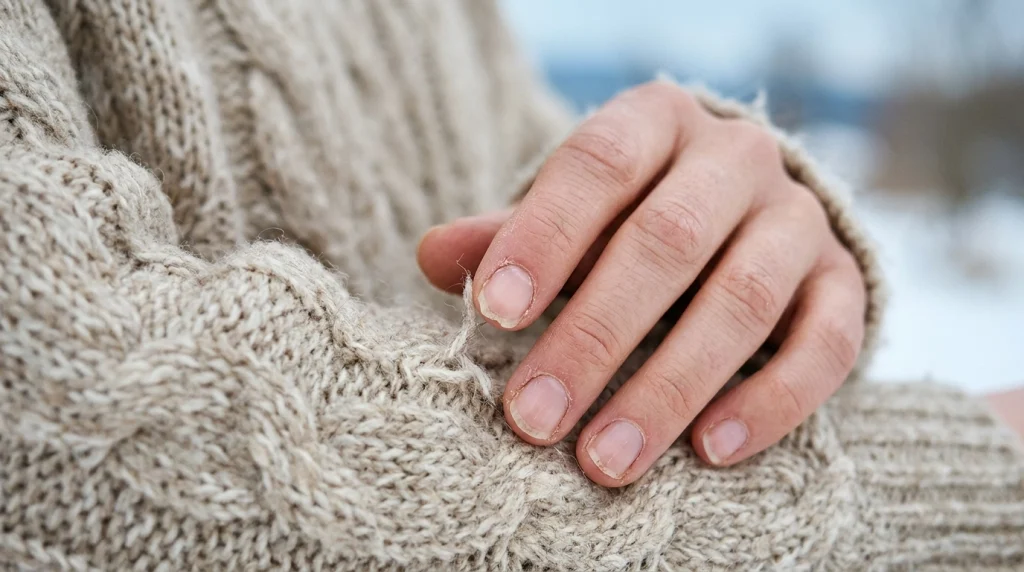
Winter nail changes don’t look the same for everyone. Some people notice rough cuticles first, while others experience peeling tips or manicures that break more easily.
The following problems are especially worth watching.
1. Brittle Nails That Break Easily
Brittle nails may feel less flexible and develop small cracks at the free edge. Even simple activities such as pulling on a sweater or opening a drawer can cause an already-weakened nail to catch and break.
You may notice:
- Nail tips breaking during ordinary activities.
- Rough edges that catch on clothing.
- Small splits near the ends of your nails.
- Difficulty maintaining your preferred nail length.
Keeping vulnerable nails shorter can reduce the leverage and pressure placed on their tips.
2. Peeling Layers at the Nail Tips
If your nails separate into thin horizontal layers, you may be experiencing a form of brittle nail splitting called onychoschizia.
Repeated water exposure, chemical irritation, rough filing, and manicure removal can contribute to this condition.
Winter dryness may aggravate an existing tendency toward peeling, but it isn’t the only possible cause.
What helps: Shorten the nail carefully, smooth the free edge, minimize prolonged wet work, and avoid pulling off loose layers.
3. Dry, Cracked Cuticles and Hangnails
The skin around your nail base protects sensitive structures underneath. When this area becomes dry, you might notice flaking, roughness, or painful little pieces of skin beside the nail.
These hangnails are pieces of torn skin, not pieces of the actual nail.
Picking or biting them can create small wounds and increase your risk of infection.
Instead, apply a fragrance-free moisturizer regularly. Carefully trim only a completely loose hangnail with clean tools, without cutting into attached skin.
For targeted advice, read our guide on how to fix dry cuticles.
4. More Visible Ridges and Rough Texture
Some people notice that their nails appear rougher during colder months.
Fine vertical ridges are common and often become more noticeable with age. Dryness or surface damage may make nail texture seem more obvious.
However, not every ridge is caused by winter weather. Deep horizontal grooves, unusual discoloration, or sudden changes in multiple nails may require medical evaluation.
Avoid trying to remove every ridge by buffing aggressively. Excessive buffing can thin an already-fragile nail plate.
5. Manicures That Chip or Lift More Easily
Winter may affect how well your manicure holds up, particularly if your nails are peeling or frequently exposed to water and household chemicals.
Polish applied over an uneven, damaged nail surface may chip sooner. Picking at lifted gel polish can also remove superficial nail layers.
The solution isn’t necessarily stronger glue or more aggressive preparation. Gentle nail care and proper application and removal are usually more helpful.
Does Cold Weather Directly Damage Your Nails?
Cold temperatures are only one part of the winter nail-care picture.
Your nails are not automatically damaged simply because you walk outside on a cold day. The bigger concern is the combination of low humidity, frequent moisture changes, environmental exposure, and mechanical stress.
Consider what changes during winter:
- Outdoor conditions: Cold, windy weather can aggravate exposed dry skin.
- Indoor heating: Heated rooms may have low relative humidity.
- Handwashing: Repeated washing and soap exposure can irritate already-dry hands.
- Household chores: Detergents and prolonged wet work contribute to nail fragility.
- Winter clothing: Rough nail edges may catch on knitted gloves, scarves, and sweaters.
- Manicure habits: Repeated polish removal and aggressive filing may worsen existing damage.
Knowing these factors helps you focus on the habits you can change rather than blaming the temperature alone.
Pro Tip
Keep a small fragrance-free hand cream beside your kitchen sink and another in your handbag. Applying moisturizer immediately after washing is easier when the product is already within reach.
How Can You Protect Your Nails From Dry Winter Air?
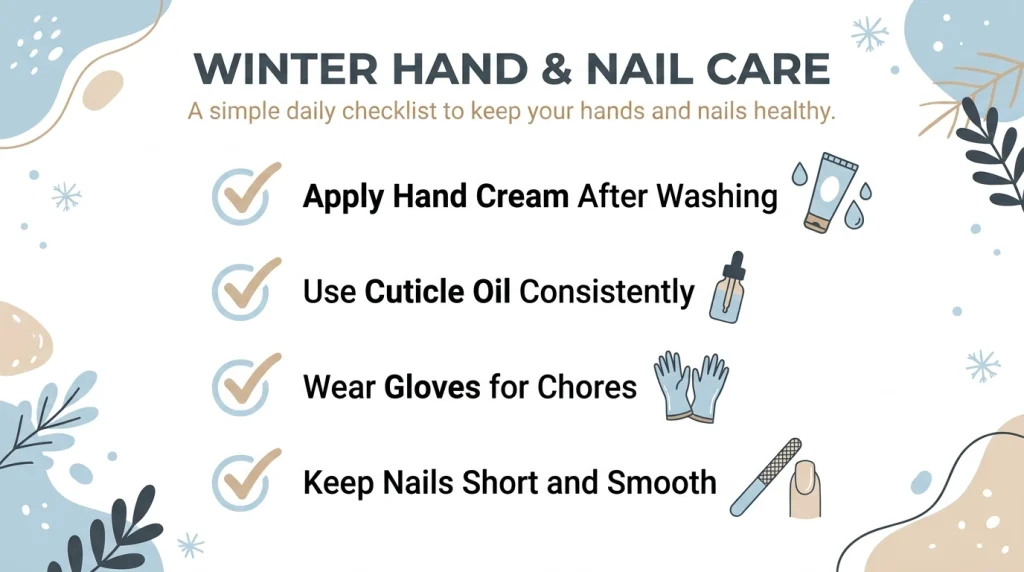
You don’t need an elaborate nail-care collection to reduce winter dryness. A few consistent habits can make a meaningful difference.
Apply Hand Cream After Washing
Every time you wash your hands, gently dry them and apply a moisturizing cream to your hands, fingertips, nails, and cuticle areas.
Look for ingredients such as glycerin, petrolatum, ceramides, or dimethicone. These ingredients help support the skin barrier or reduce moisture loss.
Fragrance-free products are often preferable when your skin is sensitive or cracked.
For extra-dry hands, a thick cream or ointment may provide more lasting protection than a lightweight lotion.
Use Cuticle Oil Consistently
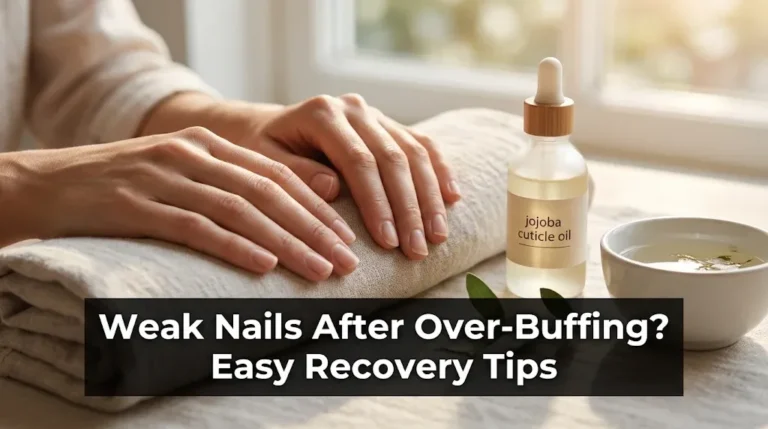
Cuticle oil can condition the skin surrounding your nails and make rough areas feel softer.
Choose a simple formula containing ingredients such as jojoba oil or another well-tolerated emollient.
Massage a small amount around your nail folds once or twice daily, especially before bedtime.
Remember that oil isn’t a permanent repair treatment for a nail plate that has already split. Its main role is conditioning and supporting your routine.
Wear Gloves Outdoors and During Cleaning
Protective gloves are especially useful when your hands are exposed to cold weather or irritating household products.
Use comfortable winter gloves outdoors and properly fitting waterproof gloves while washing dishes or cleaning.
For prolonged wet work, consider gloves with a cotton lining or a suitable cotton liner to reduce discomfort from perspiration.
Remove damp gloves promptly and dry your hands afterward.
Keep Nails Short and Smooth
Long nails experience more pressure during everyday activities. If your nail tips are already brittle, a shorter length can reduce breakage.
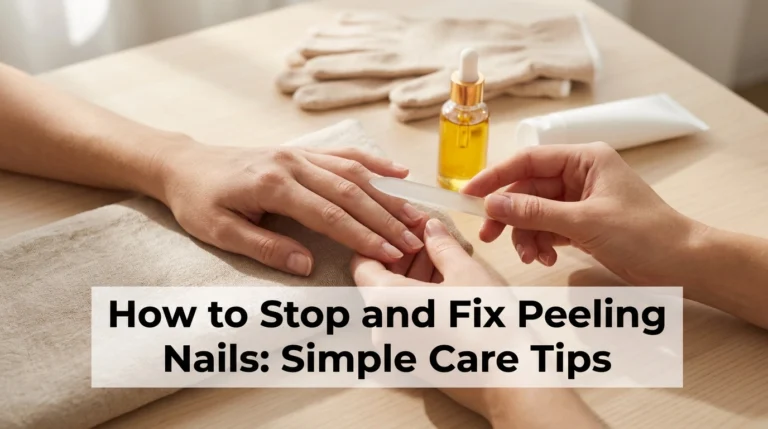
Use a fine-grit or glass nail file to smooth rough edges. Work carefully and avoid aggressively sawing across the nail tip.
A softly rounded or squoval shape can be practical when your nails frequently catch on clothing.
Consider Your Indoor Humidity
If your home feels extremely dry, a properly maintained humidifier may improve comfort for your skin.
A hygrometer can help you monitor indoor humidity. A commonly recommended general household range is approximately 30–50% relative humidity, while avoiding condensation and excessive dampness.
Keep humidifiers clean according to the manufacturer’s instructions to reduce microbial growth.
A humidifier doesn’t replace moisturizing, and there isn’t strong evidence that it alone will reverse brittle nails.
What Is the Best Daily Winter Nail Care Routine?
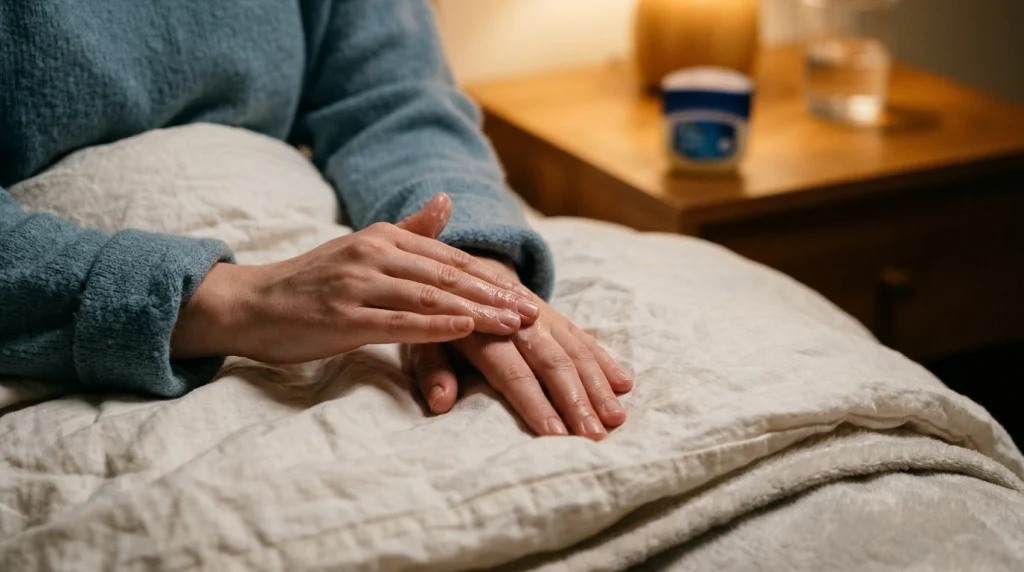
The most effective routine is one you can repeat consistently. Instead of adding more manicure products, organize your care around the times your hands need protection most.
Morning: Prepare Your Hands for the Day
- Wash your hands with comfortably warm water.
- Pat them dry without harsh rubbing.
- Massage a small amount of hand cream over your fingertips.
- Apply cuticle oil if your skin feels dry.
- Put on winter gloves before spending time outdoors.
This simple routine creates a practical starting point for daily protection.
During the Day: Replace Lost Moisture
Reapply moisturizer after handwashing and whenever your fingertips feel tight or rough.
Wear waterproof gloves when cleaning or washing dishes. If a nail catches on fabric, smooth the snag instead of pulling at it.
You don’t need to apply cuticle oil after every handwash. The important part is keeping the surrounding skin comfortable and moisturized.
Evening: Give Your Cuticles Extra Attention
- Remove any jewelry that makes thorough moisturizing difficult.
- Wash away dirt and dry your hands gently.
- Apply a rich hand cream around your nails.
- Massage cuticle oil into rough nail folds.
- Add a thin layer of petroleum jelly over particularly dry areas if needed.
If you like, wear clean, breathable cotton gloves briefly after applying your moisturizer, provided they don’t irritate your skin.
You can also follow our broader daily nail care routine for healthy nails when you want year-round maintenance tips.
Pro Tip
Apply your nighttime moisturizer while your skin is still slightly damp after washing. Then use a thin layer of petroleum jelly over especially dry cuticle areas to help reduce moisture loss overnight.
What Should You Do and Avoid During Winter?
Small daily decisions can either protect your nails or make existing brittleness worse.
Do
- Moisturize after handwashing.
- Use cuticle oil regularly.
- Wear gloves for wet chores.
- Keep fragile nail tips short.
- File snags gently.
- Use gentle manicure removal.
Don’t
- Pick at peeling nail layers.
- Cut healthy cuticle tissue.
- Use nails to open packages.
- Scrub with harsh chemicals barehanded.
- Buff brittle nails aggressively.
- Peel off gel or acrylic products.
Which Nail Care Products Help During Winter?
Winter nail care doesn’t have to be expensive. Start with products that address dryness, friction, and avoidable damage.
The following product types may be useful depending on your daily habits.
Recommended Product
Fragrance-Free Moisturizing Hand Cream
A rich hand cream can help soften dry fingertips and support the skin barrier after frequent winter handwashing. Choose a fragrance-free formula if your skin becomes easily irritated.
As an Amazon Associate, we earn from qualifying purchases.
Recommended Product
Jojoba Cuticle Oil
A simple cuticle oil can condition dry skin around your nails and make daily moisturizing easier. Choose a product without added fragrance when your skin is sensitive.
As an Amazon Associate, we earn from qualifying purchases.
Recommended Product
Fine Glass Nail File
A fine glass file helps smooth small nail snags without requiring aggressive filing. It’s particularly useful when brittle tips catch on winter sweaters and gloves.
As an Amazon Associate, we earn from qualifying purchases.
These products support different parts of your nail-care routine. Moisturizer addresses dry skin, cuticle oil conditions the nail folds, and a gentle file helps prevent rough edges from catching and tearing.
None should be expected to instantly repair an existing split in the nail plate.
Can You Wear Gel Polish or Acrylic Nails During Winter?
Yes, you can still enjoy beautiful manicures during winter if your natural nails and surrounding skin are healthy.
Cold weather alone doesn’t mean you need to abandon gel polish, acrylics, or your favorite seasonal nail designs.
However, repeated preparation, filing, adhesive application, and removal can contribute to damage if performed aggressively.
To reduce unnecessary stress:
- Choose a manageable nail length.
- Avoid picking or peeling lifting gel polish.
- Ask your technician not to cut healthy cuticles.
- Follow appropriate removal methods for your manicure.
- Moisturize the surrounding skin between appointments.
- Pause cosmetic treatments when your nails are painful, inflamed, or visibly damaged.
If your nail plate is already thin or peeling, additional enhancement removal may worsen the problem. Consider keeping your nails natural while the damaged portion grows out.
For everyday maintenance, this guide on how to properly care for your nails explains gentle filing, cuticle protection, and safer manicure habits.
How Long Does It Take for Winter-Damaged Nails to Recover?
Recovery depends on whether you’re dealing with dry surrounding skin or actual damage to the nail plate.
Dry cuticles may begin feeling more comfortable within a few days of consistent moisturizing, although deeper cracks and irritation can take longer.
A damaged nail plate is different. Once layers have peeled or split, moisturizer cannot permanently fuse them back together.
The damaged area must gradually grow outward.
Fingernails typically grow around 2.5–3 millimeters per month, although growth varies between individuals.
A completely new fingernail can take approximately four to six months to replace the old nail plate.
Small splits near the tip may grow out sooner. Damage closer to the nail base takes longer because it must travel farther.
During that time, protecting your nails from additional trauma is more useful than repeatedly applying aggressive strengthening treatments.
Warning
Don’t assume every persistent nail change comes from winter dryness. Nail infections, skin conditions, trauma, and certain medical conditions can also affect nail appearance and strength. Seek professional advice for unexplained changes, significant pain, swelling, or nails that separate from the nail bed.
When Should You See a Dermatologist About Winter Nail Problems?
Mild dryness and occasional nail-tip splitting may improve with gentle care. However, some symptoms suggest that the problem goes beyond ordinary winter exposure.
Consider scheduling a professional evaluation if you notice:
- Persistent pain, swelling, redness, or warmth around a nail.
- Pus or drainage near the cuticle.
- Unexpected dark streaks or significant color changes.
- Nails becoming unusually thick, crumbly, or detached.
- Repeated splitting that doesn’t improve with protective habits.
- Sudden changes affecting several nails without an obvious explanation.
Nail changes can sometimes be associated with skin disorders, fungal infections, nutritional problems, or thyroid conditions. A dermatologist can assess the pattern and recommend appropriate treatment.
Don’t cover a painful or infected-looking nail with gel polish to hide the symptoms.
What Are the Biggest Winter Nail Care Mistakes?
Even a good moisturizing routine can be undermined by habits that create additional nail damage.
Using Very Hot Water for Every Handwash
Very hot water can aggravate dry or sensitive skin. Use comfortably warm water and moisturize afterward.
Cutting or Pushing Back Cuticles Aggressively
The cuticle area helps protect the nail base. Cutting healthy tissue can cause irritation and create an opening for infection.
Keep the area moisturized instead of repeatedly trimming it.
Trying to Buff Away Nail Damage
Buffing may temporarily improve the appearance of a rough nail, but aggressive abrasion removes material from the nail plate.
When nails are already thin or brittle, this can make them more vulnerable to splitting.
Using Nail Hardeners Without Checking Ingredients
Some nail hardeners contain ingredients that can irritate skin or make nails excessively rigid.
Formaldehyde-containing treatments are particularly worth avoiding when nails are already brittle.
Focus on reducing trauma and keeping the surrounding skin moisturized before introducing additional cosmetic treatments.
Ignoring Water and Cleaning Chemical Exposure
If you wash dishes every day without protective gloves, even an excellent nighttime moisturizing routine may not fully address the repeated exposure.
Reduce unnecessary wet work and protect your hands during cleaning.
For additional prevention ideas, see our guide on how to protect nails in winter.
Frequently Asked Questions About Dry Air and Winter Nails
Q: Can dry air cause nails to split?
A: Low humidity can contribute to an environment where brittle nails become more noticeable. Repeated wetting and drying, harsh chemicals, and manicure damage are also important causes of splitting. Protecting your nails and moisturizing regularly can help reduce further damage.
Q: Why do my cuticles crack more in winter?
A: Cold weather, low indoor humidity, frequent handwashing, and irritating products can disrupt the skin barrier around your nails. Applying fragrance-free cream after washing and using petroleum jelly on very dry areas can help protect the skin.
Q: Is cuticle oil or hand cream better for winter nails?
A: Both can be useful. Hand cream moisturizes a larger area and supports your skin barrier, while cuticle oil conditions the skin immediately surrounding your nails. If you choose only one product, a rich fragrance-free moisturizer is a practical starting point.
Q: Does drinking more water fix brittle nails?
A: Staying adequately hydrated supports your general health, but drinking extra water isn’t a proven treatment for brittle nails caused by repeated wet work or cosmetic damage. Local moisturizing and reducing harmful exposure are more directly useful.
Q: Will brittle nails become healthy again after winter?
A: Nails affected mainly by environmental exposure may improve when you reduce irritation and protect new growth. Already-damaged nail layers must grow out, which can take several months. Persistent or worsening nail problems should be evaluated by a healthcare professional.
How Can You Keep Your Nails Healthy All Winter?
Understanding how dry air and winter weather affect nails makes winter nail care much easier. Instead of relying on expensive treatments, focus on keeping your hands moisturized, protecting them from prolonged water exposure, and avoiding unnecessary damage.
Your most valuable habits are simple: use hand cream after washing, condition dry cuticles, wear protective gloves, and file fragile nails gently.
Save this guide on Pinterest so you can return to these winter nail care tips whenever your nails need extra attention.

Hi, I’m Jessica, the creator behind Unique Lash & Nails Katy.
I created this website for anyone who loves beautiful nails as much as I do. Here, I share trendy nail designs, seasonal manicure ideas, easy nail care tips, honest product recommendations, and step-by-step guides to help you create salon-worthy nails at home. Whether you’re looking for everyday inspiration or your next favorite nail trend, I hope you’ll find something you love.