How Acetone Can Damage Nails: Signs & Safe Care
Quick Answer
Acetone can damage your nails by removing surface oils and temporarily dehydrating the nail plate and surrounding skin. Frequent exposure may contribute to dryness, brittleness, peeling, and splitting. However, occasional careful use usually doesn’t cause permanent damage. Limit contact time, never scrape off stubborn polish, and moisturize your nails and cuticles after removal.
You finally remove your beautiful gel manicure, expecting healthy natural nails underneath. Instead, your fingertips look chalky, your cuticles feel tight, and your nails seem weaker than before.
It’s tempting to blame acetone for everything, especially when your nails feel dry immediately after using it. But acetone isn’t always the only reason nails become damaged. Aggressive filing, repeated manicures, and peeling off gel polish can make the problem much worse.
Understanding how acetone can damage nails helps you separate temporary dryness from more serious nail damage. You’ll also discover how to remove polish more safely and keep your natural nails looking healthy between manicures.


What Does Acetone Actually Do to Your Nails?
Acetone is a fast-evaporating solvent commonly found in nail polish removers. It dissolves many nail coatings, allowing you to remove polish without excessive rubbing. It’s particularly useful for soak-off gel polish and certain artificial nail products.
Your natural nail plate consists primarily of tightly packed layers of keratin. Although it feels solid, the nail contains water and depends on an appropriate moisture balance to maintain flexibility.
When acetone contacts your nails, it can remove surface oils and contribute to moisture loss. The nail surface may temporarily become dry, dull, or less flexible.
This is why your nails sometimes develop a white, powdery appearance immediately after removing polish.
The important distinction is that temporary dehydration isn’t necessarily permanent structural damage. Problems become more likely when exposure is frequent, the nail plate is already fragile, or removal involves scraping and peeling.
If you’re unsure which remover you’re using, our guide explaining the difference between acetone and regular nail polish remover can help you identify the right product.
How Can Acetone Damage Your Nails Over Time?
1. It Can Dry Out the Nail Plate
One of acetone’s most noticeable effects is dryness. Because it evaporates quickly and removes oils, your nails may feel rough or unusually rigid after exposure.
When a nail becomes too dry, it may lose some flexibility. Instead of bending slightly when pressure is applied, its free edge may crack or break more easily.
Repeated exposure without adequate moisturizing can make this problem more noticeable, particularly if you already have naturally brittle nails.
2. It May Contribute to Peeling and Splitting
Your nail plate contains multiple layers of keratin. When nails become brittle, these layers may begin separating near the tips.
This condition, sometimes called lamellar splitting or onychoschizia, can produce thin flakes that peel away from the free edge.
Acetone-related dryness may contribute, but repeated water exposure, physical trauma, harsh cleaning products, and aggressive manicure removal can also play important roles.
Peeling nails need protection from additional damage, not aggressive buffing to make the surface look smooth.
3. It Can Irritate Your Cuticles
The skin around your nails is more delicate than the nail plate itself. Acetone can remove oils from this skin and disrupt its protective barrier.
As a result, your cuticles may look flaky, feel tight, or develop small painful cracks.
If the surrounding skin is already irritated or affected by eczema, acetone exposure can cause even more discomfort.
Protecting your cuticles before removing polish is therefore just as important as caring for the nail surface afterward.
4. It Can Make Existing Nail Damage More Noticeable
Acetone doesn’t automatically make every healthy nail thin. However, nails previously damaged by over-filing, scraping, or peeling off enhancements may look and feel worse after a drying acetone soak.
For example, a nail that has already lost some superficial keratin layers may appear more uneven or fragile once the coating is removed.
The resulting damage may be caused by several parts of the manicure process rather than acetone alone.
What Are the Signs of Acetone-Related Nail Damage?
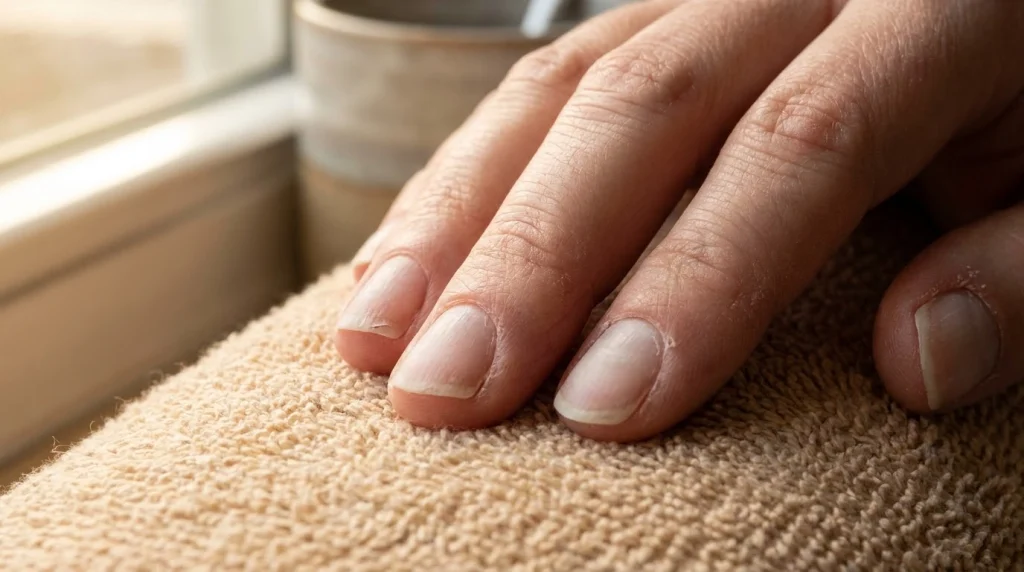
Your nails often show noticeable changes when they become excessively dry or irritated. Watch for these seven signs:
- White or chalky patches: Your nails look pale or powdery immediately after polish removal. This may reflect temporary dehydration or surface changes.
- Peeling nail tips: Thin layers begin lifting or separating near the free edge.
- Frequent breaking: Your nails crack during ordinary activities such as washing dishes or handling clothing.
- Rough texture: The nail surface feels less smooth than usual, particularly after repeated manicures.
- Dry cuticles: The skin around your nails becomes flaky, tight, or uncomfortable.
- Increased brittleness: Your nails seem less flexible and break instead of bending slightly.
- Stinging or redness: The surrounding skin becomes irritated during or after remover exposure.
These signs aren’t specific to acetone. Nail conditions, repeated wet work, nutritional deficiencies, skin disorders, and manicure trauma can produce similar symptoms.
If your nails are severely peeling after artificial nail removal, you may find our guide to caring for peeling nails after gel or acrylic removal helpful.
Important Warning
Severe pain, swelling, bleeding, pus, nail separation, or persistent discoloration should not be dismissed as ordinary acetone dryness. Stop using irritating products and seek medical advice, especially if an infection is possible.
Does Acetone Permanently Damage Natural Nails?
Usually, a single careful acetone removal doesn’t permanently damage healthy natural nails.
Dryness and mild irritation may improve with moisturizing and reduced exposure. However, an already-thinned or split portion of the nail plate cannot simply be restored to its original structure with oil or cream.
That damaged section generally needs to grow outward and eventually be trimmed away.
Fingernails typically take approximately six months to grow out completely, although individual growth rates vary.
Repeated trauma to the nail matrix, the area responsible for producing new nail material, can potentially cause more persistent problems. Ordinary acetone exposure is different from an injury to that growth area.
Think of moisturizing as protecting your existing nails and improving their flexibility rather than magically rebuilding missing keratin layers.
Who Is More Likely to Experience Nail Problems From Acetone?
Some people experience greater discomfort or noticeable brittleness because their nails or surrounding skin are already vulnerable.
- People with naturally brittle nails: Additional dryness can increase existing splitting and breakage.
- Frequent gel manicure users: Repeated removal combines solvent exposure with possible mechanical trauma.
- People with eczema or sensitive skin: Acetone may worsen irritation around the nails.
- Anyone who frequently washes their hands: Repeated wet-dry cycles may contribute to brittle nails.
- People who over-buff their nails: Removing surface layers leaves nails more vulnerable to everyday damage.
If your nails are already weak, focus on reducing unnecessary exposure and improving your daily nail-care habits instead of automatically adding another hardening treatment.
Is Acetone-Free Nail Polish Remover Better for Your Nails?
Acetone-free nail polish removers are often marketed as gentler alternatives. They commonly use other solvents, such as ethyl acetate, instead of acetone.
For ordinary nail polish, an acetone-free remover may be a reasonable choice if your nails or surrounding skin are easily irritated.
However, acetone-free doesn’t mean completely harmless. Other solvents can also cause dryness, and removing stubborn polish may require additional rubbing.
For soak-off gel polish, acetone is often the more practical option because it dissolves the coating more effectively.
Trying to remove gel with an ineffective remover can tempt you to scrape or peel the product away, potentially causing greater nail damage.
The better choice depends on your manicure, nail condition, and the manufacturer’s removal instructions.
How Can You Prevent Acetone From Damaging Your Nails?
You don’t necessarily need to eliminate acetone from your manicure routine. Instead, use it only when appropriate and protect your nails before, during, and after removal.
Choose the Right Remover for Your Manicure
Regular polish often comes off with either acetone-based or acetone-free remover. Soak-off gel generally requires a compatible removal product.
Not every artificial nail product is designed to dissolve in acetone. Hard gel, for example, typically requires professional filing rather than soaking.
Always identify your coating before beginning.
Protect Your Skin Before Removal
Apply a thin layer of petroleum jelly around your cuticles and nearby skin before using acetone.
This creates a protective barrier that helps limit irritation. Avoid covering the nail surface itself if the remover needs direct contact with the coating.
Avoid Unnecessary Soaking
For regular polish, use a remover-moistened cotton pad and wipe gently rather than repeatedly soaking your entire fingertips.
For gel, keep acetone contact focused on the nails and follow the product’s recommended removal time.
More soaking isn’t automatically better, especially when the coating isn’t responding.
Never Peel Off Stubborn Gel
If gel polish doesn’t release easily, don’t pull it away with your fingers or force a metal tool beneath it.
The coating may take superficial layers of the natural nail along with it, leaving thin and uneven areas.
Ask a qualified nail professional for help with resistant products rather than continuing aggressive removal.
Moisturize Immediately Afterward
After removing acetone and gently cleaning your hands, apply a fragrance-free moisturizer to your nails and surrounding skin.
Follow with a small amount of cuticle oil or petroleum jelly to help reduce moisture loss.
Repeat this care during the following days, especially if your nails feel dry.
Pro Tip
Keep a small hand cream near your sink and a cuticle oil beside your bed. Pairing moisturizing with existing routines makes it easier to protect dry nails consistently instead of only treating them after a manicure.
How Should You Remove Gel Polish With Acetone Safely?
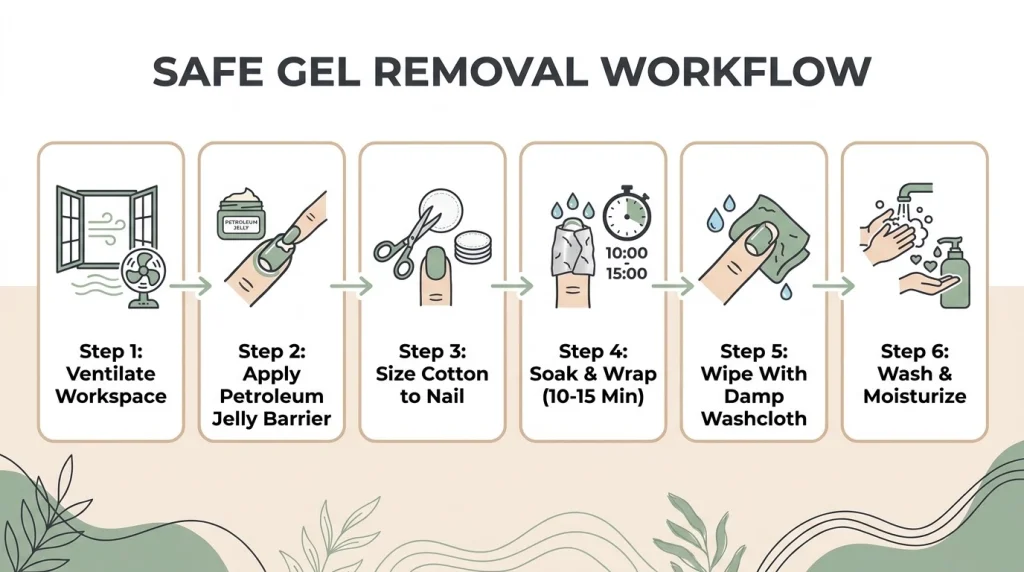
Safe removal matters because the wrong technique can damage your nails more than controlled acetone exposure.
The American Academy of Dermatology recommends limiting acetone contact with the surrounding skin and avoiding forceful peeling or scraping.
Here’s a practical approach for compatible soak-off gel polish.
- Prepare a ventilated workspace. Protect your furniture with a suitable covering and keep acetone away from flames, sparks, or heat sources.
- Protect your cuticles. Apply petroleum jelly around the nail folds without coating the gel surface.
- Prepare appropriately sized cotton. Cut pieces just large enough to cover each nail, reducing unnecessary skin exposure.
- Apply acetone. Saturate the cotton with a compatible remover. For soak-off gel, you may use 100% acetone nail polish remover if the manufacturer’s instructions recommend it.
- Wrap carefully. Hold the cotton against the nail with plastic food wrap or an appropriate nail-removal wrap. Avoid wrapping tightly enough to restrict circulation.
- Check after the recommended time. Some compatible gel products loosen after approximately 10-15 minutes, but always follow the specific product’s instructions.
- Remove softened coating gently. Use a warm, damp washcloth to wipe loosened residue. Stop if the product remains firmly attached.
- Clean and moisturize. Wash away remover residue using mild soap and water, dry gently, and apply moisturizer or petroleum jelly.
If your coating doesn’t soften as expected, don’t extend soaking indefinitely or begin aggressive scraping. Confirm whether the product is truly soak-off gel and consider professional removal.
Never heat acetone in a microwave, over a flame, or using a household heating device. It’s highly flammable.
Affiliate disclosure: As an Amazon Associate, we earn from qualifying purchases.
What Helps Dry Nails Recover After Acetone Exposure?
Recovery involves protecting the nail plate from further damage while supporting the surrounding skin with consistent moisturizing.
Use Cuticle Oil Regularly
Cuticle oil helps condition dry skin and can improve the appearance and flexibility of dry nail surfaces.
Jojoba-based products are convenient for everyday nail care. Massage a small amount over each nail and cuticle, particularly before bedtime.
If you’re comparing different formulas, our guide to nail oil versus cuticle oil explains how these products fit into your routine.
Recommended Nail-Care Product
Jojoba Cuticle Oil for Dry Nails
A simple jojoba-based cuticle oil can help condition your nails and the surrounding skin after polish removal. Look for a fragrance-free formula if your skin is sensitive.
As an Amazon Associate, we earn from qualifying purchases.
Apply Hand Cream After Washing
Water exposure followed by drying can contribute to nail brittleness. A moisturizing hand cream helps maintain the skin barrier and conditions the nail area.
Choose a fragrance-free hand cream for dry skin if your cuticles frequently become irritated.
Apply it after washing your hands and again before sleeping.
Keep Your Nails Short While They’re Fragile
Long nails experience more leverage during everyday activities, making fragile tips easier to catch or break.
Trim your nails to a comfortable length and gently smooth rough edges using a fine nail file.
Avoid excessive buffing, which can remove even more material from an already thin nail plate.
Take a Break From Gel Manicures
If your nails feel weak or begin peeling, temporarily switching to bare nails can reduce repeated removal and filing.
The American Academy of Dermatology suggests taking a nail-polish break of one to two weeks or longer between gel manicures.
A short break may improve dryness and comfort, but visibly damaged portions can take months to grow out completely.
How Long Does It Take for Acetone-Damaged Nails to Recover?
Your recovery time depends on whether you’re dealing with temporary dryness or actual nail-plate damage.
- Mild dryness: The appearance and feel of your nails may improve over several days with regular moisturizing.
- Dry, irritated cuticles: Minor irritation may improve within days, provided you avoid further exposure.
- Peeling or splitting: Damaged nail tips generally need time to grow outward before they can be trimmed away.
- Significant thinning: A damaged fingernail may require several months to grow out substantially.
No cuticle oil, strengthening polish, or beauty supplement can instantly restore nail material that has already been removed.
However, consistent protection can reduce additional breakage while healthy nail growth continues.
For a practical ongoing routine, see our guide to strengthening weak, thin, and brittle nails.
What Should You Do and Avoid When Your Nails Feel Damaged?
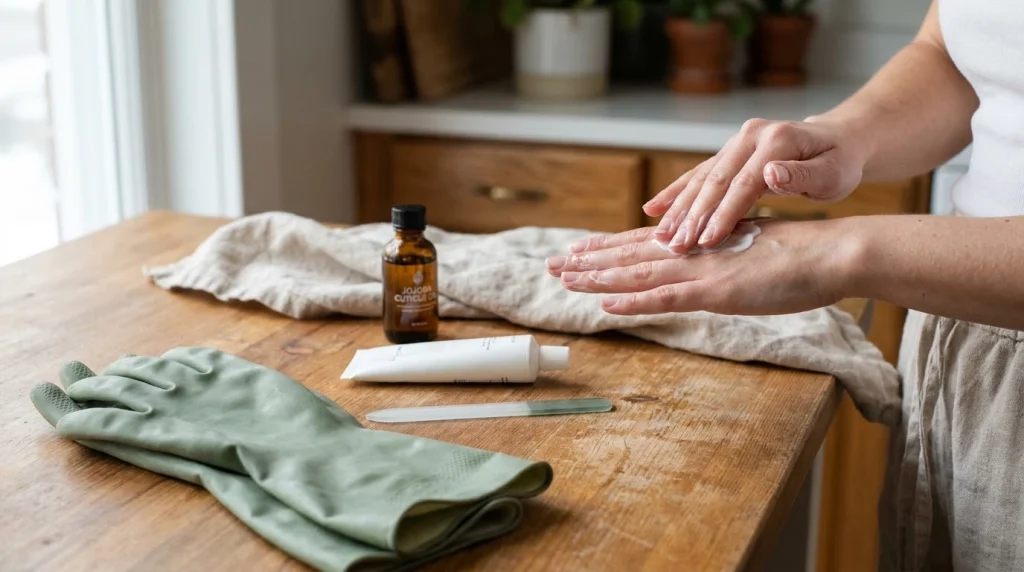
DO
- Moisturize nails and cuticles every day.
- Use gloves when cleaning or washing dishes.
- Keep fragile nails trimmed.
- Use remover only when necessary.
- Choose gentle, professional removal when needed.
DON’T
- Peel or scrape stubborn gel polish.
- Over-buff peeling nail surfaces.
- Repeat unnecessary acetone soaks.
- Pick at cracked or irritated cuticles.
- Cover unexplained nail problems with new enhancements.
Can You Still Get Manicures if Your Nails Are Sensitive to Acetone?
Yes, but choosing an appropriate manicure matters.
If regular polish suits your lifestyle, you may be able to remove it with a gentler product and less prolonged solvent exposure than soak-off gel requires.
Traditional manicures also allow you to inspect the natural nail surface more frequently.
When visiting a salon, explain that your nails have become dry or brittle after previous removals. Ask the technician to avoid aggressive filing and protect your surrounding skin.
If you experience persistent irritation or a suspected allergy, consult a dermatologist before continuing with the same products.
Between appointments, follow a simple daily nail-care routine built around moisturizing, gentle filing, and minimizing unnecessary trauma.
What Are Common Myths About Acetone and Nail Damage?
Myth: Acetone Always Permanently Weakens Nails
Occasional controlled exposure doesn’t automatically cause permanent damage. Temporary dryness is more common, while persistent structural problems may involve repeated exposure or mechanical trauma.
Myth: Acetone-Free Remover Never Causes Dryness
Other polish-removing solvents can also dry nails and irritate skin. The formula and removal technique both matter.
Myth: Scraping Gel Off Is Better Than Using Acetone
For compatible soak-off gels, carefully applied acetone is usually safer than forcefully peeling or scraping the coating.
Myth: Nail Oil Can Repair Every Type of Nail Damage
Oil helps condition dry nails and nearby skin, but it cannot replace nail layers already removed through filing or peeling.
When Should You See a Dermatologist About Damaged Nails?
Most mild post-manicure dryness can be managed with gentle nail care. However, some symptoms deserve professional evaluation.
Make an appointment if your nails remain unusually fragile despite reducing harsh treatments, or if you notice persistent separation, significant discoloration, unexplained thickening, or worsening changes.
Seek prompt medical advice for severe pain, increasing redness, warmth, swelling, or pus around a nail.
These symptoms can indicate an issue beyond ordinary solvent-related dryness.
Frequently Asked Questions About Acetone and Nails
Q: Is 100% acetone worse for your nails than regular remover?
A: Pure acetone can cause substantial dryness, especially with prolonged contact. However, it removes some coatings more efficiently than weaker formulations. The safest choice depends on the product you’re removing and your exposure time.
Q: Why do my nails turn white after acetone?
A: Acetone can temporarily dehydrate the nail surface, creating a pale or chalky appearance. Surface residue or previous manicure damage can also contribute. Persistent white patches should be evaluated if their cause is unclear.
Q: Can acetone make your nails thinner?
A: Acetone may contribute to brittleness, but substantial nail thinning is often associated with over-filing, scraping, or peeling during manicure removal. Multiple factors may be involved.
Q: Should you apply cuticle oil before or after acetone?
A: Before removal, protect the surrounding skin with petroleum jelly. Afterward, clean your nails and apply hand cream or cuticle oil to condition the nail surface and skin.
Q: How often can you safely use acetone on your nails?
A: There isn’t one universally safe frequency for everyone. Occasional careful use is generally less concerning than frequent prolonged soaking. If you notice dryness, peeling, or irritation, reduce exposure and allow your nails time to recover.
Final Thoughts: How Can You Keep Your Nails Healthy?
Understanding how acetone can damage nails doesn’t mean you have to give up your favorite manicures.
The real goal is to minimize unnecessary solvent exposure, avoid forceful polish removal, and protect your natural nails with regular moisturizing.
When you combine careful removal with gentle daily nail care, you can enjoy beautiful manicures while reducing avoidable nail damage.
Save this guide to your Pinterest nail-care board so you’ll remember these simple protection tips before your next manicure removal.

Hi, I’m Jessica, the creator behind Unique Lash & Nails Katy.
I created this website for anyone who loves beautiful nails as much as I do. Here, I share trendy nail designs, seasonal manicure ideas, easy nail care tips, honest product recommendations, and step-by-step guides to help you create salon-worthy nails at home. Whether you’re looking for everyday inspiration or your next favorite nail trend, I hope you’ll find something you love.