How to Prevent Nail Peeling: 8 Simple Daily Habits
Quick Answer
To prevent nail peeling, moisturize your nails and cuticles daily, keep your nails comfortably short, file rough edges gently, and wear gloves for wet chores. Avoid peeling off gel polish, excessive buffing, and using your nails as tools. These habits help protect existing nail layers while healthier nails gradually grow from the base.
Time Needed
5–10 Minutes Daily
Difficulty
Beginner
Items Needed
4–5 Basic Essentials
Results
Ongoing Protection
You’ve finally grown your nails to your favorite length, but now the tips are separating into thin, flaky layers. Even your prettiest manicure can’t completely hide peeling nails.
The good news? You can often reduce everyday nail peeling by changing a few simple habits. You don’t need an expensive treatment collection or complicated salon routine.
Here’s how to prevent nail peeling safely, protect fragile nail tips, and build a realistic routine that supports healthier-looking natural nails over time.


Why Do Your Nails Peel in Layers?
Your fingernails are made of tightly packed layers of keratin. When those layers begin separating, the edges may look thin, flaky, or uneven. This type of splitting is often called lamellar onychoschizia.
Peeling usually develops gradually. Everyday exposure to moisture, detergents, repeated manicure removal, and physical friction can contribute to the problem.
Repeated Water Exposure
Your nails absorb water and change slightly as they become wet and dry. Repeated cycles of soaking and drying may contribute to separation in nails that are already fragile.
Frequent dishwashing, long baths, swimming, and wet cleaning can increase this exposure. The goal isn’t to avoid washing your hands. It’s to reduce unnecessary prolonged soaking and protect your nails during wet chores.
Harsh Manicure Removal
Peeling off gel polish, dip powder, or artificial nail products can remove superficial layers of your natural nail along with the coating.
If your nails feel thinner after removing enhancements, rough scraping or filing may also have contributed. Following safer manicure techniques is especially important when your nails are already weak.
Dryness and Cleaning Products
Frequent contact with detergents, solvents, and strong cleaning products can leave your nail area dry and irritated.
Although moisturizing cannot permanently reconnect separated nail layers, it can improve the condition of your nails and surrounding skin while helping reduce brittleness associated with dryness.
Over-Filing and Physical Damage
A coarse nail file, aggressive surface buffing, or using your nails to open containers can create additional stress on the nail plate.
Even small snags can worsen peeling when they repeatedly catch on clothing or hair.
Many of these problems overlap with common nail-care mistakes. You can explore common nail health mistakes to avoid to identify other habits that may be affecting your natural nails.
What Do You Need to Prevent Nail Peeling?
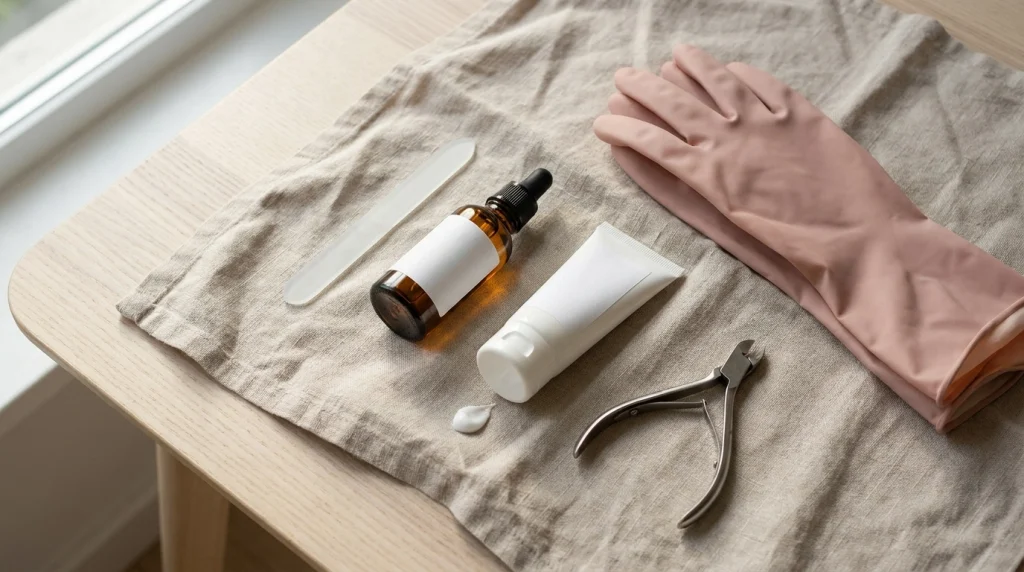
You only need a small collection of practical nail-care essentials. Start with tools that protect your nails rather than products promising instant repair.
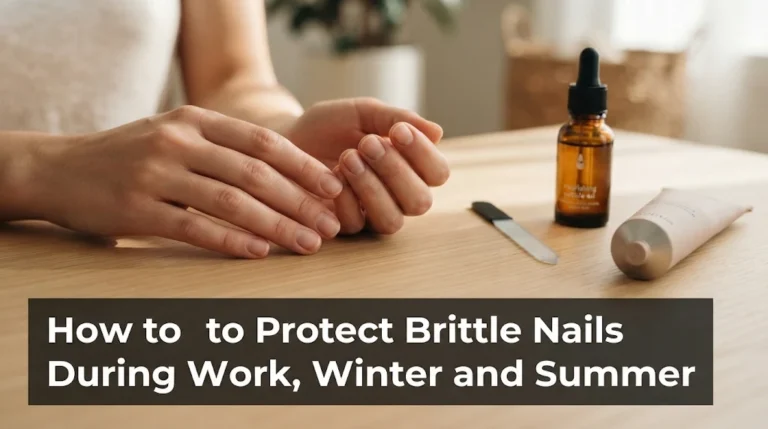
- Fine-grit or glass nail file: Smooths small snags and helps maintain a gentle nail shape.
- Fragrance-free hand cream: Moisturizes your nails, hands, and surrounding skin after washing.
- Cuticle oil: Helps condition dry nail folds and makes daily moisturizing convenient.
- Protective household gloves: Reduce unnecessary exposure to dishwater, detergents, and cleaning solutions.
- Clean nail clippers: Keep fragile nails at a manageable length.
You can add a gentle base coat if you enjoy regular nail polish, but a special nail hardener isn’t essential for everyone. Some strengthening formulas can make already-brittle nails feel excessively rigid, so choose products based on how your nails respond.
What Should You Avoid When Your Nails Are Already Peeling?
Warning
Never pull apart peeling nail layers, sand down a thin nail plate, or cover painful, infected, or significantly lifted nails with glue or enhancements. If you notice increasing pain, swelling, pus, a new dark streak, or significant nail separation, contact a qualified healthcare professional.
Peeling at the free edge is often manageable with gentle grooming. However, a nail that is painful, changing color, thickening, or lifting from the nail bed may require a different approach.
If peeling begins suddenly on several nails or persists despite careful protection, consider a medical evaluation. Certain skin conditions, nutritional deficiencies, and health problems can contribute to nail changes, although you shouldn’t assume a deficiency from peeling alone.
How to Prevent Nail Peeling: 8 Simple Steps
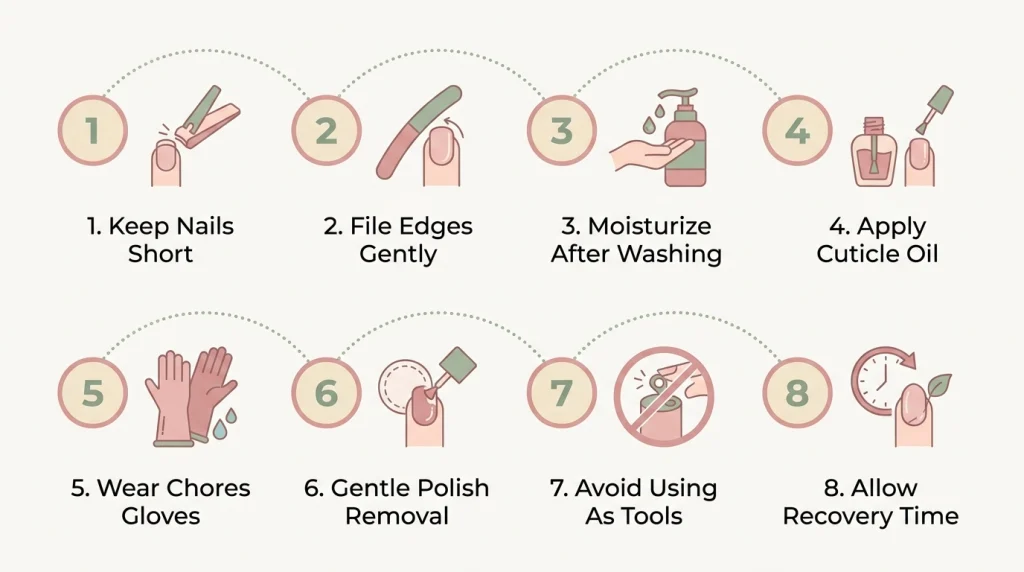
These eight habits form a practical prevention routine. You don’t have to perform every step every day. Instead, build consistent daily care around moisture, protection, and gentle maintenance.
Step 1: Keep Your Nails Short and Smooth
Start with a manageable nail length.
Trim fragile nails before the tips become long enough to catch on clothing or bend during everyday tasks. Leave a small free edge rather than cutting into the attached nail.
A short, softly rounded or squoval shape can reduce sharp corners that snag. Smooth the edges gently after trimming.
Common mistake: Cutting peeling nails extremely short or pulling away loose layers. This can expose sensitive areas and create more damage.
Step 2: File the Nail Edge Gently
Use a fine-grit or glass nail file.
Support your fingertip and use light, controlled strokes to smooth the free edge. Concentrate on removing snags without thinning the top surface.
If your nail bends while filing, reduce the pressure. Stop once the edge feels smooth rather than repeatedly filing the same area.
Common mistake: Using a coarse file aggressively or buffing the peeling surface until it looks even. This removes more nail material.
Pro Tip
Keep a small nail file in your handbag. Smoothing a snag as soon as you notice it helps prevent the edge from catching and splitting further.
Step 3: Moisturize Your Nails After Handwashing
Make hand cream part of your everyday routine.
After washing, dry your hands thoroughly and massage a small amount of fragrance-free cream over your fingertips, nails, and nail folds.
Choose a moisturizer containing familiar ingredients such as glycerin, petrolatum, or ceramides. These ingredients help support skin hydration and reduce moisture loss.
Common mistake: Moisturizing only your palms and knuckles while leaving your nails and fingertips untreated.
Step 4: Apply Cuticle Oil Consistently
Condition dry nails and nail folds.
Apply a small drop of cuticle oil around each nail once or twice daily if your nails feel dry. Massage it gently across the nail plate and surrounding skin.
Jojoba-based oils are a convenient choice, although plain fragrance-free moisturizer can also work well. Consistency matters more than purchasing a luxury formula.
Common mistake: Expecting cuticle oil to glue separated nail layers back together. Oil conditions the area but does not reverse structural damage.
Recommended Nail-Care Essential
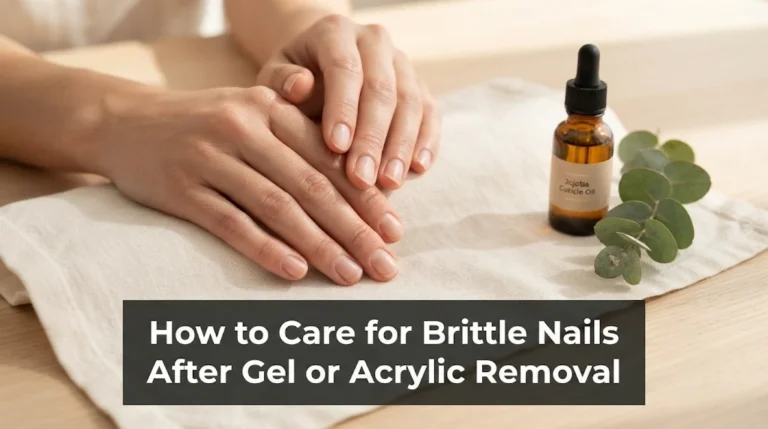
Jojoba Cuticle Oil
A simple cuticle oil is useful when your nail folds feel dry and you want a convenient way to moisturize them regularly. Choose a fragrance-free option if your skin is sensitive.
As an Amazon Associate, we earn from qualifying purchases.
Step 5: Wear Gloves for Wet Household Chores
Reduce prolonged exposure to water and detergents.
Wear appropriately selected gloves when washing dishes, cleaning bathrooms, or handling household detergents. For chemical cleaning, follow the product label to select suitable protective gloves.
Remove gloves when your task is finished. Dry your hands and apply moisturizer rather than leaving your skin damp inside the gloves.
Common mistake: Leaving sweaty or wet gloves on for long periods. Trapped moisture can irritate your skin.
Protecting your nails during chores is also important when you’re trying to prevent cracking and breakage. These easy habits to stop nails from breaking offer additional ways to reduce everyday stress.
Step 6: Remove Nail Polish Without Peeling It Off
Protect your natural nail during manicure removal.
Use a remover appropriate for your manicure rather than picking at lifting polish. With regular lacquer, gently wipe away softened polish without scraping the nail surface.
Gel, dip, and artificial nail products require their own removal procedures. Some can be soaked off, while others need professional filing. Follow the product instructions or ask a qualified nail technician.
Common mistake: Pulling off gel from one loose corner. Attached product may remove thin layers of natural nail.
Step 7: Stop Using Your Nails as Tools
Protect fragile tips from unnecessary pressure.
Use the pads of your fingers or a suitable tool when opening containers, removing stickers, and handling packaging. Avoid scraping hard surfaces with your nail tips.
These small changes are especially helpful if peeling begins at the corners or free edges of your nails.
Common mistake: Assuming short nails cannot be damaged by everyday pressure. Repeated small impacts can still cause splitting.
Step 8: Give Damaged Nails Gentle Recovery Time
Protect your nails while new growth replaces damaged areas.
If your nails feel noticeably thin, sore, or flaky after enhancements, avoid immediately applying another demanding manicure. Focus on gentle trimming, moisture, and protection.
A nail plate cannot fully repair itself after its layers separate. The damaged area must gradually grow toward the tip, where it can eventually be trimmed away.
Common mistake: Repeatedly applying strong coatings or aggressive treatments to hide damage without reducing the habits causing it.
If your nails have already experienced significant cosmetic damage, follow this guide to caring for a damaged nail at home for additional gentle recovery advice.
Which Nail-Care Products Are Actually Helpful?
There isn’t one miracle product that stops every type of nail peeling. A few affordable essentials can support your routine when used correctly.
1. Glass Nail File for Natural Nails
A smooth, fine glass nail file helps you maintain neat nail edges without relying on a rough abrasive board. Look for a file intended for natural nails, and use light pressure.
This is particularly useful if your nails regularly catch on clothing or if you need to maintain a short, rounded shape.
Browse glass nail files for natural nails on Amazon.
2. Fragrance-Free Moisturizing Hand Cream
A hand cream containing glycerin, ceramides, or petrolatum is a practical choice for frequent use. It helps protect the surrounding skin from dryness and gives you an easy way to condition your nails.
Apply it after handwashing and before bed. If scented products irritate your skin, choose fragrance-free formulas.
Explore fragrance-free hand creams on Amazon.
3. Reusable Household Gloves
Protective gloves are one of the simplest ways to reduce unnecessary contact with dishwater and household detergents.
Choose a comfortable pair that fits securely. If you use chemical cleaning agents, select gloves rated for the chemicals involved rather than assuming every glove offers the same protection.
Browse reusable dishwashing gloves on Amazon.
Affiliate disclosure: As an Amazon Associate, we earn from qualifying purchases. Product links lead to search results, so compare ingredients, suitability, and current prices before purchasing.
What Are the Do’s and Don’ts for Peeling Nails?
Do
- Moisturize after handwashing.
- Keep nail tips smooth and short.
- Wear gloves for wet chores.
- Use gentle manicure removal.
- Choose clean, suitable nail tools.
- Protect damaged nails while they grow.
Don’t
- Pull apart peeling nail layers.
- Over-buff the nail surface.
- Peel off gel or dip manicures.
- Use nails to pry objects open.
- Ignore painful nail changes.
- Expect overnight repair.
How Long Does It Take for Peeling Nails to Improve?
You may notice smoother-looking nail edges immediately after gentle trimming and filing. Moisturizing can also make dry surrounding skin feel more comfortable within a short time.
However, damaged nail layers do not permanently fuse back together. Full improvement depends on preventing additional damage while the affected area gradually grows out.
Fingernails generally grow around 3 millimeters per month, although individual growth rates vary. Replacing most of a fingernail can take approximately four to six months, sometimes longer.
During the first few weeks, concentrate on reducing new snags, protecting nail tips, and maintaining comfortable skin around your nails. Judge your progress by how the newer nail grows rather than expecting existing peeling layers to disappear.
For a simple ongoing plan, follow this daily nail-care routine for healthier nails.
Why Are Your Nails Still Peeling Despite Good Care?
Sometimes peeling continues even after you’ve started moisturizing and filing gently. Check whether one of these problems is interfering with your progress.
Problem: Your nail tips keep separating.
Immediate action: Carefully shorten and smooth the free edges. Prevention: Wear gloves for wet chores and avoid picking at the separated layers.
Problem: Your nails feel thin after gel removal.
Immediate action: Avoid further buffing and protect the exposed nail. Prevention: Use the correct removal procedure and avoid pulling attached product away.
Problem: Your nails become dry after cleaning.
Immediate action: Rinse away cleaning residue according to product instructions, dry your hands, and moisturize. Prevention: Use suitable protective gloves during future chores.
Problem: Multiple nails keep peeling without an obvious cause.
Immediate action: Review recent product exposure, illnesses, and changes in your nails. Prevention: Maintain gentle care and consult a healthcare professional if the problem persists or worsens.
Can Diet and Supplements Help Prevent Nail Peeling?
Your nails need adequate nutrition to grow normally. A balanced diet containing protein, iron, zinc, and other essential nutrients supports general health, including nail growth.
However, peeling nails don’t automatically mean you have a vitamin deficiency. External damage from moisture, filing, and manicure habits is common.
Try to include varied protein sources, vegetables, fruits, whole grains, and other nutrient-rich foods in your meals. If you’re concerned about a deficiency, ask a healthcare professional whether testing is appropriate.
Biotin supplements are often marketed for brittle nails, but evidence of benefit in people without a deficiency is limited. High-dose biotin can also interfere with certain laboratory tests. Avoid starting supplements solely because your nails peel.
How Can You Build a Simple Weekly Nail-Peeling Prevention Routine?
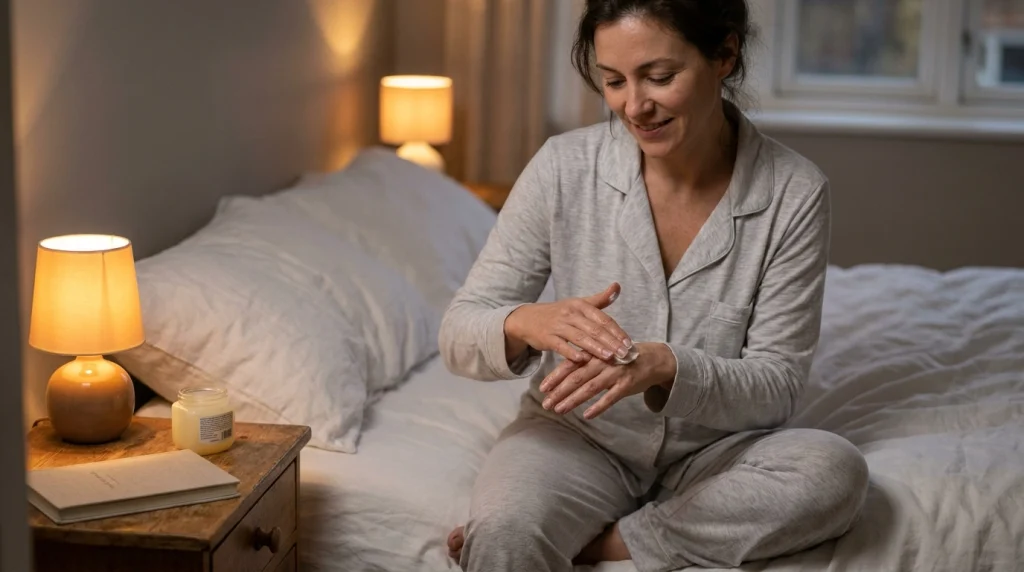
A consistent routine is easier to maintain when you divide it into daily and weekly tasks.
Every Morning
- Check your nail tips for rough or peeling edges.
- Apply hand cream after washing your hands.
- Use cuticle oil if your nails feel particularly dry.
- Keep protective gloves accessible for household chores.
During the Day
- Moisturize after frequent handwashing when practical.
- Avoid pulling at loose nail layers.
- Use appropriate tools rather than your fingernails.
- Reduce prolonged exposure to water and harsh cleaning products.
Once Each Week
- Inspect your nails for peeling, cracking, or unusual changes.
- Trim excess length if needed.
- File small snags gently.
- Clean and dry your manicure tools.
- Review whether any nail products are causing irritation or damage.
Before Bed
Massage a little hand cream around each fingertip. If your cuticles are extremely dry, apply a thin layer of petroleum jelly over moisturizer to help reduce overnight moisture loss.
You can also explore more everyday ways to protect your natural nails if your hands experience frequent physical or environmental stress.
Frequently Asked Questions About Nail Peeling
Q: What is the fastest way to stop nails from peeling?
A: Gently shorten peeling tips, smooth snags, moisturize regularly, and protect your hands during wet chores. These steps can reduce further damage, but already-separated nail layers must gradually grow out.
Q: Does cuticle oil prevent nail peeling?
A: Cuticle oil helps condition dry nail folds and the nail surface. It’s a useful part of a moisturizing routine, but it cannot permanently reconnect peeling layers or prevent damage caused by aggressive manicure removal.
Q: Should you use nail hardener on peeling nails?
A: Not automatically. Some hardeners may help certain weak nails, while others can make brittle nails overly rigid. If your nails are thin or damaged, prioritize gentle care and avoid strong formulas that worsen splitting or irritation.
Q: Why do my nails peel after gel polish?
A: Peeling gel off your nails, aggressive filing, and rough removal can take superficial nail layers with the coating. Proper removal and a gentle recovery routine help reduce additional damage.
Q: Can peeling nails grow back healthy?
A: Yes, healthier nail can grow from the base when the cause of damage is addressed. The damaged portion needs time to grow out. Persistent peeling, pain, discoloration, or nail lifting should be evaluated professionally.
Final Thoughts: Protect Your Nails One Small Habit at a Time
Learning how to prevent nail peeling starts with gentle daily care. Keep your nails moisturized, smooth sharp edges, protect your hands from prolonged water exposure, and remove manicures without damaging the natural nail.
You don’t need perfect nails overnight. Consistent protection gives new nail growth a better chance to stay healthy-looking as damaged tips gradually disappear.
Save this guide to your Pinterest nail-care board so you can return to these easy prevention tips whenever your nails need extra attention.

Hi, I’m Jessica, the creator behind Unique Lash & Nails Katy.
I created this website for anyone who loves beautiful nails as much as I do. Here, I share trendy nail designs, seasonal manicure ideas, easy nail care tips, honest product recommendations, and step-by-step guides to help you create salon-worthy nails at home. Whether you’re looking for everyday inspiration or your next favorite nail trend, I hope you’ll find something you love.