Black Nail or Fungus? How to Recognize the Difference
Quick Answer
No, a black nail isn’t always caused by fungus. An injury, repeated shoe pressure, polish staining, bacterial growth, medication, psoriasis, or natural pigmentation can darken a nail. A new or changing black band can also be a sign of nail melanoma, so unexplained discoloration should be checked by a medical professional.
Seeing part of your nail turn black can be alarming, especially when you don’t remember injuring it. Fungus is one possibility, but it isn’t the only explanation—and it may not be the most likely one.
The location, texture, shape, and movement of the discoloration offer useful clues. They can’t provide a definite diagnosis, though. This guide will help you recognize the common patterns and understand when you shouldn’t wait to get medical advice.


What Can Cause a Nail to Turn Black?
 Save
SaveA dark nail develops when something changes the nail plate, the tissue beneath it, or the pigment-producing cells near the nail root. Several conditions can create similar-looking discoloration, which is why color alone can’t confirm fungus.
Blood trapped beneath the nail
A subungual hematoma is blood trapped beneath your nail after an injury. Dropping an object on your toe is an obvious cause, but the damage can also come from tight shoes, running, hiking, or repeated pressure you barely noticed.
The mark usually looks dark red, purple, brown, or black. It may cover a small spot or most of the nail. A recent injury can cause throbbing pain, while an older bruise may not hurt at all.
As your nail grows, the dark area should gradually move toward the free edge. Fingernails can take roughly six months to replace themselves, while toenails may need 12 to 18 months. That slow movement can make an old bruise seem permanent.
Fungal nail infection
Nail fungus can produce brown, greenish-black, or black discoloration, but it more commonly begins with yellow, white, or light-brown changes. The affected nail often becomes thick, brittle, crumbly, distorted, or partly separated from the nail bed.
Discoloration caused by fungus frequently starts near the tip or side of the nail and spreads gradually. Debris may collect underneath. More than one toenail may become affected, especially if you also have athlete’s foot.
Still, appearance isn’t enough to confirm an infection. Nail injuries and psoriasis can closely resemble fungus. A dermatologist or podiatrist may examine nail clippings or scrapings before recommending treatment.
Polish, dyes, and chemical stains
Deep red, navy, green, and black polish can stain porous nails, particularly when you skip base coat or wear the color for weeks. Hair dye, cleaning chemicals, tobacco, and pigments used in crafts can also leave dark marks.
A surface stain usually affects several nails or follows the shape of the polish application. It shouldn’t create a growing stripe beneath one nail or make the surrounding skin darker.
If staining is a recurring problem, review these tips on whether nails benefit from time without polish. A clear base coat can reduce direct pigment contact, although it won’t treat discoloration caused beneath the nail.
Bacterial growth beneath a lifted nail
A bacterium called Pseudomonas can grow in the moist gap beneath a nail that has lifted from its bed. It often creates a green, blue-green, or greenish-black stain rather than a pure black mark.
This problem is sometimes called green nail syndrome. It may develop after prolonged water exposure, artificial nail wear, trauma, or nail separation. Fungus and bacteria can occasionally occur together, so guessing based on color can lead you toward the wrong treatment.
Nail psoriasis or another inflammatory condition
Psoriasis can cause lifting, pitting, thickening, crumbling, yellow-brown patches, and thin streaks of blood beneath a nail. Those blood spots can appear dark brown or black.
You may already have psoriasis on your skin, but nail changes can sometimes be the first noticeable symptom. Eczema and other inflammatory conditions may also alter how a nail grows.
Natural nail pigmentation
Some people naturally develop brown or black vertical bands called longitudinal melanonychia. These bands are more common in people with darker skin tones and may affect several nails.
A stable band can be harmless, but you shouldn’t diagnose it from a photograph or comparison chart. A new band, a changing band, or one that appears on a single nail deserves professional assessment.
Medication and medical conditions
Certain medications, including some chemotherapy drugs, can darken nails or produce pigmented bands. Hormonal conditions, nutritional problems, and other illnesses can also change nail color, although these causes often affect multiple nails.
If a color change began after you started a medication, don’t stop taking it on your own. Ask the prescribing clinician or pharmacist whether nail pigmentation is a known side effect.
Nail melanoma
Melanoma can develop beneath or around a fingernail or toenail. It is a rare cause of black nail discoloration, but it matters because early evaluation can improve the chance of detecting it before it advances.
Nail melanoma may appear as a brown or black vertical band. The stripe can become wider, darker, irregular, or more varied in color. Pigment may extend onto the cuticle or nearby skin, and the nail may split, lift, bleed, or develop a bump.
Warning
Don’t assume that an unexplained black stripe is fungus or cover it indefinitely with polish. Arrange a prompt medical examination if the stripe is new, changing, widening, irregular, or spreading onto the skin around your nail.
What Does Black Nail Fungus Usually Look Like?
Fungal infections don’t all look identical. However, a blackened fungal nail usually has additional changes that affect its texture or shape.
- Thickening: Your nail becomes harder to trim or no longer fits comfortably inside a shoe.
- Crumbling: The tip or sides split, flake, or break apart.
- Debris: Chalky or compact material collects beneath the nail.
- Lifting: Part of the nail separates from the skin underneath.
- Gradual spread: Discoloration expands slowly from an edge or the tip.
- Other affected nails: Nearby nails may show similar yellow, brown, or thickened changes.
- Associated athlete’s foot: You may have peeling, itching, or cracking between your toes.
Black fungus is possible, but a completely smooth nail with a distinct vertical stripe doesn’t fit the most typical pattern. Likewise, a round dark patch that appeared after a long run may be more consistent with trapped blood.
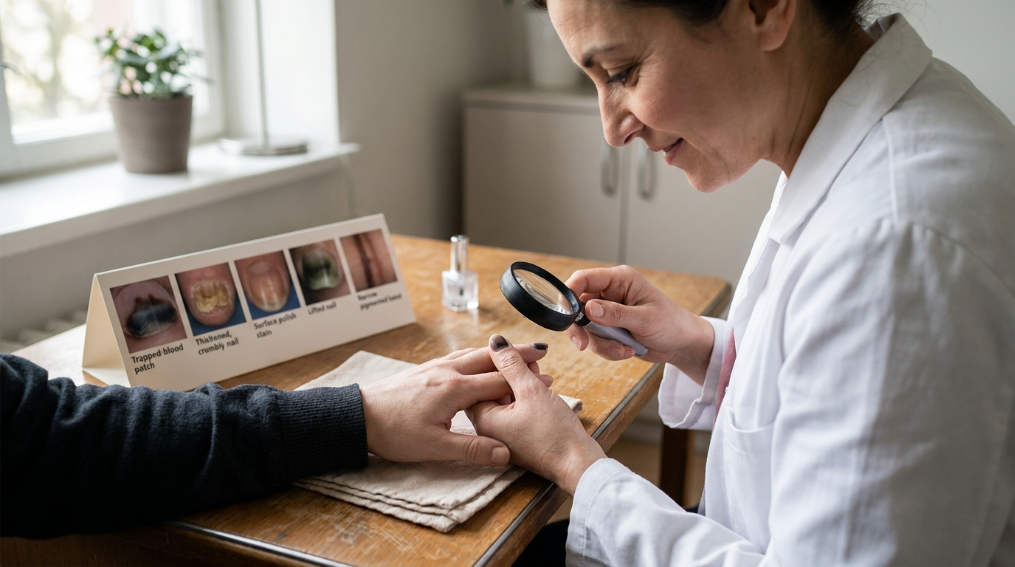
You can compare these changes with other common nail conditions and their typical signs, but use photographs only as general education. Lighting, skin tone, polish residue, and the age of a mark can make two unrelated conditions look remarkably similar.
How Can You Tell a Bruised Nail From Fungus?
Start with the history of the mark. A bruise often appears after a single impact or repeated pressure. Fungus tends to develop slowly and brings progressive changes to the nail’s texture.
- Timing: A bruise can appear within hours or days. Fungus usually changes a nail over weeks or months.
- Pain: A fresh bruise may throb or feel tender. Mild fungus is often painless.
- Surface: A bruised nail can remain smooth. Fungus commonly makes the nail thick, brittle, or rough.
- Growth: A bruise normally travels outward as the nail grows. Fungal damage may continue spreading toward the cuticle.
- Number of nails: Trauma may affect the nail that took the pressure. Fungus can spread to neighboring nails.
These differences provide clues, not proof. A traumatized nail may lift and later develop fungus, while a fungal nail can also bleed after minor pressure.
Pro Tip
Photograph the nail in the same lighting every two to four weeks. Don’t rely on memory. A bruise should move toward the tip as the nail grows, while a band that widens or changes near the cuticle needs medical assessment.
Which Black Nail Changes Need Medical Attention?
You don’t need to panic every time you notice a dark spot. You should, however, arrange an appointment when you can’t explain the change or when the pattern doesn’t behave like a simple bruise.
See a dermatologist, primary-care clinician, or podiatrist promptly if you notice:
- A new brown or black vertical band on one nail
- A stripe that is getting wider, especially near the cuticle
- Irregular borders or several shades within the same band
- Dark pigment extending onto the cuticle or surrounding skin
- A nail that splits, lifts, bleeds, or develops a lump
- Discoloration that doesn’t move outward with nail growth
- A black nail without any known injury
- Persistent pain, swelling, warmth, pus, or a bad odor
- Changes that continue despite appropriate treatment
Seek urgent care after a major injury if pain is severe, bleeding won’t stop, the finger or toe looks misshapen, or you can’t move it normally. A clinician may need to check for a fracture or safely release pressure beneath the nail.
You should also seek advice earlier if you have diabetes, poor circulation, reduced sensation, or a weakened immune system. Small nail and foot problems can become more complicated in these situations.
How Is the Cause of a Black Nail Diagnosed?
A clinician will look at the entire nail, the surrounding skin, and your other fingernails or toenails. You’ll likely be asked when the change started, whether the nail was injured, what medications you take, and whether the mark has changed.
If fungus is suspected, the clinician may clip the nail or scrape material from underneath it. The sample can be examined under a microscope or sent for laboratory testing. Confirming the organism matters because psoriasis, trauma, and bacterial growth won’t respond to antifungal medicine.
A suspicious pigmented band may be examined with a dermatoscope, which magnifies its pattern. If the clinician can’t confidently rule out melanoma, a biopsy may be recommended. That decision requires professional judgment; an at-home photograph or symptom checker can’t replace it.
Should You Treat a Black Nail With Antifungal Medicine?
Don’t begin treatment solely because your nail looks dark. Over-the-counter antifungal skin creams generally don’t penetrate the nail plate well enough to treat an infection inside it. Oral antifungal medicines can interact with other drugs and aren’t appropriate for everyone.
If testing confirms fungus, treatment depends on how many nails are affected, how deeply the infection extends, and your overall health. A clinician may recommend a prescription lacquer or solution, an oral medicine, thinning of the nail, or a combination approach.
Results are slow because treatment doesn’t instantly replace damaged nail. You need to wait for healthier nail to grow from the base. A treated toenail can therefore look discolored for many months even after the infection is controlled.
Avoid DIY Draining
Don’t burn, drill, or push a needle through a black nail at home. You can introduce an infection, injure the nail bed, or delay evaluation of a mark that wasn’t caused by blood.
How Should You Care for a Dark Nail While Waiting?
Until you know the cause, choose care that protects the nail without hiding important changes.
Do
- +Keep the nail clean and dry.
- +Trim only loose, snagging edges.
- +Wear roomy shoes that reduce pressure.
Don’t
- −Pick beneath or tear off the nail.
- −Share clippers or nail files.
- −Cover an unexplained mark for weeks.
Leave the nail bare before your appointment so the clinician can see its true color. If you must cover it temporarily, remove the polish completely before the examination.
Follow a gentle nail-care routine and avoid aggressive buffing. Buffing can thin the nail, cause more trauma, and make it harder to judge whether the original discoloration is changing.
Can You Prevent Black Toenails and Nail Infections?
 Save
SaveYou can’t prevent every cause of nail discoloration, but you can reduce repeated trauma and common fungal exposure.
- Choose shoes with enough space for your toes to move without striking the front.
- Replace damp socks after exercise instead of letting moisture sit around your nails.
- Wear sandals in shared showers, locker rooms, and pool areas.
- Cut toenails straight across without trimming deeply into the corners.
- Disinfect reusable nail tools and don’t share them with anyone else.
- Let wet shoes dry fully before wearing them again.
- Treat athlete’s foot promptly so it has less opportunity to spread to your nails.
- Ask a nail technician not to work over a painful, infected, or unexplained dark nail.
If a damaged nail is growing out, learn what to expect from the nail regrowth process. Protecting the new growth matters because repeated pressure can recreate the same dark patch before the first one disappears.
Frequently Asked Questions About Black Nails
Q: Can toenail fungus really look black?
A: Yes. Some fungal infections can cause dark brown, greenish-black, or black areas. Fungus usually produces other changes too, such as thickening, crumbling, lifting, or debris beneath the nail.
Q: Will a black nail go away by itself?
A: A bruise may disappear as the nail grows out, but the process can take months. Fungus, bacterial growth, psoriasis, and suspicious pigmentation may require diagnosis and treatment rather than waiting.
Q: Does a black nail always mean melanoma?
A: No. Injury and other benign causes are much more common. However, a new, widening, irregular, or unexplained dark band—especially one extending onto nearby skin—should be examined promptly.
Q: Can nail polish make a nail look black?
A: Dark polish can stain the nail plate, especially without base coat. A surface stain usually follows the polished area, while a distinct band arising near the cuticle needs a professional assessment.
Q: Should you put polish over a black toenail?
A: It’s safer to leave unexplained discoloration visible until it has been assessed. Polish can hide changes in width, color, and surrounding skin that may help a clinician identify the cause.
What Is the Most Important Takeaway?
A black nail isn’t automatically fungus. Look for changes in texture, think about recent pressure or injury, and watch whether the mark moves as your nail grows. If the discoloration is new, changing, or unexplained, let a dermatologist or another qualified clinician examine it instead of treating it by guesswork.
Save this guide on Pinterest so you’ll have the warning signs and comparison points available when you check your nails.

Hi, I’m Jessica, the creator behind Unique Lash & Nails Katy.
I created this website for anyone who loves beautiful nails as much as I do. Here, I share trendy nail designs, seasonal manicure ideas, easy nail care tips, honest product recommendations, and step-by-step guides to help you create salon-worthy nails at home. Whether you’re looking for everyday inspiration or your next favorite nail trend, I hope you’ll find something you love.