What Is the Nail Plate? Anatomy, Growth & Care Guide
Quick Answer
The nail plate is the hard, slightly curved part of your fingernail or toenail that you can see, trim, file, and paint. It’s made mainly of tightly packed keratin, a protective protein, and rests on the living nail bed beneath it. New nail plate forms in the nail matrix near your cuticle, then slowly grows toward your fingertip. The plate itself cannot heal like skin, so damaged areas must grow out.
That glossy surface under your favorite nude polish is more interesting than it looks. Your nail plate protects your fingertip, supports detailed hand movements, and offers clues about how your nails are growing. Once you know where it begins and what can damage it, salon appointments and at-home manicures become much easier to navigate.


What Exactly Is the Nail Plate?
The nail plate is the firm, visible structure most people simply call a nail. Run a fingertip over your polished nail: the smooth surface you feel is the nail plate. The portion attached to your fingertip is the nail body, while the section extending past the skin is its free edge.
Although it feels solid, your nail plate isn’t bone. It’s built from flattened, hardened cells packed with keratin. Those cells no longer have the living machinery needed to repair a scratch or split. Instead, fresh nail is continually made at the base, pushing older material forward.
The plate is also translucent rather than naturally pink. The rosy color you often notice comes mainly from blood vessels in the nail bed showing through it. Natural color varies with skin tone and individual pigmentation, so healthy nails don’t all look identical.
What Is the Nail Plate Made Of?
Keratin is the main building material. It’s a tough structural protein also found in hair and the outer layers of skin. Within the nail plate, tightly joined keratinized cells create a surface that can withstand normal everyday contact.
Your nail plate also contains water and small amounts of natural lipids. Their balance matters: when nails are repeatedly soaked and dried, the plate can become more prone to splitting or peeling. Very dry nails may feel rigid and brittle, while overexposed nails may temporarily feel softer.
Think of the plate as layers of thin, closely bonded material rather than one solid sheet. That layered arrangement helps explain why a nail can peel at the tip after aggressive polish removal or repeated wet work.
One common myth: white spots don’t automatically mean you need more calcium. Small white marks often follow minor trauma to the growing nail, though persistent or unusual changes deserve a closer look.
Where Is the Nail Plate, and How Does It Connect to the Other Nail Parts?
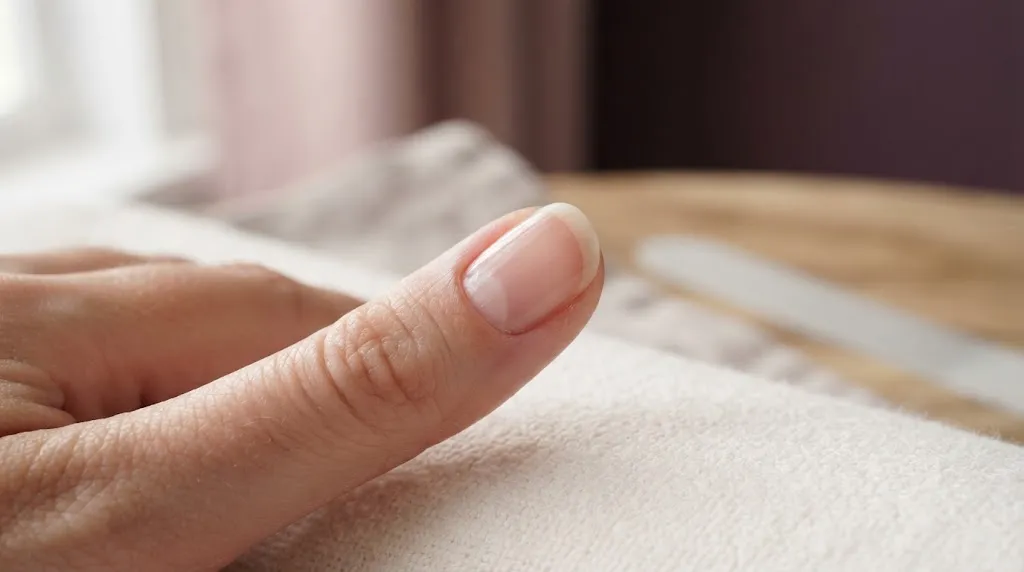
The visible plate is only one piece of your nail unit. Knowing the neighboring structures helps you understand where nail growth happens—and why pulling, scraping, or cutting the wrong area can hurt.
Nail Matrix: Where New Nail Begins
Your nail matrix sits mostly out of sight beneath the skin at the base of the nail. It produces the cells that harden into your nail plate. The pale half-moon you may see near the base, called the lunula, represents a visible part of this growth region. Not seeing a lunula on every finger is normal.
Nail Bed: The Living Tissue Underneath
The nail bed is the skin directly beneath the attached plate. It contains blood vessels and helps hold the plate in place. Unlike the hard nail plate, the bed is living and sensitive. That’s why trimming the free edge usually doesn’t hurt, but tearing a nail away from the bed can be painful.
Cuticle and Nail Folds: Your Protective Borders
The cuticle is a thin protective seal where the nail plate meets the skin at its base. The surrounding nail folds frame the plate along the bottom and sides. These barriers help keep irritants and microbes from reaching vulnerable tissue, which is why cutting away healthy cuticle isn’t a harmless beauty shortcut.
Hyponychium and Free Edge: The Tip Area
The hyponychium is the skin beneath the free edge where the attached nail ends. It forms another protective barrier. Digging underneath the nail with a sharp tool can disturb this area and cause separation or irritation.
How Does the Nail Plate Grow?
Your nails don’t grow from their tips. The matrix continuously forms new cells near the base; as those cells harden, they become part of the nail plate and push existing nail forward.
Fingernails grow about 3 millimeters per month on average, although your personal rate varies. Toenails generally grow more slowly, at roughly 1.5 millimeters monthly. Replacing an entire fingernail can take around six months or longer, and a toenail may need 12–18 months.
That’s why a small dent or discolored spot may seem to travel toward your fingertip over the following weeks. The damaged spot isn’t repairing itself; new growth is moving it outward until it can be trimmed away.
If you’re trying to grow longer nails, the biggest practical win is often preventing tip breakage rather than chasing products promising impossible growth speeds. Our guide to habits that support healthier nail growth explains how to protect the length you already have.
What Does a Healthy Nail Plate Look and Feel Like?
A healthy nail plate is usually firm, relatively smooth, and securely attached to the nail bed. It should tolerate ordinary tasks without repeatedly splitting. Slight natural curves and faint lengthwise ridges are common, especially as you get older.
Rather than comparing your nails with a heavily edited manicure photo, look for what’s normal for you. A healthy plate may be pale pink, translucent, or show natural pigmentation. White tips are common because the free edge no longer rests over the vascular nail bed.
- Surface: generally smooth, with possible subtle vertical ridges.
- Thickness: substantial enough for everyday use without being unusually thick or crumbly.
- Attachment: seated against the nail bed, without widening gaps underneath.
- Surrounding skin: free of persistent swelling, warmth, tenderness, or drainage.
If you’re unsure whether a change is cosmetic or concerning, compare it with these signs of unhealthy nails rather than trying to diagnose the color from a photograph alone.
Why Does the Nail Plate Peel, Split, or Develop Ridges?
Changes in your nail plate can come from daily wear, manicure habits, injuries, skin conditions, or other health factors. The pattern and timing matter more than any single symptom.
Peeling Layers at the Tips
Repeated soaking, drying, harsh filing, and picking off gel polish can weaken the bond between nail layers. You may see thin sheets lifting at the free edge. Keep the tips short, smooth snags gently, and reduce the exposure that’s causing the peeling.
Thin, Flexible Nails After a Manicure
Excessive buffing or drilling can physically remove part of the plate. Rough removal of acrylic, dip, or gel may lift natural nail layers along with the product. A nail that has been filed thin cannot instantly rebuild its lost thickness; the weakened section needs time to grow out.
Ridges, Grooves, and White Marks
Fine lengthwise ridges can be a normal variation. A deeper groove running across the nail may mean growth was temporarily interrupted by an illness, injury, or another stressor. Tiny white spots can appear after bumps or manicure trauma and often move outward with growth.
Lifting or Unusual Color
If part of the plate separates from the nail bed, the lifted area may appear white or opaque. This is called onycholysis. Injury, psoriasis, and infection are among the possible causes. Yellowing can sometimes be polish staining, but thickening, crumbling, pain, or persistent color change calls for an assessment.
When the problem follows a specific manicure, our guide to caring for a damaged nail at home covers practical protection while you decide whether professional care is needed.
Can Gel Polish, Acrylics, or Buffing Damage Your Nail Plate?
Yes, especially when preparation or removal is rough. A little shaping is different from repeatedly filing away the nail’s protective surface. Because the plate doesn’t regenerate in place, every layer removed from your natural nail has to be replaced through future growth.
Gel and acrylic products aren’t automatically harmful to everyone, but picking, prying, excessive drilling, and forceful scraping can leave nails thin, tender, or peeling. Artificial nails can also conceal a developing issue, which makes it harder to notice early changes.
Ask your technician to preserve the natural plate during preparation, avoid cutting living skin, and follow the correct removal method for the specific product. If removal hurts or seems to pull your nail upward, stop rather than forcing it.
Warning
Don’t glue extensions over a painful, lifting, injured, or possibly infected nail. Covering it may trap moisture or delay needed treatment. Have unexplained separation or inflammation checked before another manicure.
If you enjoy regular polish, it isn’t necessary to keep your nails bare forever. What matters is their condition and how gently you apply and remove products. See whether nails are healthier without nail polish for a more realistic way to plan manicure breaks.
How Can You Protect Your Nail Plate Every Day?
You don’t need an elaborate ten-step routine. A few repeatable habits protect the plate and the skin around it.
1. Keep the Free Edge Smooth
Trim nails to a comfortable length and use a fine nail file to soften sharp corners and catch points. A snag that hooks into fabric can turn a small split into a painful tear. File with light pressure instead of grinding repeatedly over the surface.
2. Moisturize After Washing
Massage a fragrance-free hand cream or a little petroleum jelly over your nails and surrounding skin after handwashing and before bed. Moisturizing helps manage dryness and keeps the surrounding skin more comfortable, although it won’t rebuild missing nail layers.
3. Wear Gloves for Wet Chores
Use comfortable protective gloves for dishwashing and household cleaning. Repeated water exposure and detergents can make vulnerable nails more likely to peel. Dry your hands thoroughly afterward, especially around the fingertips.
4. Leave the Cuticle Seal Alone
Skip cutting or aggressively pushing back healthy cuticles. You can make the area look tidy by moisturizing and carefully clipping only a loose hangnail, without pulling at attached skin. If it becomes red, swollen, or sore, stop manipulating it.
5. Give Damaged Nails Time to Grow Out
If the plate feels noticeably thin after product removal, wear it short and postpone another set of enhancements. Track the new growth near the base every few weeks rather than expecting a peeling tip to transform overnight. Learn more about how damaged nails regrow and when healing may be more complicated.
Pro Tip
Take a bare-nail photo in the same lighting every three or four weeks. If a damaged patch moves toward the tip while a smoother strip appears at the base, you’re seeing new plate grow in—not a miracle treatment repairing old keratin.
Which Nail Care Products Are Actually Worth Using?
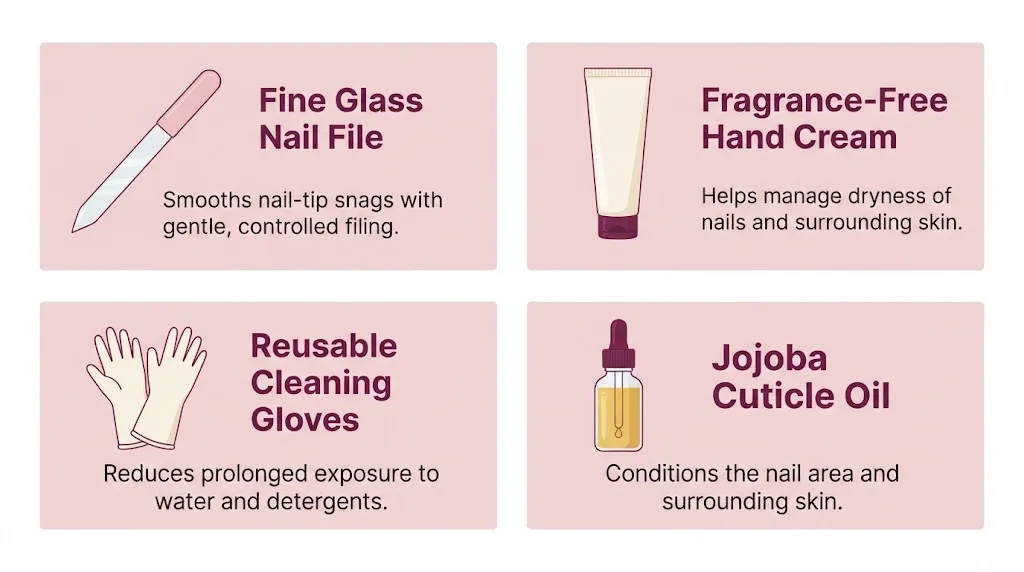
Products can’t replace the nail matrix or instantly rebuild lost plate thickness. The useful ones help you avoid fresh damage while your natural nail grows.
Recommended Product
Fine Glass Nail File
A fine glass file helps you smooth snags with controlled, gentle strokes instead of tearing at a weak edge.
As an Amazon Associate, we earn from qualifying purchases.
If your skin tends to be dry, an unscented hand cream can make regular moisturizing easier. A basic product you use consistently is more useful than an expensive formula promising overnight nail growth.
Recommended Product
Reusable Household Cleaning Gloves
Well-fitting cleaning gloves reduce prolonged contact with dishwater and detergents—a practical choice if your nail plate peels after chores.
As an Amazon Associate, we earn from qualifying purchases.
A jojoba-based cuticle oil is another convenient option if you’ll actually apply it. It can condition the nail area, but don’t mistake a smoother appearance for permanently repaired nail plate.
When Should a Nail Plate Change Worry You?
Some nail changes are minor, but others need medical attention. Book a dermatologist or qualified healthcare professional if you notice a new or changing brown or black streak, unexplained nail lifting, persistent pain, swelling, pus, major thickening, or several nails changing unexpectedly.
A sudden deep groove across the nails or recurring splitting in the same spot can also warrant an examination. If you’ve had a severe crush injury or the nail is torn away near its base, seek prompt care because the matrix and nail bed may be injured beneath the surface.
Don’t assume every dark mark is a bruise or every yellow nail is a fungus. Different conditions can look similar, and the correct treatment depends on the cause.
Frequently Asked Questions About the Nail Plate
Q: Is the nail plate alive or dead?
A: The visible nail plate consists of hardened, nonliving cells. Your nail matrix and nail bed are living tissues, so the plate grows from its base but cannot heal a split the way skin can.
Q: What’s the difference between the nail plate and nail bed?
A: The nail plate is the hard surface you paint and trim. The nail bed is the sensitive skin underneath the attached plate; it helps support the nail and supplies much of the color you see through it.
Q: Can a damaged nail plate grow back?
A: Usually, new plate continues to grow if the nail matrix is healthy. A damaged section gradually moves toward the tip; serious matrix injury can affect the shape or quality of future growth.
Q: Does nail polish stop the nail plate from breathing?
A: No. The hard nail plate doesn’t breathe like a lung, and living nail tissues receive oxygen through their blood supply. The bigger concerns are irritation, rough removal, or covering a problem that needs evaluation.
Q: Why is my nail plate suddenly thin?
A: Over-filing, picking off gel, and repeated trauma can remove or damage nail layers. If thinning happens without an obvious cause or comes with color changes, pain, or lifting, arrange a professional assessment.
The Bottom Line: Protect the Plate, Support New Growth
Your nail plate is a protective layer of keratin, not a surface that can repair itself overnight. Keep it gently shaped, moisturize regularly, protect it during wet chores, and never force off enhancements. Save this nail anatomy guide to Pinterest so you can revisit it before your next manicure.

Hi, I’m Jessica, the creator behind Unique Lash & Nails Katy.
I created this website for anyone who loves beautiful nails as much as I do. Here, I share trendy nail designs, seasonal manicure ideas, easy nail care tips, honest product recommendations, and step-by-step guides to help you create salon-worthy nails at home. Whether you’re looking for everyday inspiration or your next favorite nail trend, I hope you’ll find something you love.