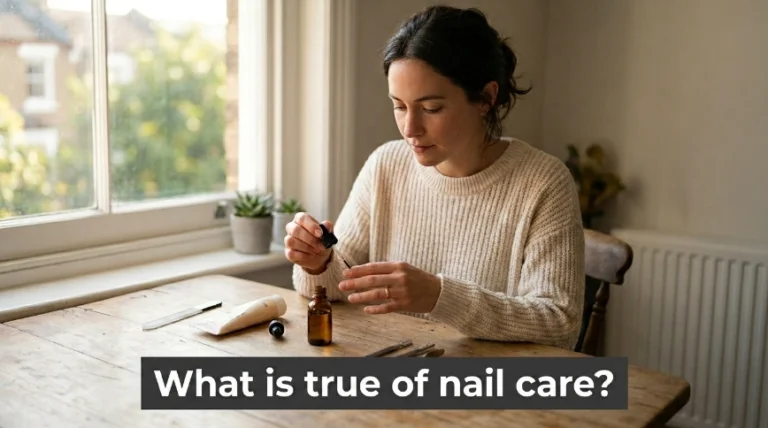
Are Fingernails Healthier Without Polish? Nail Experts Explain
Quick Answer
Nail polish itself doesn’t damage healthy nails — but the way you apply and remove it often does. Going bare can help nails recover if they’re already weak, peeling, or stained. If your nails are in good shape, wearing polish with a proper base coat is completely fine. The real damage comes from skipping base coat, peeling off polish, and over-using acetone remover.
You’ve probably heard someone say their nails need to “breathe” without polish. It sounds logical — but is it actually true? The answer is more nuanced than a simple yes or no, and understanding the real science behind it will change how you approach your entire nail routine.
This guide breaks down exactly what polish does to your nails, when going bare actually helps, and how to keep your nails strong whether you wear color every week or prefer a clean, natural look.


Do Nails Actually Need to Breathe?
Here’s the surprising truth: your nails don’t breathe through the surface. They get their oxygen and nutrients from the blood vessels beneath the nail bed, not from the air around them. So the idea that your nails suffocate under polish isn’t accurate from a biological standpoint.
Nails are made of keratin — the same protein as your hair. Keratin is dead tissue. It doesn’t absorb oxygen or process nutrients the way living skin does. So polish sitting on top of it doesn’t “block” anything your nail actually needs to function.
That said, polish absolutely interacts with your nails in ways that matter. It’s just not about oxygen — it’s about moisture, hydration, and chemical exposure.
What Polish Actually Does to Your Nails
Nail polish creates a sealed layer over your nail plate. That layer does two things simultaneously: it protects the surface from minor chips and scrapes, and it prevents your nail from naturally exchanging moisture with the environment.
Nails are slightly porous. They absorb a small amount of moisture throughout the day — from washing your hands, from humidity, from the products you use. When polish seals the surface, that exchange slows down. Over time, especially with back-to-back manicures and no break, nails can become dehydrated and brittle.
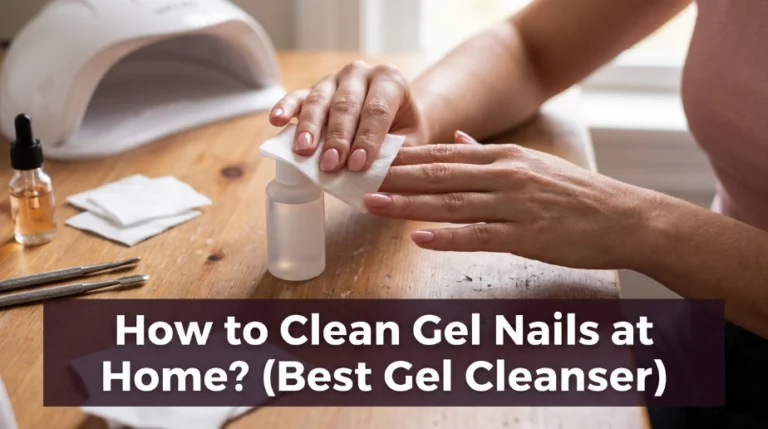
The bigger issue, though, is the removal process. Acetone-based nail polish remover strips moisture and natural oils from the nail plate every single time you use it. If you’re removing and reapplying polish every week with straight acetone, the cumulative dryness adds up fast — and that’s usually what people are actually seeing when they say polish “damaged” their nails.
Signs Your Nails Are Telling You to Take a Break
 Save
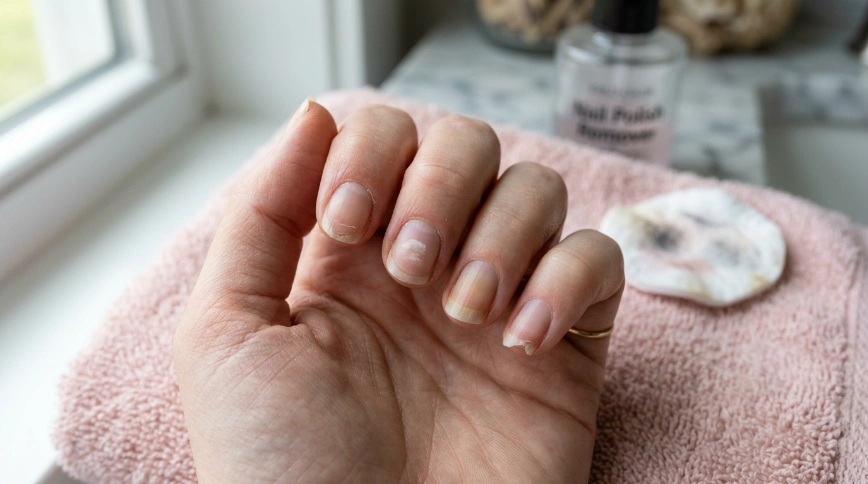
SaveYour nails will show you when they need a rest from polish. These are the specific signs to watch for:
- Peeling in layers: The nail plate is separating, usually from dehydration or too much acetone.
- White patches or chalky texture: Often a sign of keratin granulation — damage to the top layer of the nail caused by peeling off polish instead of dissolving it properly.
- Yellow or stained nails: Pigment from darker polishes has soaked into the nail — this happens almost exclusively when you skip base coat.
- Thin, bendy nails that used to be firm: The nail plate has been weakened, typically from over-filing or aggressive buffing before polish application.
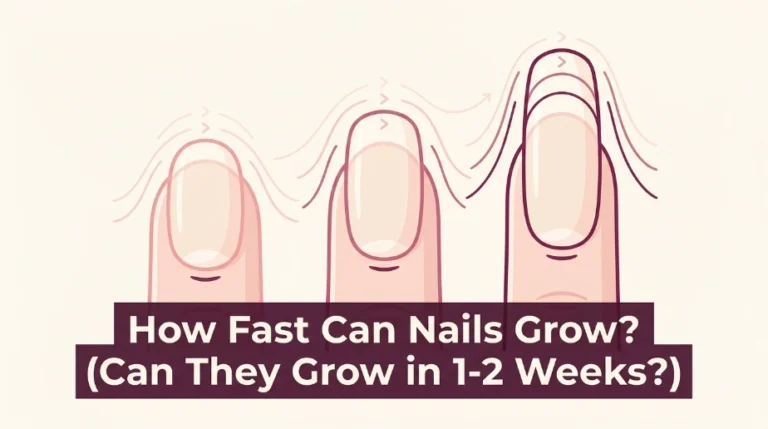
- Slow growth with lots of breakage: Not always polish-related, but dehydration from frequent acetone use can make nails more prone to snapping before they grow long.
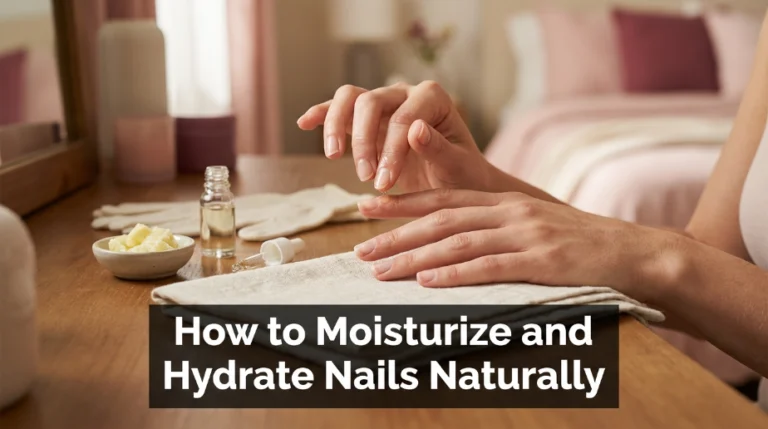
If you’re seeing any of these, a 2–4 week polish-free period genuinely helps. During that time, focus on rebuilding nail hydration with a daily cuticle oil and a keratin-strengthening treatment.
When Nail Polish Is Actually Protective
Here’s what most people miss: for nails that are already healthy, wearing polish can actually be better than going bare. The polish layer acts as a physical barrier against everyday wear — water exposure, cleaning products, and accidental impacts.
If you work with your hands, wash dishes frequently, or use a lot of household cleaners, bare nails absorb more of that chemical exposure directly. A proper manicure with a good base coat and two layers of polish gives your natural nail a layer of protection it wouldn’t otherwise have.
The key phrase there is “proper manicure.” The polish isn’t the problem. The application and removal habits are.
Pro Tip
If you want the protection of polish without constant acetone exposure, switch to a peel-off base coat under your regular color. You peel the whole manicure off without any remover needed — your nails stay hydrated and you still get full color.
The Honest Comparison: Bare Nails vs. Polished Nails
Both approaches can result in healthy nails. Both can result in damaged nails. It comes down entirely to your habits.
Bare nails work best when: your nails are currently damaged and need recovery time, you want to assess your natural nail health without product masking it, or you’re applying cuticle oil and strengthening treatments daily.
Polish works fine when: you always apply a base coat before color, you use acetone remover sparingly (not more than once a week), you never peel your polish off, and you give your cuticles and nail plate regular hydration between manicures.
For a deeper look at keeping your natural nails in shape between salon visits, check out this guide on maintaining healthy natural nails at home.
The Products That Make the Real Difference
Whether you’re going bare or staying polished, these are the products that actually move the needle on nail health.
Base coat — non-negotiable if you wear polish. A good ridge-filling base coat does two jobs: it prevents pigment from the color polish from soaking into your nail (which causes staining), and it gives the color something to bond to, which makes your manicure last longer. Apply it to every nail before any color, every single time.
Recommended Product
Strengthening Ridge-Filling Nail Base Coat
★★★★☆ Highly rated on Amazon
A strengthening base coat with keratin or calcium creates a protective barrier that prevents staining and helps fragile nails hold up under color without peeling.
As an Amazon Associate, we earn from qualifying purchases.
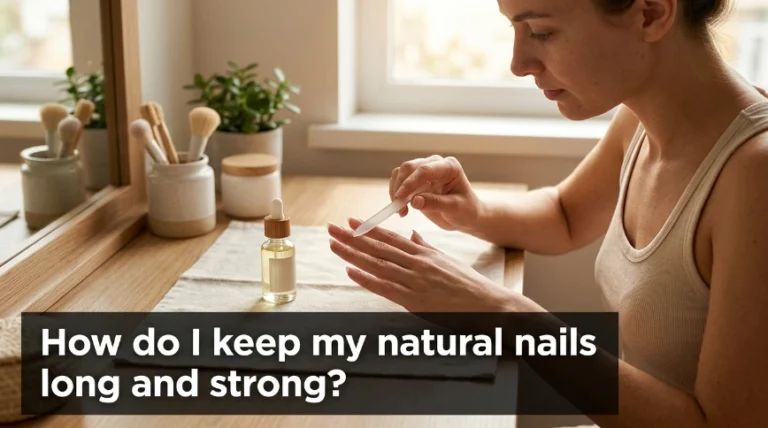
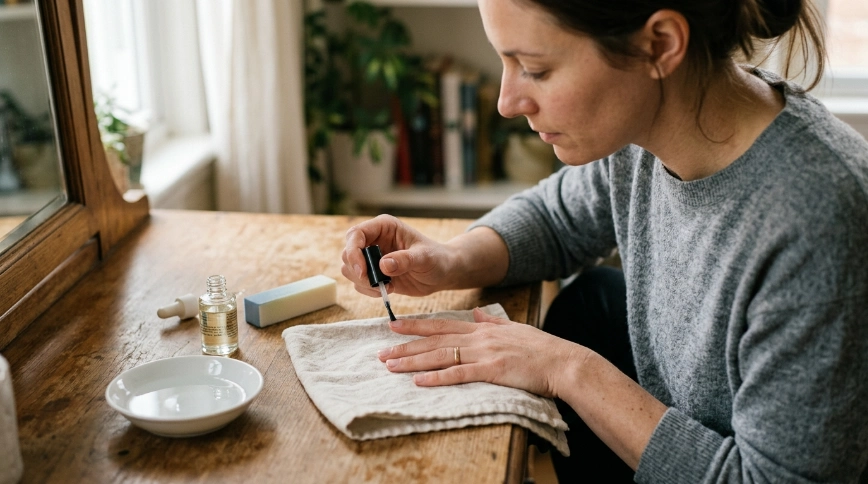
Cuticle oil — the single most underrated nail care product. Your cuticle doesn’t just look better with oil — it directly affects how your nail grows. The cuticle seals and protects the nail matrix, which is where new nail cells are produced. Keeping that area moisturized means your new nail growth comes in stronger and more flexible. Apply cuticle oil every night before bed, pressing it into the base of each nail and the surrounding skin.
Recommended Product
Jojoba or Vitamin E Nail & Cuticle Oil
★★★★☆ Highly rated on Amazon
Jojoba oil’s molecular structure is close to your skin’s natural sebum, which means it absorbs quickly and deeply hydrates both the cuticle and the nail plate itself.
As an Amazon Associate, we earn from qualifying purchases.
Acetone-free remover for everyday use. Save straight acetone for removing glitter or dark colors that need extra help. For regular polish removal, an acetone-free formula is gentler on both your nail plate and the surrounding skin. It takes slightly longer to work, but the difference in nail hydration over months of use is significant.
Recommended Product
Acetone-Free Nail Polish Remover with Moisturizers
★★★★☆ Highly rated on Amazon
An acetone-free formula infused with aloe or vitamin E removes color without stripping the natural oils your nail plate needs to stay flexible and chip-resistant.
As an Amazon Associate, we earn from qualifying purchases.
Do’s and Don’ts for Healthy Nails — Polish or No Polish
Do
- +Apply cuticle oil every night — even when your nails are polished
- +Always use a base coat before any color polish
- +Use a glass nail file — it seals the nail edge instead of fraying it
- +Give nails a 2–4 week break every few months to check their condition
- +Wear gloves when cleaning with household chemicals
Don’t
- −Peel or pick off polish — it rips off the top layer of your nail plate
- −Use straight acetone more than once a week
- −Skip base coat, especially with red, dark blue, or black polish
- −Buff your nails aggressively to create shine — it thins the plate
- −Go back-to-back with manicures for months without assessing nail health
Pro Tips for Keeping Nails Healthy Long-Term
 Save
SavePro Tip
When you do take a polish break, don’t leave your nails completely bare. Apply a clear strengthening treatment like OPI Nail Envy or Sally Hansen Hard as Nails every 2–3 days. It gives you the recovery benefits of going naked while still protecting the surface from everyday wear.
Pro Tip
If your nails stain yellow after removing dark polish, it’s almost always a sign you skipped base coat. To lighten existing stains, buff the surface very lightly with a 4-sided nail buffer and soak fingertips in a small bowl of water with a teaspoon of lemon juice for 5 minutes. Follow immediately with cuticle oil.
Pro Tip
Your nails reflect your overall health. If you’re taking a polish break and still seeing peeling, brittleness, or slow growth after a month of proper nail care, look at your diet. Low biotin, iron deficiency, and thyroid imbalances all show up in nail quality before almost anywhere else. A blood panel can rule out anything systemic.
If you’re thinking about going back to basics with a simple at-home manicure routine, the nail break period is the perfect time to reset your technique too.
Frequently Asked Questions
Q: How long should I leave my nails without polish for them to recover?
A: Two to four weeks is enough for most people to see noticeable improvement. During that time, apply cuticle oil daily and use a clear keratin strengthener every few days. If your nails were very damaged — thin, peeling badly, or with white patches — give it a full month before reassessing.
Q: Is gel polish worse for nails than regular polish?
A: Gel itself isn’t the problem — the UV curing, extended wear, and especially the removal process are. Soaking nails in acetone for 10–15 minutes every few weeks dries the nail plate significantly. If you love gel, use a reputable nail oil daily and space your gel manicures out to every 3–4 weeks rather than every 2.
Q: Can nail polish cause fungal infections?
A: Polish itself doesn’t cause fungus, but it can trap existing moisture against the nail if applied over wet or slightly damp nails — which creates the warm, dark environment fungus needs. Always make sure your nails are completely dry before applying any polish, and watch for any discoloration or thickening that doesn’t improve after a polish break, as those can be signs of a fungal issue.
Q: Are “breathable” or “halal” nail polishes actually better for nail health?
A: Breathable polishes are marketed as water and oxygen-permeable, but independent tests have shown the permeability is minimal in practice — not enough to make a measurable difference to nail health. They’re a fine choice, but don’t expect them to eliminate the need for a base coat, proper removal technique, or nail breaks.
Q: My nails look fine with polish — do I still need to take breaks?
A: If your nails feel strong, don’t peel, and grow steadily, you don’t need mandatory breaks. The break recommendation is for recovery, not a blanket rule. What matters most is your application and removal habits — keep those clean and your nails can stay polished year-round without issue.
The Real Answer to Healthier Nails
Going polish-free doesn’t automatically make your nails healthier — your habits do. Skip the base coat, peel off your color, and drench your nails in acetone weekly, and your bare nails will struggle just as much as polished ones. But use a quality base coat, remove polish gently with an acetone-free remover, and keep your cuticles oiled every day, and you can wear color as often as you want without compromising your nail health.
If you’re dealing with damage right now, a 2–4 week bare-nail reset with a strengthening treatment is the fastest path back to healthy nails. After that, it’s all about building smarter habits — not about choosing between color and clear.
Save this to your Pinterest nail care board so you always have the real facts on hand — and share it with anyone who swears their nails need to “breathe.”

Hi, I’m Jessica, the creator behind Unique Lash & Nails Katy.
I created this website for anyone who loves beautiful nails as much as I do. Here, I share trendy nail designs, seasonal manicure ideas, easy nail care tips, honest product recommendations, and step-by-step guides to help you create salon-worthy nails at home. Whether you’re looking for everyday inspiration or your next favorite nail trend, I hope you’ll find something you love.