How to Care for Brittle Nails After Gel or Acrylic Removal
Quick Answer
To care for brittle nails after gel or acrylic removal, keep your nails short, apply cuticle oil or a rich moisturizer daily, protect your hands from water and harsh cleaners, and take a break from enhancements. Avoid buffing, peeling, or hardening already-thin nails. Moisture-related brittleness may improve within weeks, but damaged nail layers must gradually grow out.
Just removed your gel or acrylic nails and discovered that your natural nails feel paper-thin, rough, or painfully fragile? You’re probably wondering whether they’ll ever feel strong again.
The reassuring news is that many cases of manicure-related brittleness improve with gentle care and healthy new nail growth. You don’t need an expensive treatment collection or another manicure to hide the damage.
Here’s how to care for brittle nails after gel or acrylic removal with a realistic recovery routine, protective habits, and practical products that help minimize further breakage.


Why Do Nails Become Brittle After Gel or Acrylic Removal?
Your natural nails are made from tightly packed layers of keratin. These layers provide strength while allowing a little flexibility. When the surface becomes thinner or damaged, your nails may split, peel, bend, or break more easily.
The gel or acrylic product isn’t always the only cause. Nail preparation, removal techniques, chemical exposure, and repeated manicures can all contribute to the problem.
1. Excessive Filing Removes Protective Nail Layers
Before applying enhancements, a technician may gently roughen your nail surface to improve adhesion. However, aggressive filing or electric-file pressure can remove too much natural nail material.
Once those layers are gone, the remaining nail plate may become noticeably thinner and more flexible. Moisturizers can reduce dryness, but they cannot rebuild the missing keratin instantly.
2. Peeling Off Gel Can Damage Your Natural Nails
It’s tempting to pull off gel polish when the edges start lifting. Unfortunately, the coating may still be attached to your natural nail.
When you peel it away, small layers of the nail plate can come off with it. This often leaves uneven white patches, rough spots, and peeling tips.
If you want to avoid repeating this problem, explore these tips for protecting your natural nails during gel manicures.
3. Acetone Can Leave Nails and Cuticles Dry
Acetone is commonly used to remove soak-off gel and certain acrylic products. While it’s effective when used correctly, it can temporarily dry the nail plate and surrounding skin.
Extended soaking and repeated exposure may make already-fragile nails feel even drier. Follow removal instructions carefully and moisturize afterward.
4. Repeated Enhancements Increase Wear and Tear
Frequent acrylic fills, repeated buffing, and back-to-back removal sessions can expose the same nail to additional mechanical stress.
The result may be a combination of thin areas, peeling edges, and dry cuticles. A break from enhancements helps you avoid adding new damage while healthier nail grows forward.
What Do Damaged Nails Look Like After Removing Gel or Acrylic?

Not every nail change means serious damage. Recognizing common signs helps you choose appropriate care rather than applying another product immediately.
- Peeling tips: Thin layers separate near the free edge of the nail.
- Soft or bendy nails: Nails flex more easily than usual and may tear during everyday activities.
- Rough nail surfaces: Uneven areas appear after filing, scraping, or removing enhancements.
- White patches: Superficial nail surface damage may create chalky-looking spots.
- Frequent splitting: Small cracks develop along the tips or sides.
- Dry cuticles: Skin around your nails feels tight, flaky, or irritated.
These changes can occur after manicure removal, but they aren’t exclusive to cosmetic damage. Nail infections, inflammatory skin conditions, and other health problems can produce similar symptoms.
Warning
If your nails become painful, swollen, significantly lifted, green or unusually dark, or if you notice pus or bleeding, stop applying cosmetic nail products and seek medical advice. Do not cover a possible infection with acrylic, gel, glue, or polish.
For a closer look at symptoms, use this guide to recognizing the signs of unhealthy nails.
How Can You Care for Brittle Nails After Gel or Acrylic Removal?
The most helpful approach is a consistent routine that reduces further damage while supporting the growth of healthier nails.
Instead of trying to force your nails to become hard overnight, focus on maintaining moisture, preventing snags, and avoiding unnecessary cosmetic treatments.
Method 1: Keep Your Nails Short and Smooth
Best for: Nails that bend, catch on clothing, or split at the tips.
Short nails experience less leverage during daily tasks. This makes them less likely to bend backward or break while you’re typing, washing dishes, or opening containers.
Use clean nail clippers to shorten the free edge if necessary. Then gently smooth rough edges using a fine-grit nail file.
A rounded or softly squared shape is often easier to maintain while your nails are fragile.
Benefits: Fewer accidental snags, easier maintenance, and reduced stress on thin nail tips.
Limitation: Shortening your nails prevents breakage but doesn’t restore material already lost from the nail plate.
Method 2: Apply Cuticle Oil Regularly
Best for: Dry nail folds, peeling cuticles, and nails that feel stiff or dehydrated.
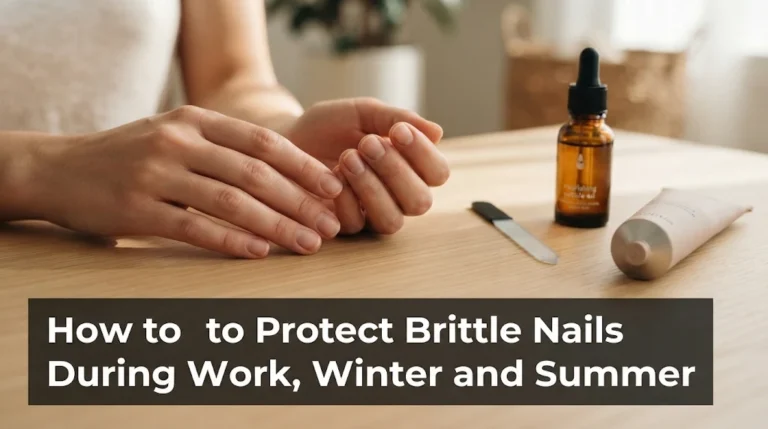
Cuticle oil helps condition the skin surrounding your nails and may improve the flexibility and feel of dry nail surfaces.
Look for a simple formula containing jojoba oil, sunflower oil, or another well-tolerated moisturizing ingredient.
Apply a small drop to each nail and gently massage it into the nail plate, cuticle area, and sidewalls.
Try using it after handwashing when practical and again before bedtime.
Benefits: Convenient hydration, softer surrounding skin, and a simple routine you can maintain.
Limitation: Oil won’t glue separated nail layers together or reverse severe thinning.
Method 3: Use a Rich Hand Cream or Petroleum Jelly
Best for: Dry hands, rough cuticles, and brittle nails exposed to frequent washing.
Apply a fragrance-free hand moisturizer after washing your hands. Pay particular attention to the nail folds and fingertips.
At night, you can apply a small amount of petroleum jelly over your nails and surrounding skin to help reduce moisture loss.
If you prefer, wear clean cotton gloves while sleeping to keep the moisturizer from rubbing onto your bedding.
Benefits: Helps relieve dryness and supports your skin’s protective barrier.
Limitation: Moisturizing improves comfort and flexibility but cannot speed up nail growth dramatically.
Method 4: Take a Break From Gel and Acrylic Enhancements
Best for: Thin, peeling, or repeatedly damaged nails.
When your nails are already weakened, another gel or acrylic application may require more filing, preparation, and eventual removal.
Consider going without nail enhancements for at least one to two weeks initially. If your nails remain visibly thin, split, or tender, extend the break while the damaged areas grow out.
You don’t need to leave your nails bare because they must breathe. Fingernails receive nutrients and oxygen through your body, not from exposure to air.
The purpose of the break is to avoid additional manicure-related stress and make moisturizing and monitoring easier.
Benefits: Reduces repeated filing and removal stress, allows easier inspection, and supports a gentler routine.
Limitation: A brief break won’t completely replace heavily damaged nail tissue.
Method 5: Protect Your Nails During Household Chores
Best for: Anyone who frequently washes dishes, cleans bathrooms, handles detergents, or works with wet materials.
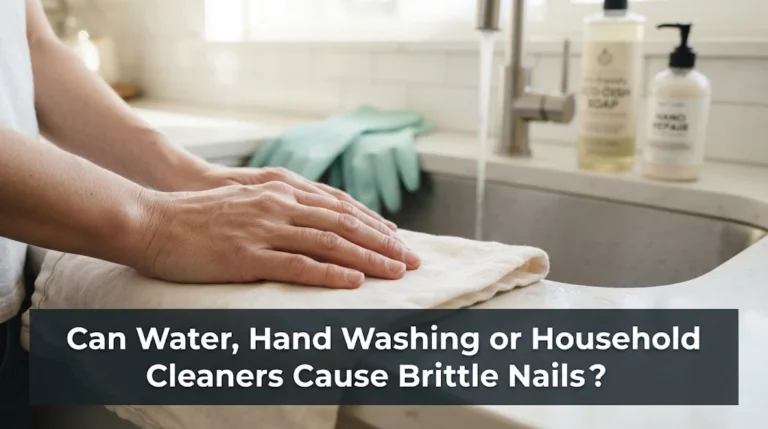
Repeated exposure to water and cleaning products can contribute to nail brittleness and skin irritation.
Wear protective gloves when washing dishes or using household cleaners. Dry your hands thoroughly afterward and apply moisturizer.
Make sure your gloves are clean and dry inside. Replace them if they become damaged or trap excessive moisture.
Benefits: Limits repeated wetting, drying, and contact with irritating cleaning chemicals.
Limitation: Gloves help protect your nails, but existing cracks still need to grow out.
For more practical ideas, see how cleaning products affect your nails and how to protect them.
What Is the Best Daily Routine for Recovering Brittle Nails?
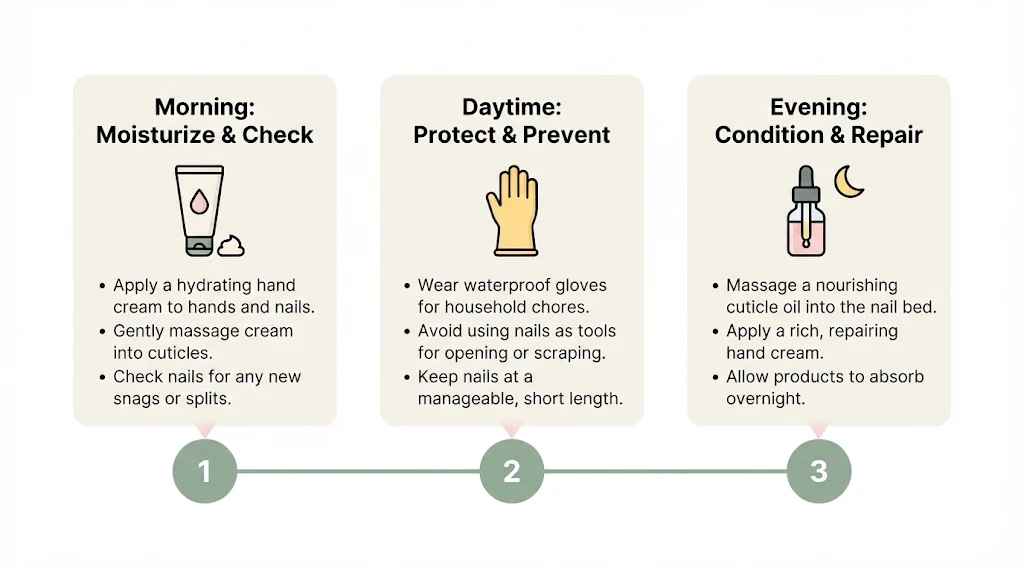
You don’t need a complicated ten-step treatment. A simple morning, daytime, and evening routine is often easier to maintain and less likely to irritate already-sensitive nails.
Morning: Moisturize and Check Your Nails
- Wash your hands with a gentle cleanser.
- Pat them dry rather than rubbing aggressively.
- Apply a fragrance-free hand cream to your fingertips and nail folds.
- Check for rough edges that could catch on clothing.
- Gently smooth a snag if necessary, without buffing the nail surface.
If your nails feel uncomfortable or tender, avoid unnecessary filing. Pain is a reason to be more cautious, not to continue reshaping the nail.
During the Day: Reduce Unnecessary Stress
- Use gloves when cleaning or washing dishes.
- Apply moisturizer after frequent handwashing.
- Use a tool rather than your nails to open packages.
- Avoid picking at peeling layers or remaining product.
- Keep sharp or broken edges protected from snagging.
The goal is to avoid small repeated injuries that turn an already-fragile nail into a deeper split.
Evening: Condition Your Nails Before Bed
- Apply a small amount of cuticle oil to each nail.
- Massage gently for about 30 seconds per hand.
- Apply a richer hand cream or a thin layer of petroleum jelly.
- Let the product absorb and avoid picking at rough areas.
Pro Tip
Keep your hand cream beside your sink and your cuticle oil near your bedside. Pairing nail care with habits you already have makes consistency easier than relying on occasional intensive treatments.
How Long Does It Take Brittle Nails to Recover?
Recovery depends on whether your nails are simply dry or have lost significant thickness through filing, peeling, or removal.
Dry skin and cuticles may feel more comfortable within days of regular moisturizing. Your nails may also become easier to manage as you reduce snags and breakage.
However, visible nail-plate damage cannot heal in the same way as living skin. The damaged part must gradually move toward the tip as new nail grows from the base.
What Can You Expect During Recovery?
- First few days: Moisturizing may relieve dry, tight cuticles and improve comfort.
- Weeks 1-2: A break from enhancements helps prevent repeated preparation and removal damage.
- Weeks 3-6: You may notice healthier-looking new growth near the cuticle, although old damage remains farther along the nail.
- Following months: The damaged portions gradually move toward the free edge and can be trimmed away.
A fingernail commonly takes around four to six months to grow out completely, although growth speed varies between individuals.
If your nails were severely over-filed, the visible damage may take months to disappear. No oil or strengthener can instantly replace missing nail layers.
What Should You Avoid While Your Nails Are Brittle?
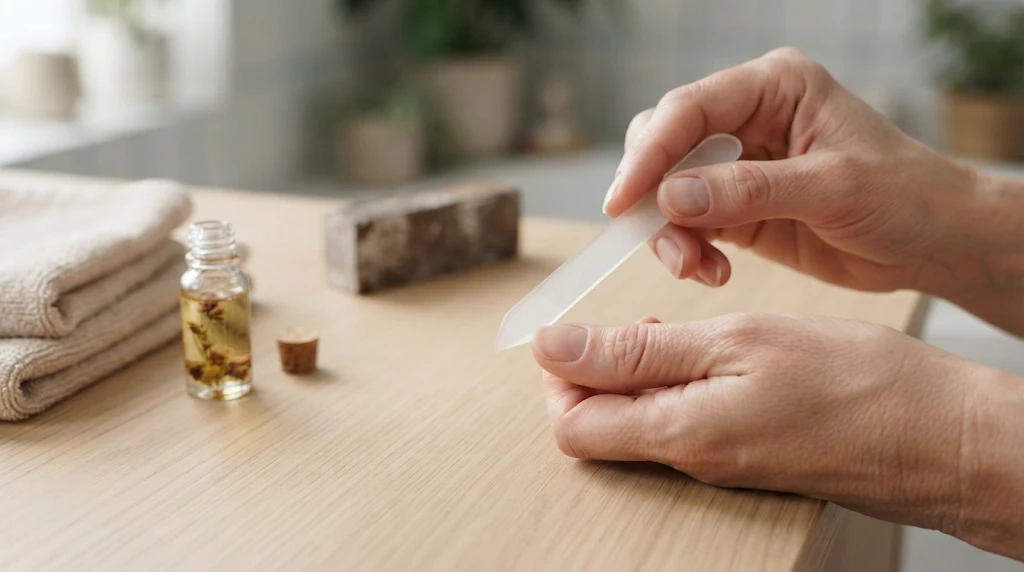
Some popular nail treatments can create additional problems when the natural nail is already thin. Your recovery routine should prioritize protection rather than aggressive treatments.
Do
- Keep nails comfortably short.
- Moisturize regularly.
- Wear gloves for wet work.
- Use a gentle nail file on snags.
- Allow damaged areas to grow out.
- Seek advice for unusual changes.
Don’t
- Peel off attached gel.
- Buff already-thin surfaces.
- Use nails to pry objects open.
- Cut or aggressively push cuticles.
- Apply extensions over damaged nails.
- Ignore persistent pain or lifting.
Avoid Repeated Buffing
Buffing can make a rough surface temporarily look smoother, but it also removes additional nail material.
When your nails are thin after acrylic removal, buffing away every visible ridge or white patch may worsen the original problem.
Leave superficial unevenness alone whenever possible and focus on keeping the free edges smooth.
Be Careful With Nail Hardeners
Not every nail hardener is suitable for brittle nails. Some products create a very rigid coating, which may be unhelpful if your nails already crack instead of flexing slightly.
Formaldehyde-containing hardeners can also cause irritation or increase brittleness with inappropriate use.
Avoid applying multiple strengthening products at the same time, especially if your nails or surrounding skin are irritated.
Skip Harsh DIY Treatments
Lemon juice, baking soda scrubs, concentrated essential oils, and other homemade remedies are sometimes promoted as fast nail repair solutions.
However, these treatments do not replace damaged keratin. Acidic or irritating mixtures may make sensitive skin feel worse.
A gentle moisturizer and consistent protection are more practical starting points.
Which Products Can Help Care for Brittle Nails?
You don’t need to purchase every product marketed for nail recovery. The most useful items are those that help reduce dryness, protect your nails, or make gentle maintenance easier.
Here are a few affordable categories worth considering.
Recommended Product
Jojoba-Based Cuticle Oil
A simple jojoba-based cuticle oil can help condition dry nail folds and make regular nail care easy to maintain.
As an Amazon Associate, we earn from qualifying purchases.
Recommended Product
Fragrance-Free Hand Moisturizer
A rich fragrance-free hand cream helps relieve dryness around your nails without relying on complicated strengthening treatments.
As an Amazon Associate, we earn from qualifying purchases.
Recommended Product
Fine-Grit Glass Nail File
A quality fine-grit glass nail file helps you carefully smooth snagging edges without repeatedly buffing the surface of weak nails.
As an Amazon Associate, we earn from qualifying purchases.
Choose products based on what your nails actually need. If you already own a gentle hand moisturizer and a suitable nail file, you may only need to adjust your routine rather than buy something new.
Can You Wear Nail Polish While Your Nails Recover?
If your nails are noticeably thin, peeling, or damaged, leaving them free of cosmetic coatings for a while is generally the more cautious choice.
Even traditional polish requires eventual removal. Frequent remover use may increase dryness, and opaque color can make it harder to notice changes beneath the coating.
Once your nails look and feel healthy again, ordinary polish may be an option. Choose gentle application and removal habits, and avoid using polish to hide unexplained discoloration or damage.
For more information about whether going without polish helps, read are nails healthier without polish?.
What If Your Nails Keep Peeling or Breaking?
Sometimes a basic moisturizing routine isn’t enough. The next step depends on the specific symptom you’re experiencing.
Problem: Your nail tips keep peeling into layers
Immediate care: Keep your nails short and gently smooth loose, snagging edges. Don’t pull off peeling layers. Prevention: Minimize repeated wet work, moisturize regularly, and avoid additional filing.
Problem: Your nails bend easily after acrylic removal
Immediate care: Reduce nail length and avoid pressure on the tips. Prevention: Skip new acrylic applications while the damaged areas grow out, and avoid hardening products that cause irritation.
Problem: Your nails have rough white patches
Immediate care: Stop aggressive buffing and keep the area moisturized. Prevention: Avoid picking at gel polish and ask for gentle removal at future appointments. Seek medical advice if discoloration persists or changes.
Problem: Your nails stay painful or begin lifting
Immediate care: Stop cosmetic treatments and arrange an evaluation with a healthcare professional. Prevention: Avoid further trauma and don’t cover a lifting nail with glue or enhancements.
How Can You Prevent Brittle Nails After Future Manicures?
Once your natural nails have recovered, you may want to enjoy gel or acrylic manicures again. A few changes in your salon routine can reduce avoidable damage.
Choose Gentle Nail Preparation
Ask your nail technician to avoid excessive filing and unnecessary thinning of your natural nail plate.
The goal is appropriate preparation for the service, not removing large amounts of natural nail material.
Never Peel Off Attached Enhancements
Even if your gel polish begins lifting at one corner, don’t pull it off. Arrange appropriate removal instead.
Different products require different removal methods. Some soak-off gels respond to acetone, while hard gels and certain enhancement systems may require professional filing.
Protect Your Cuticles
Your cuticles help create a protective seal around the nail. Avoid cutting living cuticle tissue or aggressively pushing it backward.
Tell your nail technician if you experience soreness, irritation, or sensitivity during preparation.
Pay Attention to UV Exposure
If you’re getting a gel manicure that requires a curing lamp, consider broad-spectrum, water-resistant SPF 30 or higher sunscreen on exposed hand skin, or suitable UV-protective fingerless gloves.
Both traditional UV lamps and LED curing lamps can emit ultraviolet radiation, so UV protection is worth considering.
Avoid Covering Existing Nail Problems
If your nails have become thin, painful, discolored, or separated from the nail bed, don’t immediately cover them with another enhancement.
Allow them to recover and seek professional evaluation for persistent or suspicious changes.
Pro Tip
Take a clear photo of your bare nails immediately after removing an enhancement. Compare it with another photo a few weeks later. This can help you observe new nail growth and notice whether damaged areas are gradually moving toward the tips.
Frequently Asked Questions About Brittle Nails After Gel or Acrylic Removal
Q: Can brittle nails become strong again after acrylic removal?
A: Often, yes. If brittleness is mainly caused by filing or removal damage, healthier new nail can gradually replace the damaged material. Keep your nails protected and allow several months for significant thinning to grow out.
Q: Is cuticle oil or nail strengthener better for brittle nails?
A: For dry, fragile nails, cuticle oil or a gentle moisturizer is a useful starting point. Some nail hardeners may make nails too rigid or cause irritation, and neither type of product can restore nail layers already removed.
Q: How long should you wait before getting gel nails again?
A: Dermatologists recommend considering a polish break of one to two weeks or longer after gel manicures. If your nails remain brittle, thin, painful, or peeling, postpone enhancements until the problem improves.
Q: Does petroleum jelly help damaged nails?
A: Petroleum jelly helps reduce moisture loss from nails and surrounding skin. Regular application can relieve dryness and improve comfort, although it won’t permanently repair cracks or replace missing nail material.
Q: Should you take biotin supplements for brittle nails?
A: Evidence that biotin supplements improve brittle nails is limited. Biotin can also interfere with important laboratory tests. Speak with a healthcare professional before taking supplements, especially if brittle nails persist without a clear cause.
Give Your Natural Nails Time to Grow Stronger
Learning how to care for brittle nails after gel or acrylic removal comes down to three priorities: moisturize consistently, prevent additional damage, and allow healthy new nail to grow.
Keep your routine simple, avoid the temptation to hide damaged nails under another enhancement, and seek advice if symptoms persist. Your next beautiful manicure starts with caring for the natural nails underneath.
Save this guide on Pinterest so you can revisit these gentle nail recovery tips whenever your nails need a little extra care!

Hi, I’m Jessica, the creator behind Unique Lash & Nails Katy.
I created this website for anyone who loves beautiful nails as much as I do. Here, I share trendy nail designs, seasonal manicure ideas, easy nail care tips, honest product recommendations, and step-by-step guides to help you create salon-worthy nails at home. Whether you’re looking for everyday inspiration or your next favorite nail trend, I hope you’ll find something you love.