Do Nails Grow Faster in Summer? Here’s What Really Happens
Quick Answer
Your nails may grow a little faster during summer, but the scientific evidence isn’t completely consistent. Some research has found increased nail growth during warmer months, while other studies detected little or no significant seasonal change. Healthy fingernails generally grow about 3 to 3.5 mm per month, and your age, health, nutrition, nail condition, and individual biology can matter more than the season.
You aren’t imagining things if your manicure seems to show a bigger gap at the cuticle during summer. Seasonal changes in nail growth have been reported, but here’s the interesting part: scientists haven’t found exactly the same pattern in every study.
Some research has measured faster growth during warmer months. Other studies following nails through different seasons found no significant difference between summer and winter.
So the most accurate answer isn’t simply, “Yes, heat makes your nails grow fast.” Your nails can change with the season, but temperature is only one small part of a much bigger picture.


Do Your Nails Actually Grow Faster in Summer?
They can, but the effect isn’t guaranteed or identical for everyone.
Research on seasonal nail growth is surprisingly mixed. Some long-term observations and studies have found fingernails and toenails growing faster during summer. Other research, including studies performed in very different climates, hasn’t detected a meaningful seasonal difference.
That means you shouldn’t expect your nails to suddenly grow twice as fast when June arrives.
If your nails normally grow slowly, summer probably won’t transform them into super-fast growers. You may notice a modest difference, or you may notice no measurable difference at all.
Your own experience can also be influenced by something other than the actual speed of growth: how much nail you’re successfully keeping.
If your nails split less, peel less, and stay intact for longer during warm weather, they can become noticeably longer even when the nail matrix isn’t producing nail dramatically faster.
Pro Tip
Don’t judge nail growth only by how long your free edge looks. Take a photo near the cuticle immediately after a manicure, then photograph the same nail two or three weeks later. The visible gap gives you a much better way to compare your personal growth rate between seasons.
How Fast Do Fingernails Normally Grow?
A healthy fingernail typically grows around 3 to 3.5 millimeters per month, or roughly one-tenth of a millimeter per day.
One study of healthy young adults measured average fingernail growth at about 3.47 mm per month. Toenails were much slower at about 1.62 mm per month.
That difference explains why a damaged fingernail can take several months to completely grow from the matrix to the free edge, while a toenail can take much longer.
Your individual rate can fall above or below those averages. Even the nails on the same hand don’t necessarily grow at exactly the same speed.
This is also why products promising inches of new natural nail within a few weeks should make you skeptical. Most nail-care products can help reduce dryness or breakage; they can’t override the normal biology of your nail matrix overnight.
Why Might Nails Grow Faster During Warm Weather?
 Save
SaveThere isn’t one proven explanation that applies to everyone, but researchers and nail experts have proposed several possible reasons.
Warmer temperatures may change circulation
Your hands and fingertips respond to environmental temperature. In warmer conditions, blood vessels near the skin can widen as part of normal temperature regulation.
Because new nail cells are produced in the nail matrix beneath the skin at the base of your nail, researchers have considered whether changes in circulation and temperature could contribute to differences in growth.
That explanation is biologically plausible, but you shouldn’t treat it as proof that simply keeping your hands warm will noticeably accelerate nail growth.
Your daily activity may change
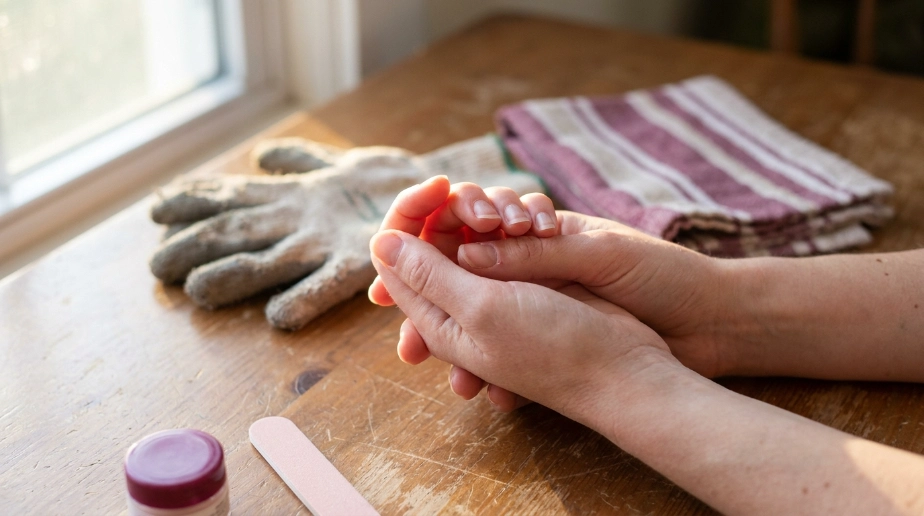
You may use your hands differently during summer. Gardening, travel, outdoor activities, swimming, vacations, or simply spending more time away from a desk can change the amount of stimulation and trauma your nails receive.
Those changes make it difficult to separate “summer” itself from everything else you do differently during summer.
Your nails may retain moisture differently
Nail plates contain water, and research has shown that nail water content can differ between seasons.
That doesn’t necessarily mean a hydrated nail grows faster. It can, however, affect how flexible, dry, or brittle your nails feel.
A nail that bends slightly instead of immediately cracking may survive long enough to become noticeably longer.
What Affects Nail Growth More Than the Season?
Summer gets a lot of attention because the change is easy to notice, but your personal nail-growth rate depends on several factors.
Your natural biology
Some people simply grow nails faster than others. Comparing your nails with a friend’s isn’t especially useful because everyone’s baseline growth rate is different.
Your age
Nail-growth patterns can change over your lifetime. Age is one of several physiological factors researchers have associated with differences in nail growth.
Your overall health and nutrition
Your body has to continually create keratinized nail tissue. A balanced diet that supplies enough protein and essential nutrients supports normal nail production, but there isn’t one miracle food or drink that suddenly doubles the speed.
If you’d like to improve the nutritional side of your routine, see what drinks can support healthy nail growth without falling for unrealistic nail-growth claims.
Damage to the nail
Sometimes the problem isn’t slow growth at all.
Your nail may be growing normally at the base while the free edge repeatedly splits, peels, or snaps. When you’re losing 2 mm from the tip nearly as quickly as you’re growing 3 mm from the base, it feels like your nails aren’t growing.
If yours are currently thin or damaged, this simple nail recovery routine can help you protect the new growth while the damaged portion gradually moves toward the tip.
Does Summer Sun Make Your Nails Grow Faster?
Sun exposure and faster summer nail growth are often mentioned together, but you shouldn’t assume sunlight is directly responsible.
The seasonal research doesn’t prove that exposing your hands to more sun will make the nail matrix produce nail faster.
More importantly, deliberately increasing UV exposure isn’t a sensible nail-growth strategy.
If you spend time outdoors, protect your skin as you normally would instead of trying to use sunshine as a nail treatment.
Your nail-care routine, nutrition, health, and ability to prevent breakage are much more practical things to focus on.
Why Can Nails Look Longer in Summer Even Without Faster Growth?
This is one of the easiest parts of the summer nail-growth question to overlook.
Growth and retained length aren’t the same thing.
Imagine your nail grows 3 mm during one month.
If dryness and splitting cause you to lose 2 mm from the tip, you only see about 1 mm of additional length.
Now imagine the same nail grows 3.2 mm during a warmer month but stays flexible enough that you lose nothing from the tip. Suddenly it looks as though your nail growth has tripled, even though the production rate changed only slightly.
That’s why preventing breakage can make a bigger visual difference than chasing ways to force faster growth.
How Can You Protect Your Nail Growth During Summer?
Your goal isn’t to force your nails to grow. It’s to protect the nail being produced so you actually get to keep the length.
A simple nail care routine works just as well in summer as it does during the rest of the year, with a few seasonal adjustments.
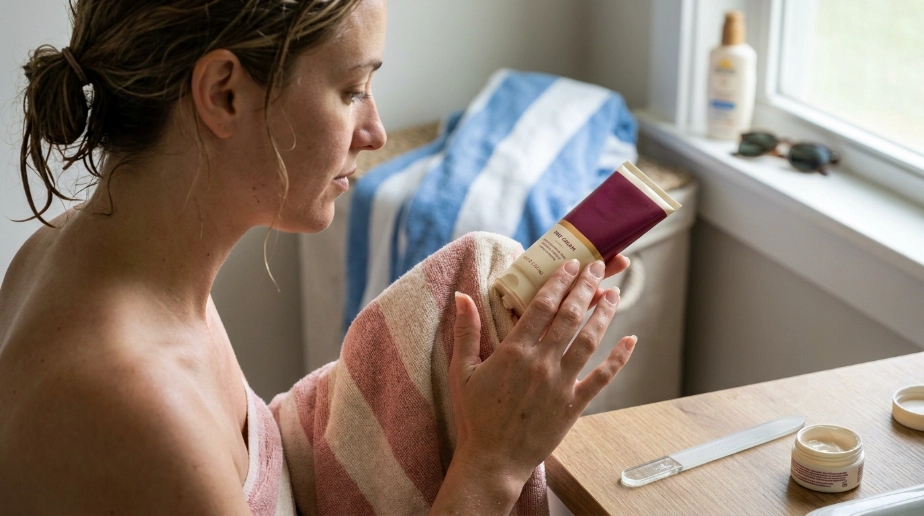
Moisturize after repeated water exposure
Swimming, showering, handwashing, and vacation activities can leave your hands moving repeatedly between wet and dry conditions.
Apply moisturizer after drying your hands instead of waiting until the surrounding skin already feels rough.
A portable cuticle oil pen is convenient when you’re traveling because you can apply a tiny amount around each nail without carrying a full manicure kit.
Seal very dry skin at night
If your cuticle area becomes rough after swimming or frequent handwashing, apply your regular moisturizer and then use a small amount of petroleum jelly over particularly dry areas.
If you’re curious about what petroleum jelly can and can’t do, see whether Vaseline is good for nails.
A fragrance-free moisturizing hand cream is another useful basic if frequent washing leaves your fingertips feeling tight or dry.
File small snags before they turn into breaks
One tiny rough edge can catch on clothing, towels, beach bags, or bedding and tear farther into the nail.
Keep a glass nail file nearby and smooth the snag before it becomes a larger split.
What Should You Do — and Avoid — for Longer Summer Nails?
 Save
SaveDo
- +Moisturize after swimming and frequent handwashing
- +File small snags before they become cracks
- +Track growth from the cuticle if you want to compare seasons
Don’t
- −Peel gel or polish from the nail surface
- −Assume more sun exposure will make nails grow faster
- −Use your longer nails to pry, scrape, or open things
Can Summer Manicures Make Your Nails Look Like They’re Growing Faster?
Absolutely.
A visible gap between your polish and cuticle makes nail growth much easier to notice. If you wear bright summer colors, gel polish, or detailed nail art for two or three weeks, the new-growth area stands out dramatically.
You may have experienced the same amount of growth during winter without noticing it because you wore sheer polish, changed manicures more frequently, or kept your nails shorter.
This visual effect is especially obvious with dark, opaque, or highly contrasting colors.
Going without polish occasionally can also make it easier to inspect the natural nail. If you’re unsure whether breaks from manicures are limiting your length, read whether nails are healthier without polish.
What Are the Best Ways to Tell Whether Your Nails Really Grow Faster in Summer?
 Save
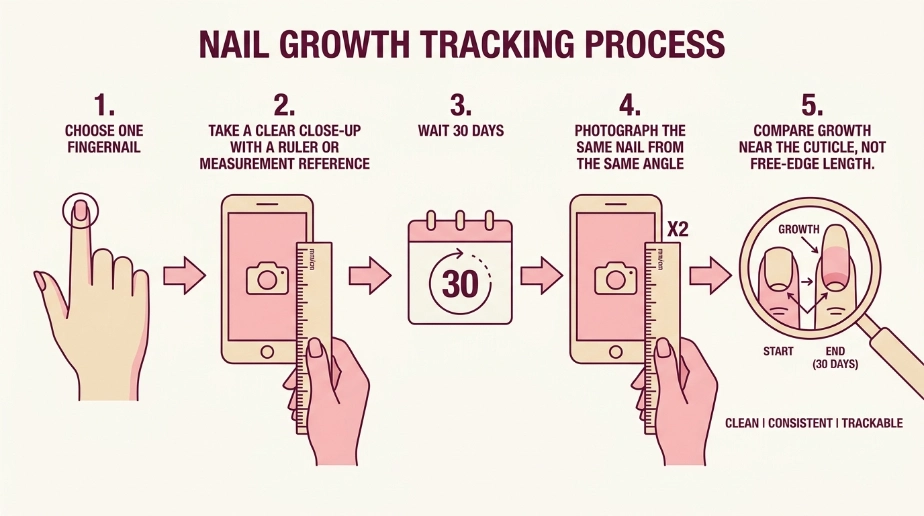
SaveIf you’re genuinely curious, run your own simple experiment rather than relying on memory.
Choose one fingernail and take a clear close-up photo immediately after a manicure or after gently pushing no skin back at all. Include a ruler or another consistent measurement reference in the photo.
After 30 days, photograph the same nail from the same angle.
Repeat the process during winter.
Don’t compare a random two-week summer period with a six-week winter period. Keep your measurement intervals consistent.
You should also avoid drawing conclusions from one broken nail. Measure growth near the base, where new nail is appearing, rather than comparing free-edge length.
Pro Tip
Track the same finger each time. Different fingernails can grow at slightly different rates, so switching fingers can make a small seasonal difference look bigger than it really is.
When Is Slow Nail Growth More Than a Seasonal Change?
Gradual differences in nail length aren’t usually a reason to panic. Nails naturally grow slowly, and temporary changes can be difficult to notice until several weeks have passed.
What matters more is whether the change is sudden or accompanied by something unusual.
Warning
Consider getting professional medical advice if you notice a persistent dark streak, significant nail thickening, unexplained separation from the nail bed, swelling, pain, major discoloration, repeated nail shedding, or a sudden change that doesn’t gradually grow out.
Those changes shouldn’t simply be covered with another manicure and assumed to be caused by the weather.
Frequently Asked Questions About Summer Nail Growth
Q: How much faster do nails grow in summer?
A: There isn’t a reliable percentage that applies to everyone. Some studies have observed faster summer growth, while others found little or no significant seasonal difference. Your personal change may be small enough that you only notice it after several weeks.
Q: Does heat make fingernails grow faster?
A: Warmer conditions have been associated with faster growth in some research, but heat alone hasn’t been proven to be a dependable nail-growth treatment. Your biology and overall nail condition still play major roles.
Q: Do toenails also grow faster in summer?
A: Some seasonal research has reported increased summer growth in both fingernails and toenails, but the evidence isn’t completely consistent. Toenails normally grow much more slowly than fingernails regardless of season.
Q: Why do my nails suddenly seem longer after a summer vacation?
A: They may have grown slightly faster, but reduced breakage, a long-lasting manicure, changes in humidity, or simply noticing the cuticle gap more clearly can also make the difference look dramatic.
Q: Can you make your nails grow faster naturally?
A: There isn’t a reliable home trick that dramatically speeds normal nail production. Your best strategy is to support normal growth with balanced nutrition and protect the nail from peeling, splitting, picking, and unnecessary manicure damage so you retain more length.
So, Do Nails Really Grow Faster in Summer?
Your nails may grow somewhat faster during summer, and some scientific research supports a seasonal increase. But the evidence isn’t strong enough to say every person’s nails consistently speed up whenever the weather gets warm.
The difference you see can also come from reduced breakage, changes in nail moisture, your manicure habits, or simply noticing new growth more easily.
Instead of trying to force faster growth, protect what your nail matrix naturally produces. Moisturize, smooth snags early, remove manicures gently, and give damaged areas enough time to grow out.
Save this guide to Pinterest so you can compare your nail growth again when the seasons change.

Hi, I’m Jessica, the creator behind Unique Lash & Nails Katy.
I created this website for anyone who loves beautiful nails as much as I do. Here, I share trendy nail designs, seasonal manicure ideas, easy nail care tips, honest product recommendations, and step-by-step guides to help you create salon-worthy nails at home. Whether you’re looking for everyday inspiration or your next favorite nail trend, I hope you’ll find something you love.