How Acrylics and Nail Extensions Can Damage Nails: Risks
Quick Answer
Acrylics and nail extensions can damage your natural nails through excessive filing, harsh removal, chemical irritation, and physical pressure. Repeated treatments may leave your nails thin, brittle, peeling, or sensitive. Extensions that lift can also increase the risk of infection. You can reduce these risks by choosing a skilled nail technician, keeping extensions manageable, avoiding aggressive removal, and allowing damaged nails to grow out.
Acrylic nails and gorgeous extensions can transform your manicure in a single appointment. But what happens underneath those perfectly shaped, glossy tips?
If you’ve ever removed acrylics and discovered thin, peeling, or surprisingly weak nails, you’ve probably wondered whether the extensions caused permanent damage.
Here’s what you need to know about how acrylics and nail extensions can damage nails, which warning signs deserve attention, and how to enjoy beautiful manicures without sacrificing your natural nail health.


Why Can Acrylics and Nail Extensions Damage Natural Nails?
Your natural nails consist primarily of tightly packed keratin cells. These layers create a protective nail plate that needs enough flexibility to handle ordinary daily activities.
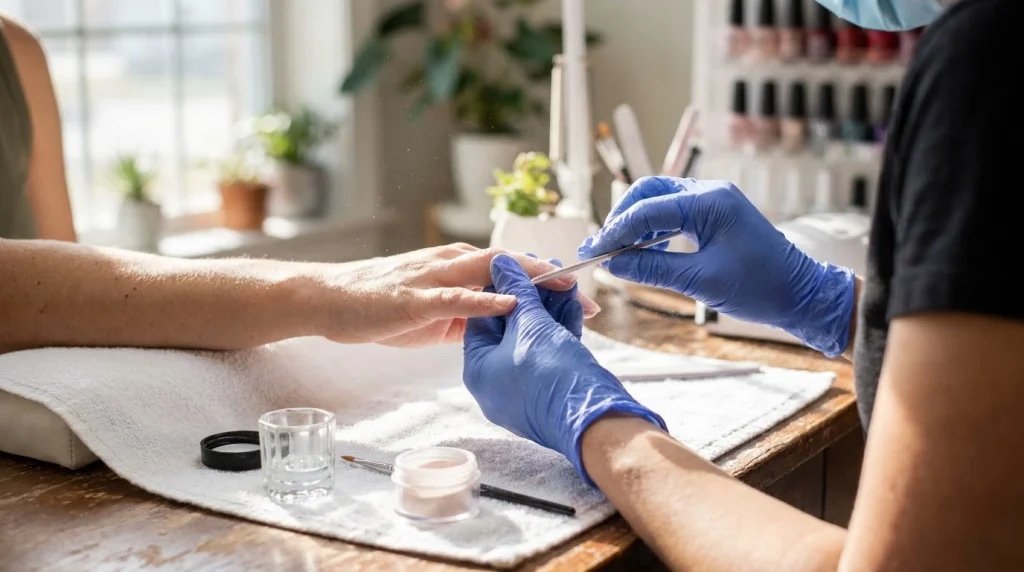
Acrylic enhancements are made by combining liquid monomer with polymer powder. The mixture hardens into a durable coating over your natural nail or an artificial tip.
The hardened material isn’t necessarily harmful simply because it covers your nail. Problems often develop during preparation, application, everyday wear, maintenance, and removal.
1. Excessive Filing Makes Your Nails Thinner
Before applying acrylics, nail technicians usually prepare the nail surface to help the product adhere.
Gentle preparation may be appropriate, but aggressive filing or repeated electric-drill passes can remove too many layers from your natural nail plate.
When your nails become thinner, they may:
- Bend more easily under everyday pressure.
- Split or peel near the tips.
- Feel tender after removing extensions.
- Break before reaching your preferred length.
- Develop rough or uneven surfaces.
Important: Filing away natural nail layers isn’t the same as simply removing surface shine. Once those layers are lost, they cannot be instantly restored with oil, polish, or nail hardener.
2. Nail Chemicals Can Irritate Your Skin
Acrylic systems contain chemical ingredients that require careful handling. Certain acrylates and methacrylates can trigger allergic contact dermatitis in susceptible individuals.
If uncured product touches your surrounding skin, you may experience itching, redness, swelling, or small blisters. Repeated exposure can contribute to sensitization.
Some nail adhesives can also cause reactions. Interestingly, an allergy may sometimes appear on other areas you touch, including your eyelids or face.
Choose a technician who avoids getting uncured product on your skin and follows the manufacturer’s application instructions.
3. Long Extensions Increase Physical Stress
Long acrylic nails act like tiny levers attached to your natural nail plates.
When an extension catches on clothing, a drawer, or a car door, the force transfers to the natural nail underneath.
That pressure may cause cracking, lifting, or painful separation from the nail bed.
Very long extensions can make ordinary activities surprisingly risky, especially if your natural nails are already thin.
4. Improper Removal Can Strip Away Nail Layers
One of the most preventable causes of acrylic nail damage is forceful removal.
Peeling, prying, or pulling off an extension can take pieces of your natural nail plate with it.
Excessive drilling during removal can create similar problems. Meanwhile, prolonged or repeated acetone exposure may leave your nails and surrounding skin temporarily dry.
Acetone isn’t automatically unsafe when used correctly. The important distinction is whether the removal method matches the specific enhancement system.
For more information about solvent-related dryness, explore our guide to how acetone and cleaning products affect dry nails.
5. Lifted Extensions Can Trap Moisture
As your nails grow, extensions may start lifting away from the natural nail plate.
Water and debris can enter the space underneath a lifted enhancement. This environment may contribute to bacterial or fungal problems.
Green discoloration, for example, can sometimes be associated with bacterial colonization. However, color alone cannot confirm a specific diagnosis.
Never seal a visibly lifted or discolored enhancement with additional glue. Have it assessed and properly removed instead.
What Are the Signs of Nail Damage From Acrylics?
Not every change after removing extensions means severe damage. Temporary dryness is different from thinning, infection, or nail-bed separation.
Still, certain symptoms suggest your natural nails need attention.
Thin, Flexible Nails
Your nails may bend with very little pressure or feel unusually sensitive when you touch objects. Excessive filing can contribute to this weakness.
Peeling or Splitting Tips
When layers of your nail plate separate, the tips may develop thin flakes or horizontal splits. Picking at the damaged areas can make peeling worse.
White Patches and Rough Surfaces
Chalky-looking patches may appear after aggressive removal or surface damage. However, white spots can have several causes, so their appearance alone doesn’t prove acrylic damage.
Redness, Itching, or Swelling
These symptoms can suggest irritation, allergy, or infection. Persistent inflammation deserves professional medical evaluation.
Nail Lifting or Unusual Discoloration
If your nail separates from the skin underneath, develops significant discoloration, or produces drainage, stop using enhancements and consult a healthcare professional.
Warning
Severe pain, increasing redness, warmth, swelling, pus, nail-bed separation, or green or dark discoloration shouldn’t be treated as ordinary cosmetic damage. Avoid covering the affected nail with another enhancement and seek medical advice promptly.
Can Acrylic Nails Cause Permanent Nail Damage?
Many cases of acrylic-related nail weakness improve as healthier nail grows from the nail matrix beneath the cuticle area.
However, recovery depends on what was damaged.
Superficial nail-plate thinning generally moves outward as your nail grows. By contrast, serious injuries affecting the nail matrix may sometimes lead to lasting changes in nail growth.
Repeated trauma, untreated infections, or significant inflammation can complicate recovery.
That’s why it’s important not to ignore persistent symptoms or repeatedly cover damaged nails with fresh acrylics.
The reassuring part: Thin nails after one manicure don’t automatically mean permanent damage. Give your nails appropriate care and have concerning changes assessed rather than assuming the worst.
Are Acrylic Nails More Damaging Than Gel Extensions?
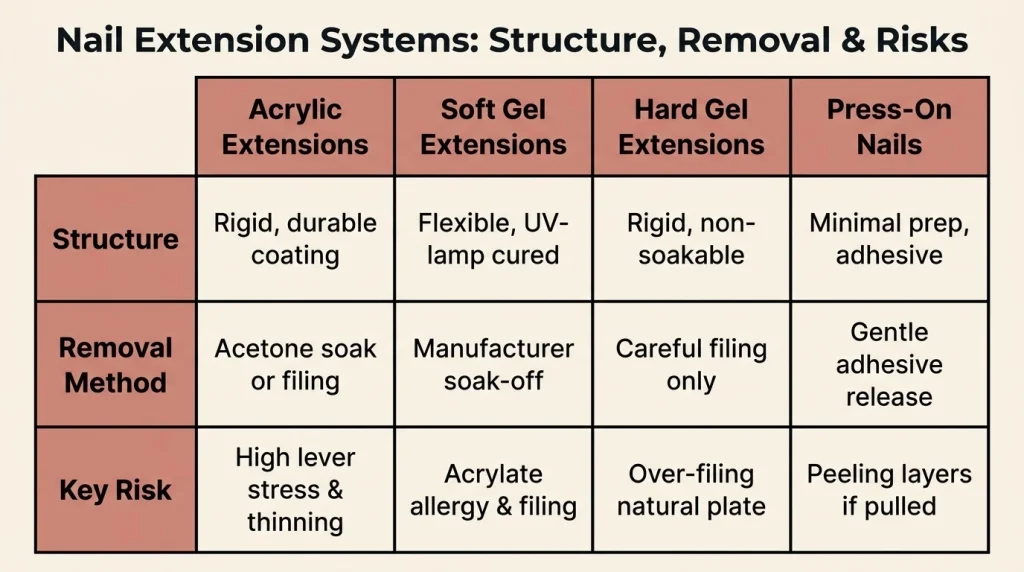
Different enhancement systems have different properties, but none is completely risk-free.
Acrylic Nail Extensions
Acrylics create a rigid, durable coating. Their strength is useful for maintaining longer nail shapes, but that rigidity can increase stress if the extension catches on something.
Preparation, repeated maintenance, and improper removal may contribute to thinning and brittleness.
Soft Gel Extensions
Some soft gel systems offer more flexibility and can be removed through a manufacturer-approved soak-off process.
However, they still carry risks involving filing, acrylate allergies, and removal damage.
Gel systems also require curing with a compatible lamp that emits ultraviolet radiation.
Hard Gel Extensions
Hard gel generally cannot be removed simply by soaking in acetone. It typically requires careful filing by someone familiar with the product.
Aggressive filing can damage the natural nail underneath.
Press-On Nails
Press-ons may involve less extensive preparation, depending on the application method.
Nevertheless, strong adhesives, rough removal, or repeated picking can still peel away natural nail layers.
Which is safer? The best choice depends on your nail condition, the specific product, proper application, and gentle removal. A well-applied enhancement isn’t a guarantee against damage, and even a temporary press-on can cause problems if forcibly removed.
How Can You Prevent Nail Damage While Wearing Acrylics?
You don’t necessarily have to abandon nail extensions to improve your nail-care habits. Start by changing how you choose, wear, and maintain them.
1. Choose an Experienced Nail Technician
Ask how the salon prepares natural nails, cleans reusable tools, and handles product removal.
Your technician should explain the products being used and avoid unnecessarily aggressive filing.
Clean equipment, appropriate ventilation, and proper hygiene are essential parts of a responsible nail service.
2. Keep Your Extensions at a Practical Length
Shorter extensions generally experience less leverage during accidental bumps.
If you type frequently, work with your hands, or regularly lift objects, choose a length that doesn’t interfere with everyday tasks.
You can still enjoy almond, oval, square, or other attractive shapes without selecting extreme length.
3. Protect Your Cuticles
Your cuticles help seal the area between your nail plate and surrounding skin.
Cutting or aggressively pushing them back can interfere with this protective barrier.
Ask your technician to avoid cutting healthy cuticle tissue or causing breaks in the skin.
4. Maintain Extensions Before They Become Unstable
Acrylic maintenance appointments are commonly scheduled around every two to three weeks, although your exact needs depend on nail growth and the enhancement system.
Don’t wait for significant lifting, cracking, or discomfort.
If an extension is already separating, ask a qualified technician to assess it instead of sealing the gap at home.
5. Avoid Using Your Nails as Tools
Use your fingertips or an appropriate tool to open cans, lift stickers, and handle packaging.
When cleaning or washing dishes, wear suitable protective gloves to reduce repeated water and detergent exposure.
If your nails already feel fragile, learn how to protect, file, and trim weak nails safely.
Pro Tip
Take a clear photograph of your natural nails before a new acrylic set. Compare their appearance after professional removal. This can help you notice changes in thickness, texture, or discoloration instead of relying on memory.
What Is the Safest Way to Remove Acrylic Nail Extensions?
The safest removal technique depends on the product attached to your natural nails.
Traditional acrylic systems may be softened with acetone, while certain gel products require filing. Some combinations of enhancements need more than one removal technique.
If you’re unsure which product was applied, professional removal is the safer option.
What Should You Do During Removal?
- Identify the enhancement: Find out whether you’re wearing acrylic, soak-off gel, hard gel, or another system.
- Follow the correct removal procedure: Use the product manufacturer’s instructions or ask an experienced technician.
- Never force attached material: Stop if the coating resists removal rather than scraping or prying it off.
- Protect your surrounding skin: Avoid unnecessary solvent exposure and never apply harsh products to broken or irritated skin.
- Moisturize afterward: Apply a fragrance-free moisturizer to your nails and surrounding skin once removal is complete.
Home electric drills are particularly risky without appropriate training because it’s easy to remove natural nail layers accidentally.
Don’t attempt to remove a painful, infected-looking, or significantly separated nail enhancement using force. Seek professional advice first.
How Can You Repair Weak Nails After Acrylic Removal?
If your nails feel thin or brittle after removing acrylics, your first priority is preventing further damage.
Moisturizers can improve dryness and comfort, but they cannot instantly replace missing nail layers. Structural damage generally needs to grow out.
Keep Your Nails Comfortably Short
Short nails are less likely to catch on objects or bend excessively.
Use clean clippers when necessary and gently smooth rough edges with a fine-grit or glass nail file.
Avoid buffing the entire nail surface just to make it look smoother.
Apply Moisturizer After Handwashing
Frequent handwashing can contribute to dry skin and nails.
Use fragrance-free hand cream after washing and massage a small amount over each nail and cuticle.
If your fingertips feel especially dry, apply a thin layer of petroleum jelly before bed.
For a more detailed routine, see our guide on how to moisturize dry nails effectively.
Take a Break From Nail Enhancements
If your nails are already weak, covering them with another hard enhancement may increase stress and hide problems that need attention.
A short break may help you assess their condition, but severely damaged nails can require much longer to recover.
Wait until your nails are comfortable and visibly healthier before considering another application.
Protect Your Nails During Daily Activities
Wear gloves for household cleaning, avoid picking loose nail layers, and keep your hands moisturized.
These small habits won’t make damaged nail material regenerate overnight. They can, however, reduce additional breakage while new growth develops.
For more detailed guidance, read how to care for weak nails after gel or acrylic removal.
How Long Does It Take for Damaged Nails to Recover?
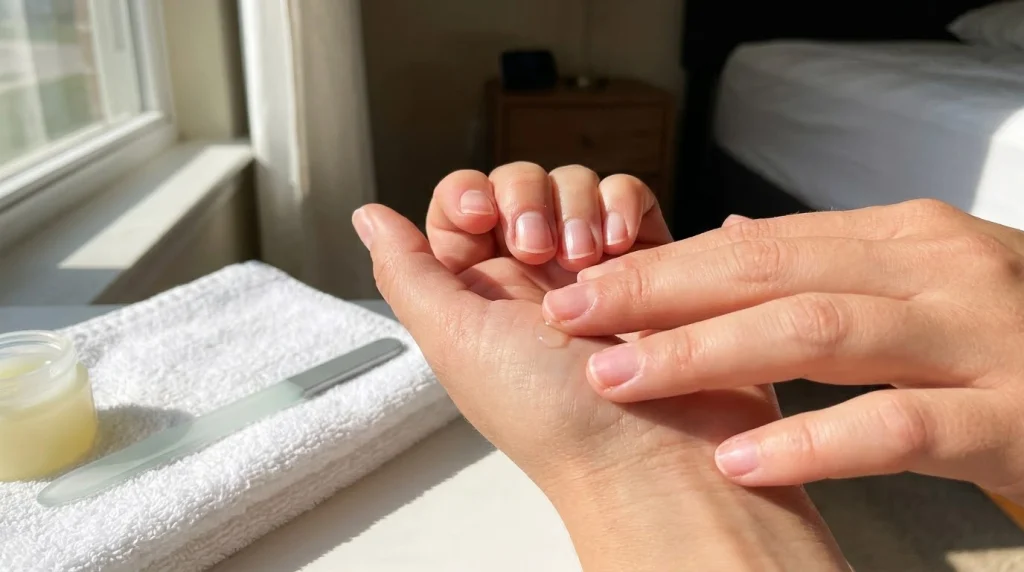
The recovery timeline varies depending on the severity and location of the damage.
During the first one to two weeks, consistent moisturizing and reduced chemical exposure may improve dryness and comfort. This doesn’t mean missing nail layers have already returned.
Over the following weeks, you may notice healthier-looking nail growth emerging near the base. Existing damaged areas gradually move toward the free edge.
Over several months, damaged nail material can be trimmed away as new nail grows. A fingernail commonly takes approximately four to six months to grow from base to tip, although individual rates vary.
If the nail matrix has been injured, recovery can be more complicated.
Explore our weak nail strengthening timeline for more information about realistic expectations.
What Should You Do and Avoid With Damaged Nails?
Do
- Keep damaged nails short.
- Moisturize after washing.
- Use gentle filing techniques.
- Protect hands with gloves.
- Allow healthier nails to grow.
- Seek advice for unusual symptoms.
Don’t
- Peel acrylics off forcefully.
- Buff already thin nails.
- Cut healthy cuticle tissue.
- Glue down lifted extensions.
- Cover possible infections.
- Ignore persistent nail pain.
Which Products Can Help Care for Nails After Acrylics?
You don’t need an expensive nail-repair system to support a gentle recovery routine.
A few everyday products can help with moisture, nail-edge maintenance, and protection.
Affiliate disclosure: As an Amazon Associate, we earn from qualifying purchases. The products below are practical care options, not medical treatments or guaranteed repairs.
Recommended Product
CND SolarOil Nail & Cuticle Care
A nail and cuticle oil can help condition dry surrounding skin and improve the feel of brittle nail surfaces. Massage a small amount around your nails as part of your daily routine.
Best for: Dry cuticles and everyday nail conditioning.
Recommended Product
Vaseline Original Petroleum Jelly
Petroleum jelly helps reduce moisture loss from dry skin. Apply a thin layer around your nails before bed, particularly after using a hand moisturizer.
Best for: Dry fingertips and cuticle conditioning.
Recommended Product
OPI Crystal Nail File
A smooth glass-style nail file can help you gently tidy rough edges without aggressively scraping the top of your nail plate.
Best for: Maintaining short natural nails during recovery.
When Should You See a Dermatologist About Nail Damage?
Mild cosmetic weakness can often be managed with gentle nail care, but some symptoms need professional evaluation.
Contact a healthcare professional if you notice:
- Persistent or worsening pain.
- Swelling, warmth, or spreading redness.
- Pus, drainage, or an unpleasant odor.
- Green, brown, or unexplained dark discoloration.
- Significant separation of the nail from its bed.
- Repeated itching, blistering, or suspected product allergy.
- Nail changes that fail to improve or affect new growth.
A dermatologist can assess whether your symptoms relate to mechanical damage, allergy, infection, or another nail condition.
Avoid applying another enhancement to conceal symptoms before the cause has been evaluated.
Frequently Asked Questions
Q: Do acrylic nails always damage your natural nails?
A: No. Acrylic nails don’t automatically cause noticeable damage in everyone. However, excessive filing, repeated maintenance, improper removal, and accidental trauma can weaken natural nails. Proper application and removal help reduce these risks.
Q: Can nails grow back healthy after acrylic damage?
A: Often, yes. If the nail-producing matrix remains healthy, new nail can grow normally while the damaged portion moves outward. Severe injuries affecting the matrix may cause longer-lasting changes.
Q: Should you take breaks between acrylic nail sets?
A: Breaks are especially helpful when your nails become thin, painful, or brittle. Nails don’t need to breathe, but time without enhancements allows you to inspect and care for them while avoiding additional cosmetic stress.
Q: Is cuticle oil enough to repair damaged nails?
A: No. Cuticle oil helps condition dry skin and nail surfaces, but it cannot rebuild missing nail layers. Protecting your nails and allowing healthier growth are more important for structural recovery.
Q: Are gel extensions safer than acrylic nails?
A: Some gel extensions are more flexible than traditional acrylics, but both can cause problems when applied or removed incorrectly. Product allergies, filing damage, and maintenance habits all influence safety.
Protect Your Natural Nails Without Giving Up Beautiful Manicures
Understanding how acrylics and nail extensions can damage nails helps you make smarter manicure decisions.
Choose careful application, avoid forceful removal, protect your cuticles, and give damaged nails time to grow out. Beautiful nail designs should never require ignoring pain, irritation, or visible damage.
Save this guide on Pinterest so you’ll have these nail-protection tips ready before your next salon appointment.

Hi, I’m Jessica, the creator behind Unique Lash & Nails Katy.
I created this website for anyone who loves beautiful nails as much as I do. Here, I share trendy nail designs, seasonal manicure ideas, easy nail care tips, honest product recommendations, and step-by-step guides to help you create salon-worthy nails at home. Whether you’re looking for everyday inspiration or your next favorite nail trend, I hope you’ll find something you love.