How to Fix and Moisturize Dry Nails: Easy Care Tips
Quick Answer
To fix and moisturize dry nails, keep them short, apply fragrance-free hand cream after washing, massage cuticle oil around each nail, and seal very dry areas with petroleum jelly before bed. Wear protective gloves for wet chores, avoid picking or peeling nail products, and let damaged nail layers grow out. Repeat these habits daily for healthier-looking nails.
Dry nails can be frustrating, especially when your favorite manicure starts peeling or your nail tips break before they have a chance to grow.
The good news? You don’t need an expensive salon treatment or a drawer full of nail products. A few gentle habits can help your nails feel better and reduce preventable breakage.
Here’s how to fix and moisturize dry nails, understand what’s causing the problem, and build a simple recovery routine that actually fits your day.


Why Do Your Nails Become Dry and Brittle?
Before you try to fix dry nails, it helps to understand what causes them. Your visible nail plate is made primarily of keratin, a tough protein that forms protective layers.
Although nails are naturally firm, they still need some flexibility. Repeated exposure to water, chemicals, friction, and harsh manicure techniques can affect their condition.
1. Frequent Handwashing and Water Exposure
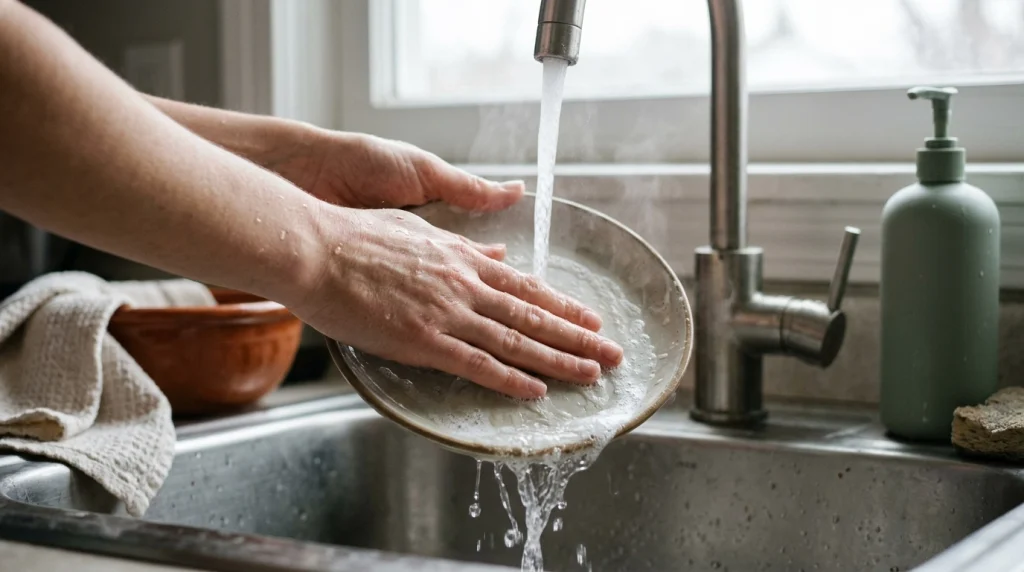
Washing your hands is important, but repeated wetting and drying can contribute to brittle nails. Your nail plate absorbs water and then releases it, which creates repeated changes in its structure.
If you wash dishes, clean regularly, or work with water throughout the day, your nails may experience more wear than you realize.
What helps: Apply moisturizer after washing and wear protective gloves during prolonged wet work.
2. Harsh Nail Polish Removers
Frequent polish removal can leave your nails feeling rough and dry. Acetone is particularly effective at removing polish, but repeated exposure can also remove oils from the nail area.
Non-acetone removers aren’t automatically harmless. Excessive rubbing and repeated applications can still contribute to dryness.
What helps: Remove polish only when necessary, avoid aggressive scrubbing, and moisturize immediately afterward.
3. Gel, Acrylic, and Dip Manicures
Artificial nail treatments aren’t always damaging when applied and removed properly. Problems often happen when you peel off the product, aggressively buff the natural nail, or repeatedly undergo harsh removal procedures.
These habits can remove superficial nail layers and leave your nails looking thin, flaky, or uneven.
If your natural nails feel especially fragile after extensions, consider giving them time to recover before your next application.
4. Cold Weather and Dry Indoor Air
Winter weather and heated indoor environments can make the skin around your nails feel tight, rough, and uncomfortable.
Even when the nail plate looks normal, dry cuticles and cracked surrounding skin can make your entire manicure appear unhealthy.
You can learn more about seasonal protection in our guide to protecting your nails from dry air.
5. Everyday Nail Damage
Using your fingernails to scrape labels, open packages, or remove stubborn stickers creates unnecessary stress.
Nail biting, picking at peeling tips, and aggressive filing can also cause small cracks to become bigger splits.
6. Underlying Health Conditions
Sometimes persistent nail brittleness is associated with conditions such as iron deficiency, thyroid disorders, eczema, or psoriasis.
If nail changes appear suddenly, affect several nails, or continue despite gentle care, a healthcare professional can help identify the cause.
How Can You Tell If Your Nails Are Too Dry?
Dry nails don’t always look the same. Some become rough and rigid, while others begin peeling at the tips.
Common signs include:
- Peeling tips: Thin layers separate near the free edge of your nails.
- Frequent splitting: Nails crack during ordinary activities.
- Rough texture: The surface or edges feel uneven.
- Dry cuticles: Skin around the nail base feels tight or flaky.
- Repeated breakage: Nails snap before reaching your preferred length.
- Hangnails: Small pieces of surrounding skin become loose and catch on clothing.
These signs can occur for several reasons, so they don’t prove that dehydration is the only problem.
Warning
Pain, swelling, warmth, unusual discoloration, nail separation, or a new dark streak should not be treated as ordinary dryness. Seek medical advice, particularly when symptoms persist or worsen.
How Do You Fix and Moisturize Dry Nails at Home?
The most useful approach combines moisturizing with protection. Applying oil alone won’t solve the problem if your nails are repeatedly exposed to harsh chemicals or physical damage.
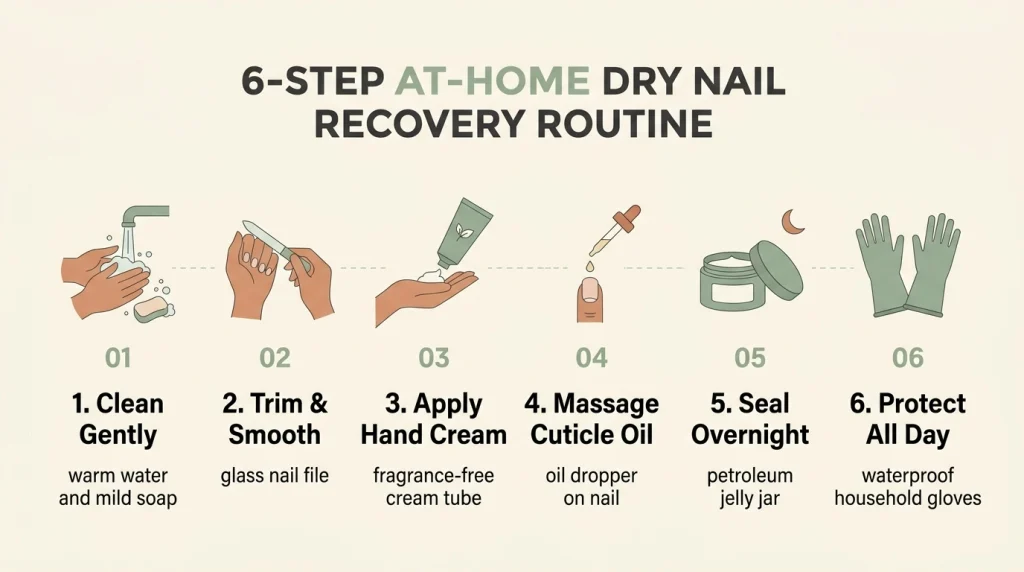
Follow these six steps to create a practical nail recovery routine.
Your Dry Nail Care Checklist
- Daily active care: About 5-10 minutes
- Difficulty: Beginner
- Essential items: Hand cream, cuticle oil, petroleum jelly, nail file
- Maintenance: Repeat moisturizing every day
- Recovery: Damaged nail sections gradually grow out over several months
Step 1: Clean Your Nails Gently
Start by washing your hands with a mild cleanser and comfortably warm water. Remove visible dirt without aggressively scraping beneath your nails.
Pat your hands dry with a soft towel, paying attention to the spaces around your fingertips.
Common mistake: Using very hot water and harsh soap repeatedly can make already-dry skin feel more uncomfortable.
Step 2: Trim and Smooth Fragile Nail Tips
Keep your nails at a manageable length while they’re brittle. Shorter nails are less likely to catch on clothing or break during everyday tasks.
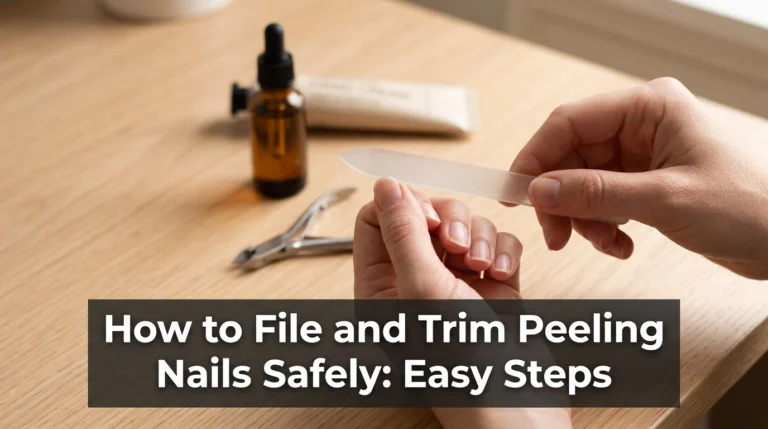
Use clean nail clippers and a fine-grit or glass nail file to smooth rough edges. Follow your natural nail shape and avoid excessive filing.
Common mistake: Pulling away peeling nail layers can extend damage farther into the nail plate.
Step 3: Apply Moisturizing Hand Cream
Choose a fragrance-free hand cream containing moisturizing ingredients such as glycerin, petrolatum, or ceramides.
Massage a small amount over your hands, nail plates, and surrounding skin. Reapply after washing instead of waiting until your hands feel extremely dry.
Common mistake: Applying cream only to your palms while forgetting your nails and fingertips.
Step 4: Massage Cuticle Oil Around Each Nail
Use a small drop of cuticle oil on each nail area, then massage it gently into the surrounding skin.
Jojoba-based cuticle oils are a convenient option, but you don’t need an expensive formula. A simple, well-tolerated moisturizing oil can work as part of your routine.
Apply oil once daily or whenever your cuticles feel particularly rough.
Common mistake: Assuming that extra oil can instantly repair a nail layer that has already split.
Step 5: Seal Very Dry Areas Before Bed
Before sleeping, apply your usual moisturizer and follow with a thin layer of plain petroleum jelly around the nail folds and cuticles.
Petroleum jelly helps reduce moisture loss from the skin, making it especially useful when your fingertips become dry overnight.
If you prefer, wear clean, comfortable cotton gloves after applying your moisturizer.
Common mistake: Applying an excessively thick layer that feels greasy and discourages you from repeating the routine.
Step 6: Protect Your Nails Throughout the Day
Wear waterproof household gloves when washing dishes or working with cleaning products. If your hands become sweaty inside them, use a comfortable cotton lining and take breaks when appropriate.
Avoid scraping, picking, or using your nails as tools. These small changes reduce unnecessary stress on fragile tips.
Common mistake: Moisturizing carefully at night while exposing your unprotected nails to detergents all day.
What Is the Best Moisturizer for Dry Nails?
The best product depends on whether your main concern is dry skin around the nails, rough cuticles, or brittle nail tips.
You don’t need every product in this section. Start with one reliable moisturizer and add something else only if your routine needs it.
1. Fragrance-Free Hand Cream for Daily Care
A gentle hand cream is the best starting point for most people. Ingredients such as glycerin attract water, while protective ingredients help limit moisture loss.
Look for a formula that feels comfortable enough to reapply throughout the day.
Recommended Product Type
Fragrance-Free Moisturizing Hand Cream
A practical everyday choice for moisturizing your nails, fingertips, and surrounding skin after handwashing.
As an Amazon Associate, we earn from qualifying purchases.
2. Cuticle Oil for Rough Nail Edges
Cuticle oil is useful when the skin surrounding your nails feels rough, tight, or flaky.
Choose a simple formula and massage a small amount around the nail base. If your skin is sensitive, avoid heavily fragranced blends.
Recommended Product Type
Jojoba-Based Cuticle Oil
A convenient option for softening the skin around your nails and maintaining a comfortable cuticle care routine.
As an Amazon Associate, we earn from qualifying purchases.
3. Petroleum Jelly for Extra Dry Cuticles
Plain petroleum jelly is affordable, simple, and helpful for protecting very dry skin around your nails.
It’s especially convenient at bedtime because you don’t need to worry about applying another product immediately afterward.
Recommended Product Type
Plain Petroleum Jelly
An inexpensive protective ointment that helps reduce moisture loss from dry cuticles and surrounding skin.
Explore Petroleum Jelly on Amazon
As an Amazon Associate, we earn from qualifying purchases.
If you want to understand how different moisturizers compare, our guide on the healthiest things to put on nails explains everyday product choices in more detail.
Can Natural Oils Help Dry Nails?
Natural oils can be useful for conditioning the skin around your nails, but they aren’t miracle treatments.
Jojoba oil: A lightweight option commonly found in cuticle treatments. It’s convenient for daily massage and generally leaves less residue than heavier products.
Coconut oil: May help soften dry surrounding skin, although it doesn’t have strong evidence as a treatment for damaged nail plates.
Olive oil: Can work as a basic skin-conditioning oil, but it isn’t necessary to soak your nails in it for long periods.
Choose a product that your skin tolerates well. Stop using anything that causes itching, redness, or irritation.
Pro Tip
Keep a small tube of fragrance-free hand cream beside your sink or in your bag. Making moisturizer easy to reach can be more useful than buying a complicated treatment you rarely use.
How Long Does It Take to Repair Dry Nails?
The answer depends on the type of damage you’re dealing with.
Dry cuticles may feel softer shortly after applying moisturizer. Rough skin often becomes more comfortable with regular care, although the timing varies.
Peeling, splitting, or thinning of the nail plate is different. The visible nail is not living tissue that can rebuild itself immediately.
Damaged sections gradually move toward the tip as new nail grows from the base. A fingernail may take roughly four to six months to grow out completely, depending on the person.
That means you can improve your everyday nail care now, but you shouldn’t expect every existing split to disappear in a few days.
Focus on preventing new damage rather than trying to instantly reverse old damage.
What Daily Routine Keeps Nails Moisturized?
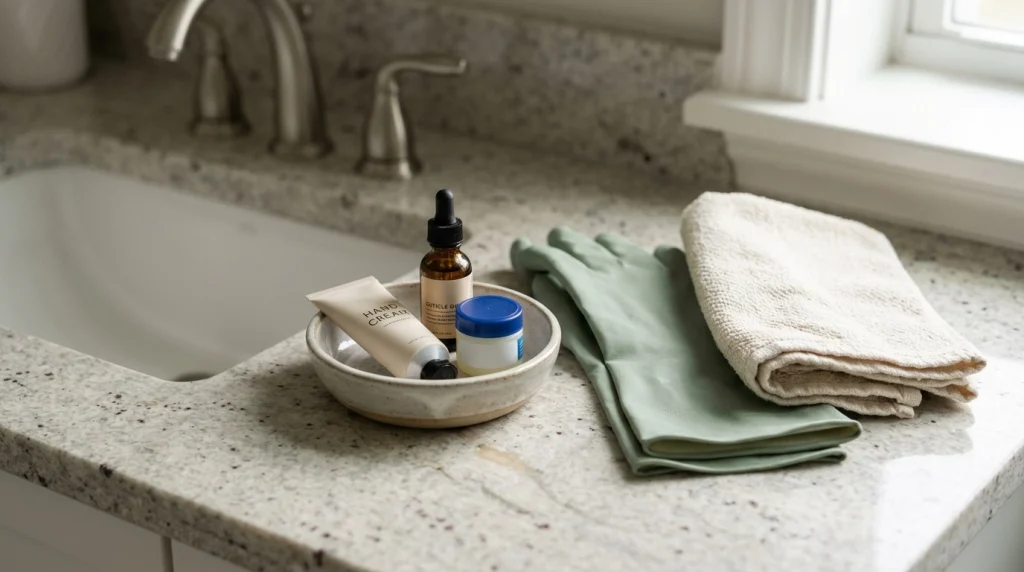
A simple schedule makes nail care easier to maintain. Instead of performing an intensive manicure every day, connect moisturizing to habits you already have.
Morning: Moisturize and Protect
- Apply fragrance-free hand cream after washing.
- Massage a small amount over your nail plates and fingertips.
- Carry a travel-size moisturizer if you wash your hands frequently.
- Use protective gloves before cleaning or washing dishes.
During the Day: Prevent Repeated Damage
- Reapply moisturizer when your hands become dry.
- Avoid picking at peeling nail tips.
- Use tools instead of your fingernails to open packaging.
- Keep damaged edges from catching on clothing.
Before Bed: Add Extra Moisture
- Clean and gently dry your hands.
- Apply your usual moisturizer.
- Massage cuticle oil around rough nail edges.
- Add a thin layer of petroleum jelly to especially dry areas.
For more general maintenance ideas, explore our simple nail care routine for healthy nails.
What Should You Do and Avoid With Dry Nails?
Do
- Moisturize after washing.
- Keep nails comfortably short.
- Use a gentle nail file.
- Protect hands during wet chores.
- Leave healthy cuticles intact.
- Allow damaged nails to grow out.
Don’t
- Peel away gel polish.
- Pick at splitting nail layers.
- Overbuff fragile nails.
- Use nails as household tools.
- Cut living skin around the nail.
- Rely on supplements without medical advice.
Why Are Your Nails Still Dry After Moisturizing?
If you’re applying cream every day but your nails continue peeling or breaking, check for problems that moisturizer alone cannot solve.
Problem: Your nail tips keep peeling.
Immediate fix: Carefully smooth loose edges without pulling away attached layers. Prevention: Keep nails shorter, limit repeated wetting, and avoid aggressive polish removal.
Problem: Your cuticles remain rough.
Immediate fix: Apply fragrance-free cream and a thin protective ointment. Prevention: Reapply moisturizer after washing and avoid pulling at hangnails.
Problem: Your nails break after every manicure.
Immediate fix: Reduce mechanical stress and consider a break from cosmetic treatments. Prevention: Choose gentle application and removal methods without excessive buffing.
Problem: Your nails stay brittle despite gentle care.
Immediate fix: Review potential irritants and protect fragile nails. Next step: If the problem persists, consult a healthcare professional to assess possible underlying causes.
Should You Use Nail Hardeners or Supplements?
When your nails break easily, stronger-sounding products can seem like the obvious solution. However, harder nails aren’t necessarily healthier nails.
Some nail hardeners, particularly formulations containing formaldehyde, can increase brittleness or irritate surrounding skin. If dryness is your main concern, start with moisture, gentle grooming, and protection.
Biotin supplements are also commonly marketed for weak nails, but evidence supporting routine use is limited. High-dose biotin can interfere with important laboratory tests.
If you suspect a nutritional deficiency, speak with a healthcare professional before starting supplements. A balanced diet is generally a better foundation than guessing which vitamin your nails need.
When Should You See a Dermatologist?
Most everyday nail dryness can be managed with gentle care, but some symptoms need professional evaluation.
Arrange medical advice if you notice:
- Persistent pain or swelling around your nails.
- Red, hot, or tender skin around the nail folds.
- Nails separating from the nail bed without a clear reason.
- New or unexplained changes in nail color or shape.
- A new or changing dark streak in a nail.
- Persistent brittleness despite several weeks of protective care.
These changes don’t always indicate something serious, but identifying the actual cause is more useful than repeatedly applying cosmetic treatments.
Frequently Asked Questions About Dry Nails
Q: Can you fix extremely dry nails overnight?
A: You can make dry cuticles feel more comfortable overnight with moisturizer and petroleum jelly. However, existing splits and damaged nail layers cannot be fully repaired overnight. Those areas need time to grow out.
Q: Is Vaseline good for dry nails?
A: Plain petroleum jelly can help protect dry skin around your nails by reducing moisture loss. Apply a thin layer after hand cream, especially before bed.
Q: How often should you moisturize your nails?
A: Apply hand cream to your nails and fingertips after washing and whenever your hands feel dry. You can add cuticle oil once daily if the surrounding skin needs extra conditioning.
Q: Does drinking more water fix brittle nails?
A: Staying adequately hydrated supports overall health, but drinking extra water isn’t a proven treatment for ordinary brittle nails. Protecting your nails from repeated water exposure and damage is usually more relevant.
Q: Should you stop wearing nail polish when your nails are dry?
A: If your nails are peeling, thinning, or repeatedly breaking, taking a break from polish and artificial enhancements can reduce additional exposure to removal procedures. Moisturize your bare nails while damaged sections grow out.
Final Thoughts on Fixing and Moisturizing Dry Nails
Learning how to fix and moisturize dry nails starts with simple, consistent habits. Keep your nails gently shaped, moisturize after washing, protect your hands during wet chores, and avoid damaging manicure techniques.
For more ideas about maintaining fragile nails, read our guide to moisturizing and cuticle care for weak nails.
Save this guide to your Pinterest nail care board so you can return to your easy daily routine whenever your nails need extra attention.

Hi, I’m Jessica, the creator behind Unique Lash & Nails Katy.
I created this website for anyone who loves beautiful nails as much as I do. Here, I share trendy nail designs, seasonal manicure ideas, easy nail care tips, honest product recommendations, and step-by-step guides to help you create salon-worthy nails at home. Whether you’re looking for everyday inspiration or your next favorite nail trend, I hope you’ll find something you love.