How Long Does It Take to Improve Brittle Nails? Tips
Quick Answer
Brittle nails may feel less dry and become easier to manage within 1–2 weeks of consistent care. However, noticeable improvement in nail strength generally takes several weeks to a few months. Since fingernails grow approximately 3 millimeters per month, replacing a damaged fingernail can take about 4–6 months. Your timeline depends on the cause of brittleness, nail growth, and how consistently you protect your nails.
If your nails keep peeling, splitting, or snapping just as they start to grow, you’re probably wondering when they’ll finally become stronger. The encouraging part is that everyday habits can make a meaningful difference, although damaged nail tissue cannot repair itself overnight.
Understanding how long it takes to improve brittle nails helps you set realistic expectations. Here’s what you can expect during the coming weeks and months, which routines are worth following, and when persistent nail damage deserves professional attention.


How Long Does It Really Take for Brittle Nails to Improve?
The answer depends on whether you’re trying to make your existing nails more comfortable and protected or waiting for healthier nails to grow in.
Your fingernails are made primarily of keratin. Once the nail plate forms, it consists of nonliving cells. This means damage such as splitting, thinning, and peeling cannot truly heal in the same way your skin does.
Instead, improvement happens through two processes: protecting the existing nail plate from additional damage and allowing healthier new nail growth to replace the weakened portions.
Typical Brittle Nail Improvement Timeline
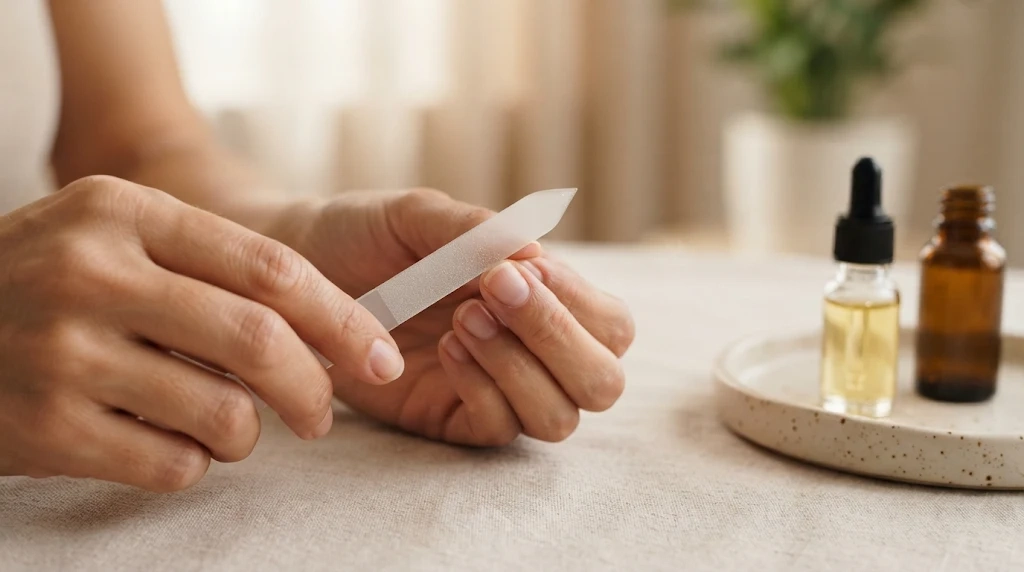
Week 1–2: Early Protection
Your nails and surrounding skin may feel less dry after consistent moisturizing. Keeping your nails short and reducing exposure to detergents may also prevent some new breaks. Existing splits will still be present.
Weeks 3–4: Fewer New Breaks
If everyday exposure was the main cause, you may begin noticing fewer snags and less peeling. However, results vary. Severe brittleness or an underlying medical condition can take longer to address.
Months 2–3: Visible New Growth
Healthier nail growth may become more noticeable near the cuticle. The older, weaker portions are gradually moving toward the tips, where you can trim them away.
Months 4–6: Substantial Replacement
Many fingernails can grow out completely during this period. If you’ve corrected the cause of brittleness, much of the previously damaged nail may have been replaced by healthier growth.
These periods are practical estimates rather than guaranteed results. If you have a nutritional deficiency, skin condition, thyroid disorder, or recurring nail trauma, your recovery may require specific treatment.
Why Do Brittle Nails Take So Long to Recover?
Your nails grow much more slowly than your skin renews itself. A typical fingernail grows around 3 millimeters each month, although age, health, injury, and individual differences can affect that rate.
New nail cells form in the nail matrix, which sits beneath the skin near the base of your nail. As these cells move forward, they harden into the visible nail plate.
This matters because applying oil or cream to a split nail can reduce dryness and friction, but it cannot permanently join the damaged layers back together.
Imagine a split near the end of your thumbnail. Even if you start a perfect nail care routine today, that split remains in the existing nail until it grows far enough to trim away.
That’s why you’ll want to measure progress by fewer new splits and healthier growth near the cuticle rather than expecting every old ridge or damaged tip to disappear immediately.
What Causes Brittle Nails in the First Place?
Before choosing a treatment, consider what is weakening your nails. The cause often determines how quickly you can make progress.
1. Frequent Water and Detergent Exposure
Repeated wetting and drying can stress your nail plate. Washing dishes, cleaning without gloves, and regularly handling strong detergents can contribute to peeling or splitting.
If this sounds familiar, protecting your nails during household chores is one of the simplest changes you can make.
2. Gel, Acrylic, and Aggressive Manicures
Frequent filing, buffing, scraping, and improper removal of nail enhancements can thin or damage your natural nail plate.
Peeling off gel polish is particularly problematic because layers of your natural nail can come away with the coating.
If your nails became brittle after repeated manicures, consider reducing cosmetic treatments while damaged areas grow out.
3. Harsh Nail Products
Frequent use of nail polish removers and certain nail hardeners can contribute to irritation or brittleness.
Products containing formaldehyde deserve particular caution because they can make nails excessively rigid and more likely to break.
4. Nutritional Deficiencies
Low iron levels and certain other nutritional deficiencies can affect nail health. However, brittle nails alone do not prove that you’re missing a particular nutrient.
Taking supplements without identifying a deficiency may offer no benefit and can create unnecessary risks.
5. Skin Conditions and Health Problems
Psoriasis, eczema, fungal infections, and some thyroid conditions may contribute to nail changes. Aging and inherited nail characteristics can also play a role.
When brittleness comes from an underlying condition, improving the nails often depends on managing that condition first.
What Is the Best Daily Routine for Improving Brittle Nails?
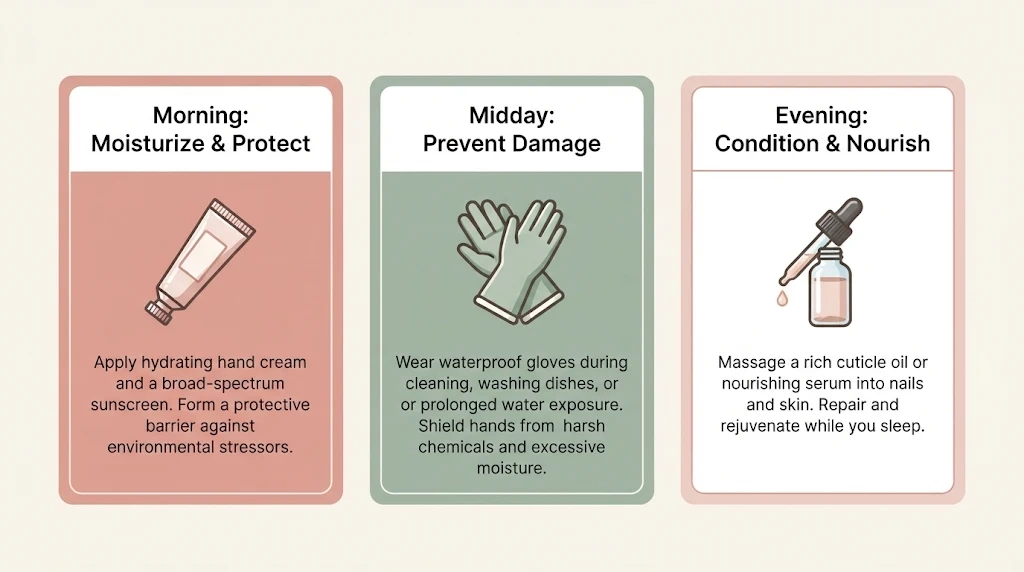
You don’t need an elaborate collection of products to start protecting brittle nails. A simple routine you can repeat every day is usually easier to maintain.
Focus on reducing damage, maintaining nail flexibility, and allowing new nail growth to develop without repeated trauma.
Morning: Moisturize and Protect
After washing your hands, apply hand cream to the nails, surrounding skin, and cuticles. Look for ingredients such as glycerin, petrolatum, or other effective moisturizers.
Pay extra attention to areas that feel dry or rough. Reapply moisturizer whenever repeated handwashing leaves your hands dry.
During the Day: Prevent Repeated Damage
Wear protective gloves when washing dishes or cleaning. If prolonged wet work irritates your hands, cotton liners underneath protective gloves may help.
Avoid using your nails to scrape labels, open containers, or pry objects apart.
Evening: Condition Your Nails
Massage a small amount of moisturizing cream or cuticle oil around your nails before bed. The goal is to support flexibility and reduce dryness, not to force faster nail growth.
Keep your nails at a manageable length and gently smooth rough edges with a fine nail file.
Which Methods Can Help Brittle Nails Become Stronger?
Different methods address different causes of brittleness. Some protect the existing nail plate, while others support healthier growth over time.
Method 1: Moisturize Your Nails Consistently
Best for: Nails that feel dry, rough, or prone to splitting after frequent washing.
Choose a moisturizing hand cream containing glycerin or petrolatum. Apply it after handwashing and before bedtime, covering your nails as well as your skin.
For additional protection, you can apply a thin layer of petroleum jelly over dry nails at night.
Benefits: Moisturizing can improve comfort, help maintain flexibility, and reduce some environmental stress on your nails.
Limitations: It won’t reverse severe structural damage or correct a medical cause of brittleness.
Method 2: Use Cuticle Oil as Part of Your Routine
Best for: Dry cuticles and nails exposed to frequent cosmetic treatments.
Jojoba-based cuticle oils are a convenient option. Massage a small drop around each nail once or twice daily.
Oil helps condition the nail surface and surrounding skin, but there’s no strong evidence that ordinary cuticle oil dramatically increases nail growth speed.
Recommended Nail Care Product
Jojoba-Based Cuticle Oil
A simple conditioning product for keeping your cuticles comfortable and reducing surface dryness.
As an Amazon Associate, we earn from qualifying purchases.
Method 3: Keep Your Nails Short While They Recover
Best for: Nails that repeatedly snap, snag, or split at the tips.
Shorter nails experience less leverage during everyday activities, which can make accidental breaks less likely.
Trim carefully and smooth the edges with a fine-grit file. Avoid aggressive side filing or cutting deeply into the corners.
Benefits: This gives weakened nails a better chance to grow without repeated damage.
Limitations: Keeping nails short protects them but doesn’t directly change their biological growth rate.
Method 4: Protect Your Nails During Wet Work
Best for: People who frequently wash dishes, clean, or work with water and detergents.
Use well-fitting protective gloves for wet chores, and remove them when the task is complete. Dry your hands thoroughly afterward.
Don’t leave damp gloves on for extended periods, particularly if you’re prone to irritated skin.
Recommended Nail Protection Product
Reusable Household Cleaning Gloves
Protective gloves help limit repeated water and detergent exposure, making them a practical addition to your daily nail care routine.
As an Amazon Associate, we earn from qualifying purchases.
Method 5: Adjust Your Diet When Necessary
Best for: Supporting normal nail growth through adequate nutrition.
Eat a balanced diet that includes appropriate amounts of protein, iron, zinc, and other essential nutrients.
Foods such as eggs, beans, lentils, fish, and leafy vegetables can contribute to a varied diet.
If you have a restricted diet, unexplained fatigue, or persistent nail problems, ask a healthcare professional whether nutritional testing is appropriate.
Limitations: Extra vitamins won’t necessarily strengthen your nails if your nutrient intake is already adequate.
Can a Nail Strengthener Speed Up Recovery?
Nail strengtheners can be tempting when your nails are peeling or bending. However, the word “strengthening” doesn’t always mean a product will improve long-term nail health.
Some formulations temporarily create a protective coating, while others make nails harder and more rigid. Excessive rigidity may actually encourage cracking.
Avoid formaldehyde-containing nail hardeners, especially when you’re already dealing with brittle nails.
If you choose a nail treatment, look for a gentle, formaldehyde-free formula and follow its directions. Stop using it if you develop irritation, discoloration, or worsening breakage.
Pro Tip
Instead of judging a nail treatment by how hard your nails feel immediately after application, watch whether they actually split or break less frequently over several weeks.
Do You Need Biotin Supplements for Brittle Nails?
Biotin is often advertised as a solution for weak nails, but the evidence supporting routine supplementation is limited.
Some small studies have reported improvements in people with brittle nails. However, stronger research is needed to establish who benefits and how consistently.
Importantly, high-dose biotin can interfere with certain laboratory tests, including thyroid tests and tests used to assess heart attacks.
Before taking a high-dose supplement, speak with a healthcare professional. Tell your medical team about any biotin you already use, particularly before blood testing.
Important Safety Note
Don’t assume that brittle nails automatically mean you have a biotin or iron deficiency. Taking unnecessary supplements can delay proper diagnosis and, in some cases, cause harm.
What Should You Do and Avoid While Your Nails Recover?
Do
- Moisturize nails after washing.
- Wear gloves for wet chores.
- Keep damaged nails short.
- Use a gentle nail file.
- Protect your cuticles.
- Eat a varied, balanced diet.
Don’t
- Peel off gel polish.
- Overbuff the nail surface.
- Use nails as tools.
- Cut or pick your cuticles.
- Rely on harsh hardeners.
- Take high-dose supplements without advice.
How Can You Tell Whether Your Brittle Nails Are Improving?
Improvement doesn’t always mean your nails become noticeably longer right away. Look for small, consistent changes that suggest your nail care routine is helping.
- Fewer new splits: Your nail tips begin surviving everyday activities without constantly peeling.
- Smoother edges: You experience fewer snags on clothing or hair.
- More comfortable cuticles: The skin surrounding your nails feels less dry and irritated.
- Healthier-looking new growth: The nail emerging near the cuticle appears less damaged than the older portions.
- Better length retention: Your nails remain intact for longer between trims.
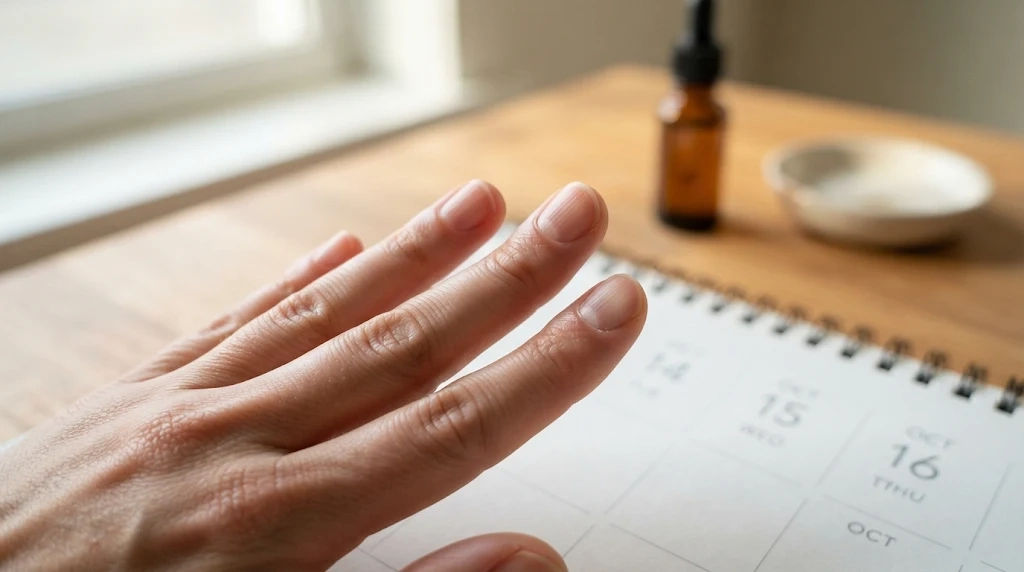
Take a clear picture of your nails every four weeks using similar lighting. Monthly photos are generally more useful than checking for visible changes every day.
Pay particular attention to the new growth near the cuticle. That’s where you’ll often see the clearest evidence that the cause of damage has been addressed.
When Should You See a Dermatologist About Brittle Nails?
Many cases of brittle nails are associated with environmental exposure or everyday habits. Still, not every nail problem is cosmetic.
Schedule a medical evaluation if your nails continue splitting despite consistent protective care, especially when you can’t identify an obvious cause.
Seek professional attention for:
- New or changing dark streaks beneath a nail.
- Nails lifting away from the nail bed.
- Persistent pain, redness, or swelling around the nails.
- Thickening, crumbling, or significant discoloration.
- Sudden changes affecting several nails.
- Nail changes accompanied by unusual fatigue or other symptoms.
A dermatologist can evaluate the nail plate, surrounding skin, and possible underlying causes. Depending on your symptoms, a clinician may recommend additional testing.
If the cause is an infection, inflammatory condition, or nutritional deficiency, addressing it directly is generally more useful than continuing to experiment with cosmetic products.
What Are the Best Professional Tips for Faster-Looking Nail Improvement?
You can’t safely force fingernails to grow dramatically faster, but you can make the recovery process more effective by reducing damage.
Tip 1: Focus on Nail Retention Instead of Nail Length
A nail that grows normally but breaks repeatedly will appear as though it isn’t growing at all.
Keep your nails short enough to avoid snagging until the damaged portion has grown out.
Tip 2: Avoid Repeated Product Changes
Switching between several hardeners, removers, and treatments makes it difficult to identify what helps or causes irritation.
Start with a basic moisturizer and protective habits. Add new products only when there’s a clear reason to use them.
Tip 3: Keep Moisturizer Where You Need It
Place a small tube of hand cream near your sink or in your bag. This makes reapplication easier after washing.
Consistency matters more than using an expensive product once in a while.
Tip 4: Choose Gentle Nail Maintenance Tools
A fine-grit nail file helps smooth edges without aggressive filing. Use gentle strokes and avoid repeatedly buffing the top surface.
Recommended Nail Care Tool
Fine-Grit Nail File for Natural Nails
A gentle filing tool can help you maintain smooth edges and reduce accidental snagging while damaged nails grow out.
As an Amazon Associate, we earn from qualifying purchases.
Frequently Asked Questions About Brittle Nail Recovery
Q: Can brittle nails improve in one week?
A: You may notice less dryness and fewer snags within a week of protective care. However, significant structural improvement requires new nail growth and usually takes much longer.
Q: How long does it take for damaged nails to grow out completely?
A: A fingernail generally takes about 4–6 months to replace itself. The exact time depends on individual nail growth and whether the nail matrix remains healthy.
Q: Will brittle nails become stronger if I stop wearing gel polish?
A: If gel application or removal contributed to the damage, avoiding further trauma may help healthier nails grow in. Existing thinning must gradually grow out, so improvement is not immediate.
Q: Does cuticle oil make brittle nails grow faster?
A: Cuticle oil can condition your nails and surrounding skin, but it hasn’t been shown to dramatically accelerate normal nail growth. Its primary benefit is moisturizing and protecting the nail area.
Q: Why are my nails still brittle after three months?
A: Ongoing water exposure, repeated trauma, an underlying skin condition, or certain health problems may be preventing improvement. If you’ve consistently protected your nails without progress, consider a dermatologist’s evaluation.
Final Thoughts: Be Patient With Your Nail Recovery
So, how long does it take to improve brittle nails? You may notice better comfort and fewer breaks within weeks, but meaningful replacement of damaged nail tissue often takes several months.
Keep your nails moisturized, avoid unnecessary trauma, and monitor healthier growth near your cuticles. If your nails aren’t improving or show unusual changes, seek professional advice.
Save this guide on Pinterest so you can revisit your nail care routine and track your progress over the coming months.

Hi, I’m Jessica, the creator behind Unique Lash & Nails Katy.
I created this website for anyone who loves beautiful nails as much as I do. Here, I share trendy nail designs, seasonal manicure ideas, easy nail care tips, honest product recommendations, and step-by-step guides to help you create salon-worthy nails at home. Whether you’re looking for everyday inspiration or your next favorite nail trend, I hope you’ll find something you love.