When Do Nail Ridges Need Professional Attention? Signs
Quick Answer
Nail ridges need professional attention when they appear suddenly, form deep horizontal grooves, or come with pain, swelling, splitting, or unusual discoloration. Fine vertical ridges are often a normal part of aging. However, a new or changing dark streak should be examined promptly by a dermatologist. If you’re unsure why your nails have changed, a healthcare professional can help identify the cause.
You notice a line running down your fingernail while removing your favorite polish. Maybe you’ve seen it before, or perhaps it seems completely new. Now you’re wondering whether your nail is simply changing with age or trying to tell you something important.
The reassuring news is that many nail ridges are harmless. Still, certain changes deserve closer attention, especially when they appear alongside other symptoms.
Understanding when nail ridges need professional attention helps you make sensible decisions without panicking over every tiny line.


Are Nail Ridges Normal or a Sign of Something Serious?

Nail ridges are raised lines or shallow depressions in the nail plate. They can run vertically from your cuticle toward your fingertip or horizontally across your nail.
The direction, depth, and timing of these ridges provide useful clues. However, their appearance alone cannot confirm a medical diagnosis.
Vertical Nail Ridges Are Often Harmless
Vertical nail ridges, also called longitudinal ridges, extend from the base of your nail to its tip. They’re common, particularly as you get older.
These ridges may become more visible because of natural changes in nail growth and texture. Some people notice them under bright lighting or glossy nail polish.
Fine vertical ridges are generally less concerning when they:
- Develop gradually rather than suddenly.
- Appear on several fingernails in a similar pattern.
- Don’t cause pain, bleeding, or swelling.
- Remain relatively stable over time.
- Don’t occur with unexplained discoloration or nail damage.
Even normal-looking ridges deserve attention if their appearance changes significantly. Learn more about how nail health changes over time to understand which changes commonly accompany aging.
Horizontal Nail Ridges May Need Investigation
Horizontal nail ridges run from one side of your fingernail to the other. Deep horizontal grooves are sometimes called Beau’s lines.
These grooves can develop when an illness, injury, or another physical stress temporarily interrupts nail growth.
Possible triggers include:
- A significant illness accompanied by a high fever.
- Physical injury near the nail’s growth area.
- Certain medications or medical treatments.
- Inflammatory skin conditions affecting the nail.
- Some nutritional deficiencies or systemic health conditions.
One horizontal groove following a known injury may gradually move toward the nail tip as the nail grows. Repeated grooves, unexplained changes, or grooves affecting several nails should be discussed with a healthcare professional.
Pro Tip
Look at your nails without polish every few weeks. Take a clear photograph if you notice an unusual change. Comparing pictures over time can help your dermatologist understand whether the ridge is stable, growing out, or becoming more prominent.
What Are the 7 Warning Signs That Nail Ridges Need Professional Attention?
Not every unusual-looking nail represents a health problem. But the following seven situations are good reasons to arrange a medical assessment.
1. Deep Horizontal Grooves Appear Without an Obvious Cause
A new, noticeable groove running across your nail deserves attention, especially when you cannot connect it to an injury or recent illness.
Deep horizontal grooves may indicate a temporary disruption in nail growth. Your healthcare professional may ask about recent fevers, medications, physical stress, and other symptoms.
If several nails develop grooves around the same time, this can suggest a broader event affected nail growth rather than an isolated injury.
What to do: Arrange a routine medical appointment and photograph the affected nails. Seek earlier assessment if additional symptoms develop.
2. Nail Ridges Appear Suddenly or Change Rapidly
Fine vertical ridges generally become noticeable gradually. A sudden change in texture, depth, or nail shape is different and deserves a closer look.
Pay particular attention if a previously smooth nail develops a pronounced groove, becomes distorted, or starts splitting in the same location.
Repeated injuries and inflammatory nail conditions are possible explanations, but an examination may be necessary to distinguish them.
What to do: Record when you first noticed the change and avoid covering it with enhancements until it has been evaluated.
3. A New or Changing Dark Streak Appears
A brown or black line running lengthwise through a nail is not the same thing as a raised nail ridge. This type of pigmented streak is called longitudinal melanonychia.
Many pigmented streaks have harmless causes, including natural pigmentation, injury, or medication effects.
However, some can indicate nail melanoma, a potentially serious form of skin cancer.
Important Warning
Arrange a prompt dermatology assessment for a new or changing dark nail streak, particularly if it widens, develops irregular coloring, affects the surrounding skin, or accompanies nail splitting or bleeding. Don’t wait for the streak to grow out or attempt to hide it with polish.
Remember that melanoma isn’t the usual explanation for a dark nail line. Nevertheless, only an appropriate clinical examination can determine whether further investigation is necessary.
4. Your Nails Become Painful, Red, or Swollen
Normal age-related ridges generally don’t cause pain or inflammation.
If your nail changes are accompanied by tenderness, warmth, redness, or swelling, an infection or inflammatory condition may be involved.
Possible warning signs include:
- Throbbing or increasing pain around the nail.
- Redness extending beyond the cuticle.
- Pus or fluid collecting beside the nail.
- Increasing warmth and swelling.
- Difficulty using the affected finger comfortably.
What to do: Seek prompt medical assessment, particularly if redness spreads, pain is severe, or you develop a fever. Spreading infection or significant illness requires urgent attention.
5. Your Nails Begin Splitting, Lifting, or Crumbling
Some ridged nails also become brittle. A few minor splits may result from repeated washing, harsh products, or manicure damage.
But persistent splitting, separation from the nail bed, or noticeable crumbling can occur with conditions that require treatment.
Possible causes include inflammatory nail diseases, fungal infections, and repeated trauma.
If you’re also experiencing fragile nail tips, explore our guide explaining why nails split or crack and how everyday habits can contribute.
What to do: Stop peeling or scraping the damaged nail and arrange an evaluation if the change persists, worsens, or involves several nails.
6. Nail Ridges Occur Alongside Other Physical Symptoms
Sometimes a nail change is one small part of a larger health concern.
For example, certain nutritional deficiencies, thyroid conditions, and inflammatory diseases can affect nail appearance.
Additional symptoms worth mentioning to your healthcare professional include:
- Unexplained fatigue or weakness.
- Unusual hair shedding or changes in skin texture.
- Persistent cold intolerance or other new symptoms.
- Unexplained weight changes.
- Recurring rashes or joint symptoms.
These symptoms don’t prove that your nail ridges are caused by a particular disease. They simply provide important context for a professional assessment.
What to do: Make an appointment with your primary care clinician, who can decide whether further examination or testing is appropriate.
7. Nail Changes Persist or Keep Returning
A ridge caused by a past injury or illness may gradually travel outward as your nail grows.
However, repeated horizontal grooves, worsening nail distortion, or changes that fail to improve despite eliminating obvious sources of trauma warrant investigation.
Persistent nail changes can be associated with ongoing irritation, skin disorders, or other medical conditions.
What to do: Schedule an assessment instead of repeatedly trying new cosmetic products to conceal the problem.
When Should You See a Dermatologist Instead of Monitoring Your Nails?
The timing depends on what you notice. Some changes can be discussed during a routine appointment, while others need faster assessment.
Generally Safe to Monitor
- Fine vertical ridges that developed gradually.
- Stable ridges without discomfort or discoloration.
- Minor texture differences after a known injury that are visibly growing out.
Continue gentle nail care and mention any concerns during your regular healthcare visits.
Arrange a Medical Appointment
- New horizontal grooves without a known explanation.
- Persistent splitting, pitting, or thickening.
- Unexplained changes affecting several nails.
- Nail ridges accompanied by other unexplained symptoms.
Seek Prompt Assessment
- A new, widening, or otherwise changing dark nail streak.
- Significant pain, swelling, bleeding, or nail separation.
- Possible infection, especially with diabetes or impaired circulation.
Seek urgent medical care for rapidly spreading redness, severe symptoms, fever with a painful nail infection, or other signs of serious illness.
If you’re uncertain which category fits your situation, contacting a healthcare professional for individual advice is safer than relying on nail photographs alone.
Why Do Nail Ridges Develop in the First Place?
Your nails grow from specialized tissue called the nail matrix, located near the base of each nail.
Changes affecting this growth area can influence the texture and appearance of the nail plate. Because fingernails grow gradually, a visible ridge may reflect something that happened weeks or months earlier.
Natural Aging
Aging is a common reason for fine vertical ridges. As nail growth patterns change, lengthwise lines may become more visible.
These changes usually develop slowly and don’t require medical treatment unless additional concerning symptoms appear.
Repeated Nail Trauma
Picking at your cuticles, biting your nails, aggressive filing, and repeatedly removing gel enhancements can injure the nail or surrounding tissue.
A damaged nail matrix may produce temporary or persistent surface changes. The result depends on the location and extent of the injury.
Skin Conditions
Eczema, psoriasis, and other inflammatory skin conditions can affect the nails.
Nail psoriasis may cause small pits, discoloration, thickening, or separation from the nail bed. Other nail disorders can produce grooves or splitting.
Because several conditions share similar features, your dermatologist may need to examine both your nails and surrounding skin.
Illness and Medical Treatments
Severe illness, certain medications, and some cancer treatments can temporarily interrupt nail growth.
Horizontal Beau’s lines may appear later as the nail continues growing.
When the underlying trigger has resolved, the affected area often gradually moves toward the free edge of the nail.
Nutritional Deficiencies and Other Health Conditions
Iron deficiency, zinc deficiency, thyroid disorders, and some systemic diseases may be associated with particular nail abnormalities.
However, a ridge isn’t a reliable test for any deficiency. Taking vitamins simply because your nails have lines may be unnecessary and sometimes harmful.
A healthcare professional can evaluate your symptoms and decide whether blood tests are indicated.
What Happens During a Professional Nail Examination?
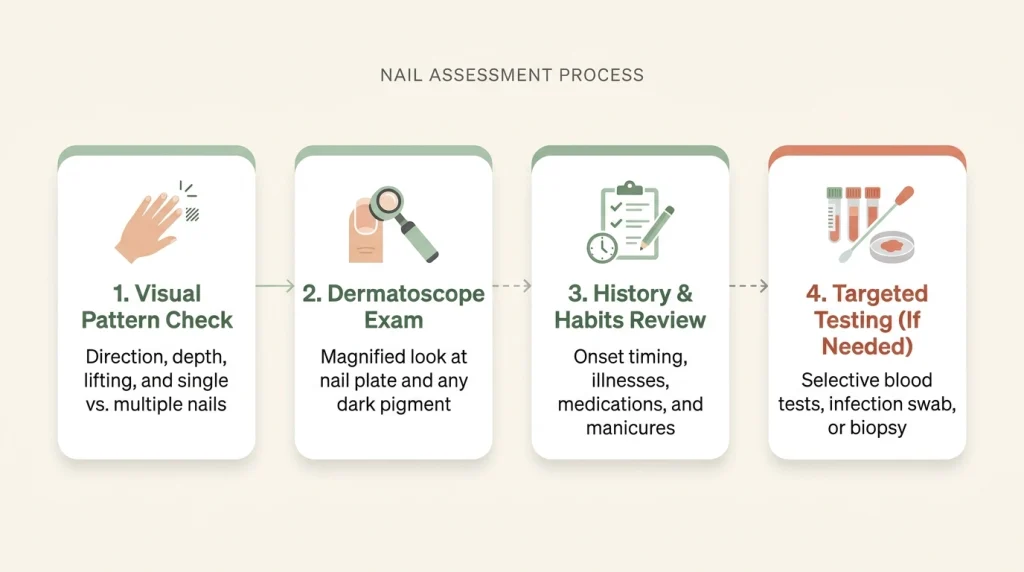
If you’ve never visited a dermatologist for a nail concern, the process is often more straightforward than you might expect.
Your clinician usually begins by asking about the changes you’ve noticed, your medical history, and your nail-care habits.
Your Doctor Will Examine the Nail Pattern
The clinician may check whether the ridges run vertically or horizontally, how deep they appear, and whether one nail or several nails are affected.
They’ll also look for discoloration, thickening, nail lifting, and inflammation around the cuticle.
If pigmentation is present, a dermatologist may use a dermatoscope, a magnifying instrument that helps examine nail structures more closely.
You May Be Asked About Recent Changes
Questions might include:
- When did you first notice the ridges?
- Have you recently been ill or injured a finger?
- Are you taking any new medications?
- Have you experienced pain or other symptoms?
- Do you regularly use gel polish, acrylics, or nail enhancements?
- Have the ridges become deeper or changed color?
Bring photographs if you’ve documented the changes. A short timeline can be especially useful when the nail looks different on the day of your appointment.
Will You Need Blood Tests or Other Investigations?
Not necessarily. Many nail conditions can be assessed through a medical history and physical examination.
Depending on the findings, your clinician may recommend targeted blood tests, testing for an infection, or further evaluation of a suspicious nail lesion.
For some concerning pigmented nail changes, a specialist may recommend a biopsy to establish the diagnosis.
Testing should be guided by the actual findings rather than automatically performed for every nail ridge.
How Can You Care for Mild Nail Ridges Safely at Home?
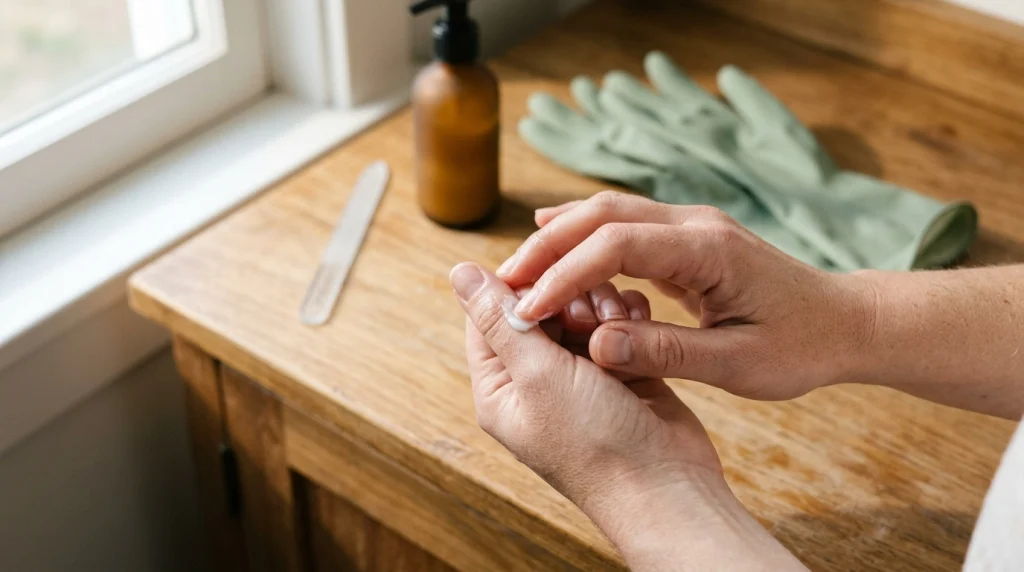
Once concerning medical causes have been ruled out, gentle nail care may improve comfort and reduce additional surface damage.
You don’t need an expensive treatment routine. Consistent, protective habits are usually a better starting point.
Moisturize Your Nails and Cuticles Daily
Apply a fragrance-free hand cream to your nails and surrounding skin after handwashing and before bed.
Ingredients such as glycerin, petrolatum, and dimethicone can help reduce moisture loss from the skin.
If your nails feel dry or brittle, regular moisturizing can support a gentler care routine, although it won’t erase a ridge caused by altered nail growth.
Our guide to moisturizing and cuticle care for weak nails explains how to protect delicate nail edges.
Keep Your Nails at a Practical Length
Shorter nails are less likely to catch on clothing or experience repeated bending during everyday tasks.
Use a fine nail file to smooth rough edges, working gently instead of sawing aggressively.
Avoid digging under the nail or cutting away healthy skin around the cuticle.
Protect Your Hands During Wet Chores
Repeated exposure to water and household cleaning products can contribute to brittle nails.
Wear appropriate protective gloves when washing dishes or handling cleaning chemicals.
Dry your hands afterward and apply moisturizer if needed.
Avoid Aggressive Nail Buffing
Buffing can make shallow surface lines less visible, but repeated or forceful buffing removes part of the nail plate.
Over time, this may leave your nails thinner and more vulnerable to breakage.
For purely cosmetic ridges that have been assessed as harmless, a ridge-filling base coat may offer a smoother appearance without substantial filing.
Warning
Don’t buff away deep grooves, unexplained nail discoloration, or suspicious changes. Cosmetic smoothing can damage the nail and make it harder to monitor a developing problem. Have concerning changes examined before attempting to conceal them.
Which Nail Care Products Are Worth Considering?
Products cannot treat an undiagnosed medical condition. However, a few basic tools may help you care for nails with harmless surface ridges.
Affiliate disclosure: As an Amazon Associate, we earn from qualifying purchases. Product suggestions below are for general nail care, not medical treatment.
Optional Nail Care Product
Fragrance-Free Moisturizing Hand Cream
A fragrance-free cream can help manage dryness around your nails and cuticles. Look for moisturizing ingredients such as glycerin or petrolatum.
Optional Nail Care Product
Fine Glass Nail File
A fine glass nail file can help smooth rough nail tips without requiring aggressive surface buffing. Use gentle strokes and avoid filing damaged areas repeatedly.
Optional Cosmetic Product
Nail Ridge-Filling Base Coat
For medically assessed, harmless ridges, a ridge-filling base coat can temporarily create a smoother appearance beneath regular nail polish. It doesn’t correct the underlying cause.
What Should You Do and Avoid While Monitoring Nail Ridges?
Do
- Check your bare nails periodically.
- Photograph new changes.
- Moisturize your nails and cuticles.
- Protect your hands from harsh chemicals.
- Consult a professional about concerning symptoms.
Don’t
- Ignore a changing dark streak.
- Buff deep grooves aggressively.
- Pick or cut healthy cuticles.
- Take supplements without a clear reason.
- Cover suspicious changes to avoid examination.
Can Nail Ridges Go Away on Their Own?
Whether nail ridges disappear depends on what caused them.
Fine vertical ridges associated with aging may remain visible. You can improve the condition of dry surrounding skin, but you cannot necessarily eliminate natural changes in nail texture.
Horizontal grooves caused by a temporary interruption in growth may gradually move outward as new nail develops.
Fingernails often take approximately four to six months to replace their visible nail plate, although growth rates vary. Toenails generally take considerably longer.
If an ongoing condition continues affecting the nail matrix, new abnormal ridges may appear even as older ones grow out.
That’s why treating an underlying medical problem, when one exists, matters more than trying to polish the surface smooth.
Frequently Asked Questions About Nail Ridges
Q: When should I worry about vertical ridges on my fingernails?
A: Fine, gradually developing vertical ridges are usually harmless. Seek medical advice if they appear suddenly, become unusually deep, cause splitting, or accompany pain or discoloration. A dark pigmented streak is a separate finding that deserves prompt examination.
Q: Are horizontal nail ridges more serious than vertical ridges?
A: Horizontal grooves can indicate that nail growth was temporarily interrupted by illness, injury, or another trigger. They aren’t always serious, but unexplained or recurring grooves should be assessed by a healthcare professional.
Q: Can vitamin deficiencies cause nail ridges?
A: Certain deficiencies, including iron or zinc deficiency, can contribute to specific nail abnormalities. However, nail ridges alone cannot confirm a deficiency. Your doctor can determine whether dietary changes or testing are necessary.
Q: Should I see a dermatologist or my regular doctor for nail ridges?
A: Your primary care doctor can evaluate many nail concerns and consider underlying health conditions. A dermatologist is especially helpful for unexplained nail abnormalities, suspicious pigmentation, or persistent changes requiring specialized examination.
Q: Can nail polish hide dangerous nail changes?
A: Opaque polish can make discoloration and other nail changes harder to notice. If a nail develops an unexplained dark streak, significant distortion, or persistent symptoms, leave it uncovered for medical examination rather than concealing the change.
What Matters Most When Deciding Whether Nail Ridges Need Attention?
Most fine vertical nail ridges are not a reason to panic. The important details are whether your nails have changed suddenly, whether you have additional symptoms, and whether the pattern suggests a condition beyond ordinary aging.
Deep horizontal grooves, painful swelling, persistent nail damage, and new or changing dark streaks deserve professional attention. Gentle nail care can protect your nails, but it cannot replace an appropriate medical evaluation.
Save this guide to Pinterest so you can revisit the warning signs whenever you notice something unfamiliar about your nails.
Medical disclaimer: This article provides general educational information and is not a substitute for professional medical advice, diagnosis, or treatment. If you’re concerned about a nail change, consult a qualified healthcare professional.

Hi, I’m Jessica, the creator behind Unique Lash & Nails Katy.
I created this website for anyone who loves beautiful nails as much as I do. Here, I share trendy nail designs, seasonal manicure ideas, easy nail care tips, honest product recommendations, and step-by-step guides to help you create salon-worthy nails at home. Whether you’re looking for everyday inspiration or your next favorite nail trend, I hope you’ll find something you love.