Moisturizing Split or Cracked Nails: Simple Care Tips
Quick Answer
Moisturizing supports split or cracked nail care by conditioning the nail surface, softening surrounding skin, and reducing dryness that may contribute to brittleness. Apply fragrance-free hand cream after washing, add cuticle oil when needed, and use petroleum jelly on very dry areas before bed. Moisturizer cannot permanently reconnect an existing crack, but consistent care and protection can help prevent additional damage while the nail grows out.
When your nails start peeling at the tips or developing tiny cracks, even a simple manicure can feel frustrating. You might try a nail strengthener, only to find another split a few days later.
Sometimes, the missing piece is a much simpler habit: moisturizing consistently while protecting your nails from repeated damage.
Understanding how moisturizing supports split or cracked nail care helps you choose products that actually serve a purpose. You don’t need an overflowing nail-care drawer or an expensive treatment to begin.
Here’s how moisture affects your nails, which products make sense, and how to build a practical routine that fits your day.


How Does Moisturizing Help Split or Cracked Nails?
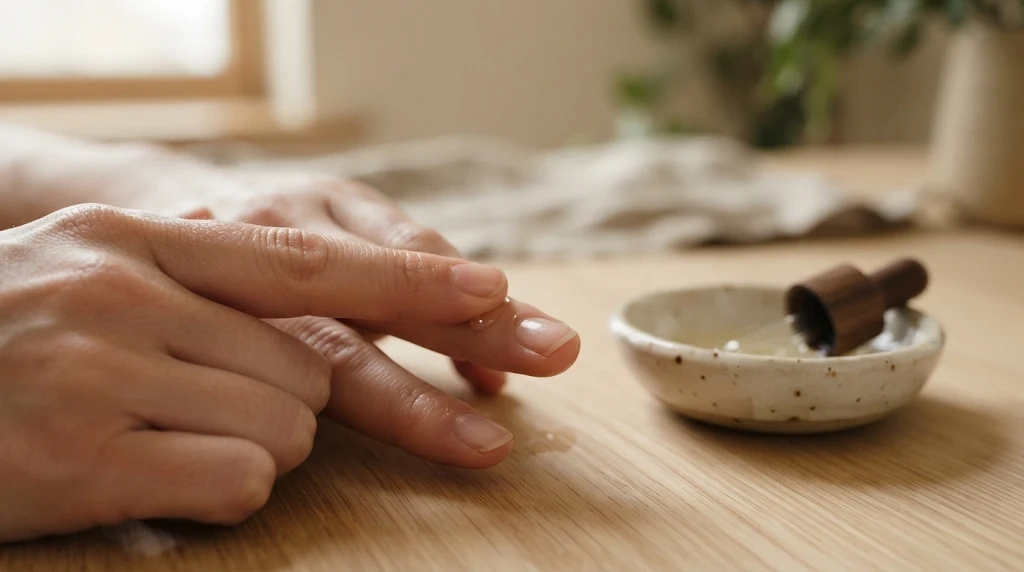
Your visible nail plate consists mainly of layers of hardened keratin. Although it looks solid, it contains water and has a degree of natural flexibility.
When nails experience repeated wetting, drying, friction, or chemical exposure, their surface layers may become more vulnerable to peeling and splitting.
Moisturizing helps maintain a more comfortable, conditioned nail surface and supports the delicate skin around each nail. It works best alongside protective habits.
1. It Helps Keep the Nail Surface Conditioned
Dry nails may feel rough and become more prone to catching on clothing or snagging during everyday tasks.
Moisturizers containing ingredients such as glycerin, oils, and petrolatum can help manage moisture at the nail surface and reduce dryness around the nail folds.
That doesn’t mean a cream can rebuild damaged keratin. Instead, a conditioned nail may feel less rough while you protect the weakened areas from additional stress.
2. It Softens Dry Cuticles and Nail Folds
The cuticle and surrounding nail folds help protect the area where your nail grows.
When this skin becomes dry, it can feel tight, flaky, or uncomfortable. Picking at dry skin may introduce small injuries.
Applying hand cream or cuticle oil regularly helps soften the skin so you’re less tempted to pull at it.
Keep the cuticles intact rather than cutting them away for a cleaner-looking manicure.
3. It Helps Reduce Moisture Loss
Different moisturizers perform different jobs. Humectants such as glycerin attract water, while occlusive ingredients such as petrolatum help limit water loss from the surrounding skin.
This is especially helpful after handwashing or before bedtime, when your hands may otherwise remain dry for hours.
For a more detailed explanation, explore whether cuticle oil actually hydrates nails.
4. It Supports a Gentler Nail Recovery Routine
Moisturizing alone cannot prevent every split. However, it gives you a simple care habit that pairs naturally with short nails, careful filing, and protective gloves.
Those habits reduce opportunities for weak tips to catch, bend, and tear.
Pro Tip
Keep your hand cream beside the sink instead of inside a drawer. Applying it immediately after washing makes moisturizing easier to remember and helps you care for your nails as consistently as your hands.
Why Do Nails Split or Crack in the First Place?
Moisture matters, but dryness isn’t the only reason nails split. Understanding what causes the damage helps you avoid relying on moisturizing products alone.
Repeated Wetting and Drying
Frequent exposure to water can make the nail plate swell and then contract as it dries. Repeating that cycle may contribute to brittle, peeling nail tips.
Dishwashing, cleaning, and repeated handwashing can all increase exposure.
Harsh Cleaning Products
Detergents, solvents, and household cleaners may irritate the surrounding skin and contribute to nail dryness or brittleness.
Wearing appropriate protective gloves during cleaning reduces direct contact with these products.
Rough Manicure Removal
Peeling gel polish, scraping off dip powder, or aggressively filing the natural nail can remove superficial nail layers.
When those layers become thinner, the nail may bend or split more easily.
Mechanical Stress
Long nails are more likely to catch on clothing, strike hard surfaces, or bend during everyday tasks.
Using your nails to open containers or remove stickers adds unnecessary pressure.
Possible Underlying Health Conditions
Persistent nail splitting can occasionally be associated with conditions such as psoriasis, thyroid disorders, iron deficiency, or nail infections.
If your nails change suddenly, become painful, or keep splitting despite careful treatment, a healthcare professional can help identify the cause.
Can Moisturizing Actually Repair a Cracked Nail?
No. Moisturizing can support damaged nail care, but it cannot permanently repair a crack that’s already formed.
Your nail plate is not living skin. Once its keratin layers split, they don’t knit together in the same way a skin wound heals.
A small split at the free edge may eventually be trimmed away as the nail grows. Moisturizing and protection can help manage dryness during that process.
If a nail is deeply cracked, painful, bleeding, or separating from the nail bed, avoid trying to seal it with household glue.
For minor cosmetic damage, our guide to repairing a damaged nail at home explains safe protective care while the damaged section grows out.
Warning
If a crack extends into the pink attached nail, causes significant pain, or involves bleeding, swelling, pus, or lifting, seek medical advice. Moisturizing products and cosmetic nail repairs are not substitutes for treating an injured or infected nail.
Which Moisturizers Work Best for Split or Cracked Nail Care?
The best moisturizer is usually one you can apply consistently without causing irritation. Different products suit different situations.
1. Fragrance-Free Hand Cream for Daily Moisture
Best for: Frequent handwashing, mild dryness, and everyday nail maintenance.
A fragrance-free hand cream is a practical foundation for your nail routine. Look for formulas containing glycerin, ceramides, or other gentle moisturizing ingredients.
Apply a small amount to your hands, then massage the remaining cream across each nail plate and around the cuticles.
Advantages: Easy to use, suitable for frequent applications, and helpful for the surrounding skin.
Limitations: Lightweight formulas may not provide enough protection for severely dry cuticles overnight.
Recommended Product Type
Fragrance-Free Moisturizing Hand Cream
A cream containing glycerin or ceramides can help moisturize dry hands and nail folds without needing a separate nail treatment.
As an Amazon Associate, we earn from qualifying purchases.
2. Cuticle Oil for Dry Nail Edges
Best for: Rough cuticles, dry nail edges, and people who prefer a lightweight daytime treatment.
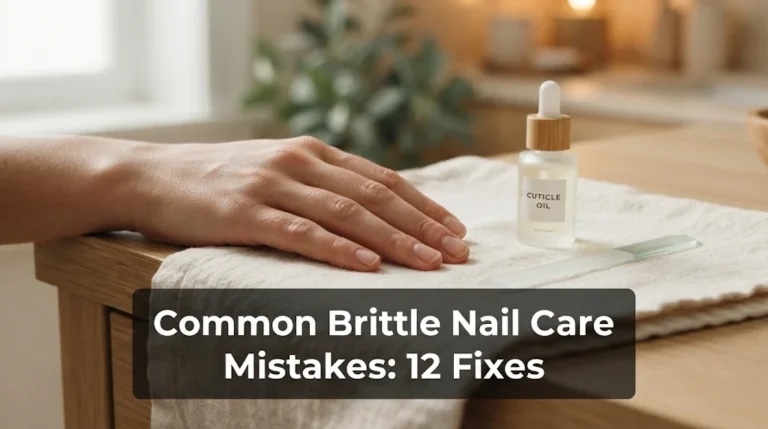
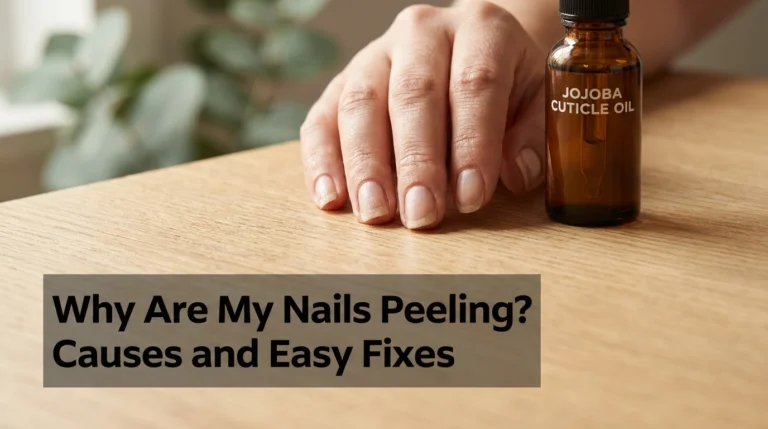
Cuticle oils often contain jojoba oil, vitamin E, or other emollient ingredients.
These oils can condition the nail area and help limit moisture loss. They are particularly convenient when applied using a small brush or pen.
Massage a small drop around each nail rather than soaking your fingertips in oil.
Advantages: Convenient, easy to target, and useful for softening rough cuticles.
Limitations: Oil alone may not adequately moisturize extremely dry surrounding skin.
If you’re deciding whether to add oil to your routine, see how nail oil helps dry nails.
Recommended Product Type
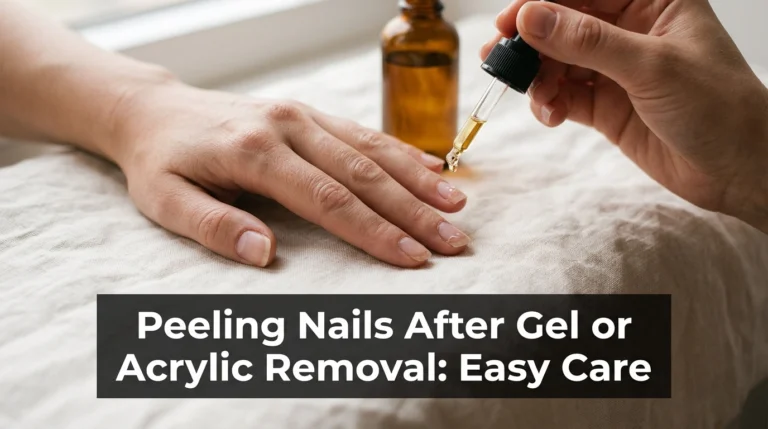
Jojoba-Based Cuticle Oil
A lightweight jojoba-based oil is a convenient option for conditioning dry cuticles and rough nail edges between handwashing sessions.
As an Amazon Associate, we earn from qualifying purchases.
3. Petroleum Jelly for Overnight Protection
Best for: Very dry cuticles, rough fingertips, and overnight moisture protection.
Plain petroleum jelly forms a barrier that helps slow water loss from the skin.
Apply hand cream first, then spread a thin layer of petroleum jelly over dry cuticles and surrounding skin before bed.
Use only a small amount. You shouldn’t need thick, uncomfortable layers.
Advantages: Affordable, simple, and useful for limiting overnight moisture loss.
Limitations: It can feel greasy and does not restore a physically damaged nail plate.
4. Rich Barrier Cream for Very Dry Hands
Best for: People whose nails and surrounding skin are frequently exposed to washing, cold weather, or dry indoor air.
A thicker barrier cream containing glycerin, petrolatum, or ceramides may be more comfortable than repeatedly applying lightweight lotion.
Choose a fragrance-free formula if your skin is sensitive. Stop using any product that causes burning, redness, or a rash.
How Should You Moisturize Split or Cracked Nails Every Day?
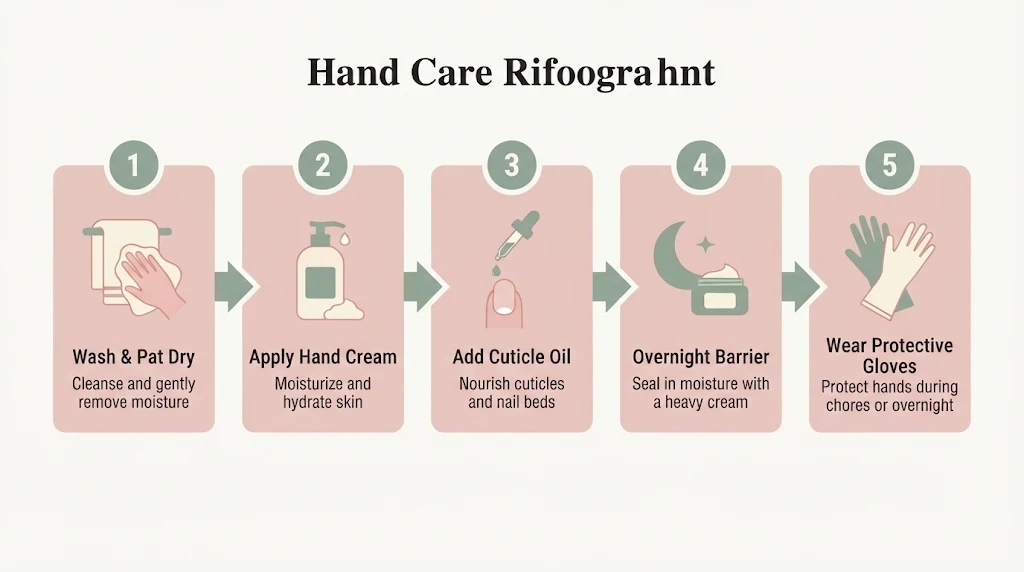
You don’t need a complicated ten-step ritual. This simple routine takes only a few minutes and focuses on reducing dryness without irritating fragile nails.
DAILY TIME
3–5 minutes
DIFFICULTY
Beginner
ESSENTIALS
Cream and gloves
RESULTS
Gradual, with care
Step 1: Wash Gently and Pat Your Hands Dry
Use a gentle hand cleanser and lukewarm water. Pat your hands dry, paying attention to the spaces between your fingers.
Your skin can remain slightly damp before applying cream, but avoid leaving your nails soaking wet.
Common mistake: Soaking your nails for long periods before moisturizing. Prolonged water exposure can contribute to repeated swelling and drying of the nail plate.
Step 2: Apply Hand Cream to Every Nail
Rub a small amount of fragrance-free cream over your hands, then massage each nail plate and the surrounding skin.
Pay particular attention to areas that feel rough after handwashing.
Common mistake: Applying cream only to your palms and ignoring the nail edges.
Step 3: Add Cuticle Oil Where Needed
Place a small drop of oil around each dry cuticle and massage gently.
You can do this once or twice daily if it feels helpful. Cuticle oil is optional when your moisturizing cream already provides enough conditioning.
Common mistake: Using so much oil that it becomes messy and discourages regular application.
Step 4: Protect Dry Areas Before Bed
Apply a richer cream at bedtime. If your cuticles remain especially dry, add a thin layer of plain petroleum jelly.
This routine gives your skin a period of moisture protection without frequent washing.
Common mistake: Expecting overnight moisturizing to eliminate an existing nail split. The damaged portion still needs to grow out.
Step 5: Protect Your Nails During Wet Chores
Wear suitable protective gloves for dishwashing and cleaning. Choose gloves that fit comfortably, and dry their interiors between uses.
For prolonged tasks, a breathable cotton liner may help if your hands become sweaty.
Common mistake: Applying moisturizer but continuing long periods of unprotected contact with detergents and water.
How Often Should You Moisturize Cracked Nails?
There’s no universal number of applications that works for everyone. The ideal frequency depends on your environment, skin condition, and washing habits.
Use this schedule as a starting point:
- Morning: Apply fragrance-free hand cream after washing.
- After handwashing: Reapply cream whenever your skin feels dry.
- Afternoon: Use a little cuticle oil if the nail edges feel rough.
- Before bed: Apply a richer cream and optional petroleum jelly.
- During cleaning: Wear gloves to reduce irritating exposure.
Consistency matters more than applying large amounts at once. If your hands remain comfortable with fewer applications, there’s no need to force extra treatments.
What Should You Avoid When Caring for Cracked Nails?
Moisturizing becomes less useful when daily habits continue to damage your nail surface.
DO
- Moisturize after washing.
- Keep nails short and smooth.
- Wear gloves for wet chores.
- Use gentle manicure removal methods.
- Leave your cuticles intact.
DON’T
- Peel gel or acrylic products off.
- Over-buff thin nail plates.
- Pull at peeling nail layers.
- Use nails as tools.
- Ignore painful, deep cracks.
For additional protective habits, see how to prevent nail splitting.
What Other Products Can Support Fragile Nails?
Moisturizers are useful, but two simple tools can make your routine more practical.
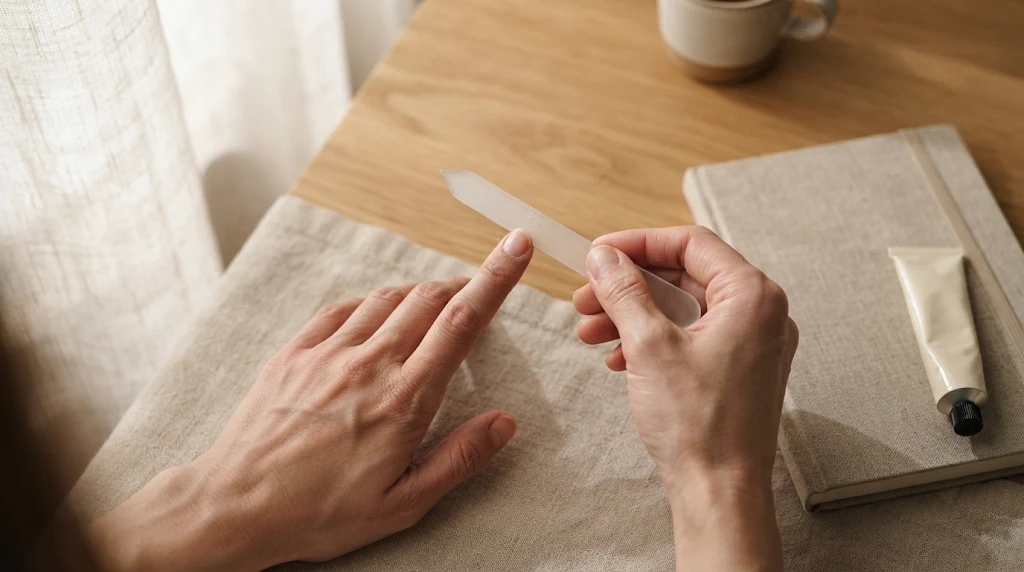
A Fine Glass Nail File
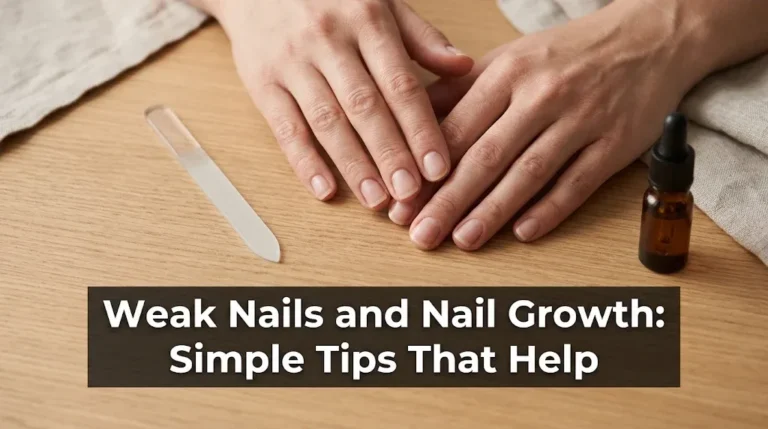
A fine-grit glass file can gently smooth small snags at the free edge before they catch on fabric.
File lightly without repeatedly scraping the nail surface. Avoid filing into painful or attached cracks.
Choose a fine, smooth file intended for natural nails rather than a very coarse abrasive tool.
Recommended Tool
Fine Glass Nail File for Natural Nails
A gentle file helps smooth small rough tips that might otherwise snag and extend a split.
Browse Glass Nail Files on Amazon
As an Amazon Associate, we earn from qualifying purchases.
Protective Dishwashing Gloves
Reusable gloves help limit contact with dishwater and cleaning products, making them a practical addition to a nail-protection routine.
Choose a comfortable fit and replace gloves that become torn. If rubber or latex irritates your skin, look for a suitable alternative material.
Recommended Tool
Reusable Protective Cleaning Gloves
Protective gloves reduce repeated direct exposure to water and detergents, which can contribute to dry, fragile nails.
Browse Protective Gloves on Amazon
As an Amazon Associate, we earn from qualifying purchases.
How Long Does Moisturizing Take to Improve Split Nails?
The answer depends on whether you’re looking for softer cuticles, reduced dryness, or completely grown-out damage.
Immediately After Application
Dry cuticles and surrounding skin may feel softer shortly after moisturizing. The nail surface may also look smoother or less dull.
These are conditioning effects, not evidence that a physical crack has healed.
After Several Weeks
With consistent care, you may notice less discomfort from dry skin and fewer new snags if you’re also filing gently and protecting your nails.
Results vary. A reduction in splitting cannot be guaranteed by moisturizing alone.
Over Several Months
Fingernails generally grow around 3 millimeters per month, although growth rates vary. A full fingernail can take approximately four to six months to replace itself.
Existing damage moves toward the tip as new nail forms at the base. That’s why nail recovery requires patience.
For a wider recovery approach, read how to make your nails healthy again.
Can You Moisturize Nails While Wearing Nail Polish?
Yes. You can apply hand cream and cuticle oil around polished nails, including the cuticle area and exposed free edges.
Traditional polish forms a coating over much of the visible nail plate, so products may not reach the covered surface as directly.
Moisturizing the surrounding skin remains worthwhile.
If you wear gel polish or extensions, don’t use moisturizing products as a reason to delay professional assessment of painful lifting, inflammation, or a deep crack.
And remember to remove enhancements without peeling or scraping away your natural nail layers.
When Should You See a Dermatologist About Splitting Nails?
Minor splits limited to the nail tips are often manageable with careful grooming and protection.
However, some changes warrant professional evaluation.
- A crack extends into the attached pink portion of your nail.
- You notice bleeding, increasing pain, redness, swelling, or pus.
- The nail begins separating significantly from the nail bed.
- One nail repeatedly develops the same deep split.
- You notice new dark pigmentation without a clear explanation.
- Many nails become unusually brittle alongside other health symptoms.
- Splitting continues despite several weeks of reduced exposure and gentle care.
A clinician may examine your nails and consider whether a skin condition, infection, injury, or other health issue is contributing.
Avoid starting high-dose nail supplements without medical advice. Some supplements, including biotin, can interfere with certain laboratory tests.
Frequently Asked Questions About Moisturizing Split or Cracked Nails
Q: Does moisturizing prevent nails from splitting?
A: Moisturizing can help condition dry nails and surrounding skin, but it cannot prevent every split. Keeping nails short, reducing repeated water exposure, and avoiding mechanical damage are equally important.
Q: Is cuticle oil or hand cream better for cracked nails?
A: Both can be helpful. Hand cream moisturizes the surrounding skin, while cuticle oil provides targeted conditioning. Neither product permanently repairs a cracked nail plate.
Q: Can Vaseline help split nails?
A: Petroleum jelly can reduce moisture loss from the skin around your nails and help soften dry cuticles. It won’t fuse a split nail together, but it can complement a gentle nail-care routine.
Q: How many times a day should I moisturize brittle nails?
A: Start by applying moisturizer after handwashing and before bed. Adjust the frequency to your dryness and comfort. Consistent moderate applications are more practical than occasional heavy treatments.
Q: Will cracked nails grow back normally?
A: Many minor damaged nails grow out normally if the nail-producing area remains healthy. Deep injuries, recurring splits, or damage involving the nail matrix may need professional evaluation.
Make Moisturizing Part of Your Everyday Nail Care
Learning how moisturizing supports split or cracked nail care starts with realistic expectations. Moisturizer helps condition your nails and surrounding skin, but it cannot erase damage that’s already there.
Keep your routine simple: use hand cream consistently, add cuticle oil or petroleum jelly when needed, and protect fragile nails from everyday stress.
Save this guide on Pinterest so you can return to these easy nail-care habits whenever your nails need extra attention.

Hi, I’m Jessica, the creator behind Unique Lash & Nails Katy.
I created this website for anyone who loves beautiful nails as much as I do. Here, I share trendy nail designs, seasonal manicure ideas, easy nail care tips, honest product recommendations, and step-by-step guides to help you create salon-worthy nails at home. Whether you’re looking for everyday inspiration or your next favorite nail trend, I hope you’ll find something you love.