How Long Does It Take to Strengthen Weak Nails? Tips
Quick Answer
You may notice less dryness and fewer broken tips within 1–2 weeks of gentle nail care. Clearer improvement usually takes 4–8 weeks, while replacing a damaged fingernail can take around 4–6 months or longer. The difference comes from protecting the nail you have now while healthier nail grows from the base. Your results depend on the cause of weakness, not just the products you apply.
You’re doing everything to help your nails grow, but the ends still split before they reach your favorite Pinterest manicure length. It’s tempting to assume that a new serum should fix them by next weekend. Real nail improvement works on a slower clock.
This guide shows you when to expect progress, how to recognize it, and which small daily habits make the biggest difference without an expensive shelf of treatments.


What Is a Realistic Timeline for Stronger Nails?

There isn’t one magic number for everyone. Nails are made of layered keratin, and the visible nail plate cannot rebuild itself like living skin. You can protect its surface immediately, but a badly damaged section usually needs to grow forward and eventually be trimmed away.
Fingernails typically grow about 3 millimeters per month. That means the fresh nail appearing near your cuticle takes time to reach your fingertip. Use this timeline as a practical expectation, not a promise that everyone’s nails will recover at the same speed.
Days 1–7: Focus on protection, not instant thickness
During the first week, you can reduce preventable damage. Keep the free edge short, smooth sharp corners, moisturize after handwashing, and wear gloves for chores. A cream or clear coating may make nails feel smoother right away, but that temporary feeling doesn’t mean the nail has physically grown thicker.
Pay attention to how often you catch a tip on clothing or break a corner. Fewer snags are an early sign that your routine is reducing mechanical stress.
Weeks 2–4: Look for fewer breaks
If your weakness mainly comes from wet work, dry skin, or rough filing, you may begin seeing fewer chipped edges. Any improvement is partly due to changed habits rather than a complete replacement of the damaged nail. Continue the routine even when your nails look better; stopping protection too soon can restart the cycle.
At the end of week four, compare a photo taken in similar lighting with your starting photo. Check the condition of the tips and the small area of growth near the base, not simply the total length.
Weeks 4–8: New growth becomes easier to notice
By this stage, you may have several millimeters of newer nail growth. If your nail matrix is healthy and the source of damage has stopped, the newly formed section may look more even and resist everyday splitting better. Old peeling layers at the tips can still remain; they don’t disappear just because healthier nail has started growing.
For a more detailed routine, follow these practical habits to strengthen nails and adjust them to your daily schedule.
Months 3–6: Give damaged nail time to grow out
Replacing much of an adult fingernail generally takes months. If repeated gel removal or aggressive buffing thinned your nail plate, you may need approximately four to six months, sometimes longer, for the damaged portion to move off the tip. Toenails grow more slowly and often take much longer to replace.
A sudden improvement isn’t guaranteed if an underlying skin condition, infection, or nutritional deficiency is involved. Persistent changes deserve an assessment rather than another round of nail products.
Why Do Weak Nails Take So Long to Recover?
Your visible nail plate is produced by the nail matrix, a growth area beneath the skin at the nail base. Once that nail plate moves outward, it consists of hardened cells. Unlike skin, the visibly damaged portion cannot grow new tissue into a split or recover lost layers.
Think of a frayed sweater cuff: you can prevent more pulling, but moisturizer won’t knit the original fibers back together. With nails, new material must emerge from the matrix. That is why an oil can improve the feel of dry nails but cannot instantly reverse over-filing or bond a deep split permanently.
The cause changes the timeline. Frequent dishwashing, detergent exposure, or picking can keep re-damaging nails. Artificial enhancements can leave nails thin after removal. Sometimes persistent brittleness accompanies eczema, psoriasis, iron deficiency, thyroid disease, or another medical issue; appearance alone cannot diagnose the cause.
If you’re unsure what is triggering yours, review these ways chemicals affect nail strength before changing several products at once.
Which Daily Habits Actually Help Weak Nails Become Stronger?
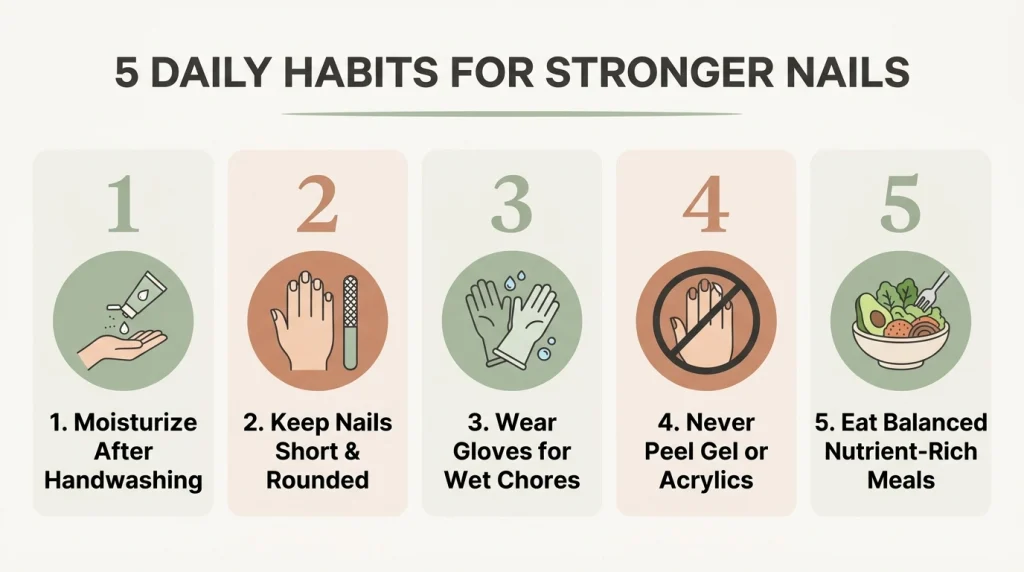
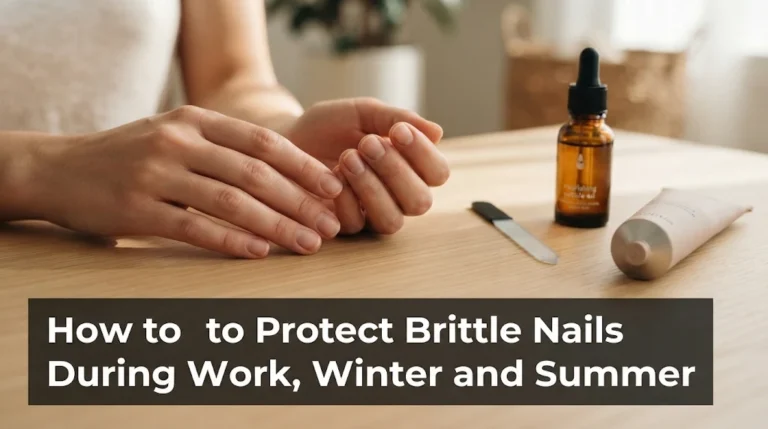
You don’t need ten complicated steps. The most effective starting plan reduces repeated injury and supports normal growth. Choose a manageable routine you can repeat on busy weekdays, not only on self-care Sundays.
1. Moisturize your nails after washing your hands
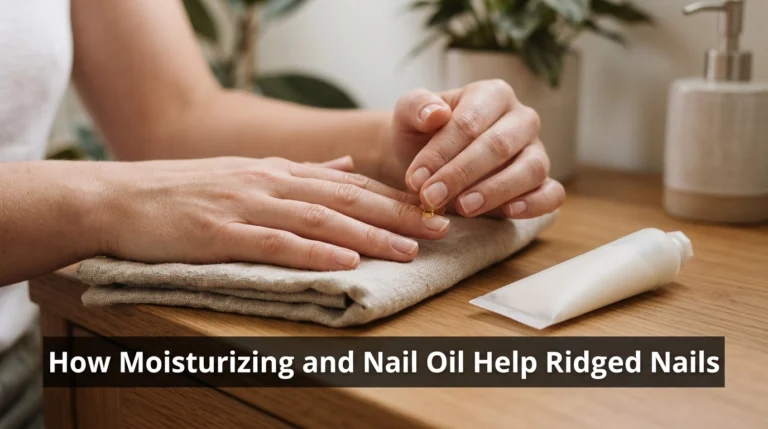
Massage fragrance-free hand cream or a little petroleum jelly over the nail plate, cuticles, and surrounding skin after washing. Frequent water exposure followed by drying can contribute to brittle, splitting nails. Moisturizing is especially useful if your fingertips feel tight or flaky after soap or sanitizer.
At bedtime, apply a richer layer so it stays on longer. A small amount is enough; expensive formulas are not required. Jojoba-based cuticle oil is an optional pleasant addition, but it shouldn’t replace routine hand cream.
2. Keep fragile nails short and softly rounded
Long nails act like tiny levers: everyday pressure at the tip can bend or split the weak section. Trim to a comfortable short length, then smooth rough corners with a fine nail file. You can still enjoy a neat, polished look without keeping a vulnerable free edge.
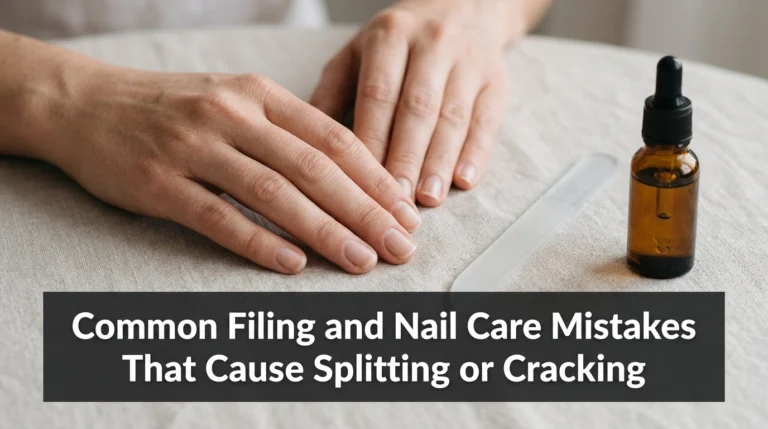
File gently rather than scraping or repeatedly buffing the top surface. If a tip has already peeled, remove the loose snag carefully; don’t pull the layer backward toward the nail bed.
3. Wear gloves during wet and chemical-heavy chores
Dishwashing, cleaning bathrooms, and handling detergents expose your nails to repeated soaking and irritation. Choose well-fitting reusable household gloves for these tasks. If gloves make your hands sweaty, remove them for breaks and dry your hands thoroughly afterward.
This habit is especially valuable when you wash dishes several times daily. A manicure product cannot fully compensate for hours of repeated exposure to water and cleaners.
4. Stop peeling off gel, dip, or acrylic products
Picking enhancements from the nail often pulls away surface layers, leaving patches that feel soft, tender, or paper-thin. Have the product removed by an experienced professional or follow the brand’s correct removal instructions. Do not force the coating off with a metal tool.
If your nails are sore or visibly thinned, consider a break from enhancements while damaged sections grow out. A natural manicure can still look intentional with clean shaping and moisturized skin.
5. Eat balanced meals rather than chasing miracle supplements
Your body needs adequate protein and nutrients to support normal nail growth. Include varied protein foods, vegetables, fruit, and sources of iron as part of your usual meals. However, weak nails do not automatically mean you lack a vitamin.
Biotin supplements have limited evidence for most otherwise healthy people with brittle nails, and high-dose biotin can interfere with some laboratory tests. Ask a clinician before taking supplements, especially if you have other symptoms or take medications.
Does Cuticle Oil or Nail Strengthener Speed Up Recovery?
These products serve different purposes, and neither makes a damaged nail regenerate overnight. Choose according to how your nails behave rather than the most dramatic promise on the bottle.
Cuticle oil and hand cream: best for dryness and routine care
Oil and cream condition the nail surface and nearby skin, making dryness easier to manage. They’re useful when you wash your hands often or notice rough, flaky cuticles. Apply a small amount daily and judge progress by reduced snagging and better comfort, not a claimed growth boost.
Optional Nail-Care Product
Jojoba Cuticle Oil
A simple cuticle oil may make regular conditioning easier, especially beside your nightstand. It’s a cosmetic helper, not a treatment for infection or a guarantee of faster growth.
Browse jojoba cuticle oils on Amazon
As an Amazon Associate, we earn from qualifying purchases.
Clear base coat: optional protection against minor snags
A conventional base coat can give your nails a smoother cosmetic finish and may help protect fragile tips from everyday friction. It doesn’t replace missing nail layers. Use a formula that’s comfortable, remove it gently, and skip coatings if your nails are painful, lifting, or reacting to ingredients.
Optional Nail-Care Product
Gentle Clear Nail Base Coat
Useful if you like a tidy natural manicure while growing out damage. Choose a coating you can remove without scraping or peeling.
Browse clear nail base coats on Amazon
As an Amazon Associate, we earn from qualifying purchases.
Very hard strengthening treatments: approach cautiously
More rigidity isn’t always better. Nails must tolerate slight bending during daily tasks, and a formula that makes them excessively stiff may increase snapping. Some formaldehyde-containing hardeners can contribute to irritation or brittleness. Stop a treatment if you develop burning, rash, worsening splits, or discomfort.
For help deciding what to avoid, see this routine for weak, thin, brittle nails.
What Should You Do During the First Four Weeks?
Instead of buying a different serum whenever you notice a split, follow one basic system and track what changes. This four-week schedule is designed to be realistic even when you work, study, cook, or care for children.
Week 1: Reset and remove sources of damage
Photograph your nails in natural light. Trim the most vulnerable length, smooth sharp edges, and stop picking polish. Place hand cream by your sink and gloves near cleaning supplies. If an enhancement is lifting, arrange safe removal instead of pulling it free. Your goal this week is fewer new injuries.
Week 2: Make protection automatic
Use cream after washing and moisturize again before bed. Wear gloves during lengthy wet tasks and carry a small file for snags. Check for irritation from products you recently introduced. If your nails hurt or surrounding skin becomes swollen, stop cosmetic treatments and seek medical advice.
Week 3: Evaluate the tips, not just the length
Look for fewer fresh splits, a smoother free edge, and less discomfort. New growth may be visible at the base, but don’t expect your whole nail to look different yet. Avoid polishing over warning signs solely to make your photos look prettier.
Week 4: Compare and continue what works
Take another photo under the same conditions. Notice whether your nails snag less and whether newly formed sections seem smoother. Keep the habits that help. If you still have substantial damage, another month of protection may be more useful than switching treatments.
Pro Tip
Take progress pictures every two to four weeks, not every day. Nail growth is gradual, and comparable photos help you spot real change without obsessing over tiny differences.
What Should You Do—and Avoid—While Nails Recover?

Do
- Keep nails comfortably short while fragile.
- Moisturize nails and cuticles after washing.
- Wear gloves when cleaning or washing dishes.
- Use a fine file to smooth snags gently.
- Track progress over weeks and months.
Don’t
- Peel off gel, acrylic, or dip manicures.
- Buff away more of an already thin nail plate.
- Use your nails to open cans or scrape labels.
- Cut away protective skin around nail folds.
- Expect supplements or polish to repair splits instantly.
How Can You Tell Your Nails Are Actually Getting Stronger?
Length alone isn’t the best measure. A nail can grow normally and still break because the tip remains damaged. Better indicators include fewer new splits, reduced peeling, smoother fresh growth near the cuticle, and less breakage during routine chores.
Compare nails individually. One finger may suffer more trauma from phone use, cleaning, or habitual picking. Also remember that healthier growth at the base and a damaged free edge can coexist for months. You haven’t failed if an old split is still visible while the newer section improves.
A simple tracker can include the number of breaks each week, how often you used gloves, and whether your nails were sore. These details may reveal which habit is making the biggest difference for you.
When Is Weakness a Sign You Should See a Dermatologist?
Warning
Get medical advice if nail changes involve pain, swelling, bleeding, a new or changing dark streak, nail lifting, marked discoloration, or rapidly worsening damage. These signs should not be covered up with strengthening polish.
Book an assessment if weakness begins suddenly across many nails, keeps getting worse, or fails to improve despite avoiding obvious damage. A dermatologist can check for disorders affecting the nail or surrounding skin. Your primary care clinician may also assess symptoms that suggest a broader health issue.
Testing for iron deficiency, thyroid conditions, or other problems is based on your history and examination; don’t self-diagnose from nail appearance alone. If you notice unusual texture or color changes, this guide to signs of unhealthy nails can help you describe what you’re seeing before your appointment.
Frequently Asked Questions
Q: Can weak nails become stronger in one week?
A: You can prevent some new breakage in a week by trimming snags, moisturizing, and avoiding damaging habits. However, a thin or damaged nail plate cannot fully replace itself in seven days; substantial improvement generally takes longer.
Q: How long do nails take to recover after gel or acrylic removal?
A: Minor surface dryness may improve sooner, but overfiled or peeled nail layers often need months to grow out. A fingernail can take around four to six months or longer to be largely replaced, depending on nail growth and the extent of damage.
Q: Does drinking more water make nails stronger faster?
A: Normal hydration supports general health, but extra water alone won’t repair peeling nail layers. Protecting your hands from repeated soaking and using moisturizer after washing are more targeted habits for brittle nails.
Q: Should I stop wearing nail polish until my nails recover?
A: Not always. A gentle regular manicure may be fine if your nails are comfortable and you remove it carefully. Skip enhancements and coatings if your nails are painful, visibly damaged, lifting, or reacting to products.
Q: Why are my nails still weak after two months?
A: Old damaged nail may still be near your tips, or everyday exposures may be continuing. If careful habits haven’t helped, or other changes appear, a clinician can assess causes that cosmetic routines may not address.
The Bottom Line: Give Your Nails Time and Consistency
You may notice fewer breaks within weeks, but replacing damaged fingernail material often takes several months. Keep your nails short, moisturize regularly, protect them during wet chores, and be gentle with manicures. Save this guide to your Pinterest nail-care board so you can revisit the timeline when progress feels slow.

Hi, I’m Jessica, the creator behind Unique Lash & Nails Katy.
I created this website for anyone who loves beautiful nails as much as I do. Here, I share trendy nail designs, seasonal manicure ideas, easy nail care tips, honest product recommendations, and step-by-step guides to help you create salon-worthy nails at home. Whether you’re looking for everyday inspiration or your next favorite nail trend, I hope you’ll find something you love.