Household Cleaners and Acetone: Dry Nail Damage Explained
Quick Answer
Household cleaners and acetone can make dry nails more brittle by exposing them to detergents, solvents, and repeated wetting and drying. Frequent exposure may contribute to peeling, splitting, and irritation around your cuticles. To protect your nails, wear suitable gloves while cleaning, limit unnecessary acetone use, moisturize after washing, and avoid aggressive manicure removal.
Have you noticed your nails peeling after washing dishes or looking chalky after removing nail polish? The products you use around your home and during your manicure could be contributing to the problem.
Your nails may look hard, but the nail plate is made of layers of keratin that can become fragile when exposed to repeated moisture changes, friction, and chemical products.
Understanding how household cleaners and acetone affect dry nails helps you make smarter choices without giving up clean countertops or beautiful manicures.
Here’s what happens to your nails, which products deserve extra caution, and how to build a simple routine that protects them.


Why Do Household Cleaners Make Your Nails Dry and Brittle?
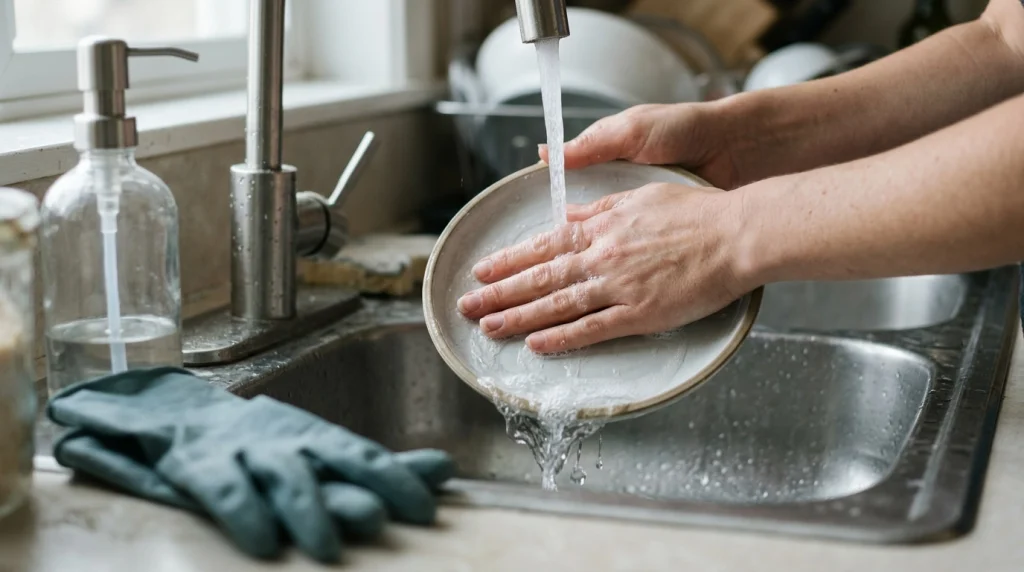
Household cleaning products can affect both your nail plate and the surrounding skin. The impact depends on the product, its concentration, how frequently you use it, and whether your hands are protected.
One important factor is repeated contact with water. Nails absorb some water during wet activities and release it as they dry. Frequent wetting and drying can contribute to changes in nail flexibility and splitting.
Detergents and some cleaning chemicals may also remove surface oils, aggravate sensitive skin, and contribute to irritation.
1. Dish Soap and Repeated Handwashing
Dishwashing liquid is designed to remove grease from plates and cooking equipment. Frequent contact can also leave your fingertips feeling dry, particularly when combined with hot water.
If you wash dishes several times daily without gloves, your nails repeatedly become wet and dry again. Over time, this can contribute to peeling at the free edges.
What helps: Use waterproof dishwashing gloves, avoid unnecessarily hot water, and apply hand cream after washing.
2. Laundry Detergents and Strong Degreasers
Laundry detergents and concentrated degreasers may contain surfactants and other ingredients that irritate skin during direct contact.
Handling these products without appropriate protection can leave the skin around your nails feeling tight, rough, or uncomfortable.
Choose gloves according to the product label, especially when handling concentrated formulas.
3. Bleach and Bathroom Cleaning Products
Bleach-based products, acidic bathroom cleaners, and powerful disinfectants require particular care because they can cause irritation or chemical injury.
These products should never be applied directly to your nails as a DIY whitening or cleaning treatment.
Warning
Never mix bleach with vinegar, ammonia, acids, or other household cleaners. Dangerous gases can form. Follow each product’s safety directions, use appropriate ventilation, and wear the recommended protective equipment.
For additional cleaning precautions, see our guide on how to protect nails from household chemicals.
What Does Acetone Actually Do to Dry Nails?
Acetone is a powerful solvent commonly used to dissolve regular nail polish and certain soak-off nail coatings.
It works quickly, making it useful for removing stubborn manicure products. However, frequent or prolonged exposure can leave natural nails and surrounding skin temporarily dry.
Some people notice a white, chalky appearance immediately after using acetone. This can reflect temporary surface dryness rather than permanent nail damage.
The concern becomes greater when frequent acetone exposure is combined with repeated manicures, excessive filing, or forcefully scraping away nail products.
Does Acetone Remove Natural Oils?
Acetone is effective at dissolving oils and cosmetic coatings. It can also reduce surface lipids and contribute to dryness around your nails.
Your skin and cuticle area may feel especially tight after prolonged exposure.
Using acetone occasionally for its intended purpose is different from repeatedly soaking your nails or using it as an everyday nail cleanser.
Can Acetone Cause Nail Peeling?
Frequent acetone use may contribute to brittle, peeling nails, particularly when the nails are already fragile.
However, acetone is not always the only cause. Rough buffing, improper gel removal, and pulling off firmly attached polish can cause additional nail plate damage.
If your nails peel after every gel manicure, review the entire removal process rather than blaming the solvent alone.
Is Acetone-Free Remover Better?
Acetone-free removers often contain alternative solvents such as ethyl acetate or butyl acetate. Some may feel less drying, especially when removing ordinary nail polish.
However, acetone-free does not mean chemical-free or completely harmless.
These formulas may require additional rubbing, and they may not work effectively on certain gel systems.
Best approach: Use a remover compatible with your manicure and avoid unnecessary contact with the surrounding skin.
Household Cleaners vs. Acetone: Which Is Worse for Dry Nails?
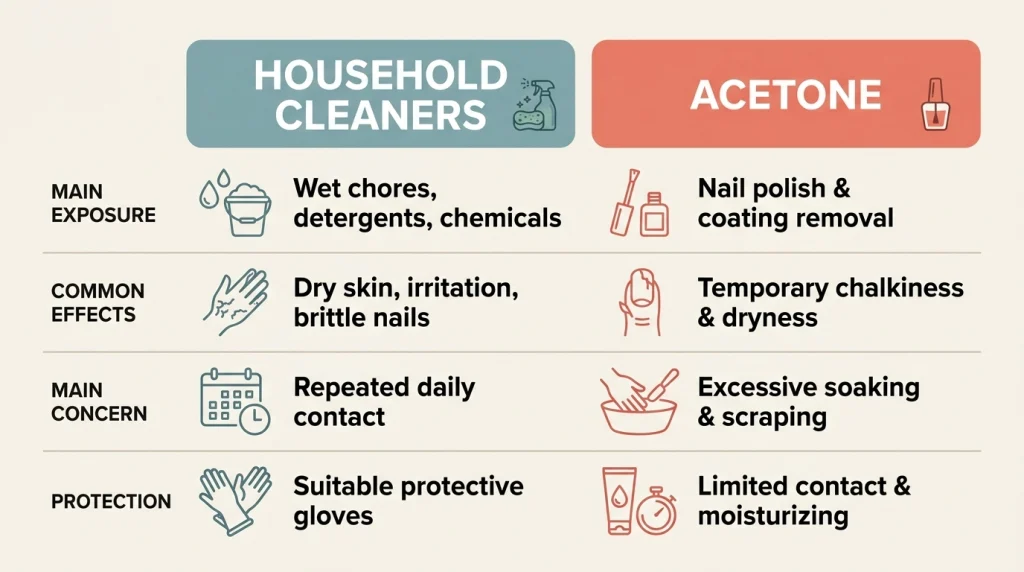
Neither is automatically worse in every situation. The amount of exposure and how you use each product matter more than the name alone.
| Factor | Household Cleaners | Acetone |
|---|---|---|
| Main exposure | Wet chores, detergents, cleaning chemicals | Nail polish and coating removal |
| Common effects | Dry skin, irritation, brittle nails from repeated exposure | Temporary dryness, irritation, possible brittleness with frequent use |
| Main concern | Repeated contact and potentially irritating ingredients | Excessive solvent contact and damaging removal techniques |
| Protection | Suitable protective gloves | Careful application, limited exposure, moisturizing afterward |
If you clean every day but remove polish once every few weeks, repeated wet cleaning may be the more important exposure. If you change gel manicures frequently and use aggressive removal methods, manicure-related damage may be a bigger concern.
What Are the Signs That Cleaning Products Are Affecting Your Nails?
Dry and fragile nails can show several changes. Recognizing them helps you adjust your routine before minor splitting becomes more troublesome.
Peeling Nail Tips
Thin layers may separate near the free edge of your nail. This type of splitting can occur when nails experience repeated wetting, drying, or physical stress.
Peeling is especially noticeable when the edges catch on clothing or hair.
Frequent Breaking and Splitting
Fragile nails may crack during ordinary activities such as typing, opening containers, or washing dishes.
Keeping your nails shorter can reduce leverage on already weakened tips.
Dry or Irritated Cuticles
Redness, roughness, tightness, and flaking around your nail folds can indicate irritation from detergents, solvents, or repeated washing.
If irritation becomes painful, swollen, or persistent, professional evaluation may be necessary.
White or Chalky Nail Surfaces
Nails may temporarily look pale or chalky after solvent exposure. However, persistent white patches can also have other causes, including surface trauma or nail conditions.
A change in nail appearance should not automatically be attributed to dryness.
How Can You Protect Dry Nails From Cleaning Products?
You don’t need a complicated nail-care routine to reduce everyday exposure. The most effective habits are usually practical and inexpensive.
1. Wear Appropriate Gloves for Wet Chores
Keep a comfortable pair of waterproof gloves near your kitchen sink. Wear them for dishwashing, prolonged cleaning, and other wet tasks.
For stronger cleaning chemicals, check the product label and glove manufacturer’s chemical-resistance guidance. Ordinary household gloves are not suitable for every chemical.
If moisture builds up inside your gloves, remove them, dry your hands, and replace damp liners.
Our guide to protecting your nails while washing dishes explains how to make this habit easier.
2. Moisturize After Washing Your Hands
Choose a fragrance-free hand cream containing moisturizing ingredients such as glycerin, petrolatum, or ceramides.
Massage it over your hands, fingertips, and skin around your nails after washing.
Keeping a small tube beside your sink can help you remember to apply it consistently.
3. Keep Your Nails at a Manageable Length
Long, brittle tips are more likely to catch on objects and split.
Trim your nails to a comfortable length using clean clippers. Smooth rough edges gently with a fine nail file.
Avoid aggressively buffing the nail surface because this can make thin nails even thinner.
4. Avoid Using Your Nails as Cleaning Tools
Don’t use your fingernails to scrape labels, remove stubborn residue, or pry dirt from corners.
Use a sponge, cleaning brush, or appropriate scraper instead.
This reduces physical stress on the nail plate, particularly when it is already fragile.
Pro Tip
Create a small nail-protection station near your sink with cleaning gloves, a dry towel, and hand cream. Keeping these essentials together makes consistent protection easier than relying on occasional intensive treatments.
How Should You Use Acetone Without Unnecessarily Drying Your Nails?
Acetone has a legitimate place in nail care, especially when removing products designed to dissolve in it. The goal is to use it carefully rather than avoid it at all costs.
- Choose the correct remover. Use the product recommended for your polish or nail enhancement.
- Work in a ventilated area. Keep acetone away from flames, heat, and smoking materials because it is highly flammable.
- Protect surrounding skin. Apply a little petroleum jelly around the nail folds if appropriate, without interfering with removal.
- Limit unnecessary soaking. Follow the removal instructions instead of leaving your fingers immersed in solvent longer than required.
- Never force off attached gel. If the coating has not released, follow the product’s removal directions or seek professional help.
- Moisturize afterward. Once removal is complete, gently wash away residue as directed, dry your hands, and apply hand cream.
For gel manicures, see how to protect your nails after gel removal for additional aftercare advice.
Important Safety Note
Don’t use acetone on broken or irritated skin. Avoid using household cleaning solvents as substitutes for cosmetic nail removers. Always store acetone securely and away from children and ignition sources.
Can Dry and Damaged Nails Recover?
Yes, many nails affected by routine dryness and environmental exposure can improve when you reduce the source of damage and practice consistent nail care.
However, moisturizing cannot permanently reattach layers of nail plate that have already split. Damaged sections generally need to grow forward and be trimmed away.
Fingernails usually take several months to grow from the base to the tip, often approximately four to six months for complete replacement.
How quickly yours improve depends on the severity of the damage, your growth rate, and whether the original exposure continues.
What Can You Expect During Recovery?
- Immediately: Cream or ointment can help relieve dryness in the surrounding skin.
- Over the following weeks: Better protection may reduce new splitting and irritation.
- Over several months: Previously damaged nail sections gradually grow out.
There is no reliable overnight treatment that can rebuild missing nail layers. A protective routine gives new growth a better chance of remaining healthy.
For a more complete recovery routine, read how to fix dry nails and reduce peeling.
What Daily Habits Help Keep Natural Nails Healthier?
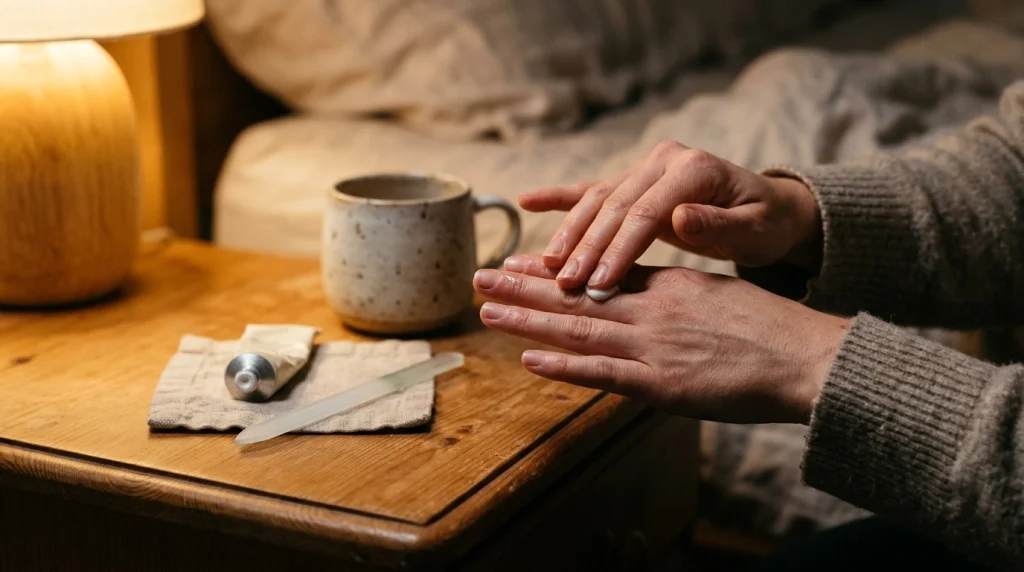
A simple daily routine is easier to maintain than constantly switching between nail treatments.
Morning
- Apply fragrance-free hand cream after washing.
- Check for rough nail edges that might catch on clothing.
- Use suitable gloves before beginning wet cleaning tasks.
During the Day
- Reapply moisturizer after frequent handwashing.
- Avoid unnecessary contact with strong cleaning products.
- Use tools instead of fingernails for scraping or prying.
Before Bed
- Massage moisturizing cream into your hands and nail folds.
- Apply a little petroleum jelly to especially dry areas if tolerated.
- Leave irritated or peeling nail surfaces alone instead of picking them.
Consistency matters more than buying an expensive collection of products.
What Should You Do and Avoid When Caring for Dry Nails?
Do
- Wear suitable gloves when cleaning.
- Moisturize after handwashing.
- File fragile tips gently.
- Use the correct polish remover.
- Allow damaged nail areas to grow out.
Don’t
- Handle harsh cleaners with bare hands.
- Peel off firmly attached gel polish.
- Over-buff thin nails.
- Use acetone for everyday nail cleaning.
- Ignore painful or persistent nail changes.
Which Products Help Protect Dry Nails?
You don’t need several expensive nail treatments. A few practical products can help you reduce chemical exposure, manage dryness, and protect fragile nail edges.
Disclosure: Some links below are Amazon affiliate search links. As an Amazon Associate, we earn from qualifying purchases.
Recommended Product
Cotton-Lined Household Cleaning Gloves
Comfortable waterproof gloves help reduce direct exposure to dishwater and cleaning detergents. Choose gloves compatible with the specific products you use.
As an Amazon Associate, we earn from qualifying purchases.
Recommended Product
Fragrance-Free Moisturizing Hand Cream
Look for glycerin, petrolatum, or ceramides to help care for dry hands and nail folds after washing.
As an Amazon Associate, we earn from qualifying purchases.
Recommended Product
Jojoba-Based Cuticle Oil
Cuticle oil is a convenient way to condition dry skin around your nails. It complements hand cream but cannot repair a physically split nail plate.
As an Amazon Associate, we earn from qualifying purchases.
Recommended Product
Fine-Grit Glass Nail File
A smooth glass nail file can help you gently shape fragile nail tips and remove small snags before they turn into larger splits.
As an Amazon Associate, we earn from qualifying purchases.
When Should You See a Dermatologist About Dry Nails?
Not every nail problem is caused by household cleaners or acetone. Persistent brittleness may sometimes be associated with skin conditions, fungal infections, or underlying health issues.
Consider professional evaluation if you notice:
- Persistent or worsening nail splitting despite gentle care.
- Pain, swelling, warmth, or pus around a nail.
- Nails separating from the nail bed.
- New or unexplained dark pigmentation.
- Significant thickening, discoloration, or changes affecting multiple nails.
- A rash that keeps returning after contact with nail products.
Seek prompt medical attention for suspected chemical burns or severe reactions. A dermatologist can help identify whether your symptoms come from repeated exposure or another condition.
Frequently Asked Questions
Q: Can household cleaners permanently damage your nails?
A: Repeated exposure can contribute to brittle, peeling nails, while strong chemicals may cause more serious injuries. Many damaged nail sections improve in appearance as new nails grow, but significant chemical injuries require medical assessment.
Q: Does acetone permanently weaken natural nails?
A: Occasional appropriate use does not necessarily cause permanent damage. However, frequent or prolonged exposure and aggressive removal techniques can contribute to dryness, brittleness, and damage that must grow out.
Q: Is acetone-free nail polish remover safe for dry nails?
A: Acetone-free removers can be less drying for some people, but they still contain solvents. Choose a formula suitable for your polish, avoid excessive rubbing, and moisturize afterward.
Q: Why do my nails peel after washing dishes?
A: Repeated wetting and drying, detergent exposure, and friction can contribute to peeling nail layers. Wear waterproof gloves when washing dishes and moisturize your hands afterward.
Q: How long does it take for dry nails to recover?
A: Dry surrounding skin may feel better soon after moisturizing, but visibly damaged nail layers need time to grow out. Complete fingernail replacement commonly takes approximately four to six months.
How Can You Keep Your Nails Healthy Around Cleaners and Acetone?
Understanding how household cleaners and acetone affect dry nails makes it easier to prevent avoidable damage. Repeated wet chores, irritating products, excessive solvent exposure, and aggressive manicure removal can all contribute to fragile nails.
Start with three simple habits: protect your hands with suitable gloves, moisturize consistently, and use nail removers carefully. Give damaged nails time to grow out rather than trying to force an instant repair.
Save this guide to your Pinterest nail-care board so you can return to these practical tips whenever your nails need extra care.

Hi, I’m Jessica, the creator behind Unique Lash & Nails Katy.
I created this website for anyone who loves beautiful nails as much as I do. Here, I share trendy nail designs, seasonal manicure ideas, easy nail care tips, honest product recommendations, and step-by-step guides to help you create salon-worthy nails at home. Whether you’re looking for everyday inspiration or your next favorite nail trend, I hope you’ll find something you love.