Splitting or Cracked Nails and Weakness/Damage: What’s the Connection?
Quick Answer
Splitting or cracked nails are often signs that your nail plate has become brittle, weakened, or physically damaged. Repeated exposure to water, harsh chemicals, aggressive manicures, and everyday trauma can make nail layers separate or break. You can protect weak nails by trimming them short, moisturizing regularly, wearing gloves for wet chores, and avoiding further damage while healthy nail grows out. Persistent or unusual changes may need medical evaluation.
You finally grow your nails to a beautiful length, only to notice another split running through the tip. Maybe your nails peel after a gel manicure, crack while doing everyday chores, or bend so easily that even a simple nail design feels impossible.
It’s frustrating, especially when you aren’t sure whether your nails are naturally weak or something in your routine is damaging them.
The connection between splitting or cracked nails and weakness/damage is easier to understand once you know how nails are built, what makes them fragile, and which habits help them recover.
Let’s look at the real causes, the differences between common nail problems, and the practical steps that can help you protect your natural nails.


What Is the Connection Between Splitting Nails and Nail Weakness?
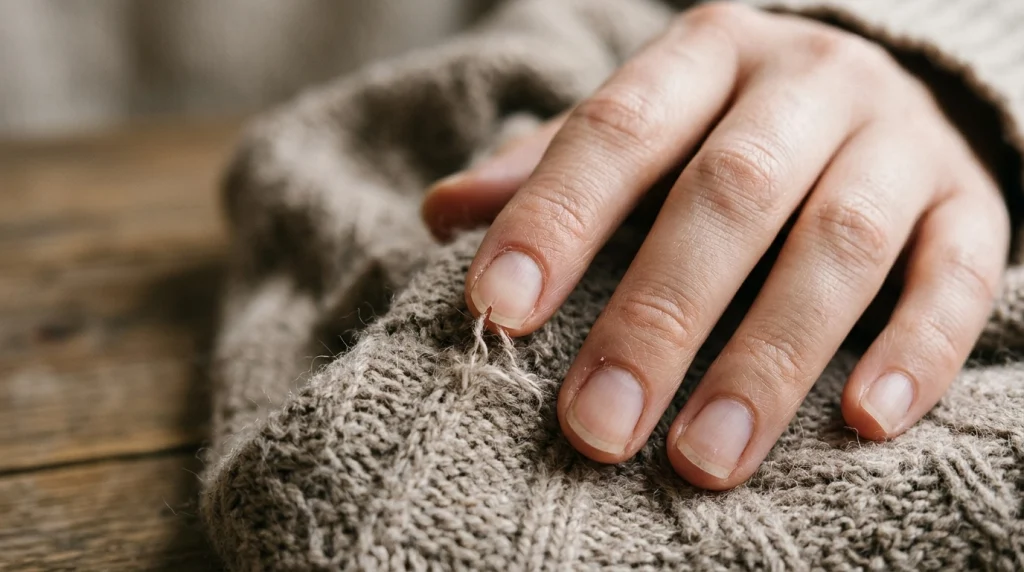
Your nails are made primarily of keratin, a structural protein arranged in compact layers. Together, those layers form the nail plate, the hard surface you paint, file, and shape.
Healthy nails have enough strength and flexibility to tolerate ordinary activities. However, repeated moisture exposure, physical stress, or cosmetic damage can reduce their resistance to cracking.
When the layers begin separating, you may notice peeling or horizontal splits. When the nail plate fractures, you might see a crack extending from the tip or side.
The important connection is that nail weakness increases the likelihood of damage, while repeated damage can make nails even more vulnerable to splitting.
This can become a frustrating cycle:
- Your nails experience repeated moisture exposure, trauma, or chemical stress.
- The nail plate becomes more fragile or develops damaged areas.
- Small splits and peeling layers appear near the edges.
- Those damaged areas catch on clothing and everyday objects.
- Additional breakage occurs before healthier nail can grow forward.
Because your visible nail plate consists of nonliving cells, a cracked section cannot permanently heal itself like a cut in your skin. You need to protect the existing nail while new nail grows from the base.
For a closer explanation of how nail growth affects recovery, see our guide to nail growth and damage.
Why Do Your Nails Keep Splitting or Cracking?
Before buying a strengthening treatment, it’s worth identifying what might be causing your nails to break. Most brittle nail problems involve environmental exposure or physical damage, although medical conditions can occasionally contribute.
1. Frequent Exposure to Water
Do you wash dishes, clean surfaces, or wash your hands frequently throughout the day?
Repeated wetting and drying can be surprisingly stressful for your nails.
Your nail plate absorbs water and expands slightly when wet. As it dries, it contracts. Repeating this cycle can contribute to brittleness and separation between nail layers.
This is one reason nails may start peeling after weeks of frequent dishwashing or wet work.
What helps: Wear protective gloves during lengthy wet chores, dry your hands carefully, and apply hand cream after washing.
2. Harsh Cleaning Products and Nail Chemicals
Household detergents, cleaning solutions, and repeated use of nail polish remover can leave nails and surrounding skin feeling dry.
Some cosmetic treatments also involve solvents, adhesives, and preparation methods that can stress the natural nail plate.
The problem often becomes worse when exposure is frequent and your nails don’t get much protection between treatments.
What helps: Avoid direct contact with cleaning chemicals, use products according to their instructions, and minimize unnecessary polish removal.
3. Aggressive Gel or Acrylic Nail Removal
Gel and acrylic manicures can look beautiful, but incorrect removal can cause significant damage.
When you peel or pry an enhancement away, layers of your natural nail may come off with it. Excessive filing before or during removal can also thin the nail plate.
Afterward, your nails may feel unusually flexible, rough, sensitive, or weak.
Instead of covering the damage immediately with another enhancement, consider a period of gentle nail care.
What helps: Follow the manufacturer’s removal instructions or use a trained nail professional. Never force products off an attached nail.
4. Physical Trauma and Everyday Habits
Your nails aren’t designed to function as tools.
Opening packages, scraping labels, picking at stickers, tapping nails against hard surfaces, and frequent nail biting can all cause small injuries.
One damaged edge can catch on fabric and turn a minor split into a larger crack.
What helps: Keep fragile nails at a manageable length and use appropriate tools instead of your fingernails.
5. Dry Nails and Neglected Cuticles
Cold weather, low humidity, frequent washing, and insufficient moisturizing can contribute to dry-feeling nails and cuticles.
Dryness is not the only cause of splitting, but it can make an already fragile nail more difficult to maintain.
Applying moisturizer regularly helps support the surrounding skin and improves the condition of the nail surface.
What helps: Massage a small amount of fragrance-free hand cream or cuticle oil around your nails, especially after washing and before bed.
6. Nutritional Deficiencies
Your body requires adequate nutrition to produce healthy nail tissue.
In some cases, low iron levels, insufficient protein intake, or other nutritional deficiencies may contribute to brittle nails.
However, splitting nails alone do not prove that you have a vitamin deficiency.
Taking high-dose supplements without confirming a deficiency may be unnecessary and can carry risks.
What helps: Eat a varied, balanced diet and discuss persistent nail changes with a healthcare professional before starting supplements.
7. Thyroid Problems and Other Health Conditions
Although most cases of brittle nails are related to external damage, some health conditions can affect nail strength and appearance.
Potential contributors include:
- Thyroid disorders.
- Iron-deficiency anemia.
- Nail psoriasis and certain other skin conditions.
- Fungal nail infections.
- Other conditions affecting nail growth or structure.
These conditions usually require more than cosmetic nail care.
If your nails suddenly change, several nails become unusually fragile, or you notice other symptoms such as fatigue, significant discoloration, or skin changes, a healthcare professional can help investigate the cause.
How Can You Tell Whether Your Nails Are Weak or Damaged?
Weakness and damage often overlap, but they aren’t exactly the same thing.
Weak nails are more vulnerable to bending, splitting, or breaking. Damaged nails have already experienced structural changes or injury.
Signs of Weak Nails
- Nails bend easily under light pressure.
- Tips split before reaching your desired length.
- Edges peel into thin layers.
- Nails repeatedly break during ordinary activities.
- Natural nails feel unusually thin or fragile.
Signs of Nail Damage
- Visible cracks or fractures in the nail plate.
- Rough or uneven areas after enhancement removal.
- Sections of the nail that have been over-filed.
- Persistent peeling near the free edge.
- Injury-related changes to the nail surface.
- Partial separation of the nail from its underlying bed.
Some symptoms overlap, and appearance alone may not reveal the exact cause.
If you’re uncertain whether a change is normal, explore these signs of unhealthy nails before deciding how to care for them.
Are Splitting Nails, Peeling Nails, and Cracked Nails the Same?
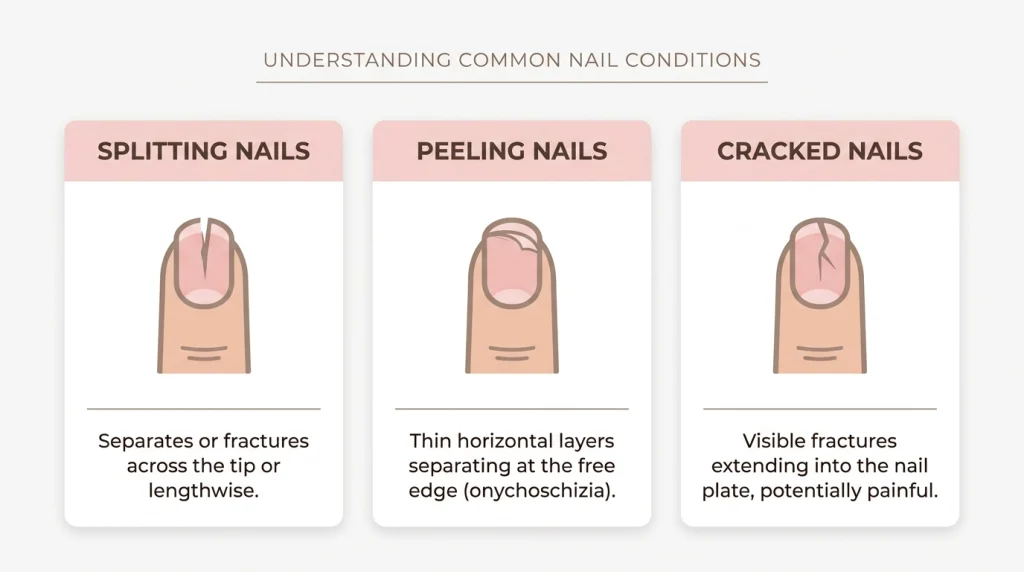
Not exactly. These terms describe related but different structural problems.
Splitting Nails
A split happens when part of the nail separates or fractures. It may appear across the tip or extend lengthwise along the nail.
Splits limited to the free edge often result from everyday stress. A deep split extending toward the nail base deserves greater attention.
Peeling Nails
Peeling occurs when thin layers separate, usually near the nail tip.
This type of splitting is commonly associated with the medical term onychoschizia.
Repeated moisture exposure, manicure damage, and mechanical stress are frequent contributors.
Cracked Nails
A crack is a visible fracture in the nail plate.
Some cracks are shallow and limited to the free edge. Others may extend into attached nail tissue and cause pain or bleeding.
Deep, painful cracks should not be treated like ordinary cosmetic imperfections.
Brittle Nails
Brittleness describes a nail’s tendency to break, crack, or split easily.
You may have brittle nails without one obvious crack, especially if several nails repeatedly peel or chip.
Pro Tip
Look closely at where the damage begins. Peeling limited to the tips often suggests external wear, while new deep splits, pain, nail lifting, or dramatic changes affecting multiple nails warrant professional assessment.
How Can You Help Weak, Splitting Nails Recover?
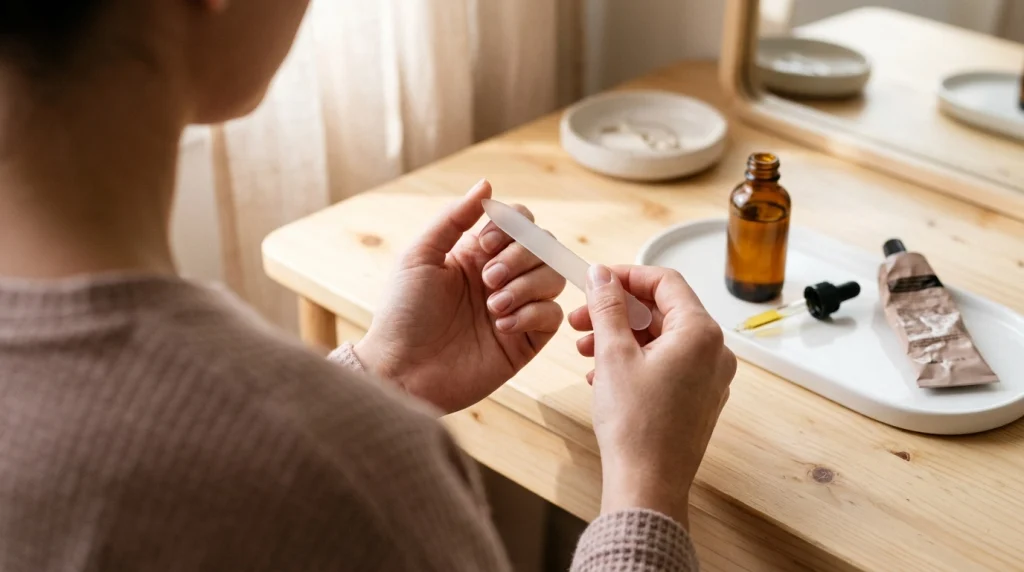
You don’t need an expensive collection of nail treatments to begin protecting fragile nails.
The most useful approach is to reduce ongoing stress and support healthy nail growth.
1. Trim Your Nails to a Comfortable Length
Long nails experience greater leverage when they press against everyday objects.
If your nails are repeatedly splitting, keeping them shorter can reduce additional mechanical stress.
Use clean, sharp nail clippers and avoid cutting into the attached nail bed.
A short, softly rounded shape is often practical while your nails are fragile.
2. Smooth Rough Edges Carefully
Small snags can catch on clothing and worsen existing damage.
Use a fine-grit or glass nail file to smooth rough free edges without aggressive pressure.
Focus on the edge rather than repeatedly buffing the top surface.
When your nails are already thin, unnecessary buffing removes material they cannot easily afford to lose.
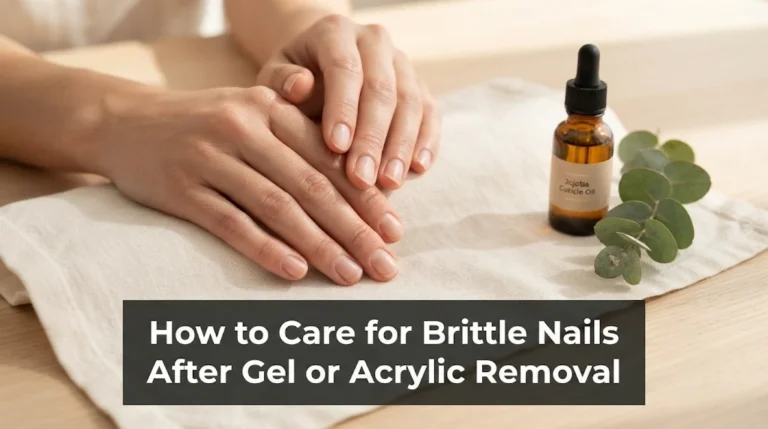
3. Moisturize Your Nails and Surrounding Skin
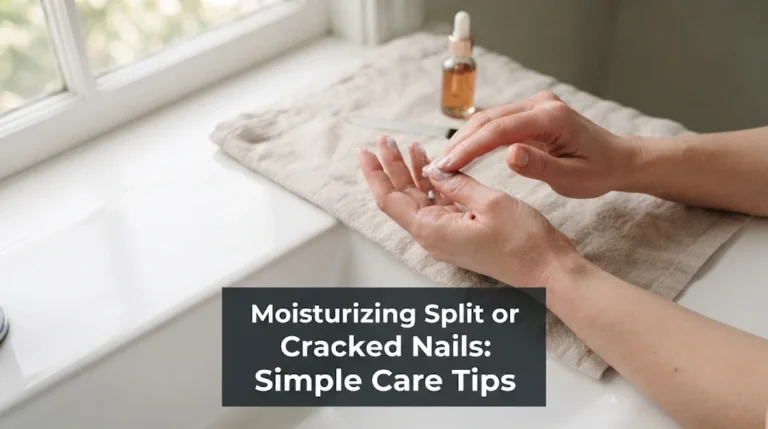
Apply hand cream after washing and whenever your hands feel dry.
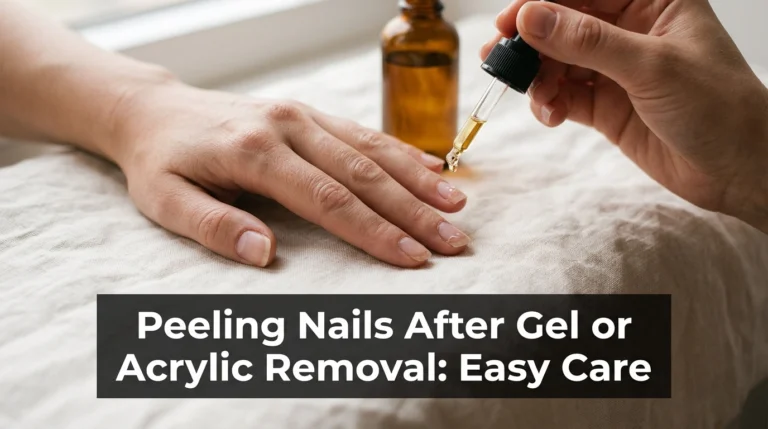
You can also massage a small amount of cuticle oil around each nail.
Products containing ingredients such as glycerin, petrolatum, or jojoba oil can help with moisturizing and conditioning.
Remember that moisturizing does not fuse separated nail layers back together. Its purpose is to support nail care and reduce dryness.
4. Protect Your Nails During Wet Chores
Repeated contact with water and detergents can continue weakening brittle nails.
Wear well-fitting protective gloves when washing dishes or using household cleaners.
If gloves become damp inside, change or dry them rather than keeping your hands in a wet environment for prolonged periods.
This simple habit can make a meaningful difference when wet work is one of your main triggers.
5. Give Damaged Nails a Break From Enhancements
If your nails became thin after gel, acrylic, or dip removal, avoid repeating the same damaging process.
Choose gentle maintenance while the affected portion grows out.
You don’t necessarily need to avoid every type of polish forever. The priority is preventing additional trauma, particularly from aggressive preparation and removal.
For more practical advice, see our guide on how to repair a damaged nail at home safely.
6. Avoid Picking, Biting, and Using Nails as Tools
Pay attention to habits you might perform without thinking.
Picking at polish, scraping labels, or opening containers with your nails creates repeated stress at the same vulnerable edges.
Use a package opener, tweezers, or another suitable tool instead.
Keep a small file nearby so you can smooth a minor snag before it turns into a larger break.
7. Support Nail Growth With Balanced Nutrition
Healthy nail growth depends partly on your overall health and access to essential nutrients.
Build meals around a variety of protein sources, vegetables, fruits, whole grains, and other nutrient-rich foods.
If you suspect a deficiency, ask a healthcare professional whether testing is appropriate.
Biotin supplements are often marketed for stronger nails, but the evidence supporting routine use in people without a confirmed deficiency is limited. High-dose biotin can also interfere with some laboratory tests.
How Long Does It Take for Damaged Nails to Become Stronger?
Unfortunately, damaged nails don’t become structurally new overnight.
Your fingernails generally grow about 3 millimeters per month, although growth rates vary between individuals.
A completely new fingernail often takes approximately four to six months to replace the existing nail plate. More extensive damage or problems involving the nail matrix may require different care.
Your recovery timeline depends on several factors:
- How much of the nail plate is damaged.
- Whether the underlying cause has stopped.
- Your individual nail growth rate.
- Whether you continue experiencing frequent breakage.
- Whether an underlying medical condition is affecting nail health.
You may notice fewer new breaks relatively soon after changing damaging habits, but visible damaged sections must generally grow forward before they can be trimmed away.
Rather than expecting immediate transformation, monitor your nails over several weeks and look for healthier new growth near the cuticles.
What Should You Do If a Nail Has Already Cracked?
The safest response depends on how deep the crack is and whether it affects attached tissue.
For a Small Crack at the Free Edge
- Wash your hands gently and dry them thoroughly.
- Examine the crack to confirm that it is limited to the unattached nail tip.
- Trim the loose edge carefully if you can do so without pain.
- Smooth any remaining snag with a fine nail file.
- Moisturize and avoid activities that repeatedly catch the damaged edge.
Don’t pull away peeling layers, since doing so can remove additional nail material.
For a Deep, Painful, or Bleeding Crack
A crack extending into the attached portion of the nail requires more caution.
Don’t cut deeply into the nail, force separated pieces together, or apply cosmetic glue to injured tissue.
If the area is bleeding, apply gentle pressure with clean gauze. Protect the nail from further injury and seek appropriate medical care.
Warning
Never apply nail glue, acrylic, gel, or decorative overlays over an open wound, suspected infection, or deeply cracked nail involving the nail bed. These products can irritate injured tissue, conceal worsening symptoms, and delay appropriate treatment.
Which Everyday Habits Help Prevent Nail Splitting?
Prevention is especially important if your nails are naturally fragile or repeatedly exposed to water and cosmetic treatments.
Do
- Keep nails neatly trimmed.
- Moisturize after handwashing.
- Use gloves for cleaning.
- File snagged edges gently.
- Remove enhancements carefully.
- Monitor unusual changes.
Don’t
- Peel off gel polish.
- Over-buff thin nails.
- Use nails to open objects.
- Ignore painful cracks.
- Cut or pick at cuticles.
- Take supplements blindly.
Consistency matters more than a complicated routine. Many protective habits take only a few minutes.
You can also review these common nail health mistakes to identify habits that might be contributing to your nail problems.
What Nail Care Products Are Actually Helpful for Weak Nails?
Some products make it easier to maintain fragile nails, but none can instantly restore a damaged nail plate to its original structure.
Choose tools and moisturizers that support your routine rather than products promising overnight nail repair.
Disclosure: As an Amazon Associate, we earn from qualifying purchases.
Recommended Nail Care Tool
Fine-Grip Glass Nail File
A smooth, fine-textured glass nail file helps maintain a neat free edge without the aggressive abrasion associated with coarse files. Use gentle pressure on fragile nails.
Product availability and customer ratings may change.
Recommended Nail Moisturizer
Jojoba-Based Cuticle Oil
A simple cuticle oil can help condition dry nail surfaces and surrounding skin. Apply a small amount regularly, especially when your hands feel dry.
Recommended Protective Product
Reusable Household Cleaning Gloves
Protective gloves help reduce direct exposure to water, detergents, and cleaning chemicals. They are especially useful if frequent wet work contributes to your brittle nails.
When Should You See a Doctor About Splitting or Cracked Nails?
Most minor nail splits can be managed through gentle protection and changes to your routine.
However, some nail changes may indicate infection, injury, or an underlying health condition.
Consider seeing a healthcare professional or dermatologist if you notice:
- Persistent splitting despite reducing obvious sources of damage.
- New or worsening pain, swelling, or redness around a nail.
- Pus, warmth, or other possible signs of infection.
- A nail lifting away from its underlying bed.
- Unexplained thickening, crumbling, or persistent discoloration.
- A new or changing dark streak under a nail.
- Deep lengthwise cracking or bleeding.
- Sudden brittleness affecting several nails without a clear explanation.
A clinician may examine your nail structure, review possible causes, and recommend appropriate tests when necessary.
Not every brittle nail requires blood tests. Testing should be guided by your medical history, symptoms, and examination.
If you have diabetes, poor circulation, or a weakened immune system, seek professional advice promptly for nail injuries or suspected infections.
Can Weak Nails Become Healthy Again?
Yes, many people can improve the condition of their nails by identifying and reducing the factors that cause repeated damage.
However, the damaged part of the nail does not repair itself in the same way your skin does.
Healthy nail growth begins at the nail matrix beneath the skin near the base of your nail. Over time, newly formed nail replaces older material.
That’s why long-term improvement depends on protecting new growth instead of repeatedly covering existing damage.
When the main problem is excessive water exposure, rough removal, or daily mechanical stress, changing those habits can help reduce future splitting.
If a medical condition is responsible, the underlying cause may need treatment before nail health improves.
For additional practical habits, read our guide on how to stop nails from breaking.
Frequently Asked Questions About Splitting and Weak Nails
Q: Does splitting always mean my nails are weak?
A: Not always. A healthy nail can split after an injury, but frequent splitting may indicate brittleness, repeated trauma, moisture exposure, or cosmetic damage. The pattern and surrounding symptoms help determine what is happening.
Q: Can nail strengtheners repair cracked nails?
A: Nail strengthening products may temporarily change how a nail feels or protect its surface, depending on their ingredients. They cannot permanently restore separated nail layers. Some hardening treatments can also make nails too rigid, so choose products carefully.
Q: Why do my nails split even when I don’t wear nail polish?
A: Nail polish isn’t the only cause. Frequent washing, cleaning chemicals, mechanical stress, dryness, natural aging, and certain medical conditions can contribute to splitting even when you never use nail products.
Q: Is nail splitting caused by a vitamin deficiency?
A: Sometimes, but most brittle nail problems are related to external factors. Nutritional deficiencies can contribute in certain cases. A healthcare professional can decide whether testing is needed instead of relying on nail appearance alone.
Q: How can I prevent my nails from splitting at the tips?
A: Keep your nails reasonably short, smooth snags gently, moisturize after washing, and wear gloves during prolonged wet chores. Avoid using nails as tools or pulling away peeling layers. These habits help reduce repeated damage.
The Bottom Line: Protect Weak Nails While Healthy Nails Grow
The connection between splitting or cracked nails and weakness/damage often comes down to repeated stress on an already fragile nail plate.
Whether the cause is moisture, manicure damage, dryness, or everyday trauma, protecting your nails from further injury is a practical first step. Persistent, painful, or unusual changes deserve professional attention.
Start with a few consistent habits: keep your nails neatly trimmed, moisturize regularly, wear protective gloves, and avoid aggressive nail treatments while damaged sections grow out.
Love simple nail care tips? Save this guide to your Pinterest nail care board so you can revisit these habits whenever your nails need extra attention.

Hi, I’m Jessica, the creator behind Unique Lash & Nails Katy.
I created this website for anyone who loves beautiful nails as much as I do. Here, I share trendy nail designs, seasonal manicure ideas, easy nail care tips, honest product recommendations, and step-by-step guides to help you create salon-worthy nails at home. Whether you’re looking for everyday inspiration or your next favorite nail trend, I hope you’ll find something you love.