Common Peeling Nail Care Mistakes: Easy Fixes
Quick Answer
The most common peeling nail care mistakes include picking off gel polish, over-buffing, filing aggressively, skipping moisturizer, exposing nails to excessive water, and using harsh removal products. To prevent more peeling, keep nails short, smooth rough edges gently, moisturize after washing, wear gloves for wet chores, and let damaged nail layers grow out.
Watching your natural nails peel into thin, flaky layers can be frustrating, especially when you’ve been trying to grow them longer. Sometimes the very products and manicure habits you use to improve your nails are making the damage worse.
The good news? Many common peeling nail care mistakes are preventable. Once you identify what’s stressing your nails, you can build a gentle routine that protects them while healthier nail grows in.


Why Do Your Nails Keep Peeling?
Your nail plate is made of tightly packed layers of keratin. When those layers begin separating near the tip, you may notice thin flakes, rough edges, or small horizontal splits. Dermatologists call this type of splitting onychoschizia.
Peeling doesn’t automatically mean you’re missing a vitamin. Everyday exposure and cosmetic damage are common explanations, especially when your fingernails peel but your toenails remain relatively strong.
Repeated wetting and drying, excessive filing, nail picking, and aggressive manicure removal can all contribute. Aging and certain health conditions may also affect nail strength.
What Does Nail Peeling Look Like?
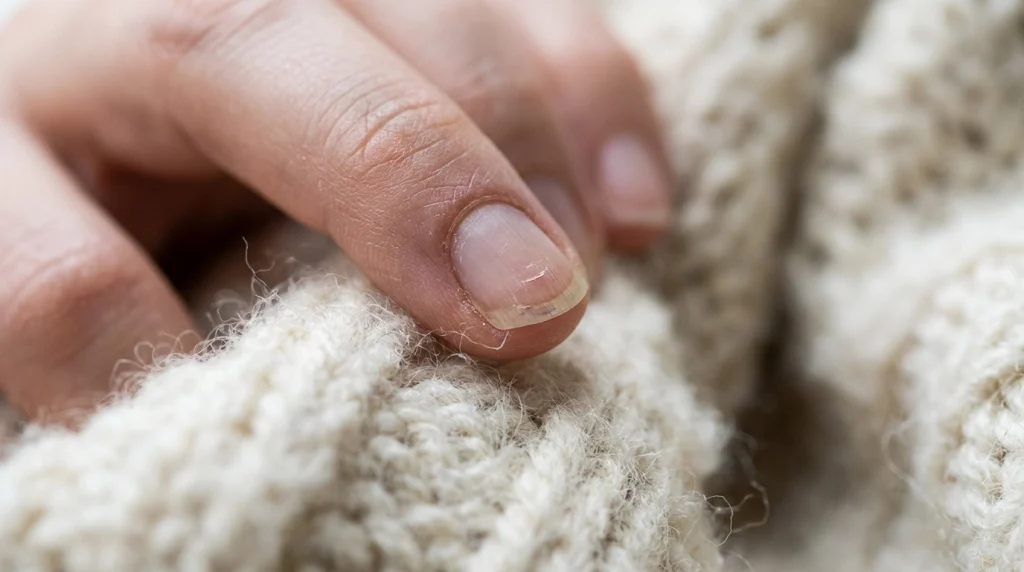
- Thin layers lifting from the free edge of your nail.
- Rough white-looking flakes near the nail tips.
- Edges that repeatedly catch on clothing or hair.
- Nails that bend, split, or chip more easily than usual.
- Peeling that becomes noticeable after removing gel or acrylic enhancements.
If your nails are peeling without pain or significant discoloration, gentle care may help limit further damage. However, swelling, pain, nail lifting from the nail bed, or persistent unexplained changes deserve medical evaluation.
What Are the Most Common Peeling Nail Care Mistakes?
These eleven habits can contribute to peeling, especially when several happen together. You don’t need to change everything overnight. Start by correcting the mistakes that match your everyday routine.
1. Peeling Off Gel Polish Instead of Removing It Properly
When gel polish starts lifting, pulling off the loose corner can feel satisfying. Unfortunately, the coating may take superficial layers of your natural nail with it.
This is one reason your nails sometimes look white, rough, and unusually thin after a gel manicure.
What to do instead: Have gel removed by a trained nail professional or follow the removal directions for your specific soak-off product. Avoid prying, scraping, or forcing resistant material away from the nail plate.
If your nails are already damaged, use the gentler recovery approach explained in our guide to protecting nails after gel removal.
2. Buffing Away Every Visible Imperfection
Light surface ridges and uneven-looking nail tips might make you reach for a buffer. However, repeatedly polishing the natural nail surface removes some of its thickness.
When your nail plate is already peeling, additional buffing can make it more flexible and vulnerable to splitting.
What to do instead: Leave peeling areas alone rather than trying to erase them. Smooth only the snagging free edge with a fine-grit file.
Remember that buffing cannot restore the layers you’ve already lost. The damaged portion must gradually grow out.
3. Filing Your Nails Too Aggressively
A coarse file, heavy pressure, or repeated sawing along a fragile nail edge can worsen existing splits.
While gentle back-and-forth filing isn’t automatically harmful, forceful filing creates unnecessary mechanical stress.
What to do instead: Choose a fine-grit nail file, support your fingertip, and work slowly using light pressure. Shape nails into a short oval or softly rounded square to reduce snagging.
Never pull away a partially detached nail layer. Carefully shorten the loose free edge instead.
Pro Tip
File your nails when they’re clean and dry enough to handle comfortably. Check each tip against a soft cloth afterward. If a nail catches the fabric, gently smooth that exact spot instead of filing the entire edge again.
4. Skipping Moisturizer After Washing Your Hands
Frequent handwashing is important for hygiene, but repeated exposure to water and cleansing products can contribute to nail brittleness.
If you moisturize your hands but avoid the nails themselves, you’re missing an easy opportunity to care for the nail plate and surrounding skin.
What to do instead: After washing and drying your hands, massage a fragrance-free hand cream over your fingernails and cuticles.
At bedtime, apply a thin layer of petroleum jelly or cuticle oil around the nail edges. These products help condition the area and reduce dryness, although they cannot permanently reattach separated nail layers.
5. Keeping Your Nails Wet for Too Long
Long periods of water exposure are a surprisingly common contributor to splitting nails.
Think about washing dishes, cleaning bathrooms, handwashing clothes, or repeatedly soaking your hands during beauty treatments.
Nails absorb water and change with wetting and drying. Frequent cycles can contribute to weakness and layer separation.
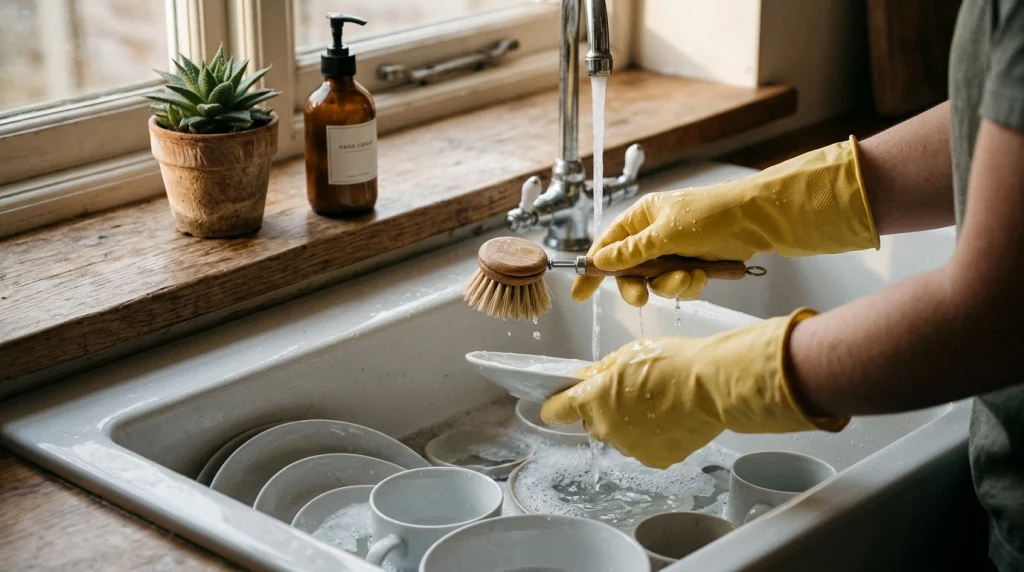
What to do instead: Wear appropriately fitted protective gloves for dishwashing and cleaning. Cotton-lined gloves may feel more comfortable during longer tasks.
After finishing, dry your hands thoroughly and apply moisturizer. Avoid leaving damp gloves on for extended periods.
6. Using Acetone Too Frequently or Unnecessarily
Acetone is useful for removing certain nail coatings, but unnecessary or prolonged exposure may leave your nails and surrounding skin feeling dry.
Removing and reapplying polish repeatedly also increases opportunities for rubbing, scraping, and other physical damage.
What to do instead: Match the remover to your manicure. Traditional polish may come off with a gentler non-acetone remover, while soak-off gel usually requires the manufacturer’s recommended removal process.
Limit solvent contact to what’s necessary and moisturize afterward. Never force off stubborn coating just to avoid using remover.
7. Cutting or Pushing Back Your Cuticles Aggressively
Your cuticles help protect the area where your nails grow. Cutting living cuticle tissue or forcing it backward can cause irritation, small injuries, and an increased risk of infection.
Although cuticle damage doesn’t explain every case of peeling nail tips, it adds unnecessary stress to an already delicate manicure routine.
What to do instead: Leave healthy cuticles intact. Soften dry skin with moisturizer and carefully clip only detached hangnails using clean tools.
A tidy manicure doesn’t require removing protective skin.
8. Using Strong Nail Hardeners Without Checking Ingredients
When your nails feel soft, a strengthening treatment sounds like the perfect solution. However, making a nail extremely rigid isn’t always helpful.
Some hardening formulas, particularly those containing formaldehyde, may increase brittleness with repeated use.
What to do instead: Read product labels and avoid formaldehyde-containing nail hardeners when your nails are already peeling.
If you want a cosmetic coating, choose a gentle product compatible with your nail condition. Stop using it if you notice irritation, increased splitting, or discomfort.
For broader everyday habits, our simple nail care routine guide explains how to maintain nails without unnecessary treatments.
9. Using Your Fingernails as Everyday Tools
Opening soda cans, scraping labels, lifting stickers, and picking at packaging might seem harmless. Yet these little actions repeatedly push against your nail tips.
If your free edges are already separating, pressure can make the split travel farther backward.
What to do instead: Use a proper tool, a coin, or another suitable object for prying tasks. Keep peeling nails relatively short until the damaged ends grow out.
Choose a length that feels comfortable when typing, dressing, and handling everyday objects.
10. Covering Damaged Nails With Another Gel or Acrylic Set
A fresh manicure can temporarily hide rough-looking nails. However, applying enhancements over damaged nail plates may expose them to additional preparation, adhesive, and removal stress.
Another coating doesn’t rebuild the layers underneath.
What to do instead: Pause enhancements when you notice thinning or peeling. Focus on gentle trimming, moisturizing, and protecting the damaged area.
If you eventually return to gel, discuss gentle preparation and removal with your nail technician. Our article on how gel polish affects nail strength explains why removal techniques matter.
11. Expecting Peeling Nails to Heal Overnight
Perhaps the most frustrating mistake is switching between multiple treatments because you don’t see immediate improvement.
The visible nail plate is not living tissue. Once its layers have separated, cream and oil won’t fuse them permanently back together.
What to do instead: Protect the existing nail while healthy new nail grows from the matrix beneath the skin near your cuticle.
Consistency matters more than using several expensive products. Avoid judging your progress from a single day or manicure.
How Can You Care for Peeling Nails Without Making Them Worse?
Your recovery routine should be gentle, affordable, and easy enough to repeat consistently.
Time needed
5–10 minutes daily
Difficulty
Beginner
Essentials
File, cream, gloves
Care duration
Until damage grows out
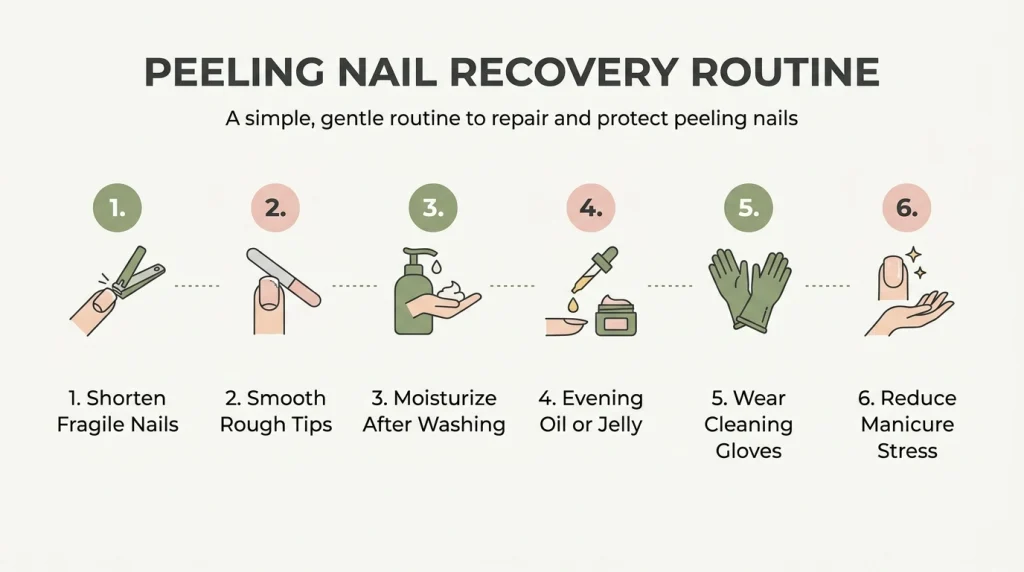
Your Simple Peeling Nail Recovery Routine
- Shorten fragile nails: Trim only as much as needed to remove easily snagged edges. Don’t cut painfully close to the skin.
- Smooth rough tips: Use a fine-grit file with light pressure. Avoid buffing the surface of the nail plate.
- Moisturize consistently: Apply hand cream after washing. Massage a little over each nail and surrounding cuticle.
- Add evening protection: Apply petroleum jelly or cuticle oil before bed to condition dry nails and skin.
- Protect your hands: Use gloves for wet cleaning tasks and avoid scraping or prying with your nails.
- Reduce manicure stress: Avoid unnecessary polish changes, aggressive removal, and repeated enhancements while peeling continues.
Pro Tip
Keep a small hand cream beside your bathroom sink and another near your workspace. Making moisturizer easy to reach helps you use it consistently after washing, rather than remembering only when your nails look dry.
Which Nail Care Products Are Actually Worth Using?
You don’t need a large collection of treatments to care for peeling nails. A few practical products can help you avoid further damage.
1. Fine-Grit Nail File
A gentle file helps smooth sharp edges before they snag. Look for a fine-grit option suitable for natural nails, and use light pressure rather than repeatedly filing the same spot.
Recommended Nail Care Tool
Fine-Grit Nail File for Natural Nails
Useful for smoothing fragile nail tips without relying on aggressive surface buffing.
As an Amazon Associate, we earn from qualifying purchases.
2. Fragrance-Free Hand Cream
Choose a cream with ingredients such as glycerin, petrolatum, or ceramides. These help condition dry skin and reduce moisture loss.
Apply it directly over your nails and cuticles, especially after washing.
Recommended Moisturizer
Fragrance-Free Moisturizing Hand Cream
A practical everyday choice for caring for dry nails and surrounding skin.
As an Amazon Associate, we earn from qualifying purchases.
3. Cuticle Oil or Petroleum Jelly
Cuticle oils containing jojoba or other conditioning oils can make the skin around your nails feel softer. Plain petroleum jelly is another affordable option.
Neither product instantly repairs split nail layers, but conditioning dry nails can be part of a protective routine.
Recommended Nail Conditioner
Jojoba-Based Cuticle Oil
Convenient for conditioning dry cuticles and the surrounding nail area.
As an Amazon Associate, we earn from qualifying purchases.
4. Protective Cleaning Gloves
If you frequently wash dishes or clean with household products, protective gloves may be one of your most useful nail care purchases.
Look for a comfortable, properly sized pair. Cotton lining can help during longer chores, but replace or dry gloves if the inside becomes damp.
Choose products based on comfort and usefulness rather than promises of instant nail growth.
What Should You Do and Avoid When Your Nails Are Peeling?
Do
- Keep your nails comfortably short.
- File rough edges gently.
- Moisturize after washing.
- Wear gloves for wet chores.
- Allow damaged nails to grow out.
- Choose gentle manicure removal.
Don’t
- Peel off gel or acrylic products.
- Over-buff the nail surface.
- Pull away loose nail layers.
- Soak nails unnecessarily.
- Cut healthy cuticle tissue.
- Hide concerning changes under polish.
How Long Does It Take for Peeling Nails to Improve?
Your nails may feel smoother relatively quickly once you trim snags and begin moisturizing. However, that doesn’t mean the damaged nail layers have regenerated.
Fingernails typically grow around 3 millimeters per month, although individual growth rates vary. A complete fingernail may take approximately four to six months to grow out.
If peeling affects only the tips, that damaged portion may disappear sooner as you trim away new growth. Damage extending farther back generally needs more time.
Focus on whether new nail growth looks healthier and whether fewer splits are developing. Our guide to stopping nails from breaking offers additional protection habits.
What If Your Nails Keep Peeling Despite Gentle Care?
Problem: Peeling gets worse after each manicure
Immediate fix: Stop picking and aggressive surface preparation. Next time: Choose gentler application and removal methods, and avoid enhancements until the damage has improved.
Problem: Nail tips keep catching on fabric
Immediate fix: Shorten loose edges carefully and smooth remaining snags. Prevention: Keep the nail shape simple and avoid using fragile tips as tools.
Problem: Nails feel dry despite cuticle oil
Immediate fix: Add a moisturizing hand cream and reduce unnecessary chemical exposure. Prevention: Apply cream after washing and protect your hands during prolonged wet work.
Problem: Peeling continues without an obvious cause
Immediate fix: Arrange an assessment with a healthcare professional, particularly if the changes persist or affect multiple nails. Prevention: Follow individualized advice rather than repeatedly experimenting with new treatments.
When Should You See a Dermatologist About Peeling Nails?
Warning Signs
Seek professional care if peeling is persistent, unexplained, painful, or accompanied by swelling, redness, significant discoloration, thickening, or separation of the nail from the nail bed. Rapidly worsening symptoms or signs of infection warrant prompt assessment.
Occasionally, brittle or peeling nails may be associated with medical conditions, including certain skin disorders or nutritional problems. However, appearance alone cannot establish the cause.
A dermatologist can examine the pattern of nail damage and determine whether testing or targeted treatment is appropriate.
Avoid starting high-dose biotin or other supplements solely because your nails are peeling. Evidence for biotin in otherwise healthy people is limited, and biotin can interfere with certain laboratory tests.
Frequently Asked Questions About Peeling Nail Care Mistakes
Q: Should you cut off the peeling parts of your nails?
A: You can carefully trim loose, snagging material at the free edge using clean nail clippers. Don’t cut into attached nail tissue or pull away layers. Smooth any remaining rough edge gently.
Q: Is cuticle oil or hand cream better for peeling nails?
A: Both can help condition dry nails and surrounding skin. Hand cream is especially practical after washing, while cuticle oil is useful for targeted conditioning. Neither can permanently reconnect damaged nail layers.
Q: Can you wear nail polish while your nails are peeling?
A: Mild peeling doesn’t always rule out traditional polish, but taking a break may reduce exposure to removers and repeated manicure preparation. Avoid covering painful, lifting, or otherwise concerning nails without medical advice.
Q: Are peeling nails always caused by vitamin deficiency?
A: No. Repeated water exposure, mechanical damage, and manicure habits are common contributors. Nutritional deficiencies or medical conditions are possible in some cases, so persistent unexplained peeling deserves professional assessment.
Q: Will peeling nails repair themselves if you stop getting manicures?
A: Stopping damaging manicure practices can help prevent additional peeling. Existing separated layers won’t completely fuse back together, but healthier nail can gradually replace the damaged section as it grows.
Final Thoughts: Protect Your Nails Instead of Over-Treating Them
Most common peeling nail care mistakes involve too much friction, unnecessary chemical exposure, or insufficient protection. Keep your routine gentle: moisturize consistently, file carefully, protect your hands, and give damaged nails time to grow out.
Save this guide to your Pinterest nail care board so you can revisit these habits whenever your natural nails need extra attention.

Hi, I’m Jessica, the creator behind Unique Lash & Nails Katy.
I created this website for anyone who loves beautiful nails as much as I do. Here, I share trendy nail designs, seasonal manicure ideas, easy nail care tips, honest product recommendations, and step-by-step guides to help you create salon-worthy nails at home. Whether you’re looking for everyday inspiration or your next favorite nail trend, I hope you’ll find something you love.