Why Are My Nails Peeling? Causes and Easy Fixes
Quick Answer
Your nails may be peeling because of repeated water exposure, harsh soaps, cleaning chemicals, aggressive manicures, or physical damage. These factors can weaken the layers of your nail plate, causing them to separate at the tips. Keep nails short, moisturize regularly, wear gloves for wet chores, and stop picking at peeling layers. If peeling persists or comes with pain, discoloration, or nail lifting, see a dermatologist.
Noticed thin layers lifting from the ends of your nails? Maybe your favorite manicure keeps chipping because the natural nail underneath is peeling away.
Peeling nails can be frustrating, especially when you’re trying to grow them longer. Fortunately, everyday habits are often responsible, and changing those habits can help prevent further damage.
Here’s how to recognize peeling nails, understand the likely causes, protect fragile tips, and know when your nails need professional attention.


What Does It Mean When Your Nails Start Peeling?
Your fingernails are made primarily of keratin, a structural protein arranged in layers. When those layers lose their normal connection, thin sheets may separate from the nail’s free edge.
Dermatologists call this type of horizontal nail splitting lamellar onychoschizia. It often appears as thin flakes or layers peeling from the tips rather than a crack extending down the entire nail.
Peeling is particularly common on fingernails because your hands encounter water, detergents, friction, and manicure products throughout the day.
The important distinction is that your nail plate cannot permanently repair a layer that has already separated. Instead, you protect the remaining nail while healthier new growth gradually replaces the damaged section.
How Can You Tell If Your Nails Are Peeling or Breaking?
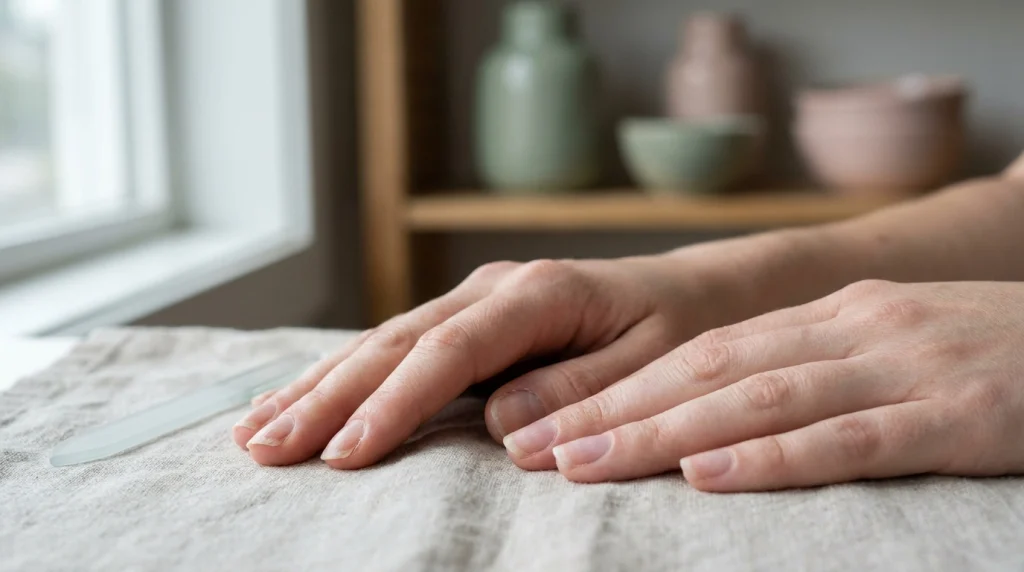
Peeling and breaking often happen together, but they aren’t exactly the same problem.
- Peeling nails: Thin, horizontal layers lift or flake away, usually near the free edge.
- Breaking nails: A crack or fracture causes part of the nail to snap off.
- Splitting nails: The nail develops a visible separation that may run across or along its length.
- Flaking nail surfaces: Rough, chalky patches may appear after excessive filing or cosmetic product removal.
- Nail lifting: Part of the nail separates from the skin underneath, which is different from superficial peeling and needs assessment.
If your nails mainly peel at the tips but otherwise look normal, repeated external damage is a common explanation.
When several nails suddenly change color, shape, thickness, or attachment, don’t assume ordinary dryness is the cause.
Why Are My Nails Peeling? 9 Common Causes
1. Repeated Exposure to Water
Frequent wetting and drying is one of the most common contributors to peeling fingernails.
Your nail plate absorbs some water and changes slightly as it becomes wet. Repeated exposure, followed by drying, can contribute to stress within the nail’s layered structure.
Think about how often your hands get wet during cooking, washing dishes, showering, or cleaning.
If your nails peel more after household chores, this pattern provides a useful clue.
What helps: Wear protective gloves during prolonged wet work, dry your hands gently afterward, and apply moisturizer to your nails and surrounding skin.
2. Harsh Cleaning Products and Detergents
Dishwashing liquids, household cleaners, and some other chemical products can increase dryness and irritation around your nails.
Repeated exposure may leave already fragile nails more susceptible to splitting and peeling.
Even if your hands feel comfortable immediately after cleaning, you may notice rough nail edges over time.
What helps: Use suitable protective gloves when handling cleaning products. Choose gentle hand cleansers for routine washing and moisturize afterward.
3. Peeling Off Gel Nail Polish
Gel manicures can look beautiful for weeks, but removing them incorrectly can damage your natural nails.
When you pull away lifting gel polish, it may take thin layers of the underlying nail plate with it.
The result can be rough, white patches, noticeably flexible nails, and peeling tips.
Excessive filing during preparation or removal can cause similar damage.
Learn more in our guide to how gel polish affects nail strength.
What helps: Never peel or pry off gel. Use the correct removal method for the specific product, or ask a qualified nail technician for help.
4. Excessive Buffing and Filing
Buffing can temporarily create a smooth, shiny surface. However, aggressive buffing removes material from the nail plate.
Repeated removal of surface layers makes your nails thinner and potentially more vulnerable to bending or splitting.
Coarse files, electric drills, and forceful scraping can also create damage, particularly when used directly on natural nails.
What helps: Avoid buffing peeling areas. Use a gentle file only to smooth the free edge, without trying to erase every visible surface imperfection.
5. Dry Weather and Low Humidity
Cold weather, indoor heating, and low humidity can contribute to dry skin and brittle-feeling nails.
When your nails are already vulnerable because of frequent washing or chemical exposure, a dry environment may make the problem more noticeable.
You might also see flaky cuticles or dry fingertips.
What helps: Apply a fragrance-free hand cream regularly. A little petroleum jelly around your nails before bedtime can help reduce moisture loss from the surrounding skin.
6. Using Your Nails as Tools
Your nails aren’t designed to open cans, scrape labels, or pry objects apart.
These activities place concentrated pressure on the free edge, which can trigger tiny splits and worsen existing peeling.
Long nails may be especially vulnerable because their tips catch more easily on everyday objects.
What helps: Use an actual tool for opening, scraping, or prying. Keep fragile nails comfortably short until the peeling sections grow out.
7. Nail Biting and Picking
Picking at a loose nail layer can turn a tiny imperfection into a much larger split.
Once a thin sheet starts lifting, pulling it backward can damage an area that wasn’t originally affected.
Nail biting creates additional mechanical stress and can injure the surrounding skin.
What helps: Gently file away snags rather than pulling them. Keep a small nail file nearby and look for patterns that trigger repetitive picking.
8. Certain Nutritional or Medical Conditions
Most peeling nails are associated with external factors, but persistent brittleness can sometimes have a medical explanation.
Iron deficiency, thyroid disorders, inflammatory skin conditions, and other health problems may affect nail appearance or strength.
However, peeling alone doesn’t prove that you’re missing a particular vitamin or mineral.
If the problem is widespread, persistent, or accompanied by symptoms such as unusual fatigue, a healthcare professional may recommend an examination or appropriate testing.
What helps: Eat a balanced diet and seek medical guidance before using high-dose supplements. Supplements aren’t a substitute for finding the actual cause.
9. Natural Nail Changes With Age
Nails can change as you get older. Some people develop more noticeable ridges, slower growth, or increased brittleness.
Individual nail structure and genetics also influence how readily nails split.
Although you can’t change these underlying characteristics, you can reduce additional damage from water, chemicals, and repeated friction.
For related advice, explore our article on the best nail care routine for healthy nails.
How Do You Stop Your Nails From Peeling?
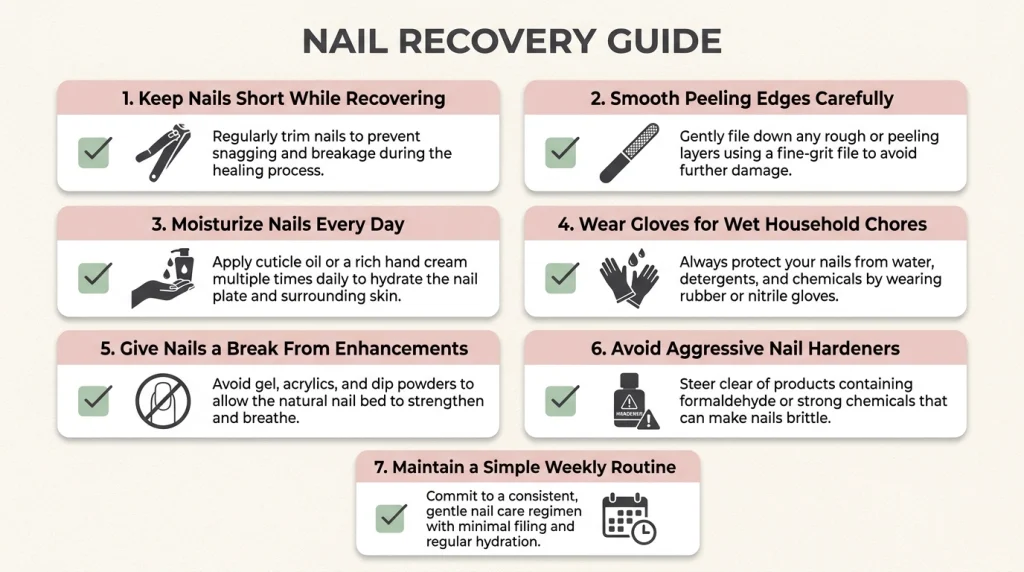
The most effective approach combines protection, gentle maintenance, and consistent moisturizing.
Start with these seven habits. They won’t instantly reconnect separated nail layers, but they can limit further damage while new nail grows.
1. Keep Your Nails Short While They Recover
Trim your nails to a comfortable length, leaving enough free edge to avoid cutting into the sensitive skin beneath.
Shorter nails are less likely to catch on clothing or bend during everyday activities.
Use clean, sharp nail clippers and gently round the corners with a fine file.
2. Smooth Peeling Edges Carefully
If you notice a loose layer at the tip, resist the temptation to pull it away.
Use a fine-grit file or glass nail file with light pressure to remove sharp snags from the free edge.
Don’t grind down the upper nail surface to make it look perfectly smooth. That could thin an already fragile plate.
3. Moisturize Your Nails Every Day
Apply hand cream after washing your hands and whenever your skin feels dry.
Pay attention to the nail surface, cuticle area, and skin surrounding each nail.
Products containing petrolatum, glycerin, or other moisturizing ingredients can help care for dry hands and nail folds.
Cuticle oil may also make regular nail care more convenient, especially if you prefer a small brush or pen applicator.
Pro Tip
Keep your moisturizer beside the sink rather than only on your dressing table. Applying it immediately after handwashing makes the habit easier to remember and helps care for skin repeatedly exposed to water.
4. Wear Gloves for Wet Household Chores
Protect your hands during dishwashing, bathroom cleaning, and other tasks involving prolonged water or chemical contact.
Choose gloves suitable for the products you’re using. If sweat collects inside them, take breaks and dry your hands.
For longer cleaning sessions, comfortable cotton-lined gloves may help reduce irritation.
5. Give Damaged Nails a Break From Enhancements
If peeling started after gel, acrylic, or repeated nail treatments, consider keeping your nails bare while the damaged sections grow out.
A fresh enhancement may temporarily hide fragile areas, but it doesn’t rebuild missing nail layers.
When you return to manicures, ask for gentle preparation, careful application, and product-appropriate removal.
6. Avoid Aggressive Nail Hardeners
Not every product advertised as a nail strengthener is suitable for peeling nails.
Some hardeners can make nails overly rigid, which may increase cracking in certain people.
Formaldehyde-containing nail hardeners are especially worth avoiding if your nails are already brittle.
Focus first on protection and gentle moisturizing rather than applying several treatments at once.
7. Maintain a Simple Weekly Routine
Once a week, inspect your bare nails under good lighting.
Trim noticeable snags, clean gently, and check whether the peeling area is moving toward the tip as the nail grows.
Continue moisturizing daily and protect your hands during cleaning.
Our guide on how to take care of nails daily explains how to make these habits part of your normal schedule.
How Long Does It Take for Peeling Nails to Heal?

Peeling nails usually improve gradually because the damaged nail plate must grow outward and eventually be trimmed away.
Fingernails commonly grow around 3 millimeters per month, although individual growth rates vary.
That means the visible condition of your nails may improve before the entire damaged section has disappeared.
- First 1–2 weeks: You may notice fewer snags or less dryness after changing your nail care habits.
- After 4–8 weeks: New growth may begin to look healthier, provided the damaging exposure has stopped.
- After 3–6 months: Much of the damaged fingernail plate may have grown out, depending on where the damage started and your personal growth rate.
These time frames are general estimates, not guarantees. Persistent damage, inflammation, or an underlying condition can affect recovery.
Be especially careful with nail products that promise to repair peeling overnight. They may temporarily improve appearance, but they cannot permanently fuse damaged keratin layers back together.
Can Peeling Nails Grow Back Healthy?
Yes. If the nail-producing tissue remains healthy and you remove the cause of repeated damage, new nail growth can often look and feel stronger.
The nail matrix, located near the base of your nail, produces new nail cells.
The existing peeling portion doesn’t regenerate in place. Instead, fresh nail gradually pushes the damaged section outward.
This is why protecting the free edge matters so much. Every new snag can create additional damage before the original peeling has grown out.
Try not to judge your progress only by whether the oldest damaged tip still looks rough.
Look at the newer nail emerging near the cuticle and whether future peeling is becoming less frequent.
Which Nail Care Products Can Help With Peeling Nails?
You don’t need an expensive repair system. A few practical products can make everyday nail protection easier.
The Amazon links below are product-category searches, not independently tested product endorsements.
Recommended Product
Jojoba Cuticle Oil Pen
A convenient way to moisturize dry nail folds and make regular nail care easier. Oil doesn’t glue peeling layers together.
As an Amazon Associate, we earn from qualifying purchases.
Recommended Product
Fine-Grit Glass Nail File
Useful for gently smoothing rough nail edges before small snags develop into larger splits.
As an Amazon Associate, we earn from qualifying purchases.
Recommended Product
Cotton-Lined Household Cleaning Gloves
A practical option for reducing prolonged water and detergent exposure during household cleaning.
As an Amazon Associate, we earn from qualifying purchases.
What Should You Do and Avoid When Your Nails Are Peeling?
Do
- Keep damaged nails short.
- File rough edges gently.
- Moisturize after washing.
- Wear gloves during wet chores.
- Allow damaged nails to grow out.
Don’t
- Pull peeling nail layers.
- Peel off gel manicures.
- Over-buff damaged nails.
- Use nails to open objects.
- Ignore persistent nail changes.
Why Do My Nails Keep Peeling Even After Moisturizing?
Moisturizing is helpful, but it doesn’t eliminate every cause of peeling nails.
If you’re still exposing your hands to cleaning chemicals, removing gel aggressively, or picking at damaged tips, the nail plate may continue experiencing stress.
Review the timing of your symptoms. Did peeling begin after a manicure, a change in your job duties, or a new cleaning routine?
Consider these common patterns:
Problem: Your nails peel after every gel manicure
Immediate fix: Stop peeling or scraping off gel and protect the damaged edges. Prevention: Ask for gentle preparation and correct product removal before your next manicure.
Problem: Your nails split after washing dishes
Immediate fix: Dry your hands, moisturize, and carefully smooth sharp tips. Prevention: Wear suitable gloves and minimize prolonged detergent contact.
Problem: Your nails peel whenever they grow longer
Immediate fix: Trim below the most fragile free-edge area when possible. Prevention: Maintain a shorter shape and reduce repeated bending and impact.
Problem: Several nails keep peeling without an obvious trigger
Immediate fix: Avoid further cosmetic damage and document the changes. Prevention: Arrange a medical assessment if the problem persists despite consistent protective care.
When Should You See a Dermatologist for Peeling Nails?
Ordinary peeling at the tips is often manageable through gentler habits, but certain nail changes deserve professional evaluation.
Warning
Seek medical attention if peeling occurs with significant pain, swelling, redness, drainage, unusual discoloration, or nail separation from the nail bed. A new or changing dark streak should also be assessed promptly. These changes may indicate a condition that needs more than cosmetic nail care.
Persistent peeling despite several weeks of reduced exposure and careful maintenance is another reason to consult a healthcare professional.
Your dermatologist can examine the pattern of nail damage and decide whether testing or treatment is appropriate.
For related prevention advice, read our guide to step-by-step nail care at home.
Frequently Asked Questions About Peeling Nails
Q: Why are my nails peeling in layers?
A: Peeling layers often result from repeated wetting and drying, chemical exposure, or physical damage. This type of horizontal splitting is called lamellar onychoschizia.
Q: Can vitamin deficiency cause peeling nails?
A: Certain nutritional deficiencies can contribute to nail problems, but everyday external damage is a more common cause. Don’t assume you need supplements based on peeling alone.
Q: Does cuticle oil stop nails from peeling?
A: Cuticle oil can help moisturize dry nails and surrounding skin. However, it cannot reconnect layers that have already separated or replace protection from repeated damage.
Q: Should I wear nail polish if my nails are peeling?
A: If your nails are noticeably damaged, leaving them bare temporarily can help you avoid additional preparation and removal stress. Don’t cover painful, discolored, or lifting nails without medical advice.
Q: Will peeling nails eventually grow out?
A: Often, yes. If the nail matrix is healthy and ongoing damage stops, new nail growth can gradually replace the affected area. Complete fingernail replacement generally takes several months.
The Bottom Line: Protect Your Nails While They Grow
If you’re wondering why your nails are peeling, start by examining your everyday exposure to water, cleaning chemicals, manicures, and physical friction.
Keep damaged nails short, moisturize consistently, avoid peeling off nail products, and protect your hands during wet chores. These simple habits give healthier new nail growth a better chance.
Save this guide to your Pinterest nail care board so you can return to these tips whenever your nails need extra attention.

Hi, I’m Jessica, the creator behind Unique Lash & Nails Katy.
I created this website for anyone who loves beautiful nails as much as I do. Here, I share trendy nail designs, seasonal manicure ideas, easy nail care tips, honest product recommendations, and step-by-step guides to help you create salon-worthy nails at home. Whether you’re looking for everyday inspiration or your next favorite nail trend, I hope you’ll find something you love.