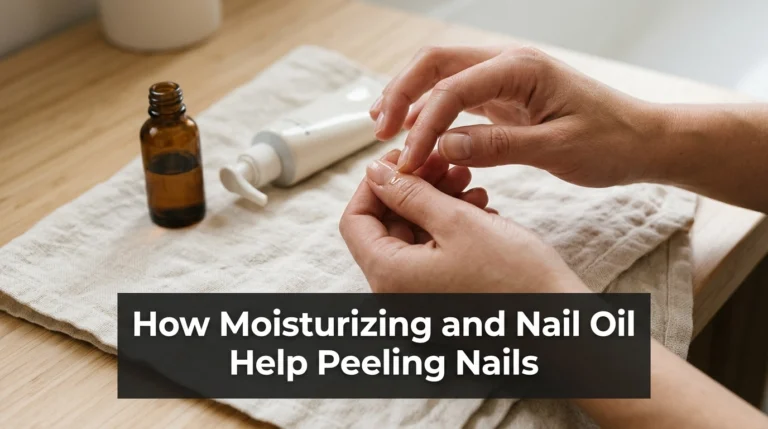
Why Are My Nails White? Causes and What to Do
Quick Answer
White spots on your nails are usually caused by minor injuries to the nail matrix, including bumping your fingers, biting your nails, or aggressive manicures. Other possible causes include fungal infections, reactions to nail products, and certain medical conditions. Small, isolated white spots are generally harmless and grow out naturally. However, nails that turn mostly white, develop unusual bands, or change alongside other symptoms deserve medical attention.
Have you ever removed your nail polish and noticed tiny white spots scattered across your nails? Or perhaps your nails suddenly look pale, milky white, or different from their usual color.
It’s natural to wonder whether your nails are damaged, missing nutrients, or trying to tell you something about your health.
The reassuring news is that many white nail changes are harmless. But the pattern, location, and accompanying symptoms can help you understand what might be happening.
Here’s how to recognize the different causes of white nails, understand which changes matter, and protect your natural nails without making the problem worse.


What Does It Mean When Your Nails Turn White?
White nail discoloration is often described using the medical term leukonychia. This term refers to white areas that appear in the nail plate or seem to originate from the tissue beneath it.
Your nails normally have a somewhat translucent appearance, allowing the color of the underlying nail bed to show through. When the nail plate changes or the appearance of the nail bed is altered, certain areas may look white.
Not every white area represents the same condition.
- Small white dots: Often result from minor nail injuries.
- White streaks or horizontal lines: May reflect nail growth disturbances, medication effects, or other causes.
- White patches with roughness: Can occur after surface damage or with some fungal infections.
- Mostly white nails: Sometimes reflect broader changes involving the nail plate or nail bed.
- White nail tips: Usually represent the normal free edge of the nail, although excessive whitening can sometimes indicate nail lifting.
The appearance alone cannot always establish the diagnosis. A dermatologist may need to examine the nail and consider your medical history.
If you’re unsure whether your nail changes are normal, compare them with these common signs of unhealthy nails.
What Causes White Spots on Your Nails?
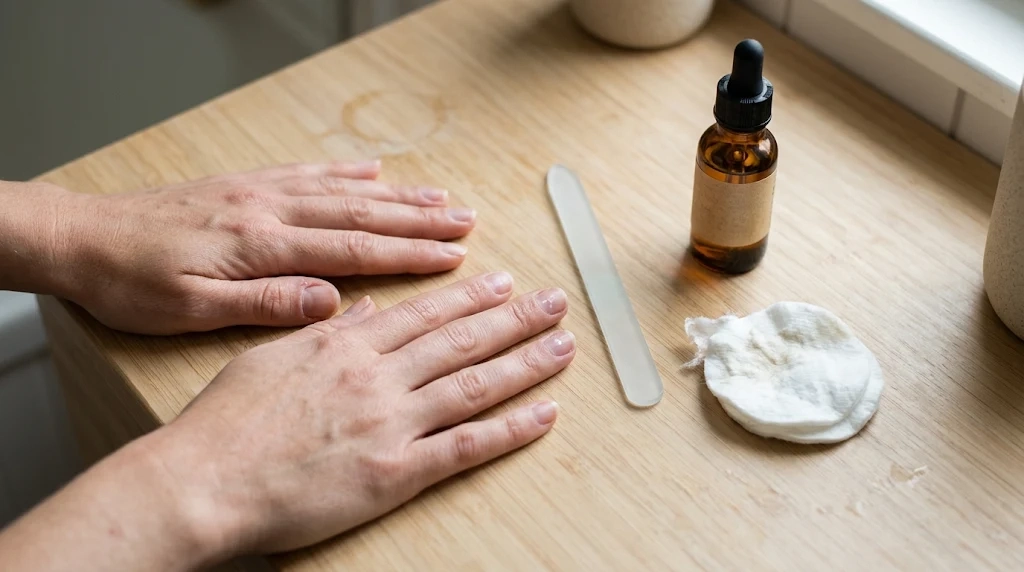
Several things can make your nails develop white spots. Understanding the likely cause is more helpful than immediately applying a strengthening treatment or taking supplements.
1. Minor Injuries to the Nail Matrix
Minor nail trauma is one of the most common reasons for small white spots.
Your nails grow from a specialized area called the nail matrix, located mostly beneath the skin at the base of each nail.
When this area experiences minor damage, the newly forming nail may develop small opaque spots.
Common triggers include:
- Accidentally hitting your fingers against a hard surface.
- Biting or repeatedly picking your nails.
- Pushing back your cuticles too aggressively.
- Using excessive pressure during manicures.
- Wearing shoes that repeatedly press against your toenails.
Interestingly, a white spot might not appear immediately after an injury. Because your nails grow gradually, the mark can become visible weeks later.
By then, you may have completely forgotten the original incident.
These spots normally move toward the nail tip as the nail grows. They eventually disappear when the affected portion is trimmed away.
Pro Tip
Take a clear picture of your nail once a month without polish. If a small white spot gradually moves toward the tip, that supports the possibility of a mark within the growing nail plate. If the discoloration remains fixed, spreads, or changes unexpectedly, have it evaluated.
2. Aggressive Manicures and Nail Product Damage
Regular manicures can make your nails look beautiful, but excessive filing, scraping, and improper product removal may leave visible damage.
This is especially relevant if you frequently wear gel polish, acrylic extensions, or dip powder.
Potential causes include:
- Over-buffing the natural nail surface.
- Scraping off gel polish before it has softened sufficiently.
- Peeling acrylic or gel enhancements away from your natural nails.
- Using electric files too aggressively.
- Repeatedly removing and replacing artificial nails without addressing existing damage.
Surface damage can create chalky-looking patches, rough texture, or uneven areas that appear lighter than the surrounding nail.
These surface changes aren’t always the same as true leukonychia caused by injury inside the growing nail.
If your nails look white after removing extensions, don’t immediately buff the affected areas to make them smooth. Additional filing may remove even more protective nail layers.
Instead, follow a gentle recovery routine. Our guide to protecting nails after gel removal explains how to reduce further damage.
3. Fungal Nail Infections
Fungal infections are another possible explanation for white nail discoloration.
Some fungal infections affect the nail surface and create powdery or chalky white patches. Others cause deeper discoloration, thickening, or changes in nail structure.
Signs that may suggest a fungal infection include:
- White or yellowish patches that gradually spread.
- Thickened or brittle nails.
- Crumbling near the nail edges.
- Nail lifting or separation from the nail bed.
- Changes that persist instead of growing out normally.
Fungal infections are particularly common in toenails, although fingernails can also be affected.
However, white discoloration alone doesn’t prove that fungus is present. Nail injuries, psoriasis, and cosmetic damage can sometimes look similar.
A healthcare professional may examine nail clippings or perform laboratory testing before recommending treatment.
Warning
Don’t cover a possibly infected nail with acrylic extensions or nail glue. Concealing the changes can delay diagnosis, and some nail products may further damage an already weakened nail.
4. Allergic Reactions to Nail Products
Sometimes, a nail product that previously worked well for you begins causing irritation or an allergic reaction.
Potential triggers include certain ingredients in:
- Nail polish and nail hardeners.
- Gel manicure products.
- Acrylic nail systems.
- Artificial nail adhesives.
- Nail polish removers and other manicure chemicals.
These products may be associated with nail changes, particularly when irritation or an allergy affects the surrounding skin or nail unit.
You might also notice itching, redness, peeling skin, swelling, or tenderness around your nails.
If symptoms begin after introducing a new product, discontinue its use and avoid applying additional chemicals until the area has recovered.
Persistent or recurring reactions may require evaluation by a dermatologist, who can determine whether allergy testing is appropriate.
5. Nutritional Deficiencies
You’ve probably heard that white spots mean your body needs more calcium.
However, small isolated white spots are not a reliable sign of calcium deficiency.
Minor nail trauma is generally a more likely explanation.
Nutrition still matters for healthy nail growth. Inadequate intake of certain nutrients can contribute to nail abnormalities, especially when deficiencies are significant or prolonged.
Relevant nutrients include:
- Protein: Helps support the production of keratin, the main structural protein in nails.
- Iron: Deficiency may affect nail appearance and strength, although white spots aren’t a specific diagnostic sign.
- Zinc: Important for normal cell growth, with deficiency potentially contributing to nail changes.
- Vitamin B12: Important for blood cell production and general health, with deficiency sometimes associated with nail pigmentation changes.
If you have ongoing nail changes along with fatigue, dietary restrictions, unexplained weakness, or other symptoms, ask a healthcare professional whether nutritional testing is needed.
Taking high-dose supplements based only on white spots isn’t recommended. Excessive supplementation can create its own health risks.
6. Certain Medications and Chemical Exposures
Some medications and toxic exposures can interfere with normal nail growth or change nail coloration.
Examples include certain chemotherapy medications and, less commonly, exposure to heavy metals such as arsenic.
These causes are much less common than everyday nail trauma.
Medication-related nail changes may affect several nails or produce distinctive lines or bands.
If you notice a new nail pattern after starting medication, speak with the prescribing clinician rather than stopping treatment yourself.
7. Underlying Health Conditions
Occasionally, white nails are associated with medical conditions affecting organs or body systems.
These are more concerning when the nail changes involve most of the nail surface, appear on multiple nails, or accompany other symptoms.
Conditions sometimes associated with distinctive white nail patterns include:
- Liver disease.
- Chronic kidney disease.
- Heart failure.
- Conditions associated with low blood protein levels.
- Certain systemic inflammatory or metabolic disorders.
This doesn’t mean that having white nails automatically indicates serious illness. Many healthy people develop minor nail discoloration.
The important distinction is whether the change is isolated and harmless-looking or part of a wider, unexplained pattern.
What Are the Different Types of White Nails?
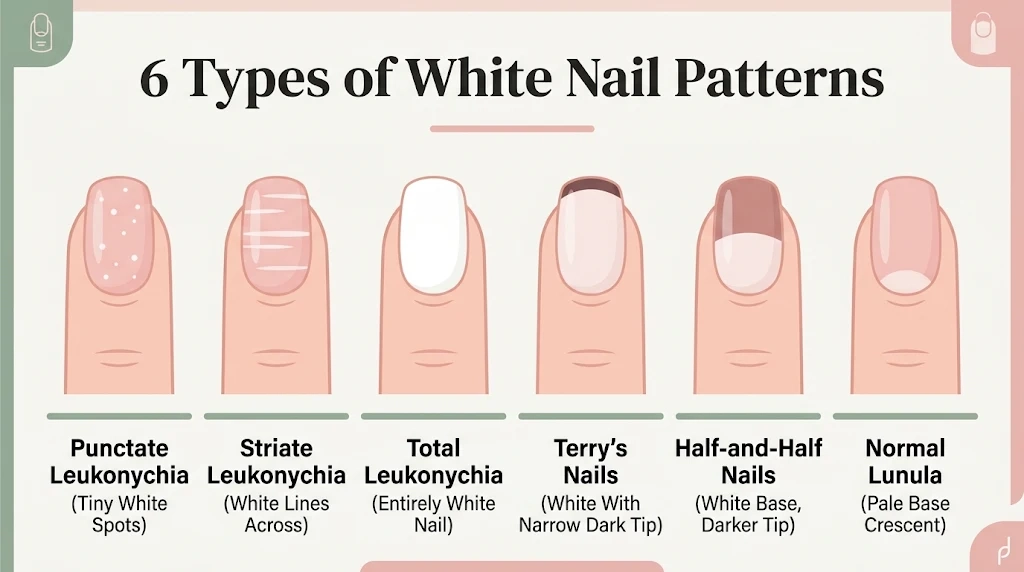
Doctors sometimes classify white nails based on where the discoloration develops and what the visible pattern looks like.
Punctate Leukonychia: Tiny White Spots
This common pattern appears as small white dots scattered across one or more nails.
It frequently follows minor injuries to the nail matrix and typically grows outward with the nail.
If you have one or two spots and no other symptoms, monitoring them is often reasonable.
Striate Leukonychia: White Lines Across Nails
Striate leukonychia involves white bands extending across the nail plate.
Some bands follow nail matrix injuries, while others can be associated with medications or medical conditions.
The number of nails affected, timing, and whether the lines grow outward can help a clinician identify the likely cause.
Total Leukonychia: Entirely White Nails
Total leukonychia describes whitening of nearly the entire nail plate.
This appearance may be inherited, acquired after significant nail damage, or associated with certain medical conditions.
Because widespread white discoloration has several possible explanations, a new or unexplained change deserves professional assessment.
Terry’s Nails: Mostly White With a Narrow Darker Tip
Terry’s nails typically appear mostly white, with a narrow pink, reddish, or darker band near the tip.
This pattern has been associated with conditions including liver cirrhosis, kidney disease, and heart failure. It can also occur in other contexts and does not independently diagnose an illness.
If several nails develop this appearance unexpectedly, especially with other symptoms, arrange a medical evaluation.
Half-and-Half Nails: White Near the Base and Darker at the Tip
Also called Lindsay’s nails, this pattern involves a pale or white area closer to the cuticle and a darker band toward the nail tip.
It has been associated with chronic kidney disease, although appearance alone cannot confirm the cause.
White Half-Moons: The Normal Lunula
Not every naturally white area is abnormal.
The pale, crescent-shaped region near the base of some fingernails is called the lunula.
It’s a normal part of nail anatomy and often appears most prominently on your thumbnails.
Some people have visible lunulae on nearly every nail, while others have only one or two noticeable crescents.
Learn more about what the lunula is and why it looks white before confusing this normal structure with a medical problem.
How Can You Tell Whether White Spots Are Harmless?
The pattern and behavior of your nail changes can provide useful clues, although they aren’t enough for a definite diagnosis.
White spots are more likely to be harmless when:
- Only one or two nails are affected.
- The spots are small and isolated.
- Your nails remain smooth and firmly attached.
- You have no pain, swelling, or surrounding inflammation.
- The marks gradually move toward the nail tip as your nails grow.
- You’ve recently had a manicure or remember a possible minor injury.
Changes that deserve closer attention include:
- Several nails suddenly becoming almost completely white.
- Persistent bands appearing across multiple nails.
- Increasing nail thickness, crumbling, or separation.
- New discoloration with redness, swelling, or pain.
- White nail changes accompanied by significant fatigue, weakness, or other unexplained symptoms.
Consider photographing the nails in consistent lighting so you can describe any changes accurately to your healthcare provider.
How Do You Get Rid of White Spots on Your Nails?
The best treatment depends on what’s causing the discoloration.
For harmless spots caused by minor injury, there’s usually nothing you need to remove or treat. The affected section must grow out naturally.
Let Trauma-Related White Spots Grow Out
Unlike a mark on your skin, a white spot within your nail plate cannot simply heal in place.
Your nail must grow forward until the affected portion reaches the free edge.
Keep your nails neatly trimmed and avoid picking or grinding down the white area.
You can apply regular nail polish for cosmetic coverage if your nails are otherwise healthy, but polish won’t accelerate the disappearance of the spots.
Stop Products That Cause Irritation
If discoloration develops alongside itching, peeling skin, or soreness after a manicure, stop using the suspected product.
Avoid further exposure while the cause is being evaluated.
Don’t assume that switching to another gel or adhesive will solve the problem, because related ingredients may still trigger a reaction.
Get Proper Treatment for Fungal Infections
Confirmed fungal infections may require antifungal medication.
Treatment varies according to the organism, location, severity, and your medical history.
Some cases can be managed with prescription topical treatments, while others require oral medication.
Because nail fungus can resemble other disorders, testing is often useful before starting prolonged treatment.
Address Any Underlying Medical Cause
If your nail changes are associated with an underlying illness, treating that condition is more important than hiding the discoloration.
Your clinician may recommend examination, blood tests, or nail testing based on your symptoms.
Not every person with white nails needs laboratory testing. The decision depends on the complete clinical picture.
How Long Do White Spots Take to Disappear?
White spots caused by minor trauma can take several months to disappear completely.
Fingernails typically grow about 3 millimeters per month on average, although the speed varies from person to person.
A fingernail may need approximately six to nine months to grow out completely, while a toenail may take 12 to 18 months.
The exact time for a particular spot depends on where it is located.
- Near the nail tip: The spot may disappear after relatively little additional growth.
- In the middle of the nail: It may take several months to reach the edge.
- Close to the cuticle: It may remain visible for much longer.
Moisturizers, oils, and strengthening products can support nail care, but they cannot instantly erase a spot embedded within the nail plate.
Pro Tip
Instead of repeatedly examining a spot every day, photograph it monthly. Gradual movement with nail growth is often easier to recognize when you compare pictures taken several weeks apart.
How Can You Prevent White Spots on Your Nails?
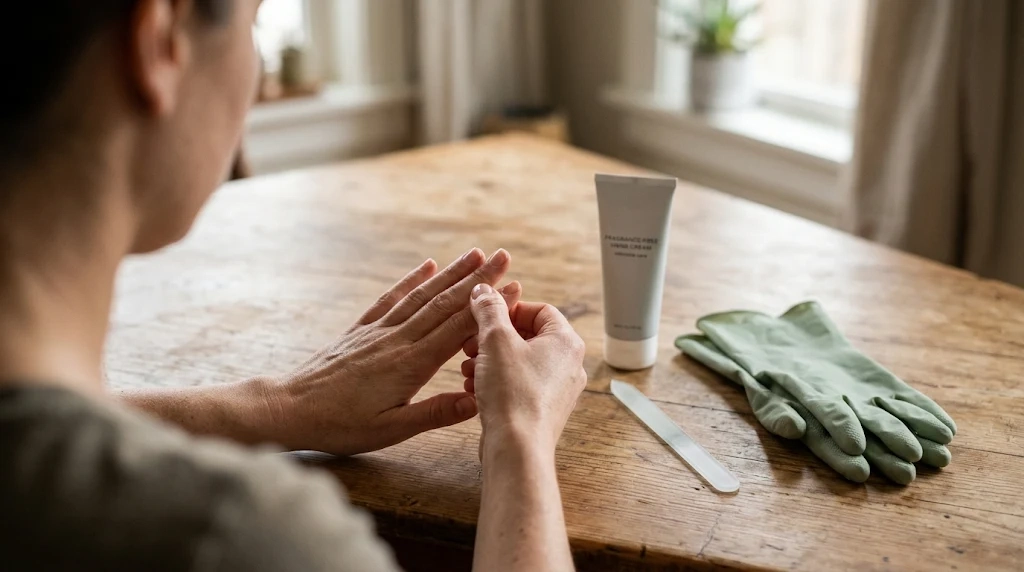
You can’t prevent every accidental injury, but gentle nail habits can reduce repeated trauma and help maintain healthier nails.
Choose Gentle Manicure Techniques
Ask your nail technician to avoid excessive drilling, aggressive buffing, and forceful cuticle manipulation.
During product removal, follow the proper instructions for the specific manicure system rather than peeling the coating away.
Your natural nail plate is protective tissue, not a surface that needs to be aggressively thinned before every manicure.
Moisturize Your Nails and Cuticles
Apply a fragrance-free hand cream or a small amount of cuticle oil regularly, particularly after washing your hands.
Moisturizing helps reduce dryness and supports the surrounding skin, making nails less vulnerable to certain types of mechanical damage.
It won’t reverse leukonychia already present inside the nail, but it’s a useful preventive habit.
Protect Your Hands During Chores
Wear appropriately fitted protective gloves when using cleaning chemicals, washing dishes for extended periods, or performing tasks likely to damage your nails.
Repeated water exposure and harsh cleaning products may contribute to dry, brittle nails and irritated surrounding skin.
Keep Nails at a Manageable Length
Very long natural nails are more likely to catch on objects and experience accidental bending or impact.
Keeping your nails at a practical length can reduce the frequency of these injuries.
Use a clean nail clipper and gently smooth rough edges with a suitable file.
For a straightforward maintenance routine, see the best nail care routine for healthy nails.
Avoid Nail Biting and Picking
Repeated biting and picking can injure the nail plate, damage the surrounding skin, and disturb the area where new nail develops.
If you often pick at your nails without noticing, keeping them short and identifying triggering situations may help you change the habit.
What Should You Do and Avoid When Your Nails Have White Spots?
Do
- Keep your nails clean and dry.
- Moisturize regularly.
- Use gentle manicure techniques.
- Monitor whether spots grow outward.
- Seek care for unusual or worsening changes.
Don’t
- Buff white spots aggressively.
- Peel off gel or acrylic products.
- Assume every spot means a deficiency.
- Use supplements without a clear reason.
- Ignore pain, swelling, or spreading discoloration.
Which Nail Care Products Can Help Protect Your Nails?
You don’t need expensive treatments to make a minor white spot grow out. Simple products that help you maintain your nails gently are usually more useful than cosmetic products claiming to remove discoloration instantly.
Cuticle Oil for Everyday Moisture
A basic jojoba-based cuticle oil can help condition dry skin around your nails and make routine nail care more comfortable.
Apply a small amount around the nail folds and massage gently. Avoid use if the product irritates your skin.
Optional Nail Care Product
Jojoba Cuticle Oil
A practical option for moisturizing dry cuticles and surrounding skin, although it won’t erase existing white spots.
As an Amazon Associate, we earn from qualifying purchases.
Glass Nail File for Gentle Shaping
A fine-grit glass nail file can help smooth rough nail edges without the aggressive pressure sometimes used with coarse files.
File with controlled, gentle movements and avoid repeatedly scraping the nail surface.
Optional Nail Care Product
Fine-Grit Glass Nail File
Useful for maintaining smooth, manageable nail edges and reducing accidental snagging.
As an Amazon Associate, we earn from qualifying purchases.
Fragrance-Free Hand Cream for Dry Nails and Skin
A fragrance-free moisturizer containing glycerin, petrolatum, or ceramides can help protect dry hands and nail folds.
Choose a formula that feels comfortable on your skin and apply it after handwashing.
Optional Nail Care Product
Fragrance-Free Hand Moisturizer
Helps maintain moisture in dry hands and the skin surrounding your nails.
As an Amazon Associate, we earn from qualifying purchases.
When Should You See a Doctor About White Nails?
Most isolated white spots don’t require urgent treatment. However, certain nail changes should be evaluated rather than treated as a cosmetic issue.
Make an appointment with a healthcare professional if:
- Your nails suddenly turn mostly white without an obvious explanation.
- Several nails develop unusual white bands at the same time.
- Discoloration spreads or repeatedly returns.
- Your nails become thick, brittle, crumbly, or detached.
- You develop persistent redness, swelling, or tenderness around a nail.
- You have white nail changes together with unexplained fatigue or other systemic symptoms.
Seek prompt medical attention for severe or spreading infection symptoms. Shortness of breath, confusion, or other serious symptoms require urgent assessment rather than routine nail care.
A clinician may examine your nails, review medications and recent injuries, or request targeted testing when appropriate.
For minor surface damage without concerning symptoms, learn more about how to care for a damaged nail at home.
Frequently Asked Questions About White Nails
Q: Why do I have white spots on my nails but no pain?
A: Small, painless white spots commonly develop after minor nail injuries. They may appear weeks after the injury and usually grow out without treatment. Pain isn’t necessary for trauma-related leukonychia to occur.
Q: Are white spots on nails caused by calcium deficiency?
A: Usually not. Small white spots are more commonly associated with minor nail trauma. They are not considered a reliable indicator of calcium deficiency, so supplements shouldn’t be started solely because of these marks.
Q: Why are my nails white after removing gel polish?
A: White or chalky patches after gel removal may reflect dehydration, surface roughness, or damage from filing and scraping. Avoid further buffing and seek advice if the nail is painful, lifting, or deteriorating.
Q: Can stress cause white spots on fingernails?
A: Emotional stress itself isn’t a typical direct cause of isolated white nail spots. However, stress-related habits such as nail biting or picking can injure the nail matrix and produce white marks.
Q: Can white spots on nails go away naturally?
A: Yes. White spots caused by minor trauma usually disappear as the affected nail grows toward the tip and is eventually trimmed away. Other causes, including infections, may require treatment.
Final Thoughts: Should You Worry About White Nails?
If you’ve been wondering why your nails are white, remember that small isolated spots are usually related to harmless nail injuries rather than a serious nutritional deficiency.
Be gentle with your manicures, protect your nails from repeated damage, and pay attention to changes that spread, persist, or appear alongside other symptoms. When the cause is unclear, a healthcare professional can help you determine the right next step.
Save this guide to your Pinterest nail care board so you can revisit these tips whenever you notice unexpected changes in your natural nails.
Medical Information Sources
The medical information in this article is based on established dermatology and clinical references. This content is educational and is not a substitute for personalized medical advice.
- Cleveland Clinic — White Spots on Nails (Leukonychia): Causes and Treatment.
- DermNet — White Nail (Leukonychia): Classification, Causes, and Management.

Hi, I’m Jessica, the creator behind Unique Lash & Nails Katy.
I created this website for anyone who loves beautiful nails as much as I do. Here, I share trendy nail designs, seasonal manicure ideas, easy nail care tips, honest product recommendations, and step-by-step guides to help you create salon-worthy nails at home. Whether you’re looking for everyday inspiration or your next favorite nail trend, I hope you’ll find something you love.