Blue or Purple Nails: Causes and Warning Signs
Quick Answer
Nails can look blue or purple because of cold temperatures, changes in circulation, bruising beneath the nail, certain medications, or reduced oxygen in your blood. A temporary color change after cold exposure may improve as your hands warm up, but sudden, persistent, or unexplained discoloration needs medical attention. If blue nails appear with breathing difficulty, chest pain, confusion, or blue lips, seek emergency medical care immediately.
You glance down at your hands and notice something unusual: your nails have developed a bluish or purplish tint. Maybe your fingers feel cold, or perhaps the color appeared without any obvious reason.
Although nail color can change for harmless reasons, blue or purple nails sometimes point to circulation or oxygen-related problems that deserve prompt attention.
Understanding the difference matters. Here’s what causes these color changes, which symptoms to watch for, and when you should contact a healthcare professional.


What Does It Mean When Your Nails Turn Blue or Purple?
Your nail plates are made primarily of keratin, a strong protein. They’re partly translucent, so the color you see depends on the underlying nail bed, its blood supply, and any pigment or material within the nail.
Normally, nail beds may appear pink, reddish, or brownish depending on your natural skin tone. A sudden blue or purple appearance can indicate a change in the blood circulating through the small vessels beneath your nails.
Doctors sometimes use the term cyanosis to describe bluish or grayish discoloration associated with reduced oxygenation or changes in blood circulation.
However, not every purple nail is cyanosis. A bruise, surface stain, medication-related pigmentation, or another localized nail condition may produce a similar appearance.
The important clues are whether the discoloration affects one nail or several, whether it appeared suddenly, and whether you’re experiencing additional symptoms.
If you’re interested in understanding other unusual nail colors, our guide to unhealthy nail color and warning signs explains what different nail changes may indicate.
What Are the Most Common Causes of Blue or Purple Nails?
Several conditions can change the appearance of your nails. Some are temporary, while others require medical evaluation.
1. Cold Temperatures and Temporary Blood Vessel Constriction
Cold exposure is a common reason fingertips and nail beds temporarily look bluish or purplish.
When you’re cold, small blood vessels in your fingers narrow. This process, called vasoconstriction, helps your body preserve heat for vital organs.
With less warm blood reaching the fingertips, the nail beds may appear darker, blue, or purple.
You might notice this after:
- Spending time outdoors during cold weather.
- Holding icy drinks for an extended period.
- Swimming in cold water.
- Entering a heavily air-conditioned room.
- Keeping your hands exposed without gloves.
In a simple cold-related episode, your normal nail color should gradually return as your hands warm.
However, persistent discoloration, severe pain, numbness, or an unusual change affecting one finger shouldn’t automatically be blamed on the weather.
Pro Tip
If your nails change color when you’re cold, warm your hands gradually with gloves or a comfortably warm room. Avoid very hot water, especially when your fingers feel numb, because reduced sensation increases your risk of burns.
2. Raynaud’s Phenomenon
Raynaud’s phenomenon is a condition in which small blood vessels in the fingers or toes react strongly to cold temperatures or emotional stress.
During an episode, affected fingers may change color in stages:
- White: Blood flow temporarily decreases.
- Blue or purple: The affected area may appear darker as oxygen availability changes.
- Red: Blood flow returns, sometimes causing tingling or throbbing.
Not everyone experiences every color stage. Some people notice only one or two changes.
Raynaud’s may also cause:
- Cold fingertips.
- Numbness or tingling.
- Temporary loss of sensation.
- Discomfort as the hands warm.
- Repeated episodes triggered by cold or stress.
Primary Raynaud’s occurs without another identified underlying disease. Secondary Raynaud’s can be associated with conditions such as autoimmune or connective tissue disorders.
If your fingers repeatedly change color, schedule a medical assessment rather than assuming the episodes are harmless.
3. Low Blood Oxygen Levels
Blue-looking nail beds can sometimes be associated with insufficient oxygen in the blood.
This is particularly concerning when discoloration also affects your lips, tongue, gums, or other areas of your body.
Possible underlying problems include certain:
- Lung conditions that interfere with oxygen exchange.
- Heart conditions affecting circulation or oxygen delivery.
- Severe respiratory illnesses.
- Airway emergencies.
- Other disorders affecting oxygenation.
The nail color alone cannot tell you your oxygen level, and lighting or natural pigmentation may affect how your nails look.
A healthcare professional may use a pulse oximeter and other tests to assess oxygenation and identify the cause.
Emergency Warning
If blue or purple nails accompany shortness of breath, chest pain, sudden blue lips or tongue, fainting, or confusion, contact emergency services immediately. Don’t wait for the discoloration to disappear or try to manage these symptoms with home remedies.
4. A Bruise Beneath the Nail
If only one nail looks dark purple, blue-black, or almost black, the discoloration may come from bleeding beneath the nail plate.
This is called a subungual hematoma.
It commonly occurs after an injury, such as:
- Accidentally closing a door on your finger.
- Dropping a heavy object on your toe.
- Hitting your nail against a hard surface.
- Running or walking in shoes that repeatedly press against your toenails.
Blood becomes trapped beneath the nail and creates a dark patch. Depending on the injury, the nail may feel tender, swollen, or intensely painful.
A small bruise may gradually move toward the nail tip as the nail grows. A larger injury may require medical attention, especially if significant pressure or nail damage develops.
Never try to puncture or burn a hole through your nail at home to release trapped blood. A healthcare professional can determine whether drainage or further examination is needed.
5. Acrocyanosis and Peripheral Circulation Changes
Acrocyanosis describes a persistent bluish or grayish appearance of the hands, feet, or fingers associated with changes in small-vessel blood flow.
People with this condition may have cold, clammy, or sweaty hands. The color change can become more noticeable in cool environments.
Unlike a typical Raynaud’s episode, primary acrocyanosis often causes more continuous discoloration rather than clearly separated attacks.
However, not every case is harmless. Sudden, one-sided, painful, or newly developing symptoms can indicate a different circulation problem.
A healthcare professional can help determine whether the discoloration is primary acrocyanosis or related to another condition.
6. Certain Medications and Pigmentation Changes
Some medications can produce unusual blue, gray, brown, or purple pigmentation in the skin or nails.
For example, long-term exposure to certain medicines, including minocycline, has been associated with blue-gray pigmentation.
Medication-related discoloration may look different from oxygen-related cyanosis. It can involve one or multiple nails and may not disappear after warming your hands.
If the color appeared after starting or changing a medication, contact the prescribing clinician or pharmacist.
Don’t stop prescribed treatment on your own, because discontinuing some medications can create additional health risks.
7. Nail Polish Staining or Cosmetic Pigment
Not every apparent color change begins inside your body.
Dark blue, purple, black, or burgundy nail polish can leave visible pigment on the nail surface, particularly when applied without a protective base coat.
Surface staining usually follows a recognizable cosmetic exposure and doesn’t cause blue lips, cold fingertips, or breathing symptoms.
However, polish stains are more commonly yellowish, orange, or brown than a sudden blue appearance beneath the entire nail bed.
If your nails look blue without polish, don’t automatically assume staining is responsible.
For more information about identifying cosmetic stains, see our article on how to lighten dark nails naturally and safely.
How Can You Tell Whether Blue Nails Are Serious?
Looking at the pattern and accompanying symptoms can help you decide how urgently to seek care, although appearance alone cannot provide a diagnosis.
When Several Nails Look Blue
Discoloration affecting several fingers can suggest a broader circulation or oxygenation issue, particularly when it develops suddenly.
Cold exposure and Raynaud’s may cause changes in multiple fingers, but persistent or unexplained blue nail beds deserve medical assessment.
When Only One Nail Looks Purple
A localized dark patch may suggest a bruise, especially if you remember hitting the finger or toe.
However, a single unexplained blue, purple, brown, or black lesion can sometimes result from another nail disorder.
A persistent spot, an enlarging dark band, or discoloration extending onto nearby skin needs professional evaluation. Rarely, a nail tumor or melanoma can cause unusual pigmentation.
When the Nails Change Color Repeatedly
Repeated episodes triggered by cold or stress may fit a circulation condition such as Raynaud’s.
Keep track of which fingers change, the circumstances, how long episodes last, and whether you experience pain or numbness.
These details can help a clinician assess the pattern.
What Other Symptoms Should You Watch For?
Blue or purple nails deserve greater attention when accompanied by symptoms affecting your breathing, circulation, or overall health.
- Breathing difficulty: May indicate a serious respiratory or oxygenation problem.
- Chest pain: Requires immediate evaluation, particularly with sudden discoloration.
- Blue lips or tongue: Can indicate central cyanosis.
- Severe finger pain: May suggest an injury or an important circulation problem.
- Persistent numbness: Can occur with impaired blood flow or nerve-related problems.
- Swelling or drainage: May indicate an injury or infection around the nail.
- Unexplained dark streaks: Should be assessed, particularly when changing or spreading.
You can compare these changes with our detailed guide to signs of unhealthy nails, which covers nail texture, thickness, shape, and discoloration.
When Should You See a Doctor for Blue or Purple Nails?
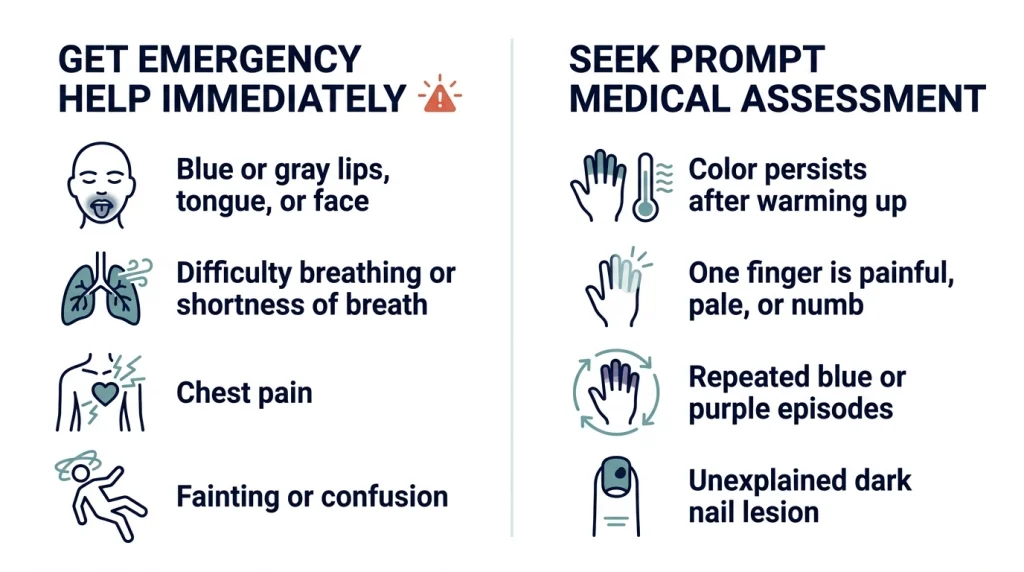
The urgency depends on how quickly the discoloration appeared and whether you have other symptoms.
Get Emergency Help Immediately
Call your local emergency number if you experience:
- Sudden blue or gray lips, tongue, or face.
- Difficulty breathing or severe shortness of breath.
- Chest pain.
- Fainting, confusion, or a sudden change in consciousness.
- Severe symptoms suggesting critically impaired circulation.
Seek Prompt Medical Assessment
Contact a healthcare professional promptly if:
- Your fingers or toes suddenly become blue without an obvious explanation.
- The discoloration persists after you’re comfortably warm.
- One finger becomes very painful, cold, pale, or numb.
- Your nails repeatedly turn blue or purple.
- A dark nail lesion develops without a remembered injury.
- An injured nail has severe throbbing pain or significant swelling.
Don’t rely on nail polish removal, creams, supplements, or a home oxygen reading to rule out a serious cause.
What Should You Do If Your Nails Suddenly Look Blue?
If you’re otherwise feeling well and the discoloration appeared during cold exposure, you can take a few cautious steps while monitoring for warning signs.
1. Move Somewhere Comfortably Warm
Go indoors or away from cold air. Use a blanket or gloves to warm your hands gradually.
Avoid direct heating pads and very hot water, especially if your fingers are numb.
2. Check for Additional Symptoms
Notice whether your lips or tongue are changing color and whether you’re experiencing breathing difficulty, chest pain, confusion, or severe pain.
If any emergency symptoms are present, seek immediate help instead of continuing home observation.
3. Remove Nail Polish If Appropriate
If it’s safe and practical, remove opaque polish so the natural nail color is easier to see.
Use ordinary remover gently. Don’t scrape or aggressively buff your nails.
4. Look for a Recent Injury
Consider whether you hit a finger, wore tight shoes, or recently noticed tenderness beneath one nail.
A bruise may explain localized discoloration, but serious injury or significant pain needs evaluation.
5. Contact a Healthcare Professional If It Persists
If your nails remain blue or purple, the change is unexplained, or episodes keep returning, arrange medical care.
Warmth may help cold-induced discoloration, but it won’t treat a heart, lung, or other underlying condition.
Warning
Never assume sudden blue nails are simply a manicure problem. If you have concerning symptoms, seek medical care first. Cosmetic treatments should never delay evaluation of possible circulation or oxygen-related problems.
How Do Doctors Diagnose Blue or Purple Nails?
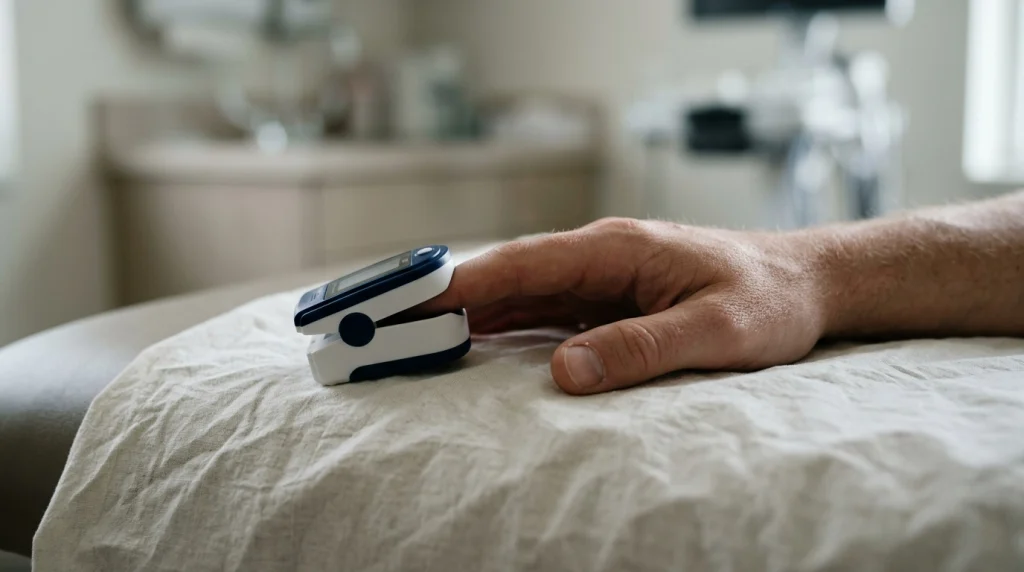
A medical assessment begins with your symptoms, medical history, recent injuries, medications, and the pattern of discoloration.
Your clinician may ask when the color change started, whether cold temperatures trigger it, and whether one or several nails are affected.
Depending on the findings, evaluation may involve:
- Physical examination: Checking skin color, temperature, circulation, and nail appearance.
- Pulse oximetry: Estimating blood oxygen saturation using a sensor.
- Blood tests: Investigating possible underlying conditions when appropriate.
- Heart or lung assessment: Checking for cardiopulmonary causes if indicated.
- Nail examination: Assessing a suspicious bruise, streak, growth, or pigment change.
A pulse oximeter can provide useful information, but readings may be affected by factors such as cold fingers, poor circulation, nail polish, movement, and device limitations.
A normal home reading doesn’t necessarily eliminate the need for medical evaluation when symptoms are concerning.
Can You Prevent Blue or Purple Nails?
Some causes are preventable, while others depend on medical conditions that require treatment.
For cold-triggered circulation changes, maintaining comfortable warmth and protecting your hands may reduce episodes.
If bruising is the cause, protecting your fingers and wearing properly fitted footwear may help avoid repeated injury.
Do
- Wear gloves in cold weather.
- Keep your hands comfortably warm.
- Protect nails against injury.
- Notice recurring color changes.
- Discuss unexplained symptoms with a clinician.
Don’t
- Ignore sudden blue lips or breathing trouble.
- Use excessive heat on numb fingers.
- Drain a bruised nail yourself.
- Cover unexplained discoloration with polish.
- Stop prescribed medication without advice.
Can Nail Care Products Help With Blue or Purple Nails?
Nail care products can help maintain healthy-looking nails, but they cannot correct cyanosis, blocked circulation, or reduced oxygen levels.
Moisturizing cuticle oil, for example, may soften dry skin around the nails. It won’t restore normal blood oxygen levels or treat an underlying circulation disorder.
Likewise, a clear base coat may reduce cosmetic staining from dark polish, but it won’t prevent bruising or medical causes of discoloration.
These products should only be considered for routine nail care after concerning symptoms have been appropriately evaluated.
If your nails are otherwise healthy and you want to improve your manicure habits, read our guide on how to properly care for your nails.
Frequently Asked Questions About Blue or Purple Nails
Q: Why do my nails turn purple when I’m cold?
A: Cold temperatures cause small blood vessels to narrow, reducing blood flow to your fingertips. Your nails may temporarily appear purple or blue. If the discoloration doesn’t improve with warming or is accompanied by pain or numbness, seek medical advice.
Q: Can blue nails mean low oxygen?
A: Yes. Blue nail beds can sometimes indicate insufficient blood oxygen, particularly when the lips or tongue also appear blue. Breathing difficulty, chest pain, or confusion alongside blue discoloration requires emergency medical attention.
Q: Why is only one fingernail purple?
A: A purple patch beneath one nail commonly results from bruising after an injury. However, persistent or unexplained pigmentation can have other causes. Have the nail examined if the discoloration develops without trauma, changes shape, or doesn’t grow out normally.
Q: Can stress make your fingernails turn blue?
A: Emotional stress can trigger Raynaud’s episodes in susceptible people, causing temporary changes in finger color. However, blue nails shouldn’t automatically be attributed to anxiety. Persistent discoloration or additional symptoms need professional evaluation.
Q: How long does a purple bruised nail take to heal?
A: Discomfort from a minor nail bruise often improves within several days, but the dark mark can remain until the damaged area grows out. Fingernails may take several months to replace, while toenails generally take longer. Severe pain or suspected fracture requires medical assessment.
Final Thoughts: Should You Worry About Blue or Purple Nails?
Blue or purple nails can result from temporary cold exposure, bruising, circulation changes, medications, or problems affecting oxygen delivery. The color alone isn’t enough to identify the cause.
If your nails suddenly change color, remain discolored, or develop concerning symptoms, seek appropriate medical advice. Breathing difficulty, chest pain, confusion, or blue lips require immediate emergency care.
Save this guide to your Pinterest nail health board so you can revisit these warning signs and share helpful nail care information with others.
Medical disclaimer: This article provides general educational information and is not a substitute for professional diagnosis or treatment. If you’re concerned about a new nail color change, consult a qualified healthcare professional.
Hi, I’m Jessica, the creator behind Unique Lash & Nails Katy.
I created this website for anyone who loves beautiful nails as much as I do. Here, I share trendy nail designs, seasonal manicure ideas, easy nail care tips, honest product recommendations, and step-by-step guides to help you create salon-worthy nails at home. Whether you’re looking for everyday inspiration or your next favorite nail trend, I hope you’ll find something you love.