Peeling Fingernails vs Toenails: Easy Care Tips
Quick Answer
To care for peeling fingernails vs toenails, treat their different sources of stress. Fingernails need frequent moisturizing, gentle filing, and protection from water and cleaning chemicals. Toenails need straight-across trimming, breathable footwear, and protection from repeated pressure. Both benefit from avoiding aggressive nail treatments and allowing damaged layers to grow out. If toenails become thick, yellow, painful, or detached, seek professional evaluation rather than assuming simple dryness.
Peeling nails can make even your favorite manicure or pedicure feel frustrating. One day your nails look smooth, and the next you notice thin layers lifting at the edges.
But here’s something important: your fingernails and toenails experience different kinds of damage. Treating them exactly the same way may leave the underlying problem unresolved.
This guide explains how to care for peeling fingernails vs toenails, recognize common causes, and build simple routines that help protect healthier nail growth.


Why Do Fingernails and Toenails Peel Differently?
Your fingernails and toenails are both made primarily of keratin, a protective protein arranged in compact layers. When those layers separate, your nails may appear flaky, brittle, or split.
Dermatologists call horizontal splitting into thin layers onychoshizia, also spelled onychoschizia.
Although both types of nails share a similar structure, their daily environments are different.
Why Fingernails Commonly Peel
Your hands repeatedly encounter water, soap, sanitizers, cleaning chemicals, and manicure products. This exposure can contribute to weakness, particularly when combined with mechanical damage.
Common fingernail triggers include:
- Frequent handwashing: Repeated wetting and drying can contribute to brittle, splitting nails.
- Cleaning chemicals: Detergents and other irritants can affect the nails and surrounding skin.
- Improper gel removal: Peeling off attached gel polish may remove superficial nail layers.
- Aggressive buffing: Repeated filing across the nail surface can thin the nail plate.
- Daily friction: Typing, opening containers, and using nails as tools can worsen existing splits.
If peeling mostly affects your fingertips, review our guide on how to prevent nail peeling for additional protective habits.
Why Toenails Commonly Peel
Your toenails generally receive less direct contact with cleaning chemicals. Instead, they experience pressure, friction, perspiration, and the environment inside your shoes.
Common toenail triggers include:
- Tight footwear: Repeated pressure against the front of a shoe can injure the nail.
- Running and walking: Repeated impact may cause splitting or other nail changes.
- Excess moisture: Sweaty socks and damp shoes encourage fungal growth.
- Improper trimming: Cutting corners too deeply can increase the risk of ingrown nails.
- Fungal infections: Infected toenails may become thick, discolored, brittle, or crumbly.
Unlike simple peeling at a fingernail tip, toenail crumbling with yellowing or thickening deserves closer attention.
Peeling Fingernails vs Toenails: What Are the Main Differences?
| Factor | Fingernails | Toenails |
|---|---|---|
| Common triggers | Water, chemicals, manicures | Pressure, friction, infection |
| Growth speed | About 3 mm monthly | About 1-1.5 mm monthly |
| Main protection | Gloves and moisturizer | Proper shoes and dry socks |
| Trimming method | Short, gently rounded tips | Straight across |
| Typical full regrowth | About 4-6 months | About 12-18 months |
These growth figures are approximate. Age, injury, illness, and individual differences can affect how quickly your nails grow.
The most useful distinction is that fingernail care emphasizes moisture and chemical protection, while toenail care emphasizes footwear, hygiene, and reducing pressure.
How Should You Care for Peeling Fingernails?
When your fingernails peel into thin layers, focus on protecting their free edges and reducing repeated damage.
You don’t need an expensive nail treatment collection. A simple, consistent routine is usually a better starting point.
1. Keep Your Fingernails Short and Smooth
Long peeling tips catch easily on clothing, hair, and everyday objects. That friction can extend existing splits.
Trim your nails to a comfortable length using sharp, clean nail clippers. Smooth the free edges with a fine-grit nail file.
A rounded or softly squared shape can help minimize sharp corners that snag.
Avoid: Filing deeply into the sides of your nails or aggressively buffing the entire nail surface.
2. Moisturize After Washing Your Hands
Repeated washing can leave your skin and nails feeling dry. Moisturizing immediately afterward helps maintain a more comfortable nail-care environment.
Choose a fragrance-free hand cream containing ingredients such as glycerin, petrolatum, or ceramides.
Massage a small amount across your nail plates, cuticles, and fingertips.
You can also apply jojoba-based nail oil to condition the nail surface and surrounding skin.
Keep in mind that moisturizer cannot permanently reconnect nail layers that have already separated.
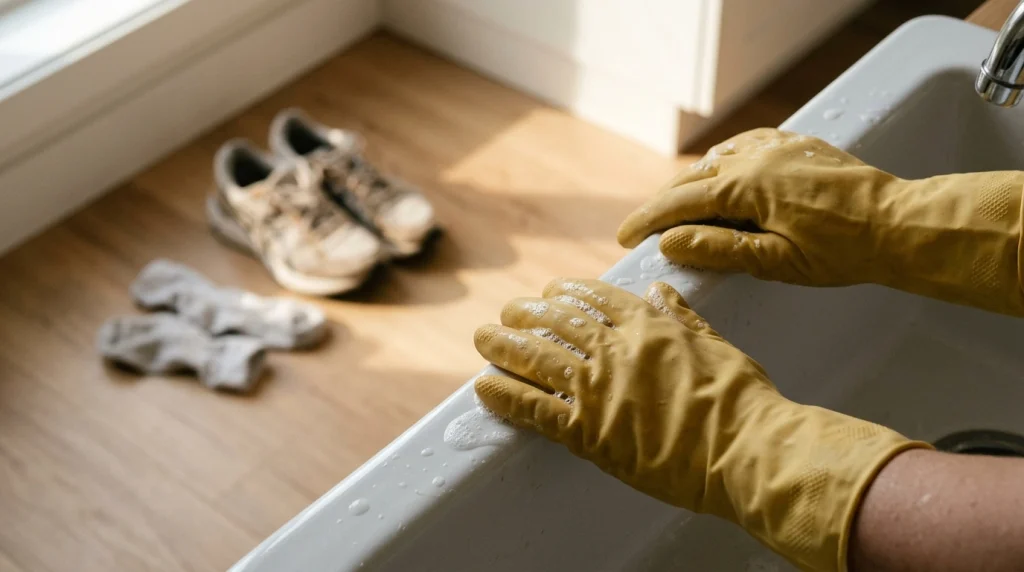
3. Wear Gloves During Wet Household Chores
Dishwashing and household cleaning frequently expose your nails to water and detergents.
Wear protective gloves appropriate for the cleaning product whenever you wash dishes, scrub surfaces, or handle irritating cleaners.
If your hands become sweaty inside gloves, dry them afterward and change damp glove liners when necessary.
This small habit reduces repeated exposure without requiring you to change your entire routine.
4. Give Damaged Nails a Break From Enhancements
If your nails began peeling after removing acrylics, gel polish, or dip powder, consider temporarily avoiding enhancements while the damaged areas grow out.
Never pull attached gel or acrylic products away from your natural nails.
For more targeted guidance, explore how to strengthen nails after gel polish.
When you return to manicures, choose gentle preparation and proper removal methods.
Pro Tip
Keep a small hand cream beside your sink and another near your bed. Linking moisturizing to habits you already perform makes consistent nail care much easier.
How Should You Care for Peeling Toenails?
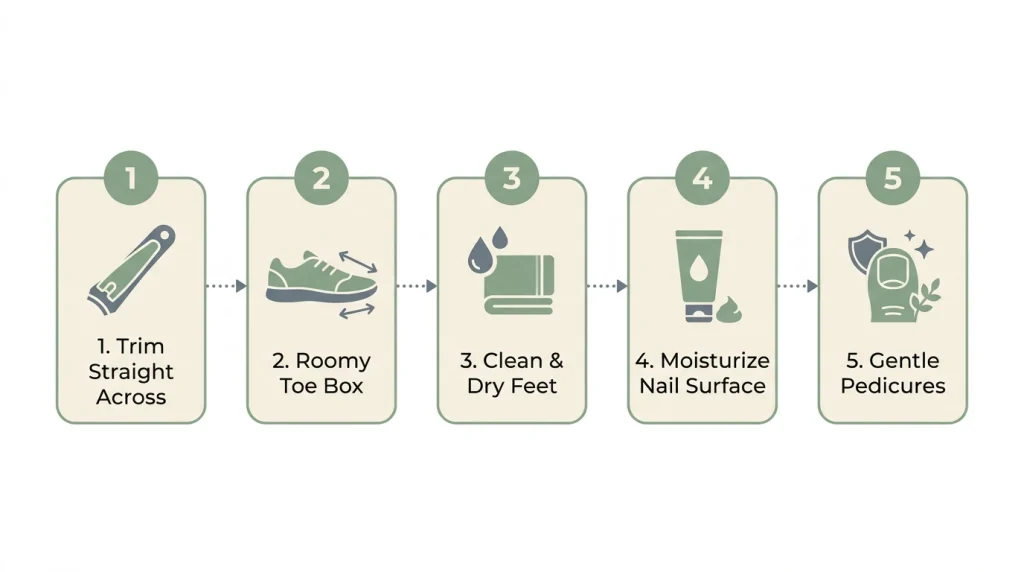
Toenails require a slightly different approach because pressure, moisture, and possible infections play a greater role.
Begin by checking whether the peeling is limited to a small, dry edge or accompanied by unusual thickness, discoloration, or discomfort.
1. Trim Toenails Straight Across
Use clean toenail clippers to trim each nail straight across, leaving a small amount of free edge.
Gently smooth sharp corners without digging into the sides.
Cutting toenails extremely short or rounding the corners deeply can encourage painful ingrown nails.
If your nails are unusually thick or difficult to trim, ask a podiatrist for guidance rather than forcing the clippers.
2. Choose Shoes With Enough Toe Room
Your toes should have enough space to move comfortably without repeatedly striking the front of your shoes.
Check the fit of running shoes, work footwear, boots, and everyday flats.
A roomy toe box can reduce repeated friction against fragile toenails.
If one toenail continually peels or splits after long walks, pay particular attention to whether your footwear presses against that toe.
3. Keep Your Feet Clean and Dry
Wash your feet regularly with mild soap and water. Dry thoroughly, especially between your toes.
Change socks daily, and replace damp socks after workouts or heavy sweating.
Choose breathable footwear and allow shoes to dry between uses.
These steps help reduce the damp conditions in which nail fungus can thrive.
4. Moisturize the Toenail Surface Without Trapping Moisture
Apply a small amount of fragrance-free lotion to dry toenail surfaces and surrounding skin.
If your heels are dry, you can use a richer foot cream on the affected skin.
However, avoid leaving thick creams between your toes, where persistent moisture may encourage fungal problems.
Your goal is comfortable skin and protected nails, not constantly damp feet.
5. Avoid Aggressive Pedicure Techniques
Do not scrape, pry, or peel loose-looking toenail layers.
Ask your nail technician to avoid aggressive surface filing and cutting healthy cuticles.
Use salons that properly disinfect their instruments and foot baths.
For more everyday care strategies, see our guide on how to strengthen weak toenails.
Warning
If your toenail becomes thick, yellow, crumbly, painful, or separated from the nail bed, don’t cover it with gel polish and assume it only needs moisturizer. Fungal infection, psoriasis, injury, and other conditions can cause similar changes. A healthcare professional can determine the cause.
Which Nail Care Products Are Worth Using?
The best products for peeling nails usually support protection and gentle maintenance rather than promising instant repair.
Start with essentials that address your daily habits.
Jojoba-Based Nail and Cuticle Oil
A lightweight nail oil is convenient for conditioning dry nail surfaces and the surrounding cuticle area.
Apply a small amount once or twice daily, especially after washing your hands.
It can improve the feel of dry nails, but it won’t fuse separated nail layers or treat fungal infections.
Recommended Product Type
Jojoba Nail and Cuticle Oil
A practical option for conditioning dry fingernails and nail folds during a gentle recovery routine.
As an Amazon Associate, we earn from qualifying purchases.
Fine-Grit Glass Nail File
A quality glass nail file can help you gently smooth small snags without repeated aggressive filing.
Use light pressure and concentrate on the free edge rather than thinning the nail surface.
Keep separate tools for fingernails and toenails, particularly when an infection is suspected.
Recommended Product Type
Fine-Grit Glass Nail File
Useful for maintaining smooth, short fingernail tips and reducing snags during everyday activities.
As an Amazon Associate, we earn from qualifying purchases.
Fragrance-Free Hand Cream
A moisturizing cream containing glycerin, petrolatum, or ceramides can help reduce dryness around your fingernails.
Choose a formula that feels comfortable enough to use repeatedly throughout the day.
Recommended Product Type
Fragrance-Free Moisturizing Hand Cream
A convenient everyday choice for frequent handwashing and dry skin around fragile fingernails.
As an Amazon Associate, we earn from qualifying purchases.
Moisture-Wicking Socks
For toenail care, socks that help manage perspiration can be more useful than another cosmetic nail treatment.
Change them whenever they become damp, particularly after exercising.
Recommended Product Type
Moisture-Wicking Everyday Socks
Helpful for keeping feet more comfortable and reducing prolonged dampness inside shoes.
As an Amazon Associate, we earn from qualifying purchases.
What Should You Do and Avoid When Your Nails Are Peeling?
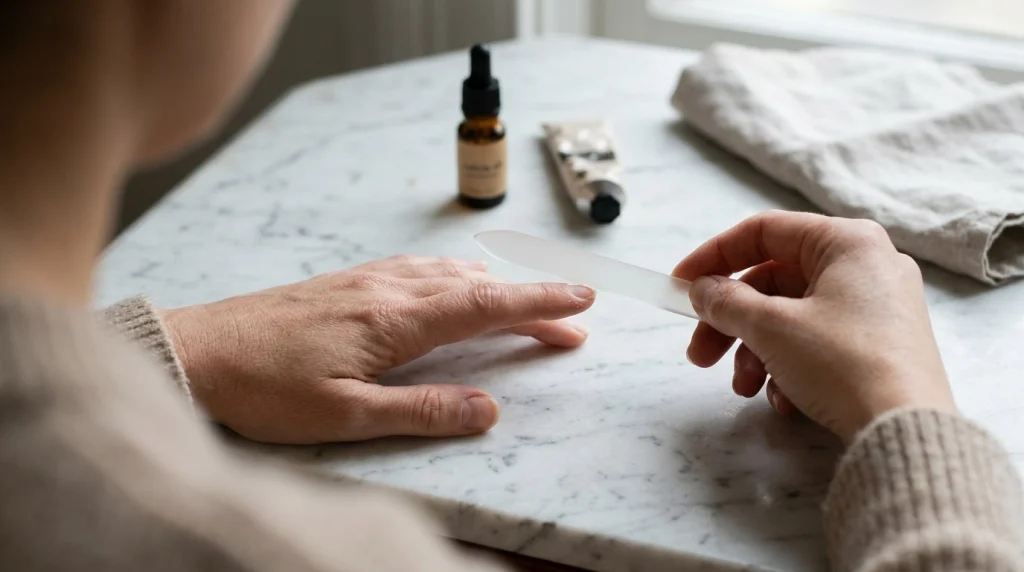
Small daily decisions matter because the damaged portion of a nail cannot repair itself like living skin.
Do
- Keep peeling nails short.
- File snags gently.
- Moisturize fingernails daily.
- Protect hands during cleaning.
- Choose well-fitting shoes.
- Dry feet thoroughly.
Don’t
- Peel separated nail layers.
- Rip off gel polish.
- Over-buff damaged nails.
- Cut cuticles aggressively.
- Wear painfully tight shoes.
- Ignore persistent nail changes.
Our article on common nail health mistakes explains additional habits that can contribute to brittleness and splitting.
How Long Does It Take for Peeling Nails to Recover?
Recovery depends on how much of your nail is affected and whether the original cause has been addressed.
Your visible nail plate contains nonliving, hardened cells. Once those layers separate, they cannot fully heal back together.
Instead, your goal is to prevent additional damage while new nail grows from the matrix beneath the skin near your nail base.
Fingernail Recovery Timeline
Fingernails grow approximately 3 millimeters per month, although individual growth rates vary.
A small split near the tip may be trimmed away sooner, while extensive damage can take approximately four to six months to grow out completely.
You might notice fewer new snags after improving your habits, but that doesn’t mean the old peeling layers have regenerated.
Toenail Recovery Timeline
Toenails grow considerably more slowly than fingernails.
A complete toenail replacement can take approximately 12 to 18 months, particularly for a big toenail.
That means consistent footwear protection and hygiene are especially important.
If your toenail remains abnormal because of an untreated infection or ongoing pressure, simply waiting may not solve the problem.
Can Nail Polish or Nail Hardeners Fix Peeling Nails?
Nail polish may temporarily cover uneven surfaces, but it cannot permanently restore layers that have separated.
Repeated removal, particularly when combined with scraping or aggressive buffing, can cause additional wear.
Some nail strengtheners may provide a temporary protective coating, but they’re not necessary for every peeling nail.
Avoid formaldehyde-containing hardeners if your nails are already brittle, because they may make certain nails more prone to splitting.
If your nails are painful, lifting, or unusually discolored, leave them uncovered until you have professional guidance.
Remember that a polish-free break is mainly useful for avoiding additional product-related trauma, not because nails need to breathe.
When Could Peeling Nails Signal a Medical Problem?
Peeling often results from everyday exposure or injury, but some nail changes have medical causes.
Possible underlying conditions include fungal infection, psoriasis, eczema, iron deficiency, and thyroid disorders.
These conditions cannot be diagnosed from peeling alone.
Arrange a medical evaluation if you notice:
- Increasing nail thickness or significant crumbling.
- Persistent yellow, green, or unusual discoloration.
- Pain, swelling, redness, warmth, or drainage.
- A nail lifting away from the underlying nail bed.
- A new or changing dark streak in a nail.
- Sudden changes affecting several nails without an obvious cause.
- Peeling that continues despite reducing obvious sources of damage.
A new or changing dark nail streak deserves prompt dermatology assessment.
If you have diabetes, poor circulation, or reduced sensation in your feet, seek medical guidance early for new toenail problems.
You can also learn more about signs of unhealthy nails and which changes deserve attention.
How Can You Troubleshoot Common Peeling Nail Problems?
Your fingernails peel immediately after gel removal
Immediate fix: Keep the nails short, moisturize regularly, and avoid buffing damaged surfaces. Prevention: Use appropriate gel removal methods and never peel attached coatings.
Your toenails repeatedly split after running
Immediate fix: Inspect your shoes for toe pressure and gently smooth small snags. Prevention: Choose properly fitting athletic footwear and maintain a comfortable nail length.
Your nails keep peeling despite moisturizing
Immediate fix: Review other exposures, including cleaning chemicals, frequent soaking, mechanical friction, and nail treatments. Prevention: Protect nails consistently and seek professional evaluation if the problem persists.
One toenail becomes yellow, thick, and crumbly
Immediate fix: Arrange an examination rather than scraping the nail or covering it with polish. Prevention: Keep feet clean and dry, manage sweaty footwear, and follow treatment advice if an infection is diagnosed.
What Is a Simple Daily Routine for Both Fingernails and Toenails?
You don’t need a complicated beauty schedule to care for fragile nails. Create two short routines that fit naturally into your day.
Morning Fingernail Routine
- Check for rough edges that could snag.
- Apply hand cream after washing.
- Use cuticle oil if your nail folds feel dry.
- Put on protective gloves before wet cleaning.
Evening Toenail Routine
- Wash your feet when needed and dry them thoroughly.
- Inspect toenails for unusual changes.
- Apply a little moisturizer to dry nail surfaces and surrounding skin.
- Choose clean, dry socks and allow worn shoes to air out.
Once or twice weekly, check your nail lengths and gently smooth any new snags.
Pro Tip
Take a clear photo of an affected nail every two to four weeks under similar lighting. Comparing pictures can help you notice whether fresh growth looks smoother or whether discoloration and damage are spreading.
Frequently Asked Questions About Peeling Fingernails vs Toenails
Q: Why are my fingernails peeling but my toenails are healthy?
A: Your hands experience more frequent washing, cleaning products, and manicure-related exposure. When only your fingernails peel, these external factors may be contributing. Persistent or unusual changes still deserve evaluation.
Q: Should I cut off peeling nail layers?
A: You can gently trim a loose section that extends beyond the nail tip, provided you don’t cut attached nail or skin. Never pull peeling layers backward, because doing so may worsen the split.
Q: Can cuticle oil repair peeling toenails?
A: Cuticle oil can condition dry nail surfaces and nearby skin, but it cannot rebuild damaged nail layers. Toenails affected by infection or repeated shoe pressure need the underlying cause addressed.
Q: Is peeling toenails a sign of fungus?
A: Sometimes, but peeling alone doesn’t confirm an infection. Fungal toenails may also become yellow, thick, distorted, or crumbly. A healthcare professional can examine the nail and perform testing when appropriate.
Q: Will taking biotin stop my nails from peeling?
A: Evidence supporting biotin for otherwise healthy people with brittle nails is limited. Biotin supplements can also interfere with certain laboratory tests. Discuss supplements with a clinician before starting them.
Final Thoughts: Give Fingernails and Toenails the Care They Actually Need
Learning how to care for peeling fingernails vs toenails starts with understanding their different challenges. Protect your hands from excessive water and chemicals, while protecting your feet from pressure, damp footwear, and avoidable injury.
Keep your routine gentle, allow damaged nail to grow out, and get unusual or persistent changes checked. Save this guide to your Pinterest nail-care board so you can return to these habits whenever your nails need extra attention.

Hi, I’m Jessica, the creator behind Unique Lash & Nails Katy.
I created this website for anyone who loves beautiful nails as much as I do. Here, I share trendy nail designs, seasonal manicure ideas, easy nail care tips, honest product recommendations, and step-by-step guides to help you create salon-worthy nails at home. Whether you’re looking for everyday inspiration or your next favorite nail trend, I hope you’ll find something you love.