How to Protect Nails While Washing Dishes
Quick Answer
To protect nails while washing dishes, wear well-fitting waterproof gloves, keep the inside dry, and use comfortably warm rather than very hot water. Handle plates with your fingertips instead of scraping with your nails. Afterward, dry around each nail and apply hand cream or cuticle oil. These small habits help prevent repeated soaking, peeling, breakage, and premature manicure wear.
Time needed
2 minutes to prepare and finish
Difficulty
Beginner
Items needed
Gloves, towel, moisturizer
Result lasts
Protection for each dishwashing session
Love a fresh manicure but dread the pile of dishes waiting in your sink? You don’t have to choose between clean plates and healthy-looking nails. Repeated water exposure and detergent contact can leave natural nails more prone to splitting, while scrubbing and snagging can damage polish. This guide shows you exactly how to wash dishes without making your nails do the hard work.


Why Does Washing Dishes Make Nails Peel or Break?
Your nail plate is made of layers of keratin, but it isn’t waterproof. Prolonged soaking lets it absorb water and become temporarily softer. Once it dries, that moisture leaves again. Repeating this wet-and-dry cycle can contribute to peeling and splitting, especially if your nails are already brittle or have been thinned by rough manicure removal.
Dish soap adds another challenge. Detergents remove grease from cookware, but frequent exposure can also dry and irritate the skin around your nails. Very hot water and long washing sessions make the problem harder to manage. A quick rinse usually isn’t the issue; it’s repeated soaking without protection. For a closer explanation, see our guide to how hot water affects your nails.
Not every broken nail is caused by dishes. Picking polish, filing too aggressively, or using your nails to pry open packaging can contribute, too. The routine below reduces the exposure you can control without demanding a perfect manicure every day.
What Do You Need to Protect Your Nails Before Washing Dishes?
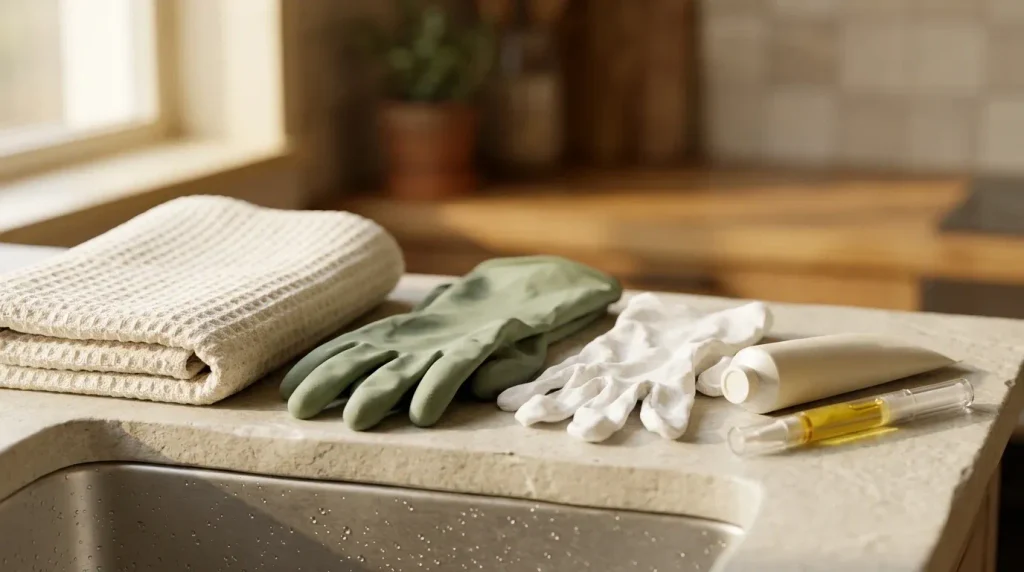
Keep your setup simple and within reach of the sink. You need:
- Reusable waterproof dishwashing gloves: Choose a comfortable, intact pair with cuffs long enough to reduce splashes entering at the wrist.
- A clean, dry towel: Use it to dry your hands and the skin beside each nail once you’re finished.
- Fragrance-free hand cream: A cream containing glycerin, petrolatum, or ceramides helps soothe dry skin after cleaning.
- Optional cotton glove liners: They absorb sweat if your hands become clammy inside waterproof gloves.
- Optional cuticle oil: A small bottle or pen makes it easier to condition the skin surrounding your nails.
If you have a latex allergy or have reacted to rubber gloves, choose a suitable latex-free alternative, such as household gloves labeled nitrile or PVC. Always check that the gloves are suitable for your dishwashing detergent.
Affiliate disclosure: As an Amazon Associate, we earn from qualifying purchases. The links below may earn a commission at no extra cost to you.
Recommended Product
Reusable Latex-Free Waterproof Dishwashing Gloves
A flexible, textured pair gives you grip on wet glasses while keeping soap and soaking water off your nails.
As an Amazon Associate, we earn from qualifying purchases.
What Should You Avoid Before Putting Your Hands in the Sink?
Warning
Don’t wear leaking gloves or leave your hands wet inside them. Trapped detergent water and sweat can irritate the skin around your nails. Remove wet gloves, dry your hands, and switch to a dry pair. If you notice persistent redness, itching, swelling, tenderness, or pus around a nail, stop irritating the area and seek medical advice.
Take off rings that trap soap underneath, and check your manicure for lifting before you begin. If gel, acrylic, or a press-on is separating from the natural nail, don’t push it back down over a damp area. A lifted enhancement needs appropriate repair or removal, not a quick cover-up.
How Do You Protect Nails While Washing Dishes? Follow These 7 Steps
1
Check Your Nails and Remove Snags
Before starting, look for a cracked free edge, loose polish, or a snag that could catch on a sponge. If needed, gently smooth a dry, painless rough tip with a fine nail file. Keep vulnerable nails at a manageable length so they don’t knock against plates and pans.
Common mistake: Peeling off a tiny lifted nail layer. Pulling it can make the split travel farther into the nail.
2
Put On Dry, Well-Fitting Gloves
Choose waterproof gloves that let you grip a slippery mug without stretching tightly across your fingernails. Check both palms for holes and keep the cuffs above the splash zone. If sweating is a problem, wear thin cotton glove liners underneath.
Common mistake: Reusing damp gloves. Moisture trapped against your skin defeats much of the protection.
3
Keep the Water Comfortably Warm
Use water that’s warm enough for the job but not scalding. Very hot water can irritate your skin, and gloves aren’t a guarantee against heat. Scrape food off first, then soak a stubborn pan separately rather than holding your hands in the sink while you wait.
Common mistake: Assuming hotter is always better. Excess heat can make cleaning uncomfortable without improving nail protection.
4
Use a Brush Instead of Your Fingernails
Let a dish brush, sponge, or plastic-safe scraper remove stuck-on food. Hold plates with the pads of your fingers and avoid levering lids or scraping corners with nail tips. Even strong polish can’t prevent a nail from cracking when pressure hits one small edge.
Common mistake: Using a thumbnail under a stubborn label or dried food. That sideways force can start a painful split.
5
Wash in Short, Organized Batches
Group cups, cutlery, and plates before you begin so you aren’t repeatedly taking gloves off and plunging your hands back into water. Use a dishwasher when available and appropriate. For a large pile, take a brief glove-free break if your hands start sweating.
Common mistake: Wearing waterproof gloves continuously through several chores. Sweat buildup can leave your skin damp and irritated.
6
Dry Your Hands and Nail Edges
Remove gloves without tipping dirty water into them. If your hands are sweaty or soapy, rinse briefly, then pat dry with a clean towel. Pay attention to the sides of each nail and under longer free edges without digging underneath with a sharp tool.
Common mistake: Leaving the area around a lifted enhancement damp. Moisture can remain in gaps that deserve professional attention.
7
Moisturize Your Nails and Cuticles
Massage a pea-sized amount of fragrance-free ceramide hand cream into your hands, fingertips, and nail folds. Add a small drop of cuticle oil if those areas are especially dry. Moisturizing won’t reverse a deep split, but it supports the surrounding skin and helps prevent excess dryness.
Common mistake: Applying cream only to your palms. Your fingertips and nail folds need attention after repeated washing, too.
How Can You Keep Nail Polish, Gel, and Acrylic Safe During Dishwashing?
Regular nail polish
Let a fresh manicure dry thoroughly before doing chores, and never count on top coat as a substitute for gloves. If the tip chips, smooth the snag and touch it up when the nail is clean and completely dry. Avoid painting over a wet nail or trapped soap residue.
Gel polish
Cured gel generally tolerates ordinary handwashing, but repeated soaking and mechanical knocks can worsen an already lifted edge. Inspect around the cuticle and sides of the nail. Don’t pick loose gel or try to seal a damp gap with more product.
Acrylics and press-ons
Long extensions have extra leverage when you grip a pan or bump the sink. Use the pads of your fingers, select roomy gloves that don’t press on the tips, and stop if an extension catches. Press-on adhesives may loosen with repeated water exposure; follow their product-specific care instructions.
If a nail becomes thin or flaky after removal, protecting it matters more than hiding it. Our gentle nail recovery routine explains what to do while the damaged portion grows out.
What Nail-Care Habits Should You Do and Avoid?
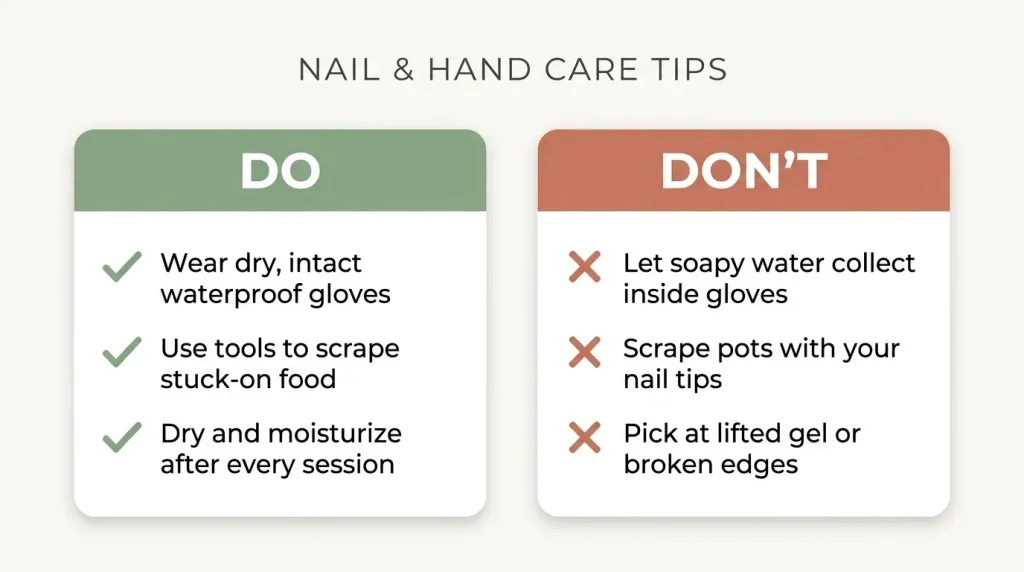
Do
- +Wear dry, intact waterproof gloves.
- +Use tools to scrape stuck-on food.
- +Dry and moisturize after every session.
Don’t
- −Let soapy water collect inside gloves.
- −Scrape pots with your nail tips.
- −Pick at lifted gel or broken edges.
What Should You Do if Your Nails Already Feel Weak After Dishes?
Your nails feel bendy or soft
Dry your hands and let the nails return to their usual firm state before filing or opening packaging. Next time, use gloves from the start rather than putting them on halfway through.
A tip is peeling or catching
Once dry, shorten or smooth only the loose free edge without tugging at it. Keep the nail short during recovery and use gloves for every wet chore. For more help, see how to repair a damaged nail at home safely.
Your skin itches inside gloves
Remove the gloves, rinse off any residue, and dry your hands. Switch to a clean latex-free pair and consider cotton liners. Seek medical advice if a rash persists, since rubber ingredients and detergents can both cause reactions.
Your manicure starts lifting
Don’t pry it off, glue it down while wet, or conceal a painful change. Arrange careful repair or removal as appropriate. A persistent gap, greenish discoloration, pain, or swelling needs evaluation rather than another coat of polish.
What Small Tricks Make This Routine Easier Every Day?
Pro Tip
Store a clean pair of gloves on a hook next to the sink. If you have to search a drawer, you’re more likely to skip them for a “quick” wash that lasts 15 minutes.
Pro Tip
Give each glove a quick inside-out check after use. Let it dry completely before storing it, and wash reusable cotton liners regularly so the next pair starts clean and dry.
Pro Tip
Keep a small moisturizing station near the towel. Applying cream while you’re still at the sink is easier to remember than promising you’ll do it later.
Recommended Product
Jojoba Cuticle Oil Pen
A small pen is convenient for applying a controlled amount around dry nail folds after dishes or before bed.
As an Amazon Associate, we earn from qualifying purchases.
How Long Before You Notice Less Peeling and Breakage?
Gloves protect your nails during the very first washing session, but they can’t instantly repair layers that have already split. With consistent protection, you may notice fewer new snags and less dry, tight skin over the following days or weeks. The damaged nail tip must gradually grow forward before you can trim it away.
Fingernails often take several months to grow out completely, so judge progress by whether new breakage slows rather than expecting an overnight transformation. If your nails keep changing despite gentler care, or you see persistent discoloration, major lifting, pain, or swelling, speak with a healthcare professional. You can compare additional warning signs in our article on signs of unhealthy nails.
Frequently Asked Questions About Protecting Nails While Washing Dishes
Q: Can washing dishes every day damage your nails?
A: Frequent, prolonged soaking and detergent contact can contribute to peeling, splitting, and dry nail folds. Wearing waterproof gloves and moisturizing afterward helps reduce repeated exposure.
Q: What gloves are best for washing dishes with long nails?
A: Choose reusable waterproof gloves with roomy fingertips, a secure grip, and long cuffs. If latex bothers your skin, select a suitable latex-free option. Replace gloves that leak or feel too tight.
Q: Does dish soap ruin gel nail polish?
A: A brief wash usually won’t ruin properly cured gel. Repeated soaking, hard scrubbing, and existing lifted edges can shorten wear, so gloves are still useful.
Q: Can I use nail polish instead of dishwashing gloves?
A: No. Polish may reduce some surface wear, but it isn’t a reliable barrier against repeated soaking or detergent exposure to your skin. Wear waterproof gloves for wet chores.
Q: Should I apply cuticle oil before or after washing dishes?
A: Afterward is convenient because you can apply it to clean, dry fingertips. Use hand cream as well if the surrounding skin feels dry, and remember that oil doesn’t replace gloves.
Can You Keep Your Nails Beautiful Without Avoiding the Dishes?
Absolutely. The most effective habit is simple: keep water and detergent away from your nails with dry, well-fitting gloves, then moisturize afterward. Your manicure can still look polished without turning a routine chore into repeated nail damage. Save this guide to Pinterest so your nail-protection checklist is handy the next time the sink fills up.

Hi, I’m Jessica, the creator behind Unique Lash & Nails Katy.
I created this website for anyone who loves beautiful nails as much as I do. Here, I share trendy nail designs, seasonal manicure ideas, easy nail care tips, honest product recommendations, and step-by-step guides to help you create salon-worthy nails at home. Whether you’re looking for everyday inspiration or your next favorite nail trend, I hope you’ll find something you love.