How Cleaning Products Affect Nails
Quick Answer
Cleaning products can affect your nails by drying the nail plate, encouraging peeling and splitting after repeated wet work, and irritating the skin around your cuticles. Dish soap, strong degreasers, bleach, and some disinfectants pose different risks; exposure time matters as much as the product itself. Wear label-appropriate gloves, avoid unnecessary soaking, dry your hands, and moisturize after cleaning. One quick chore rarely ruins healthy nails, but repeated unprotected contact can add up.
If your nails seem flaky after a week of cleaning, the products under your sink may be partly responsible. The useful question isn’t whether every cleaner is bad; it’s which exposures matter and what you can change without giving up clean counters or a fresh manicure.


Why Do Cleaning Products Make Nails Weak or Brittle?
Your visible nail plate is made mostly of tightly packed keratin. It feels hard, but it isn’t waterproof. Water can enter the plate, making it temporarily softer and more flexible. As it dries, the plate returns toward its usual state. Repeated wetting and drying can contribute to splitting and peeling, particularly at the free edge where layers are already exposed.
Cleaning adds another stressor. Many detergents are designed to loosen grease and oils from household surfaces. During frequent or prolonged contact, they can also remove protective oils from the skin around your nails. The result may be tight fingertips, rough nail folds, and more noticeable brittleness. That doesn’t mean a single drop of dish soap chemically destroys a nail. The pattern of repeated exposure is what deserves your attention.
Water and detergent work together
A long sink full of soapy water creates two kinds of stress: the nail stays wet while the cleanser repeatedly contacts your fingertips. Hot water can make the surrounding skin feel even drier. If you often wash dishes, scrub laundry by hand, or wipe counters without gloves, you may be repeating that cycle several times a day. Our guide to how hot water can damage nails explains why soaking time matters.
The skin around your nails is vulnerable too
Your cuticle and nail folds help protect the area where the nail grows. Irritated, cracked skin can sting when you use hand sanitizer or wash your hands again. In some people, repeated contact with detergents causes irritant contact dermatitis: redness, itching, dryness, or painful fissures. Fragrances, preservatives, or glove ingredients can sometimes trigger allergic contact dermatitis instead. Those reactions need different management, so a persistent rash is worth professional assessment.
Which Household Cleaning Products Affect Nails Most?
Not every bottle carries the same risk. Look at the formula, whether it’s concentrated or diluted, how long it stays on your hands, and whether the label recommends protective equipment. Here’s how common cleaning tasks compare.
Dish soap and laundry detergent
Dish soaps and laundry detergents contain surfactants that lift grease and dirt. They’re useful on plates and clothes, but repeated direct contact may leave nail folds dry and fingertips irritated. Handwashing clothes or dishes is often more troublesome than a quick splash because of the prolonged wet work. Powdered detergent can also irritate if dust or concentrated product contacts damp skin. Use a scoop rather than your fingers and avoid soaking bare hands in wash water.
Bleach and disinfectant solutions
Bleach and other disinfectants require extra caution. Depending on concentration and contact time, they can irritate skin; strong or improperly used products may cause chemical burns. Some household disinfectants contain alcohol, quaternary ammonium compounds, or other active ingredients with their own label precautions. Follow the manufacturer’s dilution, ventilation, contact-time, and glove instructions instead of assuming one glove material works for every product.
Never mix bleach with ammonia, acidic toilet cleaners, vinegar, or other cleaning chemicals. Dangerous fumes can result. A cleaner is meant for the surface listed on its label, not for your fingernails or cuticles.
Warning
If a cleaner causes burning, intense pain, blistering, or a chemical splash, stop the task immediately. Remove contaminated gloves or jewelry, rinse exposed skin promptly with plenty of running water, follow the product’s first-aid label, and contact poison control or urgent medical care. Don’t try to neutralize the chemical with another product.
Bathroom, oven, and heavy-duty degreasers
Products for stubborn grease, rust, drains, or mineral deposits can be much harsher than an everyday surface spray. Some are strongly acidic or alkaline. Your nails aren’t a safe test surface, even if the cleaner looks like ordinary liquid soap. Wear the protective equipment stated on the label, avoid splashes, and never scrape residue with your fingernails. A brush or handled cleaning tool keeps your fingertips farther from the product.
Disinfecting wipes and multipurpose sprays
Wipes make it tempting to clean several rooms with bare hands, but repeated exposure to their cleaning ingredients or preservatives can irritate sensitive skin. Follow each label’s glove and handling directions. For everyday dirt, plain cleaning with soap or detergent may be enough; disinfection is more important in situations such as illness at home.
What Nail Changes Suggest Too Much Cleaning Exposure?
Cleaning-related damage often builds gradually. You might recognize several of these signs rather than one dramatic change:
- Peeling tips: Thin layers lift along the free edge and catch on sweaters or hair.
- Frequent splitting: A small crack appears after dishes, laundry, or vigorous scrubbing.
- Rough cuticles: Skin beside the nail feels tight, flaky, or prone to hangnails.
- Temporary softness: Nails bend more easily after a long period in water.
- Red or itchy fingers: Irritation affects the nail folds or surrounding hand skin.
- Shorter manicure wear: Polish chips or an existing enhancement begins to lift sooner after repeated wet work.
These clues don’t prove that a cleaner is the only cause. Aggressive filing, peeling gel polish, repeated acetone use, nail biting, skin conditions, and other health factors can look similar. If the pattern is unclear, compare it with the common causes of weak nails before blaming your entire cleaning routine.
Can Cleaning Products Ruin Gel, Acrylic, or Regular Polish?
Your manicure’s finish and your natural nail are separate layers, so they don’t always react the same way. Regular polish can chip after repeated wet work or rubbing against rough surfaces, especially if the free edge is already worn. Cleaning products may dull or affect certain finishes, but the outcome varies by formula. Don’t assume every cleaner will dissolve polish.
Cured gel and acrylic are generally sturdier than regular polish during normal handwashing. The problem is more often a vulnerable seal, an existing lifted edge, or physical scrubbing. Moisture can collect beneath a lifting enhancement. Don’t seal a damp gap with glue or pick at the lifted material. Have it assessed and removed or repaired properly.
How Can You Protect Your Nails While Cleaning?
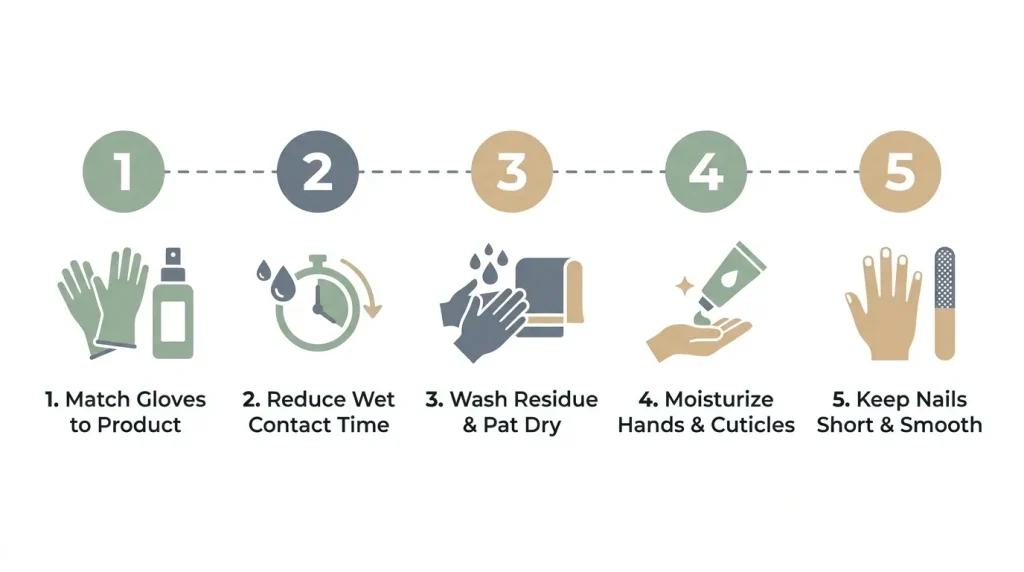
You don’t need a complicated treatment kit. The biggest wins come from preventing prolonged contact and taking care of your hands afterward. Build this practical routine into the chores you already do.
1. Match your gloves to the product
For ordinary dishwashing, a reusable, well-fitting waterproof pair is practical. Cotton-lined gloves can feel more comfortable during wet work because they help manage sweat. For stronger chemicals, check the cleaner’s label and the glove manufacturer’s chemical-resistance information. Nitrile is useful for many tasks, but no single thin glove protects against every cleaner or solvent.
If your hands get sweaty, pause when safe, remove the gloves, dry your hands, and switch to a clean, dry pair. Replace gloves that are torn or wet inside. Wearing damp gloves for a long time can aggravate irritated skin even when no detergent gets through.
Pro Tip
Keep gloves hanging beside the sink with the openings facing down so they can dry between uses. Put a second pair where you clean the bathroom. Making protection easy to reach is more reliable than promising yourself you’ll remember next time.
2. Reduce the time your hands stay wet
Use a long-handled dish brush, sponge holder, or cleaning wand when practical. Wash dishes in batches rather than repeatedly dipping bare fingers into soapy water. Choose comfortably warm water instead of very hot water when a task allows. You don’t have to avoid normal handwashing; you simply want fewer long, unnecessary soaking sessions.
3. Wash off residue and dry carefully
After cleaning, remove gloves without spreading residue onto your skin. Wash your hands as directed by the product label, then pat them dry, including the sides of your nails and between your fingers. Don’t use a sharp cuticle tool to dig beneath the free edge. That can injure the skin underneath and make an existing problem worse.
4. Moisturize nails, cuticles, and hands
When your hands are clean and dry, massage a fragrance-free hand cream over the backs of your hands, fingertips, and nail folds. Ingredients such as glycerin, petrolatum, or ceramides help reduce moisture loss from the skin. If you enjoy cuticle oil, dab a small amount around each nail as an extra conditioning step. Oil improves the feel of dry skin; it doesn’t fuse a peeling nail layer back together.
5. Keep vulnerable nails short and smooth
Long, flexible tips catch on cleaning cloths and kitchen tools. While peeling improves, keep your nails at a length that doesn’t snag. Smooth rough edges with a fine file once nails are dry, and avoid aggressive buffing. If a tiny layer has already lifted, don’t pull it away toward the cuticle. Your aim is to protect the remaining nail as fresh growth replaces the damaged portion.
What Should You Do If Your Nails Are Already Peeling?
Start by reducing the exposure that seems to trigger the problem. Wear gloves consistently for wet work, stop picking at lifted edges, and moisturize after every cleaning session. If polish removal leaves your nails uncomfortable, simplify your manicure routine until the tenderness settles. A coating can hide surface peeling, but it cannot reverse structural damage already present in the nail plate.
Take a photo of your nails now and another in a few weeks under similar lighting. You’ll get a clearer picture of whether peeling is moving outward with growth or new damage is appearing near the base. For a fuller recovery plan, see our guide to caring for damaged, weak nails.
How long does recovery take?
Dry skin around your nails may feel better relatively quickly once you stop irritating it and moisturize regularly. Split nail tips take longer because damaged nail plate generally needs to grow out. Fingernails grow around 3 millimeters per month on average, and complete replacement commonly takes about six months or longer. The exact timeline depends on how much nail is affected and whether exposure continues.
Don’t judge progress only by whether an old split disappears. Look for smoother new growth, fewer fresh tears, and less tenderness around the nail folds. If a nail lifts from the bed, becomes discolored, or keeps worsening despite protection, a clinician can check for causes beyond cleaning.
Which Nail-Care Products Are Actually Worth Buying?
Your first purchase should solve the exposure problem, not promise overnight growth. Prioritize protective gloves and a moisturizer you’ll use consistently. The links below are shopping-search links, so you can compare materials, sizes, and ingredient lists before choosing.
Affiliate disclosure: As an Amazon Associate, we earn from qualifying purchases.
Recommended Product
Cotton-Lined Reusable Dishwashing Gloves
A comfortable waterproof pair reduces the prolonged water and detergent contact behind many everyday nail complaints.
Recommended Product
Fragrance-Free Hand Cream
A rich cream with glycerin, ceramides, or petrolatum supports dry skin around your nail folds after cleaning.
If ordinary gloves make you sweat or itch, consider thin cotton glove liners under a suitable waterproof outer glove. For dry nail folds, a jojoba cuticle oil pen is convenient to keep beside your hand cream. Neither replaces gloves when you’re handling cleaning chemicals.
What Daily Habits Help Prevent Cleaning-Related Nail Damage?
Do
- Use gloves suited to the cleaner and task.
- Dry hands and gloves after wet work.
- Apply hand cream to your nail folds.
- Use brushes instead of fingernails to scrape.
Don’t
- Soak bare hands in cleaners for long periods.
- Mix bleach with other chemicals.
- Reuse torn or damp gloves.
- Pull off peeling nails or lifted gel.
A simple nightly routine can help you stay consistent: wash away any remaining residue, dry your hands, apply cream, and check for snags before bed. If you prefer a broader checklist, try this simple nail-care routine for healthy nails. Protection works better when it becomes automatic rather than something you do only after a manicure goes wrong.
When Should You See a Dermatologist?
Everyday dryness can often be managed with gentler habits, but ongoing nail or skin symptoms deserve attention. Get evaluated if the skin around your nails becomes persistently itchy, cracked, swollen, or painful; if a nail separates from its bed; or if you develop a new dark streak, unusual color change, pus, or a nail that stops growing normally. A clinician can distinguish irritation from allergy, infection, injury, and other nail conditions.
If a strong cleaner splashes onto your skin and causes significant burning, treat it as a possible chemical injury, not ordinary nail dryness. Begin appropriate first aid immediately and seek urgent professional guidance. Don’t cover a suspected chemical burn with polish, glue, oil, or a home remedy.
Frequently Asked Questions About Cleaning Products and Nails
Q: Can dish soap make your nails peel?
A: Repeated dishwashing with detergent and water can contribute to peeling, especially if your hands stay wet for long periods. Gloves and moisturizing afterward can reduce that exposure.
Q: Does bleach damage natural fingernails?
A: Bleach solutions can irritate surrounding skin and, with stronger exposures, cause burns. Avoid direct contact with your nails and follow the product label’s dilution and glove instructions.
Q: Are cleaning gloves enough to protect a gel manicure?
A: Gloves reduce wet work and contact with cleaners, but they can’t repair existing lifting or prevent every impact. Keep the manicure intact and have loose enhancements corrected safely.
Q: Can I use cuticle oil before cleaning to protect my nails?
A: Cuticle oil can condition dry nail folds, but it isn’t a chemical-resistant barrier. Wear appropriate gloves during cleaning and use oil or cream afterward on clean hands.
Q: Will brittle nails recover if I stop using harsh cleaners?
A: If repeated exposure is the cause, protection and moisturizing may reduce new damage. Existing splits must grow out, which can take months; persistent or unusual changes need medical assessment.
Can You Keep a Clean Home and Healthy Nails?
Absolutely. The key is to limit direct chemical contact and long wet chores, then care for your nail folds as consistently as you care for your manicure. Keep gloves handy, use the cleaner according to its label, and moisturize after washing. Save this guide to your Pinterest nail-care board before your next cleaning day.

Hi, I’m Jessica, the creator behind Unique Lash & Nails Katy.
I created this website for anyone who loves beautiful nails as much as I do. Here, I share trendy nail designs, seasonal manicure ideas, easy nail care tips, honest product recommendations, and step-by-step guides to help you create salon-worthy nails at home. Whether you’re looking for everyday inspiration or your next favorite nail trend, I hope you’ll find something you love.