How to Clean Toenails: Easy Steps for Healthy Feet
Quick Answer
To clean your toenails, wash your feet with warm water and mild soap, then gently scrub around and underneath your nails with a soft nail brush. Rinse thoroughly and dry your feet, especially between your toes. Remove visible dirt without digging into the nail bed, and keep your toenails trimmed straight across. Regular cleaning helps maintain good foot hygiene and reduces the buildup of dirt and moisture.
Clean toenails are an important part of your personal hygiene routine. Whether you’re preparing for a pedicure, wearing open-toed shoes, or simply want your feet to feel fresh, knowing how to clean toenails correctly can make a noticeable difference.
Dirt, sweat, dead skin, and moisture can accumulate around your toenails throughout the day. Fortunately, you don’t need an expensive pedicure or a complicated collection of foot-care products to keep your nails looking neat.
With a few basic supplies and a gentle cleaning technique, you can maintain clean toenails at home while protecting the delicate skin around them.
Time Needed
5–10 minutes
Difficulty
Beginner
Items Needed
5 basic supplies
Routine
Daily foot washing


What You’ll Need to Clean Your Toenails
Before you begin, gather your supplies. Using the right tools makes cleaning easier and helps you avoid unnecessary irritation.
- Mild soap: A gentle cleanser removes sweat, dirt, and surface buildup without being unnecessarily harsh on your skin.
- Warm water: Use comfortably warm water rather than hot water.
- Soft nail brush: A soft-bristled brush helps remove visible dirt around the nail edges and underneath the free edge.
- Clean towel: Use a fresh towel to dry your feet and the spaces between your toes.
- Toenail clippers: Clean, appropriate toenail clippers help maintain a comfortable nail length.
Recommended Product
Soft-Bristle Nail Cleaning Brush
A soft nail brush can help remove everyday dirt from around your toenails without requiring sharp tools or aggressive scrubbing.
As an Amazon Associate, we earn from qualifying purchases.
How to Clean Toenails Step by Step
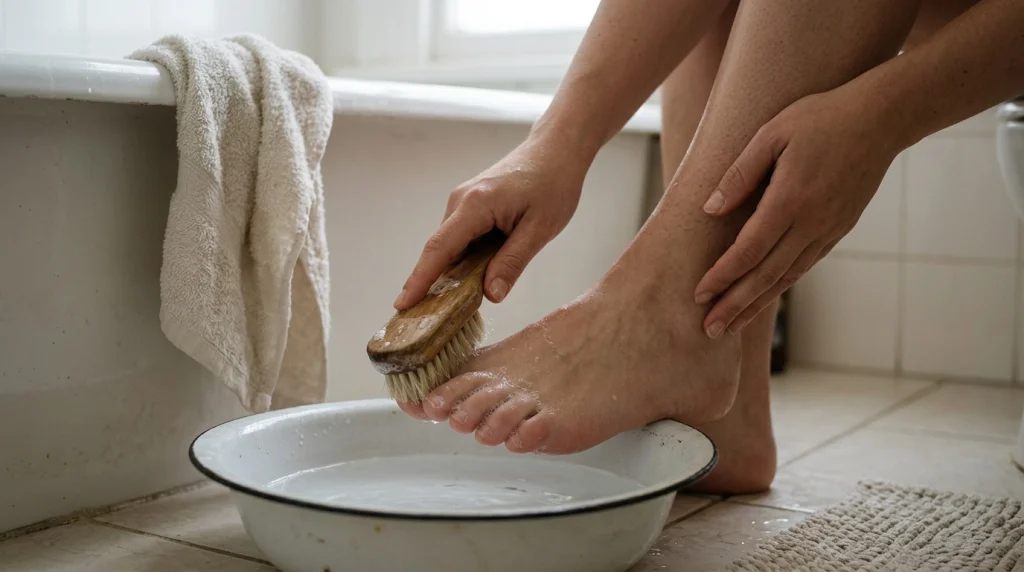
Follow these simple steps to clean your toenails thoroughly without damaging the surrounding skin.
1
Wash Your Feet With Warm Water
Begin by wetting your feet with comfortably warm water. Apply a small amount of mild soap and gently wash the tops, bottoms, heels, and sides of your feet.
Pay attention to the areas around your toenails, where sweat and dirt can accumulate. Washing your feet first helps loosen surface debris before you clean your nails individually.
Common mistake: Using very hot water. Hot water may irritate or dry out your skin, so choose a comfortably warm temperature.
2
Gently Scrub Around Your Toenails
Take your soft nail brush and gently move it over each toenail. Use small, light strokes around the nail plate, the sides, and the area where the nail extends beyond the toe.
Keep the brush pressure comfortable. You should be removing dirt, not scraping your skin or creating redness.
Common mistake: Scrubbing too aggressively. Excessive pressure can irritate the skin surrounding your nails.
3
Clean Under the Free Edge Carefully
If you notice dirt beneath the white free edge of your toenail, use the soft brush to loosen it gently. Brush along the edge without pushing deeply beneath the nail.
Never use sharp metal objects, needles, or pointed tools to dig out debris. The skin beneath the nail is delicate, and injury can create an opening for infection.
Common mistake: Digging deeply under the nail to remove stubborn dirt. Stop if debris does not come away easily.
4
Rinse Your Feet Thoroughly
Rinse your feet with clean, warm water to remove soap and loosened debris. Check each toenail to make sure no visible dirt or cleanser remains around the nail edges.
Rinsing is especially important if you have used a cleanser that may leave residue on your skin.
Common mistake: Leaving soap between your toes. Residue can contribute to irritation, especially if the skin remains damp.
5
Dry Your Toenails and Feet Completely
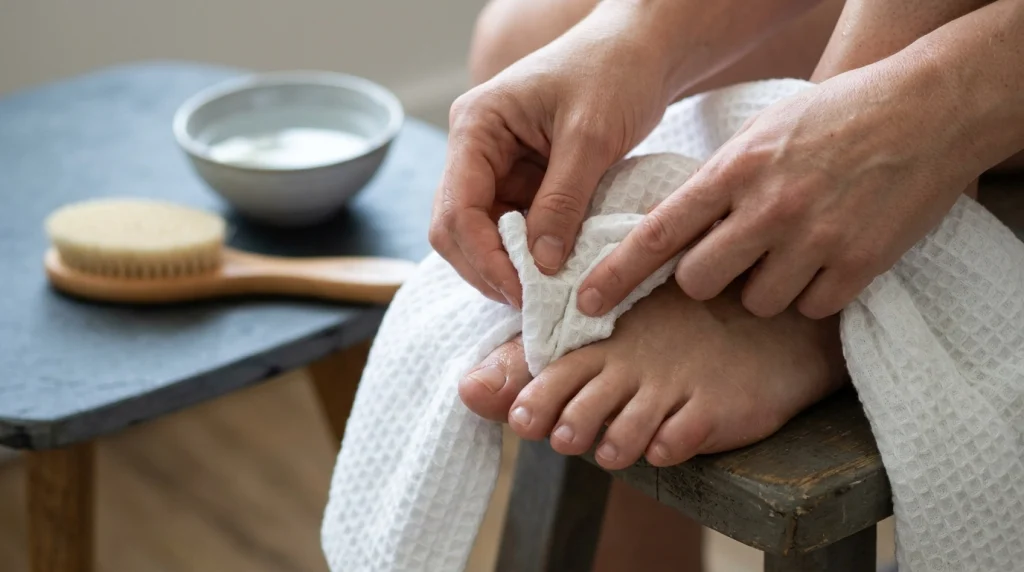
Use a clean, soft towel to pat your feet dry. Carefully dry around every toenail and between each toe.
Keeping your feet dry after washing is an important part of foot hygiene because prolonged moisture can encourage fungal growth.
Common mistake: Putting socks on while your feet are still damp. Allow your feet to dry before wearing socks or shoes.
How to Remove Dirt From Under Toenails
Dirt underneath toenails can be frustrating, especially if you walk barefoot, garden, exercise, or wear shoes for long periods.
The safest approach is to soften the debris through normal washing and gently remove what is accessible.
Use a Soft Nail Brush
Wet a soft nail brush and apply a little mild soap. Brush gently along the free edge of your toenail to loosen visible debris. Rinse and inspect the area.
Trim Long Toenails Carefully
If your toenails are excessively long, dirt may collect more easily beneath their free edges. Use clean toenail clippers to trim them straight across when necessary.
Leave a comfortable amount of nail extending beyond the toe. Cutting too short or rounding deeply into the corners may increase the risk of an ingrown toenail.
Avoid Sharp Cleaning Tools
Do not use needles, sharp metal picks, or other pointed objects to remove dirt beneath your nails. These tools can damage the nail bed or surrounding skin.
Warning
If dirt is trapped beneath a thickened, painful, lifted, or discolored toenail, don’t force it out. Persistent buildup may be related to a nail condition that needs professional evaluation.
How Often Should You Clean Your Toenails?
For everyday hygiene, wash your feet and clean around your toenails daily. You can include this routine in your regular shower or bath.
You may need additional attention after activities that make your feet sweaty or dirty, such as:
- Walking outdoors in dusty conditions.
- Exercising or participating in sports.
- Gardening or working with soil.
- Wearing closed shoes for extended periods.
- Visiting public showers or swimming facilities.
Daily washing does not mean you should aggressively scrub your nails every day. Gentle cleaning is sufficient for most people.
Regular trimming is a separate part of toenail care. Trim your toenails when they become too long, using clean clippers and a straight-across technique.
How to Keep Toenails Clean and Healthy
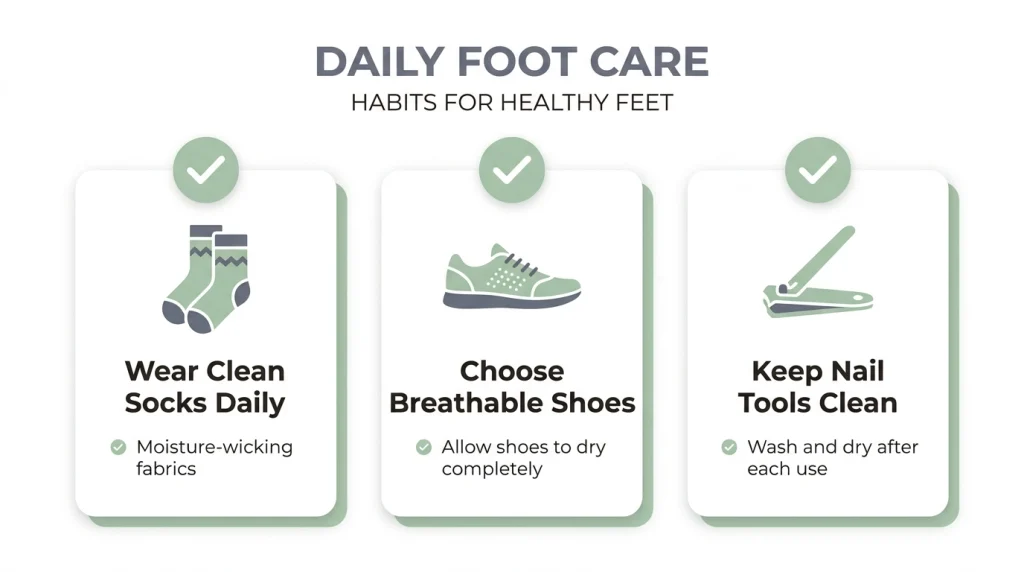
Cleaning your toenails is only one part of maintaining healthy feet. A few consistent habits can help keep your feet comfortable and reduce moisture-related problems.
Wear Clean Socks Every Day
Change your socks at least once daily. If your feet become sweaty during exercise or warm weather, change them more frequently.
Moisture-wicking socks may help keep your feet more comfortable by moving sweat away from your skin.
Choose Breathable Shoes
Wear shoes that fit properly and allow your feet to breathe. Tight shoes can place pressure on your toenails and contribute to discomfort.
Allow your shoes to dry completely between uses, particularly if they become damp from sweat.
Keep Your Nail Tools Clean
Wash and dry your nail brush after use. Clean your toenail clippers before and after grooming, and avoid sharing personal nail tools with other people.
Recommended Product
Toenail Clippers for Regular Nail Care
A dedicated toenail clipper with a comfortable grip can make routine trimming easier when your nails need shortening.
As an Amazon Associate, we earn from qualifying purchases.
Do’s and Don’ts of Toenail Cleaning
Do
- +Wash your feet daily.
- +Use a gentle nail brush.
- +Dry between your toes.
Don’t
- −Dig under your nails with sharp tools.
- −Cut your cuticles.
- −Ignore painful or discolored nails.
Common Toenail Cleaning Problems and How to Fix Them
Dirt Keeps Collecting Under Your Toenails
Immediate fix: Gently wash the nail edges with a soft brush and mild soap. Prevention: Keep your nails at a comfortable length and clean your feet after outdoor activities.
Your Toenails Look Yellow
Immediate fix: Wash gently and avoid harsh whitening treatments. Prevention: Keep your nails clean and monitor persistent discoloration. Yellowing may result from staining, fungal infection, or another nail condition, so seek professional advice if it continues.
Your Toenails Smell Unpleasant
Immediate fix: Wash your feet, dry them thoroughly, and change into clean socks. Prevention: Keep your shoes dry and breathable. Persistent odor, particularly with nail changes or itching, may need medical evaluation.
Your Toenails Are Thick and Difficult to Clean
Immediate fix: Avoid forceful brushing or cutting. Prevention: Have a podiatrist assess thickened nails, particularly if they are painful, discolored, or difficult to trim.
Important Toenail Cleaning Safety Tips
Gentle cleaning is generally suitable for healthy feet. However, certain conditions require additional care.
- Diabetes: If you have diabetes, nerve damage, or poor circulation, foot injuries may be harder to detect or heal. Follow your healthcare professional’s foot-care instructions.
- Ingrown toenails: Avoid digging into the nail corners or trying to remove an ingrown nail yourself.
- Possible fungal infection: Thickened, brittle, or discolored toenails may require professional assessment rather than repeated scrubbing.
- Open wounds: Do not scrub directly over cuts, sores, or inflamed skin.
- Persistent symptoms: Seek medical advice for unexplained nail changes, pain, swelling, redness, or discharge.
Warning
If you have diabetes or poor circulation, avoid self-treating thick nails, corns, calluses, or suspected infections with sharp tools. Contact a qualified healthcare professional for appropriate foot care.
Frequently Asked Questions About Cleaning Toenails
Q: What is the best way to clean toenails at home?
A: Wash your feet with warm water and mild soap. Gently brush around your toenails with a soft nail brush, rinse thoroughly, and dry your feet completely.
Q: How do you clean dirt from under toenails?
A: Use a soft nail brush to gently loosen visible dirt along the free edge. Never dig deeply under your nails with sharp objects because you can injure the nail bed.
Q: Should you clean your toenails every day?
A: Yes. Daily foot washing and gentle cleaning around your toenails are useful hygiene habits. Avoid excessive scrubbing that may irritate your skin.
Q: Can I use a toothbrush to clean my toenails?
A: A clean, soft-bristled toothbrush may work for gentle cleaning, but a dedicated soft nail brush is preferable. Avoid hard bristles and aggressive scrubbing.
Q: Does cleaning toenails remove yellow discoloration?
A: Cleaning may remove surface dirt or staining, but it will not necessarily eliminate yellow discoloration caused by a fungal infection or another nail condition. Persistent changes should be evaluated by a healthcare professional.
Final Thoughts on How to Clean Toenails
Learning how to clean toenails doesn’t require complicated tools or expensive products. A gentle daily routine using warm water, mild soap, and a soft nail brush can help you maintain clean, comfortable feet.
Remember to dry your feet thoroughly, trim your toenails carefully, and avoid digging beneath the nail. Save this guide on Pinterest so you can return to these simple toenail care steps whenever you need them.

Hi, I’m Jessica, the creator behind Unique Lash & Nails Katy.
I created this website for anyone who loves beautiful nails as much as I do. Here, I share trendy nail designs, seasonal manicure ideas, easy nail care tips, honest product recommendations, and step-by-step guides to help you create salon-worthy nails at home. Whether you’re looking for everyday inspiration or your next favorite nail trend, I hope you’ll find something you love.