Does Cuticle Oil Hydrate Nails? The Real Answer
Quick Answer
Yes, cuticle oil helps your nails and surrounding skin stay moisturized, but most oils do not add water the way a water-based cream can. Instead, they soften the cuticle area and help limit moisture loss from the surface. For the best everyday care, apply hand cream after washing, then massage a small amount of cuticle oil over your nails and around their edges.
Here’s the surprising part: your nails can absorb water, but soaking them repeatedly isn’t the same as keeping them healthy. In fact, constant wetting and drying can contribute to peeling and splitting. So where does cuticle oil fit?
If you’ve seen someone apply oil to a fresh manicure and wondered whether it truly hydrates nails or just makes them shiny, you’re asking the right question. The answer depends on what you mean by hydration—and how you use the oil.


What Does Cuticle Oil Actually Do to Your Nails?
Cuticle oil is a conditioning product made from ingredients such as jojoba oil, mineral oil, sweet almond oil, or other plant-derived oils. Some formulas also contain vitamin E, fragrance, or additional skin-conditioning ingredients. Its main job is to make the nail area feel less dry and to create a light protective layer.
When you massage it around a nail, the skin along the base and sides usually feels softer almost immediately. That softening effect is especially helpful if your fingertips look rough after handwashing, cold weather, or nail-polish removal. The oil can also give the visible nail plate a smoother-looking finish.
What it cannot reliably do is rebuild a split nail, replace missing nail layers, or force new nails to grow faster. The visible nail is made mostly of hardened keratin. Once a section has been badly filed or peeled, you generally have to protect it while fresh nail grows forward from the base.
Does cuticle oil hydrate the nail plate or only the cuticles?
It can help condition both, although the effects aren’t identical. The surrounding skin is living tissue that benefits from regular moisturizing. Your nail plate is a dense structure containing keratin and water; its flexibility changes with its moisture conditions.
Pure oil contains little or no water. Rather than filling a dry nail with water, it mainly acts as an emollient and may help slow water loss from the nail surface. Some specially formulated nail treatments contain both oils and water-binding ingredients, so check the ingredient list instead of assuming every bottle works the same way.
Think of oil as part of a moisture-care routine, not a substitute for every other step. If your skin is very dry, a fragrance-free hand cream plus oil is often more useful than either one alone.
Why Do Your Nails Feel Dry Even Though They Absorb Water?
The word dry can describe several different problems. Your cuticles might feel tight, the skin beside a nail might flake, or the free edge of the nail might peel into layers. Those symptoms can overlap, but they don’t all mean your nails simply need more water.
Your nail plate absorbs moisture from its surroundings. Excessive cycles of soaking and drying, however, can stress the layers of the nail. Frequent exposure to detergent, acetone, friction, and aggressive manicure removal can make the problem worse. This is one reason washing dishes without gloves may leave your nails more fragile even though they spent plenty of time in water.
Scientists have also found that nail brittleness isn’t explained by water content alone. Nail structure, repeated trauma, and individual health factors matter. That means an oil may improve comfort and surface conditioning without curing every reason your nails split.
If you’re deciding which product belongs in your routine, this guide to the healthiest things to put on your nails explains why gentle moisturizing usually beats harsh quick-fix treatments.
What Benefits Can You Realistically Expect From Cuticle Oil?

1. Softer, less rough-looking cuticles
This is the most noticeable benefit. Massage a drop along the base and sides of your nails, and dry skin can feel smoother right away. With regular use, it may also be easier to resist picking at rough edges. Oil doesn’t remove a hangnail that has already torn, though; carefully clip only the loose snag with clean tools rather than pulling it.
2. More comfortable nail folds after washing
Soap, sanitizer, and dry indoor air can leave the skin around your fingertips tight. Applying cream and oil after your hands are clean and dry helps restore a more comfortable feel. If your fingers sting, crack deeply, or develop a rash, switch to a simple fragrance-free moisturizer and consider professional advice instead of adding more scented products.
3. Better surface conditioning for dry nails
A thin film of oil makes the nail surface look smoother and helps reduce the sensation of dryness. This may support flexibility when moisture loss is part of your problem, but oil isn’t proven to permanently strengthen all nails. A softer-looking nail is not necessarily a thicker or healthier-growing nail.
4. A gentler-looking manicure between appointments
Neat cuticles make even a simple nude or clear manicure look more polished. Regular oiling may help the surrounding skin look cared for while your color remains on. If you wear gel or acrylics, keep oil on the skin and accessible nail edges; do not pick or lift the product to squeeze oil underneath.
Which Cuticle Oil Is Best for Hydrating Dry Nails?
You don’t need a luxury bottle to get the basic conditioning benefits. Choose a product you enjoy using, that doesn’t irritate your skin, and that fits into your day. Different textures work better for different people.
Jojoba-based cuticle oil: best for a lightweight daily routine
Jojoba is technically a liquid wax, but it feels like a lightweight oil. It spreads easily around the nails and is a practical choice when you want a small amount at your desk or bedside. Choose a simple, fragrance-free version if your skin is reactive.
Best for: Everyday maintenance and slightly dry cuticles. Trade-off: A thin oil may not feel protective enough on very cracked skin overnight.
Mineral oil: best for a simple, budget-friendly option
Plain cosmetic-grade mineral oil is an inexpensive emollient that helps coat the skin. It is useful when you prefer a straightforward formula without botanical extracts. As with all oil products, use only a few drops so your fingertips aren’t slippery.
Best for: Basic conditioning on a budget. Trade-off: It can leave a more noticeable film than some quick-absorbing blends.
Sweet almond or blended oils: best if you enjoy a richer texture
Many cuticle products mix almond, jojoba, and other oils for a richer glide. These can be pleasant during a short hand massage. However, added fragrance or botanical ingredients don’t automatically make the product more effective, and they can irritate sensitive skin. Avoid almond-containing products if you have a relevant allergy.
Best for: A relaxing nighttime manicure routine. Trade-off: More ingredients mean more potential irritants.
For a closer comparison of textures and ingredients, see the best oils for weak, damaged, or brittle nails.
Recommended Product
Simple Jojoba-Based Cuticle Oil
A basic jojoba-based formula is a convenient first pick if you want to condition your nail edges daily without a complicated treatment.
Check Jojoba Cuticle Oil on Amazon
As an Amazon Associate, we earn from qualifying purchases.
How Should You Apply Cuticle Oil So It Actually Helps?
There is no complicated technique. Consistency and timing matter more than using a large amount. Try this simple routine once or twice daily, adjusting for how dry your skin feels.
- Clean your hands gently. Wash away dirt and dry your hands with a towel. You don’t need to soak your fingertips, and you shouldn’t leave them wet for long periods.
- Apply a small amount of hand cream. Smooth a fragrance-free glycerin-based hand cream over your hands, nail plates, and cuticles. Creams contain water and ingredients that help the skin hold onto it.
- Add one tiny drop of oil. Use a brush, roller, or dropper to place a little oil near the base of each nail. More isn’t necessarily better; your skin only needs a thin, comfortable coating.
- Massage around the whole nail. Work the oil gently along both sidewalls, the base, and the visible nail surface for about 10–15 seconds per nail. Avoid digging under the cuticle or aggressively pushing it back.
- Repeat at the times you’ll remember. Bedtime is an easy anchor, and you can reapply after frequent handwashing if your cuticles become tight or rough.
Pro Tip
Keep a cuticle oil pen near your computer and a plain hand cream near the sink. Using the product you can reach easily is more helpful than owning several bottles you forget to open. A cuticle oil pen can also make small, mess-free applications easier while you’re away from home.
Is Cuticle Oil Better Than Hand Cream or Vaseline?
Not necessarily. These products are useful for different reasons, and combining them can work well. Hand cream commonly includes water plus ingredients such as glycerin that attract or retain moisture in skin. Cuticle oil softens and conditions the surface. Petroleum jelly creates a heavier barrier that helps limit moisture loss.
If your cuticles are only a little dry, an oil may feel like enough. If your entire hands are rough, cream is a better starting point. When you have stubborn dry patches around the nail edges, applying a thin layer of plain petroleum jelly after moisturizer at bedtime can provide extra protection.
Think of the three as options rather than competing miracle cures. Use a comfortable amount of cream first, add oil when you like its feel, and reserve heavier ointment for spots that need it. You can learn more in this practical comparison of Vaseline versus cuticle oil for your nails.
How Long Does Cuticle Oil Take to Work?
For rough skin, the cosmetic effect can be almost immediate: your cuticles may feel softer and look less flaky after the first application. That doesn’t mean the nail underneath has changed its structure. You are mostly seeing the benefit of a smoother, conditioned surface.
After one or two weeks of regular moisturizing, you may notice your fingertips stay more comfortable between washes, particularly if you’ve also reduced irritants. The timeline varies with your skin, environment, work, and how often your hands get wet.
Peeling or over-filed nail plates need a different timeline. Fingernails grow only a few millimeters per month, and replacing an entire fingernail often takes around four to six months. Oil may help you look after the existing nail while it grows, but it cannot erase deep damage in a weekend.
If your nail damage goes beyond simple dryness, combine moisturizing with the steps in this gentle nail recovery routine.
What Mistakes Make Cuticle Oil Less Effective?
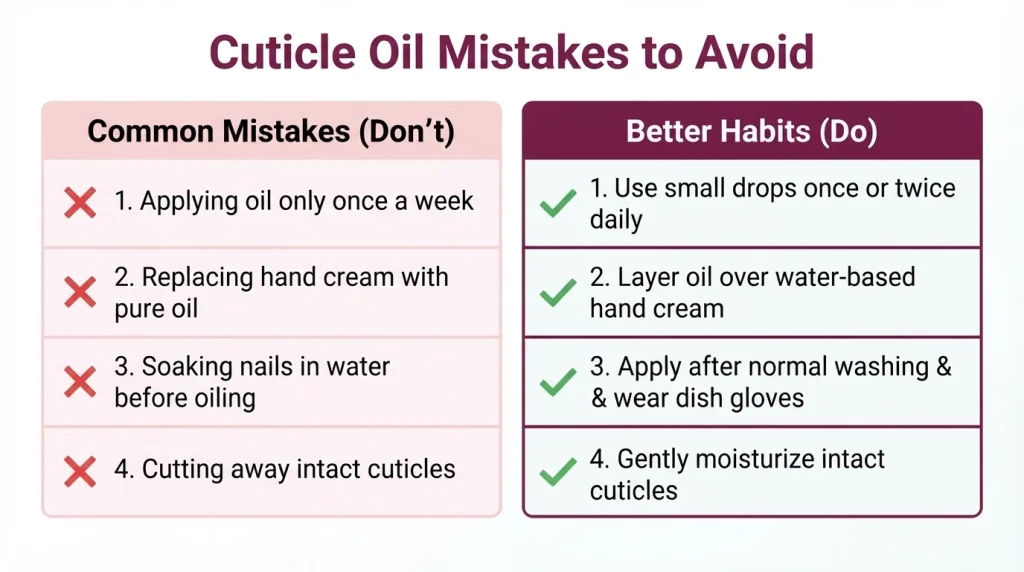
Using oil once a week and expecting a permanent fix
A heavy application on Sunday won’t protect your cuticles through days of soap, sanitizer, and household chores. Use small amounts regularly instead. Moisturizing is ongoing maintenance, much like using hand lotion, rather than a one-time repair.
Replacing hand cream with oil when your skin is very dry
Oil is useful, but pure oils don’t supply the same combination of water, humectants, and protective ingredients that a well-formulated cream can provide. Start with a fragrance-free moisturizer when your skin feels tight, then use oil as an optional conditioning layer.
Soaking nails to make the oil “penetrate deeper”
You don’t need a long water soak before oiling. Repeated wetting and drying may worsen splitting in vulnerable nails. Apply your products after normal washing, and protect your hands with gloves during prolonged dishwashing or cleaning.
Cutting away the cuticle because it looks dry
The cuticle helps form a protective seal near the base of the nail. Cutting or forcefully pushing it back can create small openings for irritation or infection. Moisturize intact cuticles; don’t try to remove them just to make oil look more effective.
Warning
Stop using an oil if it causes itching, redness, burning, or a rash. Avoid fragranced or essential-oil-heavy blends when your skin is irritated. Pain, swelling, pus, significant nail lifting, or a new changing dark streak needs medical evaluation—not another layer of cuticle oil.
Can You Use Cuticle Oil With Nail Polish, Gel, or Acrylics?
Yes, you can usually moisturize the exposed cuticle area while wearing a manicure. Apply oil around the nail folds and massage lightly. It won’t make gel or acrylics healthier on its own, and it cannot reverse damage from harsh removal.
Before applying fresh regular polish, however, remove oily residue from the nail surface as instructed by your polish system. A greasy nail plate can interfere with adhesion. Once the polish has dried fully, resume your usual cuticle moisturizing.
If a gel or acrylic nail has started to lift, don’t force oil underneath it or pull the enhancement away. Lifting can trap moisture and debris, and picking can strip layers from your natural nail. Have the manicure assessed or removed safely rather than trying to repair it with oil.
Frequently Asked Questions About Cuticle Oil and Nail Hydration
Q: Does cuticle oil actually moisturize nails?
A: Yes, it helps condition the nail surface and surrounding skin and may limit moisture loss. Pure oil doesn’t add water like a water-based cream, so using both can be helpful when your skin is very dry.
Q: Should you put cuticle oil on your actual nail?
A: Yes. You can massage a tiny amount across the visible nail plate and around the cuticle area. Just wipe away excess before applying fresh polish so the coating can adhere properly.
Q: How many times a day should you use cuticle oil?
A: Once or twice daily is a simple starting point. Reapply when your cuticles feel dry, especially after frequent handwashing, but there’s no need to soak your fingers in oil.
Q: Can cuticle oil fix peeling or brittle nails?
A: It may improve dryness-related surface comfort, but it cannot bond peeled layers back together. Protect the nail from trauma and let damaged portions grow out; see a clinician if splitting is severe or persistent.
Q: Is it better to apply cuticle oil before or after hand cream?
A: Either order can work, but cream first and oil afterward is a practical choice when your skin is dry. The cream provides a water-based moisturizer, and the oil adds a conditioning finish.
So, Does Cuticle Oil Hydrate Nails?
Cuticle oil is genuinely useful for softer cuticles, smoother-looking nails, and a routine that helps limit dryness—but it’s better understood as a conditioner and moisture-retaining layer than a magical water boost. Pair it with hand cream, treat your cuticles gently, and protect your nails from repeated damage. Save this guide to your Pinterest nail-care board so your next manicure starts with healthier habits.

Hi, I’m Jessica, the creator behind Unique Lash & Nails Katy.
I created this website for anyone who loves beautiful nails as much as I do. Here, I share trendy nail designs, seasonal manicure ideas, easy nail care tips, honest product recommendations, and step-by-step guides to help you create salon-worthy nails at home. Whether you’re looking for everyday inspiration or your next favorite nail trend, I hope you’ll find something you love.