How to Protect Nails at Work: 8 Smart, Simple Tips
Quick Answer
To protect nails at work, keep them short with softly rounded edges, smooth snags before your shift, and moisturize after washing. Wear task-appropriate gloves for wet work or approved hazardous tasks, but never wear loose gloves around exposed rotating machinery. Use actual tools instead of your nails to pry, scrape, or open things. Finish each shift by checking for chips and moisturizing again.
Time needed
5 minutes before work
Difficulty
Beginner
Items needed
File, cream, optional oil, suitable gloves
Protection lasts
Maintain throughout each shift
One minute you’re answering emails; the next, you’ve chipped a nail opening a box. If your job involves constant handwashing, cleaning, typing, or handling materials, you probably know that frustration. Learning how to protect nails at work isn’t about avoiding every task. It’s about removing the small, repeatable sources of damage so your natural nails and manicure stand a better chance.


Why do nails chip and peel more during work?
Work can combine three nail stressors: friction, repeated moisture changes, and concentrated pressure. Tapping a keyboard usually isn’t the problem by itself, but striking keys with long nail tips creates repeated contact. Sorting cardboard, fastening clasps, opening packaging, or pulling gloves over sharp nail corners can turn tiny snags into splits.
Frequent wetting and drying can make brittle nails more likely to peel. Soaps, cleaning products, and some solvents can irritate the surrounding skin. That matters because dry, cracked nail folds are uncomfortable and easier to injure. A good plan protects both the nail plate and the skin around it; it doesn’t rely on nail hardener alone.
What should you keep in a work nail-care kit?
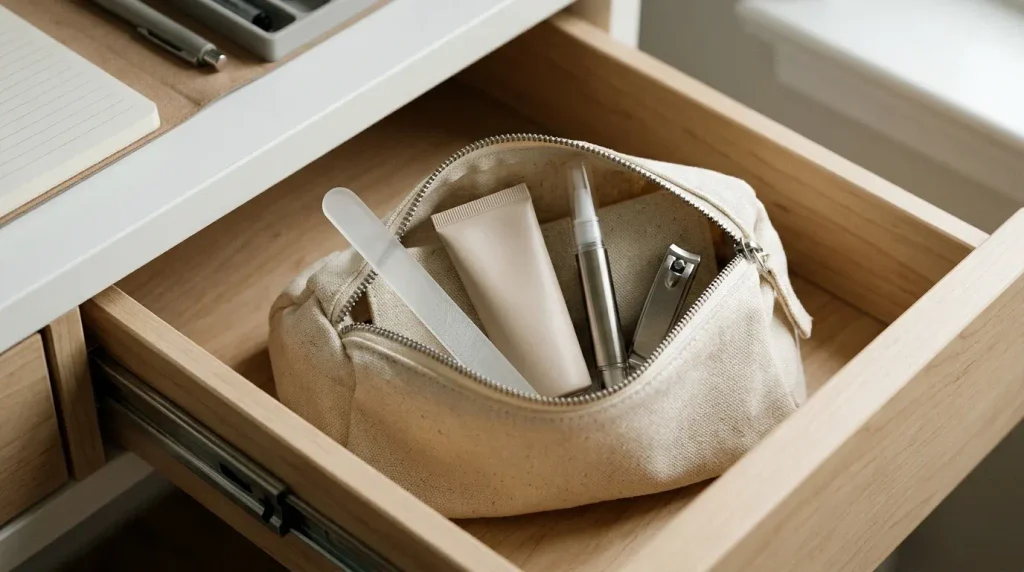
You only need supplies you’ll actually use. Keep the basics in a clean pouch or drawer, and follow your workplace’s hygiene rules about personal products.
- Fine-grit or glass nail file: Smooth a snag before it catches on clothing or gloves.
- Fragrance-free hand cream: Reapply after washing when your workplace allows it.
- Small cuticle oil pen: Use during a permitted break or after work if oily products interfere with tasks.
- Task-approved gloves: For wet cleaning, chemicals, cuts, or biological hazards, choose what the specific job requires.
- Clean nail clippers: Trim an overlong or torn free edge instead of pulling it off.
If you’re starting from scratch, this daily nail-care routine can help you build the habits that make workplace protection easier.
Warning: Work safety comes first
Beauty gloves are not a substitute for required personal protective equipment. Chemical resistance varies by material and chemical, so follow your employer’s risk assessment, safety data sheets, and glove instructions. Gloves can be caught in accessible rotating machinery; follow machine-specific safety rules rather than wearing gloves simply to protect a manicure. In healthcare or food service, workplace infection-control and nail-length policies take priority over your preferred nail look.
How can you protect your nails during every shift?
These eight steps are designed to fit real workdays. You don’t need all eight products or a perfect manicure; start with the sources of damage you notice most.
1
Trim nails to a job-friendly length
For hands-on work, aim for a length that doesn’t hit objects before your fingertip does. Clip straight across, then soften the corners into a short oval or squoval. You can still wear a beautiful nude, sheer pink, or minimalist manicure without extra length catching on everything.
Common mistake: Keeping sharp square corners because they look neat; those corners often catch first.
2
File away snags before they spread
Run a fingertip gently along each nail edge before work. If you feel a rough spot, use light, controlled strokes with a clean fine file until it feels smooth. Don’t buff the top of the nail to fix an edge problem; removing surface layers can make an already-thin nail more fragile.
Common mistake: Picking at a peeling layer while you work, which can extend the split.
3
Moisturize your nails and fingertips
Rub a little hand cream over your fingers, cuticles, and nail plates after washing, provided your job permits it. A richer moisturizer before bed gives you an easy second chance to care for dry areas. If you handle food, patients, or sensitive materials, use only facility-approved products at appropriate times.
Common mistake: Applying cream once in the morning but skipping it after repeated washing.
4
Choose the right gloves for the task
For routine nonhazardous wet cleaning, comfortable reusable waterproof gloves help reduce water exposure. At work, use the glove type specified for your actual hazard, whether that’s a chemical, sharp material, or infection risk. Check the fit and inspect for holes before you begin.
Common mistake: Assuming one disposable glove protects against every cleaner, solvent, or machine hazard.
5
Dry your hands and change damp gloves
After handwashing, pat fingers and nail folds dry rather than leaving water trapped around the edges. Replace wet or damaged gloves according to workplace instructions. For appropriate longer wet tasks, a clean cotton liner may reduce sweat discomfort, but only if it is compatible with required protective equipment.
Common mistake: Keeping damp reusable gloves on because the outside still looks clean.
6
Swap nail pressure for proper tools
Reach for a letter opener, box cutter used safely, scraper, or proper tab-lifting tool instead of levering with a nail. When typing, use the pads of your fingers rather than tapping with long tips. Small changes to how you grip, lift, and open objects remove a surprising number of opportunities for breaks.
Common mistake: Using a thumbnail to pry open a stuck lid or peel a label.
7
Keep your manicure practical and intact
Short regular-polish manicures are often easier to maintain than long extensions in hands-on jobs. If you wear polish, watch for lifted or chipped sections and remove them gently when appropriate. Never peel off gel, dip, or acrylic products; rough removal can take layers of the natural nail with them.
Common mistake: Hiding a lifting enhancement under another coat instead of addressing the problem.
8
Inspect and reset after your shift
Wash away work residue as directed, dry thoroughly, and examine each nail for new cracks, lifting, or soreness. File only an uncomplicated tiny snag; don’t glue a painful injury shut. Apply moisturizer and oil at home, where they can stay on longer without interfering with work safety or hygiene.
Common mistake: Ignoring a split until the next shift, when another snag makes it worse.
Which nail-protection tips work for your type of job?
Office work, typing, and customer service
Keep your free edges short enough that your fingertips—not your manicure—meet the keys. Store a small cream tube near your desk and a file in your bag for accidental snags. If you handle paper all day, take care with cardboard folders and staples; their edges can catch a nail quickly. You don’t need to give up color or nail art. A short squoval design is often easier to live with than very long pointed tips.
Cleaning, housekeeping, and dishwashing
Repeated water contact is a major concern, so ask for well-fitting gloves approved for each cleaning product. Dry hands before donning gloves and replace pairs that leak. Keep a separate set for nonhazardous home chores, and never assume those same gloves are adequate for workplace chemicals. After washing and removing gloves, moisturize when permitted; your skin and cuticles benefit from that consistency.
Healthcare, childcare, and food service
Follow your facility’s hand-hygiene and nail policies even when a longer manicure looks tempting. In healthcare, short natural nails are the safest default; artificial nails are prohibited for direct contact with high-risk patients, and rules for polish vary by setting. Gloves never replace required hand hygiene. Food workers should also follow employer and local food-safety requirements for nail length, polish, and glove use.
Retail, warehouses, and manual work
Moving boxes and handling equipment creates direct pressure on nail tips. Keep them short and use the assigned hand protection for cuts, abrasion, or other hazards. Avoid rings and nail shapes that interfere with gripping. Around exposed moving machinery, gloves may create dangerous entanglement risks, so obey machine-specific procedures. If you love natural length, explore these long-natural-nail maintenance habits for off-duty care.
Salon, beauty, and hair work
Repeated washing, dyes, adhesives, and manicure products can challenge both nail surfaces and nearby skin. Use ventilation and chemical-specific protection as directed, and avoid contact between uncured nail products and your skin. Choose a shape that doesn’t snag clients’ hair or gloves. When your nail folds become sore or cracked, don’t cover the irritation with more product and hope it disappears.
What should you do—and avoid—when protecting nails at work?
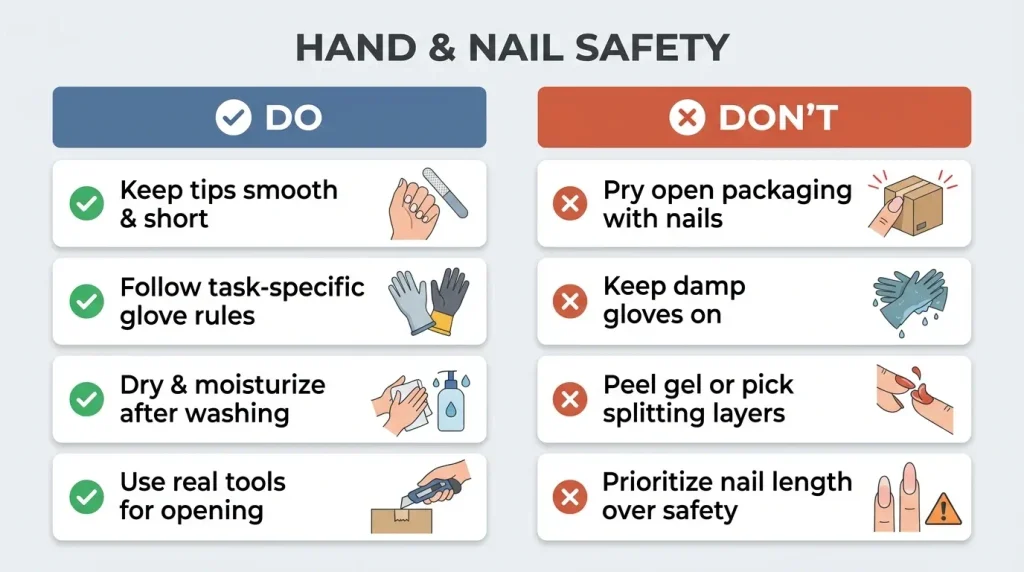
Do
- Keep nail tips smooth and short.
- Follow task-specific glove rules.
- Dry and moisturize after washing when allowed.
- Use real tools for opening and scraping.
Don’t
- Use nails to pry open packaging.
- Keep wet gloves on unnecessarily.
- Peel gel or pick at splitting layers.
- Prioritize nail length over safety policies.
What are the smartest little habits for avoiding nail damage?
Pro Tip: Keep two moisturizing spots
Keep approved hand cream near an appropriate work break area and a richer product beside your bed. That way, your routine still works on days when every minute of your shift is busy.
Pro Tip: Change one movement
Notice the exact motion that breaks your nails—pulling tape, lifting a can tab, or tapping a keyboard. Replace that motion with a tool or fingertip pad before investing in another treatment.
Pro Tip: Prepare on Sunday
Once a week, trim, smooth your edges, clean your tools, and check your cream supply. Five intentional minutes on a day off can prevent rushed filing or picking during work.
Which products are useful without overcomplicating your routine?
None of these are necessary to replace employer-issued safety equipment. They’re optional everyday nail-care aids for ordinary tasks and at-home care.
Recommended Product
Fine Glass Nail File
A compact fine file helps smooth troublesome edges without needing to cut every nail shorter.
As an Amazon Associate, we earn from qualifying purchases.
Recommended Product
Fragrance-Free Hand Cream
An easy-to-carry cream makes regular moisturizing more convenient when frequent washing dries your skin.
As an Amazon Associate, we earn from qualifying purchases.
Recommended Product
Jojoba Cuticle Oil Pen
A mess-resistant pen is handy for bedtime moisturizing after a demanding shift.
As an Amazon Associate, we earn from qualifying purchases.
Recommended Product
Reusable Waterproof Cleaning Gloves
Useful for nonhazardous dishes and wet household chores; workplace hazards still require approved, task-specific gloves.
As an Amazon Associate, we earn from qualifying purchases.
How quickly can your nails look better?
Some changes help immediately: a smoother edge catches less, shorter tips are easier to manage, and moisturizer can make dry skin feel more comfortable. A damaged nail plate, however, doesn’t heal like skin. You gradually replace the damaged section as the nail grows. Fingernails typically take several months to grow out completely, so protect new growth instead of expecting overnight repair.
If your nails were already brittle before starting a demanding job, use a gentler recovery plan alongside these habits. Our guide to helping damaged nails become healthy again explains what to watch as new nail grows.
What if your nails still break despite being careful?
Your nail catches on gloves or fabric
Fix: Gently file the rough edge and consider a shorter rounded shape. Next time: Check your tips before donning gloves or starting repetitive tasks.
Your fingertips feel dry after handwashing
Fix: Dry thoroughly, then apply an approved moisturizer when appropriate. Next time: Avoid unnecessarily hot water, and bring suitable skin-care concerns to your supervisor.
Your gel or acrylic starts lifting
Fix: Don’t peel, glue over skin, or pry the lifted product. Arrange safe removal or professional assessment if needed. Next time: Consider a shorter, lower-maintenance manicure for workdays.
Your nail or surrounding skin hurts, swells, or changes color
Fix: Stop cosmetic treatments and seek healthcare advice, especially for pus, significant lifting, a new dark streak, or worsening pain. Next time: Report suspected work-related irritation early and avoid repeated exposure until assessed.
When you need to remove visible dirt after work, use gentle soap, water, and soft brushing. This step-by-step nail cleaning guide explains how to clean without digging under the nail.
Frequently asked questions about protecting nails at work
Q: Can I keep long nails if I type all day?
A: You may be able to, but shorter nails usually make it easier to type with your fingertip pads rather than repeatedly striking keys with the free edge. Keep corners smooth and shorten nails if they interfere with comfortable typing.
Q: Do gloves always prevent nail damage at work?
A: No. Gloves help only when they’re suitable for the task, fit properly, and are used correctly. The wrong glove can fail against a chemical, trap moisture, or create an entanglement hazard around machinery.
Q: Is regular nail polish better than acrylics for hands-on jobs?
A: Short natural nails with regular polish can be simpler to maintain, but your workplace may restrict polish entirely. Acrylics and gels also require careful application and removal, so choose the least disruptive option that meets job rules.
Q: How often should I apply cuticle oil during a shift?
A: There’s no mandatory schedule. When allowed, use a little on dry cuticles during a suitable break. If oil interferes with grip, hygiene, or gloves, reserve it for bedtime instead.
Q: What’s the best nail shape for a physically active job?
A: A short oval or squoval shape is a practical starting point because it avoids protruding length and sharp corners. Your ideal length also depends on the equipment, gloves, and safety standards you use.
The bottom line: protect your nails without changing your job
The best way to protect nails at work is to reduce avoidable pressure, keep edges smooth, manage moisture, and follow the safety rules for your actual tasks. Build a five-minute pre-shift check and a quick after-work reset into your routine. Save this guide to Pinterest so you can return to the tips whenever your nails need extra care.

Hi, I’m Jessica, the creator behind Unique Lash & Nails Katy.
I created this website for anyone who loves beautiful nails as much as I do. Here, I share trendy nail designs, seasonal manicure ideas, easy nail care tips, honest product recommendations, and step-by-step guides to help you create salon-worthy nails at home. Whether you’re looking for everyday inspiration or your next favorite nail trend, I hope you’ll find something you love.