How Nail Polish and Polish Removal Can Damage Nails: Tips
Quick Answer
Nail polish and polish removal can damage nails when repeated solvent exposure causes dryness, aggressive filing thins the nail plate, or peeling off polish removes natural nail layers. Gel manicures and harsh removal methods can increase these risks. You can protect your nails by removing polish gently, moisturizing regularly, limiting unnecessary filing, and giving damaged nails time to grow out.
A beautiful manicure can make your hands look polished and put together. But what happens when your favorite nail color leaves your natural nails feeling dry, thin, or fragile?
If you’ve noticed peeling tips, white patches, or frequent breakage after removing nail polish, your manicure routine might be contributing to the problem.
Understanding how nail polish and polish removal can damage nails helps you identify what’s going wrong, make safer choices, and enjoy your favorite nail designs without unnecessary damage.


Why Can Nail Polish and Polish Removal Damage Your Nails?
Your nails are made primarily of keratin, a strong protein arranged in compact layers. These layers form the nail plate, which protects the sensitive tissue underneath.
Although your nails feel hard, they still contain moisture and need enough flexibility to withstand everyday activities.
When nail products, solvents, and mechanical pressure repeatedly affect the nail plate, its surface can become rougher, thinner, or more brittle.
However, wearing nail polish doesn’t automatically mean you’re damaging your nails. The amount of preparation, type of manicure, removal technique, and condition of your natural nails all matter.
1. Nail Polish Removers Can Dry Out the Nail Plate
Many nail polish removers contain solvents that dissolve the ingredients holding polish together.
Acetone works particularly quickly, making it useful for stubborn polish and compatible soak-off gel systems. Unfortunately, it can also remove oils from the surrounding skin and contribute to nail dryness.
Repeated exposure may leave your nails feeling:
- Dry and rough to the touch.
- Less flexible than usual.
- More vulnerable to splitting.
- Fragile around the free edges.
Dryness is especially noticeable when you change polish frequently, wash your hands repeatedly, or use cleaning chemicals without protective gloves.
The solution isn’t necessarily to avoid acetone completely. It’s to use the appropriate remover efficiently and restore moisture afterward.
2. Peeling Off Polish Can Remove Natural Nail Layers
Have you ever noticed a loose corner of gel polish and felt tempted to pull off the entire coating?
That seemingly harmless habit can cause significant damage.
When polish remains firmly attached to your natural nail, peeling it away can lift superficial keratin layers from the nail plate.
The result may be white patches, surface irregularities, peeling, and nails that bend more easily.
This is particularly concerning with gel polish because its adhesion can be stronger than traditional lacquer.
Never forcefully peel, scrape, or pry off a manicure that hasn’t released properly.
3. Excessive Buffing Can Make Nails Thinner
Some manicures require light surface preparation to improve product adhesion. However, repeated aggressive buffing or filing removes part of the natural nail plate.
Unlike your skin, the existing nail plate cannot regenerate missing layers in place.
If too much material is removed, your nails may become sensitive, flexible, and more likely to break during ordinary activities.
This is why proper nail preparation matters just as much as polish removal.
4. Dark Nail Polish Can Cause Surface Staining
Deep red, burgundy, blue, and other highly pigmented nail polishes can sometimes leave temporary discoloration on your natural nails.
This happens when pigment stains the nail surface, particularly if you apply colored lacquer without a protective base coat.
Fortunately, cosmetic staining generally improves as your nails grow.
A base coat can help reduce staining, although it cannot guarantee complete prevention.
Remember that not every yellow or discolored nail is caused by polish. Persistent discoloration, thickening, or lifting can indicate an underlying nail condition.
5. Certain Nail Products Can Trigger Allergic Reactions
Some people develop contact allergies to ingredients used in nail cosmetics, including certain resins and acrylates found in gel and artificial nail products.
Possible symptoms include itching, redness, swelling, and irritated skin around the fingertips.
Reactions may also affect areas you touch, such as your eyelids or face.
If a manicure repeatedly causes irritation, stop using the suspected product and consult a dermatologist. Continuing exposure may worsen the reaction.
6. Aggressive Cuticle Care Can Increase Infection Risk
Your cuticles help protect the area where new nail growth begins.
Cutting them excessively or pushing them back forcefully can damage this protective barrier.
When the surrounding skin breaks, bacteria and other microorganisms may enter and cause inflammation or infection.
For healthier manicures, focus on moisturizing your cuticles rather than cutting them.
Which Types of Nail Polish Are Most Likely to Cause Damage?
Different manicure systems involve different preparation and removal processes. Understanding those differences helps you recognize where damage may occur.
Regular Nail Polish
Traditional nail lacquer generally requires less preparation and can usually be removed with a suitable liquid polish remover.
Its main risks include repeated solvent exposure, surface staining, and damage caused by aggressive rubbing.
For many people with healthy nails, regular polish is a practical option because removal doesn’t ordinarily require extensive filing.
Gel Nail Polish
Gel polish is cured using a UV or LED nail lamp and creates a durable coating.
Its long-lasting finish makes it popular, but damage can occur through excessive preparation, repeated solvent soaking, or improper removal.
Gel curing lamps also involve ultraviolet exposure. You can reduce skin exposure by applying broad-spectrum SPF 30 or higher sunscreen to your hands before curing, or using suitable UV-protective fingerless gloves.
Acrylic and Dip Powder Nails
Acrylic and dip powder manicures can involve additional preparation, adhesives, and more complicated removal.
Repeated filing or forceful removal may weaken the underlying nail plate.
Some enhancement systems cannot be removed safely using the same method as ordinary soak-off gel.
If you’re unsure which product you have, ask a qualified nail technician before attempting removal.
Important Warning
Hard gel, some builder gels, and certain nail enhancements are not designed to dissolve with ordinary acetone soaking. Attempting to scrape off resistant products can seriously damage your natural nails. Seek professional removal when necessary.
Is Acetone or Acetone-Free Nail Polish Remover More Damaging?
You might assume that an acetone-free remover is always the gentler choice. However, the answer depends on your manicure and how you use the product.
Acetone-Based Removers
Acetone dissolves many nail coatings quickly and is commonly recommended for removing soak-off gel.
Its main disadvantage is that it can dry your nails and surrounding skin.
Because it works efficiently, acetone may reduce the amount of rubbing needed to remove stubborn polish.
Acetone-Free Removers
Non-acetone removers use alternative solvents, which may feel less harsh for some users.
However, they can still contribute to dryness. Some formulas require prolonged rubbing or repeated applications, especially with glitter or thick polish.
The best choice is the remover appropriate for your nail product, not simply the bottle labeled gentle.
Pro Tip
For regular nail polish, hold a remover-soaked cotton pad against the nail briefly before wiping. Allowing the remover to dissolve the coating reduces unnecessary friction.
What Are the Warning Signs of Nail Polish Damage?
Changes in your nail appearance can help you determine whether your manicure habits need attention.
Common signs of cosmetic nail damage include:
- Peeling layers: Thin pieces of the nail separate near the tips.
- Brittleness: Nails crack or split with minimal pressure.
- Surface roughness: Nails feel uneven after removing polish.
- White patches: Superficial damage becomes visible after peeling or filing.
- Thinning: Nails bend more easily than they previously did.
- Dry cuticles: The surrounding skin feels tight, flaky, or irritated.
- Staining: Pigment leaves temporary discoloration after polish removal.
Not every nail change comes from cosmetics. Iron deficiency, psoriasis, infections, and other health conditions can also affect nails.
If you’re experiencing unusual changes, don’t automatically assume your nail polish is responsible.
How Can You Remove Regular Nail Polish Without Unnecessary Damage?
Removing traditional polish carefully is one of the easiest ways to reduce unnecessary nail stress.
Step 1: Choose the Appropriate Remover
Select a remover intended for traditional nail lacquer. If your skin is sensitive, consider a formula you tolerate well and avoid heavily fragranced products when possible.
Never use household paint thinners or industrial solvents as substitutes.
Step 2: Let the Remover Dissolve the Polish
Apply remover to a cotton pad and press it gently against the painted nail.
After allowing the product a short moment to work, wipe toward the nail tip.
Avoid repeatedly scrubbing the same area with excessive pressure.
Step 3: Clean Away Remaining Residue
If a little polish remains near the edges, use a fresh section of the cotton pad to remove it gently.
Don’t scrape the nail surface with metal tools.
Step 4: Wash and Moisturize Your Hands
After removal, wash your hands with a mild cleanser and apply hand cream or petroleum jelly around your nails.
Pay particular attention to the cuticles, which often become dry after solvent exposure.
For additional techniques, explore our guide to removing nail polish quickly without excessive scrubbing.
How Should You Remove Gel Polish to Protect Your Natural Nails?
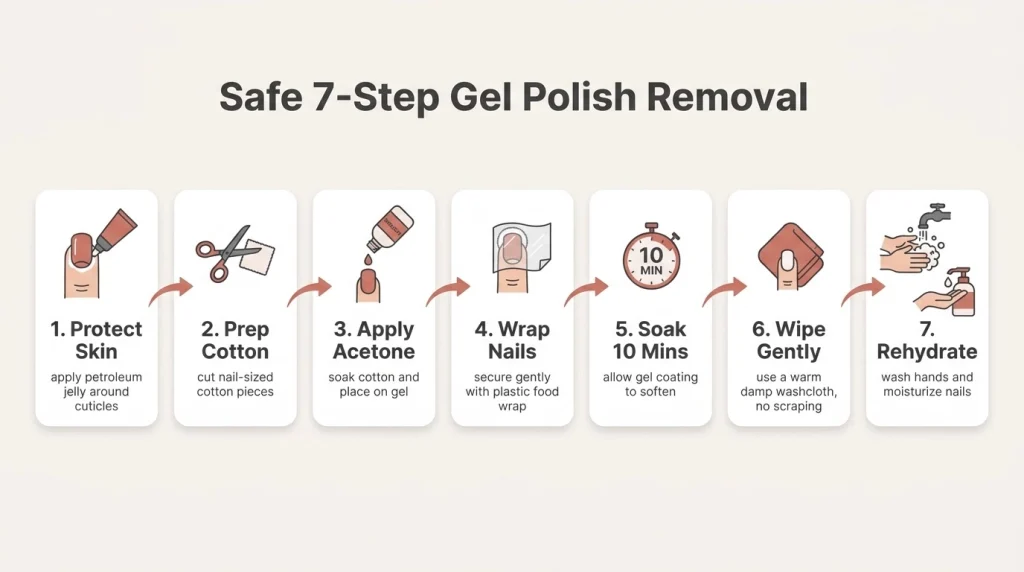
Gel removal requires extra care because cured polish bonds firmly to the nail surface.
For compatible soak-off gel, dermatologists recommend using acetone rather than pulling or peeling the coating away.
- Protect your skin: Apply a thin layer of petroleum jelly around your nails and cuticles.
- Prepare small cotton pieces: Cut them to approximately the size of each nail.
- Apply acetone: Soak the cotton pieces and place them directly over the gel.
- Wrap carefully: Secure each nail with plastic food wrap without restricting circulation.
- Allow the coating to soften: The American Academy of Dermatology describes a 10-minute soaking method for compatible gel polish. Follow your product’s specific instructions.
- Remove gently: Use a warm, damp washcloth to wipe away loosened polish without forceful scraping.
- Rehydrate: Wash your hands and moisturize your nails and cuticles afterward.
If the gel remains firmly attached, don’t pry it loose. You may be dealing with a different formulation or a product that requires professional removal.
For nails that already feel weakened, see our guide on caring for weak nails after gel or acrylic removal.
What Habits Help Prevent Nail Polish Damage?
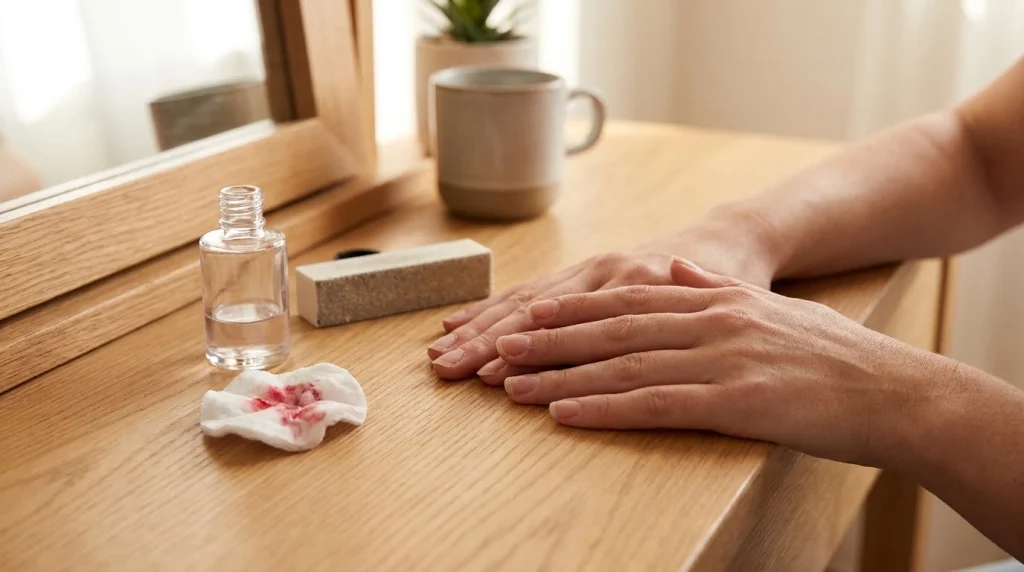
You don’t necessarily need to stop wearing nail polish. Instead, focus on reducing the habits that cause repeated damage.
Do
- Use a base coat beneath dark lacquer.
- Remove polish gently.
- Moisturize your nails and cuticles daily.
- Wear gloves for wet household chores.
- Keep fragile nails reasonably short.
- Choose qualified nail technicians.
Don’t
- Peel off gel or acrylic products.
- Buff natural nails aggressively.
- Scrape away stubborn polish.
- Cut or forcefully push back cuticles.
- Cover suspicious nail changes.
- Repeatedly apply products that cause irritation.
For a more detailed prevention routine, visit our article on how to protect your nails from nail polish damage.
What Simple Products Can Support Healthier Nails?
You don’t need an expensive collection of treatments to maintain your natural nails. A few practical products can make everyday care easier.
Affiliate disclosure: As an Amazon Associate, we earn from qualifying purchases. This doesn’t change your purchase price.
Cuticle Oil for Daily Moisturizing
Cuticle oil can soften the skin surrounding your nails and make regular moisturizing more convenient.
A portable jojoba cuticle oil pen is useful if you prefer something small enough to carry in your handbag.
Apply it after washing your hands or whenever your cuticles feel dry.
Lint-Free Cotton Pads for Gentle Removal
Soft cotton pads help distribute remover across the nail without requiring sharp tools.
You can explore lint-free nail polish remover pads for your home manicure kit.
Remember that technique matters more than the price of your supplies.
Protective Gloves for Household Tasks
Frequent exposure to water and cleaning products can contribute to brittle nails.
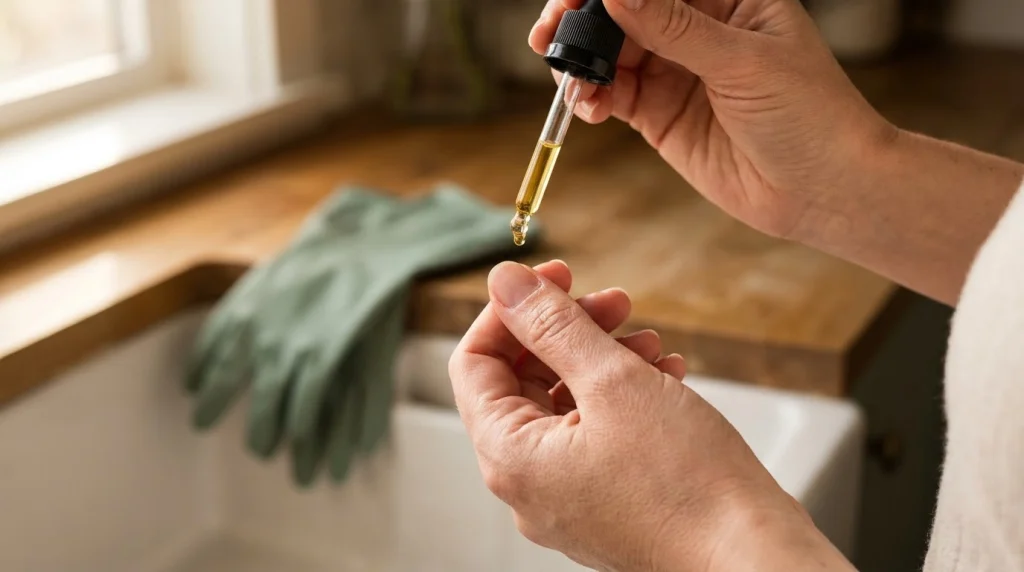
Comfortable reusable dishwashing gloves help reduce direct contact with detergents during cleaning.
Dry your hands thoroughly afterward and avoid keeping damp gloves on for long periods.
How Long Does It Take for Damaged Nails to Recover?
Recovery depends on whether your nails are temporarily dry or have experienced actual structural damage.
Dryness around the nails may improve with consistent moisturizing and reduced exposure to irritating products.
However, nail layers removed through aggressive filing or peeling cannot simply be restored by applying oil.
The damaged portion must gradually grow toward the tip and be trimmed away.
Fingernails generally grow around 3 millimeters per month. A complete fingernail replacement commonly takes about six months, although individual growth rates vary.
If your nails are fragile, take a break from harsh treatments and focus on protecting the new growth.
The American Academy of Dermatology recommends considering a polish holiday of one to two weeks or longer between gel manicures, particularly when nails show signs of damage.
For more guidance about whether taking a break is useful, read are nails healthier without polish?.
When Should You See a Dermatologist About Nail Damage?
Many mild cosmetic nail problems improve with gentler care. However, certain symptoms deserve medical attention rather than another manicure.
When to Seek Medical Advice
Consult a healthcare professional if you notice persistent pain, swelling, pus, nail separation, green discoloration, unexplained dark streaks, or worsening changes that don’t improve after stopping nail products. These symptoms may indicate an infection or another condition that needs treatment.
Don’t hide a potentially infected or injured nail beneath gel, acrylic, or another opaque coating.
A dermatologist can help distinguish cosmetic damage from allergies, infections, and other nail disorders.
Frequently Asked Questions About Nail Polish Damage
Q: Does wearing nail polish every day damage your nails?
A: Wearing regular nail polish continuously doesn’t automatically damage healthy nails. However, repeated harsh removal, excessive filing, and irritating products can contribute to brittleness or other problems. Pay attention to how your nails respond.
Q: Is acetone bad for your natural nails?
A: Acetone can cause temporary dryness and irritation, particularly with repeated or prolonged exposure. However, it is an effective remover for compatible nail coatings. Using it correctly and moisturizing afterward helps limit unnecessary damage.
Q: Can damaged nails become healthy again?
A: In many cases, healthier nails can grow in after the damaging habit stops. Moisturizing helps control dryness, but missing nail layers must grow out naturally. Severe or persistent nail changes should be assessed by a dermatologist.
Q: Do nails need to breathe between manicures?
A: No. Your visible nail plate doesn’t breathe through the air. Taking a break from manicures can still be beneficial because it reduces repeated chemical exposure and mechanical stress while allowing you to monitor nail health.
Q: Why are my nails peeling after removing gel polish?
A: Peeling can occur when gel polish is pulled away while still attached, lifting natural nail layers with it. Aggressive filing and repeated acetone exposure can also contribute to weakness. Avoid further trauma and let the damaged portion grow out.
Keep Your Nails Beautiful Without Sacrificing Their Health
Understanding how nail polish and polish removal can damage nails allows you to make better decisions without giving up your favorite manicures.
The biggest priorities are simple: avoid peeling and excessive filing, choose appropriate removal methods, moisturize consistently, and give fragile nails time to recover.
Save this guide to your Pinterest nail-care board so you can revisit these tips before your next manicure and keep your natural nails looking their best.

Hi, I’m Jessica, the creator behind Unique Lash & Nails Katy.
I created this website for anyone who loves beautiful nails as much as I do. Here, I share trendy nail designs, seasonal manicure ideas, easy nail care tips, honest product recommendations, and step-by-step guides to help you create salon-worthy nails at home. Whether you’re looking for everyday inspiration or your next favorite nail trend, I hope you’ll find something you love.