Can Water, Hand Washing or Household Cleaners Cause Brittle Nails?
Quick Answer
Yes. Repeated exposure to water, frequent hand washing, and household cleaners can contribute to brittle nails. Constant wetting and drying may weaken the nail plate, while detergents and harsh chemicals can increase peeling, splitting, and breakage. You can reduce the damage by wearing protective gloves, moisturizing after washing, keeping your nails short, and limiting unnecessary chemical exposure.
Do your nails seem to peel, split, or break even though you’re trying to take care of them? Your everyday hand-washing routine or household cleaning products could be part of the problem.
Water is essential for hygiene, but repeated wet-to-dry cycles can make already fragile fingernails more vulnerable to damage. Add dish soap, disinfectants, or cleaning solutions, and your nails may face even more stress.
Here’s how water and cleaners affect your nails, how to recognize the damage, and what you can do to protect them without sacrificing clean hands or a tidy home.


Can Water Really Make Your Nails Brittle?
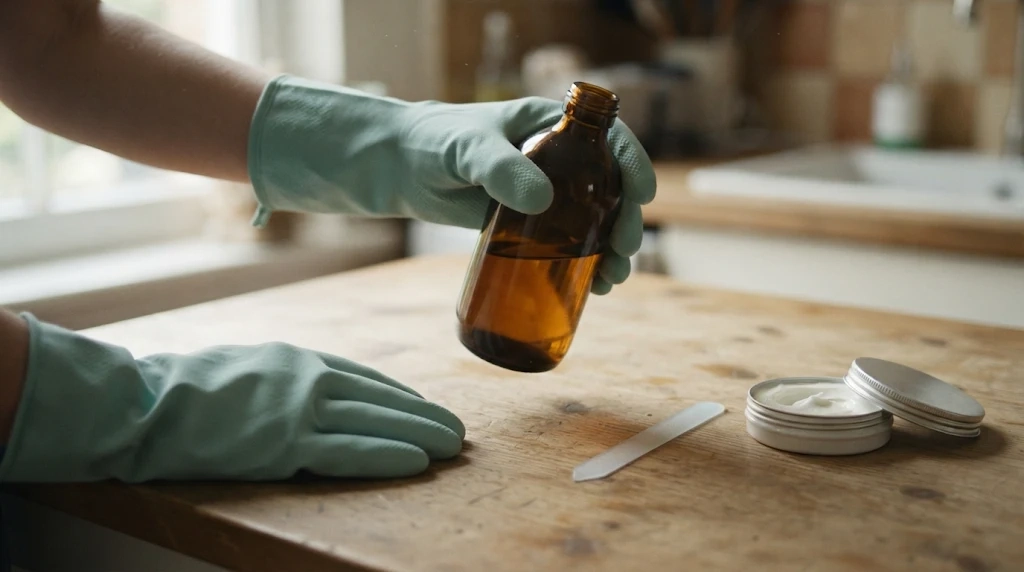
Yes, frequent exposure to water can contribute to brittle nails, particularly when your fingernails repeatedly become wet and then dry throughout the day.
Your nails are made primarily of layers of keratin, a structural protein that gives them strength. The nail plate also contains small amounts of lipids and water that influence its flexibility.
When your nails are exposed to water, they can absorb some moisture and temporarily swell. As they dry, they lose some of that absorbed water. Repeating this process can place stress on the nail structure, particularly when the nails are already damaged or fragile.
Over time, repeated wet-dry exposure may contribute to:
- Peeling nails: Thin layers separate near the tips.
- Splitting: Cracks develop along or across the nail plate.
- Breakage: Free edges become more vulnerable to everyday pressure.
- Rough texture: Damaged nail surfaces feel uneven.
- Reduced flexibility: Nails become more likely to crack instead of bending slightly.
However, water isn’t the only factor. Genetics, aging, nail treatments, skin conditions, and underlying health problems can also contribute to nail brittleness.
Pro Tip
Pay attention to your fingernails and toenails. If your fingernails split frequently but your toenails remain strong, repeated external exposure may be contributing. This is a useful clue, not a definitive diagnosis.
Why Does Frequent Hand Washing Cause Brittle Nails?
Frequent hand washing can worsen brittle nails because your hands repeatedly come into contact with water and cleansing ingredients.
Hand washing itself is important and shouldn’t be avoided when hygiene is necessary. The goal is to make your washing routine gentler on your skin and nails.
1. Repeated Wetting and Drying Stresses the Nail Plate
Each time you wash your hands, your nails are exposed to moisture. When they dry afterward, the amount of water within the nail plate changes.
Repeated cycles may aggravate existing nail fragility, especially if you already have splitting or peeling along the free edges.
People who wash their hands frequently for work may notice this problem more often.
2. Cleansers Can Affect Your Skin’s Protective Barrier
Some soaps and detergents remove oils from your skin as they clean. Repeated exposure can leave your hands and cuticles feeling dry, rough, or irritated.
Damaged skin around the nails may make everyday nail care more uncomfortable and can contribute to hangnails and irritation.
3. Hot Water Can Make Dryness Worse
Very hot water may aggravate dry or irritated hand skin, especially when combined with frequent washing or strong cleansers.
Choose lukewarm water instead. It’s a practical way to clean your hands without adding unnecessary heat-related irritation.
4. Skipping Moisturizer Leaves Your Hands Unprotected
If your hands feel tight after washing, they may need additional moisturizing care.
Applying a fragrance-free hand cream after washing helps maintain your skin barrier and can also condition the nail surface and surrounding cuticles.
Can Household Cleaning Products Damage Your Fingernails?
Yes. Household cleaning products can contribute to brittle nails, especially when you use them repeatedly without appropriate protective gloves.
The amount of potential damage depends on the ingredients, concentration, frequency of exposure, and your nail condition.
Dishwashing Detergents
Dish soaps contain cleaning agents designed to remove grease and food residue. These ingredients can also irritate your skin, particularly during prolonged dishwashing.
Washing dishes with bare hands repeatedly exposes your fingernails to both detergents and water.
Better approach: Wear properly fitted, waterproof household gloves whenever you’re washing dishes for more than a brief period.
Bleach-Based Cleaners
Bleach-containing cleaning products can irritate skin and damage exposed tissues if handled improperly.
They aren’t suitable for direct nail treatment and should be used only according to their product instructions.
Better approach: Use gloves compatible with the cleaning product, follow the label, and never mix bleach with ammonia, acids, or other cleaners.
Bathroom and Kitchen Degreasers
Some degreasers contain strong surfactants or other ingredients that can irritate skin during prolonged contact.
Repeated bare-hand exposure may worsen existing dryness around your nails.
Better approach: Avoid direct contact and use the protective equipment recommended on the packaging.
Disinfectants and Cleaning Wipes
Frequent contact with disinfecting solutions may irritate your hands, depending on their formulation.
Cleaning wipes intended for household surfaces should not be used as substitutes for products designed for hand hygiene.
Warning
Never mix household cleaning chemicals. Certain combinations can release dangerous gases. Follow each cleaner’s safety label and choose gloves specifically suitable for the chemicals you’re handling.
What Are the Signs of Water-Damaged or Brittle Nails?
Brittle nails can develop several noticeable changes. Recognizing these signs helps you adjust your nail care habits before further breakage occurs.
Peeling at the Nail Tips
One common sign is horizontal splitting, where thin layers of the nail separate near the free edge.
This type of splitting is sometimes called onychoschizia. It can be associated with repeated exposure to water, chemicals, or mechanical trauma.
Frequent Breaking
If your fingernails repeatedly break during ordinary activities such as typing, getting dressed, or handling objects, they may be more fragile than usual.
Longer nails have more leverage at the tips, making them easier to catch or bend.
Rough or Uneven Nail Edges
Rough edges can develop when fragile layers begin separating. These uneven areas may catch on fabrics and lead to larger splits.
Dry Cuticles and Surrounding Skin
Dry, flaky, or irritated skin around your nails may indicate frequent exposure to water, detergents, or other irritants.
Although dry cuticles don’t prove that your nail plate is damaged, they can indicate that your hands need gentler care.
Visible Cracks or Vertical Splits
Some nails develop lengthwise ridges or splits. Aging and other factors may contribute to these changes.
A persistent deep split, pain, discoloration, or nail separation deserves professional evaluation rather than repeated home treatment.
How Can You Prevent Brittle Nails From Hand Washing and Cleaning?
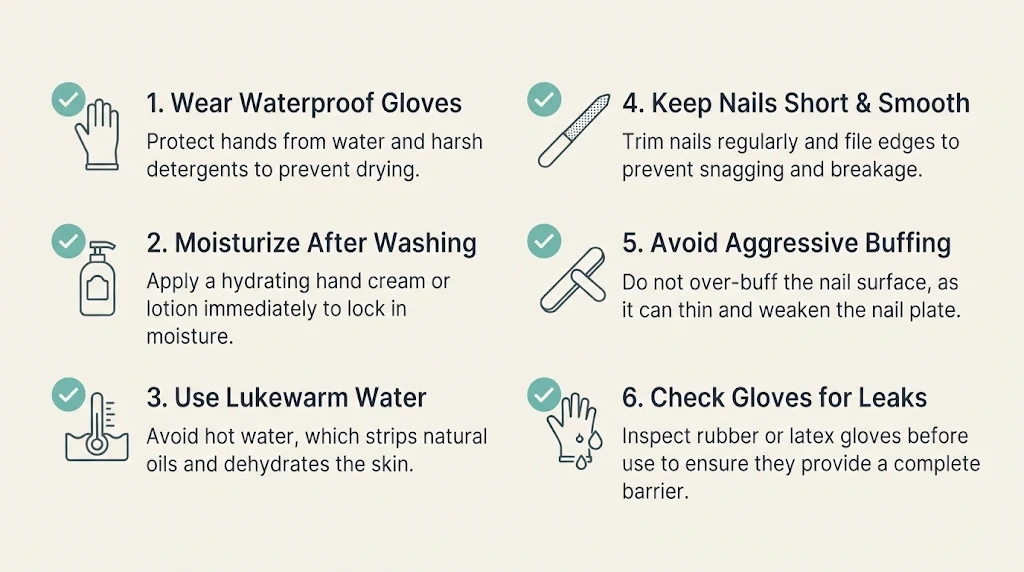
The most effective approach is to reduce unnecessary wet-dry exposure while maintaining proper hygiene and protecting your nails from harsh cleaning products.
You don’t need an expensive nail treatment routine. Small, consistent habits can make a meaningful difference.
1. Wear Protective Gloves for Wet Household Chores
Wear waterproof gloves when washing dishes, scrubbing bathrooms, cleaning floors, or handling detergents.
Choose gloves that fit comfortably and are compatible with the cleaning products you’re using. Cotton-lined gloves can help reduce discomfort from trapped moisture during longer tasks.
Remove the gloves after finishing, wash your hands when appropriate, and dry them thoroughly.
2. Moisturize After Washing Your Hands
Keep a hand cream near your bathroom sink or kitchen area so it’s easy to use regularly.
After washing and drying your hands, apply a small amount of moisturizer to your fingers, nails, and surrounding skin.
Products containing ingredients such as glycerin, petrolatum, or ceramides can support the skin’s protective barrier.
3. Use Lukewarm Water
Choose lukewarm rather than very hot water during routine hand washing.
Use an appropriate amount of gentle cleanser and avoid unnecessary scrubbing around your nail folds.
Continue following recommended hand-hygiene practices, including thorough washing when needed.
4. Keep Your Fingernails Short and Smooth
Shorter fingernails are less likely to catch on objects or bend under pressure.
Trim your nails straight across, then slightly round the corners with a fine-grit nail file.
Gently smooth any snags rather than tearing or peeling away damaged sections.
5. Avoid Aggressive Buffing and Nail Picking
Excessive buffing removes material from the nail surface. Repeatedly peeling off polish or nail enhancements can also damage the upper layers of the nail plate.
If your nails are already fragile, avoid aggressive surface filing and give them a break from procedures that cause repeated trauma.
6. Protect Your Nails Before Household Cleaning
Keep a dedicated pair of cleaning gloves close to your kitchen sink or cleaning supplies.
Check them regularly for holes or wear. Replace damaged gloves so water and cleaning chemicals cannot leak inside.
For tasks requiring chemical protection, follow the product label rather than assuming all household gloves provide the same level of safety.
Pro Tip
Place hand cream beside the soap dispenser you use most often. Making moisturizer part of your existing hand-washing routine is easier than remembering an entirely separate nail treatment.
What Is the Best Daily Routine for Brittle Nails?
Protecting brittle nails works best when you follow a simple routine throughout the day instead of relying on an occasional intensive manicure.
Morning: Moisturize and Check Your Nails
- Apply fragrance-free hand cream to clean, dry hands.
- Gently smooth any nail edges that might catch on clothing.
- Avoid picking at peeling nail layers.
- Keep your cleaning gloves accessible for household tasks.
Throughout the Day: Reduce Repeated Irritation
- Wash your hands when needed using appropriate hand-hygiene practices.
- Use lukewarm water rather than unnecessarily hot water.
- Dry your hands and nails gently.
- Apply moisturizer after washing when practical.
- Wear protective gloves during extended wet work.
Evening: Give Your Nails Extra Care
- Apply a thicker moisturizing cream before bedtime.
- Gently massage the product around your nails and cuticles.
- Check for splits that need careful trimming or filing.
- Leave your nails alone rather than picking at damaged areas.
Consistency matters. Moisturizing cannot instantly rebuild damaged nail layers, but reducing further exposure gives healthier new nail growth a better chance.
Which Nail Care Products Can Help Protect Brittle Nails?
You don’t need a shelf full of products to care for brittle nails. A few practical items can support your daily routine, especially if you wash dishes or clean frequently.
1. Fragrance-Free Hand Cream
A moisturizing hand cream is useful if your hands frequently become dry after washing.
Look for ingredients such as glycerin, ceramides, or petrolatum. Choose a fragrance-free formula if your skin is sensitive or easily irritated.
Recommended Product
Fragrance-Free Moisturizing Hand Cream
A moisturizing cream helps protect dry hand skin and makes it easier to care for your nails after frequent washing.
As an Amazon Associate, we earn from qualifying purchases.
2. Reusable Household Cleaning Gloves
Protective gloves can help reduce direct exposure to water and cleaning products.
Look for comfortable reusable gloves suitable for your cleaning tasks. Cotton-lined versions may be more comfortable during longer chores.
Recommended Product
Cotton-Lined Reusable Dishwashing Gloves
Comfortable waterproof gloves help limit repeated wetting of your fingernails during routine dishwashing and household chores.
As an Amazon Associate, we earn from qualifying purchases.
3. Cuticle Oil for Dry Nail Surroundings
Cuticle oil can help condition dry skin around your nails and improve the appearance of your nail area.
Choose a simple formula, such as jojoba-based cuticle oil, and apply a small amount to clean skin.
Remember that cuticle oil is a conditioning product, not a guaranteed treatment for every cause of brittle nails.
Recommended Product
Jojoba-Based Nail and Cuticle Oil
A simple cuticle oil can condition the skin surrounding your nails and complement your moisturizing routine.
As an Amazon Associate, we earn from qualifying purchases.
4. Fine-Grit Nail File
A fine-grit file can help keep your nail edges smooth and reduce snagging.
Choose a gentle nail file and use light pressure. Avoid vigorously sawing at fragile tips or filing down the nail surface.
Recommended Product
Fine-Grit Nail File for Natural Nails
A gentle file helps smooth rough nail edges before they catch, peel, or split further.
As an Amazon Associate, we earn from qualifying purchases.
What Should You Do and Avoid When Your Nails Are Brittle?
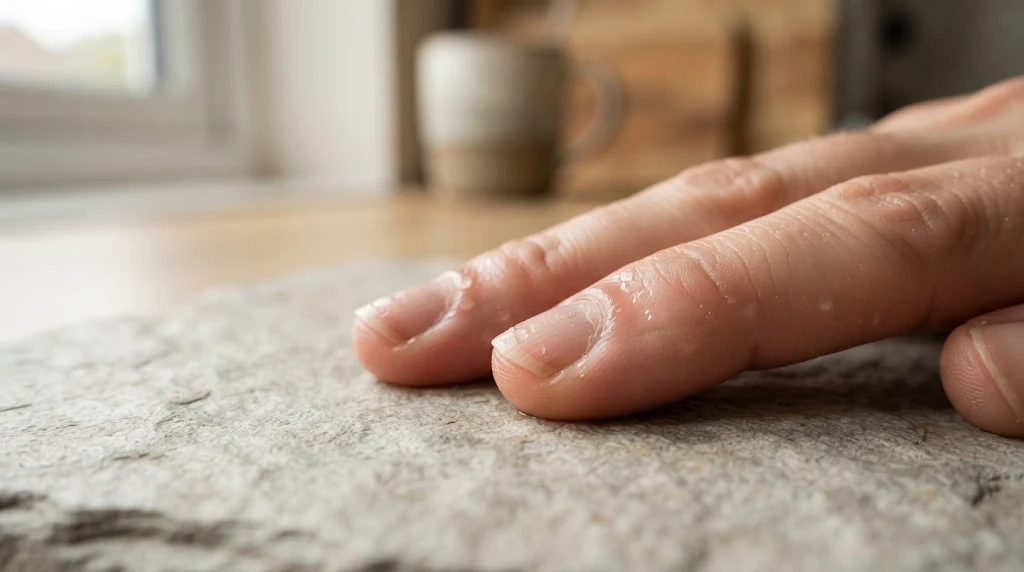
Simple daily choices can either support your nails or expose them to additional damage.
Do
- Wear gloves during wet cleaning tasks.
- Apply moisturizer after hand washing.
- Keep nails trimmed and edges smooth.
- Choose gentle hand cleansers.
- Protect your cuticles from irritation.
- Give damaged nails time to grow.
Don’t
- Clean with harsh products using bare hands.
- Use extremely hot water unnecessarily.
- Peel apart splitting nail layers.
- Over-buff already thin nails.
- Use your nails to open containers.
- Ignore painful or unusual nail changes.
How Long Does It Take for Brittle Nails to Improve?
The time needed depends on the severity of the damage, your nail growth rate, and whether the underlying cause has been addressed.
You may notice that your hands and cuticles feel more comfortable soon after adopting a consistent moisturizing routine. However, damaged nail layers don’t instantly repair themselves.
Healthy new fingernail growth gradually replaces older damaged sections. A complete fingernail typically takes around four to six months to grow out, although individual growth rates vary.
If you reduce repeated exposure and avoid further injury, you may notice that newly growing nail sections become easier to maintain over time.
Keep taking care of your nails even if improvements seem gradual. Changing multiple products every few days makes it harder to identify which habits are helping.
Can Water Exposure Cause Permanent Nail Damage?
Ordinary water exposure usually doesn’t cause permanent nail damage on its own.
When repeated wet-dry exposure is contributing to brittle nails, improving your daily habits can often help protect future growth.
However, not every nail problem is caused by water. Persistent splitting, nail distortion, infection, inflammatory conditions, or damage to the nail growth area may require medical attention.
If your nails remain unusually brittle despite consistent protection and gentle care, a dermatologist can help identify possible causes.
When Should You See a Dermatologist About Brittle Nails?
Occasional nail breakage is common, but some changes deserve professional assessment.
Consider seeing a dermatologist or healthcare professional if you notice:
- Persistent or worsening nail splitting despite gentle care.
- Pain, swelling, redness, or tenderness around a nail.
- Nails lifting away from the nail bed.
- Significant thickening, unusual discoloration, or distorted growth.
- A new dark streak or unexplained dark pigment in a nail.
- Sudden brittleness affecting many nails without an obvious cause.
Some nail changes are associated with skin conditions, infections, nutritional deficiencies, or other health concerns.
Don’t assume that brittle nails automatically mean you need supplements. A clinician can determine whether further evaluation is appropriate.
Important Nail Health Reminder
Avoid starting high-dose biotin supplements solely for brittle nails without medical guidance. Evidence for benefit is limited, and biotin can interfere with certain laboratory tests.
Frequently Asked Questions About Water and Brittle Nails
Q: Can washing your hands too much make your nails brittle?
A: Yes. Frequent hand washing may contribute to brittle nails through repeated wet-dry exposure. Continue washing when necessary, but use gentle cleansing habits and moisturize afterward to reduce irritation.
Q: Does dish soap weaken fingernails?
A: Repeated exposure to dish soap, especially alongside prolonged water contact, can aggravate nail brittleness and dry the surrounding skin. Wearing dishwashing gloves helps reduce direct contact.
Q: Is hot water worse than cold water for your nails?
A: Very hot water can aggravate dry or irritated hand skin. For routine washing, lukewarm water is a practical choice. Repeated water exposure and associated irritants remain important concerns regardless of temperature.
Q: Can brittle nails become strong again?
A: Brittle nails may improve when contributing causes are addressed. Damaged nail sections need time to grow out, so consistent protection and gentle maintenance are more useful than expecting an overnight fix.
Q: Should you avoid water completely if your nails are brittle?
A: No. Normal washing and hygiene remain important. Focus on reducing unnecessary prolonged water exposure, wearing gloves during wet chores, and moisturizing after washing rather than avoiding water altogether.
Final Thoughts: Protect Your Nails From Everyday Water and Cleaning Damage
Water, frequent hand washing, and household cleaning products can contribute to brittle nails, but you don’t have to give up your normal hygiene routine to protect them.
Wear gloves during wet chores, moisturize regularly, keep your nails short, and avoid harsh nail treatments. These simple habits can help reduce preventable damage while healthier nails gradually grow.
Save this guide to your Pinterest nail care board so you can revisit these easy tips whenever your nails start peeling, splitting, or breaking.

Hi, I’m Jessica, the creator behind Unique Lash & Nails Katy.
I created this website for anyone who loves beautiful nails as much as I do. Here, I share trendy nail designs, seasonal manicure ideas, easy nail care tips, honest product recommendations, and step-by-step guides to help you create salon-worthy nails at home. Whether you’re looking for everyday inspiration or your next favorite nail trend, I hope you’ll find something you love.