Protect Ridged Nails From Damage: 9 Easy Tips
Quick Answer
To protect ridged nails from damage, keep them comfortably short, gently smooth rough edges, moisturize your nails and cuticles daily, and wear gloves during wet chores. Avoid heavy buffing, peeling off gel polish, and using your nails as tools. These habits help reduce splitting and breakage without trying to erase your natural nail ridges.
Time Needed
5 minutes daily
Difficulty
Beginner
Items Needed
File, moisturizer, gloves
Results
Ongoing protection
Noticing tiny raised lines across your nails can make you worry that your next manicure will cause splitting or breakage. You might even feel tempted to buff every ridge until your nails look perfectly smooth.
But here’s something reassuring: many vertical nail ridges are completely normal, and protecting them is usually much better than trying to remove them.
This guide shows you how to protect ridged nails from damage using a gentle daily routine, safer manicure techniques, and simple preventive habits that fit into your lifestyle.


Why Do Ridged Nails Become Damaged?
Your natural nails are made primarily of keratin, a tough protein that forms the nail plate. Ridges can develop because of aging, nail growth patterns, previous injuries, or certain medical conditions.
Vertical ridges run from your cuticle toward the nail tip. They often become more noticeable with age and are not automatically signs of unhealthy nails.
However, nails with pronounced ridges may also be brittle. When a nail is already fragile, repeated bending, rough filing, and chemical exposure can contribute to splitting or peeling.
Common sources of additional damage include:
- Repeated water exposure: Frequent wetting and drying can contribute to fragile, peeling nails.
- Harsh polish removal: Repeated acetone exposure and scraping may increase dryness or surface damage.
- Aggressive buffing: Removing too much nail material leaves the nail plate thinner.
- Mechanical stress: Opening packages, scratching labels, or tapping long nails against hard surfaces creates unnecessary pressure.
- Improper manicures: Rough preparation, aggressive cuticle work, and forced removal of artificial products can damage natural nails.
The goal isn’t necessarily to make every ridge disappear. Instead, you want to preserve nail thickness, prevent avoidable stress, and allow healthy new nail growth.
Are Your Nail Ridges Normal or a Warning Sign?
Before changing your nail care routine, take a closer look at the direction and appearance of your ridges.
Vertical Nail Ridges
Vertical ridges extend from the cuticle toward the free edge. Fine, gradual ridging is common, particularly as you get older.
If your nails are otherwise healthy, painless, and unchanged in color, gentle protection is often all you need.
Horizontal Nail Ridges
Horizontal grooves run from one side of the nail to the other. Deep horizontal grooves, sometimes called Beau’s lines, can appear after illness, significant physical stress, or an interruption in nail growth.
New or unexplained horizontal grooves deserve medical attention rather than cosmetic treatment alone.
Warning
See a healthcare professional if ridges appear suddenly, become deeply grooved, or occur with pain, swelling, nail lifting, unusual discoloration, or a new dark streak. Don’t cover suspicious changes with artificial nails while waiting to understand the cause.
What Do You Need to Protect Ridged Nails?
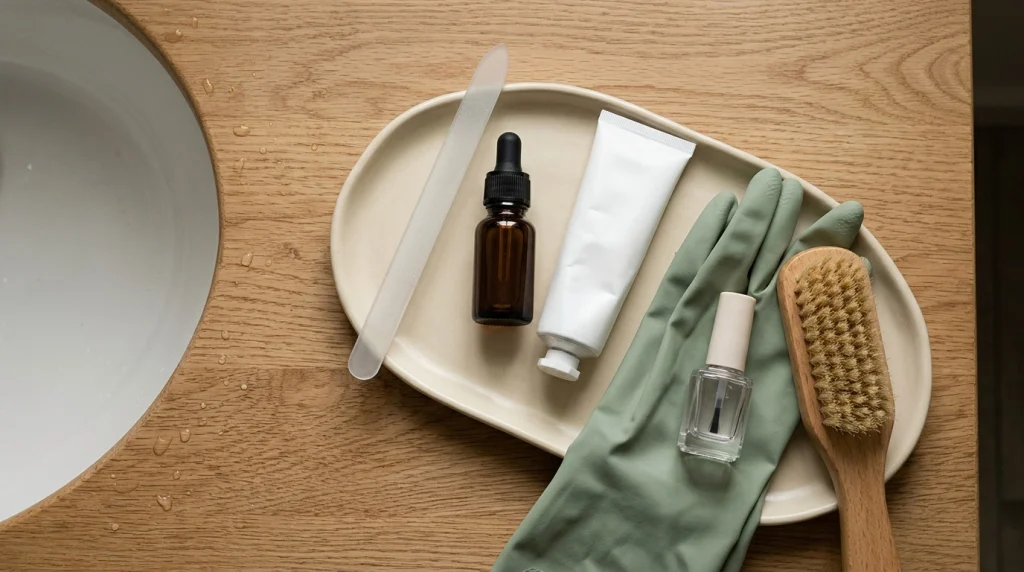
You don’t need an expensive collection of nail treatments. A few gentle essentials are enough to create a protective routine.
- Fine-grit nail file: Smooths rough edges without requiring aggressive pressure.
- Cuticle oil: Helps condition dry skin and the surrounding nail area.
- Fragrance-free hand cream: Replenishes moisture after hand washing.
- Protective household gloves: Reduce contact with water and cleaning chemicals.
- Gentle base coat: Provides a cosmetic surface for polish when your nails tolerate it.
- Soft nail brush: Helps remove dirt without scraping underneath your nails.
If you’re starting from scratch, look for a fine-grit glass nail file and a simple jojoba cuticle oil. Neither product needs to be expensive to be useful.
Affiliate disclosure: As an Amazon Associate, we earn from qualifying purchases.
How Can You Protect Ridged Nails From Damage Step by Step?
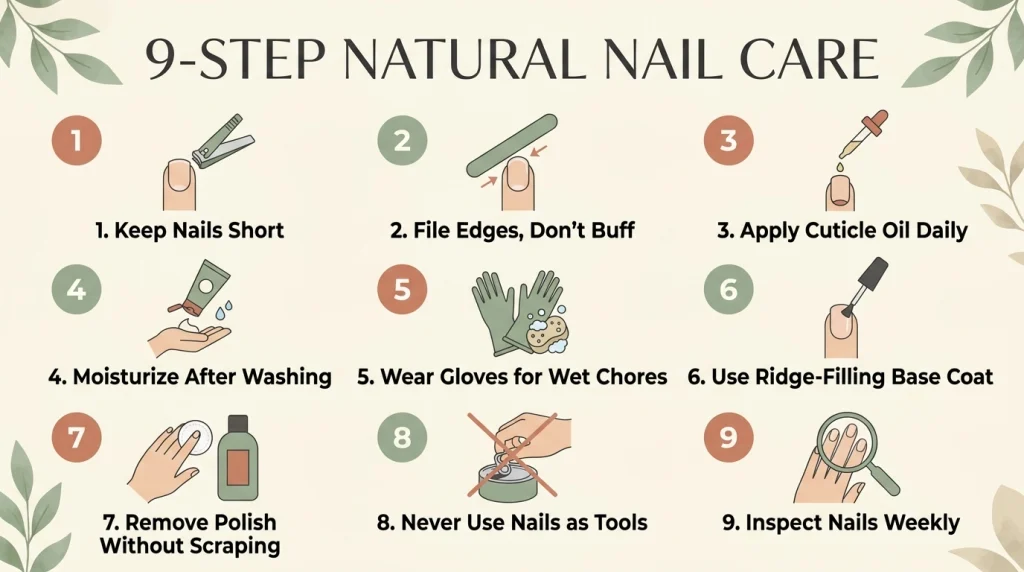
These nine gentle steps focus on preventing everyday damage. You can start immediately, even if your ridges have been visible for years.
Step 1: Keep Your Nails at a Manageable Length
Long nails create more leverage when they catch on clothing, handles, or other surfaces. Keeping your nails short reduces the chance of bending and accidental breakage.
Trim them when needed, leaving a small free edge if that feels comfortable. A rounded or squoval shape works well for many people because it avoids sharp corners that snag easily.
Common mistake: Cutting nails extremely short can make fingertips uncomfortable and may damage surrounding skin.
Step 2: File the Edges Instead of Buffing Away Ridges
Use a fine nail file to smooth small snags along the free edge. Support your finger and work with light, controlled movements instead of pressing hard.
Focus on the edge rather than the raised ridges across the nail surface. Your goal is to prevent catching, not remove healthy layers of keratin.
Common mistake: Using a coarse buffer repeatedly across ridges can thin the nail plate and make existing weakness worse.
Step 3: Apply Cuticle Oil Consistently
Apply a small drop of cuticle oil around each nail, then massage it into the surrounding skin and over the nail surface.
Try this after your evening hand wash. Consistent conditioning can improve dryness and help your nails and cuticles feel more comfortable.
Common mistake: Expecting oil to erase ridges. Oil improves conditioning, but it cannot permanently change the structure of an existing nail plate.
Step 4: Moisturize After Washing Your Hands
After washing your hands, pat them dry and apply a fragrance-free moisturizer. Work a little cream around the nail folds and fingertips.
Look for ingredients such as glycerin, petrolatum, or ceramides. These can help support the skin’s moisture barrier, especially when frequent washing leaves your hands dry.
Common mistake: Moisturizing your palms but forgetting the fingertips and skin surrounding the nails.
Step 5: Wear Gloves During Wet Household Chores
Wear protective gloves when washing dishes, scrubbing bathrooms, or handling household cleaners. This limits unnecessary contact with water, detergents, and irritating ingredients.
For longer chores, breathable cotton liners can make waterproof gloves more comfortable. Remove your gloves afterward and dry your hands thoroughly.
Common mistake: Leaving sweaty hands inside damp gloves for long periods, which can irritate the skin around your nails.
Step 6: Choose Gentle Nail Polish and Base Coat
If you enjoy polished nails, apply a thin base coat before your chosen color. A ridge-filling base coat can temporarily make the surface look smoother without removing nail material.
Choose a product that doesn’t cause stinging or irritation, and follow its application and removal instructions.
Common mistake: Applying many thick layers to hide ridges. Thick polish can chip or peel, tempting you to pick it off.
Step 7: Remove Nail Products Without Scraping
Use an appropriate remover for the product you’re wearing. For regular polish, hold a remover-soaked cotton pad against the nail briefly and wipe gently.
Gel, dip, and acrylic products require their own removal methods. Follow professional guidance rather than scraping or peeling off the coating.
Common mistake: Pulling off stubborn polish or gel, which can remove superficial nail layers along with the coating.
Step 8: Stop Using Your Nails as Tools
Use a small tool to open packages, lift stickers, or scrape residue. Your nail tips are not designed to act as miniature screwdrivers.
Pay attention to repeated pressure during typing, crafting, or household activities. Using the pads of your fingers instead of the nail tips can reduce unnecessary stress.
Common mistake: Ignoring tiny edge splits until they catch on something and extend farther into the nail.
Step 9: Inspect Your Nails Every Week
Once a week, examine your nails in good lighting. Look for new splits, rough edges, unusual discoloration, soreness, or changes in ridge patterns.
Gently file minor snags and keep track of changes that do not improve. If something looks unusual or progresses quickly, arrange a professional evaluation.
Common mistake: Assuming every new groove or change is cosmetic and covering it without checking the cause.
Should You Buff Ridged Nails to Make Them Smooth?
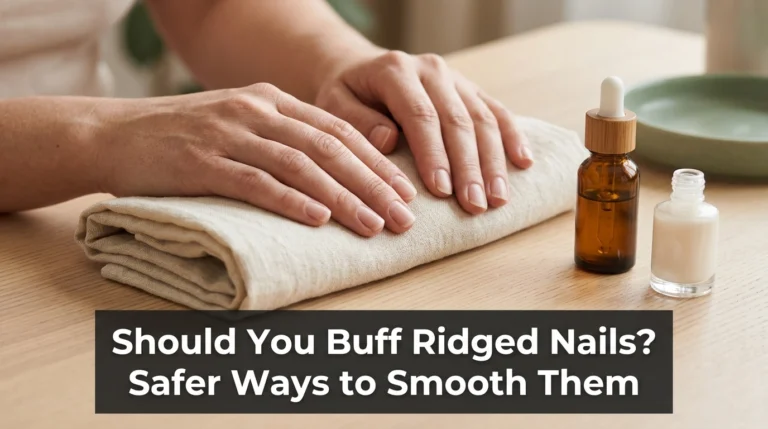
Heavy buffing is not a good solution for pronounced ridges, especially when your nails already split or peel.
Buffing removes material from the surface of the nail plate. Repeating the process can leave your nails thinner and less resistant to bending.
Although very light cosmetic buffing may be tolerated by some healthy nails, you should avoid trying to flatten deep ridges mechanically.
For a smoother manicure appearance, consider a thin ridge-filling base coat instead.
Pro Tip
If your nails have visible ridges, apply a thin ridge-filling base coat and allow it to dry according to the manufacturer’s instructions before applying color. This creates a temporary cosmetic effect without deliberately thinning the natural nail.
Can Gel Polish or Acrylic Nails Damage Ridged Nails?
Gel polish and acrylic enhancements can be appealing when you want smooth, glossy nails. However, certain application and removal techniques may worsen existing nail fragility.
Excessive filing during preparation can thin natural nails. Picking off gel or acrylic products can also remove layers of the nail plate.
If your nails are already peeling, painful, or unusually weak, consider postponing enhancements until they have been assessed and are in better condition.
When visiting a salon, explain that your nails have ridges and ask the technician to avoid aggressive surface filing and cuticle cutting.
For additional guidance, read our article on building a healthy nail care routine.
What Daily Habits Help Keep Ridged Nails Protected?
Protecting ridged nails works best when you build small habits into activities you already do.
Morning Routine
- Check your nail tips for snags before getting dressed.
- Apply hand cream after washing your hands.
- Keep protective gloves accessible for cleaning tasks.
- Avoid picking at raised nail surfaces or cuticles.
Evening Routine
- Wash and gently dry your hands.
- Apply cuticle oil around each nail.
- Massage a moisturizer into your fingertips.
- File a rough edge only if necessary.
Weekly Maintenance
- Trim nails when their length becomes inconvenient.
- Check for peeling, splitting, or unexpected changes.
- Clean nail tools and avoid sharing them.
- Review whether your manicure products are causing irritation.
For a more detailed approach, see our daily nail care guide.
What Should You Do and Avoid When Caring for Ridged Nails?

DO
- Keep nails short and smooth.
- Moisturize regularly.
- Wear gloves for wet chores.
- Use gentle manicure products.
- Monitor unusual nail changes.
DON’T
- Buff away deep ridges.
- Peel off gel polish.
- Cut healthy cuticles.
- Use nails as tools.
- Ignore painful changes.
Which Products Are Worth Using on Ridged Nails?
Choose products according to the problem you’re trying to prevent. No cosmetic product is guaranteed to remove natural ridges permanently.
1. Fine-Gr it Glass Nail File
A fine glass nail file helps maintain smooth tips and reduce snagging. It’s especially useful if your nails tend to catch on clothing or split at the edges.
Explore fine-grit glass nail files on Amazon.
2. Jojoba-Based Cuticle Oil
A simple cuticle oil can condition dry nail folds and make daily nail maintenance more comfortable. Look for a formula that doesn’t irritate your skin.
Explore jojoba cuticle oils on Amazon.
3. Ridge-Filling Base Coat
If your main concern is the appearance of ridges underneath regular nail polish, a ridge-filling base coat offers temporary smoothing without extensive buffing.
Explore ridge-filling base coats on Amazon.
4. Protective Cleaning Gloves
Reusable household gloves are practical for anyone who washes dishes or handles cleaners frequently. Choose a comfortable fit and a material you can tolerate.
Explore reusable cleaning gloves on Amazon.
As an Amazon Associate, we earn from qualifying purchases. Product links lead to Amazon search results, allowing you to compare current options.
How Long Does It Take for Damaged Ridged Nails to Improve?
The answer depends on whether you’re treating dryness, preventing further breakage, or waiting for physically damaged nail material to grow out.
Dry skin around your nails may feel more comfortable after several days of consistent moisturizing. You may also notice fewer snags once your nail edges are properly maintained.
But existing ridges and damaged nail layers cannot simply be repaired overnight.
Fingernails typically take approximately four to six months to grow out completely, although growth rates vary with age, health, and other factors.
That means a nail damaged near the cuticle may require several months before the affected section reaches the tip.
Age-related vertical ridges may remain visible even after your nails become less prone to breaking.
Be patient and focus on preventing new damage rather than expecting instant cosmetic perfection.
What If Your Ridged Nails Keep Splitting?
Problem: Splitting at the free edge
Immediate action: Carefully shorten the nail and gently file away the snag if it doesn’t extend into attached, painful tissue.
Prevention: Keep the nail shorter, moisturize consistently, and reduce repeated mechanical stress.
Problem: Nail layers peeling after manicures
Immediate action: Stop buffing or scraping the damaged surface. Avoid additional aggressive treatments.
Prevention: Choose gentler polish removal and avoid forcibly peeling off enhancements.
Problem: Dry, rough nails after frequent washing
Immediate action: Apply a fragrance-free moisturizer after drying your hands.
Prevention: Wear suitable protective gloves during prolonged wet chores.
Problem: A deep split that extends into the attached nail
Immediate action: Avoid pulling or filing the painful area. Protect the nail from catching and seek medical advice.
Prevention: Identify the cause of repeated splitting rather than continually covering it with polish.
If peeling is your main concern, explore our nail care guides for additional maintenance and prevention advice.
Can Diet or Supplements Help Protect Ridged Nails?
Healthy nail growth depends partly on adequate nutrition. Protein, iron, zinc, and other essential nutrients support normal body functions, including nail formation.
However, visible ridges do not automatically mean you have a vitamin deficiency.
Eating a balanced diet with varied protein sources, vegetables, fruits, whole grains, and healthy fats is a sensible foundation.
If your nails suddenly become unusually fragile or change alongside fatigue or other symptoms, consult a healthcare professional about whether testing is appropriate.
Don’t start high-dose supplements simply to smooth ridges. In particular, biotin supplements can interfere with certain laboratory tests and are not necessary for everyone.
When Should You See a Dermatologist About Ridged Nails?
Most gradual vertical ridges are harmless. However, some nail changes need professional assessment.
Schedule an appointment if you notice:
- New or unexplained horizontal grooves.
- A new or changing dark streak.
- Persistent pain or swelling around a nail.
- Nail lifting or separation from the nail bed.
- Significant color or shape changes.
- Repeated splitting that extends into attached nail tissue.
- Increasing distortion affecting one or several nails.
A dermatologist can help distinguish ordinary cosmetic changes from nail conditions requiring treatment.
For further medical guidance, review the American Academy of Dermatology’s recommendations on nail changes that warrant examination.
Frequently Asked Questions About Protecting Ridged Nails
Q: Can ridged nails become strong again?
A: Yes, nails that are fragile because of avoidable environmental damage may become less prone to breakage with gentler care. However, naturally occurring ridges can remain visible, and underlying medical conditions may require treatment.
Q: Is it safe to paint nails that have ridges?
A: Regular polish is generally an option when your nails are healthy, painless, and free of suspicious changes. Use gentle preparation and removal methods, and stop products that cause irritation.
Q: Should I remove ridges with a nail buffer?
A: Avoid aggressive buffing, particularly if your nails are thin or brittle. Removing nail material can weaken the surface. A cosmetic ridge-filling base coat is usually a gentler way to create a smoother appearance.
Q: Does cuticle oil remove vertical ridges?
A: No. Cuticle oil can help condition dry nails and surrounding skin, but it cannot erase the natural structure of your nail plate. Use it for maintenance rather than expecting permanent ridge removal.
Q: Why are my nail ridges getting worse?
A: Vertical ridges may become more noticeable with age. But sudden, deep, painful, or unusual changes can have other causes. Consult a healthcare professional when the appearance changes unexpectedly.
Protect Your Ridged Nails With Gentle, Consistent Care
Learning how to protect ridged nails from damage doesn’t require complicated treatments. Keep your nails short, smooth only the edges, moisturize daily, avoid harsh manicures, and protect your hands during household chores.
Remember that healthy nails don’t have to be perfectly smooth. Focus on comfort, strength, and preventing further damage.
Save this guide on Pinterest so your gentle nail protection routine is always easy to find.

Hi, I’m Jessica, the creator behind Unique Lash & Nails Katy.
I created this website for anyone who loves beautiful nails as much as I do. Here, I share trendy nail designs, seasonal manicure ideas, easy nail care tips, honest product recommendations, and step-by-step guides to help you create salon-worthy nails at home. Whether you’re looking for everyday inspiration or your next favorite nail trend, I hope you’ll find something you love.