How Water Exposure Affects Nail Moisture: Key Facts
Quick Answer
Water exposure temporarily increases nail moisture because your nail plate absorbs water and becomes softer. However, repeated soaking and drying can stress the nail’s keratin structure, contributing to peeling, splitting, and brittleness. Protect your nails by limiting prolonged soaking, wearing gloves for wet chores, and moisturizing after handwashing. The goal is balanced moisture, not keeping your nails constantly wet.
Have you noticed that your nails feel soft after a long shower but become dry, rough, or brittle later?
That’s because water changes more than the appearance of your nails. It temporarily affects the way their natural keratin layers behave.
Understanding how water exposure affects nail moisture can help you prevent unnecessary breakage without avoiding everyday activities such as washing your hands, showering, or swimming.
Here’s what happens inside your nails when they get wet, why repeated exposure matters, and how to maintain healthier-looking nails with a simple routine.


What Happens to Nail Moisture When Your Nails Get Wet?
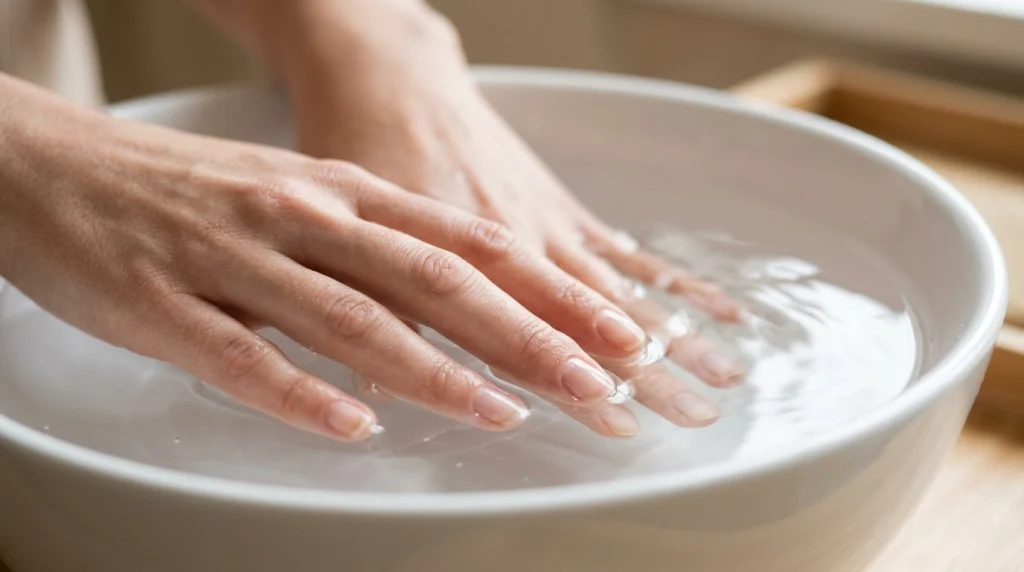
Your fingernails are made primarily of keratin, a structural protein arranged in compact layers. Although the visible nail plate feels hard, it isn’t completely waterproof.
Water can enter the nail plate and interact with its keratin structure. As the nail absorbs moisture, it becomes more hydrated, flexible, and temporarily softer.
According to published research on nail health, the nail plate typically contains approximately 16–18% water, although hydration varies with environmental conditions and other factors.
When your nails remain submerged in water, their moisture content increases. After you dry your hands, the absorbed water gradually leaves the nail plate.
This creates a natural cycle:
- Water absorption: The nail plate takes in moisture during washing, bathing, or soaking.
- Temporary softening: Additional water changes the nail’s flexibility and resistance to pressure.
- Drying: Water gradually evaporates after exposure ends.
- Repeated stress: Frequent wetting and drying may contribute to changes in nail structure and brittleness.
Occasional water exposure is normal. Problems become more likely when your nails experience repeated prolonged soaking, detergents, mechanical friction, and insufficient protective care.
Why Does Too Much Water Make Nails Weak?
Water can make your nails feel more flexible at first, which might sound beneficial. But excessive moisture exposure doesn’t necessarily create stronger or healthier nails.
The important difference is between temporary hydration and maintaining a healthy nail structure.
1. Water Temporarily Softens the Nail Plate
When water enters the nail plate, it interacts with keratin proteins and changes the physical properties of the nail.
A highly hydrated nail may bend more easily and offer less resistance to pressure.
This is particularly noticeable after spending a long time in a bathtub, swimming pool, or sink full of water.
If you scrape, pick, or aggressively file softened nails, you may increase the likelihood of damage.
2. Repeated Wetting and Drying Can Contribute to Splitting
Your nails don’t stay equally hydrated throughout the day.
They absorb water while wet and gradually release it afterward. Repeated cycles cause changes in hydration and nail dimensions.
Over time, particularly when combined with detergents and physical stress, these cycles may contribute to separation between nail layers.
You may notice:
- Thin layers peeling from the nail tips.
- Small cracks along the free edges.
- Rough or uneven nail surfaces.
- Nails that break before reaching your preferred length.
- Increased sensitivity to everyday friction.
This doesn’t mean every peeling nail is caused by water. Nail cosmetics, aging, skin conditions, and mechanical damage can also contribute.
3. Soap and Detergents Add Another Source of Stress
Water alone isn’t the only factor during frequent handwashing or household cleaning.
Strong soaps, dishwashing liquids, and cleaning chemicals can remove protective oils from the surrounding skin and cause irritation.
When your hands repeatedly become wet and then dry without moisturizing, your cuticles and nail folds may become rough or cracked.
That combination can make your entire nail area feel less comfortable and more vulnerable to damage.
Important
Don’t stop essential handwashing to protect your nails. Proper hand hygiene remains important. Instead, use a gentle cleanser when suitable, dry your hands carefully, and apply moisturizer afterward.
Can Water Exposure Actually Dry Out Your Nails?
It may seem contradictory, but repeated water exposure can contribute to nails that eventually become brittle.
While your nails are submerged, their water content rises. After exposure ends, they gradually return toward their usual moisture level.
The main problem isn’t that water automatically removes all moisture from your nails. Rather, repeated hydration changes, chemical exposure, and damage to the nail’s protective structure can contribute to fragility.
Research also shows that brittle nails aren’t always simply dehydrated nails. Keratin organization, natural lipids, aging, and repeated trauma can all influence their strength.
This is why soaking weak nails in water for longer periods isn’t a reliable treatment.
For a deeper explanation of maintaining balanced nail hydration, explore our guide to weak nails and nail hydration.
Which Everyday Activities Affect Nail Moisture the Most?
You don’t have to work in a salon or regularly swim to experience frequent nail hydration changes.
Many ordinary activities expose your nails to water throughout the day.
Frequent Handwashing
Handwashing is essential for hygiene, but frequent washing increases the number of times your nails become wet and dry.
If you wash your hands often for work, choose a suitable gentle hand cleanser when possible and moisturize afterward.
Pay attention to your cuticles and fingertips, not just your palms.
Washing Dishes Without Gloves
Dishwashing combines prolonged water exposure, detergent, and friction.
Warm water may soften your nails, while detergent can irritate or dry the surrounding skin.
Protective household gloves create a barrier between your hands and the water.
Choose gloves that fit comfortably, and remove them if moisture builds up inside.
Long Showers and Hot Baths
Long baths keep your nails submerged for extended periods.
Your nails may temporarily feel softer afterward, especially if you also use soaps or bath products.
You don’t need to avoid bathing. Simply avoid unnecessary prolonged soaking when your nails are already fragile.
Afterward, gently dry your fingertips and apply moisturizer.
Swimming
Swimming involves prolonged immersion and possible contact with pool chemicals or saltwater.
The effect depends on exposure duration, existing nail condition, and your after-swim routine.
Rinse your hands after swimming, dry them thoroughly, and moisturize your nails and surrounding skin.
Cleaning and Household Chores
Bathroom cleaning, laundry, and surface cleaning may involve repeated exposure to water and irritating chemicals.
Wear appropriate protective gloves whenever you’re handling cleaning solutions.
If your hands become sweaty inside the gloves, take a break, dry them, and replace damp glove liners when necessary.
How Can You Tell If Water Exposure Is Damaging Your Nails?
Not every change in nail texture means something is seriously wrong.
However, several patterns suggest your nails may be experiencing excessive moisture-related stress.
Peeling at the Nail Tips
If thin layers separate from the free edge of your nails, you may be experiencing lamellar splitting, also called onychoschizia.
Repeated wet work is one possible contributor, especially when combined with detergents, filing, or nail product removal.
Unusually Soft Nails After Soaking
Temporary softness after prolonged water exposure is expected.
However, nails that repeatedly tear or bend during everyday activities may benefit from more protection and gentler handling.
Dry, Rough Cuticles
Frequent washing without moisturizing can leave the skin around your nails dry and uncomfortable.
Small cracks or hangnails may develop, particularly when you pick at loose skin.
Frequent Breaking and Splitting
If your nails regularly split during simple activities, look at your overall routine.
Water exposure may play a role, but repeated manicures, aggressive buffing, skin disorders, or other factors may also contribute.
When to See a Dermatologist
Seek professional advice if you develop painful swelling, redness, nail separation, persistent discoloration, new dark pigmentation, or unexplained changes affecting several nails. These symptoms shouldn’t automatically be blamed on water exposure.
How Can You Protect Nail Moisture Without Avoiding Water?
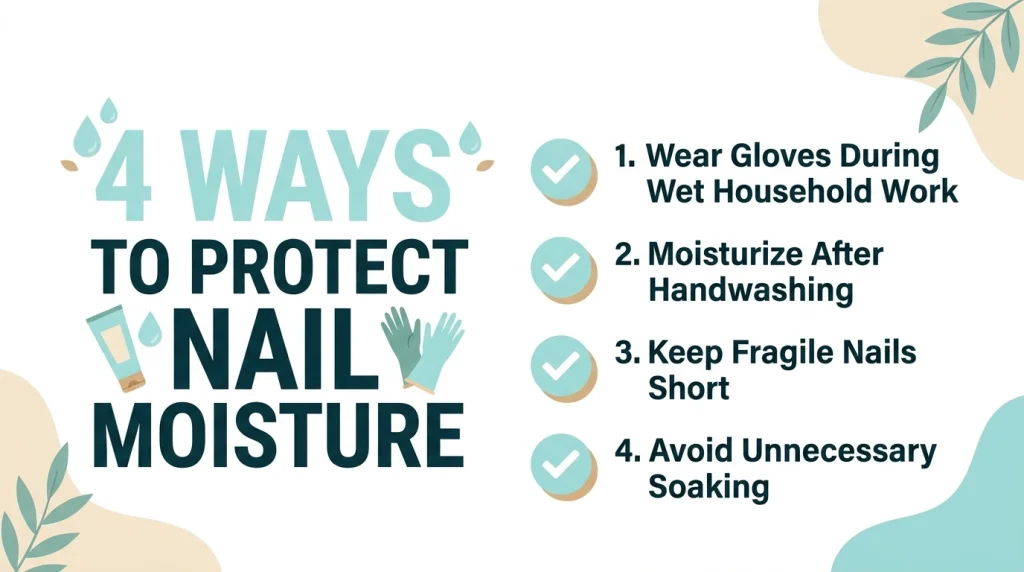
The most effective approach is to reduce unnecessary exposure while maintaining a practical moisturizing routine.
You don’t need a complicated collection of nail treatments to get started.
1. Wear Gloves During Wet Household Work
Protective gloves are especially helpful when washing dishes or cleaning with detergents.
Look for comfortable, well-fitting household gloves. Nitrile or vinyl options may be suitable depending on the cleaning task and your skin sensitivities.
If your hands sweat heavily, breathable cotton liners may improve comfort.
Make sure your hands are dry before putting on gloves, and don’t leave damp gloves on for long periods.
2. Moisturize After Handwashing
After washing, gently dry your hands with a clean towel.
Then apply a fragrance-free moisturizer across your hands, fingernails, and cuticles.
Ingredients such as glycerin, petrolatum, and mineral oil can help support moisture retention in the surrounding skin.
A moisturizer won’t restore missing keratin layers, but consistent use can help manage dryness and improve comfort.
3. Keep Fragile Nails Short
Long nails experience more leverage when they catch on clothing, hair, or objects.
When your nails are peeling, keeping them relatively short can reduce the chance of additional tearing.
Use clean clippers and gently smooth rough edges with a fine-grit file.
A rounded or squoval shape is often practical for everyday wear.
4. Avoid Unnecessary Soaking
You don’t need to soak your nails before every manicure.
If your nails are already soft or peeling, prolonged soaking may make them harder to handle without damage.
Choose gentle preparation techniques and avoid scraping the surface of softened nails.
5. Protect Your Cuticles
Your cuticles contribute to the protective seal around the base of your nails.
Avoid cutting healthy cuticle tissue or repeatedly pushing it back aggressively.
Apply moisturizer or cuticle oil when the surrounding skin feels dry.
For more targeted advice, see how moisturizing and cuticle care support weak nails.
Pro Tip
Keep a small tube of fragrance-free hand cream beside your most-used sink. Applying moisturizer immediately after handwashing is easier to remember than trying to correct severe dryness only at bedtime.
What’s the Best Daily Routine for Balanced Nail Moisture?
Consistency matters more than using numerous expensive nail treatments.
Try this simple routine if your nails regularly experience water exposure.
Morning: Start With Protection
- Inspect your nails for rough or peeling edges.
- Gently file any small snags.
- Apply moisturizer to your hands and nail folds.
- Prepare protective gloves if you have wet chores planned.
During the Day: Reduce Repeated Stress
- Wash your hands whenever hygiene requires it.
- Use comfortably warm water instead of unnecessarily hot water.
- Dry your hands carefully after washing.
- Reapply moisturizer when your skin feels dry.
- Avoid using softened nails to scrape, pry, or open objects.
Evening: Condition Your Nails
- Clean and dry your hands gently.
- Massage fragrance-free cream over each nail and cuticle.
- Apply a small amount of petroleum jelly around particularly dry nail folds if needed.
- Leave peeling nail layers alone instead of pulling them away.
You can also follow our complete everyday nail care routine for additional maintenance habits.
What Should You Do and Avoid When Caring for Water-Exposed Nails?
Do
- Moisturize after washing.
- Wear gloves for wet cleaning.
- Keep fragile nails short.
- Use gentle nail products.
- Dry hands before wearing gloves.
- File rough edges carefully.
Don’t
- Soak weak nails unnecessarily.
- Scrape softened nail surfaces.
- Peel off gel polish.
- Cut healthy cuticles.
- Leave sweaty gloves on for hours.
- Expect moisturizer to repair existing cracks.
Which Products Help Protect Nails From Water Exposure?
When managing nail moisture, focus on practical products that help reduce wet exposure, condition surrounding skin, and prevent additional mechanical damage.
You don’t need to purchase every product below. Choose the items that match your daily habits.
1. Protective Gloves for Dishwashing and Cleaning
Protective gloves reduce direct contact with dishwater and cleaning products.
Choose an appropriate material for the chemicals you’re using and replace gloves that become damaged.
Recommended Product Type
Reusable Household Cleaning Gloves
A practical barrier against repeated water and detergent exposure during household chores.
Explore Cleaning Gloves on Amazon
As an Amazon Associate, we earn from qualifying purchases.
2. Fragrance-Free Moisturizing Hand Cream
A basic hand cream is often more useful than a complicated nail treatment.
Look for moisturizing ingredients such as glycerin or petrolatum, particularly if your skin feels tight after washing.
Recommended Product Type
Fragrance-Free Hand Moisturizer
An everyday moisturizer helps condition skin and cuticles after frequent handwashing.
As an Amazon Associate, we earn from qualifying purchases.
3. Cuticle Oil for Targeted Conditioning
Cuticle oil is useful when the skin around your nails feels dry or rough.
Apply a small amount and massage it gently around your nail folds.
Oil can help condition the area, but it cannot permanently rebuild nail layers that have already separated.
Recommended Product Type
Jojoba Cuticle Oil
A convenient option for conditioning dry cuticles and nail folds throughout the day.
As an Amazon Associate, we earn from qualifying purchases.
4. Petroleum Jelly for Very Dry Nail Folds
Plain petroleum jelly can help reduce moisture loss from dry skin around your nails.
Apply a thin layer before bedtime, especially when the skin near your cuticles feels cracked or tight.
For additional guidance, see our article about moisturizing split or cracked nails.
How Long Does It Take for Water-Damaged Nails to Improve?
The timeline depends on the type and severity of damage.
Dry surrounding skin may become more comfortable after several days of consistent moisturizing, although results vary.
Peeling and splitting within the nail plate take longer because the visible nail cannot repair itself like living skin.
Damaged portions must gradually grow outward before they can be trimmed away.
Fingernails generally grow approximately 2–3 millimeters per month. A complete fingernail may take around four to six months, sometimes longer, to grow out.
If your damage is limited to the tips, you may be able to remove affected areas sooner as the nails grow.
During that time, prioritize:
- Reducing unnecessary wet exposure.
- Avoiding aggressive manicures and removal techniques.
- Moisturizing the nail area regularly.
- Protecting fragile edges from catching and tearing.
- Monitoring persistent or worsening symptoms.
If you also experience seasonal dryness, our guide to protecting nails from dry air explains additional environmental factors.
Common Mistakes That Make Moisture-Related Nail Problems Worse
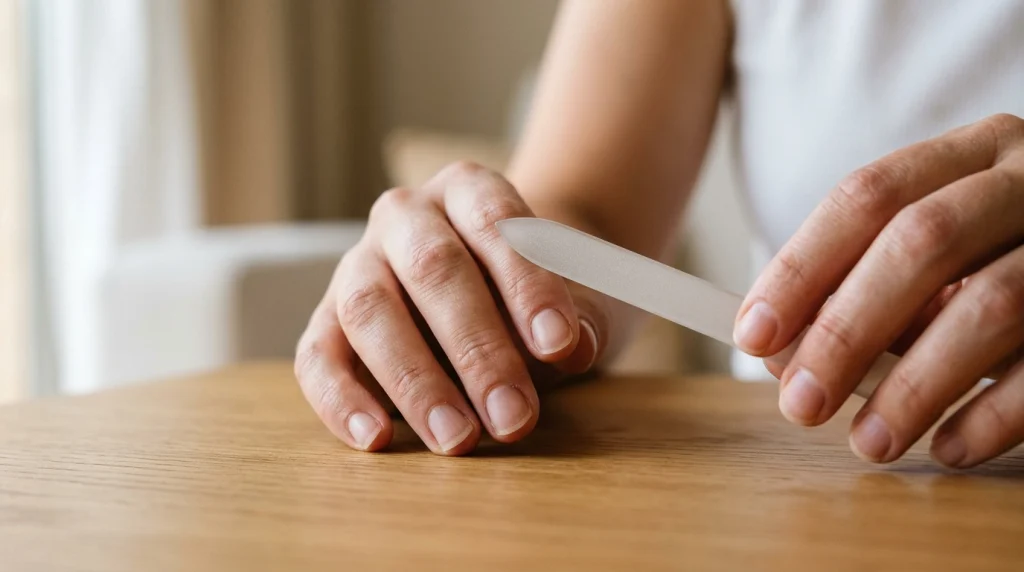
Mistake 1: Soaking Brittle Nails to Add Moisture
Better approach: Avoid prolonged soaking and use moisturizer instead. Water temporarily increases nail hydration but isn’t a dependable way to correct structural brittleness.
Mistake 2: Filing Immediately After a Long Bath
Better approach: Allow your nails to dry and return toward their usual firmness before extensive shaping. Use a fine-grit file and light pressure.
Mistake 3: Wearing Damp Gloves Too Long
Better approach: Dry your hands before wearing gloves. Take breaks if perspiration accumulates, and avoid leaving damp material against your skin for prolonged periods.
Mistake 4: Using Harsh Nail Hardeners Without Knowing the Cause
Better approach: Focus first on reducing exposure and gentle care. Some hardening products may make fragile nails less flexible or irritate the surrounding skin.
Frequently Asked Questions About Water Exposure and Nail Moisture
Q: Does water hydrate your nails or dry them out?
A: Water temporarily hydrates your nail plate as it absorbs moisture. However, repeated wetting and drying, particularly with detergents, can contribute to brittle or peeling nails. Healthy nail care involves balanced hydration and protection.
Q: Can washing your hands too much weaken your nails?
A: Frequent handwashing can contribute to nail brittleness when combined with repeated drying, harsh cleansers, or inadequate skin care. Continue necessary handwashing, but moisturize afterward and choose gentle products when appropriate.
Q: Why do my nails become soft after a shower?
A: Your nail plate absorbs water during showering. This additional moisture temporarily changes the physical properties of keratin, making your nails softer and more flexible. They generally become firmer again as they dry.
Q: Is cuticle oil better than water for nail moisture?
A: Cuticle oil and water serve different purposes. Water temporarily hydrates the nail plate, while cuticle oil conditions the surrounding skin and helps manage dryness. Neither product can permanently repair existing nail cracks.
Q: Can nails recover from repeated water exposure?
A: Many nails can look healthier as damaged portions grow out, especially when you reduce repeated wet work and maintain gentle care. Existing splits don’t fuse back together, and persistent nail changes may require dermatological evaluation.
Final Thoughts on Water Exposure and Nail Moisture
Understanding how water exposure affects nail moisture helps you recognize why nails can feel soft when wet yet become more fragile after repeated wetting and drying.
You don’t need to avoid water. Protect your nails during wet chores, moisturize consistently, and handle fragile nail tips gently while they grow.
Save this guide on Pinterest so you can return to these simple nail-protection tips whenever your nails begin feeling dry, weak, or brittle.

Hi, I’m Jessica, the creator behind Unique Lash & Nails Katy.
I created this website for anyone who loves beautiful nails as much as I do. Here, I share trendy nail designs, seasonal manicure ideas, easy nail care tips, honest product recommendations, and step-by-step guides to help you create salon-worthy nails at home. Whether you’re looking for everyday inspiration or your next favorite nail trend, I hope you’ll find something you love.