Nail Color Changes and Nail Damage: Causes & Care
Quick Answer
Nail color changes and nail damage can result from polish staining, injuries, frequent manicures, infections, skin conditions, or certain health problems. Yellow, white, green, brown, and black discoloration can have different causes. Protect fragile nails with gentle grooming, regular moisturizing, and less chemical exposure. Seek medical advice for unexplained color changes, new dark streaks, pain, swelling, or nail lifting.
Have you noticed that your nails suddenly look yellow, develop mysterious white spots, or start peeling after a manicure? It’s natural to wonder whether the change is harmless or something more serious.
Your nails can reveal clues about everyday damage, infections, and sometimes underlying health conditions. However, appearance alone rarely provides a definite diagnosis.
This guide explains common nail color changes and nail damage, what different symptoms may mean, how to protect your natural nails, and when you should consult a dermatologist.


What Do Nail Color Changes and Nail Damage Mean?
Nail color changes describe differences in your nail’s usual appearance, including yellow, white, green, blue, brown, purple, or black discoloration. Nail damage refers to changes in the nail’s structure, such as splitting, peeling, thinning, ridges, or separation from the nail bed.
Your nail plate consists mainly of keratin, a strong protein that forms protective layers. The nail matrix beneath the skin near your cuticle produces new nail cells.
When your nail plate becomes damaged through friction, over-filing, chemicals, or injuries, the existing damage generally needs to grow out. Moisturizers can improve flexibility and reduce dryness, but they cannot instantly reconstruct missing nail layers.
Changes involving the nail matrix, nail bed, or surrounding skin may require professional assessment.
What Do Healthy Nails Normally Look Like?
Healthy fingernails typically have a relatively smooth surface, consistent thickness, and a pinkish or translucent appearance that reflects the nail bed underneath.
However, normal nail color varies depending on skin tone, circulation, age, and natural pigmentation.
Some people naturally have visible longitudinal ridges or darker nail pigmentation. These features are not automatically signs of disease.
Instead of comparing your nails with edited beauty photographs, pay attention to changes from your own normal appearance.
What Causes Nail Color Changes?
Several different factors can change the appearance of your fingernails or toenails. Understanding the possible cause helps you avoid unnecessary treatments and recognize symptoms that require medical care.
1. Nail Polish and Cosmetic Staining
Dark or highly pigmented nail polish may leave yellowish or orange discoloration, especially after repeated applications.
Color pigments can stain the upper nail layers. This is usually cosmetic rather than a sign of internal damage.
Use a suitable base coat to help reduce staining, remove polish gently, and allow enough time to inspect your natural nails between manicures.
If discoloration persists, spreads, or changes the nail texture, don’t automatically assume polish is responsible.
2. Frequent Gel and Acrylic Manicures
Gel and acrylic manicures can contribute to nail damage when preparation or removal involves excessive filing, forceful scraping, or peeling away attached product.
These actions may remove portions of the natural nail plate, leaving thin, flexible nails and chalky white patches.
Acetone can also temporarily dry the nail surface and surrounding skin.
If your nails are already fragile, follow our guide to caring for brittle nails after gel or acrylic removal before booking another enhancement.
3. Fungal Nail Infections
Fungal nail infections can cause yellow or white discoloration, thickening, crumbling, and sometimes separation from the nail bed.
They occur more frequently in toenails, although fingernails can also become infected.
An infected nail may develop slowly changing color and texture over several months.
Because psoriasis, injuries, and other conditions can resemble fungal infections, a healthcare professional may need to examine or test the nail before recommending treatment.
4. Physical Injuries and Repeated Pressure
Accidentally hitting your finger, trapping a nail in a door, or wearing tight shoes may cause bleeding beneath the nail plate.
This can create a red, purple, brown, or black area known as a subungual hematoma.
Minor bruising typically moves toward the nail tip as the nail grows. More severe injuries can cause intense pressure, nail separation, or damage to the nail-growing tissue.
Seek prompt medical assessment after a significant crush injury, severe throbbing pain, or suspected fracture. Never attempt to drill or puncture your nail at home.
5. Skin Conditions and Other Health Problems
Psoriasis, eczema, and certain inflammatory conditions can change your nails’ color, texture, or attachment.
Some medical conditions, including iron-deficiency anemia, thyroid disorders, and liver or kidney disease, can also be associated with distinctive nail changes.
However, nail appearance alone cannot confirm any of these conditions. A medical history, examination, and sometimes laboratory testing are necessary.
What Do Different Nail Colors Mean?
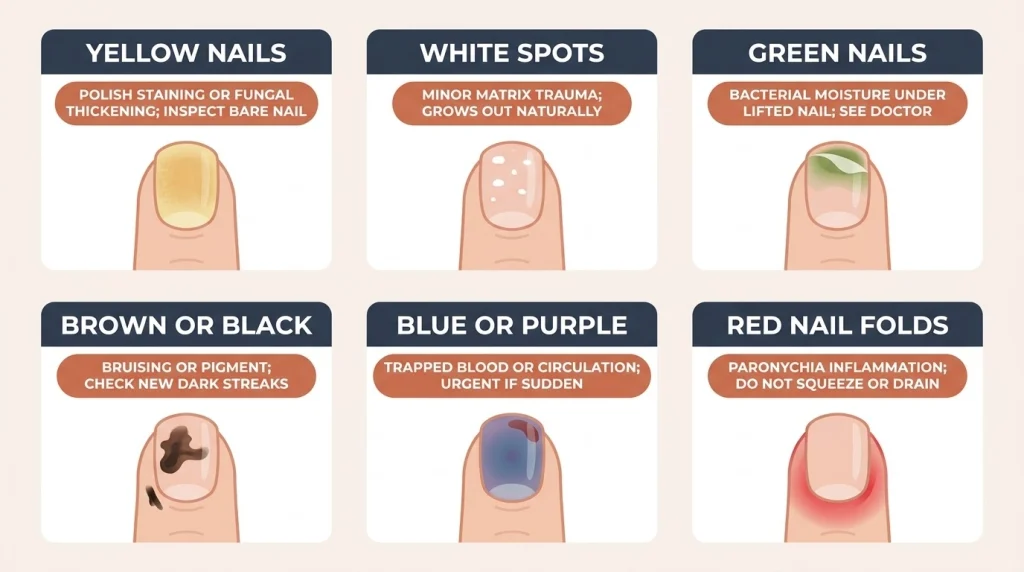
The color of your nail can provide a useful clue, but the pattern, number of affected nails, symptoms, and speed of change matter just as much.
Yellow Nails: Staining, Infection, or Thickening
Yellow nails are commonly associated with nail polish staining or fungal infection.
Staining generally affects the visible nail plate without major swelling, pain, or crumbling.
Fungal infections are more likely when discoloration develops alongside thickening, brittleness, debris beneath the nail, or separation.
Some skin conditions and rare medical disorders can also cause persistent yellowing.
What to do: Remove polish safely, inspect the nail, and avoid immediately covering the discoloration. If yellowing persists or the nail becomes thick and crumbly, arrange an assessment.
White Spots or White Patches on Nails
Small white spots often occur after minor injuries involving the nail-forming area.
These marks are called punctate leukonychia and typically move forward as the nail grows.
Chalky white surface patches may also appear after aggressive manicure removal or superficial fungal infection.
Contrary to a common beauty myth, isolated white spots do not automatically mean you have a calcium deficiency.
What to do: Avoid scraping or aggressively buffing the spots away. Observe whether they grow outward. Seek medical advice if much of the nail becomes white or the change is unexplained.
Green Nails: Possible Bacterial Colonization
Green discoloration may indicate bacterial colonization, commonly involving Pseudomonas bacteria.
This can occur when a nail has lifted and moisture collects in the space beneath it.
Green discoloration may appear after artificial nail enhancements, particularly when lifting creates a moist gap.
What to do: Stop covering the affected nail, keep it clean and appropriately dry, and arrange a healthcare assessment. Avoid applying another enhancement over the discoloration.
Warning
Do not assume a green nail is simply trapped nail polish. Bacterial discoloration can require treatment, especially when accompanied by tenderness, swelling, or nail separation.
Brown or Black Nails: Pigmentation, Bruising, or Other Causes
Brown or black discoloration has several possible explanations, including injury, natural pigmentation, medications, and certain nail conditions.
Some people naturally develop stable longitudinal brown bands, particularly those with more deeply pigmented skin.
However, a new or changing dark streak can sometimes indicate nail melanoma, a rare but serious skin cancer.
Watch for a dark band that becomes wider or more irregular, extends onto nearby skin, or occurs with nail splitting or a new growth beneath the nail.
What to do: Have new or changing dark nail pigmentation examined promptly by a dermatologist, even when it doesn’t hurt.
Blue or Purple Nails
A localized purple nail following an injury may be caused by trapped blood beneath the nail.
Blue discoloration affecting several nails can sometimes relate to circulation, oxygen levels, cold exposure, or medication effects.
What to do: If several nails suddenly turn blue or gray, particularly with shortness of breath, chest pain, confusion, or faintness, seek emergency medical attention.
Persistent unexplained blue discoloration also deserves medical evaluation.
Redness Around the Nail
Red, swollen, or tender skin surrounding your nail may indicate inflammation or an infection called paronychia.
It can develop after biting nails, cutting cuticles, picking hangnails, or injuring the surrounding skin.
Don’t squeeze swollen tissue or attempt to drain a suspected infection yourself.
Seek medical care if redness spreads, pain increases, pus develops, or you have fever.
What Are the Most Common Signs of Nail Damage?
Nail damage doesn’t always involve an obvious color change. Some of the earliest warning signs affect nail strength, texture, and attachment.
Peeling Nail Layers
Peeling occurs when thin layers separate from the nail tip. Repeated exposure to water, solvents, and mechanical stress can contribute.
Keep your nails short, gently smooth sharp edges, and apply moisturizer regularly.
Brittle or Splitting Nails
Brittle nails may crack easily or split during ordinary activities such as washing dishes or opening packaging.
Frequent wetting and drying, harsh products, and repeated manicure removal may increase fragility.
Persistent splitting affecting multiple nails deserves evaluation, especially when accompanied by skin or health changes.
Thin and Flexible Nails
Over-filing and aggressive removal can leave nails feeling unusually bendy or tender.
Applying another thick enhancement may temporarily hide the problem but doesn’t restore the missing nail material.
For practical prevention, read our guide to protecting nails during gel manicures.
Nail Lifting or Separation
Onycholysis occurs when the nail plate separates from the underlying nail bed.
The detached area may appear white or yellow because air replaces the normal attachment beneath the nail.
Possible causes include injury, psoriasis, infection, and chemical irritation.
Don’t force the separated portion back into place or glue it down. Keep the nail protected and have unexplained lifting evaluated.
Deep Ridges, Grooves, or Surface Pitting
Fine vertical ridges can be normal, particularly with aging.
Deep horizontal grooves, called Beau’s lines, may follow significant illness or disruption of nail growth.
Small surface pits may occur with inflammatory conditions such as psoriasis.
New, severe, or widespread nail texture changes should be discussed with a healthcare professional.
How Can You Care for Discolored or Damaged Nails Safely?
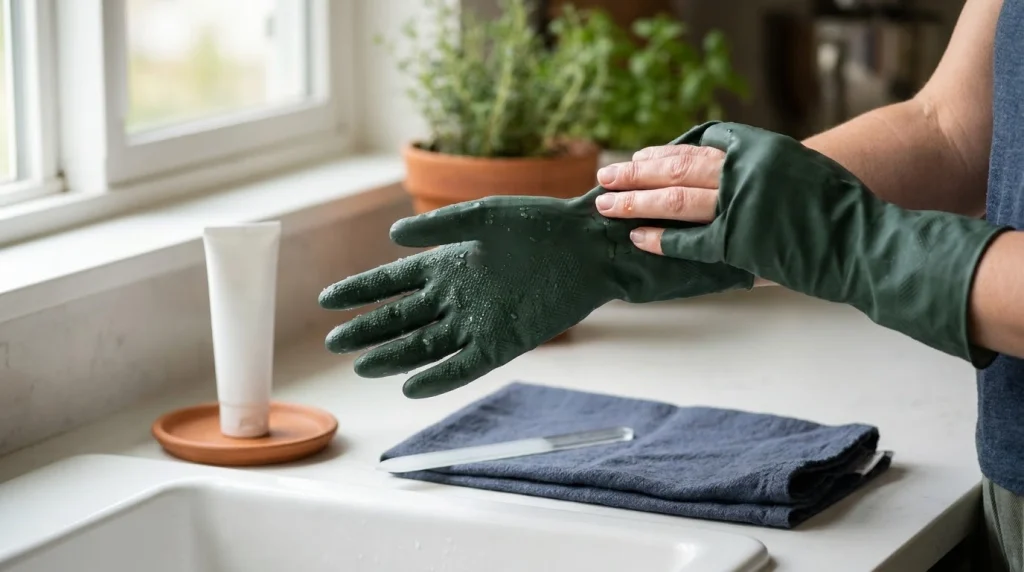
Your care routine should focus on preventing further damage rather than hiding every visible mark.
These steps are suitable for ordinary dryness and minor cosmetic damage. They do not replace medical treatment for infection, unexplained pigmentation, or painful nail problems.
1. Remove Nail Polish Gently
Choose a removal method appropriate for your polish. Avoid scraping, picking, or forcefully peeling attached gel and acrylic products.
For soak-off gel, follow the manufacturer’s instructions. Products that don’t release easily may need professional removal.
Repeated unnecessary acetone exposure can worsen dryness, so avoid changing your manicure more frequently than needed.
2. Keep Your Nails Short and Smooth
Short nails are less likely to catch on clothing, split, or bend backward.
Use a fine-grit file to smooth sharp edges gently. Avoid excessive surface buffing, particularly when nails already feel thin.
If a nail has separated from the nail bed, trim only safely accessible loose length and avoid digging underneath it.
3. Apply Cuticle Oil and Hand Cream
Moisturizing helps reduce dryness in the nail plate and surrounding skin.
Apply a small amount of cuticle oil around your nails, then use a fragrance-free hand cream after washing.
Ingredients such as glycerin and petrolatum can help maintain moisture in the surrounding skin.
For a simple everyday routine, see our article on healthy products and habits for natural nails.
4. Protect Your Hands During Cleaning
Dishwashing liquids, detergents, and repeated water exposure can contribute to brittle nails and irritated skin.
Wear suitable household gloves during wet cleaning. Remove them afterward, dry your hands, and apply moisturizer if needed.
Don’t leave damp hands trapped inside gloves for long periods.
5. Give Damaged Nails Time to Grow
Once the existing nail plate has been physically thinned or split, it cannot be instantly restored to its original structure.
New nail gradually grows from the matrix beneath the skin.
Reducing additional trauma gives the replacement nail the best opportunity to grow without repeated damage.
Pro Tip
Photograph your bare nails once a month under similar lighting. Comparing the images can help you identify whether a damaged area is moving toward the tip or whether a color change is expanding.
How Long Does Nail Damage Take to Recover?
Recovery depends on the cause and severity of the problem.
Simple dryness around your nails may improve within days of consistent moisturizing. Superficial roughness can become easier to manage as you reduce friction and protect the nail edges.
However, damaged nail plate needs time to grow out.
A complete fingernail commonly takes approximately four to six months to regrow. Toenails may require 12 to 18 months.
Growth rates vary with age, health, injuries, and individual differences.
When the nail matrix has been significantly damaged, recovery may be slower or the resulting nail shape may remain altered.
Infections and inflammatory conditions also require appropriate treatment rather than simply waiting for new growth.
What Should You Avoid When Your Nails Are Damaged?
Some popular beauty habits can aggravate already fragile nails. Use the following reminders to make safer choices.
Do
- Moisturize after washing.
- Keep nails gently trimmed.
- Wear gloves for cleaning.
- Use clean manicure tools.
- Monitor unusual changes.
- Seek medical care when needed.
Don’t
- Peel attached gel polish.
- Over-buff thin nails.
- Cut protective cuticles.
- Cover suspicious discoloration.
- Use harsh DIY bleaching treatments.
- Ignore pain or swelling.
Which Nail Care Products Are Actually Worth Using?
You don’t need a complicated collection of treatments to protect your nails from everyday dryness and friction.
Start with simple products that serve a clear purpose. None of these products treats a suspected infection or replaces assessment of unusual nail pigmentation.
Affiliate disclosure: This section contains Amazon affiliate search links. As an Amazon Associate, we earn from qualifying purchases.
Recommended Product
Jojoba-Based Cuticle Oil
Cuticle oil can help condition dry nail surfaces and surrounding skin, making it useful after frequent handwashing or cosmetic removal.
Apply a small amount daily and massage gently around your cuticles.
As an Amazon Associate, we earn from qualifying purchases.
Recommended Product
Fragrance-Free Hand Cream
A rich hand cream containing moisturizing ingredients such as glycerin can help protect dry fingertips and nail folds.
Choose a fragrance-free option if your skin becomes irritated easily.
As an Amazon Associate, we earn from qualifying purchases.
Recommended Product
Fine-Grit Glass Nail File
A smooth glass nail file can help shape natural nail tips and reduce snagging without aggressive surface buffing.
File gently and stop if a damaged area becomes painful.
Find Glass Nail Files on Amazon
As an Amazon Associate, we earn from qualifying purchases.
Recommended Product
Protective Household Cleaning Gloves
Water-resistant cleaning gloves can reduce direct exposure to dishwashing liquids, detergents, and prolonged moisture.
Choose a comfortable fit and keep the inside dry between uses.
Find Cleaning Gloves on Amazon
As an Amazon Associate, we earn from qualifying purchases.
When Should You See a Dermatologist About Nail Changes?
Many cosmetic nail problems are manageable with gentle care, but certain symptoms should never be dismissed as ordinary manicure damage.
Arrange medical evaluation if you notice:
- A new or changing brown or black streak on one nail.
- Dark pigmentation spreading onto the surrounding skin.
- Unexplained nail separation or persistent discoloration.
- Green discoloration suggesting bacterial colonization.
- Thick, crumbly, or distorted nails that may be infected.
- Recurring nail pain, bleeding, or unexplained splitting.
- Persistent swelling or tenderness around a nail.
- Major changes affecting several nails without a clear cause.
Seek urgent care for rapidly spreading redness, severe pain, fever with a nail infection, or significant injury. Sudden blue or gray nails with breathing difficulties or chest pain require emergency care.
People with diabetes, poor circulation, or weakened immune systems should seek professional advice promptly for suspected nail infections.
A dermatologist can examine nail pigmentation and structure, while a healthcare professional may recommend fungal testing or additional investigations when appropriate.
How Can You Prevent Nail Color Changes and Damage?
Not every nail change is preventable, but consistent protective habits can reduce many common cosmetic problems.
Choose Gentle Manicure Techniques
Ask your nail technician to avoid unnecessary filing of the natural nail plate. Never tolerate painful scraping or aggressive cuticle cutting.
Professional removal matters just as much as careful application.
Use a Base Coat With Regular Nail Polish
A suitable base coat can help reduce pigment staining from dark nail polish.
However, it cannot prevent infections or repair damage already present beneath the nail.
Keep Manicure Equipment Clean
Use clean nail files and tools, and choose salons that follow appropriate disinfection practices.
Avoid sharing personal nail tools when you have a suspected infection.
Don’t Hide Persistent Nail Problems
Artificial nails and opaque polish can make unusual changes harder to monitor.
Inspect your natural nails periodically, especially after removing enhancements.
If you frequently experience splitting or peeling, our guide to common brittle nail care mistakes explains which habits may be contributing to the problem.
Pay Attention to Overall Health
Eat a balanced diet, address known nutritional deficiencies with professional guidance, and avoid taking high-dose supplements based only on nail appearance.
Some supplements, including biotin, can interfere with laboratory tests. Discuss them with your healthcare professional if testing is planned.
Frequently Asked Questions About Nail Color Changes and Nail Damage
Q: Why are my nails changing color suddenly?
A: Sudden nail discoloration may result from an injury, staining, medication effects, infection, or another condition. The pattern and accompanying symptoms help identify the possible cause. Unexplained changes should be medically assessed.
Q: Can damaged nails return to normal?
A: Many mildly damaged nails improve as healthier nail grows out. Fingernails commonly take four to six months to regrow completely. Significant injury to the nail matrix may cause lasting changes.
Q: Do white spots on nails mean a vitamin deficiency?
A: Not necessarily. Small white spots commonly follow minor nail trauma. Widespread or unusual white discoloration may have other causes and deserves assessment when unexplained.
Q: Is it safe to put nail polish over discolored nails?
A: Avoid covering unexplained discoloration, green nails, painful nails, or suspected infections. Opaque polish may hide changes that need monitoring or treatment.
Q: Can nail damage be a sign of a health problem?
A: Yes. Certain skin conditions, nutritional deficiencies, and medical disorders can affect nail appearance. However, nail changes alone cannot diagnose disease, so professional evaluation is important when symptoms are unexplained or persistent.
Final Thoughts on Nail Color Changes and Nail Damage
Nail color changes and nail damage can have many explanations, from everyday polish staining to conditions that require medical treatment. Understanding the difference helps you make safer nail care decisions.
Protect your nails with gentle grooming, moisturizing, and careful manicure removal. Never ignore new dark streaks, persistent discoloration, pain, or unexplained nail lifting.
Save this guide to your Pinterest nail care board so you can revisit these tips whenever your natural nails need extra attention.

Hi, I’m Jessica, the creator behind Unique Lash & Nails Katy.
I created this website for anyone who loves beautiful nails as much as I do. Here, I share trendy nail designs, seasonal manicure ideas, easy nail care tips, honest product recommendations, and step-by-step guides to help you create salon-worthy nails at home. Whether you’re looking for everyday inspiration or your next favorite nail trend, I hope you’ll find something you love.